Reality simulation - in which Matrix do you live?
Unable to accept the existing world as it really is, we create our own world, our own symbols and the perspective of reality. The language of that world contains only the outlines of the real. It consists of the same letters and punctuation marks. The difference is that this language has not only a different meaning than it has no meaning at all.
Symbolic interactionism means communication that takes place through letters and signs. The content of the speech is discredited on the basis of the social position of the speaker, because it symbolizes its exclusive value. The distinction between symbolization and meaning is lost due to the inability of individuals to understand meaning alone.
Escapism through the morning dose of morphine, which is reflected in the validation of addicts, represents the best way in which social networks simulate reality. The symbol of "networking" creates a simulation of the social habitus, which is one of the basic human needs. Conformism as a lifestyle dictates that it is much easier to live and live in such a reality.
The interaction can be escaped by tomorrow's response to the message, under the pretext that we were busy, emotions are expressed through smilies that are much easier to put than an artificial smile on a face whose deeper meaning is only a spasm that depicts a constant effort to put our desires within the existing world. .
**After all, we can always hide behind "offline" status.**
An image of oneself that is built by constant intellectual and emotional development is replaced by an image of oneself that can only be seen and whose only frame is a mirror frame or a mobile phone screen. The change, therefore, is not reflected in the change itself, but only in a different representation of oneself.
**Trapped between a loss of identity and an unfulfilled desire to create a new one, we create only a complex based on the aspiration to present ourselves through the modern parameters of an ideal photograph**.
The simulation of reality, which over time has conventionally become reality itself, creates images of individuals. In addition, the lack of potential of individuals to separate photography from personality, as well as the excess of advertisements explain the whole fiction we live. The globalization of reality is reflected in the fact that self-satisfaction cannot be sold as is the case with mascaras and masks.
When we base our ego exclusively on masks and symbols, the question arises: What happens when we return from the masquerade? When does a mask tear or go out of fashion? That is, who are we when we take off the mask we are wearing?
Nobody, a fictional person who represents nothing but the stuntman of today who has just played his role.
By a constant life route, which we do not make a route but a routine made by our identical idea of reality, we create a cave within which we create our view of the world which is mainly reduced to the world of shadows, if we are lucky that fire reflects them like black spots painted on its walls. . If the cave represents our environment, the fire our perception and the shadows our symbols and ideas of reality, we get a realistic picture of the world in which we live.

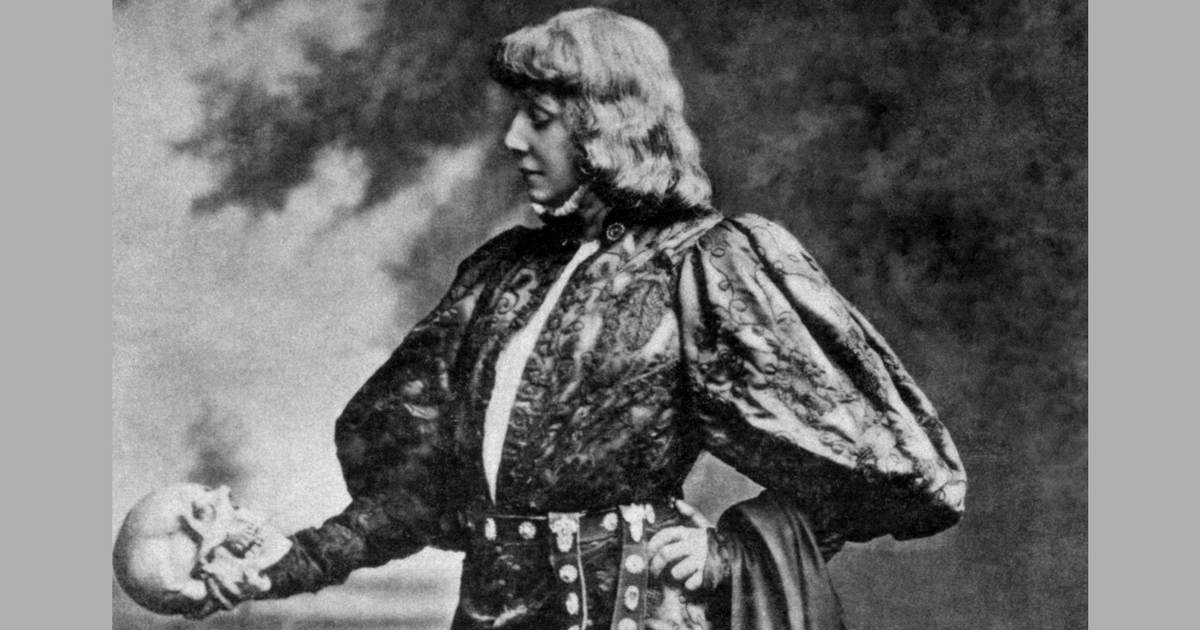
Hamlet - an eternal enigma
William Shakespeare's Hamlet is considered by many to be the greatest and most significant play of all time, and this claim can be supported from countless angles. Everyone has at least heard of Hamlet, and whoever looks at or reads the work will form their personal opinion on the numerous life questions that are being asked.
It is known that Shakespeare often took the plot for his works from the works of other writers and historians, so As You Like It (As You Like It) is actually a reworked novel by Thomas Lodge Rosalind, and Rosalind is a reworked folk legend. Romeo and Juliet originate from the song of Arthur Brook from 1562. The tragic history of Romeus and Juliet, which irresistibly reminds of the novel by the Neapolitan creator Masucho Salernitano about Giancosa and Mariotto from 1476. VIII, Richard II, Richard III) took the historical writings of Raphael Hollinshed and played with the characters, mixing facts with fiction. However, the understanding of creation at that time was very different from today's.
The works of art were not products intended for a certain market, but the common intellectual property of the entire nation. Today, art is protected by copyright, but when we talk about works of the Middle Ages, plagiarism is too strong a word.
So the story of Hamlet, the Danish prince, is actually a Dutch folk tale about a certain Amlet written by the historian Saxo Gramatik in his work Danish History from 1516. At the end of the 16th century, the lost play Ur-Hamlet appeared in London theaters, which is today attributed to Thomas. Kidu.
Through this story, Shakespeare asks questions about what it means to be human, what is the line between good and evil, as well as whether to justify a crime and whether duty overrides morality. Thousands of pages have been written on the subject of the character of Hamlet and many thinkers have given their judgment, but the answer to the question why Hamlet hesitates has not been found.
**Hamlet as an Oedipus**
The psychological approach to the interpretation of literature includes an analysis of the process of creating a work, the author's personality and how it is transferred to the work, as well as an individual analysis of fictional characters. This approach is relatively modern, as it flourished in the 20th century along with psychoanalysis. Of course, the key figure for this movement is Sigmund Freud.
Freud personally dealt with the Hamlet phenomenon. In his work Interpretation of Dreams, Freud takes Hamlet as an example of his theory of the Oedipus complex. The Oedipus complex derives from Sophocles' tragedy about Oedipus, who kills his father, marries his mother and thus becomes king. In psychoanalytic theory, it is defined as the desire for sexual connection with a parent of the opposite sex and the feeling of rivalry with a parent of the same sex.
According to Freud, the root of Hamlet's hesitation is identification with Claudius and admiration for a man who did what Hamlet subconsciously wanted. In that sense, to kill Claudius would mean to kill oneself.
Hamlet also suppresses a certain amount of shame, guilt and jealousy, but the prince is not aware of his repressed instincts, which are manifested only after a significant event, that is, the murder of his father. This theory also explains the disinterest in Ophelia and the aversion to erotica that he expresses in conversation with her.
Depending on the interpretation, the scene in Gertrude's chambers can be taken as an argument in favor of this theory. The most famous interpretation of Hamlet as an epidural is that of Lawrence Olivier from 1948. Another argument could be Hamlet's (too) frequent mention and reflection on his mother's marital bed, as well as insisting on her immorality.
https://www.youtube.com/watch?v=K0xYbpYgdPQ&ab_channel=Tommy
royd goes so far as to claim that Hamlet is a manifestation of the repressed instincts of Shakespeare himself.
Another of Freud's interpretations of this tragedy is like Shakespeare's response to the death of first his father and then his son. This assumption is supported by the fact that the main theme of the work is the relationship of the son to the father, and if we know that Shakespeare gave his only son the name Hamnet, we must admit that this approach also carries some weight.
Freud's analysis of Hamlet served as a starting point for another psychoanalyst, Jacques Lacan. Lacan explored the way in which the text of the play conveys man's struggle against lust and presents the ways in which man, especially at that time, controls his lust, playing around with it, ignoring it and channeling it in various other ways.
Lacan also defined a model of division between himself and others in literature, that is, a philosophical view according to which the alienation of the individual from other people and the impossibility of acceptance are always present. According to this model, Hamlet views everything around him as corrupt, unable to recognize the flaws in himself. Therefore, we can view the Danish prince as both a narcissist and an egoist.
A misogynist
**Weaknesses, your name is wife!**
When his uncle Claudia kills Hamlet's father (also Hamlet) and marries his mother, the protagonist awakens heavy feelings, deep shock and regret for his father when he cannot get over it. He shifts the blame for this deep melancholy into which Hamlet fell to his mother and generalizes this resentment to the entire female gender.
From the changing relationship with Ophelia, we see how much Gertrude's actions influenced Hamlet. Ophelia idealizes him at the beginning and it seems that they sincerely love each other. But on the instructions of his father Polonius, Ophelia distances herself from Hamlet, which further intensifies her aversion to women.
Hamlet feels disgust towards women. From his experience of a betrayed son and a rejected lover, Hamlet concludes that all women are unfaithful, weak and incapable of being loyal. Through Hamlet's eyes, the women in this drama are passive and pliable because the prince is not able to see the situation from their angle, the angle of an obedient daughter of a pure soul and the angle of a queen who was left without a king and thus without any protection.
Hamlet's eyesight is clouded by grief for his father, whom he saw as the perfect husband, and he cannot understand or justify his mother's marriage so quickly. The only explanation is that Gertrude is a lecher who could not control her instincts. Cynicism towards Gertrude becomes cynicism towards all women.
Women lie, cheat, manipulate, make monsters of their husbands and pretend to be innocent, but they are actually promiscuous. So, paradoxically, Ophelia is the most promiscuous precisely because she is almost angelically innocent.
On the other hand, the fact is that with her marriage, Gertrude deprived Hamlet of the throne that belonged to him after his father's death. This is a betrayal not only on a personal, but also on a political level.
However, in the last scene, Gertrude consciously drinks the poisoned wine intended for Hamlet, trying to give his life in exchange for his. This act can be seen as a confession of her sins.
All in all, although the young Dane seems like a misogynist to some, Shakespeare himself was far from it. Gertrude was given the power to elect the ruler of Denmark. Heroines like Portia, Viola or Lady Macbeth are strong and determined women, although they sometimes dress like men.
**Hamlet as a believer**
At the time when Hamlet was written (around 1600), the church greatly influenced everyone's view of the world. Citizens were torn between Catholicism and Protestantism, and Shakespeare himself is considered to have been a Protestant in public, and secretly a Catholic.
In any case, atheists were rare. Therefore, it is justified to look at every work from this period from the angle of religion.
It is not impossible that the reason for Hamlet's reluctance to avenge his father is precisely religion. First, many allusions from Hamlet's conversation with the spirit of the father can be interpreted as an expression of religiosity. The fact that a spirit is trapped in purgatory can be taken as proof of the existence of hell and heaven in this context.
Then, Hamlet was educated at the University of Wittenberg, the place where Martin Luther conceived Protestantism, so we can assume that he himself belongs to this religion. But the scene when the prince considers the murder of Claudius during prayer is taken as a definitive confession of Hamlet's faith.
Hamlet is confused. As a Protestant, he was taught that purgatory does not exist, and here is his father right there. As a Christian, he was taught that murder is a sin, and that is exactly what is expected of him. The opportunity to execute Claudius while he is praying is perfect, but if he takes his life during prayer, will not his soul repent and end up in paradise?
And finally, won't murder, even if it were revenge, defile Hamlet's soul and condemn him to eternal hell? When he finally attacked him, anger drove away any thought of faith. As faith has been neglected, it is no longer an obstacle to him.
These questions that torment our hero present him in an unexpected light; Hamlet is just a man, like any of us.
**Humanist**
On the other hand, we can view Hamlet as a man turned to man and some higher, philosophical ideals. As a longtime scholar, Hamlet is forced to return to a court ruled by intrigue, betrayal, espionage, and Machiavellianism. In this environment, it manages like a fish on dry land.
https://www.youtube.com/watch?v=F39CYBE6-Kg&ab_channel=MovieclipsClassicTrailers
At first, we see that Hamlet has some sublime attitudes toward love and morality. Friendship is appreciated and respected, and hypocrisy is threatened, as we see from his relationship with Horace on the one hand, and Rosenkrantz and Guildenstern on the other. He is educated, well-read, interested in art.
He intelligently uses his rhetorical skills to prepare a trap for Claudia in collaboration with the acting troupe that visits the court.
When a young idealist encounters the general immorality that reigns at home, he re-examines everything he knows about life and finds it difficult to find his place in the new situation. But above all, he cannot find a justification good enough to take a human life. No matter how corrupt and destructive Claudia was, Hamlet cannot come to terms with the murder, not even of the man who executed his father.
Hamlet asks questions about what it means to be human, how much human life is worth, what is essentially good and what is evil. It is these universal motives that guarantee Shakespeare's Hamlet the status of an unsurpassed work.
Hyperactive child - what is ADHD syndrome and how to deal with it
**ADHD syndrome attention deficit hyperactivity disorder (there is also a "version" of this syndrome without hyperactivity, referred to as ADD)**.
It seems, however, that the problem of children with this syndrome is not always adequately understood, while the reactions to the story about it are somewhat different. While some immediately, without further information, recognize a hyperactive child in their child, at the other extreme it is revolted that it is a popular Western fabrication.
Many children, we will all agree, are hyperactive in the "folk" sense. What does it mean, however, that a child is really hyperactive, in the sense that he has ADHD syndrome, and how can he be helped?
And you should definitely not close your eyes to this problem (although it would be really difficult to close your eyes), because ADHD can significantly affect the quality of life - both for the child and his family. If, on the other hand, one reacts in a timely and correct manner, a child with ADHD will find it much easier to cope with the obstacles that this "pain" brings with it. So let’s spread the story, and move on in order.
**How does ADHD syndrome manifest itself?**
Experts agree that ADHD syndrome can be noticed in early childhood, although such a problem is usually ignored at this age. Difficulties to sit still when expected, chatter, intrusion, conflicts with children in kindergarten, "mountaineering" ventures on furniture and various other objects - all this can be easily attributed to a simply lively child, rudeness and bad upbringing.
The problems become more noticeable, you will guess, of course - with going to school; because school is certainly a place where one must sit still and where certain demands and tasks are set before the child. While, on the one hand, a child with ADHD syndrome will come to light as a "hyperactive child" with his fidgeting in a chair, occasional getting up and talking in class, on the other hand, there will be difficulties in learning.
Regardless of their IQ (moreover, most people with ADHD syndrome have normal or above average intelligence), these children usually achieve poorer results. The problem, in fact, lies in the "living trouble" of focusing on what the teacher is saying, or on the task assigned to them. Namely, their attention is very short-lived, and the organization is mostly weak. In addition, it seems that these children find it harder to orient themselves in time and often forget about it, and they are usually prone to violent emotional outbursts.
However, it should be borne in mind that ADHD does not manifest itself identically in all children (and adults) and is generally classified into three types:
**Hyperactive-impulsive type**
"Inattentive" type (mostly characterized by problems with concentration and indecision, while hyperactivity is absent)
Combined type (containing the combined characteristics of the previous two types)
But children with ADHD can be very different individually. Personality, of course, does not boil down to ADHD syndrome. Some children, for example, may have major problems with socialization, while others are accepted and loved by their peers. In this regard, of course, parents and teachers play a big role. Their role is of great importance when it comes to other characteristics that the child will develop. Misunderstanding and excessive criticism can, for example, easily lead to low self-esteem, aggression, fear of disappointment, and even depression.
**What, exactly, is this "angry pain" called ADHD?**
Although ADHD has long been the focus of scientific research in the world, some questions about the nature of this syndrome still remain a real playground for various speculations. The subjects of the dispute mainly concern causal factors and appropriate therapy. On the other hand, some other questions seem to encounter their experimentally confirmed answers. But let's go in order. So, according to the findings and theories, what lies behind the "angry pain" that can cause so many problems for a fully intelligent child?
Namely, we all know that external behavior is a reflection of something "inside", so we could assume that it is overemphasized, frequent and unusual behavior based on some neurological diversity.
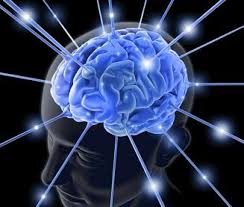
Numerous studies related to ADHD have just detected these differences. Some point to the fact that people with ADHD have a lower number of neurotransmitters, others that they have a slightly weaker blood flow in the frontal part of the brain, which has a significant role in regulating behavior and attention. Third, again, that brain activity in these individuals in this region is somewhat weaker. Fourth, performed by electroencephalography, they detect a higher level of slower brain waves, which, in turn, is associated with attention… How, then, based on this knowledge, is ADHD classified in general?
Some specialists, such as Russell Barclay, author of Taking Charge of ADHD, define this syndrome as a developmental disorder. Others, again, tend to drop the word "disorder." For example, John Taylor, in his book The Survival Guide for Kids with ADD or ADHD, addressing children themselves, points out: When you have ADHD, your brain and body are not sick. You don't have bad cells in you. Having ADHD does not mean you are stupid, lazy, crazy, bad or sick. This means that there are some differences in the way your brain works, which makes you exhibit some ADHD traits. Similarly, in the book Deficit of Attention and Hyperactivity of Children by Nebojsa Jovanovic and Coatura Tatjana Firevski Jovanovic and Sandra Jovanovic, it is clearly pointed out that the term "disorder" changes the term "diversity" more adequately, as it is considered diversity, not disorder, for example. , “Left-handedness”.
The somewhat philosophical theory of the above-mentioned Russell Barclay (a specialist with a not so kind definition), which he presents in his above-mentioned book, is also interesting, and it would be worth retelling it here.
Namely, according to Barkley, the three main symptoms of ADHD (low concentration, impulsivity and hyperactivity) can be reduced to the problem of inhibition of behavior. Barclay is, in fact, inspired by the theory of Jacob Bronowski, a philosopher, mathematician and physicist, according to which human communication differs from the way other types of communication in one important respect - the ability to react in a certain situation. In other words, humans have the ability to inhibit the immediate urge to respond. This ability, in fact, enables us other mental abilities: to create the meaning of the past and the future, to create internalized speech, to separate emotions from information and to analyze the given information. Barclay wants to add to this the ability to internalize emotions.
If then, as Barkley points out, it is true that ADHD is a problem of inhibiting the reaction, then people who have ADHD syndrome actually have a problem with the listed mental abilities. First, with the perception of the past and the future. Namely, according to this theory, children with ADHD react too quickly to take into account past experiences and consider how they can be helpful in the future. In addition, time passes more slowly for them, hence the strong impatience. They have less developed internalized speech, so they are more talkative. They do not give themselves time to separate emotions from facts. They find it harder to internalize emotions, which leads to the problem of internalizing motivation. And when it comes to analysis and synthesis, they perform these functions less well.
But, in addition to all these problems that make life difficult, a child with ADHD can overcome the listed obstacles and be very successful. Children with ADHD can, moreover, be very gifted. Mozart is just one of the examples of famous people who, according to many sources, are believed to have had this syndrome (recommendation: see the film Amadeus by Miloš Forman). Even Barkley, with his strict definitions, points out that because of their overemphasized emotionality, which can lead to a great conviction in a certain idea, they can grow into great writers, actors or traders. The "pain" called ADHD is not quite "angry", and according to many experts, it can be controlled.
But before we look at examples of how to make life easier for children with ADHD, let's mention theories about what causes these neurological differences.
The following are usually cited as causes of ADHD syndrome:
*Smoking or alcohol consumption during pregnancy
*Lead exposure
*Heritage
However, as Russell Barkley points out in his book, the first two, for now, are only related to ADHD. In other words, what can be concluded based on existing research is only that there is a risk when it comes to these items.
Barkley, on the other hand, has dedicated a good number of pages of his book to dispelling media myths about what causes ADHD. According to his claims, no findings prove that it is a question of a certain diet, sugar, food allergy, and the like. On the other hand, some authors of manuals on the fight against ADHD, so to speak, recommend, among other things, a certain diet. But let's move on to what is recommended for children and parents in general as help.
How to help a child with ADHD and how he can help himself
Barclay, for example, cites 14 golden rules for parents. Namely, parents should:
**1.they provide their child with immediate feedback and reinforce his behavior**. In other words, Barkley explains, in order for a child to persevere in a task, it is necessary to react positively to praise, compliment, and sometimes reward with each of his achievements, just as negative behavior should be immediately followed by a decree or punishment in the form of deprivation of privilege. In doing so, the parent should clearly and without shouting express what exactly the child did good or bad
**2.provide** more frequent feedback. Children with ADHD need more frequent feedback to persevere in the task. Instead of waiting to praise the child only at the end of the task, it would be more efficient, Barkley points out, to parcel out the task and agree with the child to collect points for each work done. In doing so, the total score would lead to a certain privilege.
**3.use more powerful consequences.** That is, to allow the child harmless rewarding pleasures, because the outside will encourage them to devour them more powerfully.
**4.incite a child before resorting to punishment**. The punishment itself, as Barkley explains, is not very effective without positive feedback, and can lead to other negative consequences, such as the child's resistance and bad emotions.
**5.externalize and parcel time**. This simply means that children with ADHD, due to their poor orientation in time, should set alarms and play stopwatches as a warning. More complex tasks should be broken down into more time intervals.
**6.outsource important information.** That is, to bring to the child's work environment important information and instructions in physical form, for example, on paper. It will serve as a reminder and a warning.
**7.externalize sources of motivation.** As a child with ADHD has difficulty developing inside information, it is necessary to support his behavior at work, similar to point 3.
**8.externalize the child's thought process.** For example, the child should be encouraged to write down their ideas, when, for example, they should think about the task. In that way, he will be able to sort out his thoughts more easily and will not forget the previous ones
**9.be consistent in their behavior towards the child.** In other words, to be persistent and consistent in the application of certain behavior, and not to treat the child in one way when they are alone with him and in another when they are in public.
**10.they act more than they explain**. This is recommended for the simple reason that children with ADHD are more sensitive to the consequences than to the story.
**11.plan problem situations in advance**. That is, based on past experience in a similar situation, anticipate the problem and make a response plan.
**12.control their behavior.** In other words, parents must not forget that they are parents. If they lose patience, they could try to look at the problem from the perspective of a stranger.
**13.they do not personally understand their child's problems**
**14.to learn to forgive** - the child for his outbursts, others for criticism, and themselves for occasional failure
In addition to numerous adult guides, there are similar manuals for children. The already mentioned John Taylor, in his book Survival Guide for Kids with ADD or ADHD, "talks" with a child-potential reader, about the way he can overcome the difficulties he faces every day.
For example, when it comes to decision making, Taylor recommends the following steps to a child:
**1.**Get acquainted with the situation you are facing. (Have you ever been in such a situation? What did you do then? Did it work? Who could help you?)
**2.**Identify choices (Try different ideas in a given situation. Name them plan1, plan 2, plan3). Consider the good and bad things that can come from any plan).
**3.**Try to implement the best plan.
**4.**Evaluate your plan. (Assess whether it worked).
In this book, which, being intended for children, is written in a warm, friendly tone, Taylor also gives advice on the organization and tasks at school, emotion control and relationships with peers. And he, like Barclay, suggests stopwatches and breaking tasks into pieces.
However, how can a child with ADHD still be helped, and what do experts suggest?
You have probably heard that psychiatrists prescribe medications in some cases that make it easier to control behavior and reduce problems with concentration. Individuals, however, advocate so-called neurofeedback training, that is, biofeedback, like our specialist Nebojsa Jovanovic. Let's say, for the end, a few words about it.
During this "training", the therapist places sensors connected to the computer on the child's head, and it is possible to monitor the level of brain waves on the monitor. The child is then given certain tasks and they practice their brain activity and their concentration. According to some research, the effectiveness of this method is another myth (Barkley is certainly one of the experts), while according to others, it really gives results, not only when it comes to ADHD, but also other problems of various natures. If nothing else, this treatment is not harmful, and it is a much more natural method of improving brain activity.
So much for, in short, about ADHD. For more information there is more than a lot of literature.
What lay people are arguing about is whether ADHD as a disorder does not exist at all.
What scientists are arguing and speculating about is what exactly causes ADHD and which types of therapy give (the most effective) results. What scientific circles agree on is that ADHD has its own neurological background.
What we all have to agree on, assuming, of course, that we believe in the theory of ADHD, is that the problems of a child with this syndrome need to be approached more responsibly. It may not need to be treated significantly differently (many tips can be applied to the upbringing of every child), because a hyperactive child is, after all, a normal child, with certain difficulties, so that, in the end, we define it with copyright.

What is Neuro-linguistic programming and why should it be given a chance?
**Neuro-linguistic programming encompasses a range of skills, techniques and models with which you can actively use your mind, emotions and body to lead your life successfully - and communicate with other people with extreme efficiency. NLP studies the way successful people achieve outstanding results in a wide variety of fields and teaches other people these skills, techniques and patterns. By changing the way of thinking and behaving, as well as by becoming aware of our potential, we can reach the desired goal faster and easier.**
The popularity of the NLP method increased in the seventies of the last century, when it was discovered that it helps in the fight against phobias, anxiety, but also that it positively affects the professional success of an individual, as well as the development of personal happiness.
What is NLP and how does it "work"? Is it really possible to "program" yourself for success?
What is NLP?
NLP uses perceptual, behavioral and communication techniques to make it easier for people to change their thinking and behavior, or to "direct" them.
The term NLP includes three words:
Neuro - refers to the nervous system and how we communicate with other people through our 5 senses: sight, hearing, touch, smell and taste. This is how we receive information and based on that we create our reality.
Linguistic - refers to the way we use language patterns in everyday speech and how other people's perceptions can be influenced through speech. The words we use affect our way of thinking, our mood, our way of behaving, our attitudes and actions. They also influence our interlocutors.
Programming - refers to internal processes, ie. programs of thinking, feeling and behaving and the ability to replace certain patterns of behavior that are not useful to us with more useful ones (in accordance with our values and goals that we want to achieve).
The NLP method was conceived and developed in the 1970s by Richard Bandler, a mathematician and psychologist, and John Grinder, a university professor of linguistics at the University of Santa Cruz in California (USA). They conducted research on the topic - what is the key difference between successful and less successful people. They wondered how they could discover the key elements of success and describe them in a way that other people could learn. They called this process - modeling. They studied how successful people communicate, how they motivate themselves, how they make decisions, how they learn. They believed that it was possible to identify patterns of thinking and behavior of successful individuals and that it was possible to teach others to them.
Their popularity lies in their versatility - the NLP method solves many different problems that people face, from private to professional.
How does NLP work?
Neuro-linguistic programming is based on the idea that people function on the basis of internal "maps" of the world that they learn through sensory experiences.
The outside world is so all-encompassing that we are forced to simplify it in order to understand it. The brain cannot consciously pay attention to all the information that enters through our senses, which is why it filters them.
We do not all pay attention to the same information from the outside world, but our filters only leak certain information and based on that we create our internal map of the world (our experience of reality).
Everyone's map is unique and somewhat different and depends on his age, experience, life stages, beliefs, values. It represents a simplified picture of the world, which is why we say that a map (picture of the world) is not a territory (world). Just as the map of the world is not the same as the world
It is said that an unknown man addressed Picasso and asked him why he did not show the objects as they really are.
Picasso replied confusedly: "I really don't understand what you mean."
The man showed a photo of his wife.
"Look," he said, "my wife, for example, looks like this."
Picasso looked on in disbelief. "She's very small, isn't she?" And flat? ”
Often, communication problems and conflicts arise because we assume that other people experience reality in the same way as we do. When we realize that this is not the case, then we argue over who is right. It is important to understand that no map is wrong and to learn how to recognize other people's maps, to respect them and to adjust our communication.
Neurolinguistic programming can help us with that.
NLP attempts to detect and modify the unconscious limitations of a map that an individual may have.
NLP works through the conscious use of language that leads to changes in the way we think and behave. For example, one of the main ideas of NLP is that each person has a different sensory system, known as the preferred representative system or PRS.
NLP specialists can discover this preference through your vocabulary. For example, if you often use phrases like "I see the point" - it can signal a visual PRS. On the other hand, frequent use of the phrase “I hear what you mean” can signal an audible PRS.
An NLP coach or trainer can identify a PRS person. Then, during the coaching process, it starts with gathering information about the character of a certain person, studying the way of accepting information (and reacting to it), as well as setting a goal together with the student.
NLP techniques
UFO is a broad field of practice. Accordingly, NLP practitioners use a variety of different techniques which include, but are not limited to, the following:
• Anchoring - turning sensory experiences into triggers for certain emotional states.
• Rapport - The NLP practitioner connects with the person to improve communication and empathy.
• "Whistle" - change the pattern of behavior or thinking to achieve the desired instead of the desired outcome.
• Visual / kinesthetic dissociation (VCD) - removal of negative thoughts and feelings associated with past events.
Where can NLP be used?
NLP is used as a method of personal development. Therefore, it is useful for promoting the skills or abilities you have. It helps to develop self-reflection, self-confidence and communication skills. It is possible to apply NLP to achieve work and career-oriented goals, such as improved productivity or job advancement. With the help of these techniques, it is also possible to improve mental abilities, develop creative thinking, and overcome stressful situations.
In a broader sense, it has been used as a therapy for psychological disorders, including phobias, depression, general anxiety disorders and post-traumatic stress disorder.
It is applied in the following areas: managerial practice, coaching, education, upbringing, sports, health, negotiation, psychotherapy, counseling and many others.
How is NLP learned?
NLP is a skill, not information - that's why it can't be learned in the classic "school" way.
One way to get acquainted with the NLP method is through books and online courses. Experienced NLP masters say that learning NLP is only through books and video tutorials, as if you are learning to ride a horse without real practice. You can learn a lot of information about horse riding, but when the time comes to ride a horse yourself, a problem will arise.
The fact is that one hour with a horse and an experienced trainer can do more for your riding skills than a whole day of reading and researching on the Internet.
That is why there are courses, workshops and trainings around the world. Learning NLP should be an active experience of personal and professional development in which what you will learn and master:
• Explained to you.
• Researched and used by you and others in training.
• Tested with other people from whose experience you are learning.
• Developed through the training of a professionally trained and certified NLP trainer who will allow you to develop your own NLP style - a style that suits your personality.
• Discussed with the coach and your training colleagues - instead of passive acceptance because it comes from “experts”.
NLP helps you realize that you have more choices. The greater the choice, the greater the chances that you will succeed.
***If you have only one choice in behavior, you are a robot. If you have two choices, you will often be in a dilemma. If you have three choices, you are a Free Man.***
***Richard Bandler***
Narcissus - the paradox of love. Who are the modern Daffodils?
**From the ancient Greek myth to the technological sparks of the 21st century, the notion of narcissism is close to man. Along with the persistence of this human trait through the centuries and civilizational changes, the topicality of the topic of narcissistic persons and the nature of love that they feel (or that they are able to feel) survives.**
**Narcissus sin**
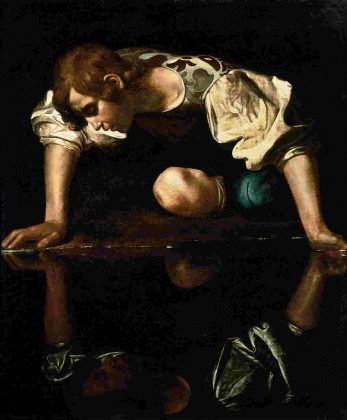
According to the famous Ovid myth, Narcissus was a young man fascinated by himself. He wandered the world looking for love and someone to share it with, and despite that, he rejected the forest nymph Echo when, in love, she approached him.
Later, approaching the river to drink water from it, Narcissus saw his own reflection and immediately fell in love with him. He even tried to kiss him, but fearing that the reflection would be destroyed and disappear, he kept himself in a position just above him, neglecting his original search for water, until he fell into that river and drowned. It was a punishment sent to him by the gods.
**Narcissus died of thirst and self-love, never reaching the love he sought, and never reaching enlightenment.**
The prophecy that Tiresias, the blind prophet, gave him at birth was fulfilled: he lived and was happy until he saw, that is, realized his character.
This myth has its deep philosophical and psychological roots throughout history and has served as a basis for portraying a type of human personality. Narcissus has become any person who feels excessive love for himself.
Hence the question: was Narcissus' sin such a kind of love, or the inability to feel love of equal intensity towards another person?
**Contemporary Daffodils**
Psychologists who have studied this type of personality have defined a narcissistic person as one whose interests, love and priorities exist solely to meet their own needs, and one who considers other people's needs, feelings and attitudes less important or even less real.
Having built an imaginary wall around himself, the narcissistic person lives in a reality tailored to his own beliefs, starting with the fact that he is the center and core of the world inside and outside that wall.
This is where her basic paradox arises: a narcissistic person seeks respect, support, attention and love, believing in his importance, but is unable to provide the same and feel towards others.
Whether personality analysis is based on the conversation, behavior and actions of a narcissistic person, or the amount of selfies taken, modern psychology distinguishes between two types of narcissistic personality - "vulnerable" and "grandiose" daffodils.
**Vulnerable and grandiose daffodils**
Vulnerable daffodils develop and maintain their self-esteem in order to cover up their insecurities and compensate for the amount of love and attention that their parents denied them during growing up. Their needs are based on the desire to be accepted and appreciated, and the focus of their attention becomes the fear of rejection.
On the other hand, grandiose daffodils have a much higher opinion of themselves, because they firmly believe that they are truly superior, better and more important than everyone. Even with this type, psychologists take childhood and upbringing as a foundation, but of a different kind than with narcissistic people of the vulnerable type. Grandiose daffodils become those people that their parents put on a pedestal from an early age and imposed on them the idea that they are better than other children.
Both types have one thing in common - a lack of empathy. Like Narcissus, who thought he had found a soul mate, love and comfort because of the reflection in the water, who laughed, cried and suffered with him, the highest ideal for narcissistic personalities becomes their SELF.
The question remains, therefore: did Narcissus fall in love with his true reflection or the image of himself he wanted to see?
**The nature of Narcissus' love**
The definition according to which love is something subtle, free, uncorrupted and altruistic is generally accepted. Narcissus certainly felt a kind of love, only it was directed towards a single person - himself. In that, perhaps, that "freedom" is represented in the definition.
Like other human traits, empathy can be learned, and is attainable by a narcissistic person, just like any other.
Narcissus' sin was not self-love, but a lack of desire to see one's own narcissism and desire to change. Therefore, his punishment was his own paradox: to seek love and understanding, and never find them.
Neither the nymph Echo, nor any other man could give him the love he was looking for - at least not as much as his own reflection could.
If someone had told Narcissus that the world was much bigger than his beliefs, that there were better daffodils than him, or that the gods had felt empathy in choosing Narcissus' punishment, would anything have changed? Probably not. This suggests a description of the nature of the narcissistic personality.
Today, we are left to wonder whether Narcissus is really to blame for his own destiny, self-image and beliefs on which he built his world, or whether the world was built by Narcissus.
Otherwise, the symbolism and unnecessary cuteness hidden in the fact that Narcissus was named after a flower and words (Greek Nárkissos) meaning "one who alleviates pain and suffering" would not make sense.

 @Aurora