 @AlmostSand
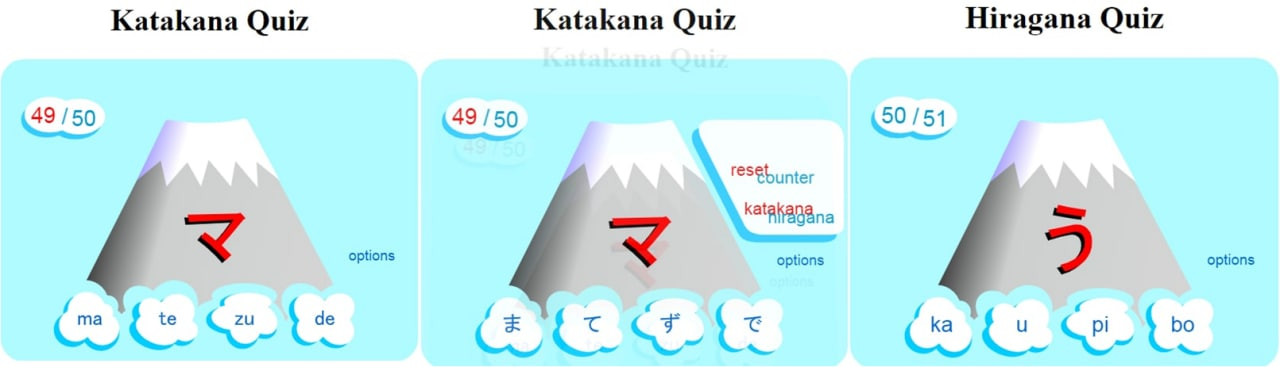
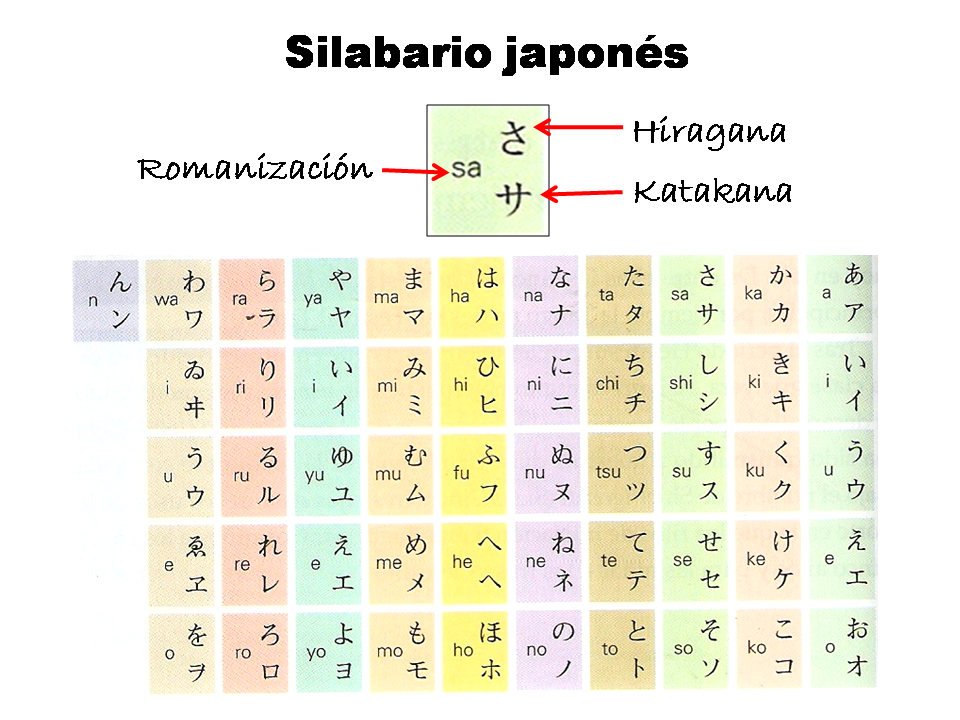
🇯🇵 𝗛𝗼𝘄 𝗜 𝗹𝗲𝗮𝗿𝗻𝗲𝗱 𝗝𝗮𝗽𝗮𝗻𝗲𝘀𝗲 𝘀𝘆𝗹𝗹𝗮𝗯𝗮𝗿𝗶𝗲𝘀 I was looking for an old game I used to practice 𝙃𝙞𝙧𝙖𝙜𝙖𝙣𝙖 and 𝙆𝙖𝙩𝙖𝙠𝙖𝙣𝙖 syllabaries, but it's been so long I can't find it. However I found this other site: http://www.easyjapanese.org/kataquiz.html It has a cute interface and it is just as practical as the other one. Plus, there are 3 game modes: 𝙆𝙖𝙩𝙖𝙠𝙖𝙣𝙖 🆚 𝙍𝙤𝙢𝙖𝙟𝙞 (𝙥𝙧𝙤𝙣𝙪𝙣𝙘𝙞𝙖𝙩𝙞𝙤𝙣) 𝙃𝙞𝙧𝙖𝙜𝙖𝙣𝙖 🆚 𝙍𝙤𝙢𝙖𝙟𝙞 (𝙥𝙧𝙤𝙣𝙪𝙣𝙘𝙞𝙖𝙩𝙞𝙤𝙣) 𝙆𝙖𝙩𝙖𝙠𝙖𝙣𝙖 🆚 𝙃𝙞𝙧𝙖𝙜𝙖𝙣𝙖 I think is a good way to study without actually feeling you're studying. The game (using the first or second mode) is this: A 𝘬𝘢𝘯𝘢 character is displayed and you have to choose between 4 𝘳𝘰𝘮𝘢𝘫𝘪 (pronunciation) options. If your answer is right, a cute sun will appear from behind 𝘍𝘶𝘫𝘪-𝘴𝘢𝘯 (Mount Fuji) 🗻. If not, a red lightning ⚡️ will appear in the middle of the display and you'll have to try another option. The counter to the left keeps a registry of the Right answers vs the total number of questions. I used to play 100 characters a day until I could answer without thinking. It helps if you say the word out loud when you're studying the 𝘾𝙝𝙖𝙧𝙖𝙘𝙩𝙚𝙧𝙨 𝙩𝙖𝙗𝙡𝙚. The point is to make your brain relate an image to a sound; you combine visual memory with auditory memory. There is another thing I learned using this method, but is not languages related... Or maybe it is? Anyway, I'll post about it tomorrow. I'm too tired now. おやすみなさい ✌️ #LingoNoise #LanguageLearning #English #Japanese --------------------------------------------------------------------------------------------------- In case you want to play, I leave you this 𝘾𝙝𝙖𝙧𝙖𝙘𝙩𝙚𝙧𝙨 𝙩𝙖𝙗𝙡𝙚 I took from one of my books and edited it, so you can read both syllabaries and then challenge your memory.
2 comments
it is a nihongo language use by the Japanese? it is good for you to find it that would really helps you for saying that language and understand as well.
Yes, they use them along with Kanji.