 @AlmostSand
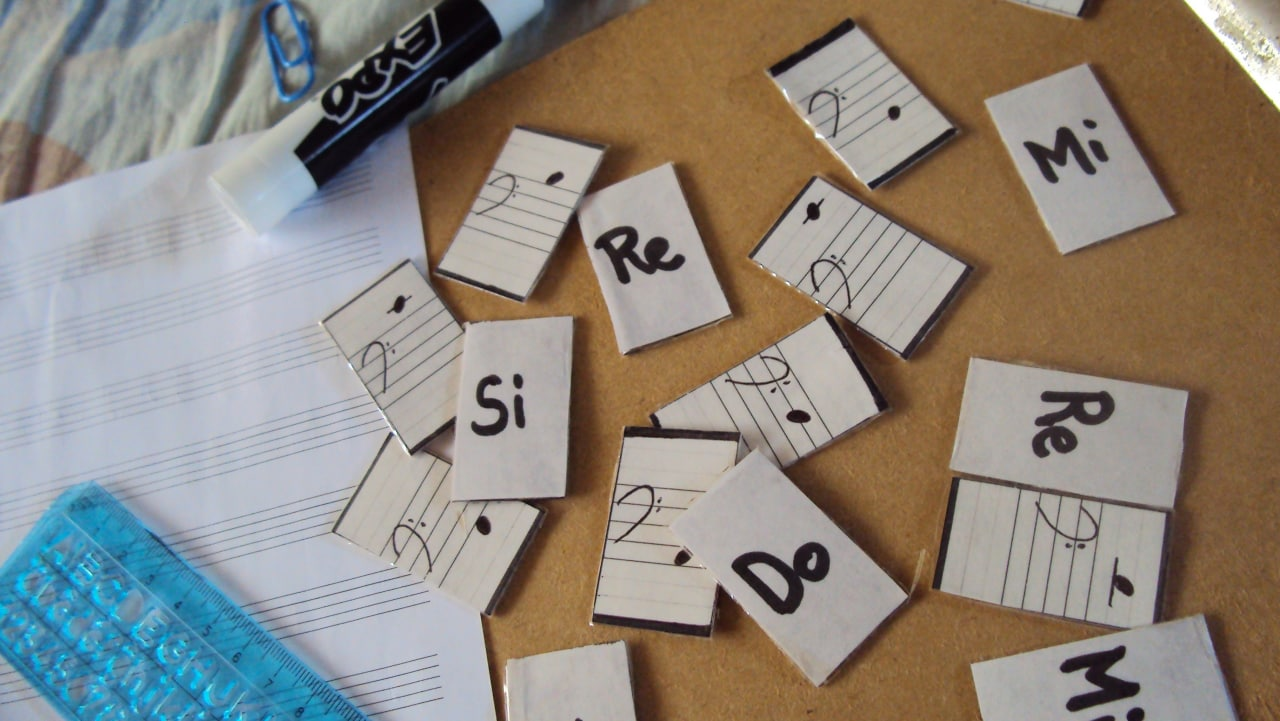
Hello, guys! How's your weekend going? As I promised the other day, here is the post about that other thing I learned using this same method 👉 https://noise.cash/post/85xk094f73vw 🎼 𝗛𝗼𝘄 𝗜 𝗹𝗲𝗮𝗿𝗻𝗲𝗱 𝘁𝗼 𝗿𝗲𝗮𝗱 𝗺𝘂𝘀𝗶𝗰 🎹 When I started learning piano, Saraí (my professor) taught me the music scales and how to read music notes using the Treble clef and Bass clef. I wrote down all the little black points with their tags on my music notebook and I learned them all. But there was a problem: When I tried to play the notes as I was reading, it was hard for me to recognize each note right on time to play it next. The reason is that I was counting the lines and spaces on the pentagram to know what was the note; 'cause I only knew how to say the notes in order and not randomly. I needed a way to read the notes randomly, faster and without counting. And I thought: How did you learn the japanese syllabaries? Exactly! It's the same: You need to make your brain relate a symbol to a note. So I took scissors, glue, tape, paper, paperboard, marker and a sheet from my music notebook and made me these little cards. - The front side is the Note on a Pentagram and the Clef it belongs to. - The back side is the Name of the note. How do I use it? I put all the cards front faced and start saying the name of the note I think it is. If the answer is Right, I put it on the right. And if it's wrong, I put it on the left. This way I got to read the notes without thinking. When I wrote my last #LingoNoise post I came up with a doubt: Do you think music is a language too? Should I have posted this on that channel then? #English #Study #Learning #Music
No comments yet