 @thesotiris
more from that month
@thesotiris
more from that month
On virtue: Fragility of meaning. Inevitability of humility.
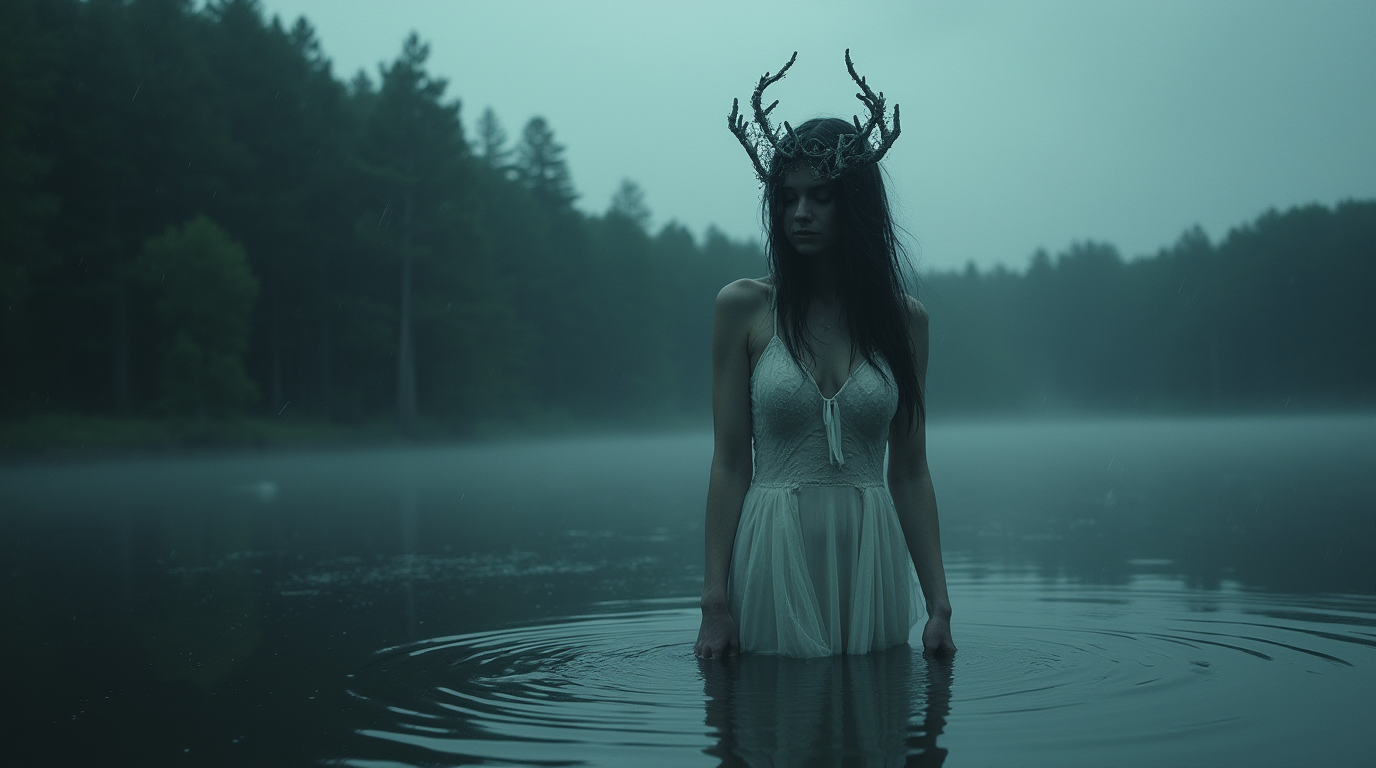
What does it mean to be virtuous? Can holding virtue be a vice, and vice versa? (No pun intended). Do you consider yourself virtuous? What is your criterion for virtue? Why are you virtuous and others aren’t, according to your criterion? Do we choose to be virtuous, and others don’t? If so, do we also choose what skews our preference towards virtue, thus facilitating our choice? I am reminded of a quote from Mary Shelley’s ‘Frankenstein’, spoken by the Creature: ***“I was benevolent and good; misery made me a fiend. Make me happy, and I shall again be virtuous.”*** Here, the Creature pleads for empathy and understanding. He explains that he was born kind and gentle, but the circumstantial cruelty, rejection, and isolation he endured from his environment transformed him into something monstrous. While this pivotal moment challenges the idea of inherent evil and emphasises the role of nurture and environment in shaping one’s behaviour, it still leaves unanswered the questions of determinism, free will, and whether someone is accountable for their actions. https://sotiris.substack.com/p/what-is-god https://sotiris.substack.com/p/what-is-the-meaning-of-existence https://sotiris.substack.com/p/excuses-vs-explanations I’ve argued in previous posts that free will is impossible, that we are all products of our random genetics and circumstantial experiences, and that our will is nothing but our predetermined neural pathways and mental algorithms. Yet, despite all this, we are still responsible for our actions, not for self-blame, but for self-empowerment. If you hold yourself accountable for your mistakes, then you can acknowledge the role you played in them. You therefore see the power you had (and still have) to control your environment, not to mention your power to make amends for your mistakes, if they hurt others, instead of just you. And if these words made an impact on you, you can thank random determinism for just happening to stumble upon this article. https://sotiris.substack.com/p/free-will-oxymoron Returning to the topic of virtue… The unvirtuous Creature of Frankenstein seeks compassion by claiming extenuating circumstances for his evil behaviour. This means that at least he acknowledges his behaviour as evil. One could say that it’s worse to know you’re doing evil and still do it. One could also accept that succumbing to a compulsive drive to do evil, while recognising it as such, is less evil than not recognising evil at all. https://sotiris.substack.com/p/some-compassion https://sotiris.substack.com/p/excuses-vs-explanations Who knows what it means to be good, to be virtuous? Nature gave us no operating manual. https://sotiris.substack.com/p/on-the-morality-of-the-demiurge The question here is whether being virtuous is easy or not. For the Creature, virtue was hard to hold. It’s easy to judge him from a place of safety. **It’s easy being virtuous when virtue is easy for you**. But how virtuous would you be — would any of us be — had we had the same experiences as the Creature, or even less traumatic ones? Are you certain you’d be just as moral, just as mentally strong, or just as sanctimonious had your virtue not served you in your immediate environment, or worse yet, had your virtue been treated like a weakness by the evil people you found yourself amongst? https://sotiris.substack.com/p/on-morality-part-1 https://sotiris.substack.com/p/the-scourge-of-moralism https://sotiris.substack.com/p/the-cycle-of-abuse One would say that meaningful virtue is that which endures misery, or even, that which springs from it. It’s easy being virtuous in an entourage that recognises, celebrates, and rewards your specific manifestation of virtue. Is being virtuous, then, meaningful? Wouldn’t holding on to virtue be more meaningful if doing so were costly to you? Virtues are virtues regardless of holding them or not. Here, I examine **the distinct virtue of remaining true to virtue despite an environment that punishes it**. Perhaps **the test of virtuousness** is how well it holds under adversity, when it doesn’t serve us, when it has no external or transcendent purpose other than to grant us some sense of identity in the short, confusing time we exist. https://sotiris.substack.com/p/deducing-the-absurdity-of-reality It’s a sad realisation to conclude that your virtue was fragile, that it buckled under the weight of traumatic abuse, that you were not worthy of the virtue you presumed to hold when virtue was easy… It’s a tragedy to conclude that the virtues you presumed to embrace as your defining attributes couldn’t hold up under scrutiny, and against abuse. This self-questioning pain is not without insight. It makes us wonder how virtuous the virtuous would have been had they experienced pushback in life… if their environment and circumstances not only ignored their virtues, but rather, treated them as vulnerabilities. Then again, we are products of our environment. **The most beautiful flower withers under conditions inappropriate for its design**. **Even the mighty lion shrivels and wanes and gives up on life in captivity**; committing suicide by refusing to procreate, in hopes of sparing his unborn offspring the horror of the cage. If only humans were as noble. https://sotiris.substack.com/p/anti-antinatalism Indeed, even the lion can be tamed through the systematic and cruel abuse of his circus trainers. Does this make that specific lion (unlucky enough to be taken by evil) less of a lion than the proud ‘king of the jungle’ who happened to be fortunate and spared the cage? Who’s to say? It is humbling to accept the **determinism of our virtue**. It is **humility to admit that your virtues are hopelessly reliant**, not only on you, but rather, mostly dependent on your environment… that you are a product of randomness rather than gleefully assigning your virtue to your imagined “free will”, narcissistically crediting yourself with your unearned blessings, as if you were a god. Humility in acknowledging that your virtue is fragile and reliant upon your environment is a virtue in itself. And this is a virtue that those who most viciously identify as “virtuous” lack. The irony… So, what is the meaning of virtue? In an existence that is apparently meaningless for us, that does not transcend the physical limitations of frail bodies that sooner or later betray us, and in which the universe abundantly demonstrates to us that it is indifferent to our sense of fairness, morality, or value of life, we can only deduce one thing: that our concept of virtue cannot be found in nature independent of humans. https://sotiris.substack.com/p/on-our-cosmic-abandonment https://sotiris.substack.com/p/the-subjectivity-of-moral-objectivism Virtue, for us, carries utility, much like we voluntarily choose the artificial scarcity of remaining faithful to our spouse. Virtue brings value to human relationships, but more importantly, to our self-image. Our consistent adherence to our **values**, **principles**, **virtues**, and **ideals** grants us **self-esteem** because it bestows upon us **identity**. From **identity**, we derive direction and **purpose**, and perhaps, some arbitrary **meaning** in an otherwise meaningless existence. https://sotiris.substack.com/p/selfish-altruism https://sotiris.substack.com/p/the-heartfelt-art-of-meaningful-relationships https://sotiris.substack.com/p/in-defense-of-brutalism We instinctively fear nothing more than meaninglessness — another one of nature’s cruel jokes on us, a line of biological programming designed to determine our thought patterns (so much for free will). We fear meaninglessness more than death, which is why humans are able to easily choose brutal death if there is enough meaning in it for them. This instinct of fear of meaninglessness is even greater than the instinct of self-preservation or procreation combined. https://sotiris.substack.com/p/why-you-write And here we are, having over-philosophised virtue to the point of pointlessness. https://sotiris.substack.com/p/peak-philosophy By all means, be virtuous; it’s better than not. It’s better for you and for those around you. Virtue makes you a desirable person, it attracts good people around you, and it grants you identity, purpose, and perhaps some meaning. But also, consider maintaining the humility in acknowledging that your virtue is fragile, as your body is. Your body relies on extremely specific environmental circumstances to thrive, and so does your virtue. Neither can define you. Is this a wise thing to question the unconditional nature of your virtue, if that risks undermining your identity? Probably not. But what if this humility is the ultimate virtue, the most unwavering self-identity, and the only true meaning that can come from virtue? Who knows? It’s for each of us to decide based on our predetermined mental processes imposed upon us by randomness. Accepting the fragility of virtue is humbling. Accepting the impossibility of free will is also humbling. Denial of this is humiliating. Perhaps humility is the only constant… but not humiliation. https://sotiris.substack.com/p/confidence-vs-arrogance
No comments yet