 @thesotiris
more from that month
@thesotiris
more from that month
Do You Want It or Need It?Negotiation, relationships, and divine gratitude

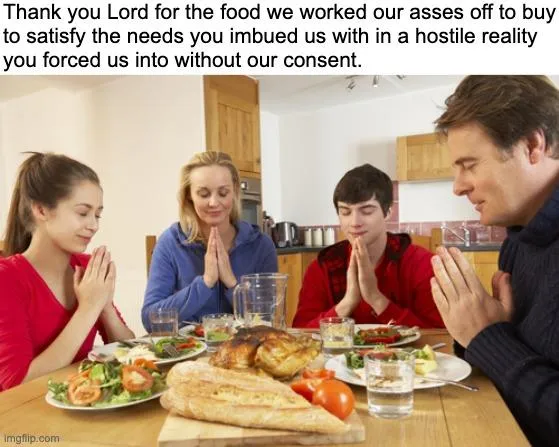
There are two kinds of desire: need and want. They differ in their drive and origin; ‘need’ comes from a place of lack and involuntary desperation, while ‘want’ comes from a place of fulfilment and a voluntary pursuit. This is why **nobody** ***wants*** **you when you** ***need*** **them**. https://sotiris.substack.com/p/need-versus-want **Dynamics** When you *need* something, you can’t live without it, or you merely survive a miserable existence of constant lack. This is because you are in a vulnerable state and hopelessly reliant upon that something. When you only just *want* something (instead of needing it), you are already content without it. Yet you still choose to pursue it, not because you have a desperate need to satisfy, but because you recognise the true value in it. Even though you don’t *need* anything, you still choose to *want* it because it is valuable to you, even though all your needs are met. Even though you’re self-actualised, this thing is so valuable to you that it can grant you over-and-above satisfaction. Now *that’s* meaningful. *Neediness* is selfish: it sees things as objects to fill a gap. *Wanting* is a compliment to what or whom you desire, since you’re fine without it or them, yet you still recognise their unique value, and the over-and-above benefit they can bring you. When you *need*, you just take, because you have little to give. When you *want*, you have something to give, since you are already in a place of fulfilment. **Absence** When you *need* but don’t get, you feel pain, as you do when you can’t breathe. When you *want* and don’t get, you feel nothing bad, save for perhaps some eagerness and disappointment (assuming you emotionally invested enough in an expected outcome). But you don’t feel worse for not getting what you want. In other words, not satisfying a *need* constitutes a loss. Instead, an unfulfilled *want* is simply a neutral status. When you *need*, and you get, you don’t feel joy or an over-and-above delight; you just quench a thirst and achieve temporary neutrality. When you *want*, and you get it, you feel delight, an over-and-above joy. When you *need*, you deep down resent the thing you desire, because need is vulnerability and weakness (not of your choosing, no less). Even if you get what you need, you resent your dependence on it. Instead, when you *want*, you appreciate what you desire, because its absence does not render you incomplete or weak, and having it is an over-and-above benefit. Let’s take a car as an example. Four wheels, transmission, an engine, and engine oil are needs. A car cannot be without them. Without even one of them, the car suffers. Needs are non-negotiables and a bare minimum. Wants, however, are the extras, the ones that make the car’s experience an enjoyable one: leather seats, heated steering wheel, cruise control, etc. Without them, the car is still a perfectly functioning car. It does not *need* anything more. But it would be even better with nice-to-haves, which you only *want* for it. We are willing to pay more for what we want, because we feel entitled to what we need — we can’t live without it, so satisfying it doesn’t bring us joy; just neutrality. We feel that what we *need* are our prerogatives, since they are prerequisites for our existence, **neither of which were of our choosing**. Naturally, we can’t value what we *need*. We value more what we *want* because it is not a prerequisite for survival; it is something of *our* choosing, which is more meaningful to us. **Relationships** When you *need* someone (or something from someone), then that someone feels pressured, smothered by you. They can sense that you depend on them, and that puts them in the spotlight; pressure they never asked for. They won’t respect you, since you are needy and desperate for them, thus exposing your place of dependency and weakness. You can’t live without them. Your neediness for them is a crushing burden to place on them. Hopeless romantics think it’s a good thing to “*need*” your lover, but it’s not. It’s pathetic, and it has nothing to do with meaningful love. You *need* them to fill a hole in you; you don’t really love them. Real love is not neediness. Love is the opposite of needing; it’s **choosing to** ***want*** **to love them regardless of your lack of need for them**. This is why many couples split as soon as one of the two gets over their neediness. Many enter a relationship based on mutual need for someone — anyone — to mitigate their loneliness. Fair enough; they both settle for each other. And under such conditions, they don’t appreciate each other because they each satisfy a need in the other, not a want. And since need reminds us of our vulnerability, we resent what we need. So, when one of the two becomes fulfilled, and the other doesn’t, that’s when they split, as they should. An unsatisfied need is torment. Thus, you resent your need, and the thing you rely on to satisfy your need. You can only appreciate something when you don’t need it, but instead only want it. **Meaning** When you *need* something, there is no meaning in your desire for it. You *need* an object to satisfy a need not of your choosing. You are condemned by nature to have to fulfill a function you were programmed to perform just to achieve a neutral state of being. You need to breathe, feed, have sex, and take a piss. But you don’t need the fresh, crisp air of a summer beach, or the experience of fine dining, or to love someone, or to engage in a fun activity. These are things you *want*. We are willing to pay much more for the things we *want* than the things we *need*. Indeed, we can’t survive without the things we need, or at best, we live a hellish existence without them, yet we aren’t willing to pay much for them. Air is free, water is dirt-cheap, and we complain about the cost of heating while we spend much more on overpriced outings, entertainment, self-care products, and travel. Why? Because we never chose our needs. We are only compelled by our nature to pursue them. Needs weigh us down. So we resent them, and we feel entitled to them — rightfully so. You need to breathe, so why would you feel any fulfilment, any meaning, in having this most basic need satisfied every second of your life? However, once you’ve covered your needs, you’ve climbed Maslow’s pyramid of needs. As a self-actualised individual, you begin to *want* instead of *need*. You don’t need what you want, because you are already content without it. But you choose to desire it anyway, since you can recognise its unique value, only from a place of fulfillment and contentment. You can’t recognise the true value in something when you simply need it to quench a desperate thirst. When you haven’t eaten in a week, it doesn’t matter if your first meal is tofu or tiramisu — you won’t appreciate the value of tiramisu. https://sotiris.substack.com/p/why-developed-societies-stop-having Only after you’re content and free from neediness can you appreciate true value. Only after you don’t *need* can you *want*. Recognising true value grants meaning. Arguably, meaning could well be the ultimate need… https://sotiris.substack.com/p/trauma-is-suffering-without-meaning **Realisations** We spend most of our money on things we need the least, and least of our money on things we need the most. Your water bill is your smallest utility bill. We find it preposterous to pay for breathing air. We demand that the state give free basic food — this is how much we value food: we demand it from the most worthless institution imaginable. https://sotiris.substack.com/p/the-most-tragic-misunderstanding https://sotiris.substack.com/p/government-is-an-unnecessary-evil Even though food is a basic need for survival, we don’t value it at all: there is no meaning in getting it. Fine dining, on the other hand, is not survival food; it’s something else entirely. So, even though we *need* the most bland, basic food for survival, we don’t want it. Instead, we *want* fine dining. **We don’t appreciate or value what we need; we can’t, and we shouldn’t, because needs are forced upon us by nature**. You can’t choose what you need. We deep-down resent the things we need because they make us their slave, and deny us our free will. We lose our self-ownership over it, and we succumb to its dictates. https://sotiris.substack.com/p/free-will-revisited Conversely, **we value something we can live without but still choose to want it**. The best relationships are those in which you are self-sufficient enough to leave at any time, yet you still choose to stay and commit. This makes it all the more meaningful. Compare that to a relationship where people are desperately needy and afraid of loneliness; they are forced to settle for each other, and they resent each other for doing so. How appreciative can they be of each other when they’re chained to each other, not by love, but by their **compulsion to need each** other? Need is bad. Want is good. Not needing or wanting could be ideal. https://sotiris.substack.com/p/the-ultimate-goal-of-philosophy The less you *need* in life, the more content and the more at peace you’ll be; the less you’ll fear, the less you’ll regret, the less you’ll feel shame or guilt over. And peace is something we all *want*… or *need*… **Negotiation** A key to negotiation is leverage. And the less you need something, the more leverage you have at the negotiating table. ‘Need’ means “can’t live without”. Yes, we are willing to pay more for what we want than what we need, but in the absence of what you need, you go all in: “*My kingdom for a glass of water!*” cries the king in the desert. Try to negotiate when you desperately *need* something and see what happens, especially when the other party only wants something from you. They’ll take you to the cleaners, more so if you have no alternatives with whom to negotiate, and they do. This is why the labour market is unbalanced and in favour of employers: under-demand of labour, which is the direct consequence of government intervention, mind you. https://sotiris.substack.com/p/when-you-hate-the-rich-more-than https://sotiris.substack.com/p/government-is-an-unnecessary-evil So, what do you do? Some things you can’t help but need for your survival. But you can improve your negotiation stance by increasing the number of sources from which you can satisfy your needs. Simple economics dictates that the price of a good is determined not only by its relative demand, but also by its relative supply. This is why air is free (for now): because it is abundant. Another thing you can do is search within to see whether you actually *need* something. A common pitfall with romantic relationships is needing someone, which puts them in the spotlight and weakens your position. Sure, we are biologically programmed to need a romantic partner (physically and emotionally), but when you need that specific person, you are going to mess it all up with your neediness — they won’t want you. Yes, focusing your love on someone is a good thing, but you must first be self-actualised enough — able to live without them; otherwise, your neediness will put them off. **Contentment vs. happiness** Work on yourself to need as little as possible; to be content as you are. The less you need from life, the more control you have, the less control others have over you, and the more at peace you’ll be. Contentment is a finer goal than happiness. Contentment does not rely on satisfying needs other than the basics for physical survival. Happiness requires you to achieve and maintain much more than basic needs, and if you aim for happiness, you become needy of too many things outside of your control. **Gratitude** Needs are water, air, a very specific temperature and pressure, and all the things we need to survive in this body. Do you ever feel ecstatic or thankful for these things, even though you receive them in abundance (perhaps especially not so)? Of course you don’t. It would be hypocritical to claim you feel gratitude for the fulfillment of your needs, as an inmate would be if he were thankful for prison food. Instead, we feel delight and joy when we get ‘likes’ from bots on TikTok. Needs are weaknesses. It’s natural not to feel thankful or appreciative for the mitigation of a need. **Telling yourself you’re thankful to “****god****” for the food you worked your ass off to buy so you can satisfy a need god instilled in you is hypocrisy and sanctimonious faux-humility**. Nobody’s thankful for satisfying needs imbued in us by nature. And rightfully so. What exactly do you owe a demiurge who plunged you into this world — without your informed consent, no less — and forced you to live with specific physical and emotional needs, not to mention biological programming that denies all free will (especially the delusion of free will)? https://sotiris.substack.com/p/putting-god-on-trial https://sotiris.substack.com/p/the-greatest-trick-the-devil-ever https://sotiris.substack.com/p/free-will-revisited https://sotiris.substack.com/p/the-narcissism-of-free-will You can’t feel gratitude for the satisfaction of needs forced upon you. You never consented to being born, **you never chose your needs**. So, to have them satisfied is not at all a source of gratitude. Nobody takes their car for an oil change and feels the joy of shopping therapy; with engine oil, you don’t buy something new, nothing over and above, nothing you don’t need but really want. Nobody dreams of engine oil to mitigate their depression. Same with our needs: You cannot be happy for having abundant oxygen, water, or the very specific atmospheric pressure and temperature our frail bodies require to survive. People who pretend to feel gratitude for having their needs met, like food, water, and shelter, are either delusional, dishonest with themselves, or dishonest with everyone else. It’s hypocrisy to claim “you’re grateful” for your food or your base income, sanctimoniously “thanking god” for the randomness of meeting your needs; needs not of your choosing, forced on you by nature. Oh? You contest? When was the last time you “thanked god” for the air you breathe, the livable climate, or the 1.013 bar atmospheric pressure vital for your survival? These are things you need way more than food, water, and shelter. Yet you don’t go around “thanking god” before taking a breath. So please, spare me the pretentiously ceremonial “saying grace” before you sit down to eat. https://sotiris.substack.com/p/putting-god-on-trial
No comments yet