 @thesotiris
edited
more from that month
@thesotiris
edited
more from that month
The enigma of Bohemian Rhapsody: Deciphering rock’s biggest mystery from a philosophical perspective
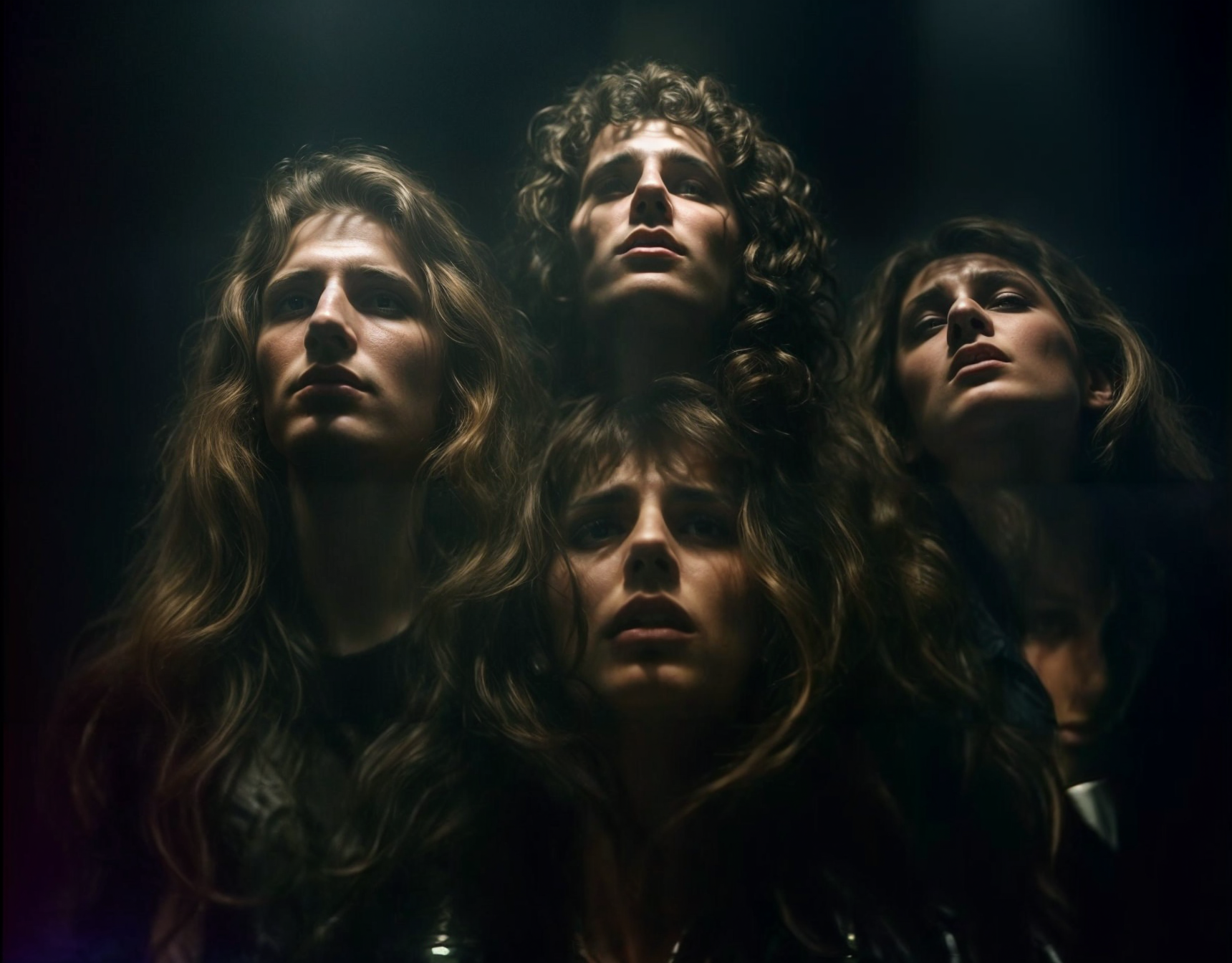
*Warning: This article delves into existential absurdism and pessimistic philosophy. If you find such areas unbearably unpleasant, please do not read.* **Introduction** When I first listened to Bohemian Rhapsody, I was in my teens, and I hated it. It unsettled me. It didn’t sound like rock at all. It wasn’t like the awesome Highlander soundtrack that had introduced me to Queen in the first place… wasn’t what I expected from the band. https://youtu.be/fJ9rUzIMcZQ Bohemian Rhapsody was weird. Bits of it sounded childish and silly. It had no structure, no rhythm, no story. It was psychedelic and confusing - all over the place. My idea of rock was strong riffs and epic choruses that stuck with you. But this song was annoying, its lyrics depressing. And the music video - those four dead-eyed heads chanting in a cross-like pattern - was creepy. It reminded me of the nightmarish Rocky Horror Picture Show, which my cousin Maria forced me to watch when I was little. As I matured, I came to appreciate Bohemian Rhapsody more and more, especially the lyrics. The more I delved into existential philosophy, the more I came to relate to the words, and later, the musical interpretation. The line “*I sometimes wish I hadn’t been born at all*” resonated eerily with me. And when I heard that Queen never divulged the true meaning behind that enigmatic song, I was intrigued even more. Most people speculate that Bohemian Rhapsody was Freddie Mercury’s way to express his coming out with his homosexuality. But I don’t think that’s it, even though it could have been a part of it. The lyrics are way too deep to describe something so vapid, earthly, and insignificant. Considering what we know about Freddie Mercury, we can begin to interpret the mysterious lyrics of this song. This interpretation is my opinion; take it as such… **Background** Mercury was struggling with identity and self-image issues: growing up in a foreign culture having a vastly different ethnic background… his name change… his bisexuality… his confused androgynous presentation… his drug use (and the highs and lows associated with it)… his sudden radical change of appearance… the crippling insecurity associated with an ambivalently flamboyant demeanour - a clear overcompensation for self-doubt and unresolved trauma. Even the title “bohemian” denotes unconventional non-conformism, a fluidity of convention and conviction. https://sotiris.substack.com/p/the-cycle-of-abuse Consider the probable impostor syndrome usually experienced by people who become suddenly successful, unsure whether to identify as deservingly successful or ineligible for the blessings they deep down can’t live up to. This is **the rockstar’s psychosis**: being treated like a god, and expected to act like one, when you know inside that you are just a human, a very flawed one at that. No wonder rock stars and celebs are so susceptible to drugs and other self-destructive behaviours. I believe the true meaning of Bohemian Rhapsody is the realisation of **existential absurdism** - the comic tragedy of accepting that we are trapped in an absurd reality, without meaning or purpose or logic… without ownership of our own will, denied of the self, punished by reality for daring to dream of meaning or self-definition. https://sotiris.substack.com/p/why-i-reject-free-will This rhapsody is beyond simple shame or guilt or anything related to petty societal pressures. It’s above all that. It’s about looking further than the material, beyond the base human. It takes the greatest question of all - why am I here? - and faces the consequences of accepting that there is no answer to it. And we know this because we are denied even the mercy of knowing there is no answer. The song is tragicomical in nature - some parts sad, others funny, others ridiculous, others defiantly hyper. That’s the **emotional rollercoaster of existential contemplation**: despair, fear, hopelessness, detachment, rage towards God, deluded hope. One moment, the song accepts the true meaninglessness of existence, the cosmic abandonment of the individual, and the denial to possess transcendent meaning to any arbitrarily appointed interpretation of our existence. And the other moment, it desperately tries to cling to hopeless hope, out of despair and fear. https://sotiris.substack.com/p/losing-hope-part-2 Mercury was a drug addict. There is a constant need to medicate this tormenting condition of constant purposelessness and meaninglessness… Without medication, contemplations of suicide surface. And Bohemian Rhapsody is partly an exploration and inner negotiation of self-murder. https://sotiris.substack.com/p/on-suicide Bohemian Rhapsody is an **epic ode to the poet’s strife** to disengage from self-destructive behaviour, while expressing his need to escape what he sees as the prison of existence… It is contradictory that way. It is also a parody, seamlessly moving from drama to comedy to anger to fear. A landslide we find ourselves in, taken by time, conflicted and torn between our conscious need to escape reality and our unconscious instincts of self-preservation. So conflicted, painful, and difficult to verbalise that it’s understandable why the band has always been dismissive and vague about its meaning. **Analysis** Let’s break down the lyrics line by line. **“*****Is this the real life? Is this just fantasy?*****”** A classic existential contemplation, a Descartian and Platonic question about the nature of our existence and perception. “*What is real?*” Morpheus asks Neo. It’s a fundamental question of all philosophy, especially when one feels detached from the world, from its social conventions, from the nature of reality itself. Freddie Mercury was known for his unconventional outlook, his norm-breaking mindset - his way of saying “I don’t fit in, and no one really does because none of us understand what is true.” Even the structure (or lack thereof) of the song breaks all the norms in an attempt to signify that what we think is real and true may not be as objective as we imagine it to be. https://en.wikipedia.org/wiki/Cartesianism https://en.wikipedia.org/wiki/Allegory_of_the_cave **“*****Caught in a landslide, no escape from reality.*****”** This is as clear as it can get: the helplessness of being thrown into an existence we never chose, and deterministically driven without much control or free will over our direction in life… It’s the realisation that we are trapped in our minds and bodies, and in our nature, unable to escape the slow descent into the nothingness and meaninglessness of death… not even escape our instinct of self-preservation that keeps us alive to suffer the fear of meaningless death. Our fear of death keeps us here tormented, torn between an instinctive desire to live but also yearning to die, to be free of perceiving the meaninglessness of our existence, unburdened by the knowledge that even who we are isn’t real… ***“Open your eyes, look up to the skies and see.”*** It’s blatantly obvious that there is nothing in the sky, no God as you imagine it, no loving God that grants your life undeserved meaning. Whatever created us does not value us; this is evident because it has obviously forsaken us, abandoned us to make up fairy-tale interpretations of our existence, giving false man-made explanations and futile purposes to our existence. But whatever interpretation man can imagine for why we are here, it cannot transcend this existence. We don’t get to attribute meaning to our existence. **Existential purpose and meaning aren’t ours to devise, let alone give to ourselves**. And since no one in the sky is there to give us the meaning we crave, we can conclude we don’t deserve it. This is what torments Mercury as well as anyone unfortunate enough to delve into existential absurdism. https://sotiris.substack.com/p/what-is-god ***“I’m just a poor boy, I need no sympathy.”*** He shows that he’s bold enough to admit he’s flawed and insignificant, but he still claims his self-regard as he demands not to be pitied. He preempts his critics by saying, “*I know you’ll dismiss me with your condescending pity, but this is not what I’m looking for here*.” ***“Because I’m easy come, easy go, little high, little low.”*** This is the beginning of the premise that life is futile and meaningless: we come from nothing and plunge into nothing. We have some moments of joy and some of misery, but they are fleeting, insignificant, and pointless on a cosmic scale. This is why people shouldn’t pity him: he does have some highs, some joy, and some blessings, which, however, go as easily as they come. This is an ode to the tragicomical nature of existential absurdism. He says, “*Don’t pity me because, despite my melancholy from seeing the true tragedy of existence, I can also appreciate its playfully humorous irony.*” He shows that he still has some dignity, integrity, and accountability. ***“Any way the wind blows…”*** This is one of the most important points of the song. This is pointing out that we are at the mercy of our environment and our nature, our will shaped by it, yet the poet boldly faces this harsh reality regardless. “*Wherever the wind may navigate my ship, I accept that I am at the mercy of randomness - the wind’s whims.*” This is the quintessence of hopeless determinism, being slaves to our nature, at the mercy of existence, surrendering to the fate of meaningless nothingness. This is not to be confused with malicious determinism, the claim that no one is responsible for their actions because we are the product of deterministic influences. Freddie here understands that we are still responsible for our actions because who else would be? He is responsible because he accepts the burden that determinism imposes on him - he accepts it, therefore he is more than willing and brave to accept his responsibility for what he gets and what he does. https://sotiris.substack.com/p/free-will-oxymoron ***“…doesn’t really matter…”*** This is another key point of this song: meaninglessness. ***“To me, to me.”*** This is perhaps some hope that meaninglessness is just his burden, and that there exists transcendent meaning for other people. Repeating and emphasising “*to me*” is a final, desperate attempt to reclaim the self, the one he is about to kill in the following verses. **“*****Mama*****”** is not his own mother nor his fiancée, as many believe. I think he’s talking to life itself - nature, creation, existence, reality. We are given birth by it, shaped by it, and smothered by it like an enmeshing, devouring mother who brings us into this world only to deny us our self-determination, only to sabotage our futile and desperate quest for meaning. Yet we can’t help but love her and turn to her when we go through hard times. **“*****[I] just killed a man, put a gun against his head, pulled my trigger, now he’s dead”*** is Mercury’s rejection of self, his realisation that our will is not our own. He killed whom he thought he was, the identity he had chosen for himself that he later realised was futile and meaningless, as all is. Who we are does not belong to us - we are pawns on a chessboard, NPCs stuck in a simulation. We are deterministic mental architectures, the consequence of nature’s programming and random life experience, which have shaped us into will-less automata with delusions of self-ownership… https://sotiris.substack.com/p/the-case-for-the-simulation-theory ***“Mama, life had just begun.”*** The first life crisis of understanding how short youth is. As soon as you mature and get to define who you are, you arrive at the conclusion that you are nothing, just the product of randomness. Life’s irony is that it is hard enough to establish for yourself some arbitrary meaning, purpose, and identity. As soon as you manage to achieve them (even if they are meaningless on a cosmic scale), you enter a new stage in your life, which means you change your purpose in the world, so you must begin redefining yourself. ***“But now I’ve gone and thrown it all away.”*** Again, here he reaffirms his self-responsibility, even though he feels ensnared by the determinism of the landslide of existence. He has abandoned the delusion of meaning. He has rejected the religion of his parents; he has abandoned the fantasy of self-determination and of a life’s meaning that is not his to give, but rather, it is for the divine to attribute. He understands that it could have been easier to delude himself with fantasy, like most people do, and thus live a more bearable existence. But he chose the harsh truth over comforting lies. And he accepts full responsibility for it. Despite having no escape from reality, he holds himself accountable: *he* killed the man, and *he* threw it all away. He rejected comfortable self-delusion and accepted the truth that nothing matters. This is his constant reimagining of self: Throwing away all the agony and strife put into defining his self, only to throw it away and reset his whole world-view. He wants to believe he has agency and accountability in his change of identity by suggesting that “he” did it, but in the end, we are hopelessly “caught in the landslide” of life, surrendering to its unbendable will, no matter how hard we paddle our arms. ***“Mama, didn’t mean to make you cry.”*** This could be the desperate hope from hopelessness that creation (mama) cares about us, and would actually cry if we were to question our gratitude to it for giving birth to us. Mercury told his “mama,” or reality itself, that he doesn’t feel he owes it anything for his existence. He finds his existence a torment, so he does not appreciate it. If anything (as he’ll admit later), he wishes that he’d never been born at all; life is torture to him, and he’s stuck in life due to his nature-instilled instinctive fear of death. He feels a despair of not controlling anything. This is not an existence he cherishes. **He tells his mother he wishes she’d never given birth to him**. But he still can’t help but care for this reality and would like to think that it (his “mother”) would feel hurt if he disconnected from it, even though he wouldn’t want to hurt her intentionally. And he also struggles with the **guilt** of wanting his mama to care enough for him to be hurt by him. ***“If I’m not back again this time tomorrow.”*** Here, he admits to contemplating literal physical suicide. It’s a desperate cry for attention, for being heard by the divine. It’s emotional blackmail: “*Please, give me what I desperately need, otherwise I’ll kill myself, and you’ll be responsible for it.*” ***“Carry on, carry on…”*** Here, we wish that existence would be hurt if he decided to end his life, and that he would be missed by it. He hopes that his life does have some meaning, and that ending it would somehow negatively affect the divine; enough that he has to tell it that it’s ok, and that it can move on without him. However, he deep down knows that life and reality will carry on without him because he, as an individual, is unimportant. But he can’t help but foster a glimmer of hope that reality would lament him, and that he has to remind his “mama” existence that it’s ok to move on without him. Here, he shows he’s OK with death and meaninglessness, even though he’d also love it if he were important enough to matter to existence. ***“…as if nothing really matters.”*** Self-explanatory. He understands that we are insignificant to existence, and existence will keep carrying on, even though we want so much to matter to it. This is wishful thinking: “*Carry on as if nothing really matters,*” as if we need to say that to this reality. We don’t. But we so desperately need to matter, to delude ourselves that our existence will miss us, that we imagine we have to tell it not to miss us. Deep down, we know it won’t. ***“Too late, my time has come.”*** Here, he imagines that his “mama” existence is begging him not to end his life. So he dramatically says, “*It’s too late, you can’t convince me otherwise.*” He gleefully takes the opportunity to drama-boast and inflict anguish on it as “revenge” for all the pain that existence had dealt him since the beginning. He wants to be missed, he wants to be chased, he wants to be valued. He wants to make existence feel the same despair he is feeling. Also, it’s too late - once you’ve experienced contemplating existential absurdism, you can’t go back to believing that anything matters. ***“Sends shivers down my spine. Body’s aching all the time.”*** With his imagined attention from the divine, he describes his existence of suffering as justification for wanting to kill himself. He has to say it, otherwise he will feel guilty for wanting to die only to be missed. This is not it! He wants to die, not because he wants to hurt his “mama,” but because he is suffering. So no one can accuse him of purposefully hurting whomever will miss him. ***“Goodbye, everybody, I’ve got to go.”*** Here, he has made his decision to end his life and be free. He announces it, officially. ***“Gotta leave you all behind and face the truth.”*** He again announces his decision to end his life, but he keeps stalling. He is waiting for something, some intervention, some realisation, something, anything. “Leave you all behind” is a hope that he will be missed. The truth he must face is that there is no meaning, and that nothing really matters. ***“Mama, Any way the wind blows.”*** A final cry to his “mama” existence, the divine, the Creator, to make sure he got the truth right: Did I get it right? Are we really at the mercy of the wind, of purposeless randomness, condemned to be denied individuality, free will, self-determination, and meaning? ***“I don’t wanna die. I sometimes wish I’d never been born at all.”*** This is the crux of the whole song, the most bone-chillingly unsettling verse. This is where he feels trapped in existence because he admits he is scared to die, even though he had just decided to end his life. He is held back by his instinct of self-preservation. We are enslaved by life - attached to our being, shackled to our instinct of self-preservation and terrifying fear of death while also suffering through life. Killing oneself is no solution - it does not solve having existed. It’s a **Catch 22**: Condemned to live a life of torture while also fearing escape. It is better not to have existed at all. Those fortunate enough not to have been born are the truly free: they never hoped, never feared, never lost, never themselves in life’s joys that are always without meaning or essence… never faced the nightmare of existential questioning, of pursuing identity only to realise that no self-identity really matters. This is the curse of those doomed with deeper understanding, those not blessed with meekness or poverty in spirit. Hoping never to have existed is the consequence of suffering the joy of being alive while finding solace in the anticipation of death, something we are terrified of: not death itself but the disolution of self. We are born and are attached to the self, to identity, to purpose and meaning. It’s “too late” because we’ve already experienced life and have thus become addicted to the desperate needs associated with is. **We’ve had the first dose of the hopelessly addictive drug of life, and we are now hopelessly condemned to love and hate it, need it and fear it at the same time**. Thus, wishing never to have known life, never to have been plunged in the Catch 22 of life and death, becomes the ultimate desire. The operatic part of the song is the appreciation of the tragic comedy of absurd existence, the laughing man’s reaction to the futility of it all. It’s silly and playful to signify that life shouldn’t be taken seriously. It’s a black comedy to distract from the pain, to satirise and ridicule the meaninglessness of existence… ***“I see a little silhouetto of a man. Scaramouche, Scaramouche, will you do the Fandango?”*** This ridiculous image serves as a tragicomical deflection from the pain of existentialism. It’s the laughter of the doomed man who realises he is doomed beyond hope but laughs at the irony of it all, satirising the tragedy of life, throwing jabs at it, mocking it in defiance. He looks back at whom he thought he was and he sees a caricature, a silly boy making a fool of himself without realising it. He believes that his old self, with delusions of identity and purpose, was worthy of being shamed. This signifies Mercury’s shame-based personality. https://sotiris.substack.com/p/the-shaming-fallacy-part-2 ***“Thunderbolt and lightning very, very frightening me.”*** This makes fun of his own fear of being shamed. The fear of shame is one of the most powerful human emotions, having driven people to brutal suicide. Having been born to Eastern parents, Mercury was shame-abused, which had **twisted his healthy modesty into toxic shame**. This is why he was so provocative: an overreaction to and overcompensation for a lifetime of shaming for who he was. https://sotiris.substack.com/p/the-shaming-fallacy-part-2 ***“Galileo.”*** The chorus calls him “Galileo.” Galileo was shamed for challenging mainstream conventions, for trying to open people’s eyes to reality, yet the people didn’t want to face the truth because it challenged their conveniently cherished, made-up beliefs. This is a reference to the fact that the truth of meaninglessness is so obvious yet so many people denied it; just like Galileo was trying to make people aware of obvious realities about the nature of the cosmos, yet so many denied it and ostracised him for it. Maybe this is why Freddie Mercury encoded his message in this song and was never clear about its meaning in his interviews. He didn’t want to be dismissed as a melancholic, a crazy person who tells harsh truths to people unready to hear them. He didn’t want to be pitied either for his own melancholy or for accepting the meaninglessness of reality. ***“Figaro.”*** The chorus also calls him “Figaro.” Figaro is a comical operatic character who also suffered from existentialism and identity crises, since he was shamed for being an illegitimate child. ***“Magnifico.”*** Here he responds to his shamers - the chorus - by saying: “*I might be shame-worthy like Galileo and Figaro, but I am still magnificent*.” This is the end stage of the shame-based personality, the flamboyant, provocative defiance of his shamers. Why “magnifico?” Because it’s Italian, like Galileo and Figaro, and it rhymes too. ***“I’m just a poor boy, nobody loves me.”*** Here, he’s being sarcastic. He is showing that he knows what they think of him to preempt them from saying it. “*Yea yea yea, I know you think I’m a pitiful child who feels unloved. I’ve heard it all before. I don’t care*.” ***“He’s just a poor boy from a poor family. Spare him his life from this monstrosity.”*** The chorus, being society that judges and shames him, keeps misunderstanding him. It refuses to give him the benefit of the doubt, or credit, or to listen to his words. It’s the condescending pity by people who delude themselves with fairytales of pretentious deluded optimism. They patronise him with their self-righteous pity, as if they can feel sorry for him, and pretend to care enough to want to save him from his affliction. They don’t get Freddie’s sarcasm when he makes fun of himself for being a poor boy. He is sarcastic to them for pitying him, but they don’t get it. https://sotiris.substack.com/p/muh-optimism ***“Easy come, easy go, will you let me go?”*** Asks for the courage to kill himself, or perhaps a miracle to reverse time and prevent his birth. ***“Bismillah! No, we will not let you go.”*** Bismallah, an Islamic incantation meaning “In the name of God.” Given that his family was persecuted by political Islamists, Islam represents oppression by an aggressive collective set on condemning anyone who does not conform to their arbitrary ideals. Society forbids Mercury’s detachment from society. They will not let him try to find answers. They will not allow him to seek individuality separate from collective identity. They will not even let him kill himself. https://sotiris.substack.com/p/islamic-feminism-and-muslim-matriarchy ***“Let him go!”*** in the fashion of Hellenic tragedy, the chorus is not essentially part of the story but somehow tries to convey the compassionate sentiments of the audience. Here, it’s an operatic dialogue, a toothless voice taking Mercury’s side and pushing back against the villain of the story, the shamers. ***“Let me go!”*** The hero of the story takes over from the chorus, having been encouraged and revitalised by them. He found to courage now to speak for himself against the aggressing shamers. Mercury’s audience was his energy. By speaking up for himself, he asserts himself, having less need to be defended by the chorus, and building up to the next more intense part where he pushes back. ***“Will not let you go. Let me go! Never let you go.”*** Prolonging this back and forth signifies the unending loop of futile negotiating that occurs in the mind of the existentially afflicted. ***“Never, never, never, never let me go…”*** Here, he expresses his doubts that perhaps he doesn’t want to escape life, and he doesn’t want to be allowed to let go. It’s him basically saying again that he is torn between wanting to die and wanting to live… but he doesn’t know who he is. One moment, he wants to let go, and the next, he wants his abusers, no less, to help keep him here. ***“Oh, mama mia, let me go.”*** Again, his mother is existence, creation, life itself. He turns to her in his final desperation. He realises that nobody is oppressing him other than his own existence, torturing him with fear of both death and life, and also yearning for both death and life. It is not other people - it’s existence. He now asks her instead to free him. ***“Beelzebub has a devil put aside for me, for me, for me.”*** He expects to be punished for his audacity to demand freedom from existence. He believes he deserves punishment. This hard rock part is rage towards the divine. He enters the stage of feeling anger for reality itself. ***“So you think you can stone me and spit in my eye? So you think you can love me and leave me to die?”*** Here, he flips from being pessimistic and welcoming of punishment to being defiant in theodicy. “Stoning” is judgment, “spitting in the eye” is the disrespect of cosmic abandonment. He cries that it’s unfair to abandon us and also judge us. It’s cruel for the divine to presume to love us but also to forsake us. He protests the fact that life is suffering, and the inconsistency of the manmade image of divinity: supposedly being loved but then abandoned, forgotten, and left to fade away into nothingness and meaninglessness. But then again, as he’ll realise at the end of the song, these are attributes of the divine that we have devised. Divinity itself has not made such a claim. ***“Oh, baby, can’t do this to me, baby.”*** He mocks all existence with the condescending belittlement “baby.” He signifies its cruelty: “*you can’t do this to me!*” ***“Just gotta get out, just gotta get right outta here.”*** Reaffirms his desire to escape reality in this final bout of rage. The rageful part of the song is followed by the epilogue, which carries the melancholic tone of the beginning. This closes the circle of this emotional rollercoaster, the torment of existentialism, the end of the adventure. It began with hopelessness, then desperately attempted to find logic in the absurdity of reality, negotiated with the self, with society, and with the divine, only to then return empty-handed back where he started, to the initial realisation: there is no meaning. This song was a futile attempt to try to seduce the divine, to express this agony in such a beautifully artistic (bohemian) way that perhaps would merit some compassion (not pity) from whatever made this reality. But it didn’t work, so it must end the way it began: with embracing despair, accepting meaninglessness. ***“Nothing really matters. Anyone can see.”*** He reaffirms his conviction that nothing really matters, and it is now even more obvious to him, after having gone through this adventure. And this is what Bohemian Rhapsody is: an epic story, a tragicomical adventure in which the hero does not win. ***“Nothing really matters…”*** Repeating it to embed it, to convince himself… that nothing has value. This way, it’s easier to cope with the Catch-22 of life. The more you love life, the more you are terrified of losing it… the cherishing of one’s existence while also wishing never to have existed. He tells himself that nothing matters to spare himself of this conundrum… of fearing death, of feeling guilty for not missing those who died as much as you thought you would… of feeling guilty for wanting others to miss you when it’s your turn to go… ***“Nothing really matters.”*** A final affirmation. He needs to repeat it again and again to escape the temptation of false hope. A push to be detached from life, to make the idea of death and meaninglessness easier to accept. ***“…to me.”*** This again is the hope that perhaps there is meaning for others, just not for him. And if this is true, again, he falls for the temptation of hope that perhaps meaning is possible. “***To me.*****”** A second “to me” is a last desperate grasp at the identity, the individualism he just shot and killed with this song. It’s also a realisation that whatever meaning we ascribe to our existence, it is not for us to give because we were not behind the creation of this existence, and we do not control it. Any arbitrary meaning we give to our existence is not transcendent, and therefore “doesn’t really matter.” A last desperate and futile reassertion of self after accepting that we can’t own who we are… we are just **marionettes on the puppet strings of determinism**. The poet says “*nothing matters, I don’t matter, but I matter* ***to me****. I know I’m insignificant, but I am significant to me even though I know that means nothing.*” This contemplation reminds me of Linking Park’s “One More Light” - “*Who cares if one more light goes out, well I do…*” and maybe with a flicker of hope that I might just matter to existence… somehow… https://youtu.be/L-6PCSZij3I ***“Any way the wind blows…”*** A final admission of surrender to this harsh reality, a confession of powerlessness, facing it head-on with arms wide open. And this is what it all boils down to: having no power over who we are, let alone anything else around us… and still accepting it boldly. Because we’re at the mercy of life and determinism, nothing we do matters. But the true tragedy of this is that even though nothing matters, we’re still accountable for mistakes, as we suffer them regardless. This is what it means to accept any way the wind blows: **determinism with self-accountability**. Why? Perhaps because self-accountability is the only measure of purpose, free will, meaning, and identity we can have. **Summary of Bohemian Rhapsody** Bohemian Rhapsody is a tragic comedy to cope with the despair and hopelessness of existentialism… torn between love of divinity and theodicy… total detachment from life while holding on to life… accepting meaninglessness while being unable to stop seeking meaning… denying the self but also trying to keep the self alive, against all odds… The essence of Bohemian Rhapsody is existential absurdism presented in the style of a dramatic comedy, with elements from opera and Hellenic epic tragedy. It’s the despair of facing reality... that there is no transcendent meaning to anything we do and nothing we are because death comes for us all, and we’ve been abandoned by creation. Creation, our “mama” doesn’t even grant us the mercy of telling us there is no meaning, so we have to endlessly toil trying to find it, which is the entirety of this rhapsody. It’s the realisation that, even in the fleeting moment of life, we don’t even know if we truly ever existed as sovereign entities with ownership of will. It’s the hurt of consciously living a life that is without meaning, knowing that whatever meaning we attribute to it is not for us to give. It’s the desire to die, because for the existential absurdist, it’s better not to live than to live a life without meaning. This means that suicide is not enough, because you have already lived a meaningless existence that is forever etched in infinity. The ideal would be never to have existed. And since this is impossible, our limited existence becomes an eternal hell. **Conclusion** The reason Freddie Mercury was so enigmatic about the meaning of this song was perhaps that he didn’t know how to verbalize it outside of musical expression. Or perhaps he didn’t want to delve into it because it was too depressing of a subject to discuss. It was his identity crisis that was half-conscious and difficult to describe. Regardless, there’s underlying hope and optimism in Bohemian Rhapsody. Despite the darkness and pessimism, it still sees value in this cruel world, signifying our noble intent to seek meaning, and making art to please people because the author believes they deserve it. And their feelings matter… to him, to him. Either that or Freddie was just trolling us with incomprehensible nonsense. Thank you for reading. I appreciate your time. All my work here is free. Like, comment, share, or subscribe for free… or not. It’s all the same. **Free will oxymoron** https://sotiris.substack.com/p/free-will-oxymoron **Sotiris Rex** https://substack.com/profile/58797461-sotiris-rex · **May 13, 2024** If causation dictates all, then free will cannot exist. Your neurons are wired a certain way; your synapses follow neural pathways that form your mental architecture, a predictable result of genetics and random life experiences within circumstantial environments. Everything you perceive, analyse and conclude must go through your mental processes. Your w… **Read full story** https://sotiris.substack.com/p/free-will-oxymoron **Losing hope [Part 2]** https://sotiris.substack.com/p/losing-hope-part-2 **Sotiris Rex** https://substack.com/profile/58797461-sotiris-rex · **December 17, 2024** “If fighting will not result in victory, then you must not fight.” **Read full story** https://sotiris.substack.com/p/losing-hope-part-2 **What is the meaning of existence?** https://sotiris.substack.com/p/what-is-the-meaning-of-existence **Sotiris Rex** https://substack.com/profile/58797461-sotiris-rex · **December 31, 2024** The most important question is why we exist; what is our purpose, and how do we derive true meaning from an existence forced upon us without even the courtesy of an explanation? **Read full story** https://sotiris.substack.com/p/what-is-the-meaning-of-existence **What is God?** https://sotiris.substack.com/p/what-is-god **Sotiris Rex** https://substack.com/profile/58797461-sotiris-rex · **Jan 4** Tolkien writes: “All we have to decide is what to do with the time that is given us.” At first, this may be perceived as a testament to free will. But how free are we to will the processes by which we will? How free are we when all the freedom we have is to freely move about in our tiny prison cell; a cell without windows, without even a hint of possibi… **Read full story** https://sotiris.substack.com/p/what-is-god **Why civilisations collapse** https://sotiris.substack.com/p/why-civilisations-collapse **Sotiris Rex** https://substack.com/profile/58797461-sotiris-rex · **Jan 10** WARNING: Do not read if you find pessimistic philosophy unsettling. **Read full story** https://sotiris.substack.com/p/why-civilisations-collapse **In defense of brutalism** https://sotiris.substack.com/p/in-defense-of-brutalism **Sotiris Rex** https://substack.com/profile/58797461-sotiris-rex · **Jan 26** The barbaric World Wars - and the subsequent US-regime hegemony based on blood and corruption - brought us the cynicism and hopelessness we express through the deliberate ugliness of brutalist architecture. We didn’t just lose faith in the world; we lost hope in ourselves. **Read full story** https://sotiris.substack.com/p/in-defense-of-brutalism **On suicide** https://sotiris.substack.com/p/on-suicide **Sotiris Rex** https://substack.com/profile/58797461-sotiris-rex · **Mar 7** Ever since Linkin Park frontman Chester Bennington ended his life in 2017, I couldn’t shake the public display of vitriol spewed against him by certain individuals, including his own friend, Korn guitarist Brian “Head” Welch. **Read full story** https://sotiris.substack.com/p/on-suicide **The shaming fallacy [Part 2]** https://sotiris.substack.com/p/the-shaming-fallacy-part-2 **Sotiris Rex** https://substack.com/profile/58797461-sotiris-rex · **Mar 24** Sanctimonious moralists and smug pontificators take to the internet to promote shaming as a “last stand for morality,” or - more accurately - a desperate attempt to push their brand of desired behaviour as if theirs were the one and only. **Read full story** https://sotiris.substack.com/p/the-shaming-fallacy-part-2
No comments yet