 @teochewoliver
more from that month
@teochewoliver
more from that month
A Chronological Introduction to Buddhist Scripture Some religions have a very short reading list. And I mean that in a good way. Islam for example pretty much has only one holy book, the *****Qu’ran***** on top of which everything else is built. Then there’s Judaism for example, where you have the *****Tanakh***** (Jewish Bible) and the *****Talmud***** or Christianity where you have the Bible, made up of the Old Testament and the New Testament. After that comes Hinduism which has many more well known Holy Books, like the *****Four Vedas*****(the *****Rigveda********,*** *****Yajurveda********,*** *****Samaveda********,*** *****Atharvaveda*****), the *****Ramayana***** and the ***Mahabharata***. Do you notice a trend here? https://en.wikipedia.org/wiki/Quran https://en.wikipedia.org/wiki/Hebrew_Bible https://en.wikipedia.org/wiki/Talmud#History https://en.wikipedia.org/wiki/Vedas https://en.wikipedia.org/wiki/Rigveda https://en.wikipedia.org/wiki/Yajurveda https://en.wikipedia.org/wiki/Samaveda https://en.wikipedia.org/wiki/Atharvaveda https://en.wikipedia.org/wiki/Ramayana Sure, until the canon is considered closed people tend to wanna add some sugar on top of the original teachings, and polish their favorite passages. This is especially evident when comparing ancient religions with more recent religions. That’s bound to happen to every religion sooner or later, you get what I mean. There’s one religion however, that’s usually left out when talking about the Holy Books of the world religions (of which Buddhism is one, no doubt about that). In fact, if you’ve ever read about Buddhism or tried to find out where to start reading Buddhist scriptures, you must’ve had a hard time. Because, depending on what sect, or stream of Buddhism you start with, you will get widely different search results. If you look for *****Mahayana***** scriptures, you might find things like the *****Heart Sutra*****, the *****Diamond Sutra***** or the *****Lotus Sutra*****. Whereas when you’ve looked for the scriptures of *****Zen Buddhism***** (the original Chinese school is called ***Chan Buddhism***) you might have found some *****Koans***** or no scriptures at all since Zen Buddhism focuses less on scripture and more on transcending to the state or place of enlightenment, by any means necessary. https://en.wikipedia.org/wiki/Mahayana https://en.wikipedia.org/wiki/Heart_Sutra https://en.wikipedia.org/wiki/Diamond_Sutra https://en.wikipedia.org/wiki/Lotus_Sutra https://en.wikipedia.org/wiki/Zen https://en.wikipedia.org/wiki/Chan_Buddhism https://en.wikipedia.org/wiki/Koan Confused? You’re not alone Actually, this is something I’ve experienced myself. I was born and raised as a Buddhist and as such, I’ve taken part in as much as six holiday ordination programmes in *****Theravada***** monasteries, yet I was never forced to study a specific book or text. Instead, all the teachings were transmitted by voice and we wrote down in our journals whatever we could take away from the teachings. https://en.wikipedia.org/wiki/Theravada There’s a very simple reason for this wide range of Buddhist scriptures: There is a dichotomy between modern Buddhist practices and scriptures and the original teachings. Now, I’m not saying that those streams which stray further from the original teachings aren’t valid. The same dichotomy exists between Jesus his original spoken teachings, which would have been in Aramaic and the modern International version of the New Testament available in almost every language of the world. Small changes become more extreme over time, that is normal. But to think that there is one monolithic work is slightly wrong. There probably was something like that, but the original version doesn’t exist anymore. Over the last 2000 years, Buddhists have reinterpreted the original teachings and added new teachings on top of them. Thus, to understand the Buddhist scriptures and their transformation as well as current Buddhist practices and beliefs, one has to learn a little bit about the history of Buddhism itself. And to make this journey as easy as possible on you, I’m going to take you through it chronologically. I think this is sufficient as an introduction. So without further ado, let’s get right into it: Buddha’s Original Teachings (5th-6th century BCE)

During (the historical) Buddha’s lifetime he conveyed his teachings through spoken word in either *****Pali***** or *****Magadhi***** (it’s still a matter of debate which one he actually used) while traveling through modern-day northern India. It is unlikely that his teachings were written down during his lifetime, at least none have survived the Indian climate and been discovered yet. The common tradition at that time and (the centuries following) was for the teachings to be passed down from senior monks to junior monks and committed to memory through daily recitation. Though its usefulness is now negligible, this tradition does still survive to this day. Have you ever been to a Buddhist temple during a festival and wondered what the entire assembly was chanting (usually from memory)? Most likely, it was a passage from a Buddhist holy text! https://en.wikipedia.org/wiki/Pali https://en.wikipedia.org/wiki/Magahi_language The Buddhist Canon (4th century BC)
In the first century after Buddha’s *****Parinirvana***** (≈death of the body of someone who has reached Nirvana) the Buddhist community, his students and disciples commonly referred to as *****Sangha*****, remained united. During the *****First Buddhist council***** soon after Buddha’s Parinirvana, Buddha’s teachings and other relevant knowledge was compiled into 3 categories or baskets (in Pali: *Pitaka*), for they were most likely kept in 3 different baskets. These are the: https://en.wikipedia.org/wiki/Nirvana https://en.wikipedia.org/wiki/Sangha https://en.wikipedia.org/wiki/First_Buddhist_council *****Vinaya Pitaka***** (on rules and the discipline of **Sangha**(≈the monks) ) https://en.wikipedia.org/wiki/Vinaya *****Sutta Pitaka***** (also known as Sutra Pitaka, mostly discourses and sermons of the Buddha) https://en.wikipedia.org/wiki/Sutra#Buddhism *****Abhidharma Pitaka***** (treatises on Buddhist doctrine, which are vary from school to school) https://en.wikipedia.org/wiki/Abhidharma Around 30 books compiled into these 3 categories made up the original ***Buddhist Canon***, the truest representation of Buddha’s original teachings, recognized by all Buddhist sects to be canonical. It is also generally referred to as the *****Tripitaka***** (**Tipitaka** in Pali) or three baskets in English. The exact contents of the Buddhist canon have probably been forever lost to the sands of time. Partly, because for about 400 years, this early Buddhist Canon was mostly passed down by oral tradition. But there’s another reason: A schism in the Buddhist community https://en.wikipedia.org/wiki/Tripi%E1%B9%ADaka The Second Buddhist Council (~383 BC)
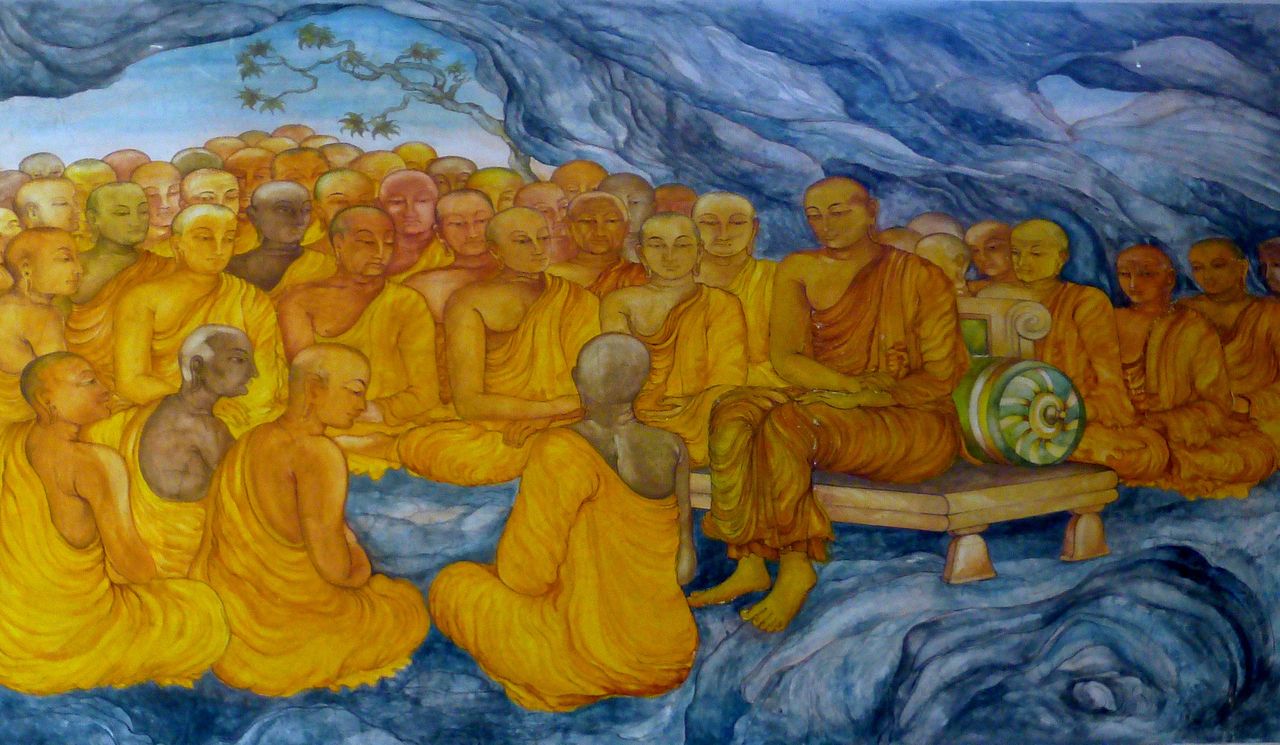
During the *****Second Buddhist Council***** in the North Indian town of Vesali, about 70 years after Buddha’s ***Parinirvana*** there was a big point of contention within the Buddhist community. It was the proper conduct and discipline of the ***Sangha*** (the monks) as well as the ***Vinaya***, the regulatory framework for the Sangha. It was for this reason, that the reformist ***Sthavira*** group split from the conservative majority ***Mahasamghikas***. https://en.wikipedia.org/wiki/Second_Buddhist_council The ***Sthavira*** group would later be divided into other groups including the ***Sarvastivada*** (which influenced Chinese and Tibetan Buddhism) as well as the ***Vibhajyavada*** which would give rise to a great number of schools, like the ***Tamraparniya*** school, which we now call ***Theravada*** The ***Mahasamghikas*** later went on the accept the existence of the ***Mahayana*** school Some scholars believe, that the ***Mahayana*** tradition developed as a lay movement outside of ***Mahasamghikas***. Some scholars believe, that the ***Mahayana*** tradition developed out of the ***Mahasamghikas*** and might have influenced each other later on but this is a matter of debate. The Pali Canon (3rd century BCE — 1st century CE)
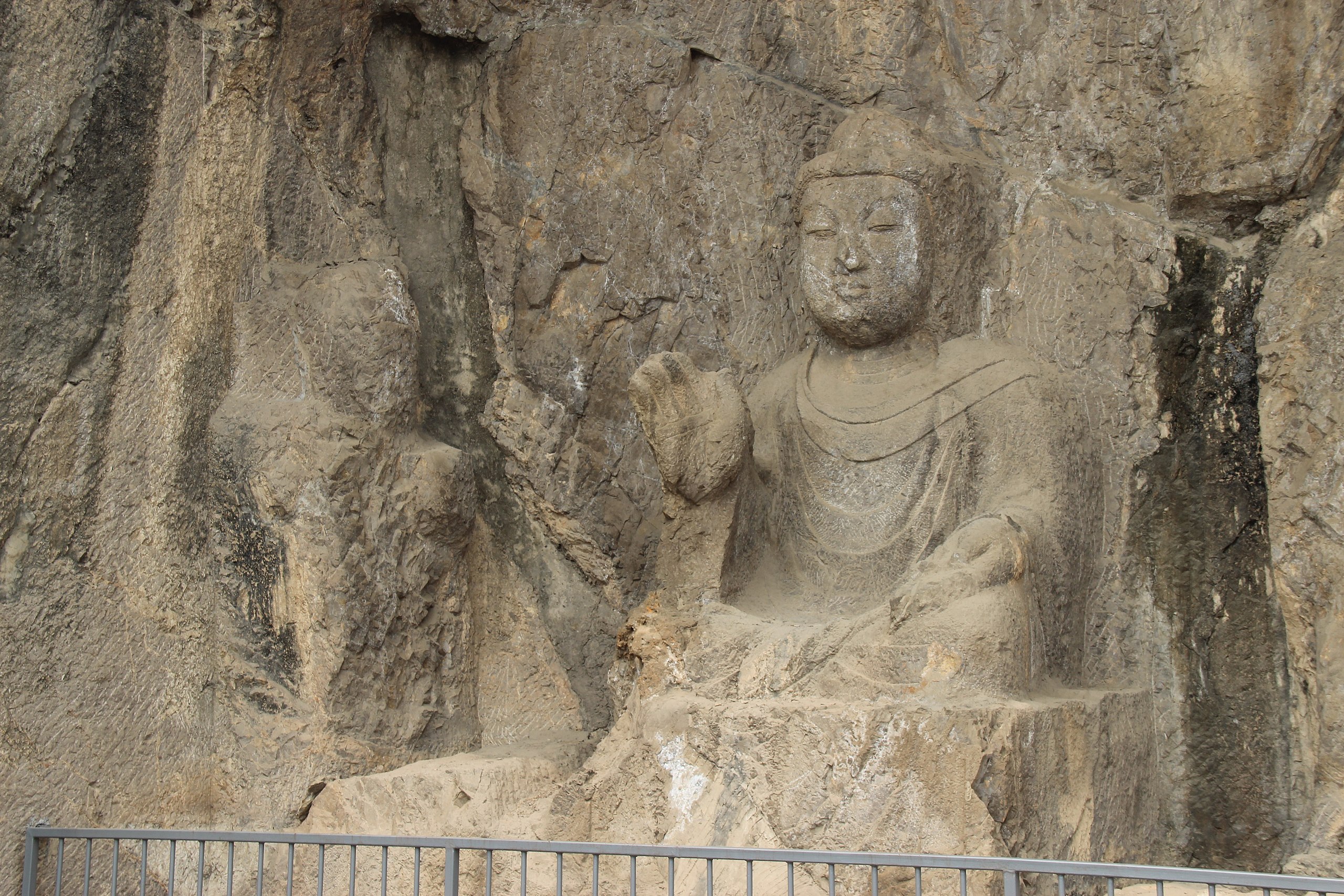
By the 1st century BCE, Buddhism had splintered into as much as 18 different schools, which all had their own rendition or version of the **Buddhist Canon** or **Tripitaka**. It contained the Theravada *****Vinaya Pitaka*****, *****Sutta Pitaka***** and *****Abhidarma Pitaka*****. However, it is believed that at this point in time the core (especially the **Sutta** part) was largely similar. It was around this time, that the schools started to write down the **Buddhist Canon** (it would be more correct to say ‘their Canon’). It generally consisted of around 30 books, though later Buddhist traditions, especially **Mahayana** have added more texts to their Tripitaka as well as a plethora of uncanonical text. The oldest and most complete fully extant Canon, the *****Pali Canon of the Theravada***** tradition was first compiled in the 3rd century BCE and first written down during the **Fourth (Theravada) Buddhist Council** in 29 BCE. https://en.wikipedia.org/wiki/Vinaya_Pi%E1%B9%ADaka https://en.wikipedia.org/wiki/Sutta_Pi%E1%B9%ADaka https://en.wikipedia.org/wiki/Abhidhamma_Pi%E1%B9%ADaka https://en.wikipedia.org/wiki/P%C4%81li_Canon The oldest found **Sri Lankan** exemplar was dated back to the 5th or 6th century CE. It was written in Pali, the language of the **Sthavira vibhajyavada**, which even today is still studied as a sacral language by Theravada Buddhists. It is important to note that the **Pali Canon** is not the oldest piece of Buddhist scripture ever found. In fact, there even are parts of the Pali Canon that were translated into different languages and are older than the Sri Lankan (for example a Chinese translated part dating back to the 4th century CE). The honor of oldest found text goes to the ***Gandharan Buddhist texts*** found in modern day Pakistan, which date back to the 1st century CE. The **Gandharan texts** possibly belonged to the **Dharmaguptaka** school. Cross-comparisons with the Pali Canon revealed that the core of the texts could be found in the Pali Canon too. The Chinese Canon (5th century CE)
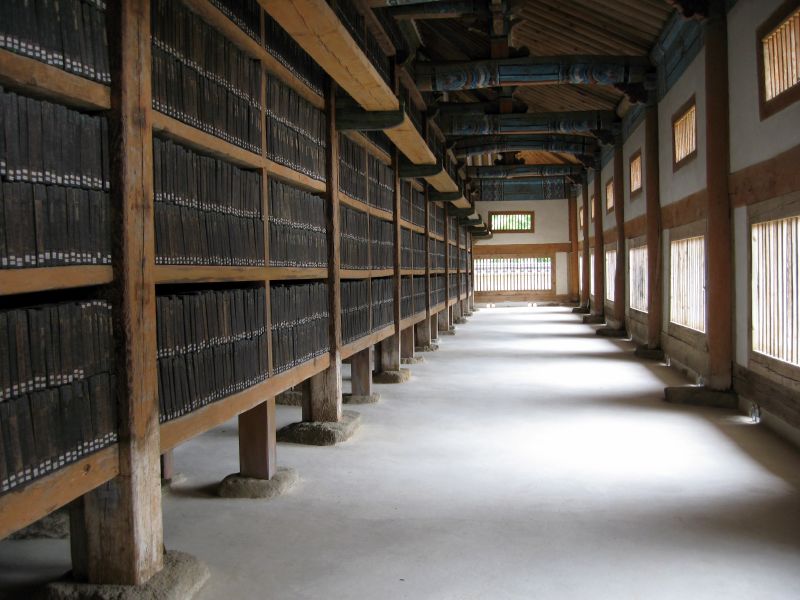
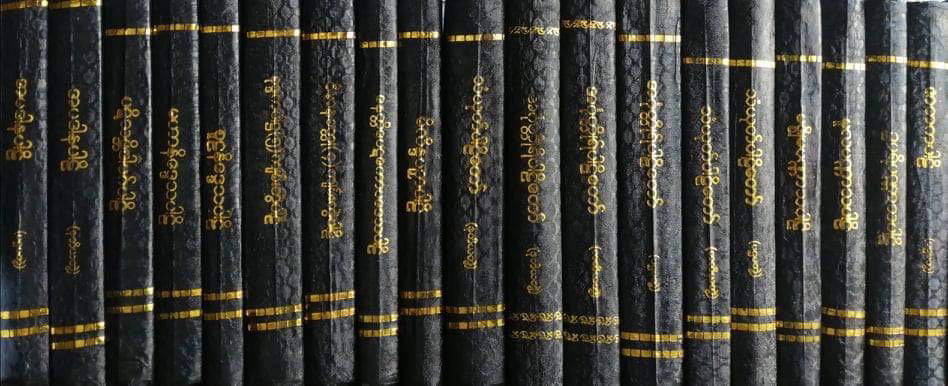
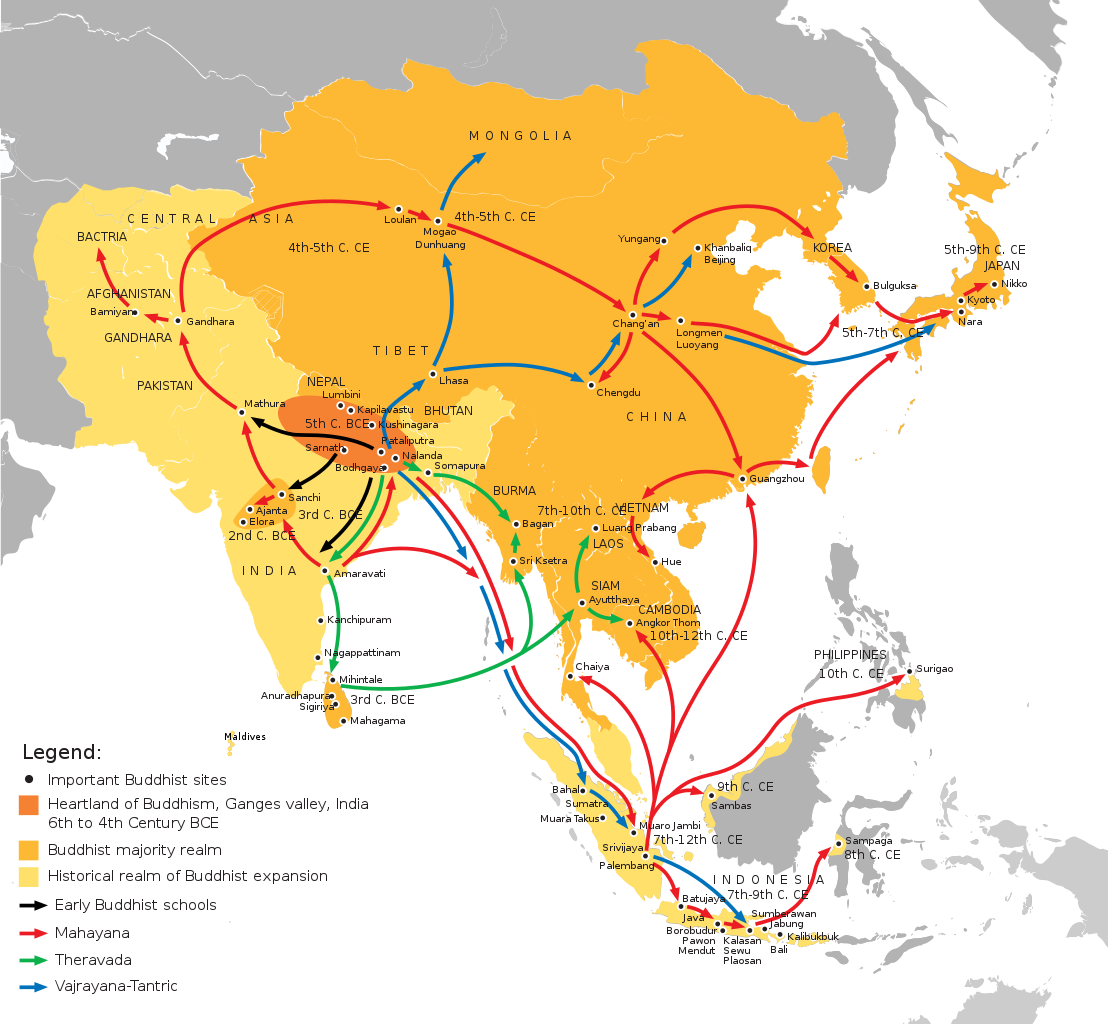
If the Pali Canon is the “*Canon of the Theravada Buddhists*”, then the **Chinese Buddhist Canon** is the “*Canon of the Mahayana Buddhists*”. The **Chinese Buddhist Canon** just like the Pali Canon, has a core made up of: **Suttras** (in Mahayana Buddhism, the collection of Sutras is called **Agama**) **Vinaya** **Abhidharma** (specifically adapted for the Mahayana traditions) However, it also contains additional Mahayana sutras (most famously the **Heart Sutra**, **Diamond Sutra**, and **Lotus Sutra**) as well as esoteric Buddhist scriptures. An early compiled version of the Chinese canon carved in stone and aptly named the **Fangshan Stone Sutras** dates back to the 7th century CE, though individual Sutras and manuscripts were proven to be older. The oldest found copies of the **Heart Sutra** (known in Sanskrit as **Prajnaparamita Hrdaya**) for example date back to the 6th century CE, though it was probably first written down centuries earlier. The Chinese Canon found its way to Vietnam, Korea and from there, eventually Japan too. The **Tripitaka Koreana**, which should more accurately be called the **Korean Buddhist Canon**, as it contains many more scriptures and dictionaries and writings apart from the Tripitaka, was first compiled in carved woodblocks in the 11th century, before being destroyed by the . Today's oldest collection of the Tripitaka Koreana dates back to the 13th century and is still in pristine condition for its age. Though Buddhism first came to China through Tibet, the relationship between the Canon of the **Vajrayana** tradition to the Chinese Canon is not linear, but a bit more complicated and possibly worth being the subject of its own Medium story... Thank you for reading this far :) https://en.wikipedia.org/wiki/Tripitaka_Koreana
Sources: **https://libguides.lib.msu.edu/c.php?g=96903&p=627149** **http://www.findingdulcinea.com/guides/Religion-and-Spirituality/Sacred-Texts.xa_1.html** **http://www.buddhanet.net/e-learning/history/s_canon.htm** **https://www.jagranjosh.com/general-knowledge/buddhist-councils-1404464490-1** **https://en.wikipedia.org/wiki/Second_Buddhist_council** https://en.wikipedia.org/wiki/Mahāsāṃghika https://en.wikipedia.org/wiki/Mah%C4%81s%C4%81%E1%B9%83ghika https://en.wikipedia.org/wiki/Sthavira_nikāya https://en.wikipedia.org/wiki/Sthavira_nik%C4%81ya **https://en.wikipedia.org/wiki/Buddhist_councils** **https://en.wikipedia.org/wiki/Early_Buddhist_Texts** https://en.wikipedia.org/wiki/Pāli_Canon https://en.wikipedia.org/wiki/P%C4%81li_Canon **https://en.wikipedia.org/wiki/Chinese_Buddhist_canon** **https://www.learnreligions.com/the-heart-sutra-450023** **https://en.wikipedia.org/wiki/Lotus_Sutra** https://en.wikipedia.org/wiki/Tripitaka_Koreana Picture #1 https://commons.wikimedia.org/wiki/File:Three_Scenes_from_the_Buddha%27s_Life,_Gandhara,_3rd_century_AD,_schist_-_Ethnological_Museum,_Berlin_-_DSC01648.JPG Picture #2 https://commons.wikimedia.org/wiki/File:Nava_Jetavana_Temple_-_Shravasti_-_013_First_Council_at_Rajagaha_(9241729223).jpg Picture #3 https://commons.wikimedia.org/wiki/File:Ancient_Buddhist_Grottoes_at_Longmen-_Three_Buddhas_on_the_Cliff,_Buddha_on_the_Southern_Side.jpg Picture #4 https://commons.wikimedia.org/wiki/File:Tripi%E1%B9%ADaka_in_Burma.jpg Picture #5 https://commons.wikimedia.org/wiki/File:Korea-Haeinsa-Tripitaka_Koreana-01.jpg Picture #6 https://commons.wikimedia.org/wiki/File:Buddhist_Expansion.svg


No comments yet