 @otto-levin
more from that month
@otto-levin
more from that month
SEC against Binance – the Finale U.S. Securities and Exchange Commission (SEC) dropped its high-stakes lawsuit against Binance, the globe's largest crypto exchange, and its billionaire founder, Changpeng Zhao, on May 29, 2025. This bombshell decision, coupled with the introduction of the bipartisan Digital Asset Market Clarity Act of 2025 (CLARITY Act), signals a seismic shift in how the U.S. regulates the $2.5 trillion crypto market. But beneath the surface of these seemingly progressive moves lies a web of controversy, with whispers of political favoritism and concerns about whether investors are being left vulnerable in a volatile industry. As nearly 100 million Americans dive into digital assets, the stakes couldn't be higher. A Lawsuit Vanishes The SEC's lawsuit against Binance, filed in June 2023, accused the exchange of a litany of violations: operating unregistered securities exchanges, broker-dealers, and clearing agencies; inflating trading volumes; and commingling billions in customer funds. The case was a cornerstone of the SEC's aggressive crackdown on crypto under former Chairman Gary Gensler. Yet, on May 29, 2025, the SEC filed a joint motion with Binance to dismiss the case with prejudice, meaning it cannot be refiled. The agency cited "discretion and policy" as reasons, noting that the decision does not reflect its stance on other crypto litigation. The crypto community erupted in celebration. "This is a landmark moment," Binance declared, praising SEC Chairman Paul Atkins and the Trump administration for recognizing that "innovation can't thrive under regulation by enforcement". An X post from @Airdropalertcom echoed the sentiment: "No settlement. No fine. Just... gone. Crypto just scored a massive win".

Political Shadows The timing of the dismissal raises questions. Just days earlier, Binance began listing USD1, a stablecoin created by World Liberty Financial, a blockchain venture linked to President Donald Trump, who controls about 60% of the firm through an LLC. Critics point to this as evidence of potential political influence. "The SEC's sudden pivot, right after Binance's deal with a Trump-backed venture, smells like favoritism," said Jane Smith, a cryptocurrency analyst. "It's hard to ignore the optics when the industry's lobbying power is so evident." Reports indicate that crypto super PACs backed nearly 300 pro-crypto candidates in recent elections, amplifying the sector's political clout. Changpeng Zhao's own history adds fuel to the fire. Despite pleading guilty to money laundering charges in 2023 and serving four months in prison, Zhao emerged with his financial empire largely intact, retaining majority ownership of Binance. His swift return to influence has critics questioning whether regulatory actions are tough enough. "Zhao's light sentence and Binance's continued dominance suggest the system is more forgiving than it appears," Smith added. A Bipartisan Breakthrough On May 28, 2025, House Financial Services Committee Chairman French Hill (R-AR) unveiled the CLARITY Act, a bipartisan bill co-sponsored by Reps. Tom Emmer (R-MN), Angie Craig (D-MN), and others. The legislation aims to resolve longstanding regulatory ambiguity by clearly defining the roles of the SEC and the Commodity Futures Trading Commission (CFTC) in overseeing digital assets. Its key provisions include: "This bill brings long-overdue clarity to the digital asset ecosystem, prioritizes consumer protection and American innovation," Hill declared. Rep. Ritchie Torres (D-NY) added, "The CLARITY Act will deliver clear rules that entrepreneurs, investors, and consumers deserve". Industry groups like Coin Center have praised the bill, with Executive Director Peter Van Valkenburgh calling it "the smartest approach to provide clarity about how securities law applies to digital assets". The bill builds on the Financial Innovation and Technology for the 21st Century Act (FIT21), which passed the House in 2024 with a 279-136 vote, including 71 Democrats, signaling strong bipartisan support. With the global crypto market valued at $2.5 trillion in 2024 and projected to grow to $6.3 trillion by 2033, and nearly 100 million Americans expected to use crypto by 2025, the need for clear rules is undeniable.
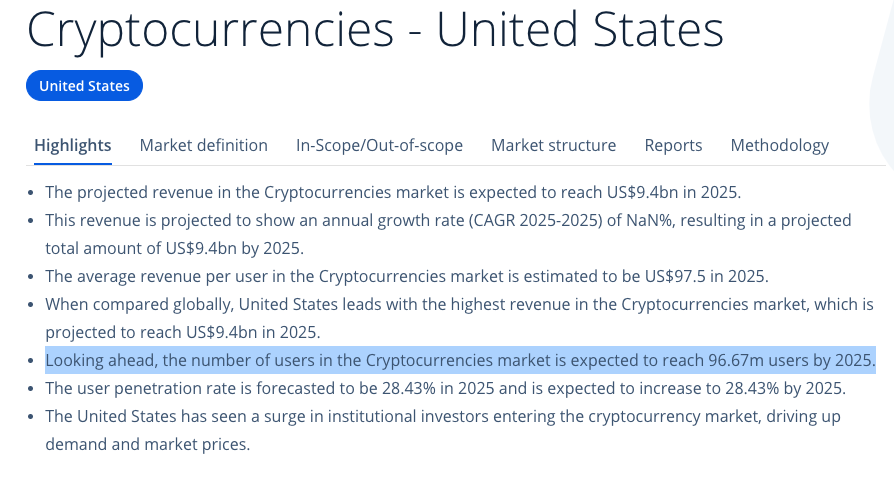
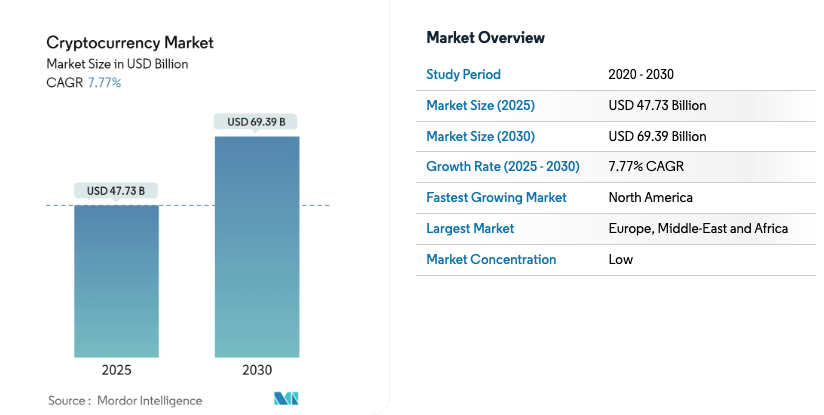
Consumer Protection Gaps? Despite the enthusiasm, not all are convinced the CLARITY Act goes far enough. Consumer protection advocates highlight the crypto market's persistent risks, including scams, volatility, and fraud. A 2024 Pew Research study found that 63% of Americans lack confidence in cryptocurrencies' safety and reliability. "While regulatory clarity is crucial, we must ensure it doesn't come at the expense of investor safety," said John Doe, a consumer protection expert. "The crypto market's history of high-profile failures, like FTX, shows we need robust safeguards, not just industry-friendly rules." The bill's reliance on disclosures and fund segregation may not fully address decentralized finance (DeFi) platforms or non-custodial wallets, where oversight remains murky. A 2022 KPMG report noted that the $130 billion stablecoin market and DeFi's rapid growth amplify risks of financial crimes. Critics argue that the CLARITY Act's framework, while a step forward, may leave gaps that fraudsters could exploit. Political Clout and Regulatory Capture Industry's Growing Influence The crypto industry's political muscle is hard to ignore. In 2024, crypto super PACs poured record sums into congressional races, helping elect nearly 300 pro-crypto candidates. This influence is evident in the SEC's recent actions, including dropping lawsuits against Ripple, Coinbase, and Binance. The appointment of Hester Peirce, a known crypto advocate, to lead the SEC's Crypto Task Force in 2025 further underscores the shift. The Trump administration's pro-crypto stance, exemplified by an executive order to promote digital assets, has fueled speculation of regulatory capture. "The industry's lobbying and political donations are paying off," said Smith. "But at what cost to impartial regulation?" The SEC's dismissal of the Binance case, without fines or settlements, contrasts sharply with Binance's earlier $4.3 billion settlement with the Department of Justice and $2.85 billion with the CFTC, raising questions about consistency. A Double-Edged Sword The convergence of these events paints a complex picture. On one hand, the SEC's retreat and the CLARITY Act promise to unlock innovation in a market with 560 million global users. The bill's bipartisan support and industry endorsements suggest a rare consensus on the need for clear rules. Yet, the specter of political influence and inadequate consumer protections looms large. The crypto market's rapid growth-projected to hit $47.73 billion in revenue by 2025-demands a regulatory framework that balances opportunity with accountability.
The Road Ahead As the U.S. positions itself as a global leader in digital assets, the SEC's actions and the CLARITY Act mark a pivotal moment. For investors, the promise of clarity is tantalizing, but the risks of a loosely regulated market remain. For regulators, the challenge is to foster innovation without compromising the financial system's integrity. And for the public, the question lingers: Is this a new era for crypto, or a dangerous dance with political favoritism? Only time will tell, but one thing is clear: the crypto world is watching, and so should you.
No comments yet