 @lucas
more from that month
@lucas
more from that month
Debunking Common SNAP Myths Beyond the Myths: What You Need to Know About the SNAP Program The Supplemental Nutrition Assistance Program, or SNAP, which most people still refer to as Food Stamps, is one of the most widely discussed yet consistently misunderstood safety-net programs in America. It's a critical, often life-saving, line of defense against hunger for millions of our neighbors, and frankly, understanding how it actually works—who it helps and how little they get—is essential if we want to have informed, empathetic discussions about our government and our economy. Stop listening to the soundbites and pay attention to the facts. We all need to be more educated on this issue.

A Program Built on Economics, Not Just Charity The concept of a federal food assistance program isn't some recent socialist invention; it originated during the Great Depression in 1939. Its first goal wasn't just to feed the poor, but to boost the failing farm economy by creating a steady market for massive food surpluses. The modern program was established permanently in 1964 as a key part of President Lyndon Johnson's War on Poverty. It has always had a powerful dual purpose: to improve the nutrition of low-income individuals and simultaneously support the U.S. agricultural economy. When funds are spent on food, that money instantly travels from the recipient, to the grocery store, to the farmer and the trucker, making it a surprisingly efficient economic engine. Today, benefits are delivered quickly and discreetly via an EBT (Electronic Benefit Transfer) card, which works just like a regular debit card at authorized grocery stores, preserving dignity and simplifying the process.
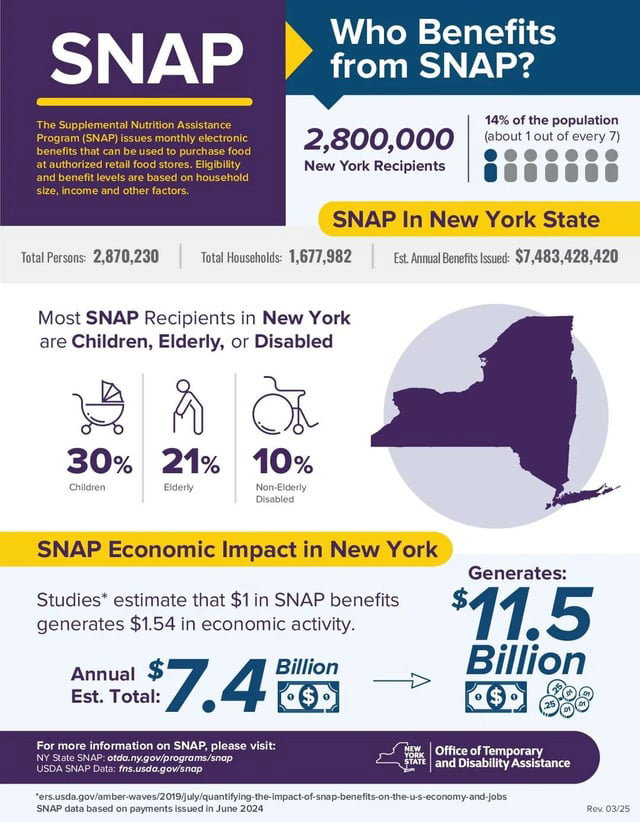
Who Actually Receives SNAP? The stereotypes about SNAP recipients are often completely detached from reality. The person using the EBT card in the checkout line is usually not what the critics portray. The biggest, most harmful myth is that recipients are simply lazy or unwilling to work. The fact is, most SNAP households with an able-bodied person are already working. They rely on SNAP because their wages are so low, or their work hours are so unstable, that they simply cannot reliably feed their children. Beyond the working poor, the vast majority of recipients are people who aren't even expected to work: children, seniors living on fixed incomes, and people with disabilities. Furthermore, the idea that they can buy anything is false: SNAP is strictly limited to basic food items intended to be prepared and eaten at home. It cannot be used for alcohol, tobacco, vitamins, medicine, pet food, or even, in many cases, prepared foods like a deli sandwich or rotisserie chicken. The rules are much stricter than most people realize. The Reality of Eligibility: Is It Really "Easy" to Get? Let's put the idea that SNAP is "easy" to get to rest. The application process is rigorous, often taking weeks and requiring mountains of documentation. Applicants have to pass multiple financial tests. First, a household's gross income (before any deductions) must generally be at or below 130% of the federal poverty line (FPL). For a family of three, that income cutoff is often less than twenty-nine hundred dollars a month. Second, they must pass a Net Income Test, meaning their income after certain deductions (like housing and child care costs) must be below 100% of the FPL. Third, there is an Asset Test: with some state variations, a household can generally have no more than three thousand dollars in accessible cash or bank accounts. Beyond the numbers, most able-bodied adults aged 18–54 without dependents are typically limited to receiving benefits for only three months in a three-year period unless they can prove they are working or in job training for at least 80 hours every month. It's a system designed to verify genuine need, not to be a loophole.
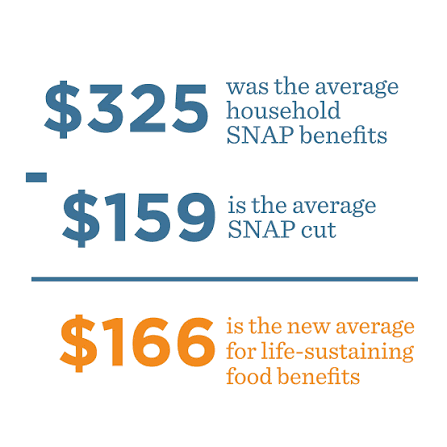
How Much Do People Actually Get? The benefit amount is calculated precisely based on household size and income, and it is not designed to cover a family's entire food budget. The money is meant to supplement what the family is barely able to afford on their own. The national average benefit is typically only around one-hundred ninety dollars per person, per month. Do the math: that works out to just over two dollars per meal. When we see bureaucratic policies, like the one preventing grocery stores from offering discounts to SNAP recipients, it’s not some minor technicality; it's a rule that penalizes a struggling family trying to stretch two dollars and ten cents to cover a necessary meal. This money is going to working families, seniors, and children, and it's barely enough to keep them fed. Act with Empathy and Knowledge The SNAP program is a powerful, efficient economic tool that immediately puts money into our local communities and supports American businesses. Crucially, it is a proven lifeline for those facing the brutal realities of low wages and high living costs. It is our duty as informed citizens to move past the myths and look at the facts. We must demand that our government stops enforcing arbitrary limitations that make it harder for the working poor to eat. Do your research. Extend your empathy. The people relying on SNAP are our neighbors, and their stability is a direct investment in the health and future of our entire community.
No comments yet