 @lucas
edited
more from that month
@lucas
edited
more from that month
Veto Showdown: Congress Fights Tariffs **The Tariffs Trap: An Unrelenting Economic War on American Families** The Trump administration's deployment of widespread global tariffs, justified by invoking a "national emergency," has ignited an unprecedented trade conflict. Far from strengthening the nation, this policy has drawn sharp criticism from economists, crippled key American industries, and forced Congress into an urgent, messy political battle to claw back its constitutional authority. **The Evolution of an Economic Weapon** The current trade war did not begin overnight but expanded dramatically through a key executive action.

**The 'National Emergency' Expansion** The foundational shift occurred with the declaration of a national emergency under the **International Emergency Economic Powers Act (IEEPA)**. This move provided the executive branch with the legal justification to impose sweeping, non-reciprocal tariffs—a tactic previously reserved for extreme foreign threats. This decision effectively bypassed Congress, which constitutionally holds the power to levy taxes and regulate foreign commerce. The tariffs initially began at a 10% rate on most global imports and were swiftly followed by additional, and often higher, duties on specific countries like Canada, Mexico, and China. **A Timeline of Costly Escalation** The trade policy has been characterized by unpredictable escalation, sudden pauses, and abrupt increases in rates. Tariffs, some reaching 35% or 40% on specific goods and countries, have been used not merely as a trade tool, but as a broad lever to enforce foreign policy goals—a use that critics argue is entirely outside their original legal scope. This unpredictability has paralyzed business investment and shattered reliable supply chains, raising the economic risk for every U.S. company. **The Devastating Toll on the American Economy** Despite claims that foreign nations bear the cost, overwhelming economic evidence confirms that these tariffs operate as a **direct tax on American consumers and businesses**, with significant inflationary results.
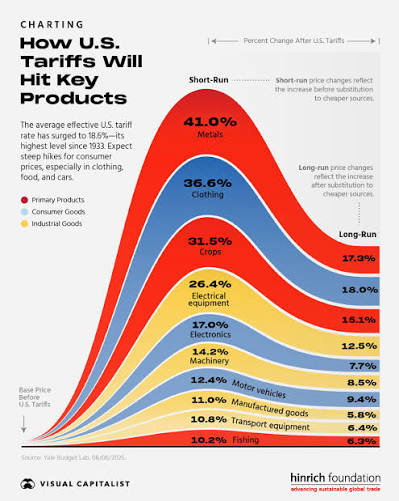
**Crushing Consumer Costs** The imposition of import duties has directly contributed to rising domestic inflation. Every tariff collected at the border is largely absorbed by the importing U.S. company, which then passes that cost on to the American consumer. This effect is felt across the economy, driving up prices on everything from household electronics and apparel to automobiles and essential groceries. Economic projections estimate the tariffs could represent a loss of over a thousand dollars in purchasing power per U.S. household. **The Betrayal of the Farmer** The tariffs have created a catastrophic scenario for the U.S. agricultural sector. When the U.S. imposed its duties, key trade partners, notably China, immediately retaliated by halting or severely restricting purchases of American commodities, such as soybeans. This evaporated the export market, causing commodity prices to plummet. Concurrently, farmers must pay higher prices for crucial supplies—like imported fertilizer, machinery, and equipment—which are themselves subject to the same tariffs. This dual financial squeeze has resulted in surging farm bankruptcies and immense distress in rural communities across the Midwest. **Diplomatic Fracture** The use of tariffs as a punitive measure has profoundly damaged relationships with key allies and strategic partners. Instead of isolating adversaries, the policy has strained alliances with nations like Canada and the European Union, who have been forced to respond with their own retaliatory duties. Furthermore, adversaries like China have demonstrated an ability to mitigate the tariffs' effects by simply rerouting their exports to other global markets, weakening the intended political leverage of the U.S. **Congress Fights Back: A Bipartisan Stand for American Wallets** In a rare display of bipartisan urgency, members of the Senate have mounted a direct legislative challenge to the administration’s trade war, seeking to restore Congress's constitutional role.
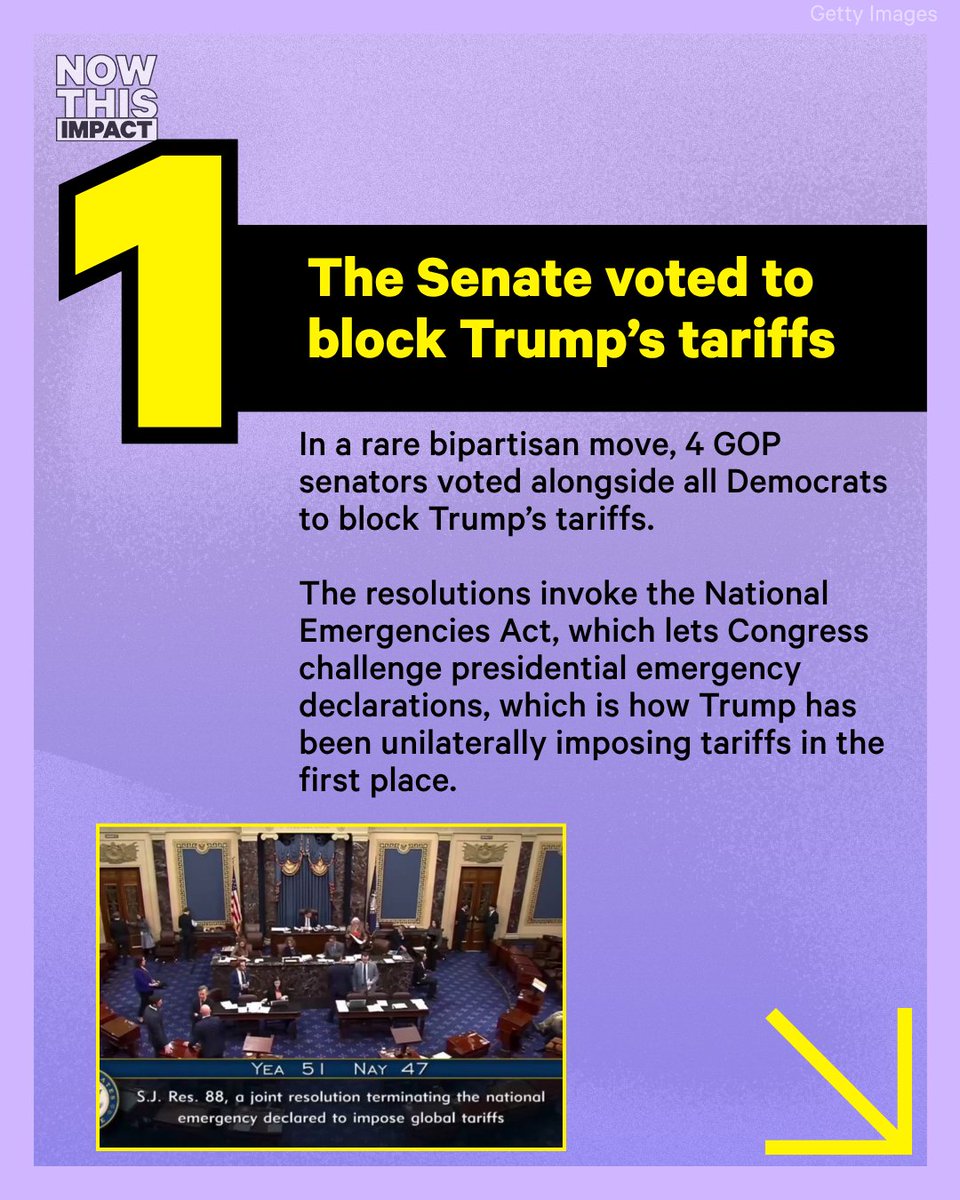
**The S.J. Res. 88 Challenge** The centerpiece of this resistance is **S.J. Res. 88**, a joint resolution introduced by Senators Ron Wyden (Democrat from OR) and Rand Paul (Republican from KY). The measure is designed to legally terminate the national emergency declaration that underpins the global tariffs. The Senate passed this resolution, along with similar measures targeting specific tariffs on Canada and Brazil, marking a significant vote of no confidence in the executive branch’s trade policy. Key Republicans, including Senators Mitch McConnell (R-KY), Susan Collins (R-ME), and Lisa Murkowski (R-AK), joined Democrats to pass these measures, signaling profound discontent over the economic costs. **The House Procedural Blockade** Despite the Senate's efforts, the path to ending the tariffs is almost completely blocked in the House of Representatives. House leadership has implemented a specific internal procedural rule that prevents these Senate-passed resolutions from ever being debated or brought to a floor vote. This maneuver effectively shields members from having to take a public position on the tariffs, ensuring the administration's trade policy remains intact without direct legislative challenge. The House leadership's action has made the fight a procedural war over the separation of powers as much as an economic one over tariffs. **Conclusion and the Road Ahead** The legislative battle over S.J. Res. 88 crystallizes the profound disagreement over the direction of American trade policy and the balance of power between the executive and legislative branches. Despite clear evidence of economic harm to consumers and farmers, the tariff structure remains firmly in place due to calculated political maneuvers.
**The Immediate Future of S.J. Res. 88** S.J. Res. 88 is currently stalled in the U.S. House of Representatives, where its path to a floor vote is blocked by a ruling from House leadership. The resolution faces a daunting, two-part political challenge: 1. **Breaking the Blockade:** Opponents of the tariffs must use every available procedural tool—such as a discharge petition or overwhelming public pressure—to force House leadership to allow a floor vote. This is necessary to simply send the resolution to the President's desk for his anticipated veto. 2. **Achieving Veto Override:** Should the resolution pass the House, the necessary response is a vote to override the Presidential veto. This requires a **two-thirds majority** in both the House and the Senate. Given the current narrow margins, this outcome depends entirely on a substantial number of Republican lawmakers in both chambers choosing to defy the administration's core trade policy. Without the successful, and rare, override of a Presidential veto, the current tariff structure, and the "national emergency" that enables it, will remain in effect, guaranteeing continued economic strain for American families and farmers. The struggle over S.J. Res. 88 is thus a barometer for whether Congress is willing to reclaim its constitutional mandate over trade and tax policy. Take Action Are you an American citizen who would like to urge your representatives to fight these tariffs? Sign this petition and send the letter to your congresspeople! STOP THE TARIFF TAX ON AMERICAN FAMILIES. END THIS TRADE WAR NOW! https://resist.bot/petitions/PQSORB https://resist.bot/petitions/PQSORB **Sources** The following sources were used to detail the progression of the tariffs, their economic impact, and the legislative response (S.J. Res. 88): • **CNBC: Trump trade, China, Warren Democrats, inflation, Xi** https://www.cnbc.com/amp/2025/10/29/trump-trade-china-warren-democrats-inflation-xi.html • **Ohio Capital Journal: Ohio family farmers describe life under Trump tariffs: 'We're in a hell of a mess here'** https://ohiocapitaljournal.com/2025/09/30/ohio-family-farmers-describe-life-under-trump-tariffs-were-in-a-hell-of-a-mess-here/ • **NBC News: House Republicans move to protect Trump tariffs from Democratic challenges** https://www.nbcnews.com/news/amp/rcna199501 • **Official Congressional Records on S.J. Res. 88** (Used to confirm legislative status and voting numbers) https://www.congress.gov/bill/119th-congress/senate-joint-resolution/88 • **Economic analyses and data from non-partisan research bodies regarding tariff costs and inflation** (Used to confirm the $1,500-$2,400 cost and the overall inflationary effect) https://www.google.com/search?q=https://www.taxfoundation.org/trump-tariffs-economic-impact/
No comments yet