 @kork75
more from that month
@kork75
more from that month
From helicopter to scooter
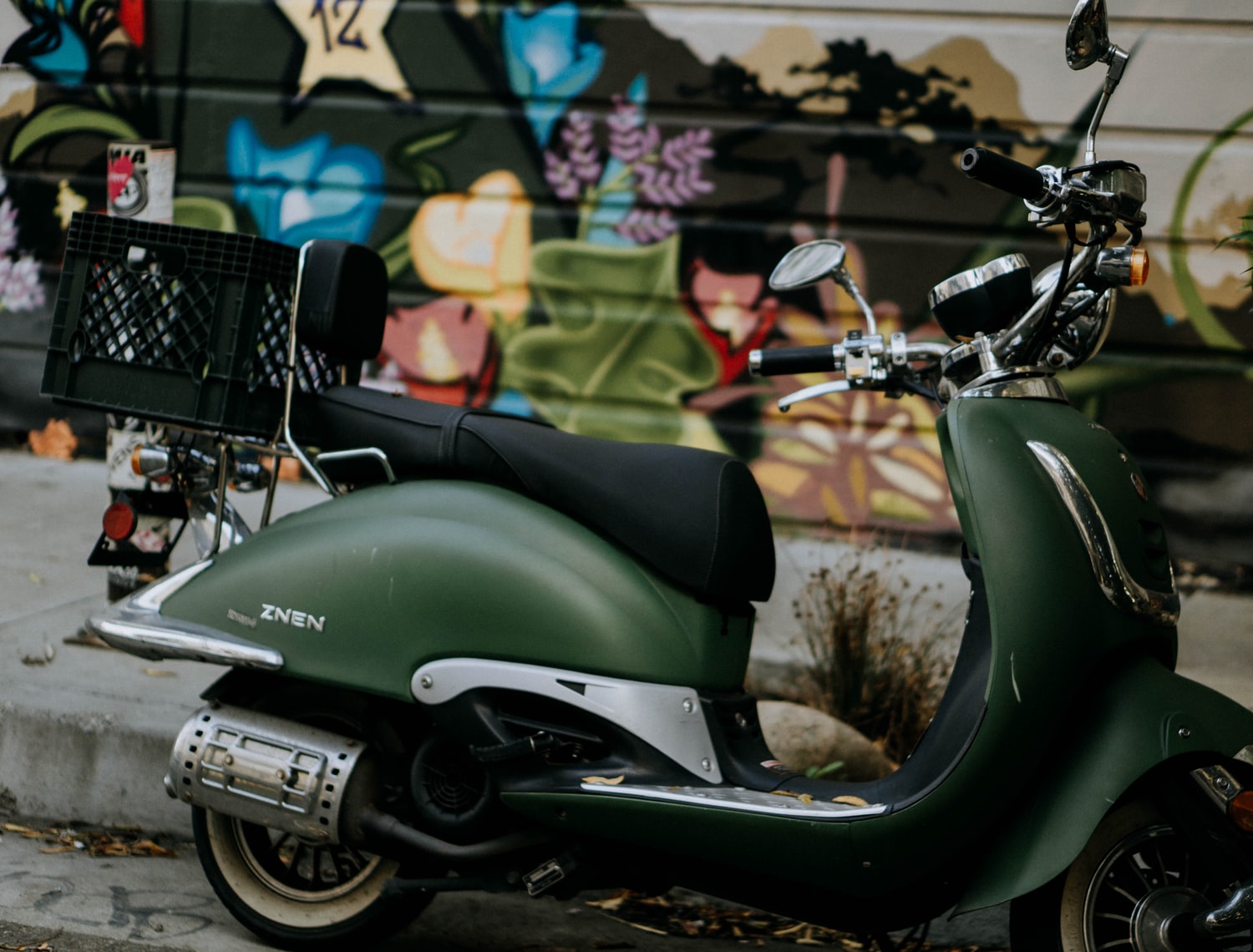
The name of Corradino D'Ascanio (Popoli, 1 February 1891 — Pisa, 5 August 1981) has gone down in history as the man who in the early postwar years designed the “Vespa”, the two-wheeled motorbike of the Italians, which became the symbol of popular motorisation in the world. D'Ascanio was an aeronautical engineer. The “father” of the scooter, in the encyclopaedias of science and technology, is the “father” of the helicopter.
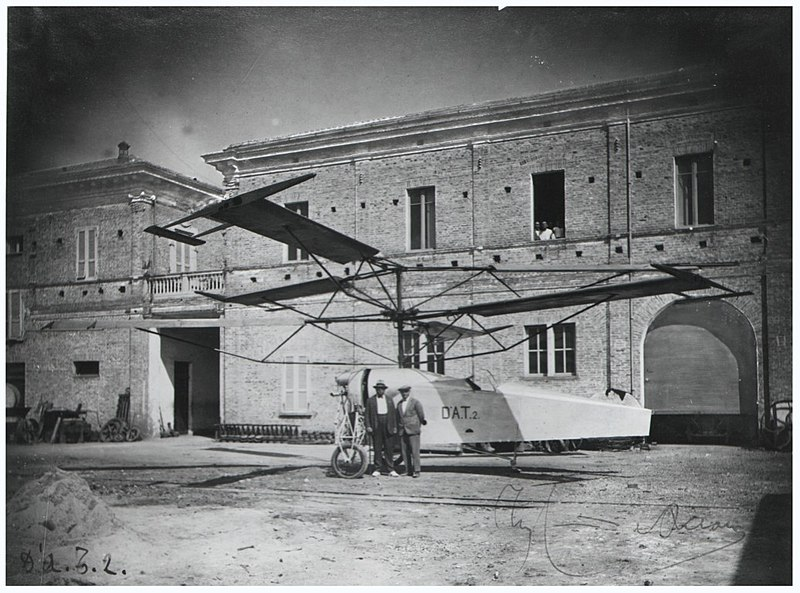
https://commons.wikimedia.org/wiki/File:Ditta_G._Camplone_%26_Figli,_elicottero_DAT_2,_Pescara_1926_-_san_dl_SAN_IMG-00003402.jpg In 1930 he proved his ingenuity by designing the helicopter, or rather, he was the first to create a vertical flight vehicle: the model took off in Ciampino on 13 October 1930. Corradino D'Ascanio, was an unheard prophet, in more mature times and under more favourable circumstances, the helicopter would go into industrial production. The D'At3 was a helicopter equipped with articulated blades (it had two for each stacked rotor) and control surfaces similar to ailerons, which allowed it to go up and down vertically. For forward and backward movement, a propeller placed horizontally in the tail tilted the entire unit forwards and backwards, thus generating a propulsive component in the desired direction. Similarly, for transverse stability, there was a propeller placed horizontally on a structure to the left of the fuselage. A third propeller arranged symmetrically concerning the previous one, but with the axis parallel to the aircraft axis, controlled the direction of motion in the horizontal plane.

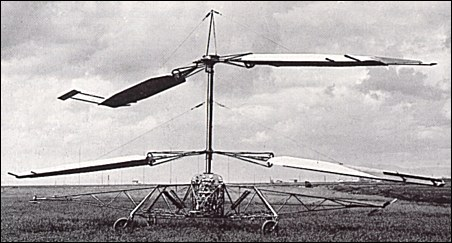
https://commons.wikimedia.org/w/index.php?title=Special:Search&search=dat+3+elicottero&fulltext=1&ns0=1&ns6=1&ns12=1&ns14=1&ns100=1&ns106=1#/media/File:DAT3_1.jpg The complexity of the manoeuvring system, which highlighted the seriousness of the problem of controllability in the first machines, should come as no surprise: ten years later, a Sikorsky prototype, during the presentation to the top management of United Aircraft, moved elegantly in all directions: except forward! The D'At3, on the other hand, was well controllable and, piloted by Major Marinello Nelli, between 8 and 13 October 1930 established three world records, rising to a height of 18 metres, flying for 8 minutes and 45 seconds over a distance of 1078.60 metres. D'Ascanio received no support from the Italian government. The Italian Air Force and the Navy were for the fixed-wing. In 1936 Piaggio was looking for a propeller designer, and D'Ascanio accepted the job. And between one propeller and another, he designed a new helicopter based on a new formula, the same one that would be adopted almost simultaneously in the United States by Sikorsky and Bell. After the war, Piaggio decided to concentrate all its efforts on motor scooters. D'Ascanio recounted the birth of the most popular vehicle in Italy at the time: "Peace had just returned and everyone was trying to do something to rebuild the country. Enrico Piaggio called me in Biella, where he had a factory. It was an aluminium saucepan factory, but I started to design a practical motorbike to get the Italians to move around", but this is another story of his. **By kork75!**

No comments yet