We Reached the End of Free
Free email. Free facilitating. Free programming. Free distributed storage. Free photograph stockpiling. Each online media website was free similar to each web crawler and each news webpage. The product that fueled the workers running the web was free. In the event that anyplace was the place where there is the free, it was the web. Some free things weren't adequately free. There were levels of free-ness: "free" as in lager, or "free" as in discourse. What's more, we ate everything up. "'Free is an uncommon value," Bruce Schneier wrote in Data and Goliath, "there has been a wide range of mental exploration showing that individuals don't act judiciously around it."
**We didn't act judiciously.**
Some said that if something was free-as-in-discourse, they'd be set up to pay for it. Be that as it may, the majority of us came for the gifts. The freedom that open-source licenses managed was a discretionary extra. What number of downloaded Firefox or GIMP and began changing the fundamental code? By far most were basically satisfied there was no sticker price. On the off chance that your computerized aspirations were unassuming, you could do all that you needed online without spending a penny.
There is, they say, nothing of the sort as a free lunch. Be that as it may, on the web, there was nothing of the sort as a paid lunch. It was all free snacks, constantly. Each site was a computerized everything you-could-eat buffet, and keeping in mind that product may have been eating the world, the world was gobbling up programming also. With so much accessible for nothing, charging for news or messages or photograph stockpiling was unsound. On the off chance that you charged for your administration, it basically wouldn't be utilized. Various now-old paid administrations found this the most difficult way possible. "You tired monsters of tissue and steel," John Perry Barlow wrote in 1996 in A Declaration of the Independence of Cyberspace, "You are not wanted among us." It appeared to be the laws of financial matters weren't wanted all things considered.
On the off chance that your computerized desires were humble, you could do all that you needed online without spending a penny.
It wasn't simply we buyers that were silly about free things. The organizations giving them weren't completely levelheaded all things considered. Papers would charge for their actual paper yet part with their substance on the web. The financial matters didn't make any sense.
One reason "free" appeared to be so conceivable was that there was such a lot of tech cash gliding about. Valuations were high as can be and the seed cash continued coming. Microsoft didn't try charging for Windows 10. In 2014, Dropbox had $1b in financing and a $10b valuation, however it hadn't tried to employ a CFO, a job most $10b organizations would see as vital. Care for the bytes and the cash would care for itself.
One contention was that once an application (or article) is composed, there are no extra assembling costs. The peripheral expenses, as many noted, tend towards nothing. Yet, it was more than this. Organizations were parting with administrations that cost them cash. Individuals were composing code in their extra time and delivering it onto the web. Cash appeared to be changed in the tech world. You didn't discover development laborers returning home from a day at work and building a heap of houses for nothing.
Maybe this was the reason theft turned out to be unusually acknowledged. With such a lot of free stuff, "free" appeared to be the web cost. It wasn't clear why one item was free and another not, when both were practically indistinguishable. "You wouldn't take a vehicle," a scandalous enemy of theft said, however vehicle organizations weren't parting with vehicles free of charge. "You wouldn't download a pizza," they said. We unquestionably would download a free pizza.
Over the long run, even administrations that charged a small sum, like WhatsApp, at $1 per year, surrendered. "Individuals may think about how we intend to keep WhatsApp running without membership expenses," WhatsApp wrote in 2016, clarifying that they wouldn't present outsider promotions. What was less clear was the manner by which they would bring in cash. Or then again whether they really needed to. "Regardless of whether they don't adapt this item," innovation expert Ben Bakarin disclosed to BBC Radio 4 when Facebook purchased WhatsApp for $19b, "Facebook can get the following billion cell phone shoppers into their environment." All anybody needed, it appeared, was to obtain clients. Transforming those clients into cash was a tomorrow issue.
In spite of the notice signals, there was something practically altruistic about everything. Tech organizations were getting such a lot of money from their center items, they could finance different administrations out of the integrity of their offer held hearts. Complementary plans were liberal to the point that except if you had a unique use case, you never expected to pay. It was a semi communist idyll. The rich financed most of us. People at tech organizations loved coding such a lot of they constructed projects as an afterthought and parted with them to benefit the world. Everything appeared to be unrealistic.
Furthermore, as it were, it was.
Notwithstanding WhatsApp's protestations, in spite of the appearing end of traditional financial aspects, regardless of the respectable desires and the ascent of free, the truth was substantially more mundane. There was cash, it was barely far away. Venture financing and adverts. As Andrew Lewis noted, in a perception that has become so normal it's not really worth rehashing: "On the off chance that you are not paying for it, you're not the client; no doubt about it."
Promotions. Everything was supported by promotions. Promotions were basically the best way to bring in cash on the web since now everything was free (or, all the more precisely, zero expense for the customer at the mark of utilization) cash needed to come from some place. The web wasn't such a lot of the place that is known for the free as the place that is known for the announcement.
We were cautioned en route: tech organizations were drawing us in to secure us. They were taking our own information. They were selling our consideration. They were tossing costs to make contenders bankrupt and wanting to up them once they had a syndication. Every one of those standards saying "free" and "limitless" would be supplanted with dollar signs. It isn't so much that we didn't tune (in spite of the fact that we didn't listen that hard) it's more that we didn't have a decision. We were picking between Flickr's 1TB of free photograph stockpiling or Google Photos limitless free photograph stockpiling. More modest organizations progressively left business or were gained. Dave Egger's parody on Silicon Valley, The Circle, closes with a shark in a tank, getting fatter and fatter as it step by step eats all the little fish. The imagery was upsettingly self-evident.
Photograph administrations are the place where I notice this the most. In 2018, Flickr declared the finish of their 1TB of free photograph stockpiling. "Lamentably, 'free' administrations are only sometimes in reality free for clients," they stated, "Clients pay with their information or with their time." On June first this year, Google Photos finished their limitless photograph stockpiling offer also. "This change additionally permits us to stay up with the developing interest for capacity," they composed.
As it were, these progressions were inescapable. "You're playing a game nobody else can play," Jeff Bargmann disclosed to Marissa Meyer when Yahoo purchased photodrive.io. "Turns out nobody could play that game," he added later. 4 trillion photographs are put away in Google Photos, with 46,000 new pictures transferred each second. In 2013, the photograph stockpiling organization Everpix's month to month AWS bill surpassed $35,000. After a year, Picturelife announced that their AWS facilitating costs were more than $1m per year. The two administrations shut down. Amazon's liberal AWS complementary plans weren't liberal or free enough. The minimal expenses of programming circulation might be low, however they aren't zero, in any event, for Google. Those 4 trillion photographs need accumulating backing up, and the product that oversees them needs fixing and refreshing.
There are options in contrast to Flickr and Google Photos obviously. However, I notice complementary plans turning out to be progressively restricted and paid levels being packaged into greater administrations. Amazon's cloud photograph stockpiling is "free" on the off chance that you have Amazon Prime. Google Photos is essential for Google One, Google's cloud pack. iCloud stockpiling is important for Apple's same: Apple One. "Attempt Apple One free," it says, with a reference bullet close to free which you can't snap to peruse the important part as it's essential for the information exchange button. On the off chance that you do track down the important part, you find "free" signifies a preliminary, after which you are naturally joined to a month to month membership beginning at $14.95. We were cautioned that this was all important for a long term hustle plot. We have been goaded, and are presently we are being exchanged.
While the laws of financial matters are unavoidable, and a large part of the "free web" was a purposeful misdirection ploy that sold and misused our information, I can't resist the urge to feel baffled that those tired monsters of benefit and money figured out how to assume control over the web, regardless of Perry Barlow's presentation. The web was an uncommon spot that appeared to overturn the ordinary monetary request of insatiability. Revenue driven organizations had to part with their administrations free of charge or have no utilization. Apple offered free iCloud stockpiling sponsored by cash from equipment deals. Presently, "administrations" are Apple's quickest developing section with increasingly more iPhone highlights requiring paid online administrations. The rush to the base has transformed into a rush to the top. On the off chance that the negligible expenses are low, it's not, at this point motivation to reduce the cost. It's a chance to expand the benefit.
Quite a while back we reclassified "free" to incorporate various kinds of opportunity. Presently we express "free" in upset commas, trailed by bullets that highlight little print clarifying it isn't actually free. This is the contorting of language that outcomes in $119 a year being characterized by Amazon as "free following day delivering".
You Can Never Outrun Reality
As far as I might be concerned, the most significant and paramount scene in Berserk steers clear of Casca or Griffith. I know how bizarre that sounds, in light of the fact that essentially every awful or beneficial thing in Guts' life spins around them, yet I wouldn't offer a particularly striking expression without being certain. In the wake of rehashing the whole story, twice, my contemplations have not changed. That specific scene actually hits the hardest.
I guess what will be will be. We can't pick what craftsmanship will mean for us. Presently, I'm doing whatever it takes not to sound pompous, however there could be no other word that can satisfactorily portray Berserk.
It is workmanship, straightforward. It is Kentaro Miura's highest accomplishment, one that will stay in the manga corridor of distinction five, ten or even twenty years as it were. Notwithstanding the disastrous actuality it won't ever see culmination, I genuinely accept no other story will at any point approach brilliance of Berserk.
Okay, we should get back to the theme before I begin wailing like a congested baby.
A piece of the Conviction Arc, the effective scene I'm alluding to happens in the Lost Children section. The section principally includes a little youngster named Jill, who we never see again after this subplot is finished up, and keeping in mind that this part isn't any more appalling contrasted with different minutes in Berserk, it doesn't make any difference. Since the accompanying scene has still stayed obvious in my recollections for every one of these years:
I'm almost certain enthusiasts of Berserk will scratch their heads and thinking, 'This? How could this be more enthusiastic than Guts seeing the whole band of the bird of prey get slaughtered? Or then again how the adoration for his life was debased by his dearest companion, somebody who he regarded and trusted with each fiber of his being?"
Much as I am enchanted with the above scene… I sort of need to concur. I sort of concur. In the entirety of the story, the Lost Children part doesn't contribute a lot of beside giving Guts more character improvement, and making the generally dismal setting more grim.
Be that as it may, similar to I said, we don't pick what workmanship means for us. What's more, this scene, while not as annihilating or painful as Casca being broken in body and soul, was the one I actually tracked down the most significant.
Why, you inquire? Since it is applicable to our lives. As I would see it, this scene consummately consolidates a pointed truth that Guts has learned, and what we, as perusers, should learn also.
The character in the scene, Jill, has recently encountered a progression of frightening occasions. The harshest thing about those occasions are that the reason for them lie not with beasts in obscurity, but rather start from individuals near her.
Her alcoholic dad who disregards her and her mom for his tragically missing dreams of magnificence. A similar dad's fat, scum bucket of a companion who had attempted to break into Jill's space to physically attack her. Her dearest companion who'd disappeared, however has now returned as an evil spirit answerable for hijacking kids and transforming them into comparable tissue eating devils.
Jill is pushed to the edge. Just a kid, she does what any kid would do. She sticks to the solitary individual who she believes is equipped for protecting her from her situation Guts, the Black Swordsman.
Yet, Guts is no knight in sparkling reinforcement. Rather than the regular scene where the primary character, in an attack of compassion and feeling, dispatches into a vibe decent discourse and solaces her, Guts does the inverse.
He startles her.
He shows her all way of disturbing, startling animals that have been following him since that portentous day he got his evil presence brand. The bizarre beasts waiting in obscurity, every one of them sitting tight for the day he goofs to devour his corpse.
Jill is stunned stupid and separates crying. A heinously injured Guts folds his worn out dark shroud over her and advises her regarding an excruciating truth:
There's no heaven for you to escape to.
Guts realized that regardless of how far he ran from the beasts pursuing him, he could never move away. Maybe than indulge Jill, taking care of her a misleading picture of a heaven where he would consistently be there to secure her, he educates her. In that scene, this is the thing that Guts is basically advising her:
You won't ever beaten your evil presences, so quit running and face them.
The hidden message in this scene is likewise repeated later in Berserk, when Griffith-now-Femto is renewed into the actual world, a lot to the frightfulness of Farnese and her associates.
It is this suffering coarseness even with dread and misery that makes Guts a particularly phenomenal character, and is the thing that gives this scene such passionate weight.
You can't run from your issues. Things being what they are, the reason not face them?
On the off chance that a man who has lost everything can get himself and push forward, then, at that point you can do likewise.
The Lives of the Graced and Lucky
It's constantly appeared to me that a few group normally make some simpler memories of things.
It bodes well. There's consistently that famous dismal sack who we as a whole call when we need to represent how much more terrible things could generally be. That needs to imply that there are individuals on the opposite side of the bend who have it blustery, correct?
There must be a few group brought into the world to adoring, adjusted guardians who really had sufficient limit and holds to raise them without spoiling it really awful, isn't that so?
I see them around, I think. Individuals who consistently appear to be positive, quiet, and for the most part unperturbed. Like they won Jonathan Haidt's "cortical lottery" and took the singular amount payout of mind wiring that mystically accommodates our confounded world.
I'm not saying they don't have a knock anywhere, or a misfortune or two. Possibly a canine bites the dust, a companion moves, or they just get the fifth line at a Springsteen show. My point is that they figure out how to coast by with nothing past unimportant torments and non-horrendous trials.
A few group simply appear to get everything, including additional servings of essentialness, great looks, and strong wellbeing.
They don't need to investigate a mirror and rehash 100 every day reps of certifying, self-adoring mantras. What's more, still, they feel totally good in their own skin.
What's more, some way or another end up liberated from annoying anxieties and other mental and enthusiastic diseases.
I've regularly said that everybody has their own burden to endure, yet isn't that right? Is it my creative mind, or do a few group basically get a pass on all that horrifying cross schlepping.
Despite the fact that I positively wouldn't look to these tricky sons of guns to clarify how they do it. They don't have the foggiest idea. They've never expected to contemplate the inquiry. That sort of contemplation and examination has been left to those of us aren't so completely and annoyingly graced.
Your Work Is Not Worthless
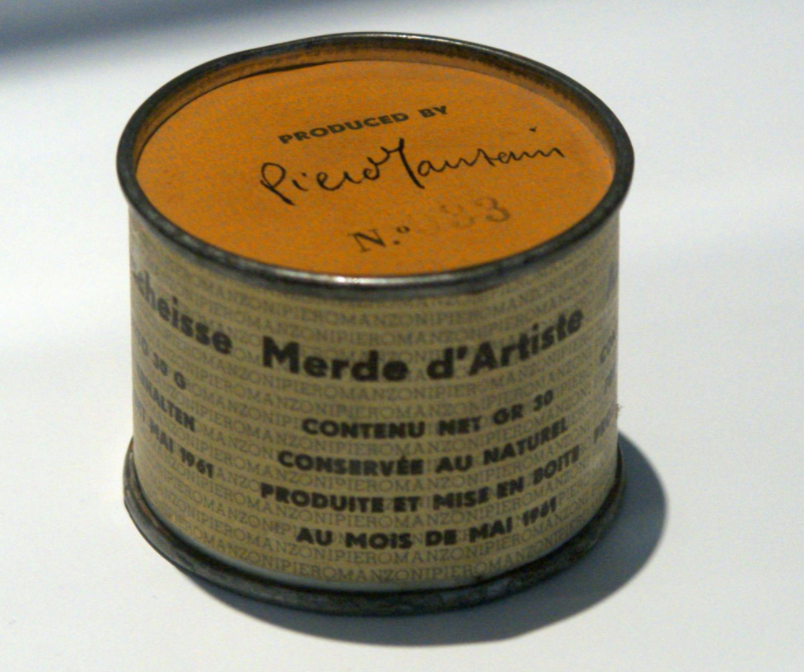
Judgment can be an amazing power in innovative endeavors. Outside impacts aren't the lone wellsprings of searing words — an essayist, craftsman, or entertainer could even be their own harshest pundit. One Italian craftsman, Piero Manzoni, made a workmanship piece, Merda d'artista, that tested his own disagreeing voices.
**Cutting words finds imagination**
One day Piero Manzoni's dad advised him, "Your work is crap." This probably been a serious hit to the youthful craftsman, however as opposed to allowing it to weaken him, he utilized it as inspiration. In 1961, Manzoni made Merda d'artista (Artist's Shit) as a reaction to the analysis.
Merda d'artista involved around ninety jars loaded up with, indeed, the craftsman's own fertilizer. The riposte was particularly gnawing because of his dad's work: running a production line delivering canned meat. The craftsman sold the jars by weight as indicated by gold's day by day market cost, delineating that despite the fact that it was dung, it was extremely valuable.
Though a tin initially cost around $37, the cost of these show-stoppers rose so much that the Tate Gallery paid around $61 000 to add it to their assortment in 2000. Manzoni had known about the commodification of the body when he said (Dutton 2009):
In the event that authorities truly need something close, truly close to home to the craftsman, there's the craftsman's own crap. That truly is his.
Manzoni had literalized his dad's figurative insult; in doing as such, he had shown he didn't mind what any individual, even a parent, pondered his innovative interaction.
**Looking for professional methodology**
There are consistently numerous barriers to inventiveness. One of them, judgment, commits it appear as though an error can be the finish of an excursion. As a general rule, the judgment can spring forward from the maker's own psyche.
Inner judgment can regularly show as analysis of others too. In this way, the harshest pundit, our very own selves, can pour out over into the existences of other creatives. By quieting the pundit, an imaginative changes life from a lose-lose situation into open-finished freedoms for development.
With a solid standpoint, hairsplitting stops to be the point. In its place, an elective methodology goes to the front: polished skill. Though hairsplitting defines impossible objectives, demonstrable skill means to make cleaned items, and acknowledges botches as freedoms to bob back from. A lessening in judgment consequently permits more artistic liberty. The humanism educator Kathryn J. Vivacious said (Weiland 2018):
**Judgment and interest can't live in a similar spot.**
The capacity to pose inquiries is an establishment for inventiveness, and a craftsman can help this cycle by disposing of scorn from different sources. Piero Manzoni made such a without judgment zone by utilizing the very analysis heaved against him as a topic for his specialty piece.
**A bigger core interest**
Merda d'artista condemns workmanship itself. Enrico Baj, a companion of Manzoni, said the jars addressed "a demonstration of insubordinate joke of the workmanship world, craftsmen, and craftsmanship analysis". By getting well known, Merda d'artista questions the rules by which pundits praise a few pieces and lambast others.
in short: If human defecation in a can become important, why are different works of art called "crap"? Manzoni uncovered the deception of making a decision about craftsmanships through pundits, industry praise, or benefits. One individual's venture isn't without esteem since it got less cash-flow than another's.
The deconstruction of corporate greed demonstrated far-located in 1961. In the resulting many years, the expanded media arrive at broadened the splits between purported fruitful craftsmanship and that which is considered pointless. Most importantly, associations would be quite possibly the most significant deciding components of accomplishment in an interactive media scene, be it as far as supporter tally, industry associations, or consideration in an establishment.
**Questions cover a reality**
On the Merda d'artista can, a name broadcasts "newly saved, created and tinned" in English, German, French, and Italian (Miller 2007). However, do the pieces contain excrement? The Tate Gallery depicted the substance of its model as "unidentified".
The craftsman Bernard Bazile opened one can in 1989 at The Center Pompidou, in spite of the fact that it wasn't opened far enough for individuals to see whatever else other than a wrapped item. In any case, the secret encompassing the substance of the jars adds to its investigate of workmanship commodification, since purchasers will trade cash for a ghost ware.
In 2007, Agostino Bonalumi, one of Manzoni's previous colleagues, expressed that the jars conveyed just mortar. This may show that even the lewd name may have been a hallucination made by the craftsman to trick a market looking for outrage. For the innovative, it is a wake up call that cautions them not to pass judgment on their own work dependent on the applause (or deficiency in that department) of a whimsical commercial center.
Accepting a God That Doesn’t Exist
I'm not a fervent denier on the issue, but rather I see no proof to help the possibility of a divine being that is hectically arranging everybody's lives. Except if obviously, that god happens to an awful choreographer. I have a lot simpler time putting stock in a divine being who gotten everything rolling and afterward took a long rest. In any case, that is a hands-off god who needs a morning timer more than our petitions. Between my absence of an individual strict history, and the tyrannical, confounded jokes of "genuine devotees," I don't expect I'll attach with an off-the-rack god at any point in the near future.
However, living under the caring assurance of a higher force has a positive allure. I notice that things go best for me when I give up control, rather than wresting it. Furthermore, when I live as though a higher force is looking after me, organizing results to assist me with realizing what I need to know.
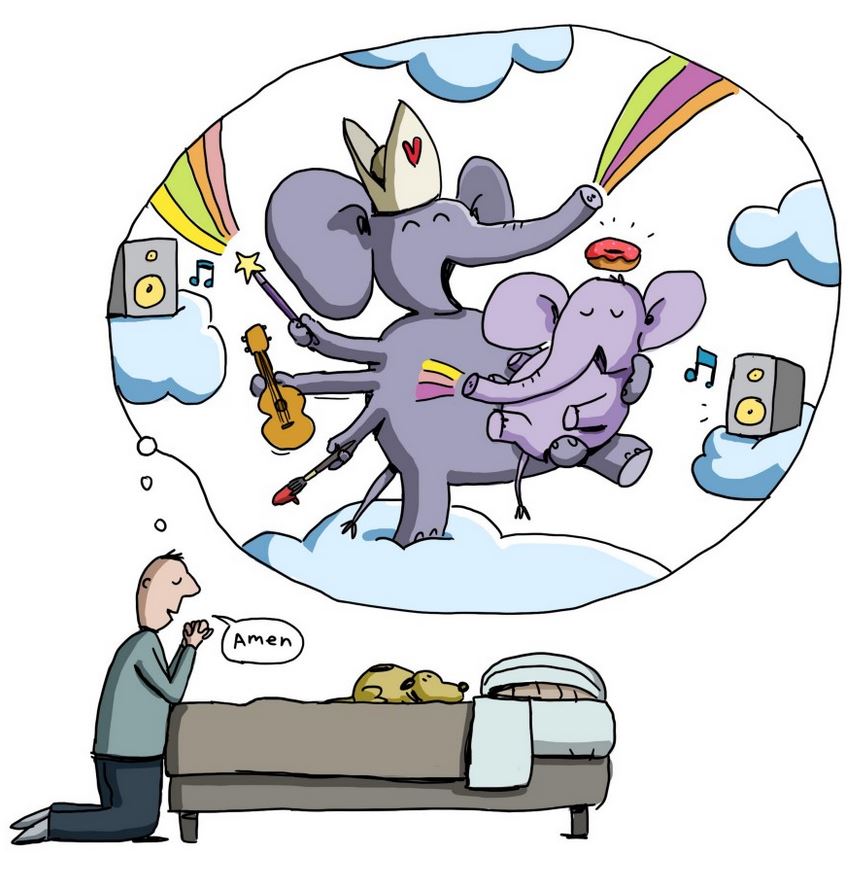
Thus, I made up a divine being that doesn't exist.
They say when you appeal to God for tolerance, God puts you on the finish of an extremely long queue. I love this detailing of god, however insofar as I'm doing practically everything, for what reason do I by any chance need God by any stretch of the imagination? I'm now on heaps of long queues, probably with no incomparable intercession. Why not cut out the center man?
When I ask myself what I can gain from each circumstance I wind up in, my fanciful god rapidly turns out to be completely dynamic in my life. At the point when I've met with disappointment, as I have ordinarily, my pretend god has transformed my mistake into basic opportunities to learn something new. Despite the fact that this could undoubtedly seem like an advantageous heap of self-daydream from a constant washout, I've generally speculated that I'm an ideal possibility to misconstrue accomplishment in a sincerely harming and socially unendurable way. In any case, regardless of whether I am only a self-swindled failure, this conviction has made me more tolerating of it. Also, kindly more unassuming.
By transforming life into schooling, my fanciful god dependably rethinks things so I am actually where I should be, regardless of where I am. That takes a great deal of pressing factor off me, which is by and large what I need a god to do.
The main exercise my imaginary god needs me to learn is about acknowledgment. Enduring consistently begins when we get what we get yet we actually get vexed. And afterward stay upset. My god says it's really clear that the more I can move with the manner in which things unfurl, the more joyful I'm going to be.
Acknowledgment isn't tied in with surrendering. It's giving a valiant effort and not battling the results over which I have no control. Acknowledgment is tied in with changing my assumptions to coordinate with the manner in which the world really works rather than my baby thoughts of how I need it to. My pretend consuming hedge discloses to me four key things about acknowledgment.
1. I'm not in control. Indeed, I have some organization, yet that doesn't make me all-powerful, or even strong. The world is a lot greater and more remarkable than I'll at any point be.
2. My insight at the time, anyway ghastly, is sure to change. My imagine god attempts to advise me that things won't generally appear to be so terrible. I will change, in any event, when I would prefer not to, or think it conceivable.
3. Things work out best for those that make the best of the manner in which things work out. This is one of my nonexistent god's unsurpassed top choice, changeless, grant winning, sound judgment precepts. I like it as well.
4. It is pretentious to think I understand what's best for me. At the point when things don't turn out well for me, it's really useful to think about that as some of my most obscure days regularly end up being basic turns to improve things. Infection, getting terminated, and being bound have prompted appreciation, better positions, and favored balance. You can never determine what's going to lead where.
My god likes to take note of that losing my mom abruptly when I was just 21 may have brought a few exercises, yet it's never been distantly great. It's constantly been horrendous and just deteriorates as I lose an ever increasing number of years with her. However, that is the excellence of an entirely composed god. It can not bomb me since it doesn't exist. Crap occurs. Not much's. Regardless, my god assists me with tolerating these poop sucking arbitrary occasions that I can't change.
You might be thinking about how an individual can have faith in a divine being that they don't trust in. It's an excellent inquiry. By and by, I didn't begin attempting to swindle myself. I just normally looked for presence of mind intelligence by which to live. It turns out there is a ton of cover between that astuteness and what a divine being may say, in the event that they existed. In the end, it naturally transformed into a feeling of a higher force guiding me.
I attempted some supplication and reflection here, and a concise snapshot of outright acquiescence there. I preferred it. I like the unusually passionate feeling of delivery and unwinding I discover when I am ready to truly release everything.
Life of Real-Life Superheroes
omic superheroes are well known to such an extent that many individuals all throughout the planet have begun wearing leggings and playing vigilante. Unusual, absurd, yet evident. Video film of the inexorably famous development gets going the manner in which you'd expect… . An elderly person who passes by "Expert Legend" holds a lager while disclosing to the camera that he has "powers past that of conventional human individuals".
A main ten rundown of absurd genuine superheroes spotlights Roger, also known as Knight Warrior, who is thin as a beanpole and lives with his mom. The stunning dauntlessness of Real Life Superheroes (otherwise known as RLSH) regularly leaves you contemplating whether you should go after a camera or a restraint.
While public response to this development has for the most part spun around ridiculing genuine superheroes (in light of the fact that it's simple and amusing to do), there has been minimal academic conversation in regards to the inspirations, viability, and relative strategies of different superheroes.
I will offer a reasonable clarification of the advantages and disadvantages of superhuman movement, examine mental soundness and inner self, give explicit guides to measure RLSH adequacy, and clarify their center reason.
To adjust openly accessible data with an insider's viewpoint, I was special to talk with Zimmer, a much-regarded superhuman who has watched city roads for right around 10 years.
Zimmer was one of the subjects of the Superheroes narrative circulated by HBO in 2011, and she's as near the genuine Batman as you can get. Beside a munititions stockpile of non-deadly contraptions she's made himself, she's additionally put resources into EMT preparing, genuine battle and parkour capacities, companions to back her up, and strange actual perseverance. A video of Zimmer's preparation routine shows her doing 17 force ups in succession without easing back. In spite of the fact that she's not somebody to meddle with, during our meeting she was shockingly modest, well-spoken, and human.
Self-Preservation
The principal complaint individuals need to genuine superheroes is simply the undeniable stupidity of placing at serious risk. At the point when clinical establishments train First Responders, the absolute first principle of crisis mediation is "don't turn into a casualty". Specialists on call are needed to stop, cautiously review the scene for conceivable security dangers, and just advance in once they are sure they can enter the region without imperiling themselves. Playing vigilante appears to disregard this standard. This is the essential explanation police attempt to debilitate hero watching.
This is a real concern, yet it originates from a misconception about what superheroes do. Not all RLSHs are "beat them up" style vigilantes. Superheroes participate in a wide assortment of local area administration, which goes from tidying up spray painting, defying organizations about unloading poisonous ooze in a waterway, taking care of the destitute, accompanying alcoholics home, and the sky is the limit from there.
At the point when gotten some information about the issue of undeveloped, overenthusiastic superheroes attempting to face lawbreakers, Zimmer reacted, "We're not requesting that individuals put themselves in harm's way. The inquiry is: What issue troubles you such a lot of that it keeps you up around evening time? Furthermore, what can be done? What abilities and assets do you as of now have? Do that."
To secure themselves, develop superheroes utilize a couple of essential standards.
To start with, on the off chance that you plan to battle, you need preparing and loads of it. Superstar superhuman "Phoenix Jones' is a boss MMA warrior who watches Seattle, and is more angry than most saints, however simply because he feels like the test. In September 2015, he was credited by the police for forestalling a homicide.
Second, even with preparing, the best superheroes just battle if all else fails. Numerous legends use weapons that frighten the adversary, instead of delivering injury, like splendid electric lamps and fundamental tasers, therefore.
Actual mischief isn't the lone risk superheroes face. The neat hero "Life" likes to give sweet treats to the destitute to perk them up, alongside fundamental necessities like toothbrushes, cream, and cleanser. Giggling, he conceded, "I'm in genuine Visa obligation" because of his altruistic exercises.
"Mr. Outrageous" is another illustration of a RLSH making enormous penances to keep watching. He adopts the battle strategy to hero work and watches around evening time to make the roads more secure. He needs to have the option to safeguard others, however his battle abilities are at present lacking to win even a fundamental road fight. In the wake of losing his first jujitsu competition and being not able to acquire his white belt, Mr. Outrageous moved out of his condo and began living out of a van so he could put more cash in hardware, printing, and preparing needs.
Imminent legends need to choose how much cash they're willing to contribute, and how long. This is one of the functional benefits of having a persona. It helps saints say, "This is my concern. I realize I can't tackle everything, so I'm committing myself to this specific reason." Setting this limit assists them with narrowing their vision so they don't extend their time and assets excessively flimsy.
Outfits
"Alright, extraordinary, serve your local area. For what reason do you need to do it in an outfit?"
This is the second wellspring of suspicion RLSHs face. Showy hand crafted outfits raise warnings in the public brain, instead of moving certainty. Residents puzzle over whether an excessive amount of time in the storm cellar playing D&D has gotten into their heads.
The conspicuous outside doesn't generally work well for them. Some RSLH outfits are awfulness themed and take after the scarecrow veil from The Dark Knight more than resembling a saint. Covers specifically make individuals uncomfortable.
Then again, some superhuman gatherings have more brilliant, more bazaar like outfits, total with capes. While these superheroes are certainly less scary, they likewise will in general look absurd. When superheroes who look crazy actually view themselves pretentiously, it leaves individuals attentive, thinking about what other social abilities may be missing.
Notwithstanding, RLSHs do have a few valid justifications for utilizing outfits, regardless of their disadvantages. Logical examination has considered the mental benefit of wearing a uniform and tracked down that others' impression of us influence our presentation. Garbs can make us more idiotic or more brilliant or quicker.
Zimmer felt that outfits were incredibly significant. Putting on a committed outfit can likewise cause individuals to feel like they have consent to help.
Zimmer's ensemble is exceptionally watchful. She utilizes a basic T-shirt with the numbers 01011010 on it — twofold for the letter "Z". Adaptable jeans give her opportunity of development. She never wears a veil since she gets a kick out of the chance to be open. At times she wears wrist bracers, gloves, or potentially a rucksack stacked with straightforward devices and a medical aid pack. To the individuals who know about her, Zimmer is entirely conspicuous, yet the normal outsider on the road wouldn't take a second look. This is an excellent equilibrium that permits her to consolidate what's significant about outfits, without distancing anybody or expecting to account for herself to everybody she passes.
I’m Young Enough To Love Flowers
My home is spooky by ghosts who live outside on the grass. What is the form that the ghosts have picked? **Their form are the Flowers..**
Snow drops, crocuses, brilliance of the snow, and purple blossoms called blue trumpets. These are the echoes of blossoms planted forever and a day prior by past proprietors. They're uncontrollable echoes. They've quite a while in the past left their unique nursery beds and have meandered like sleepwalkers and makes camp all over.
For what reason would we say we are so fortunate? I pondered. At that point I told my better half a hypothesis: "It should be a septic break. It's us. We're treating the poop out of our yard." This affirmed something I've generally accepted about myself: every single piece of me is craftsmanship. Take a gander at the blossoms I paint with my waste! My significant other said, "No."
"Go on," I said.
"The woman here before us cherished blossoms. These are hers."
I realize this is valid. However, the blossom frequenting of our grass is so broad, my heart reveals to me it must be more established than a solitary past proprietor.
(By the way, I should reveal to you this. My sibling went strolling in the forested areas one evening. On the path in front of him, his electric lamp discovered something sparkling. Plainly, somebody had lost a jewel. He drew nearer, following the point of the spotlight bar further and further down. It didn't prompt a jewel, however to a creepy crawly remaining in the way, watching him. The sparkling was the sparkle of its eyes.)
An old house is the most ideal sort of leftover. Houses are instruments played distinctively by each gathering of performers. Some play generally merry music. For other people, the melodies are melancholy. Or on the other hand brimming with rage. What's more, however you carry your own music to the house, the old tunes are still there. On the calmest days, you wind up influencing to music that doesn't have a place with you. I live in a melodic barrel, getting prepared by the residue of old notes.
I think about the long chain of individuals who have lived here and can't help thinking about the number of them cherished blossoms. Thinking about the condition of our yard, every one of them. What's more, I wonder is this something they brought to the house, or is it an affection the house recommended to them, similar to a kid who gets his sibling's rummage overalls, tracks down a failed to remember harmonica in the pocket, and figures out how to adore music?
How They Haunt
Our blossoms frequent us in four parts.
**One**
The snowdrops show up. These little white blossoms are pretty much as insane as I am about the methodology of summer. They can hardly wait. They sense a more grounded daylight and run out into the yard, yet they wind up remaining in the snow in uncovered feet.
My significant other and I feel frustrated about the snowdrops. They appear in mean March, that tentative oddity of a month. Walk, a conjoined twin (half lion, half sheep), horrifyingly destroying itself.
Hello, March, know thyself. Your sun is a liar. April abhors you.
The contemptible sun of March draws the helpless snowdrops out like the sparkling wand of an anglerfish. At that point the sky drops snow on them, a lead-cover net.
April, we need you now.
**Two**
The purple, pink, and white crocuses. These are the size of shot-glasses. What number of?
Picture a city of barnacles on a long stone. That many.
Presently quit considering barnacles, since you're envisioning a large number of minimal hard butts.
Supplant the butts with blossoms. That is our yard!
A Good Question
For what reason do I think often such a huge amount about blossoms?
I didn't use to. For quite a long time, the lone bloom I thought often about was the Venus flytrap, since it is a beast, and I love at Monster Mountain, cousin of Olympus. Area?
For hell's sake.
My hypothesis?
I'm going downhill.
Either that, or I'm getting youthful. Small kids care about blossoms. On the off chance that somebody wasn't there to stop them, they'd pick every one of the blossoms on Earth. They'd weave them in their hair, wear them intensely behind their ears, and blossoms would shoot out of their pockets like music from trumpets. Youngsters would eat them as well, expecting to become blossoms. Nurseries would be their beds. They'd pull covers of daffodils, lilies, and buttercups over their heads and keep awake until late perusing the little pages of daisies by firefly light. Furthermore, on the off chance that they had their direction, wherever they planted their exposed feet, roses would develop.
Who loves blossoms more than me?
My significant other.
It's off by a long shot.
My blossom love is a faint woods stream. It's gone through the greater part of its time on earth underground, dozing profound as a trance like state. Dreamless. Presently it's back, and somewhat crisp from living underground so long.
In any case, for my better half, it's a whole love from child days, a stream wide as a lake, and long as a landmass.
An adoration you can see from space.
Space explorer ONE: Why does western Pennsylvania look purple?
Space explorer TWO: Hold up. Do you smell lilac?
Space explorer ONE: I do! In any case, that is outlandish.
That is my better half.
Another Theory
At whatever point I consider adoring blossoms, I consider cherishing birds, and I wonder once more, am I developing old or youthful?
Kids are not reluctant. They don't have the foggiest idea how to be. They must be instructed. And keeping in mind that they're in the magnificence long stretches of being only eyes and ears and arriving at hands, they see and smell blossoms. They see and hear birds.
They go after all, aching to get. Blossoms and birds are their wafers and grape squeeze, their wild fellowship.
In any case, kids do learn reluctance.
At that point they fight with it for their entire lives.
They used to walk. Presently they have a walk. Cautiously curated steps. What's more, developed grins. Also, a method of snickering. A method of adoring. One style replaces one more and again as they frantically look for what they had to start with: neglect of self.
These felines pursue their tails, transforming themselves into tornadoes, drills, drilling out their own graves. Some of them, the fortunate ones, rise up out of the ground youthful again. They've figured out how to neglect themselves.
They've recollected how to see blossoms, and birds, figured out how to cherish them once more.
Returning
A day or two ago, I lay conscious in obscurity. Something woke me up. What right? At that point I heard the principal bird melody of the year, and I said (and it resembled shouting out),
"Gracious say thanks to God."
I've never had a reaction like that to birds previously.
What will it resemble one year from now, and the following? I have an inclination that when I hear the season's first bird a long time from now, or thirty, or forty, the joy may kill me.
You'll see me bafflingly dead some early morning. The post-mortem will stun the world.
When the surgical blade contacts my chest, I pop like an inflatable, and out flies blossoms and birds.
Reason for death?
Delight.
Captured By Flowers
Our blossoms are so amazingly bountiful, they stop individuals. Walkers stop. Drivers delayed down and park. Drivers escape their vehicles, leaving the entryways open, leaving the vehicles moving away down the road.
One
A couple of strolling women halted before our home. One of them shot her head forward like an assaulting turtle and her mouth hung totally open.
The expression all over helped me to remember something a companion said once. She cut open a melon and the yellowness of the organic product inside stunned her. It made her giggle. She was unable to help herself. The tone yelled at her and she had no real option except to yell back with chuckling.
The strolling ladies took pictures. Pictures from a long way away and close up, and they hunkered down as close as possible get to the tones on the ground.
Look all you need, I thought, yet don't contact.
Two
A little vehicle halted. An elderly person in a dull blue shirt and washed-out pants got out, leaving a lady in the front seat, watching him.
He strolled gradually to and fro before our blossoms. He took pictures. He hunkered low, similar to a kid, similar to he was going to play out a somersault.
Move along, grandpa.
Ultimately, prior to making a beeline for the vehicle, he remained there peering down at his feet, at the blossoms developing right facing the walkway, a hightide of blossoms coming in.
One final look. Calm. No photos.
He got back to the vehicle. The lady watching from the traveler's seat lifted a cigarette toward her mouth. She additionally investigated the blossoms. While she did, she held the cigarette noticeable all around near her mouth, stopped, neglected.
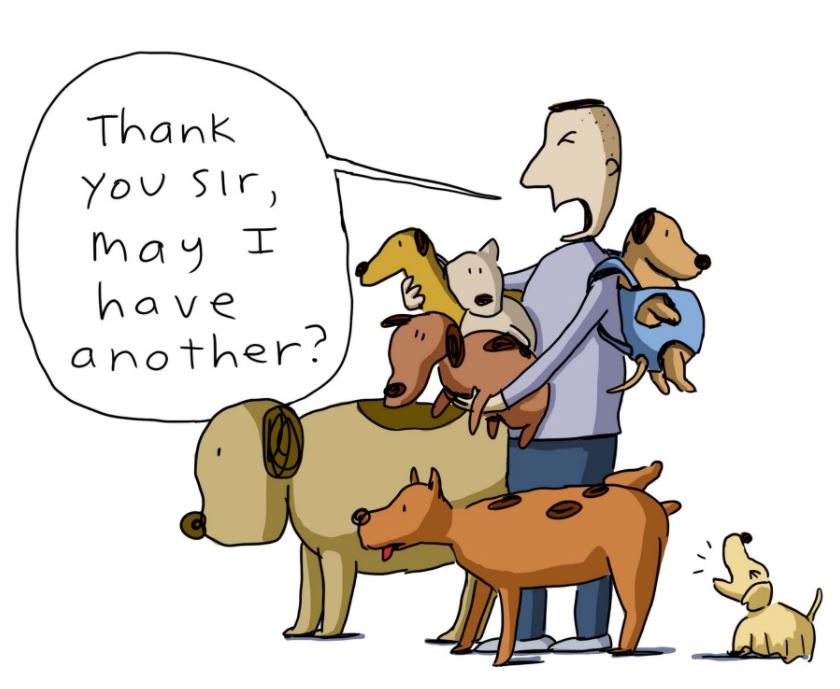
I Could "Take or Leave" Our Dogs
My better half put me on a long term notice that, when our child turned 13, we were getting a subsequent canine. I never enjoyed the thought. We had a respectful 8 year old labradoodle named Beegu that was at that point effectively rubbing my understanding and the last thing I needed was to twofold down.
It was somewhat of a splendid methodology, I need to concede. That is to say, what amount of a battle would anybody wage about something that a long ways early? And afterward, when the opportunity at last arrived, how is it possible that I would out of nowhere put my foot down about something for which I had such a lot of caution.
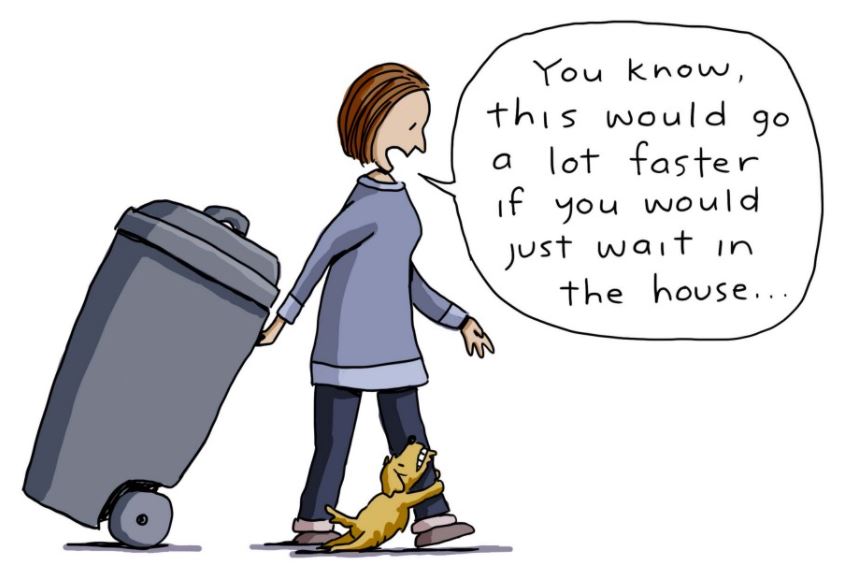
Thus we got Havi the Havanese, on the grounds that Havanese should be the one exemption for the little canines are-poor anxious and-yappy-rule. Turns out they are not. Or possibly this one was not. I couldn't say whether his initial two months were ladened with Big T Trauma, or in the event that it was exactly how insane our home was at that point, yet Havi is a bonafide enthusiastic wreck.
The two canines alternated exasperating each other up, so there was a wealth of deplorable woofing and little respite from genuine enemy of social scenes on basically every walk.
I began more than once asking my significant other how long canines are relied upon to live. She before long needed to force a level out prohibition on my pup passing jokes. It isn't so much that I detested them. The issue was just that I just delighted in them 25% however much I expected to earn back the original investment on the arrangement.
At fifteen, Beegu had an abrupt seizure and we nearly needed to put her as the night progressed. I was confounded by my feeling. I figured I may need to counterfeit a few tears so I didn't forever estrange my family with my sociopathic apathy. In any case, I didn't need to. It shocked me.
Sweet Beegu endure, however just a short time before we needed to put her down. I cried abundantly that day as the sedation glut removed her with supreme certainty. It hit me hard, and surprisingly harder that evening.
There isn't anything noteworthy about being dismal to lose a pet with the exception of that I didn't realize it was coming. However much I attempt to be else, I actually have debilitated abilities at stuffing my sentiments. I surmise I had stuffed these. That evening, a wide range of sorrow defeated me, including the deficiency of my mother when I was just 21, which I additionally had pushed down at that point.
I'm actually paralyzed by the measure of misery I have saved in me. I never acknowledged I was that appended to Beegu. Yet, I wasn't right. She was an extraordinary canine, with a top notch bladder, and she had experienced such a huge amount with us. A couple of days after she passed my stomach got tied in an excruciating bunch. Seven days from that point onward, my back spasmed, and stays sore one more week later. I surmise I actually have more misery to unstuff.
Presently we're down to Havi the Half-insane. He's a destitute, restless banner puppy for all that we dread about little canines. He's adorable as anyone might imagine, however needs a full cerebrum relocate. Furthermore, in these last weeks, to exacerbate the situation, I've lost my drive to make even a solitary pup passing break.
I Finally Watched The New Mutants
During a pandemic that was giving no indications of decreasing, a couple of movies were delivered a year ago against the counsel of logical and general wellbeing specialists. This mindful endeavor to rashly get back to "ordinary" was persuaded by everything from dazzle creative hubris taking on the appearance of respectability to frantic endeavors to remain utilized to bare corporate avarice, however none of the films delivered had as full an outing to theaters as The New Mutants.
I had been anticipating this film since 2017, yet I wasn't willing to chance my wellbeing and possibly my life to see it. As I've composed somewhere else, each strange nerd has an uncommon relationship with the X-Men regardless of whether it's just an implied affirmation of how the subjects of the funnies resound with our own battles. Also, every X-Men fan has the group that was their first, first experience with the universe of Marvel's freaks, from the first five of the 60s to X-Force, X-Factor, X-Statix, and past. As far as I might be concerned, that group was the New Mutants. It was one of the main funnies I read with anything moving toward consistency, route back in center school.
**My History with the Comics**
Well before I knew of my own sexuality, I was an awkward twelve-year-old who battled to make companions, and was more centered around staying away from menaces and discovering something great to peruse. The companion who had acquainted me with funnies a couple of years sooner had a go at getting me into the X-Men, yet they were in the entire Madelyne Pryor storyline. I thought Mister Sinister looked cool, yet discovered all the other things exceptionally befuddling.
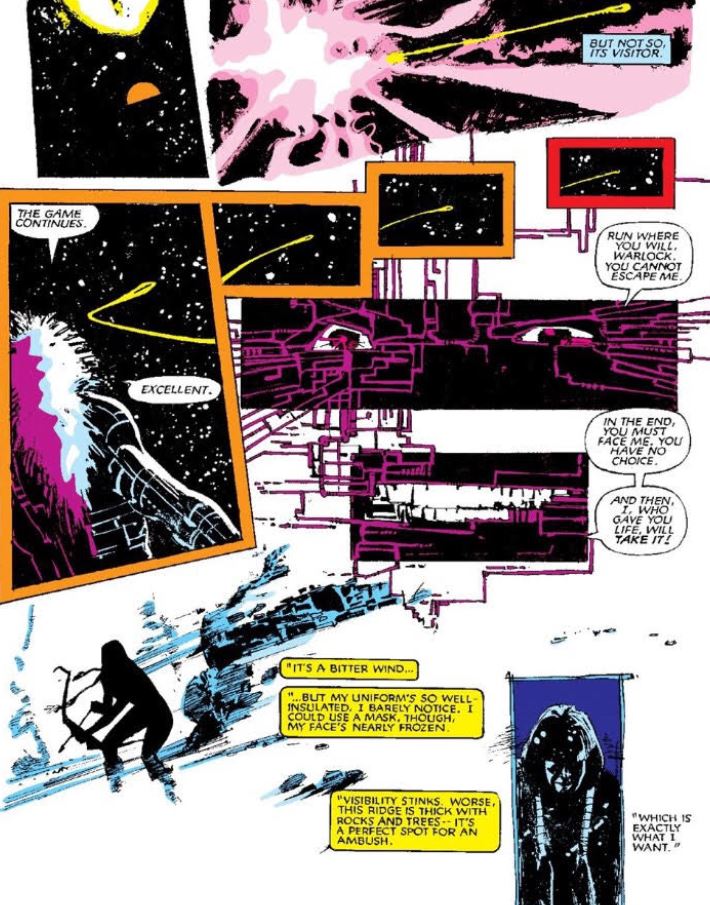
At that point, in the spinner rack of a drug store inside strolling distance of my home, I found The New Mutants. Here was something not normal for anything I had found in some other comic! The personality of Warlock and Bill Sienkiewicz's specialty jumped off the page with a dynamism I didn't think workable for what were at that point feeling like repetition superhuman stories. I don't recollect that anything about those old funnies. I wouldn't have had the option to reveal to you a solitary plot detail or character attribute until I re-read those books a couple of years prior. Be that as it may, I recollect how those funnies caused me to feel and how energized I got understanding them.
It wasn't so much in light of the fact that the characters were young people. The dramatization in the fundamental X-books about clones and love triangles felt more sensational than anything in The New Mutants, and I was unable to identify with any of that. The New Mutants combat the Hellfire Club and outsider intrusions yet were tormented with self-question, and battled their own internal evil spirits (some of the time in a real sense) as much as outside dangers. Cannonball stressed that he was too old to even consider learning the full degree of his forces and Wolfsbane had to accommodate her strict childhood with her new reality. I wind up identifying with these battles once more in middle age.
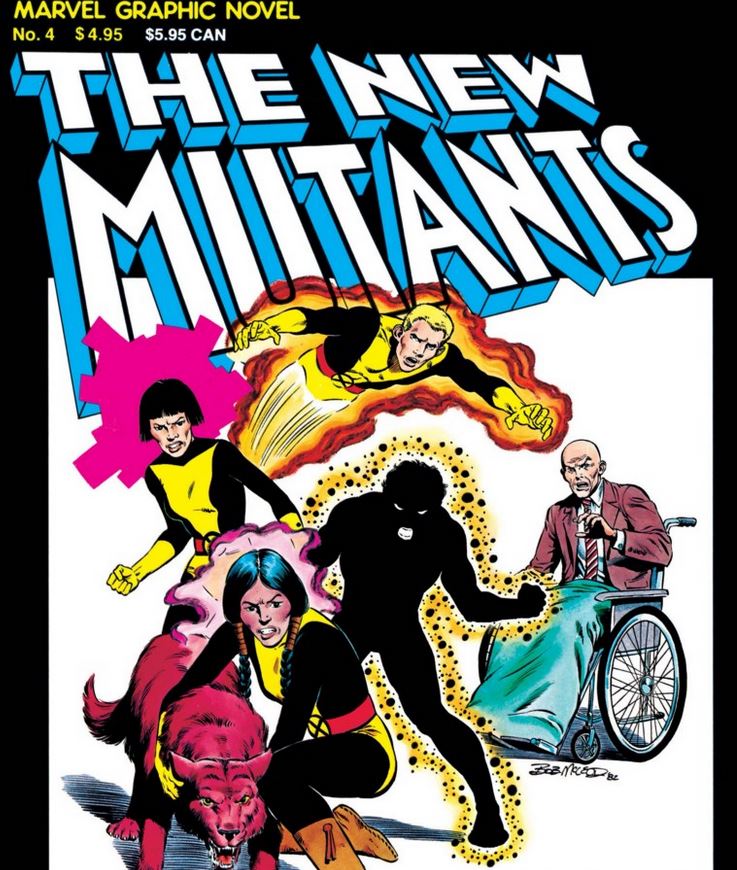
The New Mutants should be presented in their own arrangement, yet the principal issue was ventured into the fifty-page Marvel Graphic Novel #4 and delivered in December 1982. The X-Men were assumed dead during an intergalactic common conflict including parasitic outsider bugs (tedious account!). Author Chris Claremont, craftsman Bob McLeod, and manager Louise Simonson concocted an arrangement zeroing in on another class of understudies for Professor Charles Xavier's School for Gifted Youngsters, the decent "front" for detested and dreaded freak teens.
The New Mutants #1 turned out in March 1983. It included a program of Karma (Xi'an Coy Manh), a Vietnamese mystic who can have individuals' bodies; Danielle Moonstar, a Cheyenne teen who makes fantasies dependent on individuals' apprehensions; Cannonball (Sam Guthrie), a coal mining youngster from Kentucky who launches like a rocket; Sunspot (Roberto da Costa), a Brazilian beneficiary who draws super strength from the sun; and Wolfsbane (Rahne Sinclair), a Scottish werewolf.
As a matter of fact, it hasn't altogether matured well. "Reformist for now is the ideal time" is perhaps the most liberal approach to depict the book. For all the intricacy and subtlety it brings to Sunspot, the haughtiness and generalizations brought to the Asian and Indigenous characters basically dribbles off the page. Additionally, Chris Claremont, for every one of his endowments as a narrator, never appears to confide in his craftsman to convey a picture, and wants to portray the least difficult of activities.
Mr. McLeod was the craftsman for the initial not many issues, trailed by Sal Buscema. Issue #18 in August 1984 was the first for craftsman Bill Sienkiewicz, and it's anything but an embellishment that he extended what funnies were fit for as a medium. He had effectively done work of art for Moon Knight and Fantastic Four, and his transition to The New Mutants was proclaimed at the lower part of issue #17. In the afterword to The New Mutants: The Demon Bear Saga collection, Mr. Sienkiewicz stated, "As far as I might be concerned, falling off three years of Moon Knight, the opportunity to separate a couple of more hindrances was overwhelming." In his first issue, he presented the personality of Warlock.
Warlock was a "techno-natural" outsider shapeshifter who was allowed freak status for having sympathy, and joined the group in issue #21. Between his plan, shape-changing, and widening of the meaning of freak, he stays quite possibly the most unique characters in standard American hero funnies.
Comics are the Language Also in Post-Digital Age
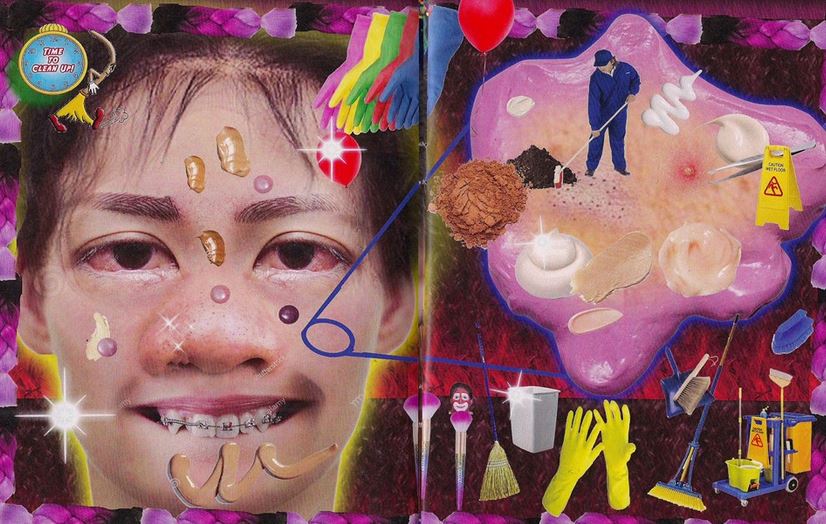
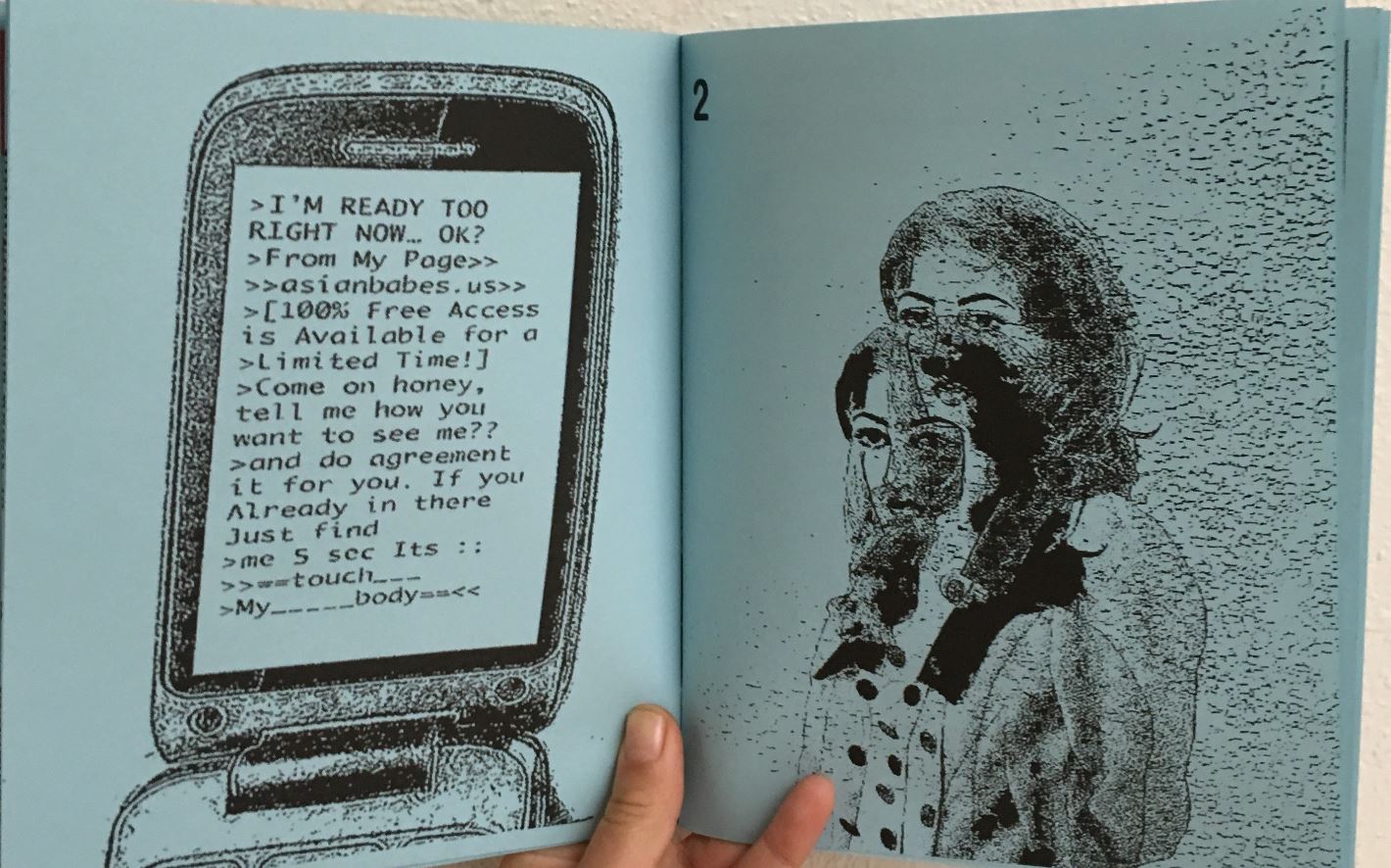
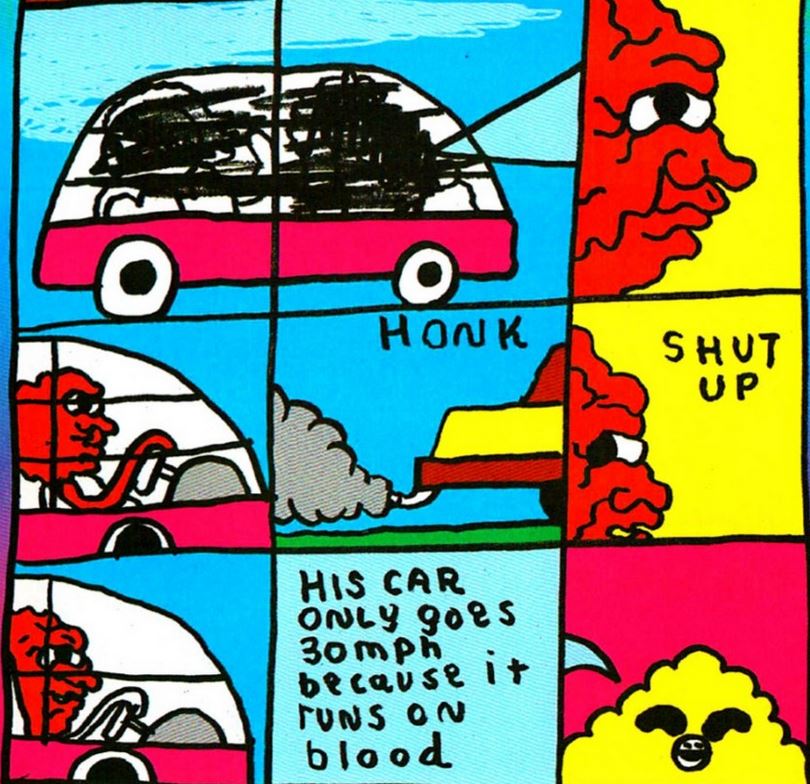
Deskilled Comics are purposefully drawn comics. They are famous in the craftsmanship funnies world today; models incorporate crafted by, Mushbuh, Kendra Yee, Mickey Zacchilli, Karrisa Sakumoto, Jaakko Pallasvuo, Kim Jooyoung, Ben Marra, Chris Harnan, Masano Hirayama, Char Esme, Ben Mendelewicz, and Isobel Neviazsky, just as specific parts of Patrick Kyle and Ginette Lapalme's works.
Other than being instances of Deskilled workmanship, these funnies regularly consolidate composed garbage and inaccurate punctuation and spelling. They are not intrigued by plot or the brain science of characters. They feel unconstrained, improvisational, and spontaneous. They incline toward continuous flow. They couldn't care less about authenticity, in the feeling of verisimilitude as well as in the feeling of "reflecting society in the correct way". The majority of them are diverting yet cynical about late private enterprise and the most recent mechanical advancement despite the fact that they are created, dispersed, and saw utilizing the most recent innovation, for example, web-based media and cell phones. A considerable lot of them don't avoid obviously showing that they are made with computerized devices, while deliberately containing innovation and website composition includes that originate before the web-based media age.
Deskilled Comics are not a self-governing or autonomous advancement inside craftsmanship funnies. The Deskilled style is famous not just in the minor subculture of craftsmanship funnies yet additionally in the contemporary post-computerized visual culture; Hito Steyerl has called it "Helpless Image". It contains numerous highlights of the post-advanced stylish, including low goal, MS Paint, late 90s and mid 2000s website composition, glitches, pixelization, appalling typography, and so on The epitome of the post-advanced (post cell phone and online media) tasteful is Meme which additionally addresses the post-computerized culture.
There have been Deskilled Comics previously. For example, in DIY, zine, and punk culture, there is Gary Panter's Jimbo and Mark Connery's Rudy, just as Lynda Barry and Japan's Heta Uma (Yuka Goto, Shiriagary Kotobuki, and Man Gataro). Deskilling comes from Modernist artistic work customs like Abstraction and Primitivism. Funnies have consistently had a tasteful association with contemporaneous visual culture and craftsmanship like Modernism (See Society in Nix and Forgotten Fantasy by Sunday Press Books), Pop Art (Jim Steranko), and Psychedelia (underground funnies).
Dissimilar to past situations where funnies were impacted by and followed the more extensive visual culture, Deskilled Comics are the transcendent component of the contemporary post-computerized visual culture. The encapsulation of post-advanced culture, Meme, demonstrates this. Image is a comic: it has words and pictures cooperating, regularly in a real sense portraying a character and what it says; some of the time it has a grouping of pictures; at times it is really a comic. Rather than the expert Deskilled Comics I referenced above, Meme is vernacular: it doesn't have creation and it is made and delighted in by the majority.
Paper Rad's works fill in as another proof that Deskilled Comics are the basic element of post-advanced culture. "Today, … Paper Rad's tasteful and approach are in proof all through web culture and mainstream society… Paper Rad's heritage can be seen any place (in the expressions of Ben Jones) "large, wonderful pictures look down unendingly on a page with energized things." … The extraordinary stylish — which amalgamated hallucinogenic shadings, tween sentimentality, new age imagery, and 80s and 90s mainstream society — constrasted that of the dull, genuine troublemaker stylish regular in Northeastern DIY punk societies at that point," said the article going with New Museum's Net Art Anthology display Art Happens Here. Deskilled Comics were Paper Rad's principle and most persuasive tasks. Other than their Deskilled style — childike, "lo-fi" stylish, the unadulterated RGB and splendid fluorescent shades of MS Paint, and "animation characters" — their works' utilization montage, continuous flow, obscurity, and allocation, which are all highlights of post-computerized culture, particularly Meme. Paper Rad was the point of reference of everything post-advanced. It is no happenstance that the substance of Meme, Pepe, was gigantically impacted by Paper Rad. Since Deskilled tasteful is universal these days, it is more earnestly to get a handle on how extraordinary Paper Rad felt right around twenty years prior. Ivan Brunetti's An Anthology of Graphic Fiction, Cartoons, and True Stories,one of the most-utilized collections for funnies classes, includes a page of Paper Rad notwithstanding right around 1,000 pragmatist, elective, and additionally autobio funnies. In twenty years, the oddity turned into the zeitgeist.
I Want People to Like Me
I can't shake the inclination that nobody truly focuses on me. I stress that everybody I know is simply enduring me until I disappear or in the long run kick the bucket. This could conceivably be valid, however any place I go, I can't get away from the inclination.
Assuming as it were…
It's conceivable that what I'm feeling isn't totally close to home to me. It might simply be ordinary, standardized impassion in a world that has become progressively inaccessible and detached. I can't actually tell.
All things considered, that will not work, however how's the year after that?
In any case, a few group are so friendly and bubbly that they figure out how to draw in fondness, warmth, and venerating deference, even in this lone world. That is the sort of individuals I need to be.
I understand that this worry with "being loved" can appear to be senseless this long after center school. Furthermore, secondary school. Furthermore, many years of proceeding with ed. However, clearly, I'm senseless.
I'm simply askin'…
In all actuality, I'd like individuals I know to encounter a little flood of joy when I appear. What's more, in the event that they don't, I'd like them to continue to investigate at the entryway for me. Perhaps they could even send a book to ensure I'm OK and to check whether I need them to drop off some chicken noodle soup, ideally a few matzo balls.
I need steady and obvious indicators of fondness. A few expressions of explicit applause. Individuals contacting me. Welcomes. Evites. Some subsequent inquiries regarding intriguing things I said weeks prior. You know, something like this.
This is an excess.
I'm not hoping to be venerated and worshipped—however I'm not really against it all things considered. I just need to feel held and upheld on the planet. I need get-togethers that are fun and loaded with chuckling, profundity, and confiding in genuineness. I need get-togethers that leave me feeling warm and fluffy and topped off thereafter, not restless and re-thinking all that I said at 4 a.m.
In any event, I'd prefer to shake the inclination that nobody likes me.
Anyway, how would I get such an excess of going? I don't actually have the foggiest idea. Be that as it may, association is a two-way road, and the lone impact I have is over my own side. Since I don't have the ability to mystically force others to like me, the most ideal alternative is by all accounts to make myself more agreeable. Keeping that in mind, I am going full-Gandhi with this exertion and attempting to be the companion I need to have.
**Respect and like others**
At the point when I can unwind and listen intently, I am genuinely shocked by the ability, fortitude, and innovativeness I see in others. It's rousing and cheering. Furthermore, it gives me something to do when they are rambling endlessly.
**Try not to pass judgment and excuse**
My reflex to limit others is about my own safeguards. What I need to think about existence can emerge out of anybody whenever—even from the individuals who appear to have totally lost their hold on the real world. You don't generally will go right to the source. This is a big deal: I am most joyful with shared discussions. I like to hear from everybody, and I like individuals who realize how to bounce in and talk and how to dial down and tune in. I have the leap in-and-talk part down very well. I'm chipping away at the other.
**Tune in and recollect**
I used to be dreadful with names, yet I've improved. I survey them presently like there will be a test. I likewise suck at recalling what individuals say. Like, if their parent kicked the bucket or their child's debilitated. Tragically, not a great deal of subtleties stick for me—in any event, when I attempt. In any case, I'm dealing with it. It doesn't matter. I'll simply record it.
**Face challenges**
I attempt to make certain to expand solicitations, approach others, and request to participate. Also, to continue to get out there socially, which is the greatest danger of all.
**Be defenseless**
I'd say all the more however I'm apprehensive about humiliation. Mention to others what I explicitly respect about them. This can undoubtedly get peculiar since not every person is OK with acclaim. In any case, I expect that even the individuals who flee shouting presumably appreciate it later. Try not to sit around pressing water from rocks.
I have a motivation to attempt to prevail upon individuals I appreciate, regardless of whether they respect me, or anybody other than themselves. I've improved at rapidly proceeding onward. I would prefer not to pass judgment and excuse, yet I additionally don't have any desire to invest my energy attempting to fill my container at a dry lake.
Likewise, did I make reference to, I'm a masseur?
Converse with everybody with a similar interest and regard
There was a person named Paul at the Wakefield Post Office who used to blow me away with this ability. He started up a genuine discussion with everybody, including irate, desperate pessimists, in the brief time frame it took to post what I can just envision were their mail bombs and Bacillus anthracis ladened bundles.
Get things done for others
I would prefer not to be a trick attempting to "purchase" companions with my "liberal soul." I need individuals to like me for me. However, something I'd like me to be is liberal. Also, I can't resist the urge to see that companions get things done for companions. Clearly, association isn't about accommodation.
I understand that this is a ton for me to utilize. Also, I couldn't say whether I can pull it off. Be that as it may, it's as yet my absolute best. I'm not one of the graced and fortunate people who everybody loves. I'm not somebody who by one way or another, mysteriously, realizes how to do every one of these things normally. I must separate them, parse them out, and practice, practice, practice. It is difficult, yet I guess it makes me a decent possibility to expound on these sorts of battles.
Wohoo.
You can't make lemonade without lemons…
Composing On Spec Has Made Me A Wreck
Dealing with theory, or spec as is commonly said in the business, is a shorthand method of saying that nobody entirely me or cares on the off chance that I exist.
At the point when I compose a book, it begins with a sketch faker that I make without anybody having requested it. I have no clue on the off chance that somebody will like it or need to distribute it. It's simply me, alone at my work area, perspiring the subtleties, trusting that it, and I, will at last discover endorsement and acceptance.This would be hard for anybody, yet it's something or other that I've reproduced from my life that is additionally horrendously recognizable.
Working under agreement has its own pressing factors, yet in any event I realize that somebody, some place has some interest in the thing I'm doing. Composing on spec offers no such consolation.
At the point when I talk publically, which I have worked really hard of keeping away from, I think that its horrendous except if it's Q&A. Regardless of what the inquiry might be, it's such a ton simpler for me to talk realizing that at any rate one individual needs to hear what I need to say. Yet, that is one more individual than I have when I compose.
I've gone through years dealing with full-length book recommendations that I've never sold, and that nobody has at any point known about. The entirety of the time I spent on them, alongside the sandwiches, electrical flow, and hot showers that I burned-through during that time, has created nothing of significant worth to others. This hasn't served to fill me with a staggering feeling of significant worth and confirmation.
This sort of work is presumably not the most ideal decision for somebody like me who has undeniably a greater number of questions than certainty. What's more, who factors utility utilization into the monetary record of individual worth. It's a head-scratcher why somebody with no benchmark of self-esteem and natural worth would decide to live this way.
In any case, until I can sort out another thing to do that may give me a superior sense that I exist and matter, at any rate it is great to slowly inhale and reflect, expect, and acknowledge the spirit destroying preliminaries of dealing with spec.
 @humapark