Mobazha: OpenBazaar-Style Commerce for Bitcoin Cash
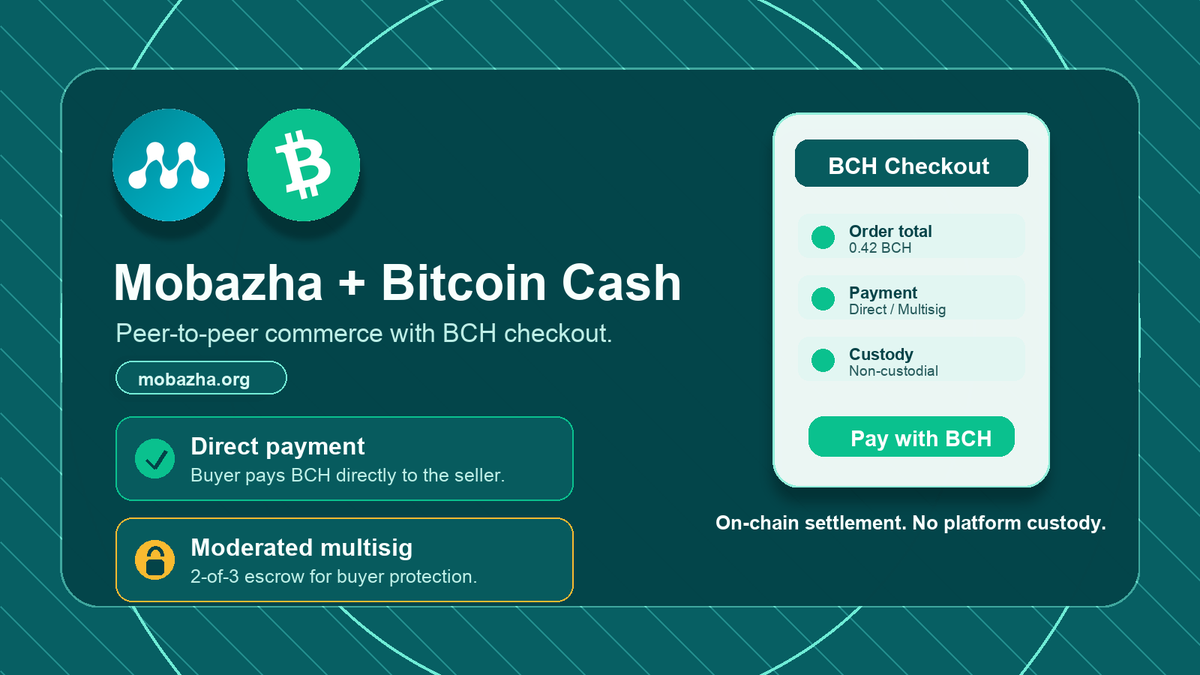
When OpenBazaar shut down, many people assumed the idea of peer-to-peer crypto commerce had ended with it. Mobazha comes from the same belief that made OpenBazaar interesting: independent sellers should be able to trade online without a marketplace taking custody of their funds. The difference is the shape of the product. Mobazha is not asking every seller to start with a desktop node. The mobazha hosting is the hosted storefront and commerce layer: sellers can use a SaaS storefront, while a standalone/self-host path remains available for people who want to run their own store infrastructure. For the BCH community, the short version is this: Mobazha supports Bitcoin Cash checkout, including simple funded checkout and moderated 2-of-3 multisig escrow. Why BCH fits this model BCH is a practical fit for peer-to-peer commerce because the payment experience can stay close to normal checkout: Low fees make small orders realistic. Fast settlement gives sellers quicker payment confidence. On-chain payment avoids card-style chargebacks. UTXO multisig makes buyer protection possible without a custodial marketplace account. That last point matters. The goal is not to replace one platform middleman with another platform middleman. The goal is to let the order flow have protection when needed, while keeping the funds on-chain and outside Mobazha custody. How BCH checkout works Mobazha stores can use BCH in two checkout styles. Direct / funded checkout This is the simple path. The buyer pays with BCH, the order is marked funded when payment is observed, and the seller can continue fulfillment. It is a good fit for trusted sellers, repeat customers, local communities, and lower-dispute products. Moderated checkout with 2-of-3 multisig For higher-trust purchases, BCH can be used with a 2-of-3 multisig escrow involving buyer, seller, and an optional moderator. Funds can be released when the buyer confirms receipt. If something goes wrong, dispute resolution can use the same multisig trust model many OpenBazaar users remember. The important part is that moderated payment is not a centralized escrow balance inside Mobazha. It is an on-chain settlement path designed around buyer protection. What mobazha hosting adds The hosted layer solves a problem OpenBazaar struggled with: most sellers do not want infrastructure work before they can publish a store. In SaaS mode, mobazha provides the hosted store experience. Sellers can manage listings, checkout, orders, and chat without running a server first. In standalone mode, a seller can run a store on their own domain. Public store data can be served from the local store node, while buyer actions such as ordering and chat can route through the SaaS buyer identity layer. That keeps Mobazha's peer-ID-based order model intact without forcing every buyer to run a node. This is the core architecture shift: SaaS and standalone are two deployment modes for the same commerce logic, not two unrelated products. What changed from OpenBazaar OpenBazaar was desktop-node-first. Mobazha is hosted-first, with self-hosting still available. OpenBazaar was mainly for crypto-native early adopters. Mobazha is aiming at independent sellers and communities that need a storefront, including Telegram-native communities. OpenBazaar made multisig commerce familiar to a generation of crypto users. Mobazha keeps that idea, but rebuilds it around today's wallet, hosting, and checkout expectations. Where BCH fits in Mobazha BCH is not just a logo on a payment list. It is a useful rail for the kind of commerce Mobazha wants to support: Small orders that should not be eaten by fees. Sellers who want final settlement. Buyers who want wallet-based payment. Communities that need a lighter alternative to card processors. Purchases where moderated escrow can reduce trust friction. Mobazha also supports other crypto payment options, including BTC, ETH, SOL, LTC, selected tokens, and stablecoins where available. BCH is the focus here because low-fee wallet payments and UTXO multisig line up especially well with peer-to-peer commerce. For BCH builders and merchants If you are a BCH merchant, wallet developer, marketplace operator, or community admin, the feedback we want is very practical: Does the checkout flow feel clear enough for normal buyers? Should the BCH wallet instructions be shorter or more explicit? Which wallet behaviors should Mobazha handle better? What would make moderated multisig feel safer and less confusing? Which seller categories are the best first fit for BCH commerce? That kind of feedback is more useful than abstract protocol talk. Mobazha needs to work for real stores, real buyers, and real disputes. How to find Mobazha Main site: mobazha org Telegram: MobazhaHQ X: MobazhaHQ Search for Mobazha if the plain text addresses are easier to copy from another browser tab. BCH checkout demos The two demos below show both BCH checkout paths in action. Moderated checkout demo https://youtu.be/nGiYy__ssXQ Direct checkout demo https://youtu.be/Q8bQWmm3Byw
No comments yet