Human Natural Needs
It occurred to me to pour out what had recently crossed my mind regarding the natural needs of humans. Maybe this theory is similar to **Abraham Maslow** *Hierarchy of Needs*, one of the figures in Humanist Psychology that I admire. Where is Abraham Maslow theory of needs in the form of a hierarchy, we know that the first is physiological needs, then security needs, love needs (a sense of belonging), self-esteem needs, and the last is self-actualization.
Here I want to express the thoughts that I feel like I want to get out of my head and put them in writing. It's a natural human need that I associate with human development from birth. Human natural needs are divided into 4, which, like Maslow's theory, are hierarchical. The first is a physiological need, the second is a moral need, the third is a rational need, and the fourth is a spiritual need.
**Physiological Needs**
Physiological needs are the first needs humans need at birth. It is no secret that humans under the age of one year will cry if their physiological needs are not met such as hunger, thirst, sleepiness, wanting to defecate. At this stage, human needs are in the stomach-down position.
**Love Needs**
The need for love (morality), is almost the same as Abraham Maslow's definition of belonging and belonging. This need also requires satisfaction on morality which can be fulfilled by good deeds for others and vice versa. After the human age reaches one year, the baby begins to grow his love and hopes to get a return from the love he grows. This baby's love grows in people who fulfil their physiological needs, the majority of which are parents. So it is at this stage that an attachment emerges between the child and the parent. At this stage, human needs are in the chest (heart) position.
**Rationality Needs**
The need for rationality is the need for the human soul to begin to find out what is going on and why he is trapped in this body unconsciously. This need begins to emerge when humans start to turn three years old, no wonder at this age children will very often ask questions to answer their rationality needs. This need will arise when the need for love has been met, then children whose love needs are not met tend to be quiet and do not ask many questions when entering the age of three. At this stage, human needs are at the head.
**Spiritual Needs**
The need for spirituality is an essential human need, this need is what all humans must seek in the form of their approach to God. I still don't know much about this, because, from some of the literature I read, the fulfilment of spiritual needs cannot be explained in words. No human language can describe the satisfaction of this need. At this stage, human needs are in the position of the soul.
Perhaps the physiological needs and the need for love (morality) are quite common in the general public, there have been many campaigns that advocate for children to be given adequate nutrition for physiological needs and campaigns for parents to provide quality time to play with children who have also been heard, although many parents continue to pursue a career for the sake of the child's future, even though it would be nice if the foundation of the child's future was built as early as possible by fulfilling the child's love needs, not just physiological.
The need for rationality is still very rarely heard. I believe that all children whose physiological needs and love (morality) needs are met are intelligent children, but being fooled by their environment is carried out at the stage where children start looking for rationality needs. In **Jonstein Gardner** philosophical novel entitled "*Sophie's World*" there is a sentence that says that young children are the best philosophers because they always question little things very philosophically. Absolute dogmatic answers make children don't want to think about asking philosophical questions anymore. Sometimes when children question philosophical things, their environment answers with very unsatisfactory answers such as "all because of God, all God's will, etc".
Answers like this make the child not dig the questions in him anymore and eventually things like this carry over into adulthood. It's no wonder that many adults today don't care about small and philosophical things, they become pragmatic humans who do something to meet practical and instant needs. There are so many examples of adults who are no longer willing to question or seek meaning from every detail of life, I think we all know its implementation in everyday life so I don't think it is necessary to give examples anymore.
Philosophy is a smart way to meet needs that are no longer ignored today, the need for rationality has been buried deep by a sea of technology that spoils humans and makes everything more instantaneous, even though in this information age everything that is needed must be instant and practical. I think that not optimizing rational needs if I don't want to say forgetting, is a form of human gratitude towards God because reason or rational power is one of the best gifts given by God to humans so that our degree in the stories of heavenly religions is above all God's creatures. another. Intellect, this instrument is what makes humans at a higher level than angels made of light and demons made of fire, even because of this reason God ordered all of His creation to prostrate to humans (Adam).
In this little article, I only emphasize the aspect of rationality needs because this need can be achieved with the results of one's efforts, in contrast to spiritual needs which can only be achieved with the help of a spiritual teacher. With this article, let's absorb one of the needs that are often forgotten today, let's optimize this most beautiful gift of God so that we are not among those who abuse God's blessings.
Religion in the Modern Era
Perhaps the discussion of religion in the modern era has been touched upon by many religious scholars, scientists, and people who are interested in this field. This article may be of less value than the articles discussed by religious scholars, scientists, and people who are interested in this field, who certainly have a much broader and higher level of insight and intellectual level than me.
This article is my anxiety to see the very diverse phenomena of religious people today. There are quite a lot of divisions of religious sects in this modern era which I generally categorize into three streams, namely *liberal, moderate, and fundamental*.
Liberal is a religious style that relies heavily on rationality in interpreting holy verses which sometimes gets rid of myths or things that cannot be proven by empirical research. While fundamentalism is a religious style that interprets the holy verses by understanding the literal texts only, not a few of the fundamentalists ignore contextual which is difficult to separate from the cause of the revelation of the holy verses. Meanwhile, moderate is a religious style that is not too liberal and not too fundamental. Moderate religious style can be said to be quite rational but it does not get rid of the myths contained in almost all religions.
There are many adherents of the three schools which in my opinion are quite sectarian. It is this sectarian passion that makes the debate in matters of religion a debate that never expires for debate. Not infrequently, the extreme sectarian passion in the debate gave birth to fights that should not have happened.
Since thousands of years ago, not a few wars if not all, wars were born because of this sectarian nature. It is this sectarian nature that gives rise to symptoms of extreme fanaticism that blinds the eyes of objectivity in viewing a problem. In this discussion, I may focus more on the religion of Islam, although I only have very little insight into Islam, it is more than my insight on other religions.
In this modern era, science is developing very rapidly, it is not uncommon for science to even pinch religious values. Far from this modern era, around the European Renaissance era of the 16th century, science hit hard on religion, especially *Catholicism* because of the discovery of the *Heliocentric* theory by **Galileo Galilei**. At that time, the authority of the church was highly recognized and very powerful. The church at that time believed by the text in its Holy Scriptures that the earth was the centre of the solar system, but Gallileo flicked it with the discovery of his Heliocentric theory. The church feels this discovery is very disturbing, because if the theory is true then the authority and public trust in the church will be reduced. Galileo Galilei was sentenced to life imprisonment for the discovery of his theory, only about 100 years after his death, Gallileo's Heliocentric theory was proven true and in the end, the church recognized it.
In my opinion, if we believe that religion, especially the holy book, was revealed by the Almighty God, then religion should not contradict scientific discoveries that can be explained empirically. Quoting an opinion from an Egyptian thinker who is also the Mufassir and Grand Mufti of Egypt, **Muhammad Abduh** more or less said that "*the Qur'an is never and will not be wrong*. "*The Quran is not the Quran*." This does not mean that religious teachings should submit to the majesty of science as extreme fundamentalists commonly interpret.
**Ibn Rushd**, the Andalusian philosopher who was very instrumental in the revival of European thought who also tried to reconcile religion with the philosophy that people considered as a science that led to error because it produced radical and wild interpretations. Ibn Rushd once said more or less “*We know very well that logical (or philosophical) thinking will not oppose religion, because the truth will not oppose the truth. In fact, the truth will strengthen other truth*s”, I think that opinion is very true because reason is also a representative of God that is attached to all humans even though not many use it.
In my opinion, the purpose of religious teachings is not to teach the truths of the world but to teach good values that contain morality for the benefit of many people. Does not according to the Qur'an the main task of the Prophet Muhammad was sent to the world is to teach goodness and improve human character? Even the Prophet **Muhammad SAW** once said "*You know better about your worldly affairs*" to one of his companions. In my opinion, the hadith indicates that we need to explore our world which of course must be by religious teachings, namely for the benefit of the people.
So there should be no need for a dispute between modern science and religion, instead, the two should work hand in hand to complement each other. As **Albert Einstein** said, "*Science without religion is blind, and religion without science is lame*".
Liberalists who glorify rationality in interpreting verses have weaknesses. They are very fixated on empirical discoveries which are of course very limited and strongly believe in the discoveries of their time which will certainly develop much larger in the future. The great Egyptian thinker who was also a student of Muhammad Abduh, **Rashid Rida** rejected the hadith which more or less called for "*If a fly gets into the drink, then dip its wings*" because he feels it is unacceptable by reason. Along with the development of science, it was found that the hadith is true because on both wings of flies there is poison and the antidote and if the two wings are dipped, the poison will be neutralized by the antidote so that it will not cause the disease that flies often carry.
Human reason is very limited, therefore it is wrong to think that something that does not yet exist is something that will not exist. It would be wrong to think that something that has not been proven is something that will never exist. Science will always develop and I believe that the things that religion conveys and have not been touched by science are not myths (as some scientists believe), they just cannot be called by our minds today. The intellectual arrogance of scientists and some liberals in my opinion is very unwise, therefore I reject the views of some scientists if they say that religion is irrational, I call religious teachings that have not been touched by science as something supra-rational and do not rule out the possibility that one-day science will touch it.
Fundamentalists are no better than liberals because many of these fundamentalists do not maximize the function of their minds. They are immersed in the texts of the holy verses that should need to be studied more deeply, even worse they ignore the contextuality of the verse. They do not think that these verses came down in a very distant time from us and surely the culture of the people is very much different from ours in this modern era.
I think that in this modern era that highly exalts reason, then we too must use reason in religion even though the purpose of religion is to fix our souls. Maybe I will write about my hypotheses regarding spirituality, rationality, morality, and physiological satisfaction in another article. At the moment I only emphasize the rationality aspect because humans at this time need rationality in understanding religion.
If indeed Islam believes in itself as a guide for every human being since the Prophet Muhammad until the end of time, then in my opinion Islam must be able to adapt itself to the times. One of them is to meet the growing needs of his time. For example, at the time of the Prophet Muhammad SAW, the Arabs greatly glorified and respected the value of literature or the beauty of language in a poem or verse, that's why the Al-Quran was revealed with literary value and extraordinary language beauty. never expired.
One of the reasons for the revelation of the Qur'an with the beauty of its extraordinary language was so that people at that time who respected literary values could easily be attracted to follow its teachings. It was proven by the conversion of one of the great Quraysh figures who strongly opposed Islam at that time who also became the second caliph of Muslims, Umar bin Khattab because of the beauty of the language of the Qur'an.
I believe that the Qur'an was revealed to meet human needs until the end of time, so surely the Qur'an also contains all human needs until the end of time. In this modern era, humans no longer need the beauty of literature to be satisfied, but what humans need today is a rational-empirical explanation. Although I have only read a little bit of Islamic literature, I am very amazed by the rational explanations contained in the Quran and many have been proven empirically.
There are so many Islamic literatures that discuss Islam rationally and in Islamic literature, I refer to the work of **Prof. Dr Quraish Shihab**, who explained the holy verses very rationally even though he also rejected everything that was contained in the Qur'an, could be rationalized.
In understanding the myths in religion, I do not believe that the historicity of these stories ever happened in fact like the story of the Prophet Adam who is believed by many to be the first human in the world. I think that the stories contained in the Qur'an are not all historically factual, but what we need to learn is the moral message contained in the stories. Perhaps for this reason many commentators write under the title "Acts of the Prophets" instead of "History of the Prophets".
The theory of evolution has become something that is very patent in science and it is difficult to break this theory because empirical evidence supports this theory. Then does this theory prove that the religious explanation of the creation of man is wrong? Not really, because the Qur'an does not explain in detail the process of human creation. Notice the verse 38:72, which describes the creation of man
"So when I have perfected the event and I breathed into it My spirit; then you should fall in prostration to him.” (Q.S. 38:72).
It is possible that the blowing of the spirit occurred when primates had evolved into Homo Sapiens because the Qur'an does not explain events from the beginning to perfection, it could be that when humans were not yet perfect they would still be the same species as the ancestors of apes, then after being perfected or become Homo Sapiens (fully human) the new spirit of God is breathed into humans. Wa Allahu A'lam.
I think here that there is no need for a dispute between the latest discoveries of science and religion because I quote Muhammad Abduh's opinion that "*The interpretation of the Qur'an is not the Qur'an itself*" so if there is an interpretation of the verse that contradicts the newly discovered truth, it is necessary to interpret repeat the verse.

Is There a Future for Psychology?
*Psychology* is commonly known as the study of the soul. Many ordinary people think that people who study psychology will have the ability to read a person's character. There is nothing wrong with the definition of psychology above, it's just that modern science or science provides some conditions for science to become an independent discipline.
Modern science departs from empirical foundations, while the soul is a very abstract concept. Empirical means that it can be observed by the senses of normal or healthy people. Therefore, psychologists agree to look for observable manifestations of the soul, namely behaviour. By paying attention to behaviour, psychologists can classify people into special categories commonly known as personalities.
There are many kinds of personality according to experts. Even experts make a classification of each personality. Call it **Hippocrates** who lived in classical Greece, he classified human personality into four groups. The Hippocratic theory is quite famous and is still often used today. Sanguine, Choleric, Phlegmatic, and Melancholy are the four groups. This theory has been around for over 2000 years! This Hippocrates is extraordinary.
Since psychology broke away from *philosophy* and became a discipline of its own, the development of psychology has accelerated. From the famous **Sigmund Freud** to the surviving **Albert Bandura**, several theories of personality have been born. Personality theories have developed into many. Even psychologists I find it difficult to memorize all the theories of personality so many.
Entering the modern era, the syncretism of science seems unavoidable. Advances in technology greatly support the development of research. The syncretism of neurology and psychology that gave birth to neuro-psychology is very advanced. The question is, *is there a future for psychology?* If psychology students only understand psychology, it seems that stagnation is insight.
Currently, neuroscientists have succeeded in developing several practical methods. To be able to know a person's personality, psychologists need data that is not instant. At least the psychologists have to do observations and interviews. The methods of psychologists are also prone to errors so that the results obtained are not satisfactory. Meanwhile, *neuroscientists* have a more accurate method of knowing a person's personality.
Today's neuroscientists can find out a person's personality through biological examinations. From the brain to the DNA has been mapped out well, although not yet final. They can know the function of the brain in micro and even nano! All human behaviour is born on orders from the brain. By reading the brain, neuroscientists can determine a person's tendencies. From intelligence to the character of a person can be mapped through biological examination.
From brain reading to the genome can be done well today. The genome is the entire genetic information of a cell or organism, or in particular the entire nucleic acid that contains that information. A neuroscientist from *Indonesia*, **dr. Ryu Hasan** said that the genome is a book that is embodied in a person and contains information up to his ancestors. So, from the genome of a neuroscientist can trace the character of our grandfathers to our great-grandparents! Sounds crazy, but that's technology. Still, want to hear something crazy from the development of neuroscience?
The brain contains almost all the information that living things remember. Currently, scientists are developing technology that can read the information in the brain. In other words, all our memories that are in the brain will be able to be transferred into a computer with an algorithm that doesn't matter what it is. This technology is predicted to be completed in the 2030s. Yes, similar to the sci-fi film *"Transcendence"* made by **Wally Pfister**, played **by Johnny Depp**.
With this technology, it is predicted that humans will be able to live eternally! Death is caused by the death of physical organs, therefore when this technology is realized then all the information in our memories will be transferred to a mechanical body. So, even though we physically die, we can live in an artificial body that knows no age. Crazy indeed.
Fortunately, today's neuroscience technology is still very expensive. To find out personality through brain and genome reading we have to dig deep into the pockets. Because of the high cost of technology, psychology is still an alternative for knowing human personality in all fields. Companies still need psychologists to recruit new employees.
Technological developments cannot be stopped. If in the past, motorcycles were a luxury item and now they have become an ordinary item and can even be said to be a primary human need in Indonesia, then it is not impossible that neuroscience technology will become cheap in the future. If the technology was cheap, it might be possible to find out a person's personality only a mattress and all the sophisticated tools to read the brain and genome were needed.
If that time has come, then humans no longer need to bother doing tests, interviews, and observations to find out a person's personality. We just need to lie down for a while, then sophisticated tools will work to read our brain and genome like a CT-Scan tool and then come out the results of personality and all its tendencies. Even today the tendency to cheat alone can be predicted by neuroscience. Can we imagine if technology is getting more sophisticated? Is there a future for Psychology?
*The main image source by* *psychology-spot.com* https://psychology-spot.com/psychology-and-technology/

Fanaticism kills objectivity thinking
It's no secret if fanaticism is one factor if you don't want to say the only factor that kills objectivity in thinking. A study said the higher the level of education is inversely proportional to the high level of fanaticism. This research is true, but in the wrong way of education such as in my country, the research can be less reliable, because not a few people who have higher education still have fanaticism to something like religion or even the most obvious right now, fanaticism against the choice leader.
In my opinion, it is not the high level of education that bury fanaticism, but the high level of reasoning. In the right education where education hone reason, maybe the research is true, but in my country, it is actually education even kills reason instead of sharpening so that fanaticism is still infected with educated people.
The only thing I have read the education system in the writings of educational experts who certainly also contain a mistake in viewing the mistake of the education system in my country. Outside the mistake of the education system, I feel concerned about fanaticism here. Fanaticism is understood or behaviour that shows excessive interest in something, and it feels like everyone knows wise words that say "everything that excessive is not good", but somehow there are still many people who do everything excessively.
The United Nations have given a red report card tolerance in my country. Violence and discrimination still occur a lot in my country, this happens because of the existence of fanaticism. Fanaticism blinds objectivity in thinking, even though thinking is one of the extraordinary talents pinned by God for the closest creature.
Killing the only talent that distinguishes humans from animals is one of the actions against human nature. Fanaticism is the perpetrator of the murder, but the murder of fanaticism has several factors that encourage the occurrence of thinking about thinking. Like the crime that occurs not because of the intention of the culprit, but also because there is an opportunity. Likewise fanaticism.
Science is light and the absence of producing darkness. Darkness caused fear. Fear raises aggressiveness and strength that sometimes surpasses common sense only so that the fear of disappearing, this is the aggressiveness of what then gave birth to fanaticism. Fanaticism is considered capable of protecting individuals whose fears from their fears. Then fanaticism kills reason, the death of reasoning realizes wild humans who justify any means so that the fear does not reappear. The death of reason is also sometimes creeping in the deaths of conscience.
Inner upheaval is quite complex that produces fanaticism. Fanaticism is a tree rooted in ignorance because almost all bad deeds are born from ignorance and ignorance. Therefore it is not surprising if all religions demand the search for science and self-approach to God because God is all sources of knowledge. In my opinion in this highly sophisticated technology era, it becomes more difficult than being a broad-minded person. Capitalizing on internet connections and a little English skills maybe we can get a lot of knowledge that is indeed broadly scattered in cyberspace.
Many wise people say that the highest knowledge is love. How can love grow in fanaticism? Impossible. One branch of the love tree is tolerance. Tolerance can be created with each other. With this knowledge, we can find out why they are different. Isn't the difference between God? If it is not because of God's will, it is certainly not difficult for God to create one without a difference.
The most fundamental mistake of humans infected with fanaticism is that they do not know that differences are God's willingness and try their best and justify any means so that the difference is lost. The most widespread fanaticism in my country is fanaticism to religion. Somehow their logic, but this is the most difficult to enter my mind.
Yes, again ignorance and ignorance that plays a role from here. Religious doctrines since childhood are injected into a child's mind. Surprisingly, after adults, we know that tales that are injected since childhood are just a fairy tale such as a race between snails and deer, the mouse the thief, and many others.
But somehow the doctrine of religion is so imprinted strong in our minds so that not a few adults do not dare to question the authority of the stories in religion. Even though it is not infrequently when we questioned the authority of the stories. As a result, the doctrines that are not questionable are fungi in the mind so that they become dark sides. The dark side makes us no longer interested in knowing other things that intersect. For example, most Muslims no longer want to know stories about prophets who are also told in Christianity and Jews.
Finally, because of our ignorance and fanaticism no longer see anything objectively. Most people who fanatic in religion defend their brothers and their faith despite making mistakes and accusing the kinds of brothers not faith even though they have no one to be alleged. This kind of things gave birth to violence and discrimination that rose in my country.
This fanaticism needs to be killed because he has killed the most valuable instruments of the human. Fanaticism root, ie ignorance is a common enemy. Instead of accusing religious people who are not prejudiced that every religion is prohibited by every religion, the religious people should work together to undermine the ignorance that affects their respective religions.
It must be realized, there is no religion in this world that his adherents ruin the teachings of his religion. Religion is a tool for God to direct his people, but not infrequently the religious people who damage the tool, but without consciousness, he feels that what damages his religion is another religion. Even though no one can damage a religion besides itself. An example of the Messenger of Allah, however, was slandered, was posted, attacked by people outside of Islam, but Islam was not tarnished at all because the adherents did not tarnish them.
Again, fanaticism is the enemy of mankind who must be killed because fanaticism has wounded the most valuable humanitarian side which is to damage its common sense. This paper is just a fad of writing before going to bed so that these eyes can fall asleep. Of course, the mind is not clear where it is, and certainly, there are many mistakes in writing. Finally, hopefully, fanaticism is not infected in our minds and humans can live peacefully without fanaticism (although this utopia).
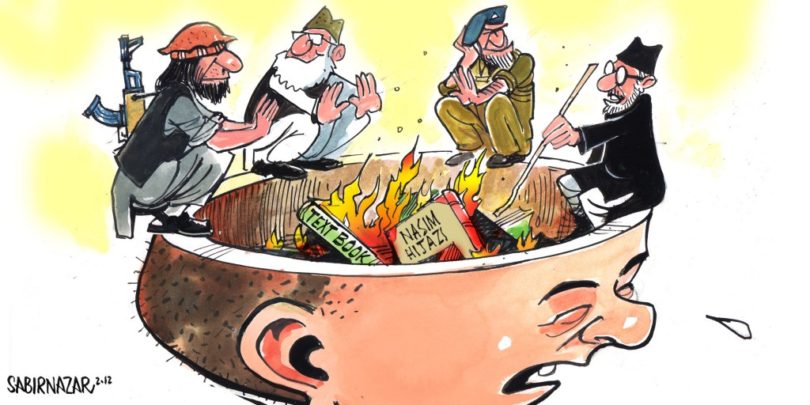
Main image by Asian Marxist Review http://www.marxistreview.asia/political-islam-in-pakistan/
Refreshing the mind and brain at Mount Bromo
When fatigue arises due to the very bad urban air, traffic jams are always encountered, as well as the hustle and bustle of the surrounding atmosphere. Appears in my mind to find a new atmosphere in a faraway place. Maybe I will choose the mountain to refresh my brain and mind.
I'm still confused, which mountain will I go to? In the end, the internet is my way of setting goals. I kept looking for information about good mountains to go to using the internet until I finally decided that Mount Bromo was my destination.
Mount Bromo is located quite far from where I live. You have to travel 3 days by bus because you have to pass through three provinces. Arriving at the bus terminal in the Probolinggo area, I had to take public transportation to go to the mountainous area as well as get lodging in the Bromo mountain area (I didn't set up a camping tent).
While waiting for public transportation to go to the inn, I met my friend who also wanted to go to Mount Bromo. Finally, my friend and I decided to go together and look for lodging there. While waiting for public transportation, a tourist from Poland approached the two of us, his name was Kamal. Eventually, we became friends with Kamal and the three of us chose to be in the same inn.
After arriving at the inn the three of us arranged all the equipment we brought. At that time, we arrived at the inn at 6 pm. The weather at Mount Bromo is very cold, I am not used to the weather at Mount Bromo, so the coldness pierced my bones. To relieve the cold, I went to look for alcoholic drinks at the tavern around the inn. I bought 2 bottles of whiskey, beer, and a pack of cigarettes. We also drank together in the inn while telling stories and joking.
The morning arrived, at exactly 3 am we rushed to go up the incline to see the sunrise. My friend and I were picked up by a jeep to go to the incline of the Bromo mountains. We just went alone, because kamal got up earlier and left earlier than us. It turns out that Kamal is a diligent person who gets up early in the morning.
Damn, the jeep we were riding did not stop at the top of the incline, because there were already many other jeeps parked lined up along the road to the incline. We also had to walk to climb the incline, it took 30 minutes to reach our destination. After arriving at the destination, at 05.30 in the morning, there were already many people gathered waiting for the sunrise. Damn, this place was so crowded that we barely got a place. There are hundreds of people from various countries gathered here to see the beauty of the sunrise.
After seeing the sunrise, we went again to see the crater in the Bromo mountains. The journey to the crater must pass through the desert of the Bromo mountains. Even though it was a desert, the weather was very cold. Unlike the deserts of the Middle East, this is a mountainous desert with very cold weather. After walking 1 kilometre through the desert, we had to climb a ladder as high as 500 meters to get to Bromo crater. Very tired but satisfying. The view from the top of the crater is quite satisfying and made me smile in awe.
After being satisfied with the atmosphere of the Bromo mountains, we returned to the inn and waited until tomorrow morning to return to the city of Jakarta. Bromo Mountains are indeed very satisfying. I want to come back here someday.
Ritual Worship Groups and Amaliah Worship Groups
I don't understand why thoughts keep spinning in my head, making the journey to dreamland difficult. In addition to masturbation, writing can also be a powerful solution so that sleepiness comes quickly.
The thought crossed for a moment about the heaven promised by religion. Who deserves to live in it? The mind accidentally collides with two categories of people. First, those who deify ritual worship. Second, those who deify amaliah worship. Of course, the two groups that collided were extreme on their respective sides.
The first group never once left the obligatory ritual worship, even the sunnah ritual worship was so much, but on the other hand, he did not care about other humans. While the second group so deified human relations, no one does not like it, but on the other hand, he never worships.
Of course, we all know very well that the best are those who combine ritual and amaliah worship. This time the group of saints was temporarily sidelined. Of the two groups above, which one would God prefer?
Not intending to suspect how God thinks, because to think that God thinks is the same as equating Himself with sinful humans. Just to hone the ability of imagination and critical power. This supposition suddenly crossed my mind when I saw people today who tend to be extreme at certain poles. Fewer of them are standing in the middle point.
Nightlife venues are getting busier, busier than in previous years. Likewise with places of worship. I am well aware that this assumption is very haphazard, abstract, and far from perfect. Because, many people have not undergone ritual worship, their morals are also bad. There are more people whose ritual worship is good, their morals are no less good.
Ritual worship is very dependent on religion because the rituals of each religion must be different. If God favoured the first group, then the logical consequence would be that there would be only one religion in heaven later. Then what about the fate of those who have not been touched by the teachings of this religion so that they have not practised the rituals? Where will they be? Heaven or Hell?
If the first group to enter Heaven, then it is clear how many rituals have been performed. The more and more solemn the ritual worship, the higher the level of Heaven that will be occupied later. The quantity of worship can indeed be counted, but the quality of worship cannot be counted. Some people worship for other reasons, not purely because of God. It seems that worship that is motivated by the will to go to Heaven and the fear of Hell is considered ritual worship that is "not purely because of God".
In contrast, amaliah worship does not depend on one particular religion. Because all religions call for the same message about amaliah worship. All religions encourage their adherents to have good morals to relate to fellow living things (including plants and animals). It's just that the etiquette taught by religion varies depending on the socio-cultural context in which the religion descends.
If the second group enters Heaven, the calculations are difficult for humans to predict. Because social behaviour is difficult to predict, sometimes some people help others because they are motivated by the motive of wanting to be seen by people. Although not a few of them are helping because they want to lighten the burden of others. The calculation is different for people who help because they hope for a reward from their Lord. Therefore, if the group of two will enter heaven then the calculations are difficult. It's even impossible for humans to find the right method.
In the end, real humans cannot predict who will enter heaven. Using neither the first group nor the second group calculations, humans were unable to find a method for calculating merits and sins. Because humans cannot know what is in a person's heart. Heaven and Hell are 100% God's prerogative.
People with common sense would agree that no human being can predict who will be the inhabitants of Heaven and Hell. But why do many people still easily label other people as infidels or experts in hell? Yet we do not know what is in their hearts so that they can do something that we consider sinful.
Sometimes we hate big sinners using the devil, which is forbidding them to repent and repent. We curse them as if there is no God's forgiveness for them anymore. We become so arrogant. Isn't pride a disease of the heart that can give birth to a big sin?
I am well aware that there should be no need to be busy thinking about Heaven and Hell because that is God's business and humans are not capable of interfering in His affairs. What should be done is to compete in goodness because that is what almost all religious bearers have called from since Zoroaster, Confucius, Buddha, Lao Tse to Jesus and Prophet Muhammad SAW whose people are spread all over the world until today

The story of my trip to visit nature tourism in 2018 ago
While I was tired of waiting for the food to arrive that I had just ordered online, I looked at the photos in my phone gallery. Memories of each photo came to my mind. I remember when I was in my hometown and wanted to go on a trip with my best friend to **Pindul Cave**. At that time we did not know the way to get there. we also invited my cousin who was 11 years old to show us the direction of our journey.
My cousin's name is **Tegar**. He is 11 years old and still in elementary school. He often plays there with his friends. so he knows the fastest direction to the location. Pindul Cave is located in Bejiharjo Village, Karangmojo District, Gunung Kidul Regency. It took about 40 minutes to cover a distance of about 10 km from my village. when I got there, I paid for a tour package ticket. With tour guide facilities, rubber tires, and life jackets.
In my opinion, Pindul Cave is a unique tourist attraction. We can explore the underground river flow in the cave. Of course, by using rubber tires, or can be called cave tubing. We wore life jackets and other equipment. With a parallel position guided by our tour guide entered Pindul Cave by sitting on rubber tires. When entering the mouth of the cave, the guide explains that the cave is divided into 3 zones. Namely, the dim zone, the eternal dark zone, and the light zone.
In addition, the guide also tells the story of the journey of *Ki Juru Mertani* and *Ki Ageng Pemanahan (*characters from urban legends). The story is related to the origin of the name Pindul Cave. In the eternal dark zone, I saw hundreds of bats hanging over the walls. In the light zone, there is a hole above the cave wall. So that sunlight can sneak in which adds to the exoticism of the atmosphere.
After about 1 hour of exploring the cave, we were directed by a guide to take a pick up car. Then go to the next tourist attraction, namely the **Oya River.** On the way to the Oya River, we passed a eucalyptus garden. This was my first experience seeing eucalyptus plants. Of course, that has not been processed into eucalyptus oil.
After arriving at the Oya Riverside, we immediately got ready to sit on rubber tires to explore the river. The current was heavy, unlike in Pindul Cave, the rubber tires that I was riding had flipped several times. The fun doesn't stop there, in the middle of the trip there is a stream of river water that forms a waterfall. Here we can play with the water below.
After passing the waterfall, the river flow seemed calm. We can enjoy the view of the Oya River which has limestone walls and thick bamboo trees. About 1 hour 30 minutes exploring the Oya River has ended. We went back to the place of departure by using a pickup car. On the way, I was amazed because I was treated to a view of the rice fields. With yellowing rice coupled with a breezy wind. When we arrived at the departure point, we changed our clothes. Feeling hungry we decided to eat at the restaurant that lined the entrance of Pindul Cave. After lunch, the three of us decided to make our way home.
I enjoy nature trips to Pindul Cave and Oya River. In this place, I found many new experiences that I had never encountered before. I hope to be able to return to visit this attraction because there are still many other caves.
That was a piece of the story of my trip to Pindul Cave and the Oya River which was very pleasant. Maybe next time I will tell another travel story for you to read. thanks for taking the time to read. regards
The compassion that transcends justice and the relationship of Siddhartha Gautama (Buddha) and Jesus
Even though I am Muslim, Jesus (Isa) is very close to my heart. When I was at the madrasa, the stories of the prophet Isa were often told by my teacher. In addition to the story of the prophet Muhammad, the story of the prophet Isa (Jesus) I often hear either at school or on the internet. In the course of my life, I have encountered philosophies, sciences and spiritual teachings from various traditions. Life is rich and colourful.
Amid life's journey, Buddhism found me. Several times, my life was saved by the teachings of Buddha, or what is widely known as Buddha Dharma. His teachings are so simple and useful for realizing a meaningful life. In this very complex 21st century, his teachings can help many people. Interestingly, the teachings of Buddha and Jesus are not only similar but identical.
Both made compassion the centre of their teachings. They both see that compassion is more important than justice. In reality, justice is important, especially to organize life together. However, justice is often used to cover up his true will, namely revenge. Therefore, the idea of justice can not only prolong hatred but can also give birth to new conflicts.
In this article, there will be a connection between the teachings of Buddha and Jesus. I am referring to the research done by Hanson, and the studies I have done before.
This study is important because religion remains important in the lives of many people. Thus, inter-religious dialogue cannot be avoided. A dialogue that is only possible, if there is understanding. And understanding will emerge if there is a desire to learn from each other. This paper is a space to learn from each other, as well as to build the bridges between religions that we need to live together peacefully.
Buddha and Jesus
Jesus, the figure known as a prophet, healer, moral philosopher, political philosopher and, even, God himself. By his admission, Jesus was the Messiah, that is, the saviour of man from his sins. He was not only well versed in Jewish teachings but also had a great deal of knowledge about the Asian worldview. There are two grounds for this view. The first is the historical basis, and the second is the textual basis of the teachings of Jesus himself.
There are two explanations for this. First, Jesus went to visit India which is a great home for the development of Asian spirituality. Second, the teachings of Asian spirituality were widespread in the Jewish community at that time. What is clear, the influence of Asian spirituality, especially Buddhism, is very clear in the teachings of Jesus. Most likely, Jesus studied it in the “lost times”, where there is no record of him between the ages of 12 and 30 in the various officially recognized Gospels.
The teachings of Jesus are also very similar to the Asian view of spirituality. His words, in particular, are very similar to those taught by Siddhartha Gautama (Buddha) who lived about 500 years before Jesus. In other words, Jesus spoke like a man who was well versed in the teachings of the Buddha. The way of teaching is also the same, namely by using short stories to convey certain moral messages. This is coupled with the common values taught, namely compassion and the courage to think critically in understanding traditions.
At the time of Jesus' life, the land of Israel also gained a lot of influence from Asia. This happened, because of the intensive international trade in the Middle East at that time. The Roman Empire made Israel a liaison with India which was the country with the largest economy at that time. Jerusalem, at that time, was an international city. The Romans also used Jerusalem as a port to invade North Africa.
In relations to Persia, the Romans also used Jerusalem as a connecting point. All of these relations, both with India, Rome and Persia, the three great empires of the time, were established since Emperor Alexander of Greece invaded, and ruled the Middle East, some 300 years earlier. Moving on the international route is not only economic merchandise, but also philosophy and religion. Given these circumstances, it is reasonable to conclude that the teachings of Asian spirituality, especially Buddhism, influenced the lives of Israeli society. It was in this context that Jesus was born and taught there.
At the time of Jesus' life, Israel was under the rule of the Roman Empire. The economy was also under Roman rule. For political purposes, many records are scattered during this period. Many records are found of the Jews who settled in India and Persia. On the other hand, there is also a lot of data about the Indians who settled in Israel, as well as in various other Roman areas.
Many records of Buddhist and Zoroastrian thinkers settled in Arabia, close to Israel. In the Gospels, just after his birth, Jesus is visited by three kings. This is an Eastern tradition that is widely developed in the Persian area. Jewish traditions are also widespread in India and Persia. Until now, Jewish settlements can still be found in Punjab and Kashmir.
The important question that needs to be answered is, are there Buddhists living in Israel? By the time Jesus lived, Buddhism had developed for more than 500 years. The teachings have spread in various parts of the world, especially in Asia and the Middle East. It is also possible that Buddhism provided the basis for the development of several schools in Ancient Greek philosophy, such as the Stoics and philosophical Cynicism. This happened, due to the actions of Emperor Alexander 300 years before Jesus who invaded the entire Middle East and North India.
Some researchers see, that after Alexander invaded North India, India sent many Buddhist missionaries to all corners of the Middle East. King Ashoka did this. In Israel, Judaism has long met with Buddhism. In many ways, this encounter was a preparation for the birth of Christianity. The spread of Buddhism can also be seen in Egypt, especially in the city of Alexandria.
Within the Jewish tradition, there was a small tradition that developed, namely the Gnostic tradition. They reject rational and optimistic religious teachings. In other words, they rejected the official Jewish teachings about Yahweh and the Torah. On the other hand, the Gnostics believed in the existence of a God who was beyond reason. His influence was felt in the thoughts of John the Baptist as well as in Jesus himself.
Some scholars even argue that the Gospel of John is very close to the Asian style of spirituality, especially Buddhism. His style is intuitive and poetic. This is what characterizes Jesus in comparison to more traditional Jewish teachings. It can be concluded that Buddhism had spread in Israel and Palestine two hundred years before Jesus was born. The interplay between Judaism and Buddhism is unavoidable.
One of the thinkers who directly discuss this issue is Jacques Derrida, a French philosopher. For him, Christianity had teachings that were directly opposite to the teachings of Judaism. However, the two are closely related historically and geographically. Jesus plays a very important role here. Three things are important to note.
First, Jesus saw that God's relationship with humans is a direct relationship. There is no need for certain intermediaries, such as religious leaders or houses of worship. The most important thing is the inner state and the goodwill of the man himself. This is the most important core of Christian morality as well as spirituality. This view contradicts the pre-existing traditional Jewish teachings.
Second, Jesus saw virtue as more important than justice. And, the highest virtue is compassion for all beings. Jesus clearly stated the dangers of the old view, namely, an eye for an eye and a tooth for a tooth. Going further, he also states the importance of forgiving those we hate, and those who hate us. Forgiveness has no limits.
Third, Jesus saw the giving of aid not to be announced to the public at large. Praying is also not to be exhibited in the wider community. Often, these are signs of sheer hypocrisy. Giving to others and praying should be done in secret. This, according to Jesus, is both a prayer and a sincere gift.
These three views of Jesus are very close to those of Essenes. This is the name of a sect in Judaism that developed about 150 years before Jesus was born. This happened at a time when Ashoka, the Buddhist King of India, was sending many Buddhist thinkers all over Asia and the Middle East. The word "Essenes" has its roots in the Sanskrit language, namely Eeshani. This is another name for Shiva, a very important concept in Asian spirituality, especially Yoga.
Another school that developed in the Middle East was Mithraism. This flow is especially developed in Persia. At that time, Zoroastrianism also flourished in Persia and Israel. The influence of Indian civilization is very strong here because Mithras is also considered one of the important gods in the Hindu tradition. Mithraism became one of the major religions of the Roman Empire in the 2nd and 3rd centuries. It also influenced the development of early Christianity there.
This crossing of civilizations shows one thing clearly, that Jesus had encountered Asian teachings, especially Buddhism. It is possible that Jesus studied both Buddhism and Zoroastrianism when he was young. In one passage in the Gospels, Jesus discusses with several scholars the things that developed in his time. This of course is also related to the Buddhist philosophy and Zoroastrianism that developed there. After that, there are no more records of Jesus, until he is about 29 years old.
Some historical data shows that Jesus had left Israel. In Islamic tradition, Jesus is known as a travelling prophet. He is also known as a guide for people who are travelling. Jesus is also known as the Messiah because he never stayed in one place. He was always around to spread his teachings. This of course opens up the great possibility, that Jesus studied the teachings of Asian spirituality.
Jesus was a wanderlust. He taught and spread his ideas in various places. This was clear from his tendencies when he was 12 years old. His teachings certainly did not come from a vacuum. During the lost years, he learned a lot from the various traditions that existed. Of course, he also met enlightened masters.
In the Bible, several pieces of information can be found. After he emerged from his disappearance, Jesus was already 29 years old. He was about to be baptized by John the Baptist. After that, Jesus then gave some of his views. The people around him were amazed at the depth and wisdom of Jesus' thoughts.
They wondered, how could a child carpenter have such knowledge and wisdom? There are two explanations. First, Jesus had learned from various enlightened teachers. One of them is Buddhist monks and Yogis from India. Both were scattered in various parts of the Middle East at that time. Second, they were just shocked, after not seeing Jesus for a long time.
To me, the first explanation is more in line with common sense. There is no mythology there. There is no excessive speculation in it. Nicolas Notovitch's book, The Unknown Life of Jesus Christ, may provide some information. The book was born out of his research and travels to Kasmir.
He visited a monastery in Kasmir. He saw records from the past about the presence of a person named Isa. Further research shows that Jesus was involved in many Asian teachings, especially Buddhism, Yoga, Vedanta and Zoroastrianism. He is open to all people, regardless of their caste and position in society. For his attitude, he was at odds with the more traditional Zoroastrian and Hindu religious leaders. According to the data, Jesus arrived in Cashmere at the age of 14 and left him at the age of 29.
Of course, the book immediately became a hot topic in Europe. The Russian Orthodox Church called the research fraud. The UK even sent some people to bury all the evidence related to the research. Various methods were used to prevent Notovitch's work from gaining the public's trust. However, ideas are the most contagious thing in the world. Notovitch's views have begun to become part of the general conversation in Christianity.
The link between European, Middle Eastern and Indian civilizations has been found for a long time. This is most evident in terms of language. Various European and Middle Eastern languages have their roots in Sanskrit. Regarding Jesus, many experts have found that Jesus' teachings took a lot from the teachings of Buddha, especially the various parables he taught. The teachings in the New Testament Gospels bear many similarities to the teachings of the Buddha that spread 500 years earlier. The history of Jesus of Nazareth, as revealed by the New Testament, is an imitation of the Buddha, and is combined with mythology borrowed from other nations.
Other sources also state the same thing. Fida Hassnain, a Buddhist thinker from Kashmir, stated emphatically, that Jesus left Israel at the age of 13 years. Then he walked with the merchants towards Damascus, Babylon, Persia and Kashmir. He was there for 17 years. There, he studied Buddhism, Vedanta and Yoga. At the age of 29, he returned to Israel.
Hassnain based his views on several sources. In Tibet found text with the title "Glass Mirror". The text mentions a man named Jesus. He is a teacher and creator of a religion. He declared himself to be the saviour of the world as well as the Son of God. He follows the basic teachings of the Buddha.
Sources from the Islamic tradition also speak more or less the same. There are about 21 sources from the Islamic tradition that mention the name, Isa. In some other traditions in the Middle East, he is also known as Yuz Asaph. In the late 9th century, a Persian thinker named Kamaluddin also mentioned Jesus. One of the ancient texts from Kashmir, namely the Bhavishya Maha Purana, also mentions the encounter of King Shalivahana who met a foreigner who called himself Ishvara Turnam (son of Allah) in the year 80. They all mention the existence of Jesus in Kashmir.
There are many other sources about Jesus in the Kashmir area. However, all of this certainly cannot be taken for granted as the truth. One thing that can be concluded is, that Jesus came out of Israel, and spread his teachings to various places in the Middle East and North India.
The influence of Buddhism, and much of Asian philosophy, is also very evident in the teachings of Jesus. Until now, there are four Gospels that are considered official by various churches, namely the Gospels written by Matthew, Mark, Luke and John. Everything that Jesus said in the four Gospels can easily be found in earlier sources in Buddhism that existed 500 years before Jesus was born. It is no exaggeration to say, then, that Jesus thought, spoke and acted like a disciple of the Buddha.
It is important to study the language here. Gautama Buddha, who lived 500 years before Jesus, spoke the Pali language. His disciples then developed Buddhism by using Sanskrit. As Buddhism spread throughout the Middle East, many Buddhist texts were later translated into Latin, ancient Greek and Aramaic (which was spoken by Jesus). The language may be different, but the content conveyed by Gautama Buddha and Jesus is the same.
Some important things should be clarified. Jesus and Buddha were born, and later received visits from three sages. This is a sign of respect in the Asian tradition, that a great person has been born. Both are also considered intelligent and talented children. Their knowledge surpassed that of children of his age, even beyond those of his contemporaries.
Jesus and Buddha underwent strenuous fasting in wild nature, far from human touch. This tradition is not found in the Jewish tradition but is very strong in the Asian tradition. While fasting, Jesus and Buddha also experienced temptations from Satan. Both managed to overcome the temptation. This success became an important point for the spiritual development of both.
Jesus and Buddha also began to work, when they were about 30 years old. Those who are interested in their teachings are not important people in society, such as religious leaders, rich people or nobles, but people from low social classes. Some of them even became faithful disciples and followed the journey of Jesus and Buddha. Some of them change their names as a sign, that they are starting a new life.
Jesus and Buddha did not work in one place. They go around teaching. Along the way, they also perform some miracles, such as healing people. However, that is not the main point of their teachings. Jesus and Buddha also did not accumulate excessive material possessions. They live simply with their students.
Jesus and Buddha worked a lot among the outcasts in society. They see no difference between people, whether they are rich or poor, or have high or low social status. Jesus and Buddha spoke of universal love and peace with all beings. Their way of teaching is also similar, namely by using simple stories, to convey the values they want to teach. Many of their stories have similarities.
Because of their just, peaceful and open demeanour, Jesus and Buddha were often worshipped like kings. The Buddha was greeted like a king when he entered the city of Rajagripa. Jesus was the same when he entered Jerusalem. On several occasions, Jesus and Buddha delivered their main teachings on a mountain. For both, the mountain is a very suitable place to change one's mind from within.
Because of his open attitude, Jesus and Buddha were often hostile to religious leaders. Buddha was suspected by the Brahmins, namely Hindu religious leaders. Meanwhile, Jesus was hostile to the Pharisees, the Jewish religious leaders. Jesus was finally crucified because the Jewish religious leaders hated him. The role of the Roman empire was also great in this regard.
Jesus and Buddha saw the importance of spreading this universal peace teaching. So before they died, both of them sent their disciples to spread their teachings. Jesus and Buddha saw that everyone could be saved from endless suffering. Some sources even mention, their death was followed by some miraculous events. However, we need not go too far into this.
Jesus and Buddha affirmed, that killing, stealing and lying are not allowed. It destroys human peace, as well as relationships with other humans. The morality they teach is also similar. Peace is more valuable than war, whatever its form. Wealth should be used to help those in need, not watering oneself with luxury.
Therefore, Jesus and Buddha strongly opposed all forms of slavery. They also oppose the caste system which sees certain groups of people as superior and more honourable than others. Instead, they teach, that we live by letting go of all fixation on self-interest, or selfishness. We are also encouraged to love all, not only family and friends but also our enemies. This is one of the most revolutionary ideas of Jesus and Buddha.
Some of Jesus' statements are very similar to what the Buddha said five hundred years earlier. For example, Jesus emphasized how fragile a person who builds a house on sand is. The Buddha has also said the same thing. Fragile cities, says Buddha, are built on sand. Both of them also emphatically stated the great teaching of all time, which is to see others as yourself. Do to others as you would want others to do to you.
Both also teach very unique views. Love your enemy. If he hits you on the left cheek, said Jesus, turn the other cheek. Buddha also said the same thing. Do not retaliate for any evil deeds of others.
Jesus emphasized that we should do good to those who hate us, bless those who curse us and pray for the good of those who hurt us. This would be in line with the teachings of the Buddha. Hate, said the Buddha, does not disappear with hate, but with love. We must learn to go beyond anger with love, and beyond evil with good. This is a universal truth, according to the Buddha.
Jesus taught that all his disciples should love one another. The Buddha also taught the same thing. Love, for him, is life itself that encompasses everything. However, to be able to love, according to the Buddha, humans must have the courage to train their minds first. This is what slightly distinguishes the teachings of the two great teachers.
Jesus also taught that people should not judge one another. Only God, for Jesus, has the right to judge human hearts and actions. Buddha taught the same thing. For the Buddha, man must learn to train himself, and not to meddle in the affairs of others. After being able to train their minds enough, people can then help others, and don't judge them arbitrarily.
Both teach unconditional love. The Buddha gave a good parable. Love is like the sun that shines on everyone. He doesn't choose between good people and bad people. It also does not differentiate between the rich and the poor.
Jesus also taught the same thing. He uses the parable of God's love for man. For Jesus, God's love is like rain that falls on everyone. He doesn't choose between rich people or poor people. Nor does he distinguish between sinners and saints.
In terms of attitude to life, Jesus also has many similarities with Buddha. They see the importance of giving. Jesus emphasized, if you want to be a perfect human being, you must sell all your possessions and give them to the poor. Only then can you have treasures in heaven. Buddha taught the same thing.
Miserly people will live in misery. Only fools are stingy with their wealth. They are attached to their property. And attachment is the main source of life's suffering. A generous person will find peace and happiness in his heart.
The birth of Jesus is associated with prophecies made in the Jewish tradition about the birth of a saviour, or Messiah. This would coincide with a similar story in the Indian tradition. Then, the Messiah will come a second time to save all mankind. This would coincide with the prophecy in India about the return of Krishna to save the world from evil.
The story of Krishna is a traditional story in India. He had been scattered there for hundreds of years, long before Jesus was born. It's about 300 years to be exact. The story spread in the Middle East along with the arrival of Buddhist and Vedantic thinkers there. His influence was most evident in the Essenes in Jewish religious circles.
There is a great resemblance between the story of Krishna and the story of Christ, who is the divine embodiment of Jesus. Krishna, in Indian tradition, is considered to be the incarnation of Vishnu, one of the Mahadevas. Krishna's mother also conceived him, when he was a virgin. This is similar to the idea, that Mary, the mother of Jesus, also became pregnant, while still a virgin. There are several other similarities.
Krishna and Jesus were born in a period of oppressive totalitarian rule. The two tyrants ordered the killing of little children. They are Herod in Israel and Kansa in India. The story of the birth of Jesus is also very similar to the story of the birth of Krishna. Both were born in the middle of the night. And when both died, according to the story, many things happened in the sky.
The word Messiah itself, which is often attached to Jesus, has its roots in the word Maitreya in Sanskrit. This means that the person who is predicted will be the saviour of mankind. In the Jewish tradition, the Messiah is the one who will come, and save the Jewish nation. Meanwhile, in India, especially in the Buddhist tradition, Maitreya is the Buddha who will save people from Samsara, namely the repetition of the process of life that leads people to suffer. The mythological stories surrounding the birth and life of Jesus stick closely to Indian traditions, especially the life of Gautama Buddha.
The names for both of them also tend to be the same, namely the saviour, the enlightened, the blessed and even the king. Jesus is called the King of the Kingdom of Heaven. Meanwhile, Buddha is indeed a king who now lives and teaches to save all human beings from suffering. Similarities are increasingly seen in the ritual traditions of both Christianity and Buddhism. The structure of the religious organization is not much different.
How are all these similarities explained? One view that is quite common is called the universalist view. The essence of his view is that the basis of human existence has similarities, regardless of cultural or religious differences. All humans are looking for a way to get out of their life's suffering, be it disciples of Jesus, Buddha, or all. All humans also long for something bigger than themselves.
This view appears in the thinking of great philosophers, such as Sigmund Freud and Carl Jung. They see that the basic pattern of human experience is universal. Socio-cultural influences exist but do not change the common basic human experience that exists. This is why Jesus and Buddha came to the same conclusion, even though they lived in different times. This is also why almost all religions have the same values and patterns.
Indeed, if you look closely, the teachings of Jesus and Buddha are very, very similar. As if they convey the same message in different packaging. The similarities are not only at the language level, but also the level of argument structure, and content. Realizing this, in the 20th and 21st centuries, the cooperation between the two religions is indeed getting closer. Thomas Merton from the Christian side, and the Dalai Lama from the Buddhist side.
This can be seen from two points of view. First, all these similarities are mere coincidences. However, if examined more deeply, this view is not strong enough. Second, as mentioned earlier, humans have the same natural state. Jesus and Buddha would have come to the same conclusion, even though their teachings never actually met.
There is a universal law that guides humans to true happiness. This universal law can be applied in two ways, namely training the mind and being wise in daily life. Jesus and Buddha discovered this law, although their teachings, perhaps, did not meet face-to-face. However, this does not explain the myths surrounding Jesus and Buddha. Both are the same as the myths in the Indian tradition.
However, this view is not strong enough. Every culture has its values. Often, these values are contradictory. Not only that, people from the same religion and culture often have different values. This happens also in various religions, including Christianity and Buddhism.
The universalist view seems to ignore this. However, if you pay attention, the teachings of Jesus and Buddha are not only similar. They are the same in all respects. This is unique in the history of comparative religion. This leads to the conclusion that one teaching (Buddhism) influences another (Jesus' teaching).
About the life of Jesus, many things are not explained in the four Gospels that are recognized by Christianity. There are about 17 years in the life of Jesus that cannot be explained. This happened, between the ages of Jesus 12 and 29. These are called the Lost Years in the Biblical Silence. It can even be said, that the teachings of Jesus can only be understood from the last three years of his life.
Why did Jesus' disciples, and millions of other followers of Jesus, never speak of these lost years? The answer is no. On the other hand, many stories about Jesus are scattered throughout the Middle East and the Mediterranean. The forms also vary, both prayers, sermons and letters. In the second century AD, the Catholic Church destroyed all stories about Jesus that differed from their interpretation.
All of them are labelled as forbidden books. This brutal process even occurred until the 20th century ago. The church sends various emissaries to destroy data that contradicts their faith. A lot of data in Central Asia was destroyed. This is indeed still a time, where the power of religion and world politics cannot be separated. Threats to religion are seen as threats to certain political powers, so they are violently attacked.
The rulers of the Church wanted to confirm one thing, that Jesus was the son of God who spread the new religion in Israel. All views that differ, or question, from that point of view are considered forbidden. Existing written works were later destroyed or rewritten. The four recognized Gospels no longer correspond to the original work. Various changes were made to protect the interests of the Church authorities.
In the days of the early Church, the preservation of the image of Jesus as the son of God among the Jews was very important. The salvation of the Jewish nation depended on it. This image was important to strengthen the Jewish political struggle against the Roman Empire. As a child of God and a Jew, the image of Jesus is important to unite Jews from different groups. Therefore, all the history of Jesus related to Asian thought should be eliminated as much as possible.
Was Jesus, then, a Buddhist? The answer is yes, as well as no. What is clear, the influence of Buddhism, and Asian philosophy in general, is very much felt in the teachings of Jesus. Historical, geographical and textual evidence would support this view. Before Jesus was born, Buddhism was already widespread in the Middle East, including Jerusalem.
Some thinkers object to this. Their reason is clear, namely that Christianity belongs to European civilization, and there is no influence from other civilizations. This is a view based on racism against other ethnic groups. Historical data would say differently. For more than 4000 years, Europe and Asia have met each other, both in the form of trade, war and cultural exchange by the great empires of the past.
From the West, King Alexander spread the Ancient Greek worldview to the Middle East, Central Asia to North India. He propagated this view through bloody wars and conquests. From the Eastside, King Ashoka spread Buddhist teachings to the Middle East and East Asia. He provided support for many Buddhist thinkers to spread their teachings. The encounter between Europe and Asia also took place intensively on the Silk Road which connected Europe and the Chinese Han Dynasty about a hundred years before Jesus was born.
Then, has Jesus ever been to India? It is difficult to give a definite answer. The lost years continue to be a mystery to many theologians and Bible commentators. To be sure, Jesus did not settle in Israel. He did not work as a carpenter, following his father. He travelled to various places, met with Asian philosophy, and studied it, especially Buddhism.
In India and even China, accounts of Jesus are widely scattered. It is difficult to determine the authenticity of these records. Interest in Jesus was also great in Asia, even before Christian Missionaries from Europe came there. The life stories and teachings of Buddha and Jesus are very similar. Coincidence is not an adequate explanation for this fact.
Not all civilizations have the same values as Buddha or Jesus. The similarities between the two are too distinctive and very specific. When Christian Missionaries from Europe encountered Buddhism, they called Buddhism the Christian religion of the East. That term would be inaccurate. Buddhism developed 500 years before Jesus was born. Hanson formulated a more appropriate designation. Christianity is Buddhism from the West.
Some Reflections
There are some reflections from the previous presentation. First, the uniqueness of Buddhism and the teachings of Jesus lies in its relationship to the richness of existing traditions. The crossing of traditions and teachings produces major religions that make up human civilization. Each teaching has a unique characteristic that is born from dialogue with other teachings. People can also be religious with wisdom while appreciating the richness of the teachings of other religions.
Second, the above understanding is important for inter-religious dialogue. In this 21st century, although weakened, religion still plays a big role in many societies. World peace is only possible if there is peace between religions. Interfaith dialogue plays an important role in this regard. True dialogue is only possible if there is an inter-religious understanding born of this kind of comparative study of religion.
Third, understanding history and inter-religious relations will give birth to cosmopolitan awareness. This is human consciousness as a universal being. This awareness transcends all temporary man-made social identities. In this very complex 21st century, cosmopolitan awareness is important to realize the balance of the human mind, as well as in its relationship with other humans. It is also very important to realize a balanced and civilized religious life.
Fourth, interfaith dialogue must be part of the official pattern of education. Religion cannot be taught unilaterally. This will fall on religious radicalism and narcissism that cloud life together. Religion should be taught in dialogue with other religions. The link between the teachings of Buddha and Jesus may become official teaching material that enriches all religious people.
Conclusion
Jesus studied Buddhism and spread it in Israel. This is a historical fact that is supported by geographical, historical and textual data. The content and teaching methods of Buddha and Jesus are not only similar but identical. Indeed, every religion stands and develops in dialogue with other religions and civilizations. We live in a world that is interconnected with each other, indivisible. This situation makes the relationship between religions, especially Buddhism and Christianity, not only peaceful and understanding, but enriches the wider human civilization with wisdom across generations. This needs to be understood and emphasized in any existing religious education.
**Reference list:**
Bodhidharma. 1987. The Zen Teachings of Bodhidharma. New York.
Derrida, Jacques. 2001. On Cosmopolitanism and Forgiveness. Routledge.
Enomiya-Lassalle, Hugo M. 1996. Zen und Christliche Mystik. Aurum Verlag.
Hanson, James M. 2005. “Was Jesus a Buddhist?" Buddhist-Christian Studies.
Hoover, Thomas. 2010. The Zen Experience. Penguin.
Mapmania. https://www.mapmania.org/map/70213/how_the_world_looked_at_the_time_of_crucifixion_of_jesus_christ.
Medium.
https://medium.com/spiritual-tree/when-buddha-and-jesus-sat-together-660a4b1b0bd0.
Notovitch, Nicholas. 2017. The Unknown Life of Jesus Christ.
Sadhguru. 2016. Inner Engineering. Random House.
Sahn, Seung. The Compass of Zen. 1997. 1997.
Simon and Schuster.
https://www.simonandschuster.com/books/The-Unknown-Life-of-Jesus-Christ/Nicolas-Notovitch/9781625588364.
Suzuki, Shunryu. 1999. Branching Streams Flow in the Darkness: Zen Talks on the Sandokai. California.
1970. Zen Mind, Beginner's Mind. New York.
Watts, Alan. 1957. The Way of Zen. New York: Pantheon.

Last Sunday morning
Sunday morning, the residents of the house were busy enough to prepare themselves. Prepare to attend an invitation from relatives. I'm still sleeping lazily on the long sofa, thoughts running wild giving me two options: "Do I coming or not?"
I don't like coming to weddings. The crowd makes you dizzy, the good food places are always crowded, the women makeup as beautiful as possible, manipulate their faces in such a way to be charming. For some reason, I always feel fake at weddings. If it's not a close friend or relative, it's too lazy to just attend.
The party is a celebration. Including the wedding party, being grateful for the occurrence of a sacred bond between a male and female couple. Words that bind two humans to live together. Breaking that bond, (if I'm not mistaken) is the only lawful thing that God hates.
However, at this time the wedding party does not seem to be a form of gratitude. It turned into a festival of prestige, where people displayed their best goods and even became a measure of the social status of the family hosting the party. So, where did this tradition come from?
The wedding party makes the husband and wife experience life like a royal family for one day. The guests also felt like they had received an invitation from the royal family. This is the festival of fakes! Everyone feels a pseudo-social status in one room. An over-the-top celebration of sacred words.
It is difficult to understand why society forms this kind of culture. If you don't hold a "wow" wedding, it means that your family is poor, despicable, unrespected, and so on. In fact, what is even worse, if there is no party, it is considered not born of pure love, but because the baby is attached to the uterine wall outside of marriage.
I was thinking of lower-middle-class people a hundred years ago. To get married, it seems that you don't have to bother being king, preparing the place, the food, and all the details. It is enough to call the penghulu, several witnesses, and close relatives. The party does not need to be prepared in advance. Just prepare what is there.
What a beautiful era it was! An era in which material shortages are not an insult. The era of honesty is worshipped. The age when hypocrisy is not accepted. I want to live like that. Where a sacred and sacred promise does not need to be burdened with so much money. Where the material is not a measure of social status!
Ah, I'm really lazy to come to the wedding party. Not for the complicated reasons above. It's just, I miss the loneliness that has been missing the last few months. My definition of vacation is not going to parties, malls, cafes, bars, or any other place. My best vacation is not hanging out with some friends to share stories and laugh together.
My definition of vacation is lying lazily on the bed. Chat with video games at will. Leaving the room only to eat and shower. Sometimes I go out to buy cigarettes. But, the most quality holidays are when the mind has intercourse with an interesting book. A book that can convert one day with more than 100 pages. A book that mixes imagination and reality. This is the best vacation.

Misconceptions about liberalism and freedom in Indonesia
I remember when I was relaxing while reading a book about **"LIBERALISM"** on a park bench. Suddenly a friend came over and saw the cover of the book. he asked me *"do you want to be a liberal"* I replied, *"yes I am a liberal"*. He was surprised and said *"Wow, you're crazy, it's better to repent,"* was the response of a friend of mine when I claimed to be a liberal. These are heretical teachings, distancing oneself from God, western tricks to destroy Islam, and other similar cynicism that I hear so often. The word liberal is like an endemic that must be avoided far away. If necessary, be scorched.
Actually, what is liberal? Why do our people have a phobia when they hear it? Liberals are people who believe in liberalism. Liberalism itself is an ideology, philosophical view, and political tradition based on the understanding that freedom and equal rights are the main political values.
Linguistically, liberal comes from Latin which means free, independent, free, and so on. In short, liberalism believes that freedom is the right of every individual. Then, if everyone demands freedom, there must be chaos everywhere. Blasphemy freedom! Liberalism is a chaotic ideology! This is the opinion of people who do not understand.
Many of those who used to demand the right to liberty were classified as liberals. Including Bung Karno, Bung Hatta, Syahrir, and other freedom fighters. They were labelled liberal by the Netherland because they fought for the right to independence. Even though their ideology is more left-leaning.
Humans are afraid of the unknown. So, it is natural that liberalism is a scourge. Let alone liberalism, many Indonesians are anti-science. Strange but True.
Limits of Freedom
Everything in this world is free, but within the corridors that obey the laws of physics. You may use your eyes and neck to glance at the beautiful girl on either side. But, if the girl is behind you, are you free to see her by just moving your eyes and neck?
If you push yourself, maybe the grim reaper will appear first. Because the neck muscles are bound by the laws of nature. At the very least, you need to move your whole body to see the object directly behind your head.
Nothing in this world is truly free. All creatures have their limits, including planets and stars that move in their orbits. Only God is infinite.
Where are the limits of freedom? Other people's freedom? Up to this point, the concept of the limit of freedom is still abstract. What if I'm sick of hearing the voices of buskers whose voices are discordant? Should these buskers have their freedom circumcised because they interfere with my freedom of hearing? If true, then just muzzle the sound of crickets in the swamp.
The first thing to understand is property rights. I think the only right that deserves the most is property. If something is your property, then you are free to do anything about it.
For example, are you allowed to burn down your house? Can. Throw away your cell phone? Can. Burning houses of worship of other religions? Should not. Killing Others? Should not. Taking someone else's money? Should not. Holding someone else's breast? Should not. Shake your penis? Can.
The point is, it's simple, if something belongs to you, you are free to do anything about it. If you succeed in making the whole world yours, then you are free to do anything. But, it's impossible.
Can you fuck your girlfriend? This is where a deal is needed. If one of the parties does not agree, this is a violation of ownership rights. Because the body is the property of an independent individual. Unless you agree with slavery or consider humans like goods, they can be traded, can be fucked at will. This is another story. And this is opposed by liberalism.
In short, the limit of freedom is the right itself.
Freedom of Opinion
Freedom is a tough topic when it comes to word of mouth. My mouths, what do I want to say! I often hear phrases like this. True, the mouth is the property of a free being. And yes, he has the freedom to use his mouth.
Many liberals say freedom of speech need not be restricted. Yes, because the mouth as an instrument of speech belongs to one individual. If you think someone's sound (a wave going nowhere) is interfering with your freedom, then muzzle the crickets in the swamp. That's more or less.
For freedom of expression, I do not agree with the extreme liberal arguments above. Ideology has always had its spectrum, including liberalism. I think freedom of expression should be limited.
Humans, in the name of civilization (differentiating humans from animals), create boundaries to maintain social harmony. We know these limits as norms and laws. Norms that deal with good and bad and laws that deal with legal-non-legal.
For me, freedom of expression falls within the corridor of norms. It is normal to have good or bad opinions. However, no matter how bad the opinion was, he could not be punished. The sanctions that are given to those who have bad opinions are social, sanctions that are usually imposed on people who violate norms.
An example of bad free speech is harassing or demeaning someone. I think the principle of liberalism must go hand in hand with humanism. All human beings must be considered equal, regardless of their background. Hate the sin, not the sinners.
Corrupts are bastards! Yes, I agree. However, there is no need to make fun of the culprit. After all, it's no use either. It makes us feel holy. We'd better think about blocking the possibility of corruption in the future. This is what I consider "hate the sin, not the sinners". Hate bad human products, not humans.
Excessive freedom of speech can lead to dangerous conflicts. We have to admit, there are still many stupid short-axis humans in the world. Therefore, freedom of expression must be regulated in norms. Restricted.
The principle of extreme liberalism regarding freedom of expression may be applied when humans reach a suitable level of maturity. For example, if you harass me as a black person, then I don't have to get angry and hit back. Because I have full awareness to consider the option to hit or not.
What makes me angry is the part of the brain that regulates emotions (amygdala). The amygdala is located inside my skull, that is, it's mine. I am free to arrange it not to get emotional hearing other people's hate speech. After all, that's his mouth anyway. If I hit him, it means I damage the part of his body that belongs to him. This is a violation.
The problem is that not everyone is mature enough to regulate their amygdala. Most of us are still primitive enough to keep up with our mammalian brains (the amygdala is often referred to as the mammalian brain. The brainstem is commonly called the reptile brain). Most of us rarely follow the rationality that is governed by a part of the brain called the pre-frontal cortex.
The proof, many call communism is similar to liberalism. Thinking a little freely about religion is considered liberal. Siding slightly with the lower classes is considered communist. This is outrageously stupid.

A little about religion
Remembering an incident when I chose the song "Losing My Religion" from R.E.M to be enjoyed, a friend spontaneously asked, "Have you truly lost religion, huh?". In my heart, this kind of question is difficult to explain, especially for those whose minds are not open enough and their logic is not sufficient. Sorry, didn't mean to be arrogant.
Some close friends know a little about my mind, especially religious matters. Therefore, such questions are very commonplace. Because my thinking about religion is a little different from what most people understand.
There was also a friend who visited the room and said, “There are also many collections of books about religion. Usually, those who often read religious books become more religious, but you don't look religious. " In response, I just smiled faintly.
In my heart I whispered again, it would be quite long and difficult to understand to explain. This is because religion for most people is considered very sacred and untouchable. Let alone questioning, doubting it is considered a big sin. It's a bit difficult to discuss religion with someone who has this kind of frame of mind.
Meanwhile, I went a little further. Questioning religious dogmas. Doubting the authority of the scholars in religious matters. Doubting the validity of the interpretation, let alone the translation of scriptural texts. To seek the existence of God in the houses of worship of each religion. Yes, I was so restless.
All these doubts are not without reason. Dogma passed down through tradition, just fed without any testing of truth. We just believe in anything covered with the word "religious teachings". Perception is blurred because it is formed from a priori knowledge which tradition forces forcibly implanted into the unconscious. Indoctrinated without a chance to question.
I believe that truth from the human head must not be absolute. The dogma that humans acquire through the attempt to interpret God verses certainly has the potential for error. Truth, for me, requires a strict filter, not just instilled like doctrines and traditions passed down from generation to generation.
The clerical authority is also confusing. They have many different opinions. Claim each other's truth. Therefore, no authoritative institution has the right to claim that its opinion is the absolute truth. All must depend on the space-time context. So, can I find the truth myself? Without sticking to any authority?
My doubts on the authority of the clergy are not limited to the present, but especially with the authority of the past. This is because the opinions of past scholars have a greater chance of losing their relevance to the present, because of differences in challenges, culture, context and psychology.
I believe that God verses are not only written in scriptural texts. It also lies in all walks of life. One of the instruments for understanding God verses is the reason. Because there is no religion for people who have no sense. Intellect is a gift from God that makes humans occupy the noblest position in His creation. It must be used as much as possible as a form of gratitude.
I fully understand the limitations of reason. Therefore, reason, which is also used by commentators to translate the text of the scriptures is also likely to be wrong. God verses listed in the holy book need to be correlated with other God verses scattered in the universe. If they are not correlated, then the biblical text becomes lost. It is no longer a guide. It is not comprehensive.
Nature, which includes all events such as human social interactions, physical events, chemical reactions, and so on are also God verses. The verse means sign. For me, everything in this world is a sign of God existence. Therefore, all of God verses must be relevant to become a guide that leads the reader on the path of salvation.
Science is in charge of interpreting God verses scattered in the universe. The interpretation of scripture texts that contradicts science is obsolete. How could God verses contradict each other? Quoting **Ibnu Rusyd**, *"the truth cannot be contradictory, it should reinforce each other"*. To me, those who reject science on the grounds of being contrary to religion are the ones who misread the instructions.
However, it should also be noted that science is not absolute. People who regard science as absolute are also mistaken in reading the instructions. Once again, science is tasked with interpreting the verses of God scattered in the universe.
It is the same as the authority of the ulama in the field of religion, which is in charge of interpreting God verses in the holy book. There is not a single attempt at interpreting that comes to absolute truth. This is because absolute truth belongs only to the master of truth, namely God.
Humans are only required to try and seek. True-false and win-lose are not judged. Using a lay analogy, will we be asked how much we have in the afterlife? Not. (he said) the question is where do we get the treasure and what is it used for? There is no reward for the rich for succeeding and the poor for failing. What is judged is merely effort.
Furthermore, I argue that religion is not an identity. Religion is not static like identity. Once you are Javanese you will forever be Javanese. Once Islam will continue to be Islam (as long as it is not apostate). Not. Religion can't be so simplistic as that. Religion is dynamic, changing depending on the individual who adheres to it.
If you are a Muslim on your Identity Card, then you are guaranteed to go to heaven, even though you will be tortured for a while in hell. Life is so easy. So, what happens to our brothers and sisters in Italy (for example) who have been indoctrinated to become Catholic from a young age? How come they go to hell because they obey their parents (just like us Muslims because we obey the words of our parents)? Who told them not to seek guidance? Loh, is the information about Islam there and here the same? Think for yourself.
I agree with **Emha Ainun Najib**, *"today you can be Muslim, tomorrow you can be an kafir. It's an kafir, one hour to become a Muslim"*. When we do wrong, we immediately become kafir. Yes, when we do something that is not right then we disbelieve. Because kafir means covering up the truth. This is the religion that I understand, not rigid and frozen. It is flexible and fluid.
Religion as a way of salvation for mankind should be able to lead humans to a safe path. Indirectly, it serves to prosper humanity. I think being religious automatically makes one human. Because he must help other humans to tread the path of salvation. He must fill himself with affection for fellow human beings.
If there is a person who becomes religious without being a humanist, he may just wear a robe. If anyone becomes religious without serving humanity, for me, he is selfish. Only thinking about his safety in the hereafter, there is no love for fellow humans. Forgetting the function of religion as a guide for mankind.

About Time
When it's 2:18 a.m. Restlessness bothered my mind. The dream realm moves away from the embrace of the night. It's not night, it's not morning. People say this is a third of the night or early morning. They say this is the best time to chat with God.
The thin hand on the wall clock moves every second, marking the time that has just passed. Suddenly it occurred to me
*"Is the second, minute, hour, day, month, year, and so on time?"*
Isn't everything that is summarized in the calendar and wall clock immanent? Man-made? Meanwhile, at that time, it was transcendent, God's creation.
Time is universal, but calendars are partial. The proof is the Gregorian calendar, Hijriyah, Javanese, Chinese, and so on. Especially in ancient times, maybe every civilization had a different way of interpreting time.
On Earth alone there are several differences in interpreting time. Especially if we look at time from a physics perspective. Time is relative. One second on Earth is not the same as one second on Jupiter. Time is not separated from space, depending on how strong the force of gravity is. Oh, get off the hook. Distance.
Instead of understanding transcendent time, my people have built mythology about time in a calendar. There are bad days, good days, and so on. Moreover, some determine the good day of marriage based on the date of birth. It's a bit occult.
Modern society taunts believers of the mythology as old, rick, and outdated. Behind that, modern society creates its bad days and good days. They think Monday is a bad day because it's the first day of the week to get back to work. Monday is a day that modern people hate.
As for what is expected is the weekend. Until there is the term Thanks God, it's Friday! as a marker of the arrival of good days, Saturday and Sunday. Because on that day most modern people are off and free from work. **Sayyidina Ali bin Abi Talib** quipped, *"my recreation is work."*
The culture of weekend holidays is a consequence of the pleasure that is postponed when humans are no longer in control of time because of the capitalist machine. Therefore, they are willing to exchange the money they have earned with their hard work and sweat during the weekday for momentary and pseudo pleasures at the weekend.
Work routines become very boring because they only carry out capitalistic activities (without value and meaning) to earn wages and survive. Work is not considered an inner calling to play a role in God play.
To make matters worse, a vacation, which is a form of contemplation and recreation, is reduced to being purely recreational. Contemplation refreshes the mind and recreation refreshes the body. No wonder those who take a vacation to the beach are only busy immortalizing their bodies (themselves with white sand) without feeling the slightest bit small in front of the majesty of God's creation. It's no secret that during the holiday season, natural attractions are full of trash.
Referring to **Martin Heidegger** (German philosopher), the starting point of the problem is the failure of (modern) humans to live their existential existence which then traps them in an ocean of banality. Modern society understands time in **Benjamin Franklin** sense: *"time is money"*.
In the end, all activities (including work and vacation) are only oriented towards survival activities. Seeking reward and seeking existence. They forget to live their existential existence. So, still referring to Heidegger, to avoid the banality of time, every human being should continue to be aware of authentic-time. What is authentic is a person who lives his attachment to the world and time, but is not immersed in it.
The awareness of authentic-time makes humans appreciate every passing second. This award arises because of the deep meaning of time. There is a term in the Islamic world that is quite well known: *"It is enough that death is advice."* For me, this teaches me to live with time, so that not a second of time passes without meaning.
This is what is starting to fade in modern society. In the past, housewives could complete all kinds of activities such as sweeping, washing (dishes and clothes), cooking, taking care of many children, and so on smoothly without complete facilities. Compared to modern mothers who are equipped with various facilities such as washing machines, microwaves, vacuum cleaners, rice cookers, and household assistants, they are often overwhelmed with household maintenance.
No wonder God reminds His servants with a rebuke *"For the sake of time, man is in the loss."*
Therefore, **Imam Syafi'i said**: *"If people pay close attention to this letter (Al-'Ashr), this letter will surely suffice them."*

Beyond Passion and Philosophy
Many of my friends are allergic to the word: **philosophy**. They are allergic to something they don't know yet. **Philosophy** is a word that is difficult to understand. Every philosopher has his definition of what philosophy is. Etymologically, **philosophy** is taken from two **Greek** words, *Phylo* which means love and *Sophie* which means wisdom. For me, **philosophy** is a way to attain wisdom. Yes, very subjective.
However, philosophy is talking about something subjective. Either intra-subjective or inter-subjective. This is because if philosophy enters the objective realm, then it must bend its knees before science, armed with facts. Philosophy only talks about subjective reality, something that only exists in imagination, dreams and delusions. Sounds complicated and creepy, but humans can never avoid it.
After all, aren't we living to make dreams come true? Making something that doesn't exist yet into existence. So, why avoid dreaming dreams?
Have you ever questioned something that seemed taken for granted? Such as the question: Why was I born in the world? What made this self-aware? Who ordered the brain to think? What is God's purpose for humans? Is that true religion? What is a truly fair system? But, what kind of justice? Or even more extreme; Does God exist? There are many more lists of strange questions like this. I call these strange questions philosophical questions.
Somehow I am sure that humans have asked such questions, at least when they were young. This is a logical consequence of the human brain as the only being capable of abstract thinking. If you have never had such a philosophical question in your head, then you need to question the health of your brain.
Now, asking puzzling philosophical questions like the one above is a philosophical process! If it is possible to define something, I define philosophy as the science of asking questions. Questioning everything that looks rational and i-rational, not a-rational.
Irrational means irrational but still in the same corridor. Put simply, cold and hot are opposites. Cold is the absence of heat, it is not something different from heat. Heat is positive, cold is negative. Cold and heat can be measured using the same measuring instrument, for example, a thermometer. You could say, cold is i-hot.
If a-rational is something that is not related to rational. An easy example is an imagination. Imagination is a-rational because it does not require causality or causation. As Einstein said, logic will take you from A to B, whereas imagination can take you anywhere. Logic is the biological child of rationality. Anything rational must relate from A to B to C to D and so on. There must be a cause and effect. No jumping around.
So, to question something that is i-rational is an attempt to look for patterns of causality. Making something that had seemed disorganized into continuity. Always try to find the line of causality so that it can be understood by reason. This is the realm of philosophy.
Ocean of Restlessness
Philosophical questions are always troubling. My friend once said, *"You can go crazy if you keep asking questions like that,"* he said with a look of astonishment in his eyes. *"What's the point in thinking that? Better to think about how to make money, start a business, and so on. Why do you think that is useless? "* he continued nagging without stopping.
Trust me, friends, I also tried hard to ignore those puzzling philosophical questions. It's just that, the questions keep popping heads. Avoiding philosophical questions is like shunning yourself. No, I don't want to be like that. I want to make a little effort to get to know myself, at least honestly face it.
I also frequently question the usefulness of the philosophical process. Then, when you get answers to philosophical questions, what do you want to do? The process of philosophizing is also not easy. It takes a lot of energy to think hard. Time is also not a little wasted from the philosophical process. Instead of wasting energy and time on pointless things, think of useful things. Pragmatic.
This pragmatism is what makes many people allergic to philosophy. Please understand. Not everyone has the extra energy and time. Many of them spend it all to support their loved ones. This is not wrong. Perhaps far nobler than people like me who often dwell on their thoughts doing nothing.
Instead of continuing to sink into a sea of puzzling philosophical questions, I chose to learn to swim so as not to drown in the ocean. We often see friends who often think deeply, until they subconsciously drown in it. They are busy thinking without producing anything. As a result, not a few also became crazy because of it. Bobbing in a sea of philosophical restlessness. Sounds creepy enough?
For me, anxiety is born of unfulfilled desires. Philosophy is one way to channel curiosity or desire to find patterns. In this sea of desire, there are still many other desires such as the desire to have power, to have, to be recognized, to be seen, and so on.
Beyond Desire
I recommend it to anyone who likes to think deeply or anyone who knows people who think deeply about doing something, which is learning to swim in that ocean of anxiety. This ability to swim enables us to transcend philosophy. Because it's futile to think deeply when there are still people who are trampled on by their humanity? I am sure that those who are used to deep thought consider social anxiety to be a trivial matter, not attracting attention to their high rationality.
We must realize that curiosity is a human desire to find patterns. Intellect is constructed in such a way as to find patterns. When we realize that all we question is our desires, there is no more anxiety. Desire only breeds anxiety. The pursuit of passion is futile. Because, once the thing that fulfils desire is gone, we will try harder to get it again.
Now, when we understand that curiosity is an attempt to fulfil "super-subtle" desires, we can easily grasp other desires that are not so subtle. Like the desire to have, the desire to be recognized, and other desires. Moreover, just a desire to fulfil practical needs.
I think, if we know the desires in ourselves, then we can get to know this self better. A wise man says *"who knows himself, then he will know his God"*. Let us learn to know ourselves by first learning to swim in the sea of passion. The person who delights in deep thought is just one step away from going beyond desire. And become a truly free human being. Free from your passions! True freedom, right?
Why Are We Lazy?
One of the most difficult things in creating is "getting started". It doesn't matter how much intention the head has gathered. So many times I plan things while I am idle or on the go. Not a few ideas also came to mind at that time. In this regard are the ideas that I would like to write down. But once the front of the laptop, those ideas are lost in the sparkling laziness.
The first and second paragraphs are the most difficult times. This is where the fistfighting time is laziness and will. It often happens that you have written a paragraph or two, you are lazy to do a lightning-fast counter-attack like in the El Clásico duel. As a result, the writing was abandoned like a carcass. It seems that this happens not only in the world of writing such as completing articles or theses. This is the law of work.
What psychological dynamics are going on inside of you? Of course I, as a stupid psychology scholar, can not answer it. College alone took six years, of course, I wasn't serious when I did it. But, let me use an evolutionary perspective not taught in class to discuss this strange phenomenon.
First of all, please understand that all living things are the product of evolution. On earth, all living things originated from single-celled organisms some 3.5 billion years ago. Do not believe? Not a problem. Facts remain facts even if hundreds of millions of people do not believe them. Like gravity, like half the earth's population does not believe it, gravity still exists. So is evolution.
Second, psychology is the study of human behaviour. Yes, in terms of etymology (understanding language) psychology should be the study of psychology. But, somehow a word also evolved. It could be that the evolution of the word makes it deeper or more reduced. As anarchist said, what was previously an anti-state ideology has now evolved into violent action.
We all just believe that everything in this world is a product of evolution. Civilization evolved, the word evolved, animals and plants also evolved. Want to say humans also evolved from monkeys? Many humans are disturbed by their comfort. Why bother? Because we (humans) feel like special creatures created by God. It would be a blasphemy to say that humans came from apes!
Again, humans are biological creatures created by evolution over millions of years. Approximately 6-7 million years ago, our ancestors broke away from their "great ape" relatives. Australopithecus is the name of the species that descended from various Homo species, including Homo Sapiens (modern humans). But how is it possible that human behaviour that is born of free will is the product of rigid and deterministic evolution? Doesn't evolution work at the level of genes?
You see, not all actions are controlled by genes (or humans who haven't succeeded in mapping genes), but there is no single behaviour that doesn't involve brain cells. Don't forget that brain cells are made up of genes that are a product of evolution. So, it is very possible that we still carry information about the behaviour of the ancestors of the animals.
For example, eating and drinking. Who teaches a baby to suckle his mother? His brain was not developed enough to learn verbally. Of course no one. It is the information in the genes that teaches it. Just like baby cows, cats, dogs, monkeys and so on. Likewise with sex. No need to learn, we should know how to make children. But now people learn a lot from porn videos. Even a cat who has never watched porn knows how to have sex.
Many behaviours are informed by genes from generation to generation. Usually, these gene-passed behaviours are very difficult to combat. However, humans are the only species that specializes in this. For example: using contraception when having sex. Humans succeeded in manipulating natural laws!
Third, back to the original problem. I thought that maybe laziness is the information passed down genetically by our ancestors. Damn right, I seem to be passing on the "lazy gene" with a huge portion! Let's try to use animal glasses to make it easier to understand. Even though it is dangerous, taking it easy is difficult. But, this is one of our basic characteristics: like easy things.
If we are animals, what is easy is good. Lazing around, eating simply, marrying at will, and other easy things. The animal ideology is easyism. Why are we lazy to finish the thesis? Why are we lazy to do assignments? Because it's hard! Better to open the diagram, chat, have coffee and other easy things. Yes, the easier ones are always much more attractive. Because this is the information that the genes convey in our heads.
Animals tend to avoid difficult things. Unless there is no other choice. In other words: if avoided, it will not be able to survive. Cannot eat, drink, and have sex. But, can't sex stay alive? For animals, it is better to die than not to have sex! Just look at the male lion, willing to risk his life against other lions to fight over the female. Uh, it's not just lions, some humans are like that too.
Now, many humans do the same thing in laziness. We are so lazy to do something until there is no other choice! That's why so many of us are looking for work. Because working with other people leaves us with no other choice but to abandon laziness. If we are lazy, we can be scolded by our superiors, get our wages cut, and get fired! Deadline turns into a monster that we must face to survive.
For that reason, some of us are willing to work a minimum of eight hours per day! Look for bosses and deadlines outside of yourself. But if you think about it, if we were to do our hobby for eight hours a day, I believe you will be successful! Example: I like to write. If I wrote eight hours a day, how many pieces of work would I produce in a year? But writing is hard! Moreover, no "boss" figure creates a monster called deadline.
Again, behaviour that is informed by genes is very difficult to fight. However, that is not impossible. The special ability of humans is to manipulate natural laws. If we manage to manipulate deadline monsters like we manipulate sex with condoms, I think our chances of not being lazy and succeeding in life are higher. Being your boss and making monster deadlines yourself seems like a weakness of laziness.

Feeling the Essence of Religion
Like previous writings, this article will also be written without including references. Without reference, it does not mean that writing is born purely from personal thoughts, my writings certainly have had a very big influence on the books that have been read. It's just that I am too lazy and unable to verify the sentence I quoted from a book, because of my bad memory so I don't remember from which book the sentence I quoted was written.
On this occasion, with an awakening of my mind, because I saw the conditions and ways of living in various religions, I was interested in pouring out my thoughts about the essence of religion. Yes, the religion here is of course more specific towards **Islam**, although perhaps this article will offend other religions a little. I am not a religious expert even my religious knowledge is still very minimal, but it feels appropriate for a human child to just express his opinion. Errors are unavoidable, because of that, please forgive them and set them right.
In Islam, according to its level, it is known as **sharia, essence and makrifat**. Maybe in other religions, the same thing is known even though in a different language. In order not to get too far from the topic, the discussion here is limited to the aspect of worship and does not touch on the issue of makrifat.
**Sharia**, surely this word is already familiar to the Islamic community. Yes, sharia is a religious law that applies the rules of human life. In this article, the Shari'a refers to outward aspects of worship such as body movements during prayer, enduring hunger and thirst during fasting, setting aside money for zakat, etc. In short, the Shari'a here is all religious orders relating to the body or matter.
**The essence** is the basis, or philosophy of something. This is the main topic of this article. Essence is always related to Shari'a and questions such as what is prayer, fasting, zakat, etc. are questions that fall into the corridor of nature. This is where our duty as beings who think to dive into the ocean of Shari'a and find the beauty of the pearl of the essence in the vastness of the ocean.
Makrifat is the highest dimension in religion and I feel that it is not feasible to write it down because of a lack of knowledge. If you feel interested in this, you can visit the bookstore because there are quite a lot of books that discuss makrifat.
In my opinion, each dimension has its path and each road has a connecting bridge that has inter-dimensional linkages. Shari'a is the first way, to achieve it only needs to carry out the religious orders which are gathered into a dogma. Essence is the second path after the fulfilment of sharia, namely the search for the meaning of each sharia. Essence can be attained through a philosophical process. Makrifat is at the top of the hierarchy, makrifat is the unification and disclosure of knowledge. It is difficult to explain the meaning of makrifat, in Islam makrifat can be achieved through Sufism. These dimensions are not hierarchical, but rather, cycles are interconnected and interrelated.
In short, sharia is a form of physiological fulfilment, its essence is rational fulfilment, and finally, makrifat is spiritual fulfilment. Because basically, humans are thirsty for these dimensions.
Religion, through its teachings, especially its worship, has the aim of fulfilling these basic human needs, so it is true that if we are religious properly, we will become fully human! Unfortunately, only a few humans take advantage of God's facilities in the form of religion to achieve human nature through the fulfilment of basic human needs.
Worship has dimensions that consist of these three dimensions; sharia, nature, and makrifat. Most religious people do worship only in the sharia stage, for example, people who fast only hold back lust, hunger, and thirst. Understanding like this which only reaches the outward aspect indicates that the person only arrives at the dimension of sharia.
The fasting service is an easy example to explain an example of the dimensions of sharia and nature. Almost the same as other worship, fasting has three levels like education. At the basic stage, fasting instructs us to endure lust, hunger, and thirst or outward aspects. At the intermediate stage, fasting encourages us to reduce bad qualities such as jealousy, envy, anger, wastefulness, greed, and many more. In the final stage, fasting expects us to increase good qualities such as being humble, sincere, loving one another, giving each other, and many more. These three stages are not only in fasting but all other forms of worship such as prayer and zakat in Islam. Let us try to think about what are the stages and functions of other worship, but one thing for sure is that the essence will not be much different. The differences may only be obtained at the basic stage, but still, lead to one goal in the final stage.
It is at that final stage that the essence of religion is actually. Yes indeed, all religions must agree with these three stages and their functions. Intellect is one of the obligatory instruments in religion because there is no religion for people who have no sense! Therefore reason must be used in religion, including understanding the essence of religion. As explained earlier, in the final stage of worship, it functions to increase good qualities such as being humble, sincere, loving one another, giving to one another. The essence of this final stage is social interest! All worship contains this essence, understanding the essence is very necessary for humans who want to be religious properly.
Religion is not born for individuals, but how to manage individual problems about society! One of the universal messages conveyed from religious bearers such as **Buddha Gautama, Jesus Christ, Rabbi Gamaliel, to the Prophet Muhammad SAW** is *"Love your neighbour as you love yourself"*. This is the essence of religion, social order.
As an example again, why do congregational prayers have a 27-fold greater reward and are even greater when performed in a mosque? Even though prayer itself can be more devoted than in the congregation? In my opinion, apart from social distribution, it is because congregational prayer makes us meet other people to socialize and when walking, it is possible to meet people who are in trouble and it is obligatory to help people who are in distress, such as one of the verses of the **Al-Qur'an** which more or less reads; *"Whoever loves creatures on earth will be loved by those in heaven"*. Yes, once again that religion requires us to behave well towards others! All inhabitants of the earth including animals, not only behave well in their group.
Why is prayer the first practice that is checked on the Last Day? In my opinion, according to the verses of the Al-Qur'an is because prayer avoids acts of vile and evil. Deeds of vile and evil are certainly related to other people, therefore when we do not do evil and evil and do good, love each other and love each other, we will automatically be rewarded with what God has promised, which is His Heaven. When our prayers are right, then automatically we do not do vile and evil and do good, love one another, and love each other. Unfortunately, there are still many people who carry out the Shari'a regularly but still do vile and evil! We can see that in Indonesia many people wear headscarves, beards, and black foreheads (usually associated with people who pray very often), but they stay in prison because they have committed a criminal act of corruption! This is what makes many people no longer believe in religion, even though this happens because people who claim to be religious do not understand the essence of religion, especially worship.
To be able to understand the essence of reading the scriptures requires a contextual understanding because if it is only understood textually there will be a degradation of meaning and a rape of meaning. Like the war that took place during the time of the Prophet Muhammad which took many victims from infidels, including the Jews. In understanding the text we must understand the context at that time so that there is no misinterpretation so that it is considered that killing Jews is permissible. We must not become ahistorical humans who do not know history, because it is only through history that we can understand the context of that period. As the foremost German philosopher, **Johann Wolfgang von Goethe** said: *“A human being who cannot learn from 3000 years ago is a man who does not use his mind".*
From some of the literature that I read, religion regulates the procedures for dealing with the Creator, the procedures for relating to humans, and the procedures for relating to nature. The differences between religions only exist when regulating the procedures for dealing with God, the rest is the same! Even though there are particular differences, the substance remains the same!
Let us be religious by understanding its essence, let us use our minds to be religious, let us do good to others as an implication of our understanding of the essence of religion. There have been many examples from religious leaders who can be emulated. Religion is beautiful, but its adherents sometimes misinterpret and tarnish the teachings of that religion. Quoting the words of **KH Mustofa Bisri** or better known as **Gus Mus**, which reads more or less; *"What can destroy religion is the adherents themselves, people outside the religion will not be able to destroy it"* because it is not necessary that we hate people who try to destroy our religion, we only need to do good to them and so the image of our religion will automatically be good. As an example in the early days of the spread of Islam, the Quraish did not stop trying to destroy the religion of Islam, but the Prophet Muhammad SAW still did well to those who hated Islam so that in the end it was Islam that won, it was Islam that finally got a good image.
In closing, let us absorb the words of a humanitarian figure, **Mahatma Gandhi:** *“When I gave up hope, I remember that throughout history the path of truth and compassion and love have always won. The tyranny of evil and murder will always be there. At times they may be invisible and unnoticed, but in the end, they always lose. Always think about it! "* I hope that this simple and worthless writing can make an impression and be used as material for reflection for religious readers who always want to be better over time. This article must contain mistake that cannot be avoided, I hope readers can understand it.
Tawheed, Pluralism, and the Role of Intellect
Starting from a light conversation with a high school friend who stated "Be careful that the influence of pluralism is on the rise, especially at UIN which is known as the basis of LIN (Liberal Islam Network)." After that statement, I made a light question, "Where is the danger of pluralism?" He explained at length which in essence states that the notion of pluralism makes us think that all religions are the same and what makes it very dangerous is the position of goodness which is placed on the value of tawhid which is the basis of Islamic teachings.
The discussion got more interesting when we gave each other arguments for and against pluralism. Yes, to be honest, I support pluralism. There is a difference in the operational definition of pluralism between the two of us. A discussion will be difficult to find common ground if there are differences in operational definitions. Pluralism is considered as an understanding that generalizes all religions, considering all religions to be true. This is a widespread understanding among Muslims, which makes people allergic when they hear the word pluralism.
Pluralism comes from the word plural which means plural, diverse, or in short, more than one. So that pluralism has a definition as an understanding that accepts diversity, whether it be ethnicity, race, religion, or others. In this paper, the emphasis is on the diversity of religions. So, pluralism is an understanding that considers religious diversity to be something that is natural and cannot be changed. Moreover, we live in Indonesia which has various kinds of diversity from ethnicity, language, culture, to religion.
Like it or not, pluralism is a necessity because differences are inevitable, including religious differences. Pluralism is not an understanding that generalizes all religions. In short, adhering to pluralism means respecting any existing religious differences. We certainly have to even have the obligation to believe in our religion as the truest because if we don't believe our religion is the most correct, why embrace a certain religion? But beyond all that, we must respect the opinions of adherents of other religions who believe that their religion is the most correct.
After all, we have no right to force the beliefs of others to follow our beliefs. If indeed the unification of belief in God's will, surely it would not be difficult for Him to make all humans worship Him through one religion alone. I think that difference or diversity is the will of God, seeing from the perspective of God's omnipotence, it is certainly an easy act to create just one belief on this earth.
Muslims who are allergic to pluralism think that pluralism injures the value of monotheism because it equates God in every religion while the true God is only Allah SWT who is worshipped by Muslims. In fact, in my opinion, understanding like this is what searches for the value of Tawheed. Because with the understanding that God in other religions is different from the God of Muslims, it means believing there are many Gods. I consider every religion to teach goodness as a form of worship to God. Then is God different? Certainly not. I believe that religion is only a means of worshipping the One God. The worship rituals are different, but what is worshipped is still the same.
Whether he is called ar-Rahman, Allah, Yahweh, Elohim, Tengri, Tien, Dyaus, Anu, Taranis, Brahman, or other names He is still the same. God exists before words, so it is human beings who make the title to the Creator according to their language. Isn't this a value of monotheism? Believing that God is only one, not two or even three, no matter what it is called in every religion. God is still God whatever it is called. In my opinion, people who adhere to pluralism have a stronger unity than those who are allergic to pluralism.
Those who are allergic think that pluralism was spread by those who are liberal to reduce the monotheism of Muslims. This is one of the weaknesses of Muslims, busy looking for enemies and scapegoating others for the decline of Islamic civilization. They think that other groups are trying to overthrow Islam. It is only the adherents of their religion that can undermine a religion. Other people or other groups of course will not be able to. It is evident from the Quraish who tried to overthrow the religion of Islam in the early days of its spread, but as long as the Muslims themselves did not destroy it, Islam would not be damaged.
They believe in conspiracy theories that say that the world hates Islam and will destroy it. They do not want to introspect themselves, drowning in the romanticism of the triumph of Islamic civilization in the past. Don't they know that the glory of Islamic civilization was triggered by the advancement of science? One of them said that the only system that can advance the Muslim community is the caliphate and the implementation of the Shari'a. Don't they know that the Khilafah system in the past also had many flaws? What makes a civilization advanced is not a government system, but the people who run the system. As long as those who run the government system are good people with integrity, of course, the civilization will advance regardless of the system.
The history of fundamentalism and liberalism in Islam is indeed very long, it is certainly not enough and I cannot explain it here. I thought my friend was a fundamentalist. Apart from discussing pluralism, which he discusses, we also discuss the role of reason in understanding religion. He considers the role of reason to be minimized in understanding religion because we only have to obey and submit to the texts written in the holy book.
This is very contrary to my beliefs. In my opinion, reason as God's most valuable gift should be used maximally as a form of gratitude. The truths of reason certainly will not contradict religious truths, because the truths are certainly not contradictory, instead, they reinforce one another. To understand scriptural texts, we need to understand contextuality which of course cannot be separated from space and time. If it is true that Islam is the religion of all times, of course, the texts must also be applicable in every era.
If we only interpret these texts textually, we will forget the dimensions of their contextuality. This only makes them dead and out of date. Therefore, it is necessary to renew the interpretation so that it is by the times and is suitable as human guidance in every age. To understand the contextuality of a text, we need to study its history. It is impossible not to maximize the role of reason in interpreting a text, therefore I think that the role of reason is vital in understanding religion.
I am not someone who holistically understands religion, therefore I will continue to learn and continue to seek knowledge about religion. This article must also contain errors that are inevitable considering I am only a human where the wrong place and forget to be. I open wide space to criticism and suggestions because the understanding of something is not possible to find the final word. We have to be progressive in understanding something.

Another Dimension in Religion
One of the roles of religion is to teach peace. Religious messages should make adherents cool, calm, and positive in seeing life. Religion also preaches the existence of God, the only All-Seeing and Hearing entity. Consequently, we can make Him a place to complain when there is no human to rely on. That is the essence of prayer, direct human communication with Him Who is Hearing.
I think we all agree on such a religion. Religion that brings comfort to life. However, there is another dimension to religion that worries its adherents. Disturbing comfort, anxiety, and questioning various aspects of life. Experts call this dimension in religion a "religious quest", which is a person's ability to involve open, responsive dialogue with existential questions (Batson & Schoenrade, 1991).
A religious quest is a belief that religion is a mission or a journey. People who accept this dimension will tend to be critical of their religion. For example: Is my religion true? Does God exist? Are other religions sure to go to hell? And so forth. Religious anxiety is seen as a test to strengthen faith.
Amid a society that is not very prosperous, the dimension of religion that is widely preferred is the first model. Life is hard, how come being religious makes it even harder? Religion must come as a solution to provide comfort for its adherents. This is religion in general. You don't need to think complicated to understand religion.
Doubts should be removed as far as possible. Being far from religious teachings will make life even harder! That's more or less the understanding. Just like the response of some circles when Muslims defeated the Mongols in the 13th century and conquered Europe in the late 18th century. Apart from many problems, the defeat of civilization will make people tend to like the religious dimension of the first model.
Admittedly, my country, namely Indonesia, is a country that is not yet prosperous. In a study conducted by The Legatum Prosperity Index, Indonesia was ranked 61th out of 149 countries. Apart from welfare figures, there are still many daily problems that afflict Indonesians. Therefore, it is not surprising that most religious figures are those who provide comfortable religious messages. https://www.prosperity.com/rankings
There is nothing wrong with the comfort dimension of religion. what becomes dangerous is when we are trapped in that comfort, so that something disturbing is considered an enemy. To an extreme degree, philosophy and science can be banned. If you are at this stage, we are complacent about that comfort. We are struck by religion.
When people have reached a high level of welfare or live quite comfortably, the preferred dimension of religion is a religious quest. Where religion provides challenges to answer existential questions. They no longer seek religion for comfort, because life is enough to provide comfort.
It should be noted, religious quests are not tied to any formal religion. It is an anxiety that arises from a search for spiritual meaning. Batson and Schoenrade (1991) in the Journal for the Scientific Study of Religion say that religious quest is similar to agnosticism (the view that God cannot be known through religion or anything).
Still referring to the study of The Legatum Prosperity Index, countries with high welfare rates are no longer trapped in religious formalism that offers comfort. Instead, people in wealthy countries are turning away from religion. Or if they are still religious, only their identity.
**In the first place** is Denmark, 74,3% of its citizens are Christian, but only 15% regularly come to church every week. **In second place** is Norway, 79% of its citizens are Christian, but only 5% regularly come to church once a week. 41.9% of its citizens admit to not having a religion. **The third** is Switzerland, 62.6% of its citizens are Christian, but only 5% admit to regularly attending church every week. There are 15% of Switzerland who claim to have no religion.
It is too simple to only use welfare statistics. There must be a lot of factors that influence a person's religious style. But, for average purposes, I think the welfare figures can give a pretty good picture.
Why are so few citizens worshipping regularly in wealthy countries? Why are there more and more people who have no religion there? This is due to religious conservatism that cannot keep up with the times. Not to mention the many religious verses that contradict reality. People living in prosperous countries have a high level of open-mindedness. If something is deemed unreasonable, it will be abandoned.
In a developing country like Indonesia, if there is a reality that contradicts a religious verse, then the reality is rejected. This is sometimes what makes it difficult for developing countries to develop. Many of them reject reality. Of course, not all Indonesians are like that. There are still quite a few people who are quite open-minded, though not many.
If religion does not want to be abandoned, religious leaders must be able to adapt to the demands of the times. It must offer fresh narratives that can encourage people to find answers to existential questions typical of religious quests. Not only offers comfort that is not relevant to the times. It must make its adherents see reality more clearly.
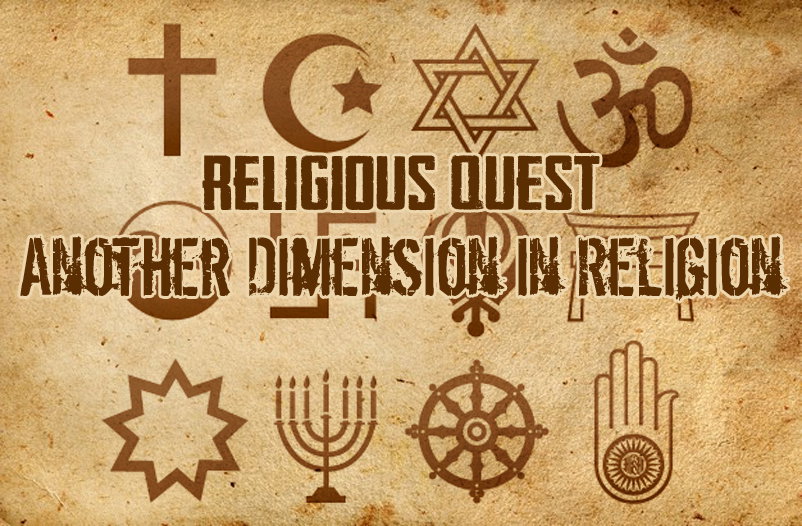
Climbing to be Human
Living in a metropolitan city, luxury cars scattered on the main road set against the sparkling lights of high-rise buildings. Humans pass by without reprimanding each other, busy staring at the smartphone where the virtual world drowns itself from reality. Everything is preoccupied with its world, this is a portrait of the individualism which has now spread its wings in the big cities of the world.
For some reason, my memory suddenly flashed 3 months ago, when I was looking for a grocery store that could exchange my five thousand rupiahs for a cup of hot coffee and two favourite clove cigarettes. Sipping coffee while smoking cigarettes is a simple joy in the middle of the hustle and bustle of the metropolitan city. Reflecting, staring at the busyness of humans who don't know where they come from and where they are going. Damn, boredom pervades the mind. I have to freshen up my mind. Sharing time with nature, enjoying the silence of the jungle in the middle of the mountain. Must.
That is the background of the trip to Yogyakarta to escape the fatigue of the capital. Together with two friends, a plan was made to make Mount Merbabu an escape destination. Amid boredom and tiredness of mind, mountains are often a place of escape for those who are fed up looking at the sea of metropolitan city people to just refresh their minds.
Becoming Human
*"Sharing your time with nature, you will know who you are, the nature of being human,"* a lyric from the soundtrack of the Gie film, performed by *Eross and Okta*, seems quite appropriate to represent the outline of this paper. Climbing a mountain is a tiring activity, walking uphill for hours bearing heavy loads, being hit by the cold wind that blows continuously is tiring. On both sides, there are only lush trees, front and back only a path that has been traversed and will be traversed.
The mind wanders, plays pictures of the viciousness of the jungle (slipping and falling, meeting wild animals, until exhausted and unable to walk anymore). Questions started raining down on my head until when did this path end? There is no other way but to keep walking to end the journey. Stopping in the middle of the road is not a solution, because the cold wind will erode every bone and even take the lives of the souls who surrendered.
When the physical begins to be depleted, that's where the mental capacity is tested. In this poor physical condition, the mind will think hard about how to save itself. Self-limitation tested, will we indulge ourselves by creating the limits of inability or will we continue to push our limits? We are ourselves with our limits. How much money and worldly degrees of honour are of no use. Because when we are cold, we are unable to warm ourselves by exchanging our money, at best we can only use money as fuel to make campfires. The good name and degree of honour? Nobody knows you when amid the fierce grip of the jungle.
In a hike, you don't need to calculate how many steps it takes to reach your destination. It only drains energy from overthinking, the important thing is just to keep going and walking until you find your goal. This is a recipe for living life, no matter how far and how difficult the goals are achieved, the most important thing is to keep going and ignore the word surrender that often persuades you to stop. Because when you walk it step by step, then in the end the goal will automatically approach itself with its compassion and beauty. Especially on the mountain, the beauty that came to me was very comparable to the exhaustion that was so hard to deal with.
Every human being will show his true nature when fatigue touches the body. Here we can see what the true nature of our friends is. Facial expressions never lie. Ah, mountains have always been the right place to look for purities that are hard to find in cities today. There is a lot of hypocrisy that can be found in the city because money and good name and degree of honour are fully valid, therefore many people are only good at us only because of our money or good name motives, not because of our real personality. This does not apply in the midst of the wild fierce.
After all, climbing is not a vacation for pleasure. It takes a mature physical and mental condition. Nature is not a place to play games with, let alone exploit the ego with proud portraits that feel like nature is being made. It seems that the purpose of climbing must be right, namely to learn to know yourself and God's creation. Goals that are right alone can be wrong if done in the wrong way, especially if our goals are not right.
For me, mountains have always kept their mysteries. Too tired to climb but always brings longing when the journey is over. Enjoying the sun rising from the highest ground, covered in laughter and hot chocolate from the bone-chilling cold, driving away fatigue in the middle of the thin oxygen of the highlands. Ah, it's always that longing that comes when the trip is over, even though in the middle of the journey the question of when the trip will end doesn't stop falling in my head.
The hike is hard to explain. We endure pain for the joy that comes to discovering ourselves and the universe. For me, climbing is a lesson to be human. We are forced to be friendly, which is hard to find in cities. When we meet other climbers, we greet each other, share jokes, chat material, to logistics. It is indeed a very beautiful world, if, in the middle of urban areas such a culture is still maintained, it seems that the conflicts that occur are a little less muted.
I can't wait to look forward to the next climb. Hopefully, the next climbs can also provide meaningful lessons. As in one of God's verses which are written in the holy book, "For there are indeed signs between heaven and earth for those who think about oneness". Hopefully, we are among those who think so that we can present a lesson from every story that is lived.

The Pale Blue Dot
Fingers feel stiff when pressing keyboard keys to write word for word. Writing routinely cannot become my habit at this time, even though my will in my heart is already on fire, it seems that laziness can still block this desire. It can be concluded that the will to write a routine in this self is not strong enough. However, at least once a week I have to write.
This paper will tell a lesson on humility that is learned from astronomy. A science that studies the universe, which is constantly trying to be able to understand the universe which is very, very wide and even until now has not been fully explored.
Almost all scientists today agree that the universe formed about 12 billion years ago through a big bang. From a small point until finally it extends to infinity at this time. Infinite does not mean literally, it's just that human knowledge is not currently able to know the boundaries of the universe. The universe is constantly expanding. It is not yet known what causes the universe to continue to expand.
All space objects in the Milky Way galaxy revolve around the sun. The Milky Way galaxy is also moving in circles that are not yet known to humans. To me, these scientists are humble enough to admit what they don't know. However, ignorance is not something that stops them from looking into it. In science, ignorance must be known.
The goal of science is for the benefit of humans. If there is the knowledge that is used for personal or group interests and harms other humans, then people who use that knowledge have betrayed the aims of science. Many people today think that science has grown up and become arrogant. Science is considered to be the culprit for the decline in the percentage of followers of religion. It is because of this that many people today are hostile to science.
Science is considered to be devoid of morality, so they dare to underestimate religion which contains thick morality. Science is humiliated because it dares to break religious teachings. For example, science rejects the theory of creation as taught by religion with the theory of evolution. Will be a separate article to explain this. Perhaps there have been many writings contradicting this matter and no less numerous writings trying to unify this contradiction as I have written before.
Science is not hostile to religion. Science is not talking about abstract things, they are only talking about something that can be proven empirically. Those who are hostile are fanatical adherents who act in the name of religion to harm other human beings. For me, this kind of attitude tarnishes religion which contains moral values. After reading scientists who were considered hostile to religion such as *Carl Sagan, Richard Dawkins, and Stephen Hawking*, I concluded that they were not people who were hostile to religion. Just like *Karl Marx*, they only regret the attitude of religious fanatics who dwarf humanity.
Back to astronomy. In 1977, NASA launched an unmanned spacecraft named Voyagers 1. This unmanned spacecraft is still operating in outer space. Voyagers 1 is a man-made object that is farthest from the earth, as of August 1 2015 this object is 19.7 billion km from the earth. Imagine, the sun is very far away only 149,600,000 km. Yes, this thing is very far away at this time. Voyagers 1 moving at a speed of 72 thousand km/hour.
Carl Sagan was a member of the Voyagers imaging team and it was from his idea that Voyagers 1 took pictures of the Earth after passing through Neptune in 1990 after 13 years of leaving Earth. He convinced NASA to turn the camera towards the earth for the last time home (Earth) at what he called "The Pale Blue Dot". Earth's distance to Neptune is around 4,351,400,000 km.
The other dots are the planets and stars in the universe. In this image, there may be millions of planets and stars that only look like dust particles. And Earth, where we live is just one of the millions of others.
Here's a reflection from *Carl Sagan* after seeing a portrait of the Earth from such a distance.
*"Here. That's our home. That's us. On it, everyone you love, everyone you know, everyone you have heard of, every human being who has ever lived their life. All our joys and sufferings, thousands of religions, ideologies and economic doctrines. Every hunter and seeker, every hero and coward, every creator and destroyer of civilization, every king and commoner, every young couple in love, every mother and father, every hopeful child, inventor and explorer, every moral teacher, every politician the corrupt, every superstar, every supreme leader, every saint and sinner in the history of our species, lives there… On a speck of dust hanging from the sun.*
*Earth is a very small stage in a vast cosmic arena. Think of the river of blood that the generals and emperors shed, so that in their glory and triumph they could become momentary rulers of a fraction… from a point. Think of the endless cruelty that the inhabitants of one corner of this pixel commit to other inhabitants who cannot be distinguished from another corner. How often they misunderstand, How eager they are to kill each other, how strong is their hatred of our mental attitudes, our self-importance, the delusion that we have a privileged position in the universe, are challenged by that pale point of light. Our planet is a lonely spot in the cosmic darkness that envelops it ...*
*In our obscurity, in all this vastness, no helpful hint will come from elsewhere to save us from ourselves. Earth is the only world known so far that supports life. Nowhere else, at least in the near future, will our species migrate. Visiting, can. Settled, not necessarily. Like it or not, for now, Earth is where we stand. It is said that astronomy is a humbling, character-building experience through experience. There is perhaps no better demonstration of human stupidity and arrogance than this image from afar. To me, this emphasizes our responsibility to better relate to one another, as well as to preserve and appreciate the pale blue dot, the only home we know of. "*
To me, *Carl Sagan* groan was touching. How is it possible for us living beings who live in a tiny piece of dust in this universe to have the height of the heart? Isn't it by seeing such greatness that we feel small and begin to grow the awareness that egoism means nothing in such an enormous universe? Is it still worth pride to exist in super-tiny creatures like us?
This article is fully inspired by the *Cosmos a Spacetime Oddysey* series by *Neil deGrasse Tyson*, a renowned astrophysicist. For readers who have never seen the film, it is highly recommended to watch it because for me it is enlightening. It only takes a slightly open mind to be able to absorb the content of the film. This article also contains many mistake, so please understand.

Ramadan Romanticism as a Child
Today, the 11th day of fasting has been undertaken by Muslims. For me, the month of Ramadan in recent years has been so bland. Without sour, salty, bitter, and spicy taste. Yes, tasteless without taste! Except for the sweet taste that manifests itself in the form of "Eid Money" before Eid. With this in mind, I suddenly missed my childhood that had Ramadan with great taste. Tasteful! Delicious!
Who was not cheerful about welcoming Ramadan when he was a child? If anything, I accuse them of not having a happy childhood. Playing is timeless, without prompting to go home. Especially if you have entered the holidays, ah really incomparable. Especially when "the late Gus Dur" became President, he took a full month off! Truly heaven on earth.
At most, what is not missed from Ramadan is the need to endure hunger and thirst, which was difficult to resist when they were young, especially when many friends who were innocent drank glasses full of dew which tempted faith. Not to mention that someone has eaten a bowl of noodles. "Luxury breaks the fast!" I thought. It's not the month of Ramadan, I can only eat noodles twice a week. This is the bitter taste of Ramadan.
Waking up to eat sahur is also one of the difficult things, maybe this is one of the sour tastes that coloured the delicacy of the month of Ramadan as a child. After the meal was over, even though the dawn call to prayer had yet to ring out, the children usually scattered outside the house to play firecrackers to wake up those who were still sleeping.
Playing firecrackers while walking around the housing, we often throw firecrackers at the homes of Christians and Chinese descendants because we used to have the mentality of the majority in general, that minorities should respect the majority because of that we wake them up so as not to feel the pleasure of sleeping at dawn as we did. feel. (sincerely and profusely apologies for disturbing your sleep at dawn)
After proudly throwing firecrackers into people's homes interspersed with jokes with our friends we continued to play in the musholla for dawn prayers. Yes, in places of worship we are rarely serious and solemn. It feels like we just continue the game with different settings according to the place. Even so, there was no feeling of guilt at that time. Understandably, his name is also a child.
Fajr prayer and the prayers are over. The children scattered out of the house and again the homes of Christians and Chinese descendants who we went to with the same goal as before prayers. So evil to remember, but his name was also a child who wanted only fun and pleasure. We stopped showering them with firecrackers when we heard exasperated screams from inside the house, we ran to avoid getting caught. Because if caught in the act, the rain of scorn will certainly draw out the ears. This may be part of the spicy taste of Ramadan.
We looked for an open space (usually in the front of our housing) to return to playing with the paper that rolled the gunpowder. All the fun spilt over in this place, some came home with torn sarongs or torn pants due to throwing firecrackers. Until the sun was getting high or around seven or eight we just broke up from the firecracker party.
Some have returned to their homes and some still don't want to go home. During Ramadan, parents rarely send their children to come home, especially when it is vacation time. Going home is usually just to take a shower. After that, go back out and hang out with friends, usually, there is a house that we go to together, a house where his parents are working. Such a house usually promises freedom.
In this house (it is impossible to mention the name) we usually play the Playstation without knowing the time until the afternoon. In this house also a small number of friends break their fast with various arguments. People say the devil is shackled in hell during the month of Ramadan, but in fact, the opposite is true, the devil is increasingly trying to persuade him to do what God has forbidden.
When evening came, almost all the children were playing outside. Almost every day we played futsal until the long whistle was heard (maghrib drum). We all went straight home, except for the person who last touched the ball, he has to carry out his responsibility to return the ball to the owner's house. An unwritten rule that always applies whether in the month of Ramadan or not.
After breaking the fast, only a few performed Maghrib prayers in the musholla, only those who were forced by their parents to go to the mosque. After breaking our fast and eating at home, we all gathered again before leaving for the prayer room. What is the goal? Worship? Not. Played? RIGHT!
As a child, it seemed that the place of worship was not a sacred place full of seriousness and solemnity, but a place where cheerful laughter was obtained even though it was wrapped in worship. Seriousness is only applied if a parent has scolded us, and that is only pretended seriousness because it is based on fear. Because if you are still joking, we must have received the spicy taste of the scolding. "Seriously, uncle, I never seem to be small," I thought.
Who doesn't laugh while sitting between two prostrations and pointing a finger suddenly a friend in the village gives a thumbs up and whispers "Hahaha, you lose, you're a loser". not to mention that someone made a circle with their forefinger and thumb and then moved it up and down on the pointing forefinger. The solemnity of worship is very difficult to achieve.
Vigilance in prayer must also be high because if you are careless it could be when you are bowing forward or when you are prostrate, your legs are pulled back so that you are just lying on your stomach and you get stifled laughter because if you let go of it, the fathers' scolding is raining down on us. Not to mention that some intentionally expect the wind from their buttocks, instead of being held back, they are released with pride. This not only invites the laughter of young children, but even adults also find it difficult to hold back their laughter.
Rarely do we follow the lowest prayer until it's over. At best, only participate in four or six rak'ahs. Of the few that some only follow when people arrive at the seat between the last two prostrations. Moreover, if the prayer priest has read a long letter, not yet four cycles, we all immediately rush out to play again.
Games during the curfew are more exciting than dawn because we no longer think about hunger and thirst. Firecracker war and sarong war with the opposite village are also often avoided, this is one of the most missed moments from childhood Ramadan. After being satisfied and tired of playing, then we all returned to our respective homes.
Indeed, childhood romance against Ramadan will not be invincible. In stark contrast, the reality is when you get older. There is no more acid in waking up at dawn because usually, you don't sleep until dawn. There is no more bitterness about holding back thirst and thirst because you usually sleep from after eating sahur until noon and even in the evening. Plus, as an adult, it is common to endure hunger and thirst when finances are being squeezed.
Everyone goes through the hustle and bustle of Ramadan activities not because of purely personal impulses when they were little, but an urge to get discounted rewards. Yes, merit. Maybe merit is the currency in the hereafter, therefore not a few people are competing to get it to live happily in the future, in the hereafter.
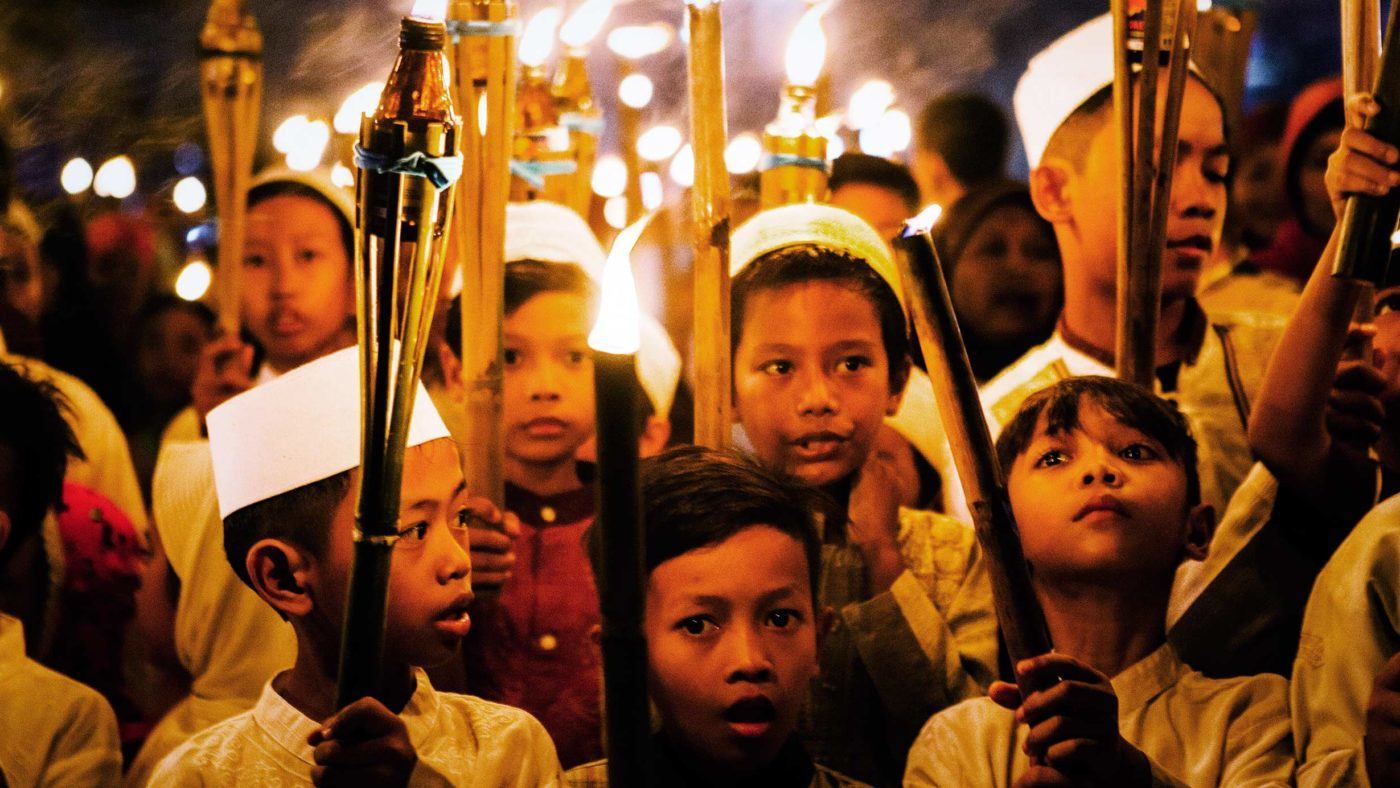
Modernization Contemplation
Last week I had the opportunity to visit Gorontalo. The only province on the island of Sulawesi that does not hold the name Sulawesi. Just like other small cities in Indonesia, the airport is quite small. No need to walk far from getting off the plane to the airport exit. Approximately less than three minutes. Far different from Terminal 3 Ultimate at Soekarno-Hatta Airport, which may take more than 10 minutes on foot from getting off the plane to the airport exit.
The trip from the airport to the city of Gorontalo is quite far, approximately 30 km. Along the way, layout a soothing sight. Green rice fields on the roadside with a mountainous backdrop at the end of the view. There are still many livestock animals that roam, such as cows and goats, which sometimes travel in groups to disturb traffic. A pretty good refreshment for the eye that is used to seeing the crowded and crowded capital city.
I happened to be picked up by one of the local officials. On this occasion, I asked many questions about Gorontalo. Previously, I had been browsing a little about this city, so that I could converse with people around me. At least, able to keep up with the conversation. After chatting, I thought about his words which made him a little reflective.
He said: “Gorontalo City is currently progressing, although slowly, after several years of stagnation. Moreover, when it was not a province of its own, this city was left behind compared to other areas in Sulawesi, ". Such a statement is quite natural, seeing the atmosphere of the city which is very rare for a multi-storey building. Indeed, a city that is not very developed is from the perspective of the citizens of the capital who are accustomed to seeing skyscrapers.
Suddenly I thought, what makes us categorize a civilization as advanced or not? Aren't the people here able to support themselves independently? Each village has rice fields that meet the needs of its inhabitants. They also have livestock that can be eaten as well as for ploughing the fields. There are also fast-breeding goats and chickens. With such an independent civilization, why do we proudly say they are less advanced?
On my way, I fell silent thinking about these questions. The official told the story again. He said that the level of education in this city had improved considerably. From 15 years ago, the average rate was only elementary school graduates, now an average of them has attended high school. "Wow, a pretty encouraging improvement," I replied with enthusiasm. He continued again; "It's far from Jakarta here, Mas. Investors are still hesitant to enter here, so the construction is rather slow, ”he continued.
Oh, I get points. Whether a civilization is progressing or not, it is measured by how fast the circulation of money occurs in an area. At least this is my layman's thinking. One of the conditions for the progress of civilization is that its citizens must be more specific. That is, one person cannot have many skills. The good thing is that one person has a deep, specific skill.
For example, a computer expert must understand very well about computers and their trifles, but it would be nice if he couldn't cook, even if he needed to make coffee, he couldn't. In this way, he will always rely on other people to make food or coffee. Well, this could potentially increase the opportunity to continue spending and increase the velocity of money circulation. Likewise other professions. It would be nice if they depend on each other so that they can exchange fortunes.
My layman thought simplifies advanced civilization in a nutshell: acute consumerism. Where every citizen continues to spend capital to sell their expertise. Dependence on others is a feature of advanced civilizations! If you want to be successful, somehow you have to make a lot of other people depend on your expertise. Too simple indeed, the name is also common sense.
This is very different from pre-modern humans. Where each individual must master a variety of skills to survive. Must be able to recognize poisonous plants, make fire, cook, make weapons, hunt, understand the direction of the stars (as a natural compass), be able to get along well and so on.
In short, pre-modern humans had to make the best use of their five senses to survive. From some of the research I read, pre-modern humans were the happiest humans of all time.
How come? They spend very little time working. That said, from some of the studies I read on pre-modern humans, they only worked less than 20 hours a week. The rest? Chat, hang out, play and hang out together. That's why the things I just mentioned are always fun, even for us now.
Humans have survived such a lifestyle for tens of thousands of years. From an evolutionary point of view, modern humans still carry such natural inclinations. Modern humans work an average of 40 hours a week. Lots of lost time to hang out with friends.
Not surprisingly, many modern humans experience stress. This is due to the incompatibility of modern lifestyles with the natural physiological and psychological needs of humans.
Maybe right, maybe wrong. But I prefer the first phrase. The proof, many people decide to commit suicide. Statistically, the number of victims who committed suicide was more than the victims of accidents plus victims of war. I forgot the exact number, please just browse on google, that number must be widespread.
So, is it appropriate for us to attach the word "left behind" to an independent civilization such as in Gorontalo and other small cities? we arrogantly ridicule human civilization living in the forest as primitive people. They could be happier than us who proudly claim to be modern-day children. Now, the question that just arises is: “Is modernization a step forward or even a step back for human happiness?

Demon and Anomalies in the Month of Ramadan
Consistency is one of those difficult things. Promises to yourself to be consistent often just evaporate. The fire of passion, in the beginning, was easy to set off, but keeping it burning was no easy task. It turns out that what the people say has a point, keeping something is more difficult than obtaining it. I'm still too weak to keep the flames of spirit burning, it's too easy for these flames to be put out by even the smallest of things.
There is something we have to ask ourselves about this month of Ramadan. The lust that usually brings pleasure and we indulge, now we have to fight and hold back. Yes, it seems that this is the origin of the idiom that Demon is imprisoned in the month of Ramadan because Demon is our passions. It is lust that guides our path to hell if it is always spoiled.
The demon who is said to always seduce us to evil seems to be an illusion. It is only a manifestation of our passions. However, humans always want to appear charming, humans want to always appear right, therefore humans blame Demon for what he does if the output is bad. Humans easily blame something outside of themselves with the addition of the word "mistake". For me, it would be better if humans would blame themselves for what they did. Don't just blame the devil.
It seems logical why Demon is imprisoned during the month of Ramadan. Because, as long as we fast we have to kill our passions. Now, the easiest way to avoid Demon temptations is to cut our throats, because the real devil is ourselves. That is why Rasulullah said, "You are heading from a minor jihad to a greater jihad" after the war. Someone has asked what is the greater jihad? Rasulullah answered "The struggle of a servant against his lust".
The month of Ramadan is like confirming the psychoanalytic theory of Sigmund Freud. The theory of the personality of this phenomenal figure has been challenged everywhere, even though psychological therapy is still based on his theory. Sigmund Freud, if I'm not mistaken, said that the id (unconscious impulses) must be channelled. Otherwise, it could explode at any time and produce even more dangerous behaviour. For example, for Freud, the sex drive had to be channelled, because otherwise at times the sex drive was unbearable and the person raped the person.
Immediately this head wondered whether this Freud theory also applies to people who fast? When fasting we are told to hold back our lust. The most basic passions that must be suppressed are eating, drinking, and sex. Well, the wonder why in the month of Ramadan when we are told to endure hunger, the prices of staple foods soar? This soaring price is due to high demand, the law of economics. Not to mention the people whose weight increases during the month of Ramadan.
Apart from suppressing the basic passions, we are also required to restrain the more difficult passions, namely anger. But again the reality says something else. Just try to walk down the streets before breaking the fast. The road users suddenly turned into fierce beasts. What did the hell happen? Did this all happen because of a subconscious urge that exploded after having to be held back from dawn to dusk?
Some say that if you run it for 21 days it will become a habit. The month of Ramadan, which requires fasting for those who believe, is a madrasa to make themselves better. But, again the reality is the opposite. After the month of Ramadan ends, we return to being a den of demons without the slightest improvement.
It seems there is something wrong with our understanding of fasting so that many of us do not go up to the next grade after going to madrasah from God for one month. I don't know what happened, I hope my vision of the reality in this fasting month is wrong and we change to become a better person after all of this.

Our ethics today
Today, I am interested in discussing ethics and its relationship to this Indonesian context. As we know that ethics and morals are terms that have almost the same meaning, it's just that the language of origin is different. Ethics comes from Greek, while moral comes from Latin. An action we can call ethical or moral if we consider the action good. Because ethics and morals indeed talk about whether or not an action is good.
Maybe only a few of us know that there is one more term that is similar and we often mix it, namely etiquette. Apart from the similar names, this term also concerns human behaviour. Etiquette talks about the manner of action or manners in short. Etiquette discusses the appropriateness of an act without giving ethical value to it or just judging it outwardly.
For example, if we give something to Person A, then we have to hand it over with the right hand. If we are eating together at the table, then we must not put our feet on the table. It is perfect etiquette, but it has absolutely no ethical content. If we give an envelope filled with money to A with his right hand, but Person A is a judge who will sue us, then this would be an unethical act even though it is etiquette perfect.
Ethics are universal, such as the 10 commandments of God that were revealed to the Prophet Moses. Don't steal, don't cheat, don't kill, don't commit adultery, and so on. Meanwhile, etiquette is relative depending on time and place. Javanese etiquette is certainly different from that of Bugis people, it would be considered rude for Javanese to burp at the dinner table, while for Bugis it is normal.
It is not a contradiction if someone who always sticks to etiquette at the same time becomes a hypocrite. Therefore, the term wolf in sheep's clothing is quite well known. People can be polite, neat, and refined, but intend to deceive. No wonder so many scammers are very etiquette perfect, corruptors easy example. Meanwhile, if someone sticks to ethics, it is impossible to be a hypocrite, because it is an unethical act.
Today, most of us only prioritize the etiquette aspect. For example, on-campus how strict the rules governing etiquette are. We are not allowed to wear sandals, T-shirts, torn pants, and so on (on my campus). If this prohibition is ignored, the lecturer will not hesitate to expel us from class. Meanwhile, plagiarism or dishonesty with all its variations such as cheating on exams, copying assignments from the internet, even copying theses related to ethics is not as strict as the application of sanctions for rules that enforce etiquette. This happened for real.
In school, etiquette also takes priority over ethics. How to dress is considered more important than honesty in taking your exams during exams. This kind of thing is ingrained and passed down from generation to generation so that it is considered normal by all circles. No wonder when we grow up and have become important people, we prioritize etiquette over ethics. So that we become selfish and ignorant bastards. The governor who often speaks harshly is considered unethical, even though so far it has not been proven to have committed fraudulent practices. It should be said that he is not etiquette but ethical.
We are more sympathetic to people who are polite, friendly, and well-groomed even though they are jerks than people who are ethical despite their bad appearance. Ethics and etiquette are soaked in the same mud that many of us are no longer able to tell the difference between the two. Religious people are also starting to catch this virus. Everywhere we see religious people are all Arab in appearance. Bearded, turbaned, with robe, black forehead, the long veil that says Sharia and so on.
Even if we take it, not a few people who look like that are caught in legal cases. The closest example, clerics on television, was not the only one or two who were caught in legal cases. Not to mention the corruptors, from those who wear the veil to the turf, all of them are in prison. I think this is one of the results we are more concerned with aspects of etiquette than ethics. We forget that ethics teaches us not only to be fair to others but to be fair to ourselves too.
I think etiquette is important, but the priority is still under ethics. Religion, especially Islam also has a lot to say about etiquette. How to dress, put the right side first, how to eat well, and other ways. However, if we trace it, religion talks more about ethics. You must do good, you must not be arrogant, you must not lie, you must forgive, be tolerant, and so on.
The teachings on etiquette (in Islam) are mostly written in hadith, while the teachings on ethics are written in the Al-Quran. In Islam, the position of the Qur'an is higher than the hadith. For me, this indicates that Islam emphasizes ethics more than etiquette. Because, after all, ethics talks about morals. Perfecting morals is one of the goals of Rasulullah SAW being sent to the world.
Etiquette does not apply when we are alone. If you are eating alone, you are free to put your feet on a chair or the table. But ethics applies anywhere and anytime. If we eat in a restaurant that is busy and running away, then our conscience will automatically punish us with feelings of guilt because we have violated ethics. If we take it easy after committing an ethical violation, then it is questionable whether our conscience is still alive or not. The only sanction in the field of ethics is an uneasy heart condition or in the language of religion, this is a sin.
It seems we are already in the same muddy as etiquette and etiquette, making it difficult to tell which ethics is etiquette. Hopefully, with this article, we can think for a moment and clear up the parables that are often confused. Hopefully, all the readers of this article are not hypocrites who are only concerned with the aspects of etiquette rather than ethics. Be an ethical person, because with ethics we can't be hypocritical. Because, he said, the deepest hell was created for hypocrites.

An Allegory of Life
Life is quite surprising. We never know why we can be born in this world, we are never given a choice in which part of the world we will be born in, we never even know how long we will stay in this world. A certainty that I believe is what we have the choice to become and how we live.
I do not want to be absorbed in religious dogma which is considered by the majority of people to provide answers about our anxieties in going through life. Yes, religion gives a little insight into how we should ideally live and what is our purpose for being born into this mortal world.
The world is mortal, it is just play and pranks. That's a word of God in one of His verses. Is that true? Yes, but in a game it takes seriousness. It's the same as in the game of football. We all know that football is just a game, but to win a football match we also have to be serious.
In a game, there must be losers and wins. Likewise life, the loser goes to the pain of hell and the winner enjoys the beauty of heaven. No human being wants to lose, and vice versa, all human children will want to taste the freshness of victory. To win a game other than seriousness, of course, requires a strategy or tactic. The problem is, in life, what strategy or tactics are right?
Surely there is a substantial recipe that applies to all humans. However, even if the strategy or tactics for navigating through life are substantially the same, they do not mean they are the same in appearance or coverage. It's no secret that humans are unique, no human is the same, even though they are identical twins. The difference is a certain thing, every human being has information in different genes plus life experiences that are impossible to be the same and ultimately affect the human mind.
Twins can't have the same experience. For example, even though sleeping in the same bed, the twins can't look at the same object. These small differences of course result in a different experience. That is why it takes a different life strategy or tactic for all humans.
The packaging on the recipe for life is the way to live life, while the content or substance of the recipe is the intention. In some of the literature that I have eaten, I have concluded that the substance of the recipe is living for others, not just thinking about gain and loss for oneself. The things we do for ourselves die with us, while the things we do for others and the world will endure with the world itself.
The way to achieve the goal which is the manifestation of that value is different. Some have gone through it by becoming religious, scientist, businessman, farmer, and others. We must find the right recipe wrapper and according to our needs to navigate life happily. If you have walked through life with pleasure, it is not difficult for us to taste the contents of that recipe.
The recipe wrappers are procedures for dealing with worldly problems, while the contents of the recipe are procedures for preparing provisions for a real-life afterlife in this mortal world ends. Don't almost all religions teach that the best way is the middle way? We are not encouraged to just live in the world or eat the recipe packets, but we are also not encouraged to play around in this mortal world and think only about life after death. If I'm not mistaken, the Prophet Muhammad SAW once said "Worship as if tomorrow you will die and work as if you will live another thousand years".
The Scriptures are often cited as the best recipe for living the game of life. The holy book is the best-selling book and is always read by mankind. In this era of materialism, it is unfortunate that humans only read the holy book in a textual manner, this is what in my opinion makes mankind farther away from the essence of the holy book.
Scripture is like two blades, if misused it will be very dangerous as it is today. The scriptures are only a political commodity for personal gain. But used properly, scripture will lead us to an extraordinary recipe for winning the game of life. As with fire and water, if adults understand very well their benefits, water and fire are very helpful for human life. On the other hand, if done by the wrong people, water and fire will bring tremendous calamity.
Yes, we must be smart in choosing a strategy to win a game of life. The packaging and contents of the winning recipe are equally important to achieve the safety of this world and the hereafter. Until now, I am still looking for the winning recipe and hopefully, I will not tire of searching and not fall into mundane pleasures which means defeat in the game. Because the results of winning and losing can only be seen after this game of life is over. Yes, after we close our eyes for the last time and wake up seeing real life, eternal life after physical death.
Ah, this article is again a bedtime because sometimes the mind continues to wander even though the body is tired. Hopefully, this bedtime writing can land on the reader's mind so that my reflections can be of use to many people. It cannot be denied that there are many mistakes in this paper, but it's okay because the opinion is not a mistake.

A Brief History of Moral Philosophy
Escape for a moment from writing a thesis that is full of rules. From writing techniques to how to quote everything as arranged as possible. Moreover, only a few of the many sentences can use their own opinion. Even though he has studied for more than four years, he has not yet obtained the freedom of expression. It restricts creative freedom. Strata-1 is only assigned to present the theory, he said.
Fatigue in the limitations of opinion might be better stated in a writing. Writing in own blog that does not require rules, only its principles that should not be violated. Because he examines moral reasoning in his thesis, recently the literature that has been devoured is not far from the discussion of morals. So on this occasion, I am interested in discussing morals.
If we trace the history, this discussion of morals is as old as science. Science departs from the discussion of philosophy which is recorded as being born in Greece in the era around 500 BC. From the era of Socrates, the discussion of morals has been studied in depth even though it has not been recorded comprehensively. Moral philosophy, briefly discusses what is good and what is not good.
Throughout history, perhaps no moral philosophy has been easier to understand and so widespread than hedonism. Yes, hedonism is a flow in moral philosophy. Moral philosophy answers philosophical questions in the form of "what is the best thing for humans?", Adherents of hedonism answer "pleasure". Hedone is Greek means pleasure. Hedonism was discovered by Kyrene, a student of Socrates. In the early days of hedonism, the pleasure was seen only outwardly. So, as long as the things that are done are fun, it is good according to this viewpoint.
Another philosopher, Epicurus, criticized this view. He agreed that the best thing for humans is a pleasure. However, for Epicurus, there was a pleasure beyond outward pleasure. He argues, desire should be limited to give birth to greater pleasure. According to Epicurus, there are three kinds of desires, namely unnecessary natural desires (such as food), unnecessary natural desires (such as good food), and vain desires (such as wealth). Only the first desire has to be satisfied. Therefore he advocated a simple way of life. For him, unnecessary or even vain desires disturb the peace of mind. Yes, similar to the opinion of Gautama Buddha.
Furthermore, the famous philosopher Aristoteles stated that the best thing for humans is happiness. For Aristoteles, happiness is the ultimate goal of mankind. In our understanding, happiness is relative. Some think that pleasure is happiness, some think that abundant wealth is happiness and there are many other opinions about happiness. But, according to Aristoteles, it was wrong. Wealth, for example, is mostly obtained to achieve other goals. So, not the end goal. Aristoteles thought that the final goal is when humans carry out their functions properly. The goal of football players is to play football well, the goal of music players is to do music well and so on.
The question then is what is the ultimate universal human goal? The characteristic of man that distinguishes him from animals is his reason or ratio. So, for Aristoteles, the ultimate goal (happiness) of humans is to carry out their rational activities properly. This means that humans must run it with virtue. According to Aristoteles, there are two virtues, namely intellectual virtues and moral virtues. Aristoteles discussed this matter of virtue at length, especially regarding moral virtues. Aristoteles thought that morals are in line with reason, so people who have a good level of ratio are moral and vice versa. Too complicated to discuss here. Aristoteles flow of moral philosophy is known as Eudemonism.
Furthermore, there is a flow of Utilitarianism which was coined by the philosopher David Hume in England during the renaissance era. This flow was intended as an ethical basis for reforming English law. This flow is not much different from classical hedonism, it's just that Utilitarianists think that the moralism of action must be determined by considering its usefulness to achieve human happiness. So, in this flow, whether or not an action is ethical is based on fulfilling the happiness of many people. Not only emphasized on individuals like hedonism. John Stuart Mill, a great British philosopher, stated that one's happiness should not cause unhappiness for others. Happiness that causes suffering to others is not ethical or moral.
Yes, utilitarianism is not as colourful as it is written. It's just that my limitations and the complexity of utilitarianism will make readers bored if discussed here. So far, moral philosophy has been oriented towards the goals of action. Meanwhile, the deontology school emphasizes whether an act is ethical or not. Deon in Greek means what to do.
Immanuel Kant, a philosopher whose position is very high created this flow of moral philosophy. He assumed all good things in the real sense were only goodwill. Health, wealth, or intelligence is good if it is used by evil wills to become very immoral. The question that arises then is what makes goodwill? For Kant, the will is good when it acts out of an internal obligation.
If the action was done for another motive how sublime and praiseworthy it was, for Kant it could not be called good. For example, if we do good because we like to do it, give to beggars because we feel sorry, return books because we feel bad for those who have them or even we study because we want to graduate, these things cannot be called good deeds. Immanuel Kant's thoughts are difficult to digest, but Kant was one of the most influential philosophers.
My initial intention was not to lecture on moral philosophy, but because my fingers were so fluent in writing that I forgot my original purpose. Maybe my real goal will be conveyed in a later article. Want to be deleted, but unfortunately this much. As a result, posting whoever knows can meet the readers' interest in discussing moral philosophy. Of course, this article contains a lot of mistakes, because it is very welcome and I am grateful if anyone wants to correct the mistakes in this paper.

We All Perform bid'ah
Trying to consistently record anything that comes to mind into a piece of writing. Whether people read it or not, it doesn't matter. The most important thing is to keep writing whatever it is. So, on this occasion, I would like to record thoughts that have just emerged after reading a lot of articles on da'wah accounts.
Recently thought has been focused on religious matters for some reason. Thought after thought hit the head on religious matters. Maybe because before the month of Ramadan, information about religion, especially Islam, is overflowing everywhere. Accounts that aim to spread da'wah are increasingly prevalent, guerrilla everywhere, and penetrating every community. Social media is ultimately the battlefield.
Various schools to understand religion compete with each other to invite others to follow their flow. From liberals, moderates, to conservatives, all carry out their mission. For me, some things are interesting, educate, make us reflect, and not a few that make us bored. Most of the boring articles are conservative. Conservatives sometimes just don't appeal to those who think, especially those who think forward. Progressive.
Boring articles are those that discuss topics around the law. For me, the law is too narrow, only black and white. Leaving no grey space for thought. Moreover, those who are conservative always refer to the life of Rasulullah SAW. Yes, he is a human role model. But, can't all incidents be referred to Rasulullah SAW? For example, how to drive a motorized vehicle is good, of course, we cannot refer to Rasulullah SAW.
This is where it gets boring because conservatives think that the things that the Prophet did not do were bid'ah and bid'ah were bad deeds. Then, their understanding stiffened. Little by little it is not allowed, a little bit of heresy, sin, haram, and the like. Pilgrimage to the grave of bid'ah, tahlil bid'ah, the Prophet's birthday, and many more. And many more are considered bid'ah.
Even though their understanding is rigid, their zeal in preaching is commendable. They are guerrilla everywhere. Their understanding of religion is also easily understood by many people. No wonder why today so many religious people have conservative characteristics. Because most people are not critical, it is enough to give a statement and an argument, it is immediately considered valid and credible.
If we want to make an issue with bid'ah, we are all innovators. Even in religious matters. When the Prophet was still alive, did he ever read the Al-Qur'an which was recorded? The verses of the Al-Qur'an were only collected for the first time in the era of the Caliph Abu Bakr after the Prophet died. It was used as a Mushaf during the era of the Caliph Uthman bin Affan. Even at that time, the Koran did not have a point, let alone a vowel, so it was difficult for non-Arabs to distinguish between the letters ba, ya, na, and ta.
The period in the Al-Qur'an only existed in the tabiin era. Meanwhile, the harakat in the Qur'an was only added long after the Prophet Muhammad died. Isn't this an act of innovation? Yes, this is a bid'ah because it did what Rasulullah SAW did not do. Bid'ah is creativity because it finds something new. As long as bid'ah makes it easy and beneficial for the community at large, it is certainly not a problem. Moreover, the dot and vowel in the Al-Qur'an are affixed to make it easier for non-Arabic people to read the Al-Quran. Because at that time Islam began to spread to various parts of the world.
Pilgrimage more than once should also be bid'ah. Rasulullah SAW only had one pilgrimage even though the distance from Medina where he lived to Mecca was not that far. It is said that the Prophet's birthday was first carried out by the Islamic warlord, Saladin Al-Ayubi to pump up the morale and morale of the troops in the war to seize Constantinople.
Yes, even though it is bid'ah, but as long as it has wide practical benefits it doesn't matter. As long as it doesn't violate the teachings of the Al-Qur'an, of course. However, it seems that those who are conservative do not understand history. Because for them the most important thing is just to be completely obedient to the arguments without trying to uncover the essence of the arguments that are learned.
Many more conservative arguments feel funny if they are accepted. Is it true that Islam is that strict? It must be this absolute, it must be this absolute. This is what makes most people adopt a conservative understanding because there is no need to think too much and read history. It is enough to just obey some of the arguments in Arabic.
Many television programs also broadcast the preaching of Islam at this time. For me too, most of them are quite conservative. Because only a conservative understanding of religion can be broadcast instantly and easily understood. Because it only takes two or at most three propositions to explain an event. Ignoring the many differing opinions of scholars. Of course, this article is also very subjective, because I am also not a person who understands religion deeply. It's just that I want to think and read a little in understanding religion.

Common Sense and Smells of Occultism
There are still many of our people who believe in occult things. This belief perches on all elements of society. From those with low education to the university level. Believing in occult things is natural, it becomes strange when it is believed by those who are highly educated. This is because higher education requires high rational abilities, while what is occult is completely contrary to rationality.
I recently had a massage by someone who claimed to have supernatural abilities. From reading the future to communicating with supernatural beings. An extraordinary talent. But common sense said that was absurd. If he's that good, why is he a masseuse by profession?
He talked a lot about this self. Yes, some are right and some are wrong. As a guess. Although most of his guesses are correct, I don't just take it for granted. If such capabilities existed, why didn't the intelligence services recruit them? Indeed, there was a project to gather indigo people in the intelligence services. However, the project failed because it turned out that the forecasts were inaccurate.
After all, if it was true that back in the days of the kingdom many magic people had extraordinary abilities, why was this nation being colonized? They said they were being pitted against each other. Isn't that strange? If you can predict the future, why did the old kingdoms want to be pitted against each other? I guess it doesn't make sense either.
If it were true that supernatural abilities existed, they would still be defeated by western nations that prioritized rationality. So, in conclusion, common sense is superior to supernatural abilities. I do not mean to deify reason, I am also aware that reason still has limits. However, for understanding the world, reason seems to be a more precise instrument than the others at present.
If we want to look a little deeper, then we will find the fact that occult things are rife in poor areas. The poorer the area, the more heresy is believed. Yes, being poor doesn't always mean bad. Maybe, worldly things are not the orientation of people who explore the world of the occult.
Indonesia, which thrives on occult things, is only a developing country. Still far from developed countries. Far from being the welfare state. Indeed, colonialism had a long effect. Until now, there are still many Indonesian people who have a colonial mentality.
At least, if the occult was real and great, the achievements of Indonesian football would not be as bad as now. The occult is incapable of crossing the ocean, he says? After all, we still lost the Asian Cup in Indonesia. There are very few human resources to be proud of in Indonesia.
The facts that happened made him even more sceptical about such things. Our mentality is still that of a colonized nation, so we still believe in such things. How our fate will be in the future depends entirely on how we are today. For me, life is not influenced by occult things, let alone creatures that are said to be waiting for us. Not.
The only supernatural things that should be trusted are those that question divinity. This is because, after all, God is in an area that is incomprehensible to reason or the occult. It is beyond all dimensions that humans can understand. To quote the great medieval philosopher, Thomas Aquinas: *"The last limit of our ability about God is that we know nothing about God."*

Capitalization of God
In this era of global capitalism, it seems difficult to let go of the grip of the capitalist system from various dimensions of life, not only from the economic aspect. Religion, which should have been far from capitalism because it is not materialist, is currently not free from the clutches of capitalism.
Many religious people think of God as a means of production so they never stop asking for all kinds of worldly fame. In the capitalist world, to control the means of production, large capital is required. In religious life, external worship is equated with capital to control God, who is considered a means of production.
With this kind of understanding, it is not surprising that so many religious followers continue to perform external formal worship in the hope that God as a means of production will make it easier for them to obtain worldly benefits. How many prayers have come out of the mouths of humans to get a raise in wages, smooth business, respectable positions, and so on, which are worldly benefits?
It is true that God commands humans to ask Him and promises to grant His servants' requests. But isn't the intention in every worship only because of God? Therefore it is somewhat unethical if we worship in the hope that God becomes a means of production giving us worldly benefits. Not only is it unethical, it doesn't make sense to ask God to do what we want because God knows better what is best for us.
In books that provide instant tips for worldly success, we often find the extraordinary properties of giving alms. Almsgiving is not an obligation in religion, especially in Islam, but God promises to repay it in return many times. However, it is not the rewards that God has promised that we should expect.
It is enough with the belief that God certainly does not break his promises to those who give charity. Because if we give charity in hopes of multiple rewards, it is not a sincere charity. In my opinion, things like this have no value of worship, because hoping for worldly benefits is called trade, not worship.
The capitalization of God is not only dangerous because it diminishes the values of Tawhid that exist in every religion, but also causes horizontal conflicts in the struggle for a place with God as a means of production. This is one of the factors that make conflicts between religions never stop, we are competing to fight over the means of production to gain worldly benefits. If not worldly gain, we hope for heavenly gain.
Is God's power so narrow that we are scrambling for worldly gain let alone heavenly? With this understanding, it means that we also underestimate the power of God in providing sustenance. This superficial understanding reduces God's limitless power. If his grace in the world alone can bestow all beings, what will his grace in the hereafter? Somehow some still feel that God has a monopoly on the happiness of the hereafter only for his group.
It is this one-sided claim of religious truth that is born from this narrow understanding that often triggers horizontal conflicts between religious communities. The belief to save stray sheep (people with different beliefs) is deeply embedded in this kind of belief doctrine so that often violence is used to impose their beliefs on people of different faiths.
Again, this happened because God's promises were superficially studied. Perhaps there is some truth in Aristotle's words "Basically, humans are political animals." So it is not surprising that the goal of man is solely a matter of profit, both worldly and spiritual. If the understanding of religion is like this, what is the difference between religion and politics, where are the adherents of a certain belief nudging each other for-profit?
God is not a means of producing profit for mankind. Our inability to tolerate people with different beliefs is an indication of shallowness in thinking. The difference in belief is of course God's will, therefore we as His creation have no right to interfere in this matter by insisting and underestimating people with different beliefs. Our task as His creation is to sincerely worship Him, without expecting both worldly and heavenly benefits.
Is it true that we sincerely worship Him if we hope for profit? Of course not the answer. We worship only to get the benefits promised by God. Even though these benefits are only a stimulus so that we can sincerely approach Him. The deception of the world is what makes us aim at the stimulus.
Again, it does not mean reducing God's will. For example, a parent who gives a gift to a child who gets good grades hopes that the child will study hard so that his future is bright. The parent will be disappointed if the child's grades decline just because the prize is dismissed. Gifts are only a stimulus to stimulate the child's passion for learning, not a goal, as are the gifts promised by God.
Are we also one of the humans who capitalize God? Make God the means of production for our benefits both worldly and heavenly? Do we practice the teachings of Tawheed if we hope for profit? Isn't the religion that is accepted by Him only those that are submissive and surrender to Him?

Religion, Philosophy and Science
Being alone in the rain at night is a catalyst that can trigger the passion for writing to its optimal limits. The quiet atmosphere against the sound of the crashing water hitting the earth provides just the right kind of serenity. Making friends with a cup of coffee and a few cigarettes, let's pour those thoughts into a virtual post on this blog.
No matter how human history is discussed, it cannot escape the influence of religion, philosophy and science. I think those three things are the triangles that formed human civilization until it finally became what it is today. They are gifts given by God to humans, they are the tools that enable humans to live life properly.
Religion, philosophy and science cannot stand alone. They are interconnected and crossed, they dialectic to give birth to new syntheses for the benefit of mankind. Dialectics means that humans created all three of them, and at the same time were created by them. Philosophy helps to enlighten faith in religion, as well as being expanded in depth by religion itself. Science derives transcendent values from religion, while at the same time making religion on earth not full of abstract superstitions.
Religion promotes social harmony. Primitive humans who have a complex and competitive social structure do not heed the principles of morality. Murder is commonplace. It is at such times that religion is born as a balance and complement to social structures. Spiritual leaders from ancient times have always had a charisma that can unite society and have specific strategies to keep the people living in harmony.
Philosophy enlightens man by sharpening his thinking power. Philosophy makes people find out systematically, comprehensively, and radically why something happened. In the past, everything was connected with supernatural powers that kept humans from developing. For example, the phenomenon of the appearance of a meteor in the sky was considered a bad omen coming from gods. This makes humans unable to develop rationally.
Science with its scientific glasses helps humans to subdue nature. At a time when civilization was still low, humans studied patterns in the sky to gain knowledge of direction. Science also makes humans know when it is time for the animals to migrate and when the harvest season comes so that humans can properly manage nature for the advancement of human civilization.
The short, very simple examples above may give a little shadow that these three things have existed since time immemorial. It seems that these three things are inherent in the human brain.
Religion teaches humans to have a basis for morality and how life should be run. Philosophy sharpens the ability to think systematically, comprehensively, and radically as a tool to find out why life works. Science provides scientific glasses that make humans realistic and understand everything in the world.
The what, why, and how are the questions that move humans forward. Without these questions, it is unlikely that humans will make rapid progress and leave their primal cousins far behind. Religion, philosophy and science must go hand in hand. They must have dialectics, without dialectics, these disciplines will bring down one another, which in the end will make humans who use them also experience a fall.
What is happening especially in my country is something I should be worried about. Religious scholars, philosophers, and scientists were possessed by an arrogant attitude that made them want to establish their scientific disciplines. Many wise people say that pride is the hardest liver disease to avoid. The demons who were once very obedient to God were unable to avoid the arrogance that eventually forced them out of heaven. (A little superstition is okay)
Clerics are suspicious of the wildness of philosophical reasoning which, according to them, has a destructive nature. Religious people also hate the arrogance of science which they consider to have broken the values contained in religion. Philosophers underestimate science which is considered too mechanical and too obedient to the senses. Philosophers also consider religion as a source of irrationality that makes human rationality stagnant. Scientists are not much different, they have prejudices against philosophy which they consider unrealistic and too abstract to explain something. Scientists are also hostile to religion, which is seen as an authoritarian figure that forbids too much.
The dialectic of the three is not going well. The key to progress is the harmonious cooperation of the three. Humans can achieve such rapid progress is because of a good cross of the three things. The dialectical confusion of these three things makes humans even more primitive. Back to the past. No wonder the world today seems to be headed for destruction with insignificant conflicts created by humans themselves.
“War is over if you want it,” said one of the most famous musicians, John Lennon. Yes, war can end if we want to learn to synergize religion, philosophy and science. It does not stop until the end of the war, with a dialectic that runs smoothly, then humans will go towards progress and enlightenment that continues to keep pace with the times. Humans will go hand in hand to achieve glory in this world and the hereafter if the dialectic of the three runs smoothly.
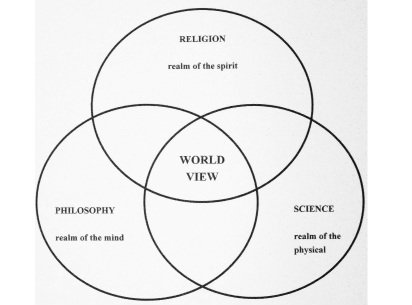
Harbinger of Sky, Eclipse, and Gratitude
Humans as one of the creatures that can lift their faces cannot be separated from the influence of the sky conditions. It is said that one of the revolutions in human evolution was his ability to raise his face to the sky so that the next development could be passed quickly. Other animals such as apes, whose evolutionary tree is closest to humans, still walk bent and pay more attention to the ground, which indicates that they prioritize worldly matters such as the necessities of eating, drinking, sleeping, and sex.
After evolution formed a more flexible human neck and walked upright, humans learned from the sky about directions and seasons. Human talent in finding patterns is like a double-edged sword, therefore patterns that cannot be sensed because they appear over a long period are an odd thing. In short, strange omens that occur every few years such as comets, meteors, lunar eclipses, and solar eclipses are considered bad omens. Interpretations from all corners of the world differ on this matter, but the common thread remains the same, namely the arrival of a disaster soon.
This odd sign is considered a message of the disaster sent by the gods. Dis-as-ter comes from Greek which means bad star (a sign of a strange sky). For the Masai tribe in East Africa, a comet means starvation, for the Zulu tribes in the South a comet means civil war, for the Eghap tribe in the West a comet means disease, and for the Luba tribe in Zaire, a comet means the death of a tribal leader. There are still many different interpretations from all corners of the world.
The solar eclipse that has occurred in my country is also inseparable from the myths of the arrival of calamities. Asians believe a solar eclipse occurs because a mystical creature devours the sun, so people make loud noises to drive this creature away. Because it is believed that this mystical creature can poison food, drink, and even fetuses in the womb. Meanwhile, the Mesopotamians thought that the solar eclipse occurred because of human sins, so they lit candles together while praying to the gods so that the sun could shine again.
There are still many myths from all over the world that interpret the signs of a strange sky as a disaster. Therefore, it is not surprising that many cultures and religions carry out a ritual in welcoming an eclipse. Luckily, the Chinese people who were very systematic starting around 1400 BC they began to record the occurrence of these strange signs until in the end it was found that strange signs from the sky such as the appearance of comets, meteors, and eclipses were natural phenomenon that occurred every few years. Humans are hungry for the meaning that our existence must have a special meaning for the universe. Until now, humans have not stopped at the search for these natural phenomena.
Humans can predict exactly how and when these strange signs. Even these signs are no longer strange, but only ordinary natural phenomena that appear every tens or even hundreds of years. Be thankful for science that puts forward rationality so that it can answer these phenomena so that finally we no longer need to be afraid and perform unnecessary rituals to dispel myths. Today we can see freely how this rare natural phenomenon occurs while enjoying its beauty.
My country was once special in the eyes of the world because only in my country is the only area where a total solar eclipse passes. I woke up early in the morning to witness this rare natural phenomenon, armed with a piece of used X-ray paper, enjoying the beauty of the eclipse even though it was not 100%. This rare natural phenomenon gives goosebumps, and many even shed tears when witnessing this phenomenon. For those who enjoy nature, of course, this natural phenomenon is something very extraordinary and thrills the little heart.
All beings created by the Most Beautiful Being must always yearn for their origin, therefore, as a human being who is hungry for meaning when he sees beautiful phenomena, his little heart must be trembling. There are things inexplicable words that touch the little heart from the bottom. For me, these kinds of things indicate the omnipotence of God, seeing this phenomenon makes us as humans grateful for His blessings.
Islam, the religion I believe celebrates this rare phenomenon with a prayer ritual. Because prayer is a ritual to signify gratitude to the Creator. Moments like this are the right time to reflect on yourself while giving thanks and contemplating the meaning of creation and the purpose of creation. Ah, thank God for allowing this generation to have witnessed this extraordinary solar eclipse. One time, I obliged myself to approach the area where the total solar eclipse visited. Hopefully, someday it will happen.

 @dark_spirit666


