Religious Critical Reason
There are currently about 5 billion religious people around the world. They are adherents of world religions, such as Islam, Christianity, and Buddhism, as well as local religions, such as Rastafari and Neo-Paganism. About 2 billion people decide not to be religious. Until early 2021, this non-religious group experienced the fastest development.
In history, religion was born with two purposes. The first brings man closer to his creator. His names are various, ranging from God, Dewa to Yahweh. It depends on the local culture, where the religion was born. The second is to provide order for human life amid all the uncertainties of life, ranging from disasters to the fear of facing death.
The purpose of religion can be summed up in two words, namely meaning and morals. Meaning is related to the purpose of human existence. Morals are related to guidelines for action so that humans can live together peacefully. The forms of religion also vary, in line with cultural developments in various places. However, the basic essence is similar.
Religious Corruption
Like everything in human hands, religion began to be corrupted. Political interests use it to gather the masses and seize power. Economic interests use to earn more money from the stupidity of the masses. My country is full of these two experiences.
Religion is used to justify lazy thinking. People also become narrow-minded and intolerant. They become closed to dissent. They become evil and blind to common sense.
In my country, religion is destroyed by formalism. This means that religion is only an outward appearance, starting from how to dress to blind memorization of certain religious teachings. There is no inner change. There is no deep appreciation that brings peace and compassion. Only outward appearance.
Religion is also used for social conformism. To get promoted, people follow a certain religion. To be fluent in politics, people adhere to certain religions. Religion loses its true meaning and morals.
Due to shallow religious formalism, people are no longer able to think independently. His mind is flawed. The logic is tucked behind blind faith. He is not able to make decisions with clear reason and by the circumstances.
The result is religious radicalism. People become evil towards other religions, as well as other interpretations of their religion. One more step, he became a terrorist. He is ready to kill and destroy other people, just because of different religions, or different religious interpretations.
Critical Religious Reason
This is where critical reasoning is important. He learned from the criticism of religion made by philosophers and social scientists. The point is simple: everything must be tested with real evidence and common sense before it is believed. This ranges from tradition to widespread general views.
That something is written, is not necessarily true. That something comes from the past, and is written, is not necessarily true. Here is the importance of the ability to interpret critically with data and common sense. This is very important in the context of religious life.
That something was said by an expert, is not necessarily true. That something is said by a respected person in society is not necessarily true. Truth is a matter of concrete evidence and logic. Only by relying on concrete evidence and logic can the true truth come to the fore, and the right decisions can be made.
That something is believed by many people, does not mean it is true. On the contrary, it is very likely to happen. Something that many people believe tends to be wrong. History has proven that.
For thousands of years, humans have believed that the earth is the center of the universe. This view is broken. With various studies and political battles, we have come to the truth, that the earth revolves around the sun. There are other examples with a similar pattern.
Religious Criticism
Religion can be an imaginary institution. So said Feuerbach, a German thinker. God is often a projection of the human mind. All good things are directed at him.
Finally, humans worship their imagination. He became disabled and weak, because he was busy worshiping, and forgot to develop himself. According to Feuerbach, the science of God is the science of humans. Religion that dwarfs human identity and capabilities is imaginary.
Religion can also make us like children. We always ask for God's invisible help. Finally, we are lazy to try ourselves. We are also lazy to be responsible for our actions because everything is thrown to God.
In this sense, like Freud, the Austrian thinker reminded, religion is a form of mental disorder. People worship the invisible. People beg for the unseen. If not careful, religion can fall into mass hypnosis that fools and impoverishes life.
In times of poverty and injustice, religion can be a comforting temporary opiate. So said Karl Marx, a German thinker. Religion dulls reason and fighting power. People accept oppression, injustice, and poverty without a fight.
In this age of science and technology, religion should have no place. So said Richard Dawkins, an English thinker. Religion is an artifact of the past that causes poverty, ignorance, and war. It does not deserve a living space in the 21st century.
Purifying Religious Life
The religious critics above are not entirely wrong. Religion can fall into heresy that justifies injustice. Religion can make people narrow, stupid, and poor. We can learn from all of them while continuing to purify our own religious life.
On the other hand, the government must also be firm against all forms of religious radicalism. Injustice in the name of religion must be fought as quickly and effectively as possible. He should not be allowed to roam and disrupt the order of living together. In this world, it belongs to all creatures, regardless of the species, religion, also for non-religious.
This is the essence of religious critical reasoning. If this is done, then we will experience the purification of religious life. We will remain faithful and religious, at the same time open to differences, able to reason with common sense, be critical and find peace in life. Only in this way, inter-religious peace can truly be realized.
Don't delay anymore.
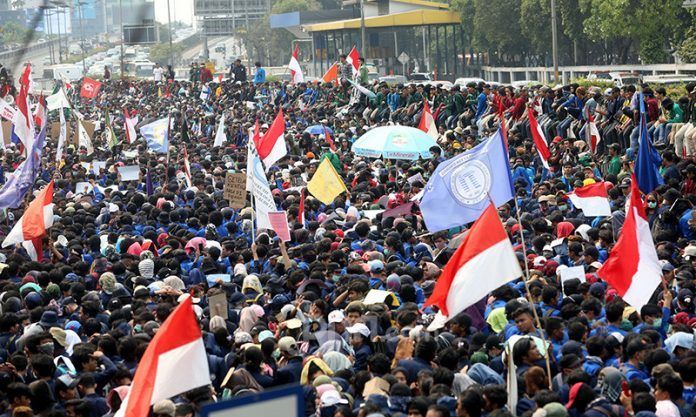
Humanizing the System
**Barack Hussein Obama**, former President of the United States. He is famous as the first black US President. The way he talks is very inspiring. He is considered a "*slang*" president with policies that are considered quite successful.
He is the son of immigrants who later studied and succeeded in the United States. Initially, he lived in Hawaii and then continued his studies at Harvard University's Law School. He then became a politician in Chicago, and then became the 44th President of the United States in 2008 and then.
His life story is the "*American Dream*", which is a story about a poor person who then climbs the career ladder, and becomes successful. He became a symbol of the effort to deal with various prejudices and racist attitudes. The fruit is a success. His life has been an inspiration to many people.
In many of his speeches, Obama has often emphasized this. "*You can be successful if you try,*" he said many times in his speeches. He said it more than 140 times in public. (Sandel, 2020) In philosophy, this is also known as **Meritocracy**.
This is an understanding that emphasizes that in a society, people can succeed, simply because of their talent and hard work. Success does not depend on race, religion, or family background. Success is the result of one's efforts. So, when successful, people have the right to be proud.
**Sandiaga Uno**, the Minister of Tourism and Creative Economy in Indonesia, has often spoken a similar tone since late 2020. He often told me that he was fired in 1998. With his efforts, he then rose and became a successful entrepreneur. Now, having succeeded as a businessman, like many others before him, he is trying to become a politician.
Success stories are easy to impress. Many books and films were created to perpetuate the story. Motivators also like to spread it. “*Chase your dream!*”, “*You can do it if you try hard!*”, “*Success is in your hands!*”, they shouted at motivational seminars.
The other side of meritocracy is often forgotten. People who fail are considered because of their fault. They are less intelligent or lazy, so they fail. Prosperity Theology is even crueler, people fail in life because they are not blessed by God. He failed because he was full of sin. (Sandel, 2020)
Divided Society
Society was divided into two. One is a group of successful people who are rich and influential. The other is a group of people who fail and are poor. This is the social gap that is the root for various other social problems, ranging from religious radicalism, crime to bloody conflicts.
Social inequality data from the Central Statistics Agency may provide some insight. Social inequality is measured by the Gini ratio of the level of expenditure in the household. The Gini ratio is 0 to 1. The number 0 is perfect equality. Meanwhile, the number 1 is a perfect gap.
The latest data from the Central Statistics Agency was obtained in September 2020. The Gini ratio in Indonesia is 0.399. It decreased since the beginning of 2020 which reached 0.39. This means that social inequality is getting bigger in Indonesia. The pandemic, and the government policy blunders associated with it, have had a major impact in this regard.
There is another measure that can be used, namely social inequality based on the value of wealth. This was formulated in a 2017 Credit Suisse report. (Garnesia, 2020) The wealth of the four richest people in Indonesia reaches 25 billion US dollars. This is greater than the total wealth of 100 million poor people in Indonesia which reaches 24 billion US dollars.
The gap hurts even more as the meritocratic outlook grows. People succeed, because of their efforts. People fail because of their laziness. In the long term, the hatred between the two groups was tapering off.
Considering Meritocracy
Is my success the fruit of my efforts? Was my failure the fruit of my laziness? Can meritocracy be justified? These are questions that must be addressed critically.
Seven things affect a person's failure or success. The first is health. A healthy and well-nourished body is the main capital of success. Without these, success will be hard to reach.
The second is the more or less stable state of the national economy. Even though he was born in a poor family, if the national economy had stability, the chances of success would be great. It should be noted that a healthy body, adequate nutrition, and a stable national economy are not created by one person alone. This is the result of the efforts of the wider community and the international community.
The third is work ethic. A good social environment develops from a good work ethic. This will later be passed on to the next generation. With a good work ethic, the chances of success will be much greater.
The fourth is political stability. A country that continues to be hit by conflicts and wars is not safe for the lives of its citizens. The success of its citizens to develop is far from their grasp. The work ethic and political stability are also not the creation of one person alone, but the cooperation of many people.
This is directly related to the fifth, namely infrastructure. Without adequate infrastructure support, success will be difficult to achieve. This mainly includes adequate transportation and communication infrastructure. The development of digital technology in the fourth industrial revolution greatly supports this.
The sixth is the personal ability that suits the tastes of the market. From time to time, market tastes continue to change. The pattern is always random. People with high abilities, but not according to market tastes, will find it difficult to develop. On the other hand, people with shallow abilities, but in line with market tastes, can soon become celebrities who are considered successful.
This is a random pattern in economics. Economic values are not in line with real contributions to society. The profession of garbage collector contributes greatly to society, although it is often neglected economically. The influencer profession often gets great economic benefits, even though it doesn't contribute much to living together.
The last one is nature that is minimal in disaster. This is self-explanatory. A society that is free from major disasters, such as tsunamis, earthquakes, and various other forms of disasters, will be easier to succeed. This is of course beyond human ability to predict and fully control.
The basic idea of meritocracy is not quite right. Success is very dependent on many things. It can even be emphatically said, success is always collective. No one succeeds by his strength and effort. That's the delusion of the motivators.
Failure is also not just because of my laziness. Many things influence, as described earlier. A bad social environment, random markets, and disasters that keep coming make many people fail in life. My failure is not entirely mine, but the failure of many. Systemic failure.
Humanizing the System
If my success is not mine, and I owe a great deal to society at large, then solidarity makes a lot of sense. Solidarity with those who failed is not a mere call. Their failure is also not because of them alone, but because of the failure of many things. If success arrives, then sharing becomes something that should be done.
The social state makes solidarity a part of official policy. The higher the income, the higher the tax levied. In fact, in some circumstances, taxes can touch 90% of income. Funds from taxes are then used to build society as a whole, including building infrastructure, fighting poverty, creating a culture of peace, and disaster mitigation.
Realizing this, a humble attitude emerges. People are not arrogant, because of their success. He realized that his success was the success of many people. He then becomes humble, ready to share, and more human in his life.
People who fail are not discouraged and become angry. He realized that his failure was a systemic failure. He can try to develop himself. However, if his talents and abilities do not match the market's taste, then he will be difficult to develop. He did not feel hopeless, let alone a grudge against the wider community.
This is the importance of building a humane system. Everyone has the same right to develop. If successful, then he is ready to share. If he fails, he does not have to suffer, be discouraged, despair, hate, fall into hunger or be homeless.
The human system is aware that failure has many causes. So, high-quality social security becomes very important to be realized. Those who lose the competition do not have to live in shame, hunger, or being homeless. They can still live decently as dignified human beings.
A healthy democracy is formed from this kind of humane system. Social inequality is low. Many people meet in public spaces, despite their different races, religions, and political sects. The community has high social resilience to face radicalism and other possible conflicts. Society is not easily divided by destructive interests.
We must humanize the existing system. The government has a big responsibility in this regard. Those with the necessary authority and resources. We monitor, criticize and assist all existing processes. Let's start moving.
**The lead image by:** **https://unsplash.com/photos/QR_TFiIX8hM**

The Concept of Freedom in Philosophy
**Freedom** is one of the most discussed themes in **philosophy** and **science**. Apart from all influences from inside and outside himself, are humans free to live their lives? Is this freedom total, or partial? What is the explanation? These are questions that have invited many of the greatest minds in history to answer them. The issue of freedom also has a direct impact on human life. There are four important things to consider. The first is related to legal matters. When a criminal act is based on his freedom, then he deserves to be punished. Otherwise, the punishment becomes unreasonable and unjust.
The second is a matter of living together. Regulating free people is certainly different from regulating people who are not free. The choices are also quite broad, namely from modern democracy to totalitarianism that breathes religion. A democratic rule of law is based on the notion of freedom and human dignity. Without all this, democracy will not be possible.
The third is about human relations. Love or friendship is meaningless without freedom. Not only that, without freedom, human relations will tend to be manipulative. People will take advantage of each other according to the elements that affect them. Humans who become wolves for each other (Homo Homini Lupus), presumably that is what might happen.
The fourth is about the meaning of life itself. What kind of life should a man lead, if there is no freedom in it? We will only be determined completely for circumstances outside of ourselves, such as political, economic, ecological, and even emotional states. We become like slaves waiting to be picked up by death. The ability to create meaning in life presupposes freedom in it.
These four things make the issue of freedom very important to consider. Some of the important views of freedom in philosophy are that freedom is understood as freedom to choose. Humans can choose and determine the pattern of their own life. This would be different from other objects that only follow the laws of nature mechanically. Similar patterns are also found in animals and plants that mechanically follow their natural impulses.
Furthermore, freedom is understood as self-autonomy. This is widely formulated in the school of German Idealist philosophy. Autonomy is the ability to determine one's moral laws independently. The social environment and the biological environment certainly have an influence. However, the ultimate and final decision is within each individual.
The concept of freedom in philosophy is also the inspiration for the birth of modern science and technology. In front of nature, humans can not act arbitrarily. He must learn to understand and obey the laws of nature. Only then will he be able to take advantage of nature for his benefit. This way of thinking indeed gave birth to rapid technological developments but also became the root of the destruction of nature after the industrial revolution.
Philosophy comes to important conclusions regarding human freedom. It is seen as a human ability to make sense of his experiences. That is, what happens outside of him can not be fully regulated. Many elements determine. However, the meaning of all these events can be created by human free will. This is the meaning of freedom in philosophy, namely the freedom to interpret various events experienced by humans.
Another element of freedom is the freedom to say no. Humans can resist the situation. He can choose otherwise, rather than what is offered. This makes human actions unpredictable. So much uncertainty in it. This would be in line with findings in neuroscience research. The complexity of the neural network and the human brain makes human actions unpredictable. Relationships with other people in the social world make things even more complex. In neuroscience, freedom is also understood as a state, in which human actions can never be completely predicted. It is this uncertainty that gives birth to a spark of freedom and makes life very colorful.
With all this complexity, many possibilities could happen. Possibilities and uncertainties are born and can be seen as a form of human freedom. Perhaps, it is not as complete as the concept of freedom of philosophers in history. However, up to this stage, the concept of freedom as a complexity that gives birth to various possibilities and uncertainties in human life would be sufficient.
**The image source by** **https://unsplash.com/photos/bUu9bVUosqE**

What to Do, If the State Fools and Impoverishes Its People?
July 2021, **Indonesia** is on the verge of disaster. The **COVID-19** pandemic is still haunting us. The government made wrong policies regarding this disaster. People are getting more and more difficult.
Millions of views have been submitted. However, all seemed neglected. The government continues to issue policies that hurt the people. The House of Representatives never really represented the interests of the people, but only enriched themselves and the party. The state seems deaf to the voices and interests of its people.
For a long time, the government has fooled its people. Various policies issued complicate the educational process that occurs. Religious radicalism infiltrated various school walls. That too was ignored.
The quality of teachers is also neglected. The quality of the minister of education has never really been considered. Not surprisingly, from many international measures, Indonesia ranks behind. This ranges from the ability to understand science to the ability to read.
In 2021, Indonesia ranks 62 out of 70 countries in terms of reading level. This is the result of the Program for International Student Assessment (PISA) survey issued by the Organization for Economic Cooperation and Development (OECD). One book is only awaited by about 90 people every year. The international standard is that one person reads at least 3 new books every year.
The government also continues to impoverish its people. Social inequality is ignored. The behavior of officials is just like that of petty kings who are corrupt and despised. Policies related to the COVID-19 pandemic have also tortured and impoverished the people.
In short, Indonesia has become a country full of injustice. The rich are getting richer at the expense of many. The poor are getting poorer, because of policy mistakes. Religious radicalism continues to spread in various sectors of life, without a proper response.
Country Destination
The 1945 Constitution clearly states that the State of Indonesia has five main objectives. The first is to protect the entire Indonesian country and the entire homeland of Indonesia. The second is to promote the general welfare. The third is the intellectual life of the country. The fourth is to carry out a world order based on freedom, eternal peace, and social justice.
To realize these five things, the state certainly needs resources. This is where the role of the people becomes very important. People are obliged to pay taxes to provide resources for the state. The people are also obliged to participate in development to the best of their ability.
In a democracy, the government comes from the people, by the people for the full benefit of the people. Officials come from the people. They also work with popular support to achieve the above five goals. However, if the government fails to realize its five goals, and impoverishes and fools its people, what should be done?
Suing the country
A country that does not carry out its duties is useless. It takes resources but does not fulfill its obligations. Officials become rich amid the poverty of their people. This is Indonesia in 2021. Four things can be done.
*First*, the state must be sued through democratic channels. People's wishes are conveyed through writing in the media, both mass media, and social media. The media has become a place for information as well as public education. The media must not be a propagator of fear and division, as is the case today.
Peaceful demonstrations are also a democratic way. Government policies related to the pandemic clearly must get a response from the people. The mass media and social media have tried to voice the real wishes of the people. Because the government is deaf and doesn't care, the people have to stage demonstrations to convey their wishes.
*Second*, the second democratic way is to form an organization. People must convey their wishes through organizations that work professionally with clear objectives. This organization critically and continuously provides input to the government. It is hoped that with a critical and consistent pattern, the government will change to a better direction in managing the country.
*Third*, this path can also be combined with international cooperation. Various international organizations, such as the United Nations, ASEAN, and the European Union, can be invited to work together to pressure the government. This cooperation can also provide adequate resources, to achieve the five goals of the establishment of the Indonesian state above. The democratic path is slow and sometimes seems hopeless. However, he was spared the bloody violence, as a result of the political conflict that might occur.
*Fourth*, the last resort, when the government fools and impoverishes its people, is revolution. People took to the streets to stage large and long demonstrations. Conflicts with the police and military will inevitably occur. Victims will surely fall, both human and property.
The Importance of Pancasila
In Indonesia, critical movements against the government are often hijacked by religious radicals. They want to replace Pancasila with a state-based religion that makes no sense and is destructive. This must not be tolerated and must be prevented at all costs. The critical movement for the government must still be based on the legal basis of the state, namely Pancasila in all its units.
In essence, Pancasila is perfect. Good and critical interpretations must continue to be carried out to maintain the integrity of the Indonesian state. The problem is, Pancasila is not implemented by the Indonesian government itself. Just and civilized humanity is far from reality.
The unity of Indonesia continues to be threatened by religious radicalism and terrorism. Democracy continues to be hijacked by rich people who are increasingly greedy and corrupt. Social justice has never been a reality for most Indonesians. Without Pancasila, the five basic goals of the founding of the State of Indonesia are just a dream.
If the state impoverishes and fools its people, then the people must move. We have to convey our wants and needs through various available media. We must organize professionally, and cooperate with the international community. And, if all democratic means are abandoned by a deaf government, it's time for revolution!
*The lead image source by:* *https://id.pinterest.com/pin/616993217683488941/*
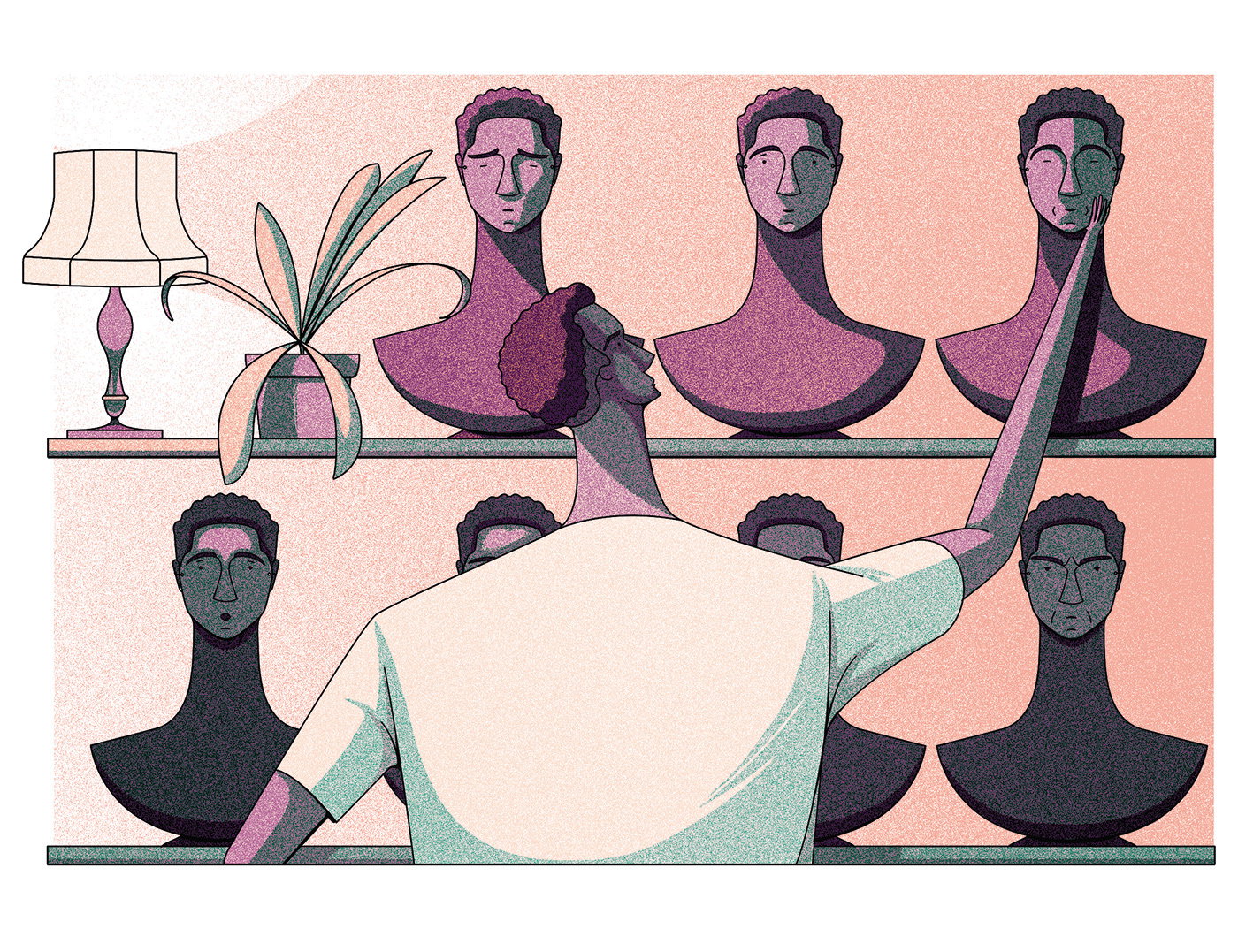
This ideology is called hypocrisy
Talking about ideology is complicated. On the one hand, it is considered the basis of a group, including the philosophical basis, values , and governance of everyday life. On the other hand, ideology is a false consciousness that is manifested in wrong thinking about the world. Ideology seems immune to criticism and can be used to eliminate people who have different views.
Both notions are not free from hypocrisy. Often, both are tangible manifestations of hypocrisy itself. When beautiful words are far from real action, hypocrisy is then inevitable. It is like a pungent odor that irritates the noses of sane people.
Maybe human life is never free from hypocrisy. The problem is then not being free at all, but about the level of hypocrisy that exists. When the nudity of hypocrisy can no longer be covered, disgust arises in the collective belly of society. Is there a politics-free of hypocrisy? The answer, as Bob Dylan put it, is in the wind.
When a group claims to be godly but suppresses and nurtures terrorism through its education system, hypocrisy is inevitable. What is made by God then is not the owner of the universe, but money and power. When money and power are made into idol gods, the governance of coexistence falls into constant tension, conflict, and war.
When a group claims to be humane but remains silent about the dismissal of thousands of helpless workers, hypocrisy immediately wafts through the air. Humanity is a beautiful word that covers oppression. Humanity becomes propaganda that is echoed to cover the stench of various policy mistakes that lead to violations of the basic rights of human life.
When a group claims to be democratic but ignores the voice of the people, it is hypocrisy. When people still struggle to get decent jobs, still get poor quality education, and inadequate health services, but leaders distribute money and power to their friends, great hypocrisy is immediately smelled.
When many people still live below the poverty line, and the rulers distribute public money to their cronies, without considering common sense and a sense of decency, where lies social justice? What immediately smelled was sheer hypocrisy and lies. Where is social justice, when rulers enrich the rich, to secure their power?
Hypocrisy Ideology
In the end, the noble ideology was again used to cover the distribution of money and power among the political elite. History seems to repeat itself. When this noble ideology falls into rotten political circles, it can easily be used to justify various forms of violence, ranging from corruption, nepotism to kidnapping and murder.
To be honest, perhaps the only enduring ideology in politics is hypocrisy. Words can be high. Appearances can be sympathetic and convincing. However, the smell of hypocrisy is undeniable.
Hypocrisy can be avoided if the rulers and the people as a whole understand the deepest core of the existing ideology. Surface understanding will result in superficiality, and lead to policy-making errors. This mistake will pierce the sense of justice in society. Even rulers will lose their legitimate support from the people if injustice continues to be silenced.
How long do you want?
*The lead image source by:* *https://www.behance.net/gallery/74525713/Hypocrisy-Filosofie-magazine*
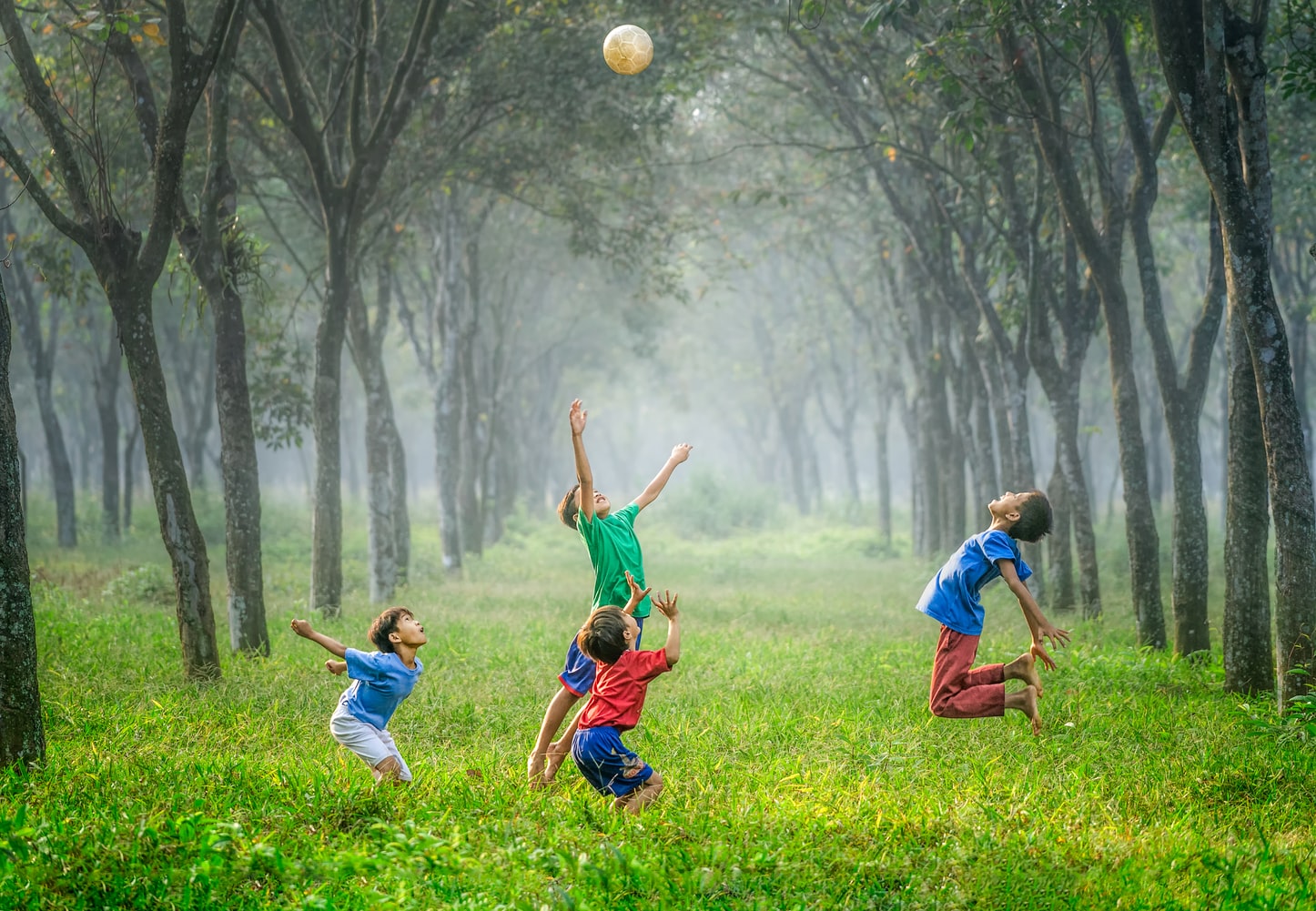
Happy in the face of disaster
Disasters are not new in human life. Disasters are also not new to this earth. There is no such thing as a disaster. It's just a concept created by humans. The earth just moves and changes. It simply follows the laws of nature as it is.
Earth and Mass Extinction
Earth itself has experienced five major disasters, or what is known as mass extinctions. The former occurred 440 million years ago, and the latter occurred 65 million years ago.
In the last 500 million years, 99% of the species that have ever lived on earth have become extinct. From the ashes of destruction, new species are born and grow.
About 65 million years ago, a giant asteroid hit the waters of Mexico at a speed of 73,000 km per hour. The result is a huge hole that releases dust and sulfur into the sky, making the whole world dark and cold. (Greshko, 2019)
This was the beginning of the fifth mass destruction, which destroyed the dinosaurs of that time. From the rubble of existing destruction, birds and mammals evolved and became humans millions of years later through the process of evolution.
Disasters always go hand in hand with life. Destruction always goes hand in hand with creation. So, disaster is not new news. We just need to broaden our horizons, so we can respond calmly and clearly.
Responding with clarity
How to deal with disasters? This is the most important question that we must answer right now, especially in response to the government's failure to deal with the COVID-19 pandemic in 2021.
The key to responding to disasters is not just intelligence, but awareness. This means realizing ourselves as pure consciousness that pervades the universe.
Our original selves preceded social identity. He is the same as the whole universe. From time to time, this kind of awareness needs to be nurtured. It is our original and natural state of mind as human beings.
Happy
I call it Happy, which is constantly rests in awareness. Tranquility and inner peace will emerge. Our minds are beyond the suffering and happiness that humans are accustomed to. Clarity will emerge. We will be able to see challenges as they are, without excessive fear or anxiety.
We need to continue to maintain this happiness. If we fail and get lost in thoughts and emotions, we only need to return to the present moment through our breath, sound, taste, or mantra. It must be practiced for life, without stopping. This blissful clarity is at the core of all world spiritual streams. It can also be called enlightenment, or liberation.
Direct experience
From moment to moment, all human life experiences are experienced directly. No more judgments of good or bad, right or wrong, like or dislike. All are experienced as they are with unconditional acceptance. Life becomes lighter from moment to moment because it is not burdened by excessive judgment.
We can then act according to the circumstances. This is true wisdom, namely wisdom that is born from a natural mind, not from outdated traditional morals. We then become enlightened human beings who are fully involved with the struggles of the world. There is a time to be harsh and angry, and a time to be gentle and patient. All in time.
Addressing Government Failure
In my country, the pandemic is part of the disaster. It does not cause mass extinctions. It only creates great fear and poverty, as a result of government policies in my country which are chaotic and destructive. The pandemic just needs to be seen for what it is, and not overreacted, as our government is doing.
The sick are treated according to symptoms. Those who are not sick are encouraged to comply with health protocols. Do not overdo it, for example by closing transportation, prohibiting people from working, threatening the people, terrorizing the people, and impoverishing the people.
Such policies will only make people angry. If this continues, the people will protest. Peaceful democratic paths will be taken to channel protests. However, if this is kept silent, the people will move against it.
Bloody revolutions can happen. Don't let us move to this point. So, let's learn to be happy all the time, so that we find clarity in this life, and can respond to various disasters clearly and intelligently. It is precisely in the midst of a disaster that strangles the soul, we need to be happier.
*The lead image source by:* *https://unsplash.com/photos/tvc5imO5pXk*
If I were the President of Indonesia during the Pandemic
I am very disappointed with the way the Indonesian government has handled the pandemic. Day by day, the feeling of annoyance is getting stronger inside. This pandemic not only threatens people's lives but also undermines the nation's morale. Day by day, more and more people no longer trust the government.
They also live poorer. Not because they failed in business competition, but because of government policy mistakes that made them live in fear and poverty. Indonesia's economic growth projection was lowered to 3.8% from the previous 4%. This happened, due to economic uncertainty, due to the drastic change in government policies in response to the COVID-19 pandemic.
It's not just a number. Amid the increasing population, which has now exceeded 270 million and continues to grow, the low economic growth means, the people's income is getting lower, and poverty is also expanding. News of the death is published every day on various national and social media. People live in terror every day.
If this is allowed to continue, the possibility of treason and rebellion could be high. Several voices have emerged to carry out a revolution in Indonesia. This country could fall into a bloody civil war. The price is too high.
For a moment, I contemplated. What will I do, if I am allowed to become President of the Republic of Indonesia during this pandemic?
Two Ways of Thinking
Before entering the technical step, two ways of thinking would need to be considered. *First*, as President, I am a servant of the people. My job is to fully serve the interests of the people. I must not live in luxury, while my master is impoverished in poverty and fear.
*Two*, I am the leader of the country, and the state must protect its people. I will not issue policies by terrorizing the people, nor making them trapped in poverty, fear, and uncertainty.
These two ways of thinking are rooted in modern political philosophy as well as the values of Pancasila. The state must ensure social justice using a civilized and democratic humane. Freedom of religion and the unity of the Republic of Indonesia can only be safeguarded, if social justice, democracy, and civilized humanity are also safeguarded. All the precepts in Pancasila are a unity that must be considered in its entirety.
Creating a Sense of Security
There are four strategies that I will run. First, I will organize news related to the pandemic. There is no need for the death toll to be exhibited every day. This is inhumane and pointless. There is no need for the number of people who are infected every day to be spread all the time. The majority of people are asymptomatic and will recover.
Data from July 10, 2021, confirms, out of 2.5 million COVID-19 sufferers, 2 million will recover. The death rate also touched 64 thousand people (0.024%), of Indonesia's 270 million population. (Our World in Data, 2021). At the global level, COVID-19-related victims have touched 4 million people out of 7 billion people in the world. This is about 0.058%.
I don't want to minimize the suffering of the victims of COVID. However, we must pay attention to the bigger picture, if we are to take the right policies. Media that continue to spread fear and panic will be reprimanded or shut down. In a democratic society, the presence of demagogues (creators of fear and division) cannot be tolerated.
The state must protect and provide a sense of security to its people. This is not a false sense of security but is followed by effective and efficient concrete actions to solve the problem.
Opening Borders, Guaranteeing Economy
Second, I will guarantee that national borders remain open. I will not impoverish the people by cutting off transportation routes, as the current government is doing.
Medical tests are certainly necessary. There is no tax for test kits I will make subsidies for test kits, so that citizens from all over Indonesia can take the test, without worrying about the cost. The right to move and move is part of human rights as a citizen. This is important, not only for economic affairs but also for morals and the happiness of citizens as a whole.
Two important questions arise. What if COVID spreads, and creates more deaths? and also where the money to provide subsidies to the people? I will answer that in step three.
Stream Funds to Corrupts to Develop Health Systems.
Third, I will confiscate the assets of corruptors, and channel all available funds to build an adequate health system. This means more health workers and adequate health facilities. In the long term, I will propose the death penalty for corruptors and the confiscation of their assets for state purposes. This of course must work with the DPR.
So far, the main problem in handling COVID is the lack of health personnel and adequate health facilities. This is completely the government's fault! Do not impoverish and oppress the people, because of the mistakes made by the government! Distribute as many funds as possible from various directions to build a qualified health system.
Debt to other countries or international institutions can be a last resort. This was done after all non-essential flows of funds were redirected to the development of an adequate national health system. We create shared cash to build health facilities and health workers who are prosperous and world-class.
In the long term, the education of health workers, both public and private, will receive subsidies from the state. Everyone, without discrimination, can be involved in the service of the health system if they have the calling and ability to do so.
Living With COVID 19
Fourth, we must all accept the fact that this COVID-19 virus, with all its mutations, will live with us. We will never be able to eliminate this virus from the face of the earth. All efforts to eliminate COVID 19 will only bring new victims. Any rhetoric offered to eradicate the virus will only create new bigger problems.
After all, the COVID-19 virus is part of the universe's life. We have to give it space and manage its spread as best we can. Treatment will be based on symptoms. In the long term, there is no need for tests to move places in Indonesia, both for local and foreign residents.
With more and more Indonesians being vaccinated, and the high quality of the health system, COVID 19 can be treated the same as any other disease. It is not to be feared but managed wisely from day today.
These are the four steps I would take if I were the President of Indonesia during the pandemic. Hopefully, it can be an inspiration.
When Life Doesn't Go As Planned
Three true stories around my life. A friend is passionate about the culinary business. He designed a cafe that he hoped would become popular. All plans are prepared. A capital loan has been obtained. Unexpectedly, the pandemic arrived. All canceled. Debt does get relief. However, it is still a burden to be paid. Café canceled. Zero income, even minus.
The second story is about a career. After working for so long, he hoped to get the promised promotion. However, like everywhere in my country, office politics play a role. Promotions disappear in plain sight, because of the elements of corruption, collusion, and nepotism within the organization.
The third story about a relationship that ran aground in the middle of the road. Marriage is a hope to continue together. Challenges and happiness lived together. But, like everything, it often doesn't go according to plan. Infidelity peeks in the middle of the road. Suspicion is a part of everyday life. A beautiful marriage turns into a living hell. Parting was finally the only way.
Plans don't always go as expected. Some delay and even destroy it. Life doesn't go as planned. Obstacles are a part of life. Time and time again, we have to learn this. Time and time again, we fail. Disappointed, angry, and suffering are fruits that must be felt.
Two Views
The adage says, make a plan, but be prepared to change it. Making plans is not like carving in stone. It's more like carving letters on water. Many elements influence it, and we must be ready to change when circumstances require it. Success in life often comes from the ability to make a backup plan. The master plan is often hit by uncertain circumstances. The contingency plan is also moving forward to become the main plan. Thus, preparing a backup plan is an important path to success.
Sadhana for Disappointment
Sadhana is a spiritual practice. It provides a way to experience God directly within. It is the basis of inner silence and peace. When it comes to disappointment, especially when things don't go according to plan, there are six important things to consider.
First, when plans are hit by uncertainty, we need to stop in the here and now. Stop all activity. Stop all analysis. When things don't go according to plan, we need a break.
Second, canceled plans often create disappointment, even anger. Distracted mind. Emotions are unstable. Here, we need to hold on to life. We need to pay attention to the characteristics of life within, such as breath, heartbeat, sounds around us, objects in front of our eyes, or taste on the skin and the tongue. Do this for at least five minutes. If attention is distracted, we just need to gently return. Life becomes a strong anchor when strong emotions visit. We are no longer carried away by changing circumstances within ourselves. All changes are quite noticed and observed. This is the end of suffering.
Third, this is also related to the previous description, namely being fully aware of the suffering that comes. Everything changes, including suffering and happiness. What is sought is not temporary happiness, but freedom from pain and happiness. Take at least five minutes to realize the feeling inside you that this too will pass.
Fourth, the three Sadhanas above help us to achieve clarity. After that, we can start looking for a way out. Clarity is the most important ingredient in problem-solving. After the mind is calm and clear, we can start the analysis to uncover the root of the problem, and look for possible solutions.
Fifth, not all things have a way out. Not all problems have to be solved now. Many circumstances do present a dead end. If that happens, fine. We are anchored back in life, as in point three. We stop here and now. We melt into the state and enter the silence. At this point, even though we are deadlocked, we can still feel happiness.
Sixth, life is neat and, oftentimes, full of surprises. The plan fails, but surprising things happen unexpectedly. We just need to observe and be patient. Many times in my life, I have experienced this. If our plan fails, then another plan is in progress. There is another intelligence at work. We can call it cosmic intelligence, God, the universe, and so on. At this point, we just need to observe, anchor to life, and do what is necessary and can be done.
Life often doesn't go according to plan. This is also a good thing. If all things go according to our plan and will, then the world will be destroyed. Desire and plans are often just a form of the narrow, greedy, and destructive human ego. As the old saying goes, if one door closes, another will open. Patient. Silence. Observe. And went to another door that was already open.
Image by: drmichellebengtson.com https://drmichellebengtson.com/what-to-do-when-life-doesnt-go-as-planned/

Enlightenment About My Body
There was a big epiphany on the plane trip from Denpasar to Jogjakarta a week ago. An old book is read while flying across the distance from Bali to Java. Written simple words that open the eyes, "*I am not my body*". Jerky, time seemed to stop.
There was a silence within me that came forward. Body like cotton. It is thin and floaty (this is a fact because it is on the plane). One key to life opens and opens many other doors.
All problems are no longer a problem. What was previously worrying now feels distant. There is a distance created. There was a new, spacious and majestic space that came to the fore.
As if Trouble
As far as I understand, there are nine pressing problems in human life in the 21st century. **First**, so many people worry about money. They worry about the safety of themselves and their families. Various ways, even those that harm others, are often taken, to collect more money.
**Two**, we also often worry about family. How is the health of my wife, husband, children, and parents? How can I help them live healthy, happy, and long lives? Excessive worrying will create anxiety, even long-lasting depression, such as bodily illness and even suicide.
**Three**, diversion from anxiety is also often detrimental. Often, people fall into consumptive attitudes. He buys things he doesn't need. Income, and even savings, must disappear to satisfy the endless buying urge.
**Four**, when money and purchasing power disappears, other objects become fugitives. Many people turn to alcohol. They get drunk to cover up the anxiety they feel. This is of course a vicious circle because alcoholism will create new, more dangerous problems.
**Five**, drug addiction also takes a similar pattern. Momentary pleasure is sought to get out of trouble instantly. People seem unconscious, this is like digging a grave deeper. The effects of drug addiction are far more painful than the initial anxiety.
**Six**, this is what seems to be a trend now, Religion is an unhealthy escape from the anxiety of life. People change clothes, cover their entire bodies, and feel that they are the holiest people in the world. A small number become terrorists who threaten the comfort and integrity of living together.
**Seven**, greed may be a cover for anxiety. People are not satisfied with what is there. He racked his brain and energy to find what was more satisfying, without any clear direction. This is the root of all corruption and other dishonest acts, namely the fear of an uncertain life.
**Eight**, momentary bodily pleasures are the quickest to divert anxiety. Sex then became the main choice. No wonder, in the 21st century, pornography, prostitution, and infidelity exploded in various parts of the world. The relentless crisis, coupled with an increasingly uncertain pandemic, is forcing people to seek temporary diversion.
**Nine**, this tendency is perhaps the most subtle, namely the excessive obsession with health. As if the pain is a mortal enemy that must be eradicated. Pain is a part of life. It is an opportunity for the body to truly rest when activity is overwhelming.
What do the nine things above have in common? One thing: it's all about the body! Everything is born from the needs of the body, and the drive to preserve the body. And since both family and love relationships are bodily relationships, they also become objects of anxiety.
Consciously or unconsciously, the body is the main reason for all our anxiety. People accumulate wealth, often through corruption, also to satisfy bodily needs. People worry about their lives and their families, also because of the physical bond. Only humans are this troublesome.
Animals and plants also have bodily needs. However, they don't worry much, as humans do. They also want to survive in an uncertain world. However, no animal was trapped in prolonged depression and chose to commit suicide. No animal kills each other, just because of religion.
My Body
If the body is the cause of many of life's anxieties, what does it mean? The body is a constantly changing entity. It is a collection as well as remnants of the food we have eaten. Back then, our bodies were small. However, with the passage of time and the amount of food we eat, it has grown.
The body is also the result of habit. If we are used to eating a lot, then our body is big. Conversely, if we eat a little, then the body is small. The body has its own needs that demand to be met.
Unbearable needs can also be referred to as compulsions. These are strong urges that compel them to be fulfilled. The forms vary, ranging from uncontrollable eating, excessive sex, excessive grooming to the need for luxury goods. It is this fulfillment of the body's compulsive needs that is the reason for much of the anxiety in our lives.
The body cannot be separated from the mind either. What we think will feel in the body. Wounds on the body can also mess with our minds. So, the concept used should be the body-mind concept. Both are one.
Am I My Body?
This question is important to answer. If the answer is yes, then all our anxiety is justified, because it is all related to meeting the needs of the body. However, on closer inspection, the correct answer is no. Our bodies are constantly changing. Meanwhile, consciousness or life in it remains.
So, I am not my body. I can observe my body. I can be aware of my body. So my body is not me, because it can become the object of my consciousness.
If I am not my body, who am I? The answer is simple: I am the consciousness that observes my body. Various studies in philosophy and neuroscience have come to this conclusion. I am a living consciousness, while the body is only my vehicle in this world.
What are the implications of this understanding? Most of the problems are problems of the fulfillment of the body. Our anxiety about family is also because we have a physical bond with them. However, if we are aware, that we are not our bodies, then there is enlightenment there.
There is a distance between me and my body. This also means, there is a distance between me and my mind. There is a distance between me and my anxiety. This is indeed the end of suffering.
The compulsions are gone. Anxiety disappeared. We still have to work, to meet the needs of the body. We still have to take care of families in need. However, everything was done calmly and clearly.
This must be realized from time to time. In between activities, try to say to yourself, "I am not my body". This will form a new pattern of life. This will lead us to enlightenment that gives birth to peace and clarity. The right actions will flow from there.
On the other hand, as a living consciousness that has transcended the body, we also feel a bond with all beings. We become part of all living things that exist. Discrimination, racism, and identity conflicts will disappear instantly. We use the body but can transcend it, and touch the cosmic consciousness within us.
Thumbnail Image by unsplash.com https://unsplash.com/photos/_Zd6COnH5E8

The Great Ignorance
In the world of *philosophy*, this has become a classic story. In Ancient *Greece*, in the city of *Athena*, **Socrates** was considered the wisest man. The reason is unique. He is the wisest man because he knows that he knows nothing. Not much explanation is given. There are many interpretations of the story. One of the most influential is the interpretation that Socrates was well aware of the limitations of the human mind. We can never really understand anything in this world.
Language and Reality
Human knowledge is bridged by language. Language is an abstraction to describe the state of the world, as captured by the five human senses. Language is also an abstraction for thinking and feeling. It becomes a communication tool to convey the contents of taste and reason. Because it is an abstraction, language is always not enough to describe reality as it is. There is always an inescapable distance between the word and the real. There is always a gap between spoken words and their true meaning. This distance can never be truly closed, no matter what human efforts.
The same thing happens in science. It is born from words and concepts that move with the laws of logic. To some extent, he could touch the truth. However, he would not be able to understand everything. Old arguments become obsolete. A new argument was born. Until a certain time, it becomes obsolete and abandoned. A new perspective was born.
One question answered. Dozens of other questions will appear. One riddle solved. Various other mysteries arise in scientific research. It will never stop and be a fun adventure for scientists. The clearest example is in modern physics. Until now, scientists have not been able to explain what matter is. Does it exist, or is it an emptiness that manifests, so that it seems to be real? Recent developments in quantum physics and neuroscience have dispelled the naive belief that matter is real and indisputable.
Not surprisingly, some of the latest discoveries in astrophysics are described using the word dark, or black. Examples are dark matter, dark energy, and black holes. These three words want to explain the ignorance of scientists. There are still many mysteries in the universe that need to be investigated further. Here the importance of intellectual honesty. There is nothing we can know in this universe. We also do not understand, who we are. There is always room for mystery in every word and concept that is born.
Not knowing is an open attitude. This is an attitude of wanting to learn without stopping. Words and concepts are used to dive into the truth. However, the truth itself can only be experienced, but cannot be fully and fully formulated.
The Danger of "Feeling Know"
This is where religion becomes dangerous. Religion is based on faith. That is, religion rests on pure belief, without a logical basis and real data. Religion makes people "know". Without a critical attitude, the attitude of "knowing" will lead people astray into ignorance. Only fools can be sure. Words and concepts are considered truths that describe reality as it is. The attitude of knowing kills knowledge and wisdom.
It breeds laziness to think. People believe in dogmatic shallow answers. The search for truth ceased. People live in shallowness that leads to self-destruction. Common sense is dim. Decisions are made on shallow and dogmatic grounds. Discrimination and injustice occur in various areas of life. Living together is full of tension and prolonged conflict.
No wonder, so many wars are carried out in the name of religion. So much oppression and injustice being done in the name of religion. Two groups know they will kill each other to prove their stupidity. In my country, I am already full of deadly terrorism based on radical religious teachings.
Knowledge and Spirituality
This is where the importance of religion develops into spirituality. The basis is no longer an attitude of "knowing", but an attitude of openness to the mysteries of life. Humility emerges. Ignorance is great because it draws people closer to the wisdom of life that transcends words and concepts. At this point, spirituality goes hand in hand with knowledge. The two embraced ignorance. Both see ignorance as to the path to enlightenment. Both are humble and eager to explore this limitless universe.
Spirituality and knowledge are honest in life. When we think we know everything, especially content with shallow and dogmatic answers, we become liars. We lie to ourselves, and others. On the other hand, if we are really honest, we will be completely ignorant. We become open and humble to all that exists. Great ignorance will lead us to the highest knowledge. It can be experienced, but it always escapes the grasp of words and concepts. We sit and absorb the mysteries of life that go beyond words and language. Only in this way will our lives become truly meaningful.
The main image by: salon.com https://www.salon.com/2021/06/04/dark-matter-theory-fifth-force-particle-physics/
Money Spirituality
*Main Image By:* *corporatemonks.com* https://corporatemonks.com/money-or-spirituality/
These two words, namely *spirituality*, and *money* are often separated. Spirituality is seen as something related to sacred things, far from money. Meanwhile, money is seen not only as a fulfillment of human needs but also as a symbol of self-esteem in the eyes of society. Money is often sought with ambition and greed.
This understanding is dangerous. Without the intervention of spirituality, money will become a tool to oppress other people and nature. Money will be a satisfying pleasure that leads people to the emptiness and destruction of their lives. In this sense, spirituality is the expansion of human identity from just the personal self to the vastness of the universe.
In many places in the world, *religion* is also separated from spirituality. On various occasions, religion has also become a tool to raise money, as well as to gain political power in a dirty way for rotten interests. An unhealthy mix of politics, economics, and religion has become a very destructive phenomenon in some countries.
In my country too, money divides society into two classes, namely the rich class and the poor class. There was a very sharp social inequality. Amid an endless pandemic, the economic impact continues to be felt. Inequality is getting bigger and more visible in various places here.
The relationship between money and human life must be re-examined. Money must be seen for what it is, i.e. as its original function. This is where the spirituality of money plays an important role. Three things are important to note.
Misunderstood Money
*First*, in today's world, money is often seen as a goal. People live and work to earn money. People cheat and corrupt to get more money. Not only that, people even hurt and kill each other to earn money.
*Two*, money also generates attachment. If there is money, people are happy. If you lose money, people will suffer. Money has become a source of happiness for many people.
*Three*, money is also often a measure of a person's self-esteem. With money, he becomes valuable in the eyes of society, although the way he earns money is questionable. Without money, people are seen as useless. **Herbert Marcuse**, a German thinker, called this Sein al Haben, namely the existence of a person who is seen from the amount of money and property he has.
Money Spirituality
Money spirituality means, people put money in its real role. With identity as wide as the universe, people work to earn money. He also uses money from the point of view of the universe. There are three important things to note.
*Firs*t, money is placed as a tool for life. It is not a goal, because the highest goal in human life is to live fully. If money interferes with this goal, then it needs to be let go. Money is also seen as a tool for the welfare of society at large and not just a group of people.
*Two*, money is not used as an object of attachment. Human happiness is rooted in being fully alive. He does not depend on money or other things. Human happiness also does not depend on the existence of other people.
*Three*, self-esteem is also separated from money. Humans are precious and dignified in themselves. It has nothing to do with his possessions or money. Spirituality will lead people to a healthy and balanced relationship with money.
May be true said **Michael Sandel**, an American thinker. The most precious things in this world cannot be bought with money, because they are free. This would also be in line with *Zen* wisdom, that the most expensive thing in the world is the head of a dead cat. Why? Because no one knows the price!

Countries that are obsessed with religion tend to be poor and underdeveloped
Around 7 pm, I was parking my motorbike. There was a noise so loud and so long. I asked the parking attendant, *"what is that sound?"*. *The sound of people praying*, he explained.
Why so hard? I couldn't even hear the parking attendant's voice. I can't even hear my voice. Why does prayer have to be so hard?
I looked at the related places of worship. Very few people, but very loud voice. Does it need to be that hard? Isn't that disturbing the environment? Isn't that noise pollution? What are these symptoms?
It is said that, if discussed properly, people can be accused of blaspheming religion. Finally, people are afraid and silence the noise that is very disturbing to the surrounding environment. Such is the fate of silent lovers in a religion-obsessed country. The sick, the needy, and the lonely lovers must be forced to listen to meaningless, and often ear-piercing, prayers.
Possible True Hypothesis
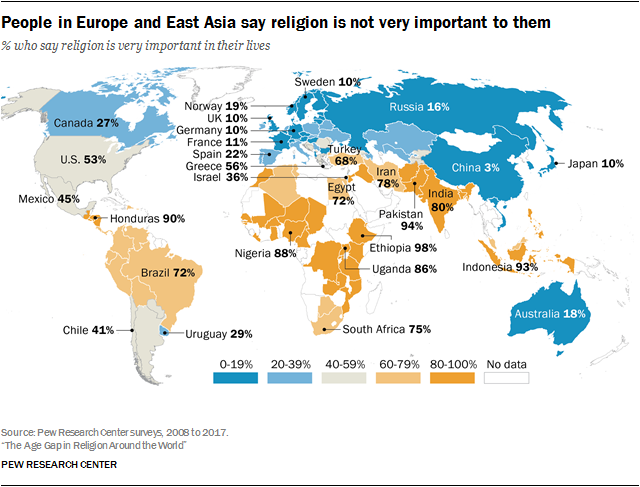
I have long had a simple hypothesis. Hypothesis means an opinion that has not been tested in research. It goes like this, the more a country is obsessed with religion, the more backward and poor that country is. With a few keystrokes on the keyboard, "**Professor Google**" immediately presents useful data.
The data was taken by the **PEW** research institute in the form of a survey from 2008 to 2017. This is an independent research institute headquartered in Washington, United States. They do research regularly about various things related to living together. They use the latest research methods to extract the desired data. This is the data I get:
Let's dissect the data. Five countries see religion as very important. They are **Ethiopia** (98%), **Pakistan** (94%), **Indonesia** (93%), **Honduras** (90%), and **Nigeria** (88%). These are countries that fail to bring prosperity and justice to their citizens. The social inequality between the rich and the poor is very high. Armed conflicts, ranging from bomb terrors to civil wars, have not yet ended.
We'll see the other side. Five countries do not see religion as important. They are **China** (3%), **Sweden** (10%), **Japan** (10%), UK (10%), and **Germany** (10%). This is a list of outstanding countries.
China has become a superpower with enormous political, economic and cultural influence in the world. Many criticisms leveled at the Chinese Government. However, we can't deny, they're just amazing. What about Sweden, Japan, England, and Germany? These are developed countries, where people from all over the world want to live, work, and study.
Ask yourself. Would you like to live, work and study in Ethiopia, Nigeria, or Indonesia (except those who were born there, like me)? I think most will say no. Would you like to study, work and live in China, Japan, or Germany? I think most would say yes.
Why did this happen?
Data from PEW does not mention obsessions. However, from my observations and readings, religion has become an obsession in life in the five countries I mentioned above. Truth exists only in religion, especially mine, which was given at the time I was born and has no right to choose or to move. Others are misguided, and even have to be bombed to be exterminated from the face of the earth.
There are seven important things to note. First, obsession is a symptom of an unhealthy mind. People adore something, without being critical. People lose common sense and get lost in the object of their worship.
Obsessed people are hard to talk to well. They are blind to reason. They can't, or don't want to, see it from another point of view, or a broader perspective. Finally, they also tend to be sensitive, and ready to use violence, if they feel cornered.
Obsession with religion has a similar impact. People are blind to data and facts that differ from their views. People become stubborn in their stupidity. In a society obsessed with religion, science and wisdom will not thrive.
Second, obsession will also kill common sense. People are not able to think logically and see real cause and effect in the world. Critical attitude also disappeared. The old traditions and views that are heretical are still maintained, even though they have been proven completely wrong.
Third, data illiteracy and illiteracy will lead to poverty. Corruption will be widespread, even closely related to religious life. Various policies will fool and impoverish the people. Poverty and slums are rampant, followed by a handful of rich people with flashy luxury housing that disturbs the view.
Without data and common sense, society will not be able to make fair laws. Policies will also be misguided. Various social problems, such as poverty, crime, discrimination, and corruption, will only get bigger.
Fourth, all this will create intolerance to different ways of life. Conflicts between groups and between religions will occur regularly. The loss of life and property will be incalculable. Indonesia is full of this kind of experience.
Fifth, the state will also be trapped in futile debates. The matter of dress will become a public debate that takes a lot of time and energy. The question of sin, hell, and heaven will also become a futile public discourse. In a world battling pandemics, developing renewable energy, and preparing for interplanetary travel, religion-obsessed nations are falling further and further behind.
Sixth, poor and underdeveloped countries will fall prey to the international community. Its natural wealth will be dredged out. The country will only be a place of sale. Its culture was crushed by foreign influences. In cultural and economic poverty, conflict and destruction await in plain sight.
Seventh, in the end, countries that are obsessed with religion will become failed states. The government is not able to provide prosperity and justice for its citizens. Bloody conflicts will become an inseparable part of everyday life. At a certain time, the country will disappear from the face of the earth.
These seven things can also be reversed, to understand countries that are not obsessed with religion. They tend to be sensitive to data and use both common sense and critical thinking in making policies. They managed to get out of poverty and prolonged conflict in their area. Tolerance to different ways of life is very high. They became developed countries in terms of culture, economy, and politics, as well as being role models for other countries.
Fair Religion
I was tempted to deny the existence of religion in the world. However, this seems overkill. It is undeniable that religion has made a major contribution to the development of human civilization. Without religion in all its forms, humanity would have been devastated by the uncertainties of nature.
Learning from Aristotle and Gautama Buddha, the moderate middle way is the best. So, we must remain religious. However, do not let us fall into poverty and backwardness. There are five important things to note.
First, let go of all forms of obsession. That's not healthy. Can kill common sense and conscience. It even kills empathy.
Religion is fine, but don't obsess. Religiously relaxed and full of laughter. Keep learning to reason. Continue to develop conscience and empathy. Please worship, while remaining sensitive to the interests of others, and the common good.
Two, human life has many sides. Don't just develop religion. Develop the artistic and cultural side as well. Develop the scientific and philosophical side as well. Our lives will be balanced, and far from the trap of obsession.
Three, in particular, we must learn to develop science and art. This will sharpen common sense and conscience. The education system must develop a scientific culture and a love of cultural arts. This starts with selecting the right education minister and education officials.
Fourth, if you want to be religious, study to the core. Don't get stuck on shallow surface skin. Don't get caught up in misleading interpretations that fool you. The essence of all religions is oneness with God and all that exists. Love and peace will arise naturally from this union.
Five, at one point, we must go beyond religion and enter spirituality. That is, we no longer see ourselves as mere members of certain social groups, but as citizens of the universe. In philosophy, this is also known as cosmopolitanism. We will coexist peacefully with everything, including the plants and animals around us. We will avoid all forms of torturous obsession, including an obsession with religion.
My country still has hope. Most Indonesians can reason well and have a clear conscience. Only a few are radical and destroy the common good. They are small, but they love to make chaotic on social media and national mass media.
Hopefully, my country can develop into a religious country, but prosperous and intelligent. We can be an example to the whole world in this regard. I dream that one day, all places of worship will be open to all religions. People can then do Yoga in the Church, or Sholat in the Vihara, without any feeling of discomfort or fear. We transcend the unhealthy obsession with religion and become an enlightened nation. Hopefully, this is not just a dream, but a meaningful reality. It depends on all of us. Let's get to work!

Manifestations of Karl Marx and Friedrich Nietzche Fictional Philosophy
Departing from the thought of **Friedrich Nietzsche** who strongly criticized Lutheran Christianity which he considered irrational in the course of his life. Likewise, **Lenin** saw the ambivalent orthodox who continued to defend the Tsar's interests in the name of God and turned a blind eye to the suffering of the Russian people. To go against the Tsar is to go against the church, to fight the church is to go against God. Unfortunately, **Nietzsche, Marx, and Lenin** do not intersect with the maniacal views of modern humans regarding religion in the context of groups in defending their respective truths.
In his book, Nietzsche always uses metaphors in expressing his philosophy related to the existence of God in the history of human life. As in one of his books, Nietzsche tells that one morning, a madman was running around the market shouting "I am looking for God! I am looking for God!". People who saw the madman then gathered around to witness the action of the madman. Then there was one community member who said, "Where did God go? Did he run away or move house?" The lunatic then responded by glaring at the person who asked the question, then said "Guess where did God go?" then all silence. Not long after, the madman answered his question by saying "I want to tell you, that we killed him, Yes, we all killed God!"
That is a story written by Nietzsche who is a philosopher who proclaims God's death from Europe. Of course, this metaphor created by Nietzsche elicits various responses, such as being annoying because he believes that God exists and cannot be killed. But for Nietzsche himself, God exists only in the realm of thought, because God does not "manifest" out there. "Never bury your head in heavenly sand, but carry it freely, an earthly head that creates meaning", as Zarathustra said, an imaginary character created by Nietzsche mind.
Yes, if viewed from a limited human mind, what Nietzsche said is true. Because when humans expect God's presence by asking for tangible evidence of his existence by giving a sign at that very moment, then the tendency of our thoughts towards God will be polarized as Nietzsche thinks. God will die if a man with all the limitations of his mind thinks that God must make him a good and righteous person at all times, all the time. In my opinion, killing God is very easy, just by judging the gifts and gifts given to nature, life, and various other sources, God is "dead" in each human being.
Once again, Nietzsche argues, that the God imagined by man is the result of the work of man's madness. God is also human, the image of God comes from the unfortunate fragments and human ego. According to him, the shadow is a life of its own for humans, so that humans can overcome whatever it is without a shadow (God). Strictly speaking, God is a manifestation of madness and short creation that is only experienced by those who suffer the most. In short, according to Nietzsche, God is just wishful thinking formed from helpless weak humans,
In my opinion, Nietzsche conception of a divine mind is coherent or linear with the modern human condition as it is today. Back to Nietzsche words, that "God is only a weak human imagination". It is undeniable that humans, in their deepest souls, tend to remember God when there is an endless calamity or difficulty. the concept of thinking that ignores God's substance in every activity, as if it makes God only obliged to give pleasure so that at the most difficult point, modern humans tend not to enjoy the process that is being given by God, so once again, God has "died" twice in man himself. In my opinion, the point of life is about suffering, about pain including hardship or distress. Some people say they are not being afflicted by trouble, some people are lucky. Because to me, the bottom line is that we only die once, and live with enough time. For me too, if we want to feel alive, then we must feel pain. The small assumption is, our reflex when we fall or get hit by a fairly heavy and large object, we will feel pain, and from that pain, we still know that we are still alive. Likewise with the conception of God within us.
Similar to Nietzsche, **Karl Marx** also argues that the moral teachings that have been applied so far and teach humility, resignation, do good, and others that are associated with religious teachings function to silence critical attitudes which are then used to control social change towards justice. Karl Marx also argues that religion with moral teachings is considered to have become an addiction that makes people drunk in illusions about the afterlife and forgets to deal with bad and unfair social realities. Marx's critique of religious authority is rooted in his predecessor philosophers who held the same view. The philosopher was Ludwig Feuerbach who wrote a work entitled "Das Wasen Chistentms" (The essence of Christianity) which impressed Karl Marx at that time. For Karl Marx, the figure of Ludwig Feuerbach became a role model for him who burned and awakened his mind so that it was open and then the ideology of Marxism was born.
Feuerbach's keywords lead to a critique of the core idea of one of his teachers, namely Wilhelm Friedrich Hegel. Hegel's core idea is, "In human consciousness, God reveals himself. We feel that we think and act according to our will or taste, but behind it, it is the 'universal spirit' that achieves its goals.
In my opinion, if simplified, Hegel's intention means that humans are puppets with their awareness, understanding, and will, but in fact, they are still in the hands of the mastermind. The mastermind is what is called the universal spirit or God, not man.
Then Ludwig Feuerbach denied it. According to him, what Hegel said was wrong and distorted the facts by forming as if the real is God who is pseudo or invisible, while humans who are real are only puppets.
So according to him, it is not humans who are the object of God's mind, but God is the fruit of the human mind, according to him, the existence of humans as material that can be felt cannot be denied, while God is only the object of human thought.
The criticism was continued by Feuerbach who posited that the undeniable reality is what can be felt by humans, not speculative thoughts. According to him, humans must start from the only undeniable reality, namely, the certainty that can be felt, or originates and is based on the five senses.
Karl Marx then criticized Feurbach's idea by saying "why do humans run to God? Even though God only exists in the realm of human thought, not the reality of the five human senses. From his explanation, then Karl Marx concluded that human flight to God is a form of social alienation. Social alienation in the form of injustice, inequality, and social inequality.
In short, Karl Marx considered God and religion to be secondary. Both are implications of primary causes, namely the inability of humans to deal with corrupted social realities. That is why, Karl Marx stated that religion is the opium of society, which has distanced society from the struggle against rampant injustice and tyranny.
It was this understanding and idea of Karl Marx which was later embodied in the ideology of Marxism and was then easily accepted by his followers. The followers or adherents of the ideologues of Marxism become very vicious when faced with issues of religion, symbols, or religious adherents.
This includes what happened to Vladimir Lenin. Through his struggle with the Bolsheviks which later gave birth to the Soviet Union, as the first socialist country in the world that was born from the October Revolution of 1917. In his actions little known to the public, that Vladimir Lenin suppressed the Orthodox Church and broke the influence of Islam and Buddhism at that time. The single ideology formed by Vladimir Lenin, namely, Marxism-Leninism became his iron fist and sledgehammer. This is what then when linked with the history of the Indonesian, the **Communist Party** journey becomes an undeniable fact that they feel disgusted and hate towards religion, the religion leader and their followers, and other religious symbols.
Their hatred of religion and God has created chaos. They put human beings first as a sensory reality and put God as secondary, which they think does not exist.
But one thing is certain, how this Marxism-Leninism ideology works, has proven to be successful in uniting the empathy of its people, thus making their people loyal to them. Even the Red Army troops owned by the Soviets contained soldiers from various religions but were able to be loyal under the leadership of the Soviet banner. There is a historical fact that some people may not know, that one of the soldiers who raised the **Soviet Union** flag over the Reichstag after being conquered was a Muslim soldier, named **Abdulhakim Ismailov**.
*Main Image by :* *Medium.com* https://buffsoldier-96.medium.com/the-dialogue-that-never-was-marx-vs-nietzsche-on-religion-a38a271a3d73

Covid-19 Pandemic: Whose fault is it?
It's been about 1.5 years since the **Covid-19** pandemic has occurred in my country. Starting with the excitement of the discovery of the first case in the city of Depok on March 1, 2020, now the number of daily additional cases is still in the thousands. Even 1 month after Eid al-Fitr, the daily number of cases reached 15000 to 20000 infected people.
In principle, this virus is easy to kill or inactivate in a simple way as long as the virus is outside the body. The COVID-19 virus is very small in size and is an mRNA type virus, which is a virus that can only reproduce if it lives or is attached to its host. Generally, the COVID-19 virus uses wet areas of the nose and respiratory tract as a host. So, outside the human body, this virus cannot reproduce itself. The problem is if this virus manages to enter the nose, either through inhaled air or through hands that accidentally touch a viral object, then touch the nose or mouth, the virus will multiply and cause symptoms in the human body.
Structurally, this virus consists of thin skin (fat) and contents. This skin serves as a tool to attach to the host cell and eat away at it. Viruses without skin, cannot infect host cells. Just as oil or grease on food plates can be cleaned with soap, the skin of this virus can be easily deactivated by washing with soap or other disinfecting agents.
While viruses that stick to objects are deactivated through washing/disinfection, viruses that are still in the air (for example due to the breath/cough of a Covid positive person) are prevented from spreading with appropriate masks and maintaining sufficient distance (2 meters).
How to control the rate of spread of the covid 19 viruses has often been conveyed on TV news, radio, on social media, namely by:
Wearing a mask
Washing hands
Keep the distance
Avoid crowds
Limiting mobility/movement of people
But in reality, it doesn't work as it should. It's a shame when our brothers and sisters swallow the wrong information. There is a lot of incorrect information circulating on social media or whatsapp groups which are then shared further and result in negligence of health protocols, either intentionally or unintentionally. There is even information that even aims to provoke. Why do most of us trust provocations more than official information and official advice?
In my reflection, humility is an attitude we need to have. Not the time to look for scapegoats, and self-defense. In a language dictionary on the internet, I found the notion of humility, which is not arrogant or arrogant. What is it like not being arrogant or not being arrogant? In this situation, the lack of humility can be seen in each of them, for example:
Am I the greatest and most correct?
Shall I try to understand what is right without being judgmental?
Am I being honest and open or am I getting emotional on my own/group?
Do I admit that I am small before God and nothing?
Obedience is one of the fruits of admitting honestly that we are weak/small. We may feel that we have done worship, prayed, worked well, etc. But have we obeyed? Is it possible for us to be obedient to the unseen, while even to the visible we do not want to be governed?
If there is a question, *"Who is at fault for this pandemic?"*, and if we don't find out who it is, maybe we are all at fault.
*Main Image Source by:* *https://unsplash.com/photos/Ei46GUcG_y4*

Life and Competition
Winning and losing is always present in the process of life that we live. Sometimes to achieve something we want does require intense competition. In any case, competition is still an inseparable part of life, right?
Competition can come in any form, it could be competition to get a vacant position at work, competition to be ranked 1 and students excel in school, or maybe competition to get champion status in various sports competitions.
So how do we deal with competition in life?
In my view, the first thing to do is to set our thoughts and perspectives *first*. A champion must also have the mind of a champion. Whatever the process that accompanies it, it takes positive thinking, dares to go forward, never gives up, and keep the spirit to become the champion.
*The second* thing is setting a winning mentality. Without a winning mentality, the competition we live in will end with unsatisfactory results. Have you ever heard the expression, "only those with a winning mentality deserve to be champions" Mental development like this requires a long process and continuous practice without stopping. The process that is carried out to achieve the goals to be achieved is what will later form the mentality of a champion.
*The third* thing is daring to try hard, maximizing effort and potential, and also daring to fail. If you want to win any competition in life, it takes hard work, continuous practice, and evaluating your shortcomings when you fail. Becoming a champion in a competition is not as easy as turning the palm, not just achieved (aka instant). Only those who are highly dedicated and wrapped in a hard and sustainable business process, and remain confident in their goals when accepting failure are an important factor for success in winning any competition.
"life is part of the competition. For those who fail, keep the spirit and keep trying. And for the winners, keep trying to be the best of the best".
*-Nafi Nur Rauf-*
So, that's why we should treat the competition in life as something interesting. Remember, life is part of the competition. If you want to win the competition, you need continuous hard work, not just sitting idle. Understand that we are the product of our thinking. If we think and have a winning mentality, try as hard as we can, if we fail, keep thinking positive, evaluate existing shortcomings, and remain confident that we can win the competition. Insyaallah, God will surely help us to our destination.

The reason I choose sologamy
Sologamy is a rebellion against the tyranny of having to be in pairs. Sologamy is marriage to oneself. It is a sufficient expression to acknowledge and embrace yourself fully. That is enough to live alone and not a problem without a partner. I suggest to all of you, out of respect for your freedom. As much as possible do not fall in love. People say that falling in love and having a family is fun. But I have seen how my family members are unhappy by love and marriage.
Remembering the **'Hedgehog Dilemma'.** You cannot be in a relationship with another person without pain. Because other humans are hedgehogs whose thorns are their own '**ego**'. So you cannot approach another Human intimately without you having to injure or be hurt by him. I've reminded this over and over again in my Facebook posts. That maybe my Sologamy decision is based on *Misanthropic* thinking.
Remembering Existentialists like the philosopher **Jean Paul Sarte** is pessimistic about love. Not like **Scheller** or **Marcel Gabriel** who idealize the condition of falling in love. This **Sarte** sees love only as an objectification of the body. Because true love is only physical. After all, falling in love with Sarte is a sign of failure to maintain self-subjectivity. Or use the term Gramscii already hegemony. There is no me, there is only him. In the next transformation, love will develop into possessing. The hope that a lover has for his lover. The lovers expect lovers to be like A and not like B and when they expect each other in the end, love becomes a "*jail*"
Maybe this is the reason that makes me a philophobic. I have experienced being '*imprisoned*' in love. I've experienced how it feels to be hurt. But I'm not a donkey. Only the donkey fell in the same hole. In the end, I decided to do sologamy.
Remembering, according to **Fromm**. Humans do not run to freedom but run from freedom. What is freedom? That is to be alone. Only in solitude does one feel free. **Schopenhauer** said he who does not love solitude does not love freedom!
All human problems are interpersonal problems according to **Adler**. So this sologamy decision is very unanimous. Even in front of the mirror, every day I swear that:
I will no longer leave myself alone
Every day I will stand in front of the mirror and be grateful for everything that is in me.
I will give myself the best life I want.
I am the one who is close to me, who follows me in joy and sorrow. No betrayal never hurt. Even when I fell, I greeted and supported myself. And when I'm happy, only I am the happiest about me.
*"He who does not enjoy solitude does not love freedom"*
**- Schopenhauer**
Main Image by hoopercomedy.com https://www.hoopercomedy.com/blog/a-hard-look-in-the-mirror
Antinatalism as Resistance
Previously, I wrote about ANTINATALISM as a solution
https://read.cash/@daffaputra/introducing-antinatalism-as-a-solution-c62d883e
Today, I write about my life experience, until finally, I became an Antinatalist.
After graduating from school, at the age of 19, I was immediately called to work with my neighbor in a printing press. I have worked with him for quite some time. It's been over two years and I've had nothing but exhaustion. The money I earned from my work ran out in a short time to meet my daily needs. I was only paid 20 thousand rupiahs per day. While I work from morning to night. No holiday. I am like a robot that works without rest. I am a production machine. How I suffer when I remember that time.
I am alienated. Alien, feel like an Alien; I go to work just to wait for time to come home and time to get paid. I'm not being myself. Entrepreneur, I have no capital. I'm willing to starve for a while but I can't let the rest of my little family starve. I realized this was all slavery. I went left. I invite others to accept the concept of the left. I indoctrinate. Consequently, I was fired.
Humans in this system are just tools. A tool that is used when it is useful and discarded when it is useless, moreover, it is dangerous.
However, at that time I was very sure of the ideals of Socialism. Ideals where Humans are no longer a 'tool' (zuhadness) for other Humans. But over time, nothing has changed; those in power continue to stick to their power.
And we can only rhetorically. I became pessimistic. Even not only I, but Gramscii also once said that when he sees the current reality, he is also pessimistic. The rulers are getting smarter; they continue to do everything possible for the sake of the continuity of their power.
Then I met Antinatalism at a time when I was already under. I studied it and then read firsthand the works of David Benatar, Emil Cioran, Thomas Ligotti. I delve into them.
And began to ponder. The power of this system depends on the pawns that perpetuate it. Bringing children into the world is tantamount to bringing new pawns to perpetuate this system. I am already pessimistic about the future of Socialism. I'm tired of being an active left. Now I change the way of resistance: by refusing to bring slave slaves to continue the life of this system!
Perhaps not having children and grandchildren personally is insignificant to the destruction of this system. But at least, I have forgiven the generation that is rooted in me from experiencing the misery of living under the heavens of this system of things.
I'm not gambling. I believe life is a possibility but, by not bringing it into existence, I spare them from the worst possible occurrence. How does a good possibility come about? It doesn't matter because they don't exist. There is no gain or loss. Profit and loss are only the calculation of those who enter into existence.

How to Deal with Anger
Everyone must have felt angry. some people do not know how to deal with anger and some are able to deal with anger and defuse it. What I do when dealing with Anger is:
**SILENCE**
**REMEMBERING THE GOODNESS OF SOMEONE WHO MAKES ME ANGRY**
**TRYING TO UNDERSTAND WHY HE DOES THAT TO ME**
**FORGIVE**
Four very simple steps, right? But, what about in practice?
Simple, when someone pisses me off. The first thing I have to do is JUST BE SILENT. Why are you silent? If I suddenly respond with anger too, the situation will escalate and become even worse. It's a simple law! If the fire is doused with kerosene, the fire will get bigger. However, if the fire is allowed to burn on its own, it will eventually go out. You in this case are in a position of not having Water. So, just shut up. Let the fire extinguish itself!
Then, what else do I do? Remembering the kindness of someone who makes me angry. When we are angry, we are unable to think objectively. In an angry point of view, there is only the ugliness and ugliness of the person he resents. As if Humans only have one side. So, by thinking that there is good in the object or person we offend, we become more holistic. Anger will also dim when we remember that someone who irritated me, turned out to have helped me a long time ago.
The onion skin of the second consciousness was peeled off. Then we peel again the next skin with what? By trying to understand his actions that upset us. Because all humans act on the truth according to their own opinion, then, anger or hatred can be minimized if we try to understand each other's truth that is used or embraced by everyone.
**BASIC ASSUMPTION:** Man acts in his own right!
If the things above can be done then, it is easy to get to the **FORGIVE STAGE**.
So in any situation and to anyone. We can remind ourselves that someone who made Me annoyed with him, however, He used to do good things to Me and try, I see from the truth that person thinks. Oh it turns out he did this because he thought it was the right thing even though it might be wrong. Oh so if that's the case, I can afford to forgive him.
That's how I deal with anger. I hope the method I did can be useful for all of you. regards

Absurdism: How to be Happy, Anytime and Anywhere
In Greek mythology; Sisyphus is a king who is punished in hell for cheating death. He was punished in hell by the gods by pushing a large rock up the mountain where the rock after being at the top would fall back down and Sisyphus had to push it up again, and so on - forever.
The philosopher Albert Camus rewrote Sisyphus's Mythology and said that we can imagine that Sisyphus could be happy in his torment. Sisyphus, someone who is tormented forever in hell and can not go anywhere except pushing a big rock to the top of a mountain, can be happy.
We can reflect on ourselves, workers in modern times, like Sisyphus. We work until the afternoon, then come home to rest like Sisyphus who descends the mountain as the rock falls, and returns to work again the next day like Sisyphus who again pushes the rock up to the top. With this analogy, can we also be happy in our daily life? Albert Camus describes an absurd human figure who can be happy anywhere and anytime as long as he lives in this world.
Absurdism is a philosophy that answers whether humans find meaning in their life in this world? And what is absurd is the basic desire of humans who get meaning from life in this world, but the universe cannot provide an absolute answer. So an absurd man is a person who accepts this absurdity sincerely. This acceptance will set him free, and he can be happy here and now.
The absurd man will see that he is so tiny and almost lost in the vast expanse of galaxies. The vast earth is just a small planet that is like dust in a very large space. In this immeasurable universe, all matters are extremely insignificant. Absurd man will never think of a problem or anything, because all his affairs have nothing important to this universe, and he is free from anxiety. Absurd humans realize that what is certain in this world is death. He knows that all civilizations will perish, all that has started will end, and nothing lasts forever.
In the end, everything is nothing important and everything will have no meaning anymore. Absurd man will live his life feeling full of gratitude because he is still alive and can enjoy life. An absurd human would live the day happily, eating his food as deliciously as if it was his last meal, and indeed could be. He will respect life and respect others, we can all part at any time because death is certain to come uncertain. Absurd humans as much as possible have fun and throw away worries.
With everything temporary, meaningless, and certain to perish; absurd humans don't want to cling to anything. Everything to him was just an illusion, nothing important, meaningful, and all the same. Through all the ages; hard and happy, absurd humans will remain calm. Peace will break because he can see everything as it is, without needing to be labeled anything and need not be given any meaning. The absurd man is happy with whatever he has without being attached to anything because anything will perish.
Without attachment, we will not feel happy whenever and wherever we are. Free to play and celebrate this temporary life but we should be grateful for this. Happiness is in our own hands, independent from outside, from whatever we have, or whoever we have, because nothing is eternal, nothing is important, nothing matters. Happiness is within, stems from our calm, detachment, freedom from everything, the sincere acceptance of the absurd.
*Free to be happy, now and here, anytime and anywhere.*
Anatomy of the Artist's Soul
Picasso would be right. He once said, *"Art is a lie that reveals the truth."* Color, sound, and taste may not be real. However, the experiences it engenders are as real as life itself. No money can afford it. Indeed, people need the money and things to live on. However, without art in his life, he will feel empty. Suicide feels better.
That is my belief so far. Art, in all its forms, makes life, which is always absurd, beautiful, and colorful to live in. Art is the handiwork of artists. They are scattered in various fields of life, from painters, sculptors, singers to software programmers. They are the people I like the most in the world. In the hands of their colored souls, a variety of amazing works are steeped in history.
Their work is born of anxiety. Artists are restless souls who itch to create and beautify the lives of all of us. They are full of questions. The answer is not with a conceptual formula, but by evoking real experiences and feelings. They do not hesitate to go against the old mindset. In their eyes, tradition is something that must be changed, not blindly worshiped.
Because of his courage and intelligence, artists are often misunderstood. They are considered troublemakers, so they are feared, hostile, and even killed. However, they didn't give up. From the anxiety and social pressure they often experience, they continue to create to beautify life. From their minds the birth of new ideas that were unthinkable before. The governance of society, to the way of life for liberation, seems to have come from their hands.
Amid a society full of conflict, the artists offer relief and beauty. Their mind is a mind that crosses all religious, racial, and cultural boundaries. With chilling works, they are the real peacemakers. Deep down in our hearts, we are all artists. Children are true artists.
They can dance and sing freely. The spirit of art has disappeared because public education kills creativity. What remained was a pile of undead who were only obedient and poor in color. Returning to being an artist, whatever the contents of our daily lives, that is our real job. Only then will we be able to dance and sing happily amid an increasingly absurd life.

Introducing Antinatalism as a Solution
This article will be divided into 10 sections:
What are Antinatalists?
Antinatalist solutions to overpopulation problems
Arthur Schopenhauer's Universal Pessimism Philosophy
Liberal Principles with Antinatalism
Nietzsche, Amor Fati and Antinatalities
Theistic Antinatalism
Atheistic antinatalism
Better to never be - David Benatar
Children are not tools to fill the void in our lives
My offer
What are Antinatalists?
Antinatalists are philosophical ethical positions that give negative values to procreative activities. Antinatalists are a completely new school in my country. People are used to thinking that childbirth is a common thing and is even a very important function for a woman.
Like the Anarchism movement, the idea of anti-natalism has been around for at least 2,500 years, but I think the term 'anti-natalist' is a fairly recent creation to describe this philosophy. It seems that some scattered individuals have thought about it thousands of years ago, and even recorded their ideas; call it the misanthropic philosopher "*Arthur Schopenhauer*" and the blind poet "*Abu Al-Ma'ari*".
Many Greeks tragedies and Hindu-Buddhist texts talk about so many ideas that give a negative value to birth, it is not new but unfortunately fails to return.
Within Christianism, there are church movements that openly condemn procreation as the work of Satan; let's just say: Gnosticism, Catharism, Bogomils, and Marcion.
Antinatalist solutions to overpopulation problems
Thomas Robert Malthus on June 7, 1798, published an essay entitled, "*Essay on the Principle of Population*"
In the essay, Malthus criticized William Godwin's future utopia of society that if one day it will come. An era where there was no war, where technology in agriculture and industry developed rapidly. There is food and drink available to everyone and sex is no longer a priority so it does not cause high birth rates.
Malthus wiped out the beautiful "Godwin's daydream". By arguing that food resources for survival are produced very slowly and very limited, while the human desire for sex (reproduction) will continue to increase as a result of the instinct to conserve species. This will result in a high rate of human population growth while the available food resources are not able to cover all of them.
Malthus argued that the growth rate of the human population followed a series of measurements which when measured in numbers would read 1,2,4,8,16, and so on. Meanwhile, the food resources that are produced will follow a series of measurements which when measured in numbers will read as 1,2,3,4,5, and so on.
In other words, this condition will result in one day the available food resources are no longer sufficient for human needs.
Godwin's “daytime sweet dreams” completely collapsed.
Overpopulation is a serious problem. Although some online scholars don't believe it. On the contrary, believe that Man can get out of any situation he faces. That doesn't justify continuing to breed. Just a belief that we can get through everything. The problem is that the Malthusian disaster has not erupted.
I believe each of us must take concrete steps. But it seems most don't think too much of it, instead deny it. I know denial is a human psychic mechanism when faced with dangers whose solutions are so undesirable.
So what are all the governments of the world doing? They only talk about education, condom distribution, and high taxes for having children. While nothing serious.
Some people interpret a pandemic like Covid-19 that is happening to us today as a natural mechanism for population balance. You are serious? Nature never cares for you. Your species survive because your species adapts and not Nature tries to adapt to you.
We find many facts in evolutionary biology that it is common for species to become extinct due to overpopulation. Then, you think that amid an epidemic like this, the rate of reproduction is decreasing? You may need to read the statistics for births during the outbreak.
Even though we are a species that has an above-average level of intelligence, the reality is that breeding is another matter. Due to the combination of lust, fear of loneliness, and the need for meaning, Humans continue to reproduce no matter what the facts are.
Based on the description above about Malthusian thinking and the problem of Overpopulation, I have one solution to this problem. Yes, especially if it's not anti-natalism!
Amid the fact that the human population is increasing, it becomes a very laudable attitude if some individuals are willing to take an inactive role in reproduction to suppress the number of the human population.
I realize that Malthus's opinion is gray (still unclear; still raises pros and cons). Some scholars believe that the available food resources are sufficient to fulfill the entire population of mankind, but because of the unfair distribution in the Capitalism system which allows investors to harvest as many resources as possible. So that the problem of food resource crisis arises.
Therefore, my writing will not only touch on the problem of overpopulation but also the problems of life which are more dominated by suffering and pain. We will discuss this in the next section.
Arthur Schopenhauer's Universal Pessimism Philosophy
Arthur Schopenhauer was a misanthropic philosopher who was deeply influenced by Immanuel Kant and Buddhism. He wrote a book called, "*The world as will and representation*".
He's thinking that the World as Representation was influenced by Kantian Phenomenology. Kant argued that we cannot access objects according to what they are (noumena) but always objects according to observers (phenomena). Whereas with this world it is never understood based on what it is but always based on the subject who observes the world. On what basis does the subject interpret the world as A and not as B? will.
The thinking of the world as Schopenhauer's will was influenced by Buddhism. According to Buddhism, life is dukkha (suffering) and that suffering is produced by tanha (will). To end suffering is to end will. Will is always feeling lack (never enough) and that is what creates suffering.
With the same understanding, Schopenhauer argues that life is suffering because the essence of life is only driven by various desires. There are two blind wills; First, the will to suffer self-suffering, and second, the will to carry out the suffering of the species through Reproduction.
All of this will only end in death! But paradoxically, death may end our suffering but life will nourish our children and grandchildren in suffering and pain. Is there "Nibbana" for all creatures? Schopenhauer would argue that there is only one way, namely to kill the will of reproduction itself.
But what about happiness? Isn't their happiness in this life? Yes, but let's understand one thing; happiness is only temporary relief of pain that ends in boredom.
Let's take the analogy of eating delicious toast, how do you feel when you are given the most delicious piece of toast in the world? You will be happy but, what if you give it every day, every hour, every minute, every moment. You will only eat good toast, all day long (morning to night), how would you feel on the hundredth day eating the same delicious toast in the world? Yes, you will be bored.
So, happiness is transitory and life then is just a 'back and forth' between pain and boredom. Where you are pulled by your will here and there.
This is the central notion of Arthur Schopenhauer that life is suffering and utterly unworthy, we carry on with the absurd comedy of reproduction.
But what if the potential child wants to suffer himself? Aren't anti-natalists inconsistent with the principles of Liberalism? I will discuss this in the next section.
Liberal Principles with Antinatalism
I am a Libertarian. For me, Libertarian always means go along with Antinatalists. Libertarianism certainly implies anti-natalism. This is debatable. Libertarianism promotes freedom and is active against slavery, so the two are linked.
Existence is slavery. When I was the first 18 years of my life, I and maybe some of us all had to become servants working for the people who brought us into this existence to satisfy their selfish desires.
We have to do whatever and everything they ask for without payment. Then now as an adult, after turning 25 this year, I find myself a slave to industry.
All of these are forced by one, namely to feed biological needs to continue to survive. By extension, we are all slaves to our imperative biological drives - hungry, thirsty, etc.
Freedom? You cannot have a good moment in bondage to existence.
The principle of non-aggression does not allow the use of force against others. All actions, exchanges, etc. must occur between parties who agree. Since what existed never gives consent to be brought into existence, reproduction is, therefore, an act of aggression. Reproduction is a violation of the principle of nonaggression.
Given that existence is slavery and that reproduction is a blatant violation of the principle of non-aggression, it follows that, if we are to assume libertarianism is true, then anti-natalism is certainly a consequence of it. There is no other way than that.
But then is not Antinatalism a concept that is not amorphous? The destiny of birth in this world must be accepted! I will discuss this in the next section
Nietzsche, Amorphates and Antinatalysts
Earlier, I would like to remind you of a quote from Nietzsche himself about life as a Human in this world.
At the beginning of his book, "The Birth of Tragedy," Nietzsche tells an ancient tale of King Midas hunting in the forest, looking for the wise Silenus, Dionysus' best friend. Finally, after all these years, the King caught him and asked what was the best and most desirable thing for humans. Silenus maintained a sour silence until provoked by the King, he burst out with a disdainful laugh and said, “Oh, wretched fleeting race. why are you forcing me to tell you what is wisest for you not to hear? What is best of all is completely beyond your reach: not being born, not becoming, becoming nothing. But what's best for you is - die soon. "
> Amorphates and Antinatalysts
I accept this life, I celebrate it and that means I rebel against absurdity. I didn't run to religion or kill myself. I am Sisyphus! I killed all the values that were forced on me and chose my path. I'm trying to be a Nietzschean Ubermensch, that I'm amorphous and that I say, 'yes' to life! but in my opinion, it is still unjustifiable to force a non-existent person to fill the solitude of our lives, or to throw unsolicited babies into cosmic horror.
That I alone suffer like this and that it is not appropriate for me to impose it on nothing, whatever the argument that Natalis makes, still imposing something cannot be justified even if something is good. Because we cannot gamble on the life and fate of our children.
I chose an antinatalist apart from being absurd and there is no contradiction between the two. I choose to preach against procreation even though I know my actions are absurd because people will continue to reproduce whether I preach or not. I am only concerned about the future of children and that something has to stop this absurd reproductive comedy. I don't care about you who don't care about other people's suffering and children. But I care for myself.
Theistic Antinatalism
Some people think that Antinatalists are only in line with Atheistic thinking. Antinatalists are more in line with their main theistic thinking which has the doctrine of the duality of power: the power of God and Satan.
We take the example of Gnosticism, Catharism, Bogomils, Marcion, etc. who have the central idea that there is an eternal battle between the good powers called 'God' and the evil powers called 'Satan'.
This world where suffering predominates over pleasure is the 'World of Fall'. The Fall from Sin. According to Christian doctrine, Sin causes Man to procreate. Sin is also what makes people cursed through suffering and pain.
The world and all its pleasures must be rejected because this World is the product of Satan's deception. We must support the power of good overcoming evil by doing good and by rejecting procreation.
There is a joke about the Hell problem. Of course, this is just a joke. If you try to keep your child from going to hell. You have to think that not including your children in existence means that they also survive the torments of Hellfire.
Atheistic antinatalism
Some Atheists consistently argue that God does not exist by pointing out the argument of the Trilemma Epicurus. That there cannot be a personal God who is so good and powerful suffering. This is called the Theodicy problem. It is saved in the Dualistic Theistic concept but a little difficulty in the Monotheistic Theistic concept (where there is only one single ruler who has power over everything)
***Trilemma Epicurus:***
*If God is unable to prevent evil, then he is not all-powerful.*
*If God is not willing to prevent evil, then he is not all-good.*
*If God is both willing and able to prevent evil, then why does evil exist?*
Based on the above description, a figure like God who is all-powerful and all-loving does not exist because the world still has suffering and evil.
But unfortunately, even though it is based on these arguments to deny the existence of God it does not make an atheist jump to the Antinatalist conclusion. It seems that the power of reproduction is stronger than feelings of empathy for the suffering of posterity.
Better never -David Benatar
Before ending this long article, I will slightly offend the figure who has popularized the idea of anti-natalism in the world. It's David Benatar with his book, "Better never: danger enters existence"
"It is surprising that while good people go to great lengths to save their children from suffering, some of them seem to notice that the only guaranteed way to prevent all their children's suffering is not to bring them into being. first place"
Benatar wrote in, *"Better Never Have To Been"*
David Benatar is one of the figures who popularized Antinatalism with the concept of asymmetry of pleasure and suffering.
The existence of suffering is bad.
Having happiness is good.
The absence of suffering is good.
The absence of happiness is not bad.
With this logic, Benatar argues that it is unethical to bear children in this world.
9. Children are not tools to fill the void in our life
Parents bring their children into the world because, for them, children give meaning, reason, and purpose to their lives. Yes, it's for their life. But what about the child's life? Are children just Zuhandenes (tools)? nonsense is Zum-Su (for something)?
Potential children are human or dasein potential. As potential daseins, they exist thanks to a throw (geworfenheit); that means they 'do not exist in Zum-Su' but, 'just exist without knowing the cause and for what purpose' .. manipulating potential children to give meaning to our lives is ontologically Heideggerian.
Children did not come into this world. Children are not gifts, gifts. We are the ones who force them to come here to bear the burdens of existence which we are fed up with.
Burdens such as looking for work, suffering from hunger, illness, being bullied, experiencing calamities, losing loved ones, and various other problems of existence.
When we bring children into this world, we never think for a moment; why brought them here? Even if we think, the reasons we find are always selfish reasons, never for the sake of the child. So that someday there will be a helper who takes care of our old age, to strengthen our marriage relationship, so that we are not lonely. We never consider the pain and every tear of the child that must be shed on the ground because existence hurts everything.
*"Again, you may look upon life as an unprofitable episode, disturbing the blessed calm of non-existence. And, in any case, even though things have gone with you tolerably well, the longer you live the more clearly you will feel that, on the whole, life is a disappointment, nay, a cheat. "*- Arthur Schopenhauer
My Offer!
Finally, I have to close my long writing with an offer from me.
The number of Orphans in the World has increased dramatically. Meanwhile, many of us who continue to reproduce create new creatures to experience new tribulations in the world.
If you have the good financial ability. It is better if you decide to adopt orphans rather than continue reproducing: creating overcrowding, potential sufferers, or new slaves of slaves.
**You have to end it and it can be started from us !!**

 @daffaputra