The Battle of Adwa: A Beacon of African Freedom and Unity **❤❤Today, I want to share a story that makes every Ethiopian and African proud. It is the story of the Great Victory of Adwa.** **The Battle of Adwa: A Beacon of African Freedom and Unity.** **Introduction**
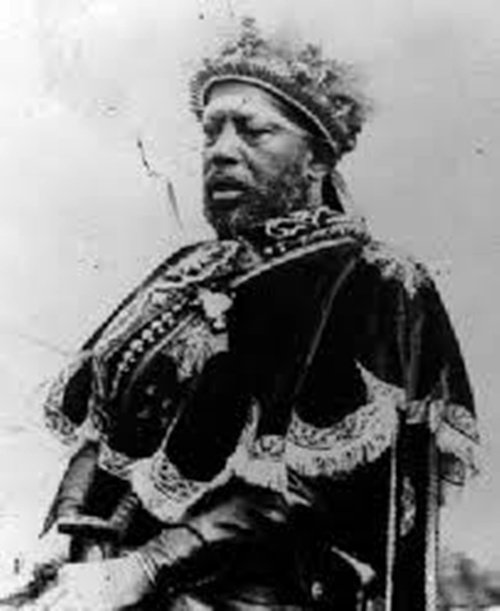
The Battle of Adwa, fought on March 1, 1896, stands as one of the most significant turning points in world history. It was a moment when an African nation, armed with courage and an unbreakable spirit, stood against a global colonial power to defend its sovereignty. For Ethiopia, Adwa is not just a military victory; it is the very bedrock of our national identity and pride. In an era where the "Scramble for Africa" saw almost an entire continent partitioned by European powers, Ethiopia stood as a defiant exception.
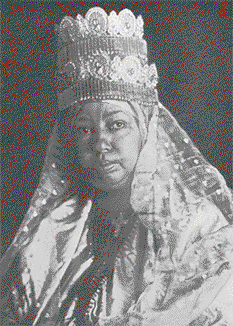
Image Source: Public Domain / Historical Archive **The Threat of Colonialism and the Treaty of Wuchale** In the late 19th century, Italy sought to expand its empire by invading Ethiopia. The conflict was rooted in the deceptive Treaty of Wuchale. Article 17 of the treaty had two different meanings: the Italian version claimed Ethiopia was a protectorate of Italy, while the Amharic version maintained Ethiopia’s full independence. When Emperor Menelik II discovered this betrayal, he did not hesitate. He famously declared, "Ethiopia has need of no one; she stretches out her hands unto God." The Italians underestimated the determination of the Ethiopian people. They expected a fragmented nation of tribal chiefs, but instead, they met a unified wall of resistance. **The Strategic Brilliance of Empress Taytu Betul** One cannot tell the story of Adwa without mentioning the incredible role of Empress Taytu Betul. She was not just a queen; she was a brilliant military strategist and a fearless diplomat. Before the main battle at Adwa, the Empress played a decisive role during the Siege of Mekelle. She noticed that the Italian fort had a critical weakness: its water supply. She commanded the Ethiopian forces to cut off the water line to the fort. For 15 days, the Italians were left without water in the scorching heat, forcing them to negotiate and weakening their morale significantly before the final confrontation. Her bravery inspired thousands of women to join the struggle as providers, nurses, and even soldiers, proving that Adwa was a victory for both men and women.
Image Source: Historical Archive **The Day the Mountains Shook: March 1, 1896** The final battle took place in the rugged mountains of Adwa. The Italian army was equipped with modern cannons and rifles, while many Ethiopian soldiers fought with traditional shields, spears, and older firearms. However, the Ethiopians had something the invaders lacked: a cause worth dying for and a brilliant tactical plan. Under the visionary leadership of Emperor Menelik II, who managed to mobilize over 100,000 soldiers from every corner of the country—regardless of ethnicity or religion—the Ethiopian forces outmaneuvered the Italian columns. By noon, the Italian forces were in full retreat. This triumph forced the world to recognize Ethiopia as a sovereign, independent state and sent shockwaves through Europe. **My Perspective: Why This Victory Lives in My Heart** **As an Ethiopian, this victory teaches me that unity is our greatest strength. Growing up, hearing the stories of my ancestors who marched barefoot for months to defend a land they loved fills me with an indescribable sense of duty.** Adwa is not just "history" found in dusty books; it is a living lesson for our future. It proves that when we put aside our differences and stand together as one, no force on earth—no matter how technologically advanced—can take away our dignity. To me, being Ethiopian means carrying the spirit of Adwa in everything I do: the spirit of self-reliance, defiance against injustice, and pride in my roots. **The Global Legacy: Pan-Africanism** Adwa became a source of inspiration for the entire Pan-African movement. It proved to colonized people in the Caribbean, the Americas, and across Africa that European "invincibility" was a myth. The green, yellow, and red colors of the Ethiopian flag were later adopted by many African nations upon their independence as a tribute to the only nation that never bent its knee to colonialism.
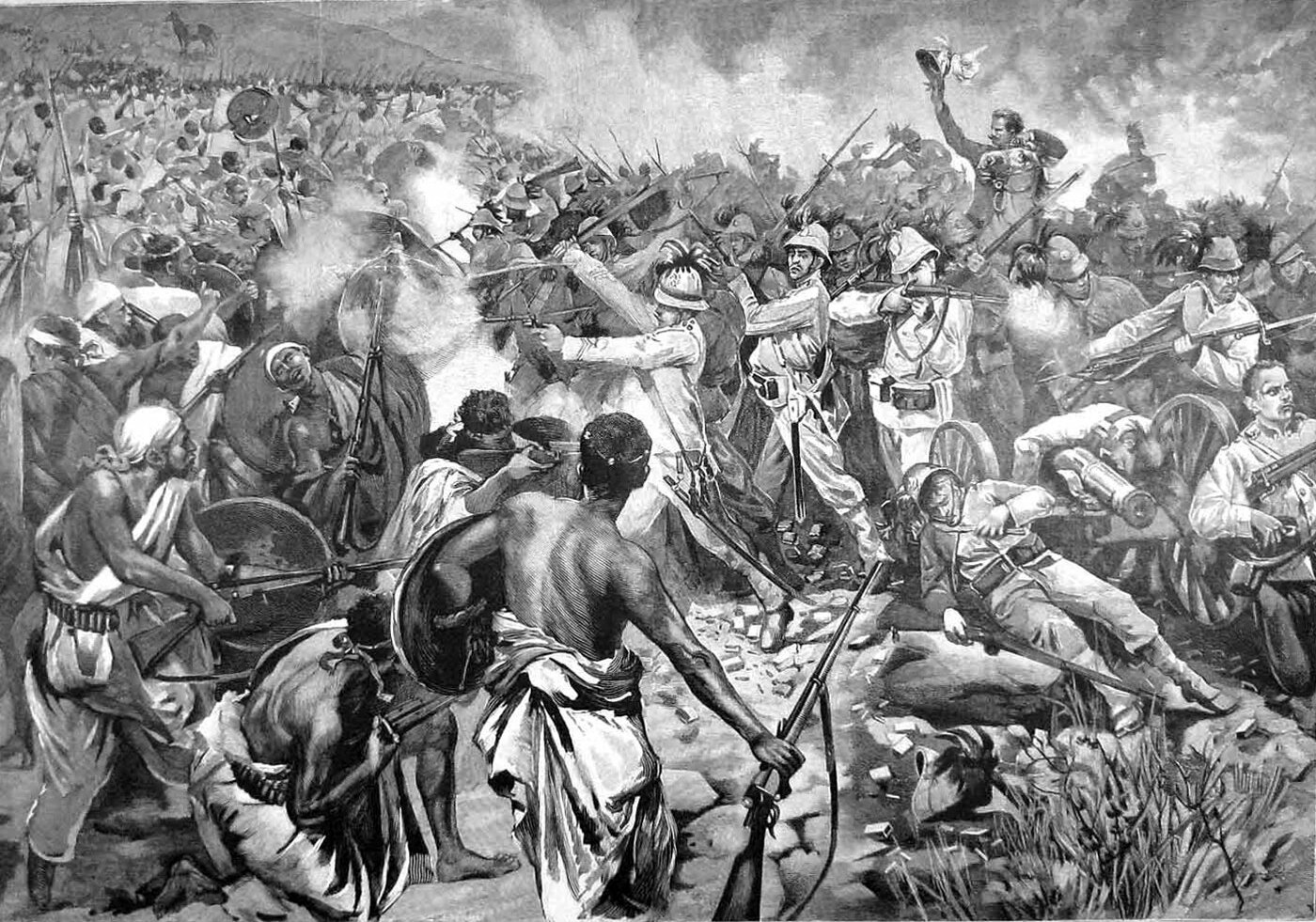
Image Source: Wikimedia Commons **Conclusion: A Call to the Youth** Today, we remember Adwa as a lesson in bravery. It is more than just a historical event; it is a blueprint for dignity. In a world that is often divided by modern challenges, the victory of Adwa serves as a timeless reminder of what can be achieved through collective action. For the youth of Africa and the world, Adwa is a call to protect our heritage, value our freedom, and work together for a better future. Let us carry the torch of Menelik and Taytu into the 21st century. **What does the story of Adwa mean to you? Does your country have a similar moment of historic unity? Let’s discuss in the comments below!**
No comments yet