Surviving Economic Collapse Through Dash, Bitcoin, Litecoin, and Precious Metals - Kennedy Financial
https://www.youtube.com/watch?v=W02dV90eIt8&t=6s
I had the pleasure of appearing on Kennedy Financial to talk about the recent economic collapse created by the global pandemic scare, and its consequences for people's savings and purchasing power after the Federal Reserve hyperinflates the dollar. We went over survival preparedness, including food storage, and touched on the cash run on the banks. We also delved into cryptocurrencies, in particular what Dash has been up to, with improvements to privacy on mobile and the continued rollout of Dash Platform on testnet, as well as strong market performance in 2020.
Finally, we covered decentralized content, highlighting the LBRY platform, which allows content creators to auto-sync their channels to back them up to avoid censorship and demonetization. I also mentioned CoinTree, a service which lets you keep your social media and crypto donation links in one place.
*If you enjoyed this, please leave a tip, either here or* *via CoinTree**. Thank you!* https://cointr.ee/thedesertlynx
Stop Making Exclusive Platforms for Your Favorite Cryptocurrency
Ever since the basic applications of Bitcoin beyond regular payments have been conceptualized, there has been a veritable digital gold rush to capitalize on the tokenized and/or decentralized platform market. From Hive to Steemit to LBRY to Uptrennd, Read.Cash, Twetch, you name it, there are countless projects vying for dominance in this space. And yet, many of them make the fatal mistake of only supporting a single cryptocurrency.
Centralized systems are well-entrenched, well-funded, and largely have superior user experiences and support. They won't be supplanted by a divided and tiny ecosystem of users. If you were thinking of starting a new platform or venture and expecting it to only support your favorite cryptocurrency, stop. Don't.
**Even Bitcoin can't swing the whole "only me" thing anymore**
There's no mincing words here: this isn't 2016. The days when you can succeed in cryptocurrency business while solely supporting Bitcoin, aside from some tiny edge cases, is over for good. While it still claims almost two thirds of current market share in terms of valuation, its percentage of actual transactions and use is significantly smaller. Given the present-day global adoption rates for cryptocurrency as anything other than a speculative investment vehicle, no one coin can have a prayer of serving as the sole successful money for a new monetized platform.
**With crypto tribalism you'll only get people who care about one coin, and not much else**
As I've tested out various platforms, I've noted that coin-specific tribalism extends to content platforms, and even types of content on those platforms. Bitcoin Cash fans stick to Memo.Cash, Bitcoin SV people use Twetch, and so on. Rarely do they cross over. This extends to content as well, with posts about that specific token doing well, while crypto-generic or other subjects do poorly. This means that not only is the platform in question limiting its user base to fans of a specific token, but it is alienating frequent contribution from all but the most hardcore and one-track minded fans. Generously speaking, this can amount to a dozen or so people actively using the platform on a daily basis.
Funny enough, this sort of petty tribalism doesn't extend to centralized platforms. Despite running on corporate infrastructure, being prone to censorship, and exclusively leveraging fiat currency, the YouTubes, Facebooks, Twitters, and so on seem bizarrely more attractive to crypto fans than those running on "the wrong" decentralized cryptocurrency. It's pretty enlightening.
**By picking the tool arbitrarily you're hamstringing your ability to read the market**
Businesses succeed by finding the right calibration of product details that satisfies consumers' needs at a price they're willing to pay, marketing that product to said customers, and actually selling it in sufficient amounts to both cover production costs and turn a profit. This process can be very tricky, leading to numerous failures and adjustments along the way, and this is only amplified in an industry where almost no one comes with the means to easily become a customer: everyone has the wrong money. Compounding this challenge by arbitrarily selecting a key element which absolutely cannot change even if it isn't working, and you have a recipe for disaster. What if you build the perfect platform, but you peg it to the wrong token? Whether through technical, liquidity, or simple user base issues, you're stuck without the ability to make a much-needed pivot to save your business.
Even if you are willing to change tokens if the previous one just isn't working, that may only prove more disastrous. In addition to alienating your entire user base, which had likely signed up just because you were using their token of choice, the prospect of attracting new users, who likely had written off the project as exclusively pertaining to a singular token, is slim. Just look at Yours, the blogging platform leveraging micropayments for tips. At first it used Bitcoin until that became infeasible, and attempted to build payment channels to cut down on fees. Then it switched to Litecoin before going to Bitcoin Cash, and finally to Bitcoin SV following the fork. Now, it's effectively dead, with outstanding technical issues and no new development or posts for months after crunching down its subset of potential users smaller and smaller with each token switch.
**Exception: Platform-based tokens**
Now, this doesn't mean that a platform that just uses one token is destined to fail. In fact, platforms with a proprietary token can do quite well. Notice this subtle distinction between a platform-based token and a token-based platform. If you model a platform on leveraging an existing token, you're largely relegated to attracting that token's existing users, and inherit the limitations of the network. If you have your own token and network, you no longer risk the marketing pigeonhole nightmare, and you're free to modify the token if it isn't working without having to upend a whole ecosystem outside of your own project.
It's worth noting that this is conditional on the system running without requiring previous exposure to the token. If a user can simply sign up and start using, then you have succeeded in the first step. Even buying more tokens to maximize the platform such as boosting posts is acceptable if it's easily doable with fiat currency and within the platform, making the experience akin to buying advertising placements or premium memberships on any other existing service.
**Still, minimize user exposure to too many tokens**
All that being said, while you want to accommodate as many customers and forms of payment as is feasible, over-complicating any system is sure to be its downfall. Apple had resounding success in generating mass appeal by limiting user interfaces to almost toddler levels of minimalism. This principle seems to run counter to almost everything I just said above. It doesn't necessarily. You can still support many options and tokens as long as the entry point is streamlined enough, and day-to-day operations only leverage one. For example, in a purely payments-based platform, you can have a simple tip/pay button which can either automatically send any of the coins in your balance, or have a drop-down menu to select one of several options. For a closed-ecosystem platform that runs on a single token, you can have the option to buy the token seamlessly through a variety of payment options. This second one is probably the ideal, and mirrors mainstream online commerce.
Stop thinking one coin will rule them all. Even if it does, it probably won't be yours. Sorry. Just don't limit your dream project to your favorite token. It will pay to play favorites among winners, not hopefuls. Thank me later.
*If you enjoyed this, please leave a tip, either here or* *via CoinTree**. Thank you!* https://cointr.ee/thedesertlynx
Josiah Spackman on DigiByte, the Poloniex Delisting, and Tron and Binance's Centralizing Influence
https://www.youtube.com/watch?v=WJVtiuXHRBE
I had a great conversation with Josiah Spackman, DigiByte community member and the host of the Daily DigiByte Updates and DigiByte and Friends, on the ever-growing influence of the Binance, Tron, and Huobi alliance. We cover the Poloniex delisting of DigiByte, which previous held the project in high technical regard, after a Twitter spat between founder Jared Tate and the exchange's official handle, leading to a greater discussion of centralization in the ecosystem. Finally, we cover the great things DigiByte has been working on lately, and how the productive cryptoverse is moving in a similar direction as a whole.
Thank you so much for watching! Tips are appreciated! If you wish to donate via another cryptocurrency, or follow on social media, please go to my CoinTree page. And don't forget to join LBRY and get away from centralized content platforms! https://cointr.ee/thedesertlynx https://lbry.tv/$/invite/@DigitalCashNetwork:c

Are We Still Pretending the Crypto World Is Decentralized?
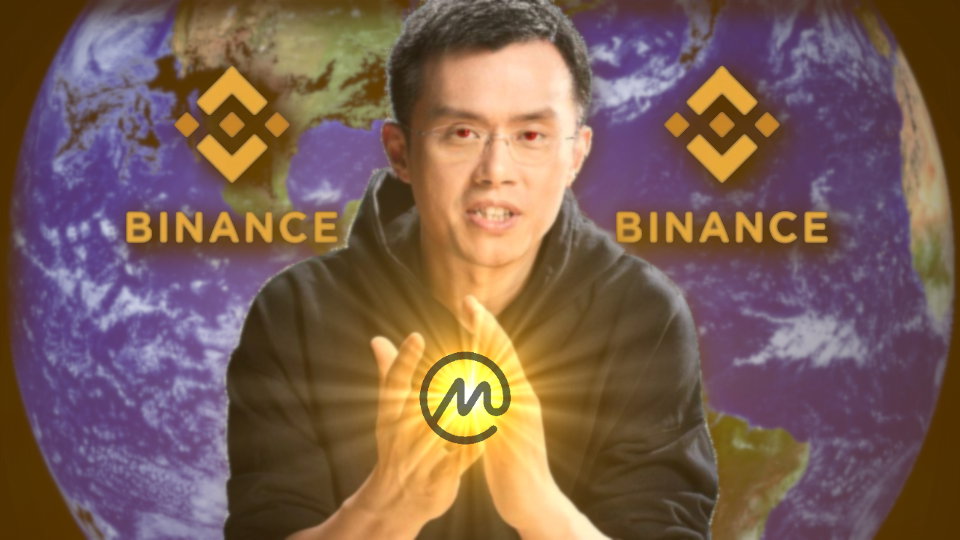
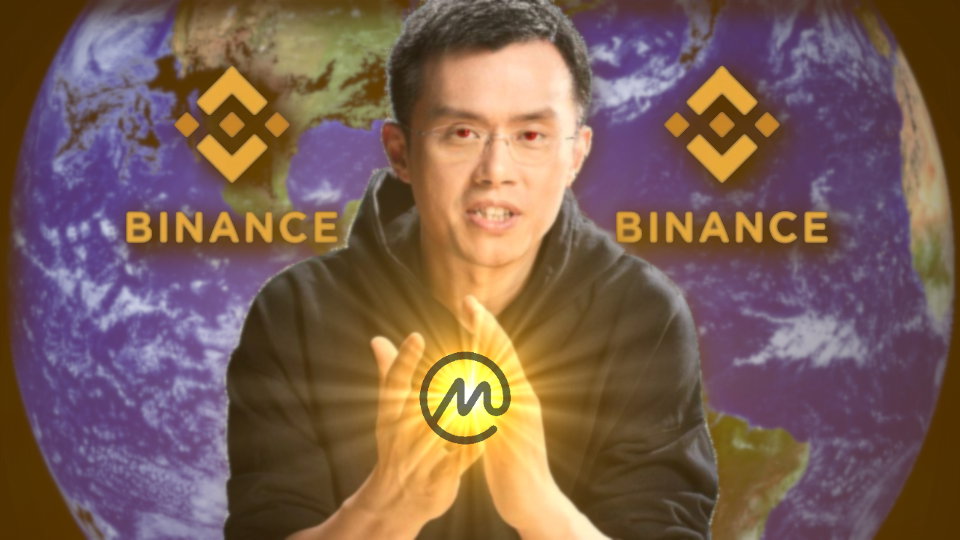
Binance bought CoinMarketCap. It's enough of a headline on its own, yet it represents the latest piece of an increasingly worrying puzzle: just how much influence does founder Changpeng "CZ" Zhao have over the ostensibly-decentralized cryptocurrency ecosystem? As it turns out, it's a whole lot, and the cryptoverse may not be nearly as decentralized as we had previously hoped. An extremely small group of people can act as kingmakers in the entire space, possibly even compromising Bitcoin itself. https://twitter.com/TheCryptoLark/status/1244903589245415425
**The network CZ controls or influences is pretty staggering**
Rather than go into a lengthy and conspiratorial breakdown, let's quickly summarize the Binance network by taking a look at a single event: the Justin Sun takeover of Steem, which I've written about before. During this episode, three exchanges (Binance, Huobi, and Poloniex) acted together to take over the Steem network using customer funds. This was in the interest of Sun, who owns Poloniex, accounting for one actor. The other two, Binance and Huobi, acted swiftly on this ethically-dubious (and later shown to be deeply unpopular) act which did not even concern their direct financial interests, but those of a friend's side-project. This shows that, in practice, all three operate together as one entity without the need for extreme circumstances. Just the valuations of all three cryptotokens, Tron, Binance Coin, and Huobi Token, combined come to about $3.5 billion, just shy of a top-five crypto position. Binance and Poloniex occupy places #1 and #12, respectively, of the Blockchain Transparency Institute's list of verified exchanges, with Binance's trading volume exceeding that of the rest of the top ten combined (Huobi is not listed due to high levels of wash trading). https://www.bti.live/exchanges/ https://www.bti.live/bti-september-2019-wash-trade-report/
Combine this with the new acquisition of the most popular crypto market data aggregator, and CZ's propensity to bully journalists who pose problems for him (more on that next), and we can see that his heavy influence on the ecosystem is only going to grow stronger.
**Pretty serious actions have been taken for minor reasons**
The network of CZ and friends is not above wielding their relatively substantial power at will. CZ famously threatened to sue crypto publication The Block over reporting that Binance offices had been raided, while Binance delisted all of Bitcoin SV because of the dubious legal actions of one of its key figures, leading the charge of mass delistings which significantly impacted its market valuation in the short term (though it has since claimed a consistent place just outside of the top-five). Poloniex acted in an even more petty and vindictive manner when the exchange announced that DigiByte was delisted following critical comments from its founder. Not only this low threshold for extreme action, but the propensity for punishing speech is even more chilling. https://cointelegraph.com/news/binance-ceo-we-will-be-suing-the-block-over-china-police-raid-story https://twitter.com/cz_binance/status/1117796100000210951 https://twitter.com/Poloniex/status/1202381619149070336
**Bitcoin is not safe from potential threat**
But this threat mainly concerned less important projects out of the top few, right? Bitcoin is still safe, isn't it? Unfortunately not. Binance controls the single largest Bitcoin trading pair, BTC/USDT at almost $2 billion 24-hour trading volume, while Huobi's BTC/USDT claims #8 on the list of verified exchange trading pairs. While this is under 10% of the total trading volume, two of the top 10 verified pairs, including the single most dominant one by a wide margin, is nonetheless significant. CZ's ability to manipulate the Bitcoin price and markets should not be underestimated. https://www.bti.live/bitcoin-coin/
And, more importantly, let's not forget CZ's now-infamous Freudian slip where he spoke with confidence about his ability to roll back transactions on the Bitcoin network within a few days. Though he mentioned the risk to Bitcoin's credibility, and later took back the statement and said such was impossible, actions prior and since have shown he frequently has both the power and will to act in this manner. The now-infamous 2018 research paper *The Looming Threat of China: An Analysis of Chinese Influence on Bitcoin* indicated that a full 80% of the network's hashpower is located in China, controlled by just a few players. Depending on the extent of his influence, CZ may very well be able to make good on a network rollback threat. https://twitter.com/CoinSpice/status/1125979761728049152 https://arxiv.org/pdf/1810.02466.pdf
What Can We Do to Improve Crypto's Decentralization?
I wouldn't paint such a bleak picture of the space without offering some slimmer of hope. It's largely an unregulated space, meaning that any temporary position of dominance is easily lost with a sharp swing of consumer sentiment. Here's a few ways of going about doing that now.
**Control your keys**
Most importantly, actually control the funds you pretend to own. Don't leave them on exchanges where they can be vulnerable to thefts, confiscation, or other manipulation. Keep them out of the direct area of control by the small circle of exchanges.
**Use your crypto with as few third parties as possible**
While decentralized cryptocurrencies are relatively difficult to disrupt or attack, their various supporting companies can be. The more often you use your coins in a direct, private key-to-private key manner, the less middlemen matter.
**Diversify investments**
Quite simply, don't have all your money in one potentially-compromised project. Find networks with coins and control distributed more evenly and in different geographic areas outside of those with the heaviest influence from CZ and company. Also consider spreading to other assets outside of blockchain.
**Exercise both research and purchasing power**
Finally, look into the projects, and businesses, you support. Look up the consensus model and distribution, as well as coin supply and how much is controlled by how few parties. Investigate the jurisdiction, and ethical behavior, of exchanges you use. And stay way from those of both which exhibit centralized tendencies.
Crypto is a big idea with a small group of users and influencers. CZ and friends may have significant control over the space, far more than we'd like to admit, but we can still decentralize the world of decentralized digital assets. And we should, before it's too late.
*If you enjoyed this, please leave a tip, either here or* *via CoinTree**. Thank you!* https://cointr.ee/thedesertlynx
Every Bitcoiner Implicitly Supports Price Gouging
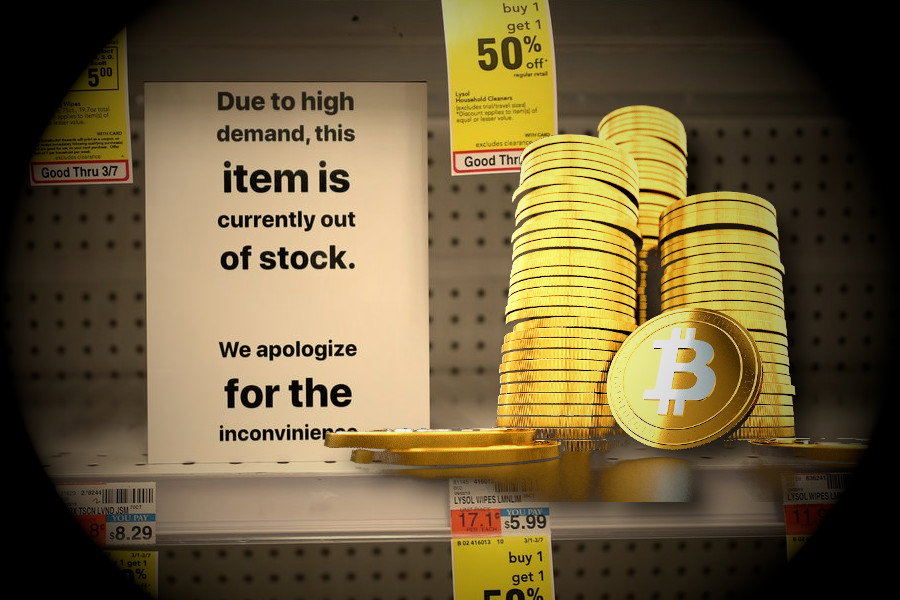
A couple of weeks ago, a friend of mine received threats against his family for jokingly offering to sell masonry masks at sky-high prices. The hordes of anti-price gouging Bitcoin fans were swift and merciless, threatening real-world consequences for what was intended to be a conversation-starter on the principles of the free market. Which is strange, because last I checked, the entire modern *raison d'être* for Bitcoin involves price gouging. https://twitter.com/kurtwuckertjr/status/1238954216783327232
**What actually is price gouging, and is it bad?**
Now I'm not out here to call Bitcoiners bad people. Price gouging, believe it or not, is an essential component of the economy, and a net good in times of crisis. I would recommend this article if you want more detail than the basic rundown I'm about to give. Simply put, when the demand for a certain good passes the existing supply at a certain price, that price will go up until the demand and supply equalize. This also works in reverse in the case of a sale, where not enough people want to buy something at the current price, so a discount is applied until they will. Gouging is just radically adjusting prices to respond to crisis-triggered supply shortages. https://fee.org/articles/on-price-gouging/
The problem with price gouging isn't that it isn't good, it's that it's unsightly. Seeing basic goods marked up to a previously-unfathomable level puts a hard number on the severity of a tragedy. It doesn't matter that higher prices discourage hoarders from emptying the shelves, or that most people would gladly pay exorbitant prices for a good rather than do without. Or that higher prices create a strong profit incentive for the entrepreneurial to bring those goods to the needy at great trouble and expense, helping to solve the shortage. None of this matters to the optics of the situation, where people see a real number and are forced to come to terms with human suffering that otherwise remained a much foggier concept. They choose to get angry at the merchant setting the prices rather than at the calamity itself.
**HODLing implies gouging at some point in the future**
Coincidentally, the main value proposition for Bitcoin in the store-of-value era is the same: buy up as much of the supply as possible at lower prices (hoard), sell some at some future date at incredibly inflated prices (price gouge). While many investors in other cryptocurrencies can have similar expectations, as is common in any initial adoption phase of a new technology or industry, most still have some expectation of present and future use. Dash and Bitcoin Cash are intended to be used for purchases, LBRY credits pay for decentralized content hosting and reward creators, Basic Attention Token similarly rewards both creators and regular users, etc. Present-day users may benefit from being early adopters more than future users, but this is counterbalanced by the risk associated with going all-in on a new and unproven technology. Both sets of users still benefit, however.
The same can't be said for Bitcoin anymore. Using it today gives few benefits outside of some cost and efficiency savings with particularly large transfers, resistance to confiscation, and access to the speculative crypto-asset markets (an advantage that is fast dwindling as more coins acquire fiat trading pairs). Most aggressively advertised, however, is the simple act of buying and holding, with waiting longer to get in decreasing its benefits. The Bitcoin proposition is a game of hot potato, and no one wants to be the last sucker holding fiat.
**Financial collapse dream scenarios are textbook gouging**
The parallels between price gouging in a disaster and hoarding Bitcoin are a lot more similar than their pure economics. Recent marketing slogans have included a great sense of urgency, including the ultimately ill-fated "last chance to buy Bitcoin under $10,000!", eerily reminiscent of calls to stock up on essentials before the store shelves are barren. The ultimate Bitcoin success fantasy is, in fact, the total collapse of the current financial system, with its last desperate adherents fleeing last-minute to digital safe haven assets at great upcharge. Not only is this practically the same situation as a toilet paper hoarder reselling at an insane markup during the quarantine, it's cosmetically the same as well. https://twitter.com/MatiGreenspan/status/1231637834416754689 https://twitter.com/_Kevin_Pham/status/1206666737078419456 https://twitter.com/udiWertheimer/status/1239297664438751232
**Anti-price gouging Bitcoiners are either hypocritical or haven't thought through their own endgame**
Despite this, we see plenty of Bitcoin fans loudly, angrily, condemning any instances of price gouging they come across from social media. Why? Well to be honest, many are likely hypocrites, decrying others' acts of gouging while plotting to do the same. As for the others, they probably haven't thought through their financial plan and its consequences yet. They may simply believe in buying Bitcoin today to secure against a future full of fiat currency devaluation. They may not have realized that this will eventually result in selling to a desperate person who has no other choice. Price gouging is slammed because the buyer has a forlorn human face. The last few to exit the fiat system won't be any different.
So go ahead, Bitcoiners: hodl as long as you can, and sell some minor fractions of your hoard to some poor sucker in exchange for what's left of their life savings. Just don't virtue signal against price gougers, because not only are you wrong, but you're one of them.
*If you enjoyed this, please leave a tip, either here or* *via CoinTree**. Thank you!* https://cointr.ee/thedesertlynx
5 Post-Pandemic Innovations We Should Be Anticipating
Right now, large portions of the world are hunkered down under quarantine, determined to survive the global pandemic. These are dark times, and the economy will likely take years to recover. However, I believe we could see quite a few positives come in the aftermath of the Coronapocalypse, including:
1: Deregulation of Affected Industries
There have been a great number of heavy-handed and tyrannical orders enacted by governments around the world in response to the pandemic. It hasn't been all bad, however. At least in the US, many restrictions and regulations have been either temporarily lifted or are being considered for removal. New Hampshire implementedremote instruction for public schools, temporarily deferred vehicle license and registration renewals, and lifted the restriction on alcohol for takeout orders from restaurants and bars. Ohio temporarily eased in-state nursing license requirements. Up for discussion are even more anti-competitive regulations which have caused hospital bed shortages. https://www.governor.nh.gov/news-media/emergency-orders/documents/emergency-order-1.pdf https://twitter.com/GovChrisSununu/status/1241058984771096576 https://www.governor.nh.gov/news-media/emergency-orders/documents/emergency-order-6.pdf https://nursing.ohio.gov/ https://twitter.com/GregMooreNH/status/1239598765171978241
Now, I don't for a second believe that governments will collectively see the error of their previous ways and simply maintain their deregulation measures after the crisis is over. But I am saying that the people will get used to this freedom, and make a very strong case for permanent lifting restrictions in the future, especially concerning the more ridiculous aspects such as the ban on alcohol for takeout.
2: Death of the Useless Office
Let's face it: in our increasingly interconnected and digital world, the old-school cubicle office hasn't been relevant for quite some time. Still, so many workplaces continue to force their weary employees to commute many miles and wear uncomfortable clothes to be cooped up in a dimly-lit carpeted environment together. While remote working options such as working from home, a coffee shop, or coworking venue have certainly been on the rise, many businesses still hold on to the old model through inertia. Mandatory telecommuting has forced lagging elements of the industry to adapt, and once workers taste the sweet, sweet freedom of being able to clock in from wherever they so choose, they won't likely be giving it back.
Think of the savings in time, money, space, and overall efficiency that a global "ditch the office" revolution would provide. Coworking spaces can support far more workers than traditional offices since not all of them need to be there at all times, and many companies can use the same space, cutting costs and freeing up prime real estate for uses other than soulless and ugly offices. Removing the mandatory commute at preset times cuts down on transportation costs for workers and reduces traffic congestion, naturally including accidents and deaths. Imagine such a world.
3: Modernization of the Payments and Delivery Industries
Many businesses are suffering right now because of the physical limitations of present conditions. Those that survive will do so because they have adapted. Every restaurant will now have delivery options and be included in all the requisite apps and services. Cash-only businesses will be forced to adopt streamlined online payments. Gone are the days where you can simply run a business with no online presence and antiquated payments technology. I already wrote about how this quarantine crash would affect the cryptocurrency industry and its development into a broadly-used and effective payments technology, and I can bet other sectors will be catching up as well.
Yes, this does mean that some businesses are going to be unable to compete and go away, and with them all the nostalgia of times past. That old corner café that has been around for the better part of a century, that only takes cash and doesn't do delivery, may end up closing. Such is life.
4: Erosion of Trust in Government and the "Official Story"
Governments around the world have had varying responses to the outbreak of coronavirus, from pure denial to complete martial law. The media has whipped the world into a panicked frenzy. Thanks to the information age, the negative effects of these have been amplified on the global populace. So far. However, the free spread of information will quickly turn to indicting current regimes for their failure to act effectively to combat the virus, as well as the chaos and damage their response measures have caused. The same goes for the media, whose sensationalizing coverage can be contrasted with personal accounts directly from the source. I believe we will see a global erosion of trust in both institutions.
Especially the government-imposed measures will have an impact. Millions globally have been imprisoned in their own homes, or had their livelihoods destroyed, by threat of violence, not as a direct result of the virus. In some of the more widely-affected communities this may be seen as a necessary evil, but I guarantee that countless employees and business owners will be incredibly bitter at government for crushing everything they worked for over years, even decades, on a whim.
5: A Flourishing of Meaningful Human Contact
I'm predicting people will become more social, and more socially-fulfilled, as an after-effect of the global pandemic and quarantine. First, solidarity and cooperation as the whole planet now has one significant aspect of their lives in common. Second, social isolation (scarcity) will at least temporarily drive up the value (price) people are willing to ascribe to human contact. And finally, an increasingly remote workforce and online delivery-based shoppers means that less of our capacity for human interaction will be used up dealing with mundane or unpleasant tasks, freeing up social energy for better purposes. Instead of working in a cubicle all day surrounded by unlucky compatriots and going straight home to decompress and avoid people, we may work in relative isolation and seek the company of others in off-time. Instead of hating people after a day of fighting the hordes to shop for groceries, we may order all essentials online and spend a relaxing afternoon shopping at a local farmer's market. Instead of resenting our fellow humans for the friction they case us in our day-to-day lives, we may shift almost entirely to cherishing their company. None of this is guaranteed, of course, but I remain hopeful.
The world may be going through a tough time right now. But in a few years, we may be looking at a brighter future than we've seen before. Stay focused.
*If you enjoyed this, please leave a tip, either here or via* *CoinTree**. Thank you!* https://cointr.ee/thedesertlynx
How Does Digital Cash's Value Proposition Look Now?
It happened. That terrible, yet wonderful, moment where the legacy financial system experiences a significant crash, spurred on by a lot of fear and uncertainty in the world. This was the moment Bitcoin has been waiting for, a true time to show its use case when the house of cards falls down.
And yet, it, too, crashed. All the cryptocurrency markets did. This wasn't supposed to happen. Or was it? What can we learn for next time to make sure the digital money revolution succeeds during times of panic?
**The crash dispelled crisis valuation myths**
We have long heard how Bitcoin's true calling was a world facing social and economic collapse. Well, we've now experienced a far-reaching crash in traditional markets and a panicking society going into isolation. What happened with Bitcoin? It tanked as well, losing over half its value within a week. Gold, meanwhile, held its value much better (more on that in a bit). All in all, Bitcoin an its children largely behaved like the rest of the speculative assets and quickly lost value as investors scrambled for more security. Still at a quarter the value that some investors paid over two years ago, the entire store-of-value premise is starting to look shaky.
Now, what if Bitcoin isn't functioning as a defense against economic implosion, but a hedge against fiat currency devaluation? In that way its scarcity does play a role, and against a currency which consistently leaks value there's little argument there. However, under these criteria just about any scarce asset will do. Might as well use gold.
**Cash, not even gold or bank cards, is king for a reason**
Even gold, however, took a significant tumble during the recent economic crash. Why, if it's such a good store of value? Simple: you can't use it to buy basic essentials. I mean you can, in theory, and this has been done in the past, but precious metals' use as a medium of exchange has largely atrophied as fiat currencies took over. Largely speaking, what people want right now are basic supplies to keep them and their loved ones fed and taken care of during these difficult times. What gets them what they want is, simply, cash. And not just fiat currency in a bank account, but physical cash.
That's the next coming scarcity: paper cash. Under the best of circumstances, digital fiat just isn't as reliable as bills. There are transfer delays, bank and payment app incompatibilities, service outages, errors, limitations, and more. But during a time of crisis, a fractional reserve banking system can't support the demands of everyone trying to get their money, simply because they don't have all of it on-hand. Or at all. That's why we've seen a run on the banks of sorts, with some limiting cash withdrawals. People are clamoring for the one thing they know will work 100% of the time for buying what they absolutely need.
**Physical cash showed its drawbacks in a pandemic**
Paper cash isn't a perfect crisis solution either. With physical isolation in full swing, the logistics of transacting with stacks of bills have suddenly become challenging. Even worse, because we're talking about a virus in this case, transmitting physical objects which have been in contact with countless pairs of hands is a pretty scary prospect. If a digital cash alternative were widely used at this point, regular cash would be shunned.
**Virtual connectivity with physical isolation pushed digital payments forward**
The present pandemic has essentially shut everything down. People aren't going in to work or out to eat and drink, and only venture outside for bare essentials. Life, however, has to continue. Income must be made, goods must be produced, and services must be rendered. This means that life has largely marched on, except in a much more physically isolated way, facilitated by the digital age. More people than ever are working from home, are socially congregating online, and are transacting virtually.
This pandemic-induced isolation may be over at some point, but the world has irreversibly lurched forward into the digital era. The concept of peer-to-peer electronic cash, possibly debuted before its time, is about to come into its own in a big way.
**Does sound money + payments completely survive the next calamity?**
Cryptocurrencies have leveraged both speculation and scarcity in an increasingly inflation-ridden world in order to maintain and grow in value. They nonetheless plunged due to their lack of use and adoption for buying bare survival essentials. However, if we see significant inroads into using a scarce cryptocurrency as everyday money, next time could be different. The Bitcoiner fantasy of rising to the top as the old world crumbles around them may actually become a reality.
The markets crash in a crisis, with crypto being no exception. The fiat currency printing machine will likely push similar scarce assets into a significant rebound. If crypto is used for digital cash the time the next calamity hits, there may be no such crash again.
*If you enjoyed this, please leave a tip, either here or via* *CoinTree**. Thank you!* https://cointr.ee/thedesertlynx
The Anarchist "Don't Vote" Scam
Another election season is in full swing, and with it comes the incessant virtue-signaling of anarchists the world over making a snide mockery of the whole process. While I can often count myself among them, I do have to take issue with the absolutist, hard-line anti-voting stance that proclaims that voting in every case imaginable is both immoral and ineffective. Elections suck, are a giant pain, are low-return for the amount of effort and funding put into them, and are definitely wrong when employed to take away your fellow humans' rights and money. But those who claim that engaging in the activity of voting is invariably wrong and useless are quite misguided. What's more, they may be trying to scam you.
**Disclaimer! I won't respond to any comment that ignores the content of this article. If I don't deserve the courtesy of being heard before being shouted at, you don't deserve the courtesy of my attention.**
This Is Not an Endorsement of Voting
Let me be clear: it isn't my intention to lift up the process of voting. Personally I rarely vote, particularly on the national scale where the options are limited, and believe that there are quite a few other, more efficient methods for making the world a freer and better place. I just don't subscribe to the notion that it's always awful, terrible, and useless, and I believe that dispelling these myths is a necessary first step before outsiders start taking other libertarian ideas seriously. There are many reasons you may not want to vote, including:
**You aren't informed enough to maximize your vote**
You may not have enough disposable time or means to really study how to make sure your vote counts towards something good as opposed to reinforcing the status quo. That's fine. Don't vote.
**There are no good options, even in protest**
There may be no good candidate or legislation available with any chance of success that will be a net or complete positive, and no long-shot options fully reflect your convictions. Don't worry, you don't have to vote.
**You have better things to be doing with your time**
You're busy bringing about a better and freer world in ways that make a far greater impact than you would if you spent that time voting. Hey, please don't vote!
**You really don't want to**
And, the ultimate reason not to vote: you just don't want to. Life is far too short to spend any of it wasted, and if standing in line at the polls fills your heart with regret, just don't do it.
Why Do Governments Let People Vote?
Make no mistake: governments don't want you to vote. Dictators and oligarchies would be more than happy to simply live off of the hard work and obedience of their subjected populace without requesting their input. The only reason voting mechanisms exist is because regimes need to provide an outlet to simulate self-governance in order to obtain the initial consent of others to be ruled. However, if any such regime gets so lucky as to be able to obtain control *without* giving the right to vote, or manages to phase voting out while still maintaining power, you can rest assured that it will be more than happy to maintain these conditions. Governments fear voting, and do their best to guide their subjects into participating in it in as safe and controlled a manner as possible, with minimal risk of some radical gaining momentum with crazy ideas such as "freedom" and "individualism." The ability to vote is really the least awful part of government, which makes some anarchists singling it out with such aggression a bit bizarre.
Argument 1: It Doesn't Work
Is voting an efficient means of effecting change? Maybe not. Is it as powerful as its more vocal advocates seem to think? No way. But does it do *absolutely nothing?* Also no. While relatively rare, there are still quite a few recent examples of people voting for more freedom and actually getting it. The increasingly widespread legalization (or at least decriminalization) of cannabis in the US is a great example of ways where quite a few people's lives and freedom were dramatically impacted for the better by voting. Another key example has been the increase in firearms ownership freedom across the country, from expanding access to concealed carry licenses to not requiring them at all. In smaller jurisdictions it can become easier to effect positive change through the legislature, for example my own state of New Hampshire's legendary high percentage of radical libertarians in the House, and the resulting economic boom from the reforms implemented. The argument that it's not possible (or even in some cases practical) to lessen the size and scope of government through voting simply isn't based in fact. https://en.wikipedia.org/wiki/History_of_concealed_carry_in_the_U.S.#/media/File:Right_to_Carry,_timeline.gif https://www.youtube.com/watch?v=X_mjymGl888 https://www.thecentersquare.com/new_hampshire/we-create-opportunity-gov-sununu-makes-case-for-keeping-taxes/article_a9a7679c-4ea7-11ea-8d75-737acf8ee3c7.html https://twitter.com/GregMooreNH/status/1220013580193497088 https://twitter.com/GregMooreNH/status/1234894137960300544
Additionally, there exists the great paradox by which voting is most efficiently proven to be ineffective by actually voting. A great deal of today's libertarians and anarchists were generated by Ron Paul's two presidential campaigns, both from the effectiveness of the run for office in spreading his message, and in his ultimate failure to capture the Republican nomination. Seeking votes and a position of influence through established "legitimate" means as a candidate for elected office created a much better platform for his ideas than if he had presented himself simply as some random guy who thinks himself important. The eventual collusion of the party and media apparatus to exclude him at every turn ultimately convinced many that the system is rigged and illegitimate, the same now taking place with Tulsi Gabbard as the Democratic Party scrambles to silence her voice. As far as exposing the illegitimacy of the system, few things seem to work as well as voting. https://heavy.com/news/2020/03/dnc-debate-tulsi-gabbard-delegate/
Argument 2: It's Immoral
This is really a three-part argument with varying degrees of nuance. The first is that it is immoral to impose your will on others by threat of violence. This I can agree with wholeheartedly, though it doesn't apply specifically to voting, but to the whole institution of government. If you exclusively vote to increase the controls over people's lives that government exerts, that would be immoral. But if you vote to lessen the oppression we all feel from the state, then that would not be immoral, and could indeed be considered the opposite. In fact, if you have it easily within your means to take a small action which may result in the lessening of the burden of government upon your fellow humans, and you choose not to, I would consider that as a dereliction of your moral duty.
Second, a further argument is that voting for freedom is counterproductive as it contributes to the legitimacy of the system. This is true to the extent that engaging voluntarily in an action infers a degree of consent. However, there are many other, more sinister areas in which many of the same people slamming voting choose to participate, including registering (asking permission) to drive and travel, leaving children in public schools, engaging in legal contracts and other services, getting married, and more, yet do not see the logical inconsistency of legitimizing government's involvements in those areas while decrying doing so in another. Also, voting is such an open-ended action that, depending on how you vote, your element of legitimization can be quite minimal. Imagine thinking that voting for a candidate that advocates for abolishing large portions of the government, or for "anarchy," or for Vermin Supreme who wears a boot on his head and promises free ponies for everyone, somehow legitimizes the system.
Finally, some argue that voting is immoral because it constitutes voluntarily participating in an area of government where one does not get arrested or fined for abstaining. There certainly is some logic to this argument, however I challenge you to find anyone who applies it consistently. To argue using moral absolutism terms against voting while arguing in pragmatic terms for participating in other voluntary areas of government is quite silly, and I bet you can't find anyone who believes this who also refuses to use public services and fiat currency while maintaining their income as low as possible in order to minimize their tax contribution. If you can, be sure to salute them for their logical consistency, but have pity on them for the life that leaves them with.
Argument 3: Doing Literally Anything Is a Better Use of Time
This is actually one of the stronger arguments, but it needs some important qualifications. As outlined above, voting can in some certain special cases have an impact, and therefore literally doing nothing is clearly not a more effective use of time. Particularly when we take into account how little time is actually spent in the process of voting per year, it's hard to make a case for the activity incurring a high opportunity cost. Now, what about when we calculate all the time and energy spent not only in physically voting, but in becoming an educated, informed, and effective voter? Then we actually have a substantial chunk of time and resources to work with, and can make more reasonable comparisons with spending the time doing something else.
In fact, I would actually encourage every principled anarchist to take the "non-voter challenge" of actively pledging to put in the time and effort into other forms of advancing liberty to more than make up for the void left by not participating in voting. This is notoriously much harder than it seems, and involves a degree of self-reflection, hard work, and creativity, certainly a lot more difficult than literally just showing up and checking the "make a difference" box (which, coincidentally, is why most people limit their contribution to a freer world to simply voting). But it's worth a shot.
So How Is Telling People Not to Vote a Scam?
Now why would I go to all this trouble in expressing a counter-opinion, particularly since I'm not the biggest voting advocate to begin with? To answer that, I'd ask a counter-question: why do so many people who disagree with voting put so much energy and aggression into this particular nuance of an anarchist perspective? Obviously one can't know the individual motivations of every single person acting in this way, but where there's a pattern, you can start to infer some ulterior motives. At the very least I can lay down some key reasons why someone would do something like this.
**Definition of a scam**
Merriam-Webster defines a scam as "a fraudulent or deceptive act or operation" and the act of scamming people as "to obtain (something, such as money) by a scam". I outlined above the reasons why categorizing voting absolutely as both ineffective and immoral is demonstrably false. Now, what would someone stand to obtain through perpetuating this deception? Well, a few key things come to mind. https://www.merriam-webster.com/dictionary/scam
**Anarcho-pundits make money off of the delusion**
As always, whenever something doesn't initially seem to make a lot of sense, it helps to follow the money. When it comes to disposable funds that libertarians have on hand to donate to causes they believe in, the bigger the chunk of the pie that's taken up by campaigns and political action efforts, the less remains for podcasters, authors, bloggers, and other pundits. Now I know there isn't perfect overlap in donor bases between the two categories, but there is still competition, and when deciding between funding doers and talkers, it stands to reason that doers would tend to win out more of the time. What better way to damage the competition than by convincing your customers that it's evil to take their contributions elsewhere?
This also explains quite well why the infrequent activity of voting receives disproportionate attention and shaming compared to all the other various forms of interacting with the state including paying taxes, registering vehicles/businesses/guns, applying for permits and licenses, keeping children in the public education system, and, of course, using government-controlled and mandated currency. Especially that last one. It makes a ton of sense to focus heavily on deriding the one element of government participation that can most directly hurt your bottom line, while remaining conveniently understanding when supporters are only able to contribute via fiat money. Will you say no to my Patreon subscription in order to stay ideologically pure? Yeah, I thought not.
**Anarcho-slackers get a convenient excuse**
You don't have to monetarily profit from publicly proclaiming your opposition to voting in order to still have strong motivations to do so. You could also simply want to espouse pro-freedom ideas while finding a convenient moral excuse to preclude yourself from the most accessible means of doing something about it. In other words, if you don't vote but very loudly tell people how immoral it is, you can avoid being criticized for not doing anything to further the free society you insist that you desperately want. For bonus points, convince yourself that not voting is actually a form of activism, and that you're actively hastening the demise of the state. Which you aren't. It's pretty low to scam people into giving you a break for being a hypocrite, yet some people do it.
**State-employed actors neutralize the opposition**
Now we get into full conspiracy territory, and trust me, I'm not assuming anyone (especially anyone in particular) is an enemy agent of sorts. But think about it: if a powerful institution like the state fears a group of people who ideologically oppose its existence, wouldn't it be in their best interests to trick them into doing absolutely nothing about their convictions? Or, in absence of that, wouldn't the state want its detractors to abandon the only "official/legitimate" channel of dissent so that their concerns are more easily ignored? In fact, a regime seeking to remain in power must retain some semblance of legitimacy, and keeping the opposition from being represented in the democratic process (and avoiding the embarrassing and dangerous act of having to steal or manipulate the electoral process) does that quite well. Any good tyrant wrangling with a semi-democratic system should allocate some budget towards funding controlled opposition advocating against voting. I sure would.
Vote. Or don't. However you choose to exert your fullest practical effort towards the reduction and eventual dissolution of the state is none of my business. I'd only encourage you to study how to win, as you owe it to your philosophy. But when you start taking an absolute hard line against voting, my scam alarm bells start to go off.

Four Things CZ (Accidentally!) Warned Us About Crypto in the Steem Debacle
By now you are probably aware of what went down with Steem and Tron, but if not, I’ll give you a quick recap: Steemit, the popular blogging platform run on the Steem blockchain, was recently acquired by Justin Sun, the infamous founder of the Tron cryptocurrency. Due to what can be briefly summarized as irreconcilable differences, Steem witnesses acted against Sun, who then retaliated by using a majority of staked Steem to replace all the witnesses, leveraging both tokens acquired in the Steemit acquisition and tokens residing on several major exchanges. Tokens which were ostensibly owned by many individuals who trusted their funds to an exchange, and their trust was betrayed.
While the star of this unfortunate show may seem to be Justin Sun, it’s really Changpeng Zhao (CZ) of Binance, one of the exchanges involved in this collusion (who reportedly decided to reverse his actions following customer backlash), who is the most interesting player in this crypto drama. Here’s what we should be learning from him, if we’re paying attention.
1:"Not your keys, not your crypto" failed... miserably
The whole concept of property ownership in crypto is that of radical personal responsibility: you can only consider to "own" that which you can directly control. The idea is that centralized parties that hold your funds in your name, and promise to return them promptly upon request, are the de facto owners of your property, as when push comes to shove they absolutely will take part in its repossession. Cryptocurrency allows you to use and hold your own funds without entrusting them to anyone else who might betray you down the road. Well, at least that was the original idea. As we’ve increasingly come to see, a large percentage of most coins’ supply tends to reside under the control of large centralized exchanges. In fact, for many this may be the top several largest addresses on the blockchain. Not too long ago Litecoin reportedly had the majority of its entire supply moved by what could be a single entity.
That’s a problem for the concept of personal financial autonomy, for sure, but now we’re seeing that this is an issue for supposedly decentralized networks as a whole. Whatever lure holding your own private keys was supposed to provide was not strong enough, and got out-competed by better user experience and the prospect of massive gains from speculative trading.
2: There's a strong insider's club that does collude
When Justin Sun bought Steemit, this seemed to be just the latest in a troubling series of events showing a key figure from one of the least-respected projects in the space eating up yet another piece of this still-new decentralized ecosystem. What it turned out to be was far worse. Within a very short time frame, entrenched economic actors came together to support this dubious figure and completely upend the governance system of what was once a top-ten project. Still worse, this may have been done with customer funds, meaning that action was taken with severe ethical implications just to bail out a buddy failing to control his latest acquisition. As comedian George Carlin famously said regarding the ruling elite, “It’s a big club, and you ain’t in it.”
3: Decentralization theater still has market value
However, CZ quickly saying he would reverse Binance’s votes after receiving a backlash shows something else as well: pretense of decentralization sells. The entire reason cryptocurrency took off to begin with was the promise of building a new global financial future free of control and gatekeepers. Whether or not it has lived up to that promise is a different matter entirely. There are countless services and blockchains with marketing claiming censorship resistance. However, most of these fail any actual test of such, whether through giant premines or founders rewards, “temporary” centralized elements, poorly-constructed or captured systems, and so on. While widespread condition of faux decentralization is the industry’s biggest open secret, it still does have to remain secret in public appearance.
Lest we forget, CZ already mentioned the possibility of colluding with miners to roll back Bitcoin transactions back during a major Binance hack, before quickly taking it back and assuring the public that this was impossible. We should know by now to pay close attention to his first hot take, but as long as we aren’t forced to confront how much power people like him have, our coins won’t lose all their value.
4: This spells a dismal future for proof-of-stake
Finally, this whole episode has been a nightmare for the viability of the proof-of-stake consensus mechanism. Now, technically nothing has changed, and chains leveraging its technology can still remain secure, as long as the ownership over their supply remains sufficiently decentralized. In theory. In practice, just as we’ve seen hashrate on proof-of-work chains solidify under the control of just a few actors, coin supplies have ended up heavily-weighted towards centralized exchanges. No matter how many individual owners these represent, we’ve seen how on a whim customer funds were used for arguably fraudulent purposes by a single actor, completely disrupting a (delegated) proof-of-stake chain. We may see this play out in a similar fashion in the future for any number of similar coins as their supplies congregate on exchanges whose owners display few scruples.
CZ may not have set out to give the entire cryptocurrency industry a giant wake-up call, but that’s what he ended up doing. Were you listening?
*If you enjoyed this, please leave a tip, either here or via* *CoinTree**. Thank you!* https://cointr.ee/thedesertlynx
Long Slide to Suicide: Why Winners End Their Lives
**(originally published 6/8/2018)**
This week we've seen the passing of public personality Anthony Bourdain. What sparked discussion was that it was an apparent suicide, which has caused a lot of people to react with surprise at someone who was perceived to be so successful taking his own life.
No one but Anthony knows his motivations. Still, having been extremely close to suicide several times myself, I feel like this is a good chance to try to help make sense of it all. This is such a difficult and emotional subject, and it gets messy to even talk about it sincerely, but I feel an obligation to touch on it if it helps even one person to gain a better understanding.
You never really know what people are going through
We think we know people. We think because someone is financially successful, hardworking, attractive, popular, and has good health and a good family, that they must be doing great. In reality, there could be so much more going on inside, from real-world tragedies and insecurities to psychological struggles that have been ongoing for quite some time. In both cases, the rest of us might not have a clue, since many people keep their struggles inside to not appear weak, because they themselves don't understand what they're going through, or because they'd rather suffer in silence than deal with all the attention that speaking out about it would bring.
When I was in final deliberations on whether or not to end my own life, not a soul knew about it. I was young, considered attractive and well-liked by many, hardworking and accomplished, and working in a passion of mine, with a great relationship with my dozens of students. I nonetheless was in great pain and wanted out ASAP by any means necessary, and didn't want to tell anyone, precisely because the thought of having all that was going on inside just laid out for the public to examine and discuss without end was to me an even worse fate than either keeping quiet or ending my life. So I kept quiet. I made it through eventually, but not all do.
Smart, creative people are the most susceptible
Unfortunately, people with intelligence, creativity, and non-traditional thinking patterns tend to be the easiest to go by their own hand. Humans, as animals, are programmed to think about the now, fight for food and mates, and generally survive without the slightest thought to how and when it's all going to be over. Human consciousness, on the other hand, can see much farther, and the deeper thinkers see a fuller scope of existence, and have more and harder questions about the meaning of life. On a far-reaching level, they can see how insignificant a single human life is in the grand scheme of the universe, and have difficulty seeing how their actions make a difference whatsoever. On a personal level, they can be filled with self-doubt as to how smart, kind, and competent they are, if they're well-liked, and are acutely aware of everything that could go wrong, leading them to focus on this rather than everything they're doing wonderfully. In both cases, it's a small mortal knowing a little too much for their emotions and instincts to be able to handle.
Suicide support services be damned, there's really nowhere to go and be understood
Now I know what most people are thinking: "If only we had known we could have helped." In many cases, no, you couldn't have. While there are plenty of support services out there for people on the edge, largely there's nothing out there for us. I've never felt more alienated in my life than when I opened up about my own suicidal plans before. So few care to understand you as a person, and treat the disease of unhappiness before its final symptom comes knocking, that for the most part you're on your own until it's too late. Many well-meaning people would even be happy to try to help you out way in the beginning, but they're mostly unequipped to understand the depth and complexity of depression. Even worse, every conversation with someone who just can't understand can drive a person more into isolation and loneliness.
Which is why I'm writing this. I have no idea what other people are going through, and definitely don't want to contribute to the problem. What I can do, however, is offer my own life experience and thoughts, and put them out there in case someone else has felt the same, and will feel less alone by reading this. I encourage you, anyone else who feels they "get it," to do the same.
**Is a Premature End Really a Bad Thing?**
Now we get to the spot that upsets a lot of people, especially the grieving family and friends of people who took their own life. It's especially painful since many of those left behind experience the darkness and complexity of existence for the first time, and are never the same. Understanding all this, I have no choice but to go forward. The only way to make some sense or sanity out of the whole thing is with the truth, to fully wrap our heads around the concept of a finite existence, and by so doing to remove its power to unequivocally cause us grief in this life.
We all end
This is the biggest reality that most people have a hard time grappling with when it comes to suicide: we all die. The universe and life are infinite, we aren't. From the moment we first open our eyes in this world, the clock is ticking until we leave it for good. So much focus on the tragedy of suicide seems to imply that it brings an end that otherwise wouldn't arrive. We, as living critters, are hardwired to deny and struggle against our inevitable end with all of our might, all of our resources, and all of our ingenuity. That's how we survived as a species, and the same goes for all life. Truly grasping the inescapable end is how we become more than mere mammals. This can lead to true transcendent happiness, but it can also lead to life-ending despair.
Sometimes the choice is to end happy, rather than in pain or regret
Premature ends can very often be related to suffering, but not always. Sometimes, they come to people who are perfectly happy, satisfied, and fulfilled with their lives. In this case, it comes as a simply hard-headed decision to select exactly when to take the inevitable end. It could be a happy person faced with a terminal illness or other impending source of pain, choosing to end on a high note rather than mar their happy lives with an extra couple years of suffering at the end. Sometimes, in a move that truly baffles most, an end is chosen without a specific desire to escape pain, but simply because they're done living. Right now, I can't imagine a situation where I, without pain of some kind, choose to be done with life, but some just live as long as they have living to do, and then stop. This decision, while confusing to most, still must be respected.
The real tragedy isn't cutting off time, but cutting off life
The really sad part about suicide isn't that it cuts short our time on this planet, but that it robs us of fulfilled living. The real tragedy when someone ends their life is that, with the right help, they may have been able to get in a few extra years of a happy and productive life, and that they simply didn't see that option at the time. We have to differentiate between loss of time and loss of life here. However, realizing this truth puts us in an awkward position, where we have to now look at wastes of life as equal, if not worse, than murder or suicide. Make no mistake: conning (or forcing) someone into spending precious moments of their life on something that isn't the maximizing of their human potential is no different from murdering them right on the spot. Similarly, wasting your own life, out of fear or other weakness, on holding back from doing everything you ever dreamed of achieving and experiencing, is the real suicide we all fear.
Remember, then, that the actual end isn't the tragedy, but everything that comes before. You could be killing yourself a little bit every day. Cry not for the fallen, mourn the walking dead.
*If you enjoyed this, please leave a tip, either here or* ***via CoinTree****. Thank you!* https://cointr.ee/thedesertlynx

LBRY Bank Accounts Shut Down! CEO Jeremy Kauffman on Why Decentralization Matters
This past week I had the distinct please of speaking with Jeremy Kauffman, the founder and CEO of LBRY, a decentralized content platform, about a recent challenge affecting both him and his company: becoming unbanked. Recently, LBRY's bank accounts were shut down without warning or stated reason, likely because of the company's focus on blockchain technology (a fact which was never hidden), a key area of competition for banks. Beyond this, however, Jeremy's own personal accounts and those of his family were also shut down, similarly without explanation. We spoke about what this whole situation means for LBRY and more personally Jeremy moving forward. https://lbry.tv/@DigitalCashNetwork:c/LBRYJKauff:a
Naturally, we then covered the dangers of relying on centralized services such as banks which have the capability to completely shut users out for sometimes arbitrary reasons. We also covered the "fake decentralization" phenomenon, where platforms and services claim to be blockchain-based while actually running on fully-centralized infrastructure. These platforms mix in some token blockchain elements, such as rewarding users with tokens, while still operating exactly the same as traditional services, including the ability to go offline and, of course, to censor user content and withhold funds. Platforms such as LBRY seek to maintain maximum decentralization from the beginning, which can make building a strong user experience from the beginning a challenging task, but doesn't run the risk of simply failing to decentralize down the line and creating just another censorship-prone content platform.
Finally, of course, we dove into LBRY itself and went over some hard questions on the platform's future and potential, from its humble beginnings to its newest ambitious versions and recent spike in popularity.
You can watch the entire interview embedded above, exclusively on LBRY for the time being, and I recommend you do. If you enjoy the content please remember to leave a tip and a comment. If you want to check out LBRY, please go here. https://lbry.tv/@DigitalCashNetwork:c/LBRYJKauff:a https://lbry.tv/$/invite/@DigitalCashNetwork:c


Why Peter McCormack Is Dead Wrong About Medium of Exchange vs. Store of Value
Last week, Bitcoin maximalist pundit extraordinaire Peter McCormack famously approached the Venezuelan border, spoke with a few people, and determined without a shadow of a doubt that the uncensorable digital payments use case for cryptocurrency is without merit, that only store-of-value matters. Obvious issues with methodology and propagating biased hearsay aside, McCormack raises a relevant argument that the digital gold use case is the real killer app for blockchain technology. As it tuns out, he’s dead wrong. And not just in regards to the developing world, but including his First World bubble. There’s a veritable digital gold mine of use cases for digital cash just waiting to be leveraged the world over. https://twitter.com/PeterMcCormack/status/1227958618106011649
Legitimate Banking and Payments Issues Exist in the Developing World
There are countless reasons that current payments systems don’t work well enough in some parts of the world, so many that it almost feels unfair to list them as part of an argument. But here are a few of the more commonly-occurring issues. Lack of access to reliable electronic payments in cash-heavy areas where most consumers nonetheless have a mobile phone, either smart or otherwise, can give a strong use case to cryptocurrency, which needs no more significant infrastructure than that to operate. Underdeveloped, inefficient, or corrupt banking systems mean that customers and business owners can pay high fees and wait weeks, if not months, to access their money and pay bills. And, of course, there’s the classic use case of remittances, where workers abroad pay excessive fees and endure long waiting times to send money home, when a cryptocurrency payment can cross borders instantly and for an insignificant cost.
The situation in Venezuela is particularly poignant because of the unique mix of an educated populace with infrastructural failure and hyperinflation. Where much of the world may operate on a cash-only basis, this isn’t practical when an almost-worthless pile of paper notes can become completely worthless in transit, meaning that electronic payment solutions are absolutely necessary. Issues with payment processors have created untenable situations where shopping mall goers sometimes have to wait hours to pay for parking and leave, with no cash alternative solution, while cryptocurrency payments still work. Nationwide power blackouts have taken down all manner of payment processor, but due to some mobile phone networks still operating during blackouts, SMS-based crypto wallets such as Dash Text still work for sending money. Forget simply protecting savings from rapidly wasting away in value, there are countless purely payments-based problems that are still in desperate need of solutions.
Adequate Stores of Value Already Exist
Probably the most common, and easiest, way people have benefited from cryptocurrencies is through their speculative use as an investment. Yes, it’s true, probably more lives have been changed by buying a digital token and seeing its value increase exponentially (or at least hold its value better than the local currency) than have profited significantly from actually using the tech to process payments and other similar uses. However, there is nothing unique or revolutionary about this benefit. Plenty of stores of value exist already. Most common among these is the US dollar, which tends to hold its value decently in the short term, even though over a century it has lost most of its value against gold, a superior store of value that existed long before Bitcoin. Add in all the various other investment vehicles and most people in most countries have access to something that works better than their national currency at holding value.
That’s not the point of Bitcoin originally, or of cryptocurrency more broadly today. The point wasn’t that its value didn’t tank with inflation and manipulation. The point wasn’t even that its value didn’t tank and no one could stop you from owning some. The point was that its value wasn’t open to manipulation and no one could stop you from owning AND USING it. You can invest in any number of assets and profit long-term. You can buy gold in cash without anyone knowing it, and store it (and its value) without anyone’s permission or knowledge. But you can't do all this and then sent it to anyone anywhere in the world for pennies per transaction. Uncensorable PAYMENTS are what matters.
The only reason Bitcoin has value today is that people bought into its payments ability, which still exists to a limited extent today, with store-of-value properties only valid after its payments capabilities had built an impressive network effect of adoption. Otherwise no one would have bought this worthless digital token that’s backed by nothing in the “real world” and is expensive and difficult to move around.
Plenty of People Are Still Getting Screwed By the Banking System
Even in the most developed and wealthy countries in the world there are still plenty of people critically underserved by the current banking and payments space. Some of these are those deliberately targeted by the powers that be such as politically controversial groups including Wikileaks and firearms sellers, while others including legal cannabis sellers remain in a grey zone where they can legally operate but are denied access to banking services. Still others operate in industries or use cases deemed “high-risk” by the payments world and are subjected to high-chargeback rates, expensive fees, long waiting times, and other headaches.
Even though McCormack might operate in a privileged world where all means of transmitting money just work, many of his friends, neighbors, and countrymen aren’t as lucky. And you can bet there’s a massive amount of money to be made in solving these critical problems, meaning that any cryptocurrency that manages to pull it off will win big.
Even in the Developed World, Payments Suck
The payments industry has come forward by leaps and bounds since the old days of swipe-only credit cards. But let’s be honest: it still sucks. Its issues may be well-hidden by slick interfaces and “free” services, but try really putting things through their paces and you’ll quickly see the inherent limitations of a permissioned system. Try signing up a new user from scratch, sending them either a significant or insignificant amount of money right away, and having them then send a payment to someone in a completely different country. You’ll likely run into identity bottlenecks, waiting periods, requests for documentation, fees, and other issues blocking you from just simply sending your money wherever and however you please. Try it with cryptocurrency and, as long as you use something geared towards this sort of thing like Dash, you’ll encounter almost no hiccups or delays: just download an app without ID requirements, send any amount of money in and out, to anywhere in the world, for microscopic fees. The digital cash experience is really something that can get addicting once it catches on, once the early clunky usability hurdles are solved.
The world stands in crying need of a decentralized, efficient, uncensorable payments system. It’s the entire reason people paid attention to Bitcoin to begin with. People like Peter McCormack who refuse to acknowledge this growing reality will be stuck swiping antiquated plastic cards and angrily shaking their fists at true global financial freedom.

 @TheDesertLynx
