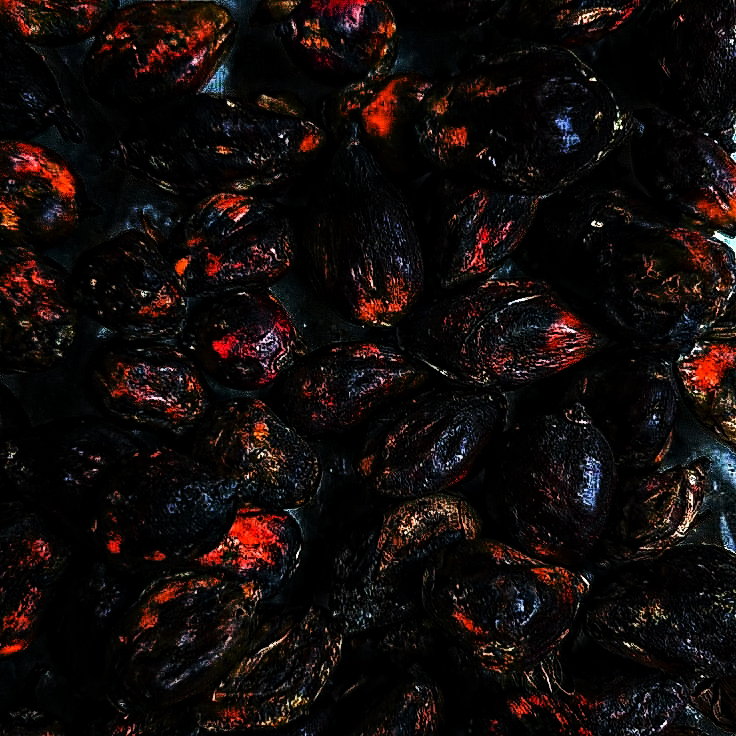
Red Hands, Roadside Coins Here’s a story woven from the lives of different people—a woman, a man, and children—tied to the trade of palm kernels on Sundays, their struggles, their rhythms, and the dance of survival in a bustling market. In a town where the sun rose with a fierceness that painted the earth red, Sundays were alive with the clatter of palm kernels and the hum of voices. The market sprawled along the roadside, a chaotic quilt of sacks, stalls, and sweat, where traders vied for space like roots clawing for soil. Among them were three souls bound by the kernels: Adiza, a woman with hands tough as the husks she sold; Kwame, a man whose dreams teetered on every sale; and the children—little hawkers with eyes bright and feet quick—who darted through the crowd like sparrows. Adiza was a force, tall and unbowed, her wrapper tied tight around her waist. She distributed palm kernels with a rhythm all her own. Sundays began before dawn, her voice ringing out as she hauled sacks from her mud-walled home to the market’s edge. “Take now, pay later,” she’d call, pressing handfuls into the palms of neighbors and strangers alike. “Go, and come back to take money.” Her trust was her gamble—some returned with coins, others with excuses. “I can’t buy it at this price,” they’d mutter, turning away, leaving her to count losses in the creases of her brow. Still, she pressed on, her arms straining as she lined her bags along the road, racing other women to claim the best spot where dust met footfall. The first to land a space caught the early buyers—those with full purses and sharp eyes—and Adiza fought for it, her sacks thudding down like a declaration. Kwame watched her from his own patch, a man wiry and worn, his shirt patched at the elbows. He sold palm kernels too, but not with Adiza’s flair. Sundays were his tether—he’d once dreamed of a shop, a roof over his trade, but the kernels kept him roadside, bartering with cracked hands. He didn’t trust like Adiza did. “Pay first,” he’d grunt, holding back his sacks until coins clinked into his tin. “I can’t buy it at this price,” buyers would snap, haggling him down until his profit was a whisper. He struggled to line his bags straight, his space shrinking as women like Adiza elbowed in, their voices drowning his. Yet he stayed, the kernels his lifeline, each sale a brick in a wall against hunger. The children wove through it all—siblings and strays, some as young as six, their palms stained red from the kernels they hawked. There was Kofi, with a grin too big for his frame, and Ama, whose sharp tongue matched her quick steps. They carried shallow baskets, shouting, “Fresh kernels, sweet oil!” as they dodged carts and feet. Sundays were their hustle, coins tucked into rags tied at their waists. They’d swarm Adiza first—she’d slip them handfuls to sell, a nod of kinship—and then pester Kwame, who’d shoo them off unless they brought cash. “I can’t buy it at this price,” buyers would laugh, tossing them half what they asked, but the children persisted, their small bags spilling over as they raced to claim corners where the crowd thickened. The women—Adiza among them—were a storm of motion, their voices rising over the market din. They struggled against each other, a quiet war for space. Mornings saw them jostling at the roadside, sacks toppling as they staked their claims. “Move your bag!” one would shout, another shoving back, their wrappers flapping like flags. The best spots—near the junction or the market’s mouth—went to the swift or the strong, and Adiza often won, her glare a blade that parted the fray. But the strain showed: her back ached, her sacks grew heavy, and the coins trickled slower each week as prices climbed and buyers balked. One Sunday, as the sun dipped low, Adiza stood counting her take—less than she’d hoped, more than nothing. Kwame lingered nearby, his tin lighter than yesterday, his eyes on a buyer who’d promised to return. The children clustered at the road’s edge, Ama jingling her coins while Kofi chewed a kernel he’d nicked. A woman haggled with Adiza, her voice sharp: “I can’t buy it at this price—lower it!” Adiza sighed, tossing in an extra handful. “Take it and go,” she said, too tired to fight. Kwame watched, then called to the children. “Sell these for me,” he said, handing over a small sack. “Half’s yours if you’re quick.” Kofi whooped, Ama nodded, and they vanished into the dusk, baskets swinging. Adiza glanced at him, a rare smile tugging her lips. “You’re learning,” she said. Kwame shrugged, but his shoulders lifted a fraction. The market thinned, the roadside grew quiet, and the palm kernels—cracked, red, enduring—lay scattered like the day’s small victories. Adiza, Kwame, and the children would return next Sunday, bags in hand, voices raised, fighting for space and survival in a world that turned on the grit of their trade. What do you think of these lives intertwined by palm kernels? For a title, how about "Sundays of the Kernel Sellers" or "Red Hands, Roadside Coins"? Let me know if you’d like more stories or a deeper dive into their world! For this story of Adiza, Kwame, and the children selling palm kernels on Sundays, their struggles for space, trust, and survival, here are some title options tailored to its heart: "Sundays of the Kernel Sellers" Captures the rhythm of their weekly trade and the cast of characters, with a straightforward, evocative feel. "Red Hands, Roadside Coins" Highlights the physicality of the palm kernels (their red stain) and the small earnings that drive their hustle, grounding it in vivid imagery. "The Kernel Line" Nods to the literal and figurative lines they form—bags along the road and the delicate balance of their lives—short and punchy. "Dust and Deals" Evokes the dusty roadside market and the bartering that defines their Sundays, with a gritty, atmospheric tone. "Palm and Promise" Ties the palm kernels to the promises they chase—Adiza’s trust, Kwame’s caution, the children’s quick coins—in a poetic blend. My favorite is "Red Hands, Roadside Coins"—it’s tactile and vivid, painting the scene while hinting at their labor and reward. It feels like it carries the sweat and spirit of the story. Which one speaks to you most, or do you have a new spark
to suggest?
No comments yet