 @Sydai01
more from that month
@Sydai01
more from that month
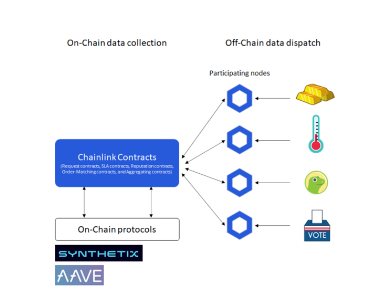
Trivia : What is Chainlink? Chainlink is a decentralized oracle network that brings off-chain data into an on-chain format, bridging the gap between the isolated blockchain and real-world data. It aims to ensure that the external information (pricing, weather data, event outcomes) fed to smart contracts remains untampered with. Chainlink is built on top of the Ethereum blockchain and Chainlink (LINK) is the native token of the protocol. LINK is used to pay Chainlink network operators for their services. A brief history of Chainlink Chainlink is a product developed by a private company called SmartContract Chainlink Ltd. The project raised a total of $32 million during its ICO in 2017. It went live on the Ethereum mainnet 2 years later, on June 1st, 2019. Team behind Chainlink The team behind Chainlink is SmartContract Chainlink Ltd, a company co-founded by Sergey Nazarov and Steve Ellis. What is the purpose of Chainlink? To understand the purpose and function of Chainlink, we will split it into two sections: ● Chainlink, the protocol ● Chainlink (LINK), the token Chainlink, the protocol Before we dive into the function of the Chainlink protocol, we need to understand the basics of smart contracts and how oracles work. Smart contracts are the “If-This, Then-That” software code through which instructions will be executed when specific conditions are met. However, smart contracts can read only on-chain data. For smart contracts to read real-world data, they must find a way to connect and synchronize with external data sources. This is where oracles are used as the ‘bridge’ that allows off-chain data to be made available on-chain. The Chainlink protocol is a decentralized network of nodes that enables real-world data to be made available on-chain. The protocol has two components: (1) a network of outbound nodes to request off-chain data and (2) a network of inbound nodes that will synchronize the requested off-chain data back on-chain. The data synchronization process begins when Chainlink requests the external information via a smart contract (known as Request smart contract). The Request smart contract will then trigger a corresponding smart contract (known as a Service Level Agreement - SLA smart contract) and further generate three more sub-smart contracts: The Chainlink Reputation Contract This keeps track of the oracle's provider record and performance to authenticate the reliability of the data supplied. The Chainlink Order-Matching Contract This matches the request made from the Request smart contract based on the parameters set. It will choose nodes based on the bids made and fulfill the request. The Chainlink Aggregating Contract Once the Request node is matched, the information received from the chosen oracles will be aggregated on the Aggregating contract. The data received will then turn into a single weighted value before being sent back to the smart contract that requested the information.Once the Aggregating contract returns the requested information to the Request smart contract, the information will be translated and parsed on the blockchain. In return, the node operators will be rewarded with LINK for their services. For more info DYOR...
No comments yet