 @Skippers
more from that month
@Skippers
more from that month
Money evulotion!!
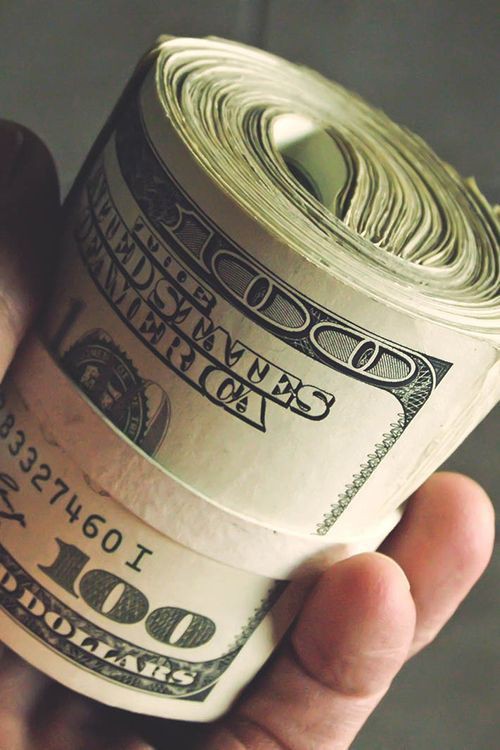
We can define it as a unit of measurement, a medium of exchange used by a society for the payment of all kinds of goods and services. Currently the money is materialized in the physical form of bills or coins. The concept of money is as old as civilization,from the first texts in hieroglyphic form "which include accounting notes" up to the deposits of primitive civilizations in which coins or more rudimentary ways of minting value are found,money has always been present. Over the last few millennia it has evolved and completed some fundamental phases or periods. **Barter** : this mode of exchange of goods is not a form of money,since it does not imply materializing value in a unit of measure, but its the origin of the concept of monetary value as we know it today. Thousands of years ago, the act of exchanging one basic good for another implied giving value to things. For example, exchanging one bearskin for three rabbits meant that the fur was more valuable; that is, centuries later, the skin would be worth more money. **Precious metals** : the main evolution in the conception of value occurred when things went from the intrinsic value of things (that is,“serve for something”, such as a skin to shelter) to abstract value, such as that given to an object, for example, a seashell. Among the earliest forms of money we find shells, feathers, ornaments or even salt. Over time,precious metals, mainly silver, gold and copper, were imposed globally,although there have been many primitive forms of money in various civilizations "either through stones or precious metals " they all have common characteristics: easy to transport,resistant, can be divided, are difficult to obtain and due to their aesthetic qualities they are recognized in different cultures. **Currency** : with the progressive introduction of the use of gold and silver as an exchange of value in the Middle East, China and India around 600 BC the first coins began to be minted as a unit with a fixed weight and a specific value. In this way, it was possible to set a standard, guarantee the amount of material contained in each coin and reinforce the power of the institution that endorsed the issuance of that currency. Centuries later, alloys of different metals began to be used to mint coins so that each of these was no longer backed by the value of the coin itself. For example, the metal that a euro € coin is made of today is worth much less than one euro, but as a society we recognize its value because it is backed by the European Central Bank. It was a big significant event, since it transferred the value of money from its physical form to the country that accredited it. This gave rise to future forms of money, such as banknotes, and was the origin of the fiduciary system or, in other words, the monetary system as we know it today. **Bank money** : with the maturity of the monetary system, and as a complement to physical money, around the 5th century an idea arose in northern Italy : the opportunity to safeguard money in entities to which the trust would be given to keep the money, in exchange for a document that proves that the client actually had the amount deposited. All those notes and balances of the clients were registered in the accounts of the institutions, thus facilitating the custody of money,credit, trade and the transfer of large sums. It was the origin of the banking system as we know it today. In a first stage, the client had to pay the financial institution for the custody of the money,later, it became the bank that paid a minimum interest to its customers in exchange for using their money to grant credit to new customers. This is what is known as the cash ratio,the “cash ratio” is the portion of deposits that a bank must keep intact in its own coffers relative to the percentage of money it can use to grant loans and investments to its clients. **Electronic money** : have you ever thought that most of the money that we use today or that you have saved does not really exist? They are accounting notes recognized by financial institutions that prove this money is yours, but its money that will never be materialized in the form of coins or bills. In fact, its estimated that less than 5% of the money is cash,the rest responds to all the non printed money that flows through notes, payments and electronic transfers,this is a great evolution in the conception of money, which also materializes in what is known as plastic money, which refers to this electronic money in the form of a credit card,electronic money was born in 1949 from "Diners Club" as a form of check so that its customers could dine on credit at certain establishments. After that, Visa, American would be born Express and the rest of the brands that we know today. Its appearance would facilitate payments and democratize buying on credit....skippers
No comments yet