 @SaraEllen
edited
more from that month
@SaraEllen
edited
more from that month
Death shaming
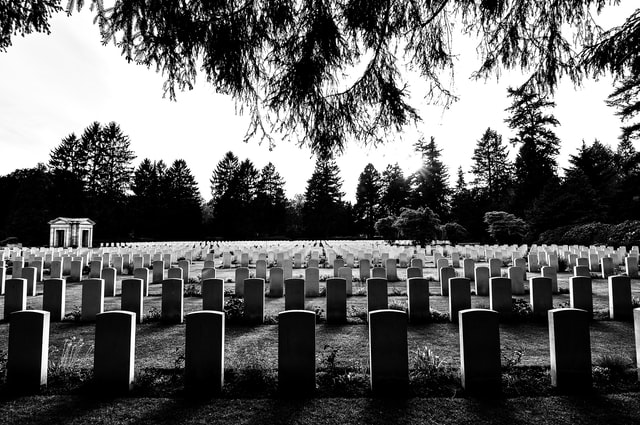
Article #14 Death shaming is an **assertiveness**, **rising** in countries like Pakistan and India. The word “death shaming” is my own, created to define a **specific comportment**. But if you look all over the place, you will frequently see this brashness. We have also established some **values** of death and whoever expires in addition to these standard means of death, we **instantly** pronounce him to be hellish, unfaithful, and traitorous or a victim of **torment**. Death of **solitude,** Death after a **serious disease**, **Disastrous** death, Not being able to put the body **six feet under the ground** **immediately** after death, **Elimination** of limbs at the stint of death (whatever the reason). Not all children are well **settled** at the time of death. Committing **suicide** etc. In this case, we present the **dreadful examination** in front of the **family**. Often those with a subtle **heart** say that they are not **frightened** of what will happen to them. Because no one can decide in advance when and how someone will **expire**. But from a **psychosomatic** point of view, we have this **terror** behind this attitude of ***death shaming*** that it may not happen to us. We first pray that **Allah** lifts the hands and feet while walking. Or God prohibit death in a foreign land and so on. We try to relieve our most dreaded worries with the help of Daniel and depict such deaths in a bad light. There were similar deaths. We need to **comprehend** that strong negative **examination** of someone else's death will not get you out of this **fright**. But it will also cause more cerebral and sensitive **suffering** to the family. This fear will disappear when you consciously believe that we too may die. Then take protective actions in this regard and even if we assume that in spite of all the protective dealings our or someone else's death turn out to be **aching**, then the manner of his death cannot define his character and faith at all. If an **unkind** person perishes a good death, his unkindness will not end. And if you or I think so, then the difficulty is in our philosophies which need further **remark** and **learning**. Cry over what **grief**? People be like the way death occurred with the life of the **dead**. If a person dies between two **holy rites**, they will see his **dead body** and say how **happy** his face is. Neither the **alive** nor the **deceased** are **putative**. I sense the most intellectual suffering when a person taking care of a **sickening** person tells him that it is a **retribution** for **immoralities** - to make a sick person understand that his **sickness** is the result of his **moralities** To make the person **hurt** more than the **illness** which will make the person feel **shamefaced**, **humiliated** and **self-loathing** in accumulation to the sickness - strong willpower, **sustenance** and **kindness** for their loved ones as well as **treatment** is **essential** to fight the **ailment**. It is **significant** to give unconditional **care** to the person in case of **sickness**, no matter what his character is, not to make him more **disgraceful** by making him feel **shamefaced**. Behind all this comes the idea of beliefs. And more indigenous **beliefs** and **customs** than beliefs. In early times, dead bodies of people who died in conflict were seen to have cuts on the upper body or on the back. And in this way the **courageousness** and **faintheartedness (cowardice)** of the dead was determined. The person is considered to be a great **hero** who gets a wound on the chest while the one who gets a wound on the back side of his body is not looked upon with such **admiration** that he may show his back and run away from the war. Therefore, in writings and poetry, it is a sign of bravery to have **wounds** on the **chest** that a person never turn his back from the Warfield and he fought with bravery, to be brave, to be valiant and bold, to face risks manly, to stand **strong** on the **battleground**. ***Pain, taking on the chest, continuing the*** *****attack********. The great is probably called the protection.*** **This is precisely how our philosophies play a part in our mental glitches because we try to validate them with the help of beliefs as an alternative of solving our mental glitches.** As **problematic** routines in ****Europe**** force persons to kill yourself and mental stress and people become more **fascinated** to **liquor** or other **drugs** which is a big motive for this **updated life** which has an influence on ****India and Pakistan****. An individual's **well-being and personality** or an **sickness,** an epidemic are also connected to such **misconceptions**, such as linking **Corona Virus Disease to punishment**, **linking AIDS to betrayal**, and **linking a child's infirmity or epilepsy to a parent's role**. This attitude is a **tormentor** in our **culture** and is more **predominant** where there is a lack of literacy, education and **consciousness**. All this is done to **defend** one's **beliefs** even though it has an **undesirable** **result** on the **intellectual** of the **civilization** and the **individuals**. This form of reform **civilization** needs man to disremember that reform has its own **instructions** and **rules**. The nation that **accepted** them has **advanced** and **flourished**. ****European**** civilization is an example for us in this regard or the former **communist** countries where faith nothing was found. Every person has to decease, all of us has to give an account of our **grave**. We become the ****Grand Mufti**** in the affairs of others and *****Saman Bikman***** in our own **dealings**. Our **society** is not able to get out of such **beliefs** which is a moment of image. To make someone **understand** that your discomfort, pain, sickness, death, etc. is a **Karma** for your sins, and that you’re aching, pain, disease, death is a test from the God, then we do not accept such a standard, we do not know. ***Such*** *****ill-informed***** ***people do not miss the*** *****chance***** ***to*** *****hound***** ***every Homo sapiens on every event.*** The **witticism** of not ingestion when you see a lean individual, the shock of not getting married when you see a virgin girl, all the **commiserations** of someone having a descendant talking in a tough tone. These are just some of the goal setting **shareware** that you can use. They don't really care how their disputes lash up the **emotions** of others, if someone tries to teach them a little bit of wisdom they will get angry about what we told a lie, or we so they were **flippant**. Visiting the sick is **essential** in Islam because the **enduring** is **fortified** and it is better to pray for the **bizarre**. The **illness** can **mark** anyone, even if the **Prophet is a prophet.** This does not demonstrate that the illness is because **immoralities**. I think people in our and other poor states have a lot of time, nothing unusual to do, no capitals, a severe lack of entertainment. Abandoned, tasteless and feeble societies keep thinking such things. In rich western countries, people don't have that much time to discuss such kind of topics. You might get to see another behavior to the differing. Deliberately proving the dead "Heaven and Rehmat-ul-Allah Alayh". That is, if an **oppressor** or an individual dies whose **life** does not imitate to the **reputable** **standards** of humans, then we try to wash the character of that person with a few pleasing occurrences that take place at the time of his **death**. He used to offer prayers and fasts, but if he dies in **Ramadan**, there must be some **concealed** goodness in him. I think both of these attitudes point to our **insincerity**. Perhaps we are consciously trying to create love for the **deceased** by **associating** these events with the **dead**. Thanks for reading.
No comments yet