 @SOE
more from that month
@SOE
more from that month
We Can’t Be Using Only Dollars on Mars
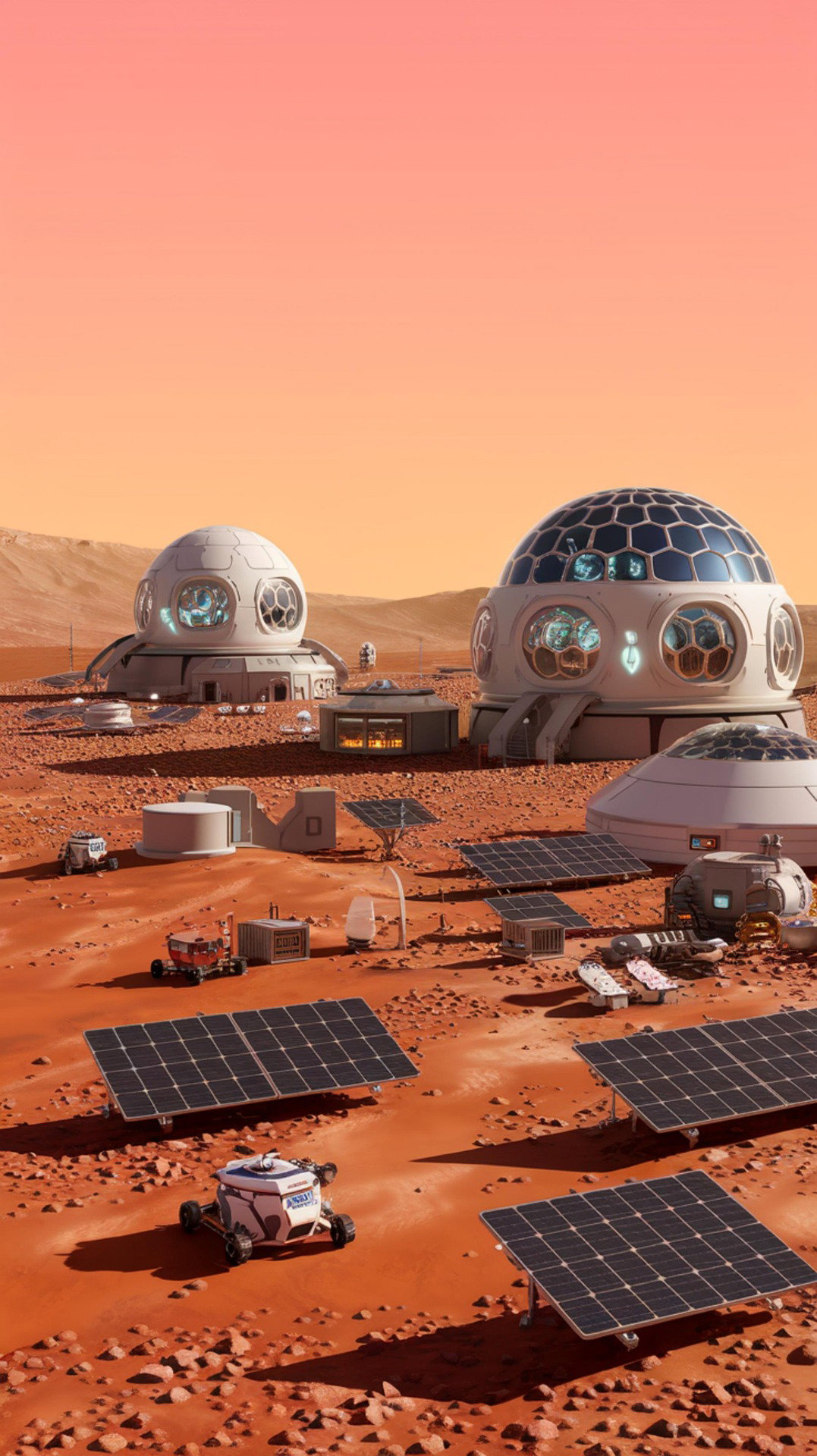
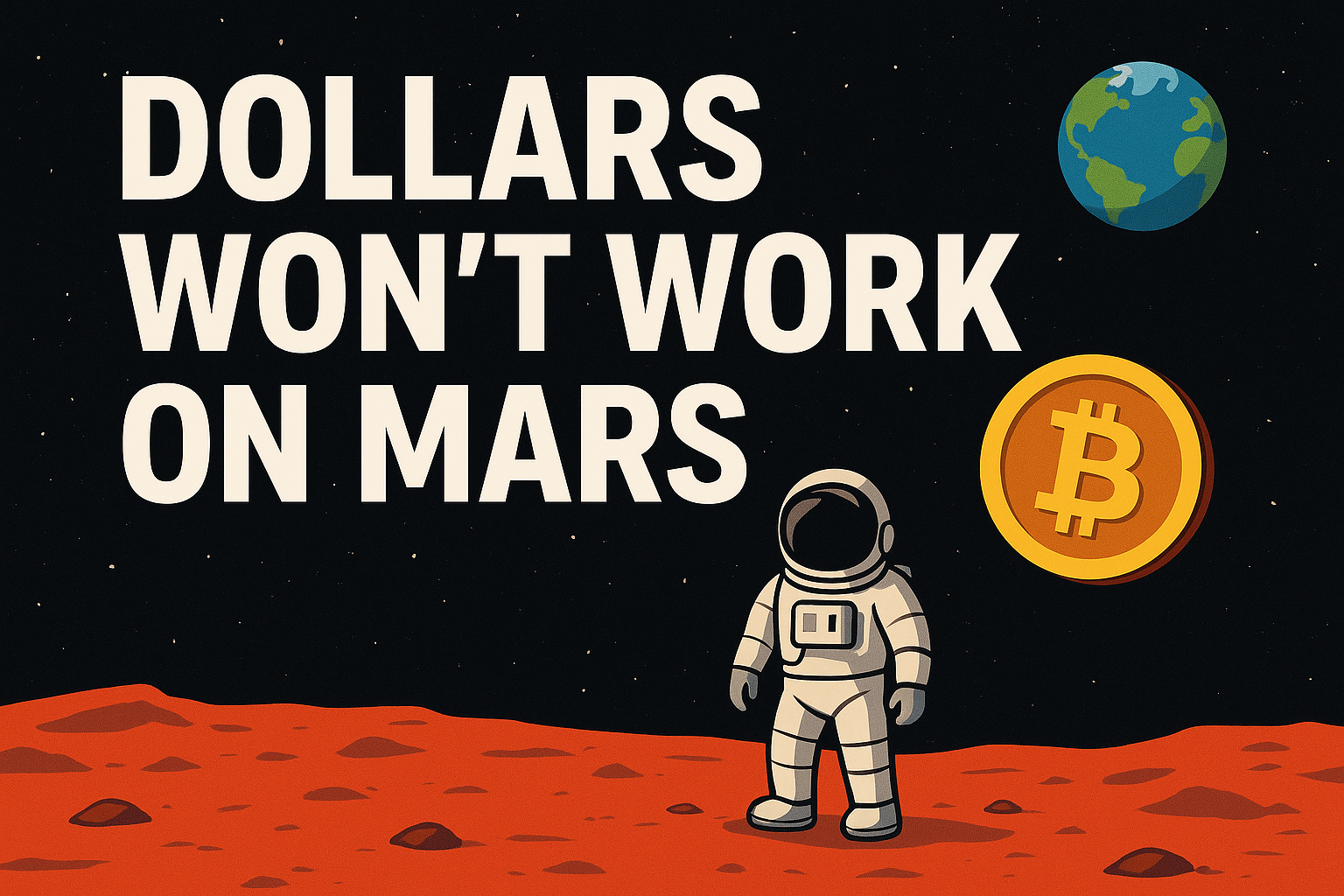
Hey there, fellow space dreamer! As someone who spends countless nights thinking about the stars and how to fund cosmic projects, I can’t help but geek out over this: when we finally touch down on Mars—maybe in our lifetimes—stuffing our pockets with dollars just won’t cut it. Earth’s fiat money is tied to borders, banks, and politics. Mars? It’s a blank slate for a truly interstellar economy, and crypto like Bitcoin Cash is the perfect fit. Imagine this: you’re a settler on the Red Planet, trading oxygen you mined for fresh veggies from a hydroponic dome. Or maybe you’re paying 3D printers in tokens to fabricate parts, or selling data back to Earth—all settled instantly, with no bank middlemen. Traditional bank transfers would crawl, crushed by latency. A signal from Mars to Earth takes 4–24 minutes each way, but crypto can work locally and even use the Lightning Network to sync across planets in minutes. That’s game-changing. A settler could sell data and get paid before the full signal loop even completes, enabling real-time commerce. **Here’s why crypto trumps fiat on Mars:** Latency kills fiat. Bank transfers would take ages just from communication delay. Crypto can settle locally and sync later. Neutral money beats politics. Mars won’t be “America’s planet” or “China’s planet.” Only borderless money makes sense. Programmable economy. Rovers, satellites, and robots could pay each other directly via smart contracts—something fiat can’t do. Using only dollars on Mars would be a bad engineering assumption. The features needed for off-Earth commerce—low friction, borderless settlement, programmability, and offline functionality—fit crypto far better than fiat. That doesn’t mean one coin will dominate, but a tokenized, multi-layer payment stack is clearly the future. Neutrality is also key. Mars won’t belong to one nation—it’s humanity’s playground. A decentralized crypto like Marscoin (a real Litecoin fork designed for funding Mars initiatives) keeps things fair. Blockchain could even tokenize Martian land rights or satellite data, creating tradeable tokens to power missions and even metaverse economies like Dogelon Mars (ELON). Earth is already testing this direction. SpaceX’s 2020 Crew Dragon mission kicked off private spaceflight, and the Falcon 9’s reusable landing in 2015 slashed launch costs by 90%. Researchers are now considering Bitcoin as an interplanetary currency, exploring solutions like Proof-of-Transit Timestamping to handle cosmic delays. Imagine programmable smart contracts letting rovers pay printers for replacement parts without human input. For me, this isn’t just about tech—it’s about making space accessible to dreamers like us. The U.S. dollar may dominate on Earth, but it can’t serve as the backbone of an interplanetary economy. Crypto isn’t an “if”—it’s a “when.” By 2050, we could be blogging from Martian domes, tipping in BCH. Would you pack dollars for Mars, or go all-in on crypto? Drop a comment—I’d love to hear your thoughts. If this sparked your imagination, feel free to tip in BCH to keep the cosmic convos flowing. 😉
No comments yet