 @Polaris
more from that month
@Polaris
more from that month
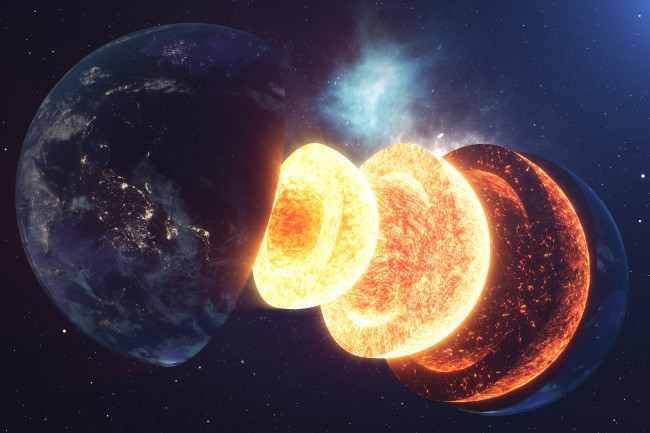
Earth Has Been Hiding a Fifth Layer in Its Inner Core Scientists say they've detected a new, mysterious layer at the center of our home planet. The discovery could unearth more about Earth's history. One of geology's basic principles is that the Earth is made up of four layers: the crust, the mantle, the outer core, and the inner core. But this may be squashed in light of a new study that suggests Earth actually has a distinct fifth layer that's been under our feet all along. Researchers at the Australian National University (ANU) say that the new layer they uncovered is located within Earth's inner core. Deeper analysis of this discovery could help scientists better understand our planet's history and evolution. A Peek Inside Earth Approximately 4.6 billion years ago, the Earth formed. The story starts with the planet's interior or rocky core, which formed through the collision of heavy elements. The core, found at the center of the Earth, is made up of two parts. The outer layer, comprised of liquid iron alloy, is about 1,355 miles thick. The outer core is also thought to be responsible for Earth’s magnetic field. In contrast, the inner core is made up of solid iron alloy with a radius of 760 miles. The Fifth Layer Scientists have long suspected that Earth's inner core was made of two layers. But it wasn't until ANU researchers took a closer look at what lies below that an “innermost inner core" was confirmed. Their work revealed a distinct change in the structure of iron deep within the inner core at about 3,604 miles below the Earth's surface. You may recall from earlier that the inner core consists of solid iron alloy. This is due to high pressure deep within the Earth that stops the iron alloy from melting. But distinct structural changes were detected in this iron alloy that set apart the newly discovered innermost layer from the rest of the inner core. Read more: https://www.discovermagazine.com/the-sciences/earth-has-been-hiding-a-fifth-layer-in-its-inner-core #Space
No comments yet