 @Nico91
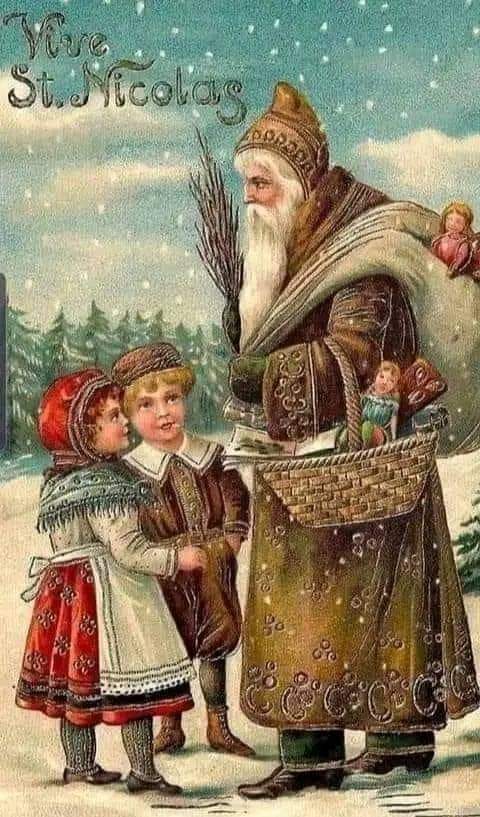
The legend of Santa Nicholas Every year, on the night of December 5 to 6, Santa Nicholas sneaks into people's houses and leaves gifts in the well-behaved children's boxes, but also in the adults'. He is much more discreet than Santa Claus, because no one ever sees him. In order to receive the gifts, usually sweets, the children have to clean their boots well. For the disobedient, however, Santa Claus leaves a stick, thus warning them to listen to their parents and grandparents. The legend of Saint Nicholas was born in the year 270 in the city of Patara in Asia Minor (now Turkey), and his name means, in Greek, "conqueror of nations". He lived in the city of Myra, where he was a bishop. After his parents died, Nicholas distributed his wealth to the poor, and then he went to Jerusalem as a prelate. How the tradition of gifts left in socks or socks came about. There are many legends that talk about Nicolae's deeds after he became a priest. According to a legend, he helped three poor girls get married. He left a bag full of gold at the gate of their house, so that each girl would have a dowry and be able to get married. When it was the last girl's turn, her father wanted to see who was bringing them the bags of gold and stood watch one night. Then, Nicholas left the bag on the chimney of the house, in a sock that was left to dry, and thus the tradition of gifts placed in shoes appeared. The three bags of gold became the symbol of Saint Nicholas, in the form of three golden balls. Saint Nicholas, the protector of sailors and travelers Nicholas also came to the aid of sailors and travelers. Another legend says that one day he was returning home by sea, coming from Jerusalem. A strong storm started, and Nicholas prayed to God and then the storm suddenly stopped. The sailors on the ship considered this a miracle, and since then Saint Nicholas is also the protector of sailors and travelers. The remains of Saint Nicholas lie in a crypt in Bari, Italy, where he was buried after his death in 343.
1 comment
Happy St. Nicholas day.