 @NakamotoBch
more from that month
@NakamotoBch
more from that month
Why The Big Bang is one of the most widely Accepted Scientific Theories of our time
The Big Bang is one of the most widely accepted scientific theories of our time. It's a theory that can be applied to a number of different fields and has been used to explain how we ended up with the universe we have today. One big question that still remains unanswered is whether or not this suggests that there could be other universes out there, and if so, what now? For those who do not like to read lengthy articles, here is an overview of what I covered in this post;
**Brief explanation:** The Big bang theory is a scientific explanation for how our universe came to be that has gained wide acceptance within the scientific community, regardless of its philosophical underpinnings or implications. To say that some scientists believe the big bang was caused by "nothing", as in no physical cause, is therefore inaccurate, despite what religious apologists may claim. That being said, it's a widely-held view in physics circles that our universe arose from literally nothing before the big bang, and this is what I'll be looking at in this article. What is the Big Bang
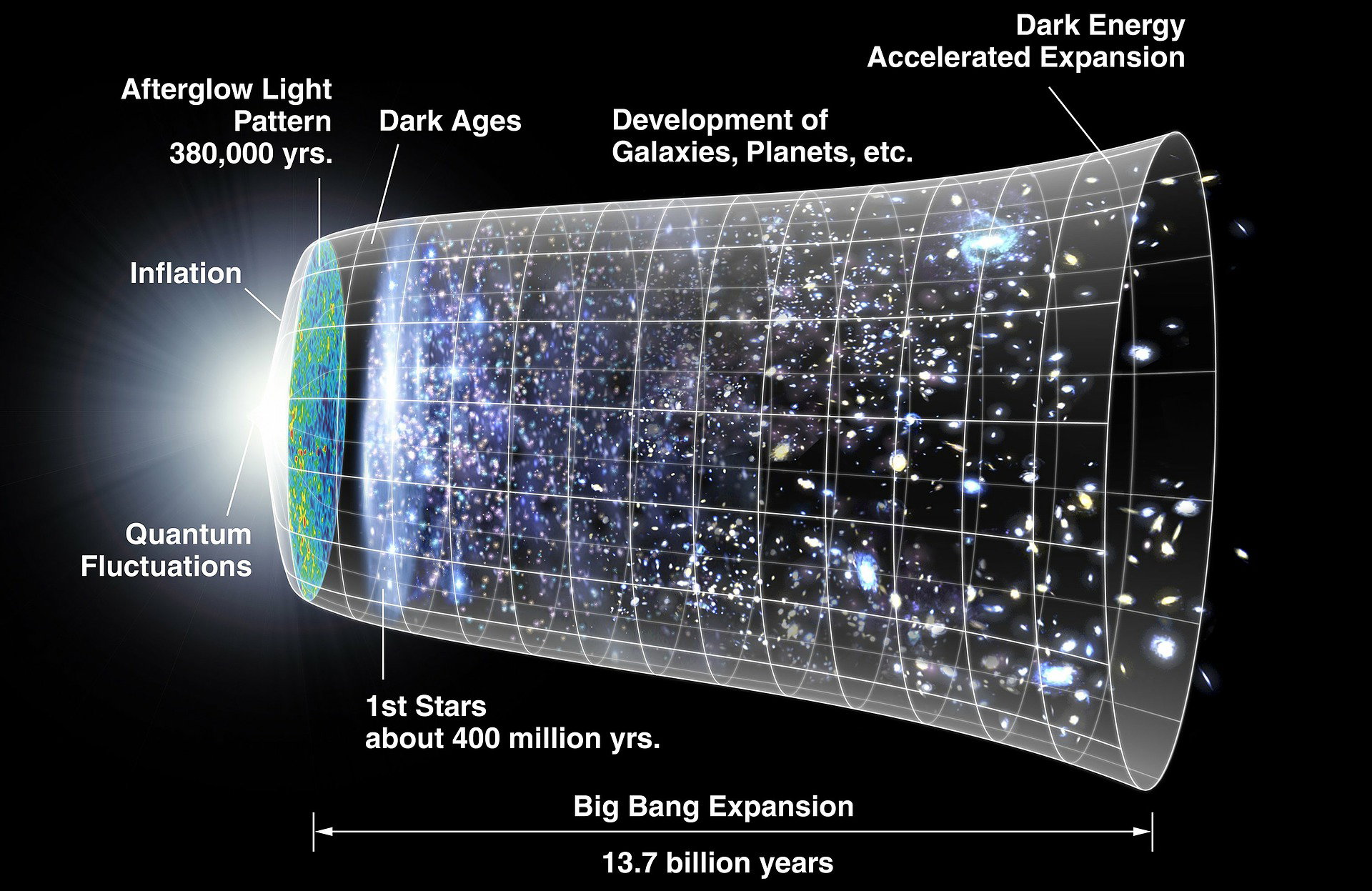
The Big Bang is a scientific theory that explains how the universe came to be. It first hypothesizes about the origin and expand of the universe. It states that all the matter in the universe began at one point, and this point was really hot. It also states that because of this high temperature, all particles in the universe were moving around very quickly. After some time, everything cooled down and it became more calm. The particles then started to attract each other, which caused gas clouds to form (this is why we have stars). These clumps of gas cooled even more and turned into galaxies. Over time these galaxies collided with each other and formed what we call clusters today. How well is the theory supported?
The Big Bang has been accepted by scientists as one of the most widely accepted scientific theories out there because it explains a lot about our universe, it's been tested through numerous observations and experiments, and that no other theory can hold a candle to how well this describes what we know about our universe which makes it extremely unlikely that this isn't true. To answer whether or not this suggests that there could be other universes out there, we'd first need to ask ourselves what it means for something to be "true". Truth is an incredibly tricky thing to define when it comes to science and as a result many people have argued that science doesn't seek truth rather it seeks the best explanations. As Carl Sagan said in his book Demon Haunted World: **Extraordinary claims require extraordinary evidence**
As an atheist, I not only have no evidence for gods, I also have no desire to find any. It seems unnecessary and irrelevant. However, if you want a serious answer: The question of God's possible existence may or may not be entirely meaningless; but if the question is allowed meaning then the big bang theory is at least consistent with that meaning - more than most theories would be! To provide a more detailed response, we can use the following analogy. Imagine that your friend was on a plane which was going to crash and you didn't know whether or not they were wearing a parachute. how would you want them to answer this question? If they said "Yes I have a parachute" then it's clearly better for them to be telling the truth as it means there's some chance they might live and if in doubt of whether their parachute will work or not, at least they'll try. On the other hand, imagine you asked them: "**Do you have any paragliders?**" Now if they say "yes" even though it's unlikely for their parachutes to work it suggests that there's no point worrying about dying because there's nothing they can do about it. It may be unlikely for their parachutes to work but since there is a possibility that they do, we might as well prepare for the worst case.
If you want to know how likely it is that God (or gods) exist then this also depends on what god(s) you want to talk about. Now if you're asking whether or not any existing religious stories actually describe something real which is independent from humanity and our minds, or even billions of years old rather than just thousands of years old then I would say that none do. So while I don't think your question means anything in terms of whether or not gods exist, the Big Bang theory certainly does suggest that other universes are possible. As a result, the question of whether or not this is "true" would be dependent on what you mean by true. As for me, I'd say that it's perfectly reasonable to assume there are other universes but also acknowledge the fact that we haven't found any evidence to support them so far and possibly never will. Again **"Extraordinary claims require extraordinary evidence."**
Given our lack of knowledge we don't have enough information right now to determine whether or not it's even possible for more than one universe to exist - but if other universes did exist then they might actually be able to solve some big problems in physics such as why Quantum Mechanics and General Relativity don't seem to work together. https://einstein.stanford.edu/content/relativity/a11758.html#:~:text=In%20quantum%20mechanics%2C%20fields%20are,are%20defined%20by%20'quanta'.&text=Quantum%20mechanics%20is%20incompatible%20with,exchange%20of%20well%2Ddefined%20quanta. So as it stands, I'd say that if there are other universes out there then they most likely exist on the quantum level and don't interact with ours - perhaps due to some sort of "quantum foam" as suggested by Stephen Hawking. So while your premise is correct in saying that the Big Bang theory currently holds true as one of our top scientific theories, I would disagree with you when you imply that this suggests a belief in God. Rather, it suggests we shouldn't believe something which can't be proven false because even then at least we wouldn't have any evidence to suggest otherwise.
However, in order for me to answer what might happen to these universes, we'd first need to ask ourselves whether or not the Big Bang was the only thing that started our own universe or whether there were other precursor events which led to this. If it is true then I would say we don't have enough information to find out what happened before then so further examination of possibilities seems unnecessary. Given that many scientific theories can be wrong, I think it's more important to be able to identify bad science than to claim something as "the truth". In order for a theory or hypothesis (such as the Big Bang) to be considered valid and accepted by scientists, it must have had overwhelming amounts of evidence in its favor and/or very few alternatives which are also logical.

This isn't like mathematics where two things could both be correct even if one cannot prove that they're wrong - with theories, if a prediction isn't true then another theory or idea must replace it. Therefore although many scientific theories are accepted as fact I don't think we can consider anything to be "the truth" because we simply don't have enough information to know whether or not something is absolutely true without any doubt at least not yet anyway. ***Thanks for reading.. Cheers!!!*** ***References:*** https://blogs.scientificamerican.com/observations/can-science-rule-out-god/ https://einstein.stanford.edu/content/relativity/a11758.html#:~:text=In%20quantum%20mechanics%2C%20fields%20are,are%20defined%20by%20'quanta'.&text=Quantum%20mechanics%20is%20incompatible%20with,exchange%20of%20well%2Ddefined%20quanta. http://websites.umich.edu/~gs265/bigbang.htm https://en.wikipedia.org/wiki/Cosmos Images from Unsplash and Pixabay https://Unsplash.com https://pixabay.com/



4 comments
If you ask a believer they would say it all was created by God and the opposit would say something totally different. Same about humans. Was there Adam and Eve or evolution?
There's plenty of both. Creationists love to pick on evolutionists for picking too many things to be consistent, while evolutionists get accused of having too many holes in their story.
The Big Bang is the most accepted scientific “theory” because there are that many people in the world who choose not to believe the scientific “facts” clearly set forth in Genesis account of The Creation, the origin of the universe. The other fact is that there would be many unemployed scientists if they did not say they were working on trying to substantiate the theory. The Big Bang Theory was introduced in 1927. Ironically, it was supposed to provide proof that the biblical account was correct, i.e. religion and science need not contradict each other. Only people started asking more questions and debating it. NASA has people employed whose “job” is to study The Big Bang. Of course, NASA is not the organization in the world with scientists and researchers working on this. Big Bang news and updates are published regularly in publications like Science Daily. You either believe one or the other. Either the universe was the result of an explosion that created order out of chaos OR it was the result of the orderly thinking of a Supreme Intelligent Being. "Supreme" meaning that Being is way smarter than all of us! You can't believe both! As “a theist”, I believe the latter. Also, I disagree that it is more important to identify the “bad science”. Anybody can come up with pseudo-science. You don't even have to be a scientist to come up with a bad scientific theory about anything! The search for truth is far more important and a much more worthwhile endeavor. Besides how can you possibly identify the bad science WHEN you don't know what the good science is in the first place? Respectfully.
Nice 🙂. I appreciate your thoughts. Well received