Out of Body Experience
A feeling of your consciousness leaving your body is an out-of-body experience (OBE), which some may also describe as a dissociative episode. People who've had a near-death experience frequently mention these episodes.
Within their physical body, people usually feel their sense of self. From this vantage point, you can most possibly see the world around you. Yet you may feel as though you are outside yourself during an OBE, looking at your body from a different viewpoint.
What actually happens during an OBE? Does your consciousness leave your body, actually? The experts aren't completely positive, but they've got a couple of hunches that we'll get into later on.
How does an OBE feel?
What an OBE feels like, precisely, is difficult to pin down.
According to reports from individuals who have encountered them, they normally include:
A sensation of floating outside of your body
An altered world outlook, such as looking down from a height
The impression that you're looking down from above at yourself
A feeling that what is going on is very real, very real.
Usually, OBEs occur without warning and generally do not last for very long.
You may be more likely to experience OBEs if you have a neurological disorder, including epilepsy, and they may occur more often. But an OBE is going to happen very rarely for many people, maybe maybe once in a lifetime.
Some figures indicate that the sensations associated with an OBE have been encountered by at least 5% of people, although some say that this figure is higher.
Is it the same as astral projection?
OBEs are referred to by some people as astral projections. But between the two, there are some main differences.
Typically, an astral projection requires a concerted attempt to send your consciousness out of your body. It typically refers to your consciousness moving toward a celestial plane or dimension from your body.
On the other hand, an OBE is normally unplanned. And your mind is said to actually float or hover over your physical body instead of travelling.
OBEs, or at least their sensations, are largely accepted and have been the subject of several studies within the medical community. However, astral projection is deemed to be a supernatural activity.
Support me in **cointree** http://cointr.ee/monskins

Hello does anyone knows any platform for mining bch that pays everyday?
Why can a change of perception help you understand yourself?
Today, there are more than 7.5 billion people in the world and each of us thinks in a different way.
There are, of course, people who have similar opinions. This is why we are able to gather together around unique reasons. But at the heart of it, for various reasons, we do stuff.
It is this specific reality that has made me so interested in people that I have found a greater respect for them.
It was also through that reality that I learned a precious lesson.
The lesson is that we need to consider the differences in experience and therefore individuals.
In reality, we can grow better by accepting these differences in ways we can't imagine on our own.
Why Viewpoints Matter
The viewpoint is the way we see the world, the truth of ours.
It's special to ours, and it's all ours.
But is the only one that exists is our reality?
It's definitely not.
Whether it's work roles or individuals in general, every individual has their own realities. Our truth is the basis for these positions and viewpoints.
We see it from there differently.
It is really important to see things in a different light as a leader or as an person. We add a deeper layer of comprehension of ourselves and others by doing so. To illustrate this, I often use the example of individuals in control (like managers) or politicians.
At times, it is convenient for individuals to see why administrators or leaders do such things that make little sense. Some people believe these individuals are out to get them. When change comes, they complain about change or something else.
The fact is, those complainants may very well lack perspective.
I'm not suggesting that all leaders are saints and, given the correct circumstances, all managers are fine.
Nevertheless, their conduct should not be based exclusively on one opinion, the general public or their workers.
There are a number of talents we need to cultivate in order to see things in a different light: perspective-taking and perspective-seeking.
Perspective-taking is seeing stuff from different points of view. We ought to try to get into the shoes of other people and see it from their side, in essence.
It's a lot more than sitting in someone's shoes with perspective-seeking.
Instead of choosing a hand, perspective-seeking is simply looking critically at stuff.
It's keeping an open mind and a desire to know what's going on with someone.
But it is through this cat-like curiosity and ability to see things in multiple lights that it is possible to use skills in several different ways. It's how I've seen absence, dysfunctional relationships, rage and vengeance in various lights over the course of this writing challenge. I've been revisiting and deepening my interpretation of those themes.
In addition, you can enrich your life by learning other aspects about your life and truth by being open to people's perspectives.
Perspective helps culture as well
You may also take a global view and see the importance of having diversity in your community and social life.
Diversity is necessary in order to create teams. We can see it now more than ever, as people take on a more collaborative spirit at work.
That said, race, gender , and sexual orientation still lack some diversity. A lot of us, in truth, overlook it.
It is because of this that accepting it will help us evolve.
For instance , businesses that have embraced diversity alone have seen improvements in innovation and revenue. Compared to other companies whose executives are mostly white men, companies that have women taking leadership positions have seen increased sales as well as more innovation.
As it opens up our culture, these multiple viewpoints and backgrounds are important in our lives.
A lot of racial friction that has arisen in society today could easily be associated with societies and lifestyles where people are not exposed for a large portion of their lives to various groups of people.
That or they grew up with a certain standard and interpretation of certain individuals of color.
By keeping an open mind and also collaborating with other groups of people, those barriers can be broken down. Both as a child and as a grown-up.
Try that one,
Abraham Lincoln said once ...
"Judge not, for if you were in that position, you would do the same thing."
I urge other individuals to start living in that way because it allows us to seek both insight and perspective.
We flourish because we have a wide mind and try to comprehend both sides of the coin.
Two sides of any story will always be there. So take both in and strive critically to understand.
It is to have knowledge to understand one hand, but understanding both is to have wisdom.
Towards your growth!
Support me in **cointree**. http://cointr.ee/monskins
Channeling Arcturians
In these critical times on the world, the Arcturians are Christian beings of love working for mankind and the earth.
They are People of Love operating in the Modern Era, in the realization of Oneness, Unity / Christ Consciousness and in the restoration of Peace on and beyond Earth, with the evolution of Earth, Humanity and All Kingdoms on and beyond Earth. This means working in Peace, Solidarity and Unconditional Love, right here and right now on Earth, towards each of us seeing, becoming, experiencing and living.
One of our galaxy's most advanced extraterrestrial civilizations is Arcturus. It is a fifth dimensional civilization, which is like a prototype for the future of the Earth in fact. As an emotional , mental and spiritual healer, her energy works for humanity. Their complete emphasis is on the path of God's realization in every area of their society. The Arcturians teach that LOVE is the most basic element for life in the fifth dimension.
In their Starships, which are some of the most advanced in the World, the Arcturians navigate the universe. The Arcturian community, the Arcturian Central Conclave, is governed by what they call the Elders. These beings are admired for their advanced intelligence, wisdom, and exceptionally high vibrational frequencies by the people of Arcturus. The higher the level of vibration, the nearer one is to love and light; the closer one is to Spirit. The most gentle, caring and non-judgmental beings are the Arcturians. On Arcturus, there is also no sickness / dis-ease, it was removed centuries ago.
Initially, missionaries were the Arcturians with whom I have an inner plane relation and with whom I work; explorers, scientists, educators and healers, working with many planetary systems such as Earth with collapsing habitats and destruction of the natural order of life and evolution on those planets, to rescue and maintain species of nature that became extinct due to the imbalance and imbalance.
The Arcturians specialize in particular areas of emphasis, growth and development, often predetermined to the needs and requirements of the developing Society before gestation. Everyone performs their specialized role and works as a whole, where everyone has access to the gifts and abilities of all; there is no uniqueness like we are experiencing here on planet Earth at this moment, but everyone specializes entirely in their field of expertise and acts as one Person, one Being, one Love, one Collective Consciousness. Maybe it could be seen as a Christed Hive Consciousness functioning only in unconditional love and beyond.
The Scientists and Explorers are Starships allocated for the collection of endangered species [in DNA collection style procedures], these Arcturians.
These Arcturians are the Instructors, Teachers and Healers. Other Starships are entrusted to work with Humanity on and within the fallen planets, also as inner plane Guides and Counselors, in the education and healing of Humanity on and within the fallen planets concerning the restoration of Peace.
As it is in giving that we receive, within this sector and sectors around the Universe, the many Arcturians traveling on Mother Ships are also learning, developing and evolving and its part of their education and evolution and constantly expanding specialization to share / give back, interface and communicate and be of service to the larger plan, for the greatest benefit of all concerned.
Arcturus is a very big universe, linked to the Arcturians in my heart, because the Earth is such a tiny planet when placed in perspective with other planets, my experience is that it seems so strange that not all people on Earth know each other.
These Arcturians are the Instructors, Teachers and Healers. Other Starships are entrusted to work with Humanity on and within the fallen planets, also as inner plane Guides and Counselors, in the education and healing of Humanity on and within the fallen planets concerning the restoration of Peace.
As it is in giving that we receive, within this sector and sectors around the Universe, the many Arcturians traveling on Mother Ships are also learning, developing and evolving and its part of their education and evolution and constantly expanding specialization to share / give back, interface and communicate and be of service to the larger plan, for the greatest benefit of all concerned.
Arcturus is a very big universe, linked to the Arcturians in my heart, because the Earth is such a tiny planet when placed in perspective with other planets, my experience is that it seems so strange that not all people on Earth know each other.
Support me in **cointree**. http://cointr.ee/monskins
How To Quiet Your Mind
Meditation, particularly in a high-stress workplace, is an underappreciated activity, but that is where it is most important. Here's how to suppress your feelings about racing.
These days, peace and calm are a precious luxury, but we are our own worst enemies also. How many times have you just gone to bed to relive your day in your head, or to make tomorrow's mental to-do list? Or maybe you've been carved out to rest for a few minutes and hijacked by a barrage of thoughts or concerns? It can be a tall order to find peace in a world of chaos.
Victor Davich, author of 8-Minute Meditation: Quiet Your Mind, Change Your Life, says, "Americans suffer from a case of ADD." "It is difficult to be on top of anything with technology , economic stresses, jobs, and family, and it upsets our natural balance."
This overload and overwhelm also contribute to anxiety, fear , and depression, and you can handle things in a gentler way whereas you can't check out of life and escape accountability.
"One of the fastest tools for achieving inner peace and quiet is meditation," Davich says. "It's an Eastern instrument for Western outcomes."
Meditation is defined by Davich as a state of mindfulness. "Being conscious does not mean relaxing the mind in the way that most individuals expect," he says. "The mind won't stop worrying about it. Once, a Zen master told me that the purpose of mindfulness is not to inhibit thought, but to transcend it.
The mind will not stop thinking. The purpose of mindfulness is not to inhibit thought, but to transcend it.
How you respond to your thoughts is the answer. Your mind is like an electric fan with thoughts blowing everywhere if you concentrate on your thinking, says Davich. However, when you concentrate on your breathing or your body, thoughts will come and go through the sky like clouds. He says, "You should look at them, remember that they are just feelings, and let them go." "You don't have to have an attachment to them emotionally."
Mindfulness is not another item on the to-do list to put on; it's a regular devotion. Davich says meditation for eight minutes can have a positive effect on your well-being. An attorney, he says the profession helped him to survive the law school stress and increased his GPA. To quiet your mind, he shares three quick steps you can take:
1. ENTER into a successful place.
Give yourself a deep breath and sigh it out. As soon as you can, sit comfortably and relax your body. Davich says, "We have these dreams of having to have a complete lotus role." "It's not necessary."
2. Get the BREATHING in touch.
Close your eyes and find the spot where your breath is most prominently felt in your body. It could be your belly, diaphragm, or under your nostrils, Davich says. Start concentrating your attention on your breathing in a gentle way. This will be your anchor point.
3. DETACH From YOUR Thought.
Distractions such as emotions, body sensations, or images can begin to pop up within a couple of seconds. Realize this is natural and return to the anchor point gently. Please continue this for 8 minutes. You can use an app, such as Simply8 by Davich or Buddhify, to keep track of the time and set the tone.
Most people find morning a peaceful and convenient time of day to meditate, Davich says. Before bed, others do it to make them relax. During your lunch break or any other time that works for you, you might meditate.
"There is only one rule:" Keep your mediation work aligned with a regular appointment, just like brushing your teeth, "he says. "It is a great tool for helping to put space between you and the distractions of the universe."
Support me in **cointree** http://cointr.ee/monskins
The Subconscious covers more Facets
If you want to better understand customer behavior, you not only need to look at the overt reactions of people what they think they like, but also take into account implicit feelings and judgments. But why is it the case that subconscious mechanisms affect our decisions? We can certainly make better judgments if we think more about our choices consciously and not let our gut feelings take over. I'm going to look at how we use subconscious 'thinking' in this blog post to make choices and whether this is actually a successful technique.
It is also believed that when there is a lot at stake, when we purchase expensive goods, choose a place to live or buy a car, we base our choices primarily on conscious thinking. In comparison, subconscious reasoning is often the key driver of our decisions when searching for cheaper or less important items (we will usually choose an item out of a selection of rivals within seconds, without actively weighing up all of their pros and cons, but rather trusting our intuition). When you think about subconscious thought as quick and relatively simple, and conscious thought as a sluggish, more effortful mechanism that can be used to circumvent the subconscious and more carefully analyze various aspects, this theory definitely makes sense. But does implicit decision-making have more to do than is instantly obvious?
Your friends and family will advise you to spend a fair amount of time considering multiple choices, sleeping on the decision, writing down benefits and drawbacks, and debating them with others if you make an important decision (e.g. buying a house). But research has shown that it might not always be the safest choice to only trust your conscious thoughts.
We assume that thinking hard and explaining choices can contribute to better results, but this is not always the case. An experiment was carried out to assess whether individuals would be happier with random or justified choices. For this, after the experiment , participants were given the choice between several posters that they were allowed to carry. Half of the participants only had to select a poster and take it home, while the other half were asked to write down the reasons why the poster was chosen.
Both were told that the experimenter would not know which poster they chose, so that their choices would not make them feel judged. When asked a few months later about their choices, the spontaneous group not only chose different posters than the deliberation group (posters that were 'only beautiful' instead of those with motivational slogans, etc.), they were also far more pleased with the choice they created. But one might argue that it is not a particularly important decision to choose a poster, and that we can trust our subconscious to make this choice, of course. The following example, however, will explain that when making more critical decisions, we can use our gut feelings as well.
A series of experiments was carried out at the University of Amsterdam to evaluate whether we make better decisions using conscious or sub-conscious decision-making processes, looking at selecting apartments or possible roommates.
For this, 12 pieces of information were shown to participants about each potential apartment (e.g. size, location) or roommate (e.g. tidy, fun). The manner in which the data was presented ensured that a hypothetical 'best option' was always available (one apartment was better than the others). They were either asked to select their favorite immediately (control condition) after showing participants the details, were given 3 minutes to think about their decision and then chose (conscious thought) or were distracted for 3 minutes by a difficult task and then asked to decide (this discouraged conscious thinking and was therefore seen as the subconscious decision). It turned out that the subconscious community made the best decisions by looking at the choices they made (subjectively, as well as when variables of individual significance were taken into account, such as when someone said that location was more important than height, etc.).
We neglect one important aspect of these various ways of 'thinking' when we think of conscious and subconscious thinking as merely slow vs. quick or effortful vs. effortless: the amount of knowledge that can be processed. Consciousness can handle only a comparatively small amount of information at once, while the subconscious 's processing ability is much greater. Therefore, conscious thinking will lead to better outcomes than the subconscious when we have to make a decision and take just a few details into account, while the subconscious tends to be better at creating overall perceptions. Aware deliberation runs the risk of taking into consideration not all of the details because there are several variables to consider, but of basing the decision on only a few of the facts. Therefore, it can always be easier to listen to your gut instincts even when making complex, significant decisions.
And one of the pieces of advice given to you earlier by your friends and family is actually based on this idea: sleep on your decision. Sometimes, it will help to draw a conclusion by being distracted for a moment, and writers, authors and anyone else who needs to use their imagination will know that incubation (stepping away from a problem) will help greatly to come up with good solutions.
Overall, it can be said that not only easy, unimportant decisions are best taken using the subconscious, but that our subconscious is highly affected by even difficult and important decisions, such as choosing a home, since it provides a more global impression. This is why it is not only important to test subconscious, implicit and automatic experiences when trying to predict the popularity of cheap products such as fast-moving consumer goods, but also to provide a lot of insight into more expensive products (and related brands, advertising strategies and design).
Support me in **cointree**. http://cointr.ee/monskins
Happy Halloween everyone!
Viva La Vida
https://music.youtube.com/watch?v=bZ_BoOlAXyk&feature=share
When I hear this song, I felt my synesthesia played loud. The vibe of this music is very lovely and it is portraying fun. I’m on full eargasm as the people tossed their colorful sands all over each other. This is really well played by David Garett. I felt my synesthesia trickledown my spine. Pure bliss and amazement.
How’s the life over there in your country? Is the covid treating you well?
Everyone has a facade
Everyone has a front, a facade, a face for the world to see, that they bring forward. It is how people around them choose to view them. Truth can be discovered if the front varies from truth. This is especially true of businesses that have a megaphone (i.e. the internet) with many customers. You'll learn a lot more of the facts than the facade of ads reveals.
People bring a façade around as well. Where the front is truth-based, you find something whole, something trustworthy, something real. When the front is built on lies, it will inevitably be identified. However, it's always difficult to penetrate the facade and find out what's true. This is particularly true if it's someone we meet just for a brief period of time.
Someone can carry themselves as if they already have something going well for them. They give off the facade of uber-confidence and the correct answer seems to always be understood. You may be tempted to believe them if you encounter this person, but typically these individuals are some of the most insecure people out there, easily wounded by the slightest remark contrary to their façade. It can seem like all is going well for them, but the reality is that it rarely does.
If we buy into the facade that individuals put before us, it may produce false conceptions of how people perceive life other than our own. The same is the case for our rivals. Just because it looks like they're recruiting and rising, doesn't mean they really are. It can cause you to think less about your own company or person if you buy into the false facades of others. In these cases, you have to see through the façade to interpret correctly and realize that you don't see the whole picture outside of very close relationships.
In addition, if we all want to learn and eventually assist those around us, we must try to see beyond their façade. Before passing judgment or being deluded, as they are, in how they look, we must really strive to understand them. In order to realize that things are often not ideal, this also involves simulating the world around them and understanding that what you see on stage can have no connection with what happens when the curtain closes.
Support me in cointree.. http://cointr.ee/monskins
How to sell ebooks online
Nowadays, the internet has changed so many things. As clients, email letters were replaced by snail mail. Instead of exhausting our pockets with long-distance phone calls, we use Skype. And rather than battling for a parking spot and coping with the crowds at the nearby shopping centre, we shop at Amazon.
On the flip side of that, we use email to advertise our goods and services as internet entrepreneurs, Skype to hold meetings and can make a living selling on Amazon.com.
And that's just a tiny glimpse of all the disruptions that the internet has made us enjoy. Book publishing is one of the biggest disrupted industries and one of those that offers a great route to a solid online money-making venture for an individual entrepreneur. More precisely, publishing and selling downloadable ebooks.
You see, what the large publishing companies are doing with the large editors' offices, the authors' offices, the administrative staff... and then the big printing presses... and the distribution centers to bring their books out to bookstores all over the world... all to eventually bring books into buyers' hands... you can do it right now on the device you have. If it's not a huge disturbance, I have no idea what it is.
Many find that self-publishing is a much safer choice (and, in most cases, a more lucrative option!) with all the red tape, "play to pay" tactics, and the lack of marketing help from the major publishing houses (along with low royalties).
There are some important distinctions between this self-publishing process and the conventional publishing process (which, by the way, does not have the negative connotations it used to have). For one, you won't be concerned with printed books. This reduces the cost and inconvenience of actually making, storing, and shipping books, and may not even sell them. The entire thing is going to be interactive. These are ebooks that can be read on tablets such as Amazon's Kindle, or even on a computer, on another tablet or smartphone.
Ebooks are now selling in the millions per year from modest beginnings, comprising around 20 percent of the United States publishing industry. And there is plenty of space to get a slice of the business for a one-person ebook entrepreneur.
So let's look at how you can make money with ebooks, from brainstorming to publishing, and most of all ... The promotion and selling of your online ebooks.
What are ebooks, though?
Ebooks are, all right, books. But in a way where it is possible to distribute or download them online. You can write them on your own, hire authors, use material from the public domain, and produce your ebooks from several sources. And just about any subject can be addressed, just as many, if not more, than could be published by a conventional publisher because you can tailor your tomes to niche markets. Travel guides, how-to books, mystery, romance, science fiction, self-help, technology, religion ... as long as there is a demand of ready buyers, just about every topic is fair game.
(Scanning the bestseller lists on Amazon is one of the best ways to search for them. And not only the overall chart, but also that for categories and subcategories.)
You would also not have to rely on an editor or publisher asking you whether a book will be written. And in order to put your book on the shelves, you won't have to rely on a bookstore. You're completely in charge of the whole operation.
Currently, you're going to do it yourself, including sale and promotion. And that means that you get all the money to hold. They're not sneezing at something.
In recent years, self-published writers have had significant success. Take Hugh Howey, who, through Amazon's Kindle Direct Publishing, sold a variety of science fiction books. He sold 20,000-30,000 copies a month at one point, which produced $150,000 in monthly income. Amanda Hocking, who authors "paranormal romance" and fantasy novels, has sold well over a million Amazon books, earning revenue of more than $2 million. That's proof that self-publishing on Amazon will make you money.
Maybe most notably, the author of 50 Shades of Grey, E.L. Before being picked up by a conventional publisher and made into a movie, James's erotica series began life as a self-published work.
Let me show you how the same type of company can be created.
Bear in mind that while Amazon.com is the most famous way most individuals think about selling online ebooks, you can also sell your ebooks directly from your own website. More below on that.
Starting an Ebook Company Where You Sell
You have a few options available as an ebook publisher for selling your works.
You can set up a website of your own and directly sell your ebook online. For instance, you could make a PDF available to your readers. A clear shopping cart or PayPal connect and you're all set. Your site is visited by a reader, they order, and they get a download link and get your book. It's pretty much all automated, and to make sure the site is running smoothly, you simply keep an eye on things.
The advantage of this is that you monitor the whole process, have all the consumer data (so that you can sell additional goods , services, or books), and you can charge higher prices. You may find this shocking, but many ebooks sold directly on a website will sell for $40 or more, which is double what a conventional print book would sell for, especially if it's on a focused subject.
Working with a third-party website like Amazon is one of the best ways to sell ebooks. In the past, you may have purchased items, even books, from Amazon. But this is an entirely different aspect to this big e-commerce platform.
Even though they charge you a fee on your purchases, the major advantage of operating with Amazon Kindle Direct Publishing is their scope. It is said that about 89 million Americans are active readers of ebooks. That's your target audience, all those people who come and browse for a new book on this website. When doing a quest for a similar keyword, it could be your book that they find. In fact, 38% of daily ebook sales on Amazon go to self-published titles.
Although you might not make as much money as you can sell directly on your own platform, you will have the chance to meet an audience that you wouldn't have access to otherwise.
The method for selling your Kindle ebook is straightforward. You subscribe, then upload your ebook. They make sure that it is translated to their proprietary format. Then, via Amazon.com, you are ready to sell and grow your business.
With which of these choices should you go? I suggest that both be accomplished.
Put one (or two) of your books on Amazon and consider that as a source of traffic ... A way for new customers to find you; and from the sales of the ebook you get to make money. To drive individuals back to your website and get them on your email list, use your Amazon ebooks.
The easiest way to do this is to have inside your book a free bonus offer and make them go back to your website to claim their bonus. They have to opt-in and give you their email address in order to get access to the bonus.
When you have them on your email list, at a higher price point, you can follow up with them and sell them additional ebooks from your own platform. Using the best of the two worlds!
The first step to making your bestseller-Where to get your content
Believe it or not, you may already have published much of an ebook. Those blog posts could be converted into an ebook with some editing if you are already making money with a blog. Just compile relevant blog posts in a meaningful order, make any appropriate edits to take out references that are not relevant, and add an introduction and conclusion, and you're finished. Any blog posts you use can cover and fit together well on the same or similar topics.
Although the data can be found on the website for free, many individuals are willing to pay money to get it formally packaged into something simpler to consume, such as an ebook.
That's just one way of putting together the material for your ebook, of course. If you want to publish an original work of fiction or nonfiction, which is also a good choice, something you write yourself new.
If you're starting from scratch, the main thing is to continually work towards your goals of completing the book. Each day, write something! Start with an outline and fill it in afterwards.
A book that is in the public domain can also be repurposed. This implies that the copyright has expired and anybody can take and publish the material of those books, either revised or reworked in some way or as is. Have you seen the book the came out a few years ago, Pride and Prejudice and Zombies? That's a perfect example of a public domain book being re-worked.
In places like Project Gutenberg, you can find public domain works, including classics such as Call of the Wild by Jack London and Shakespeare and books on just about every topic you can think of (a quick search yielded dog training guides, a how-to guide for amateur singers, and much more).
The key here is not only to republish the works in the public domain, but also to change them and put your own spin on them. The book The Art of War will serve as an example. The book could be repurposed into something like The Art of War for Business Professionals or The Art of War for Freelance Employees.
You can employ someone else to write your book for you as another choice. In the book publishing industry, this is currently a very common practice; these authors are referred to as' ghost writers.'
A final thought to bear in mind is that anything like War and Peace doesn't have to be published. You can write shorter books for Amazon and sell them from $2.99 to $4.99 at lower price points, and people prefer shorter ebooks with more oriented niche subjects. Bear in mind that you can sell a greater number of books and use them as a way to draw customers to the other things you do while you don't make a big profit per book from them.
Your Ebook Marketing
In the conventional publishing world, there is a dirty little secret. Usually, publishers don't consciously sell or support the vast majority of the books they publish. This recognition is gained only by those from proven best-selling authors.
Although, as an ebook publisher, you will enjoy having this same control over your strategy of marketing and sales. You should have no trouble finding a way to get your book title(s) out into the world with all the choices available, and catch the interest of potential readers.
I propose a multichannel approach to marketing from several different perspectives. Social networking is one definite outlet. To get the word out, use your Facebook profile, Twitter, LinkedIn contacts and more. Post it on Facebook when the book is written, with a link back to your website with more information and a way to order, for example.
But one announcement isn't enough to send out. You've got to build a buzz around your ebook. Encourage people to say something about your ebook to friends and spread the word. Upload your book-related material. Build competitions. Take giveaways. For the ads, get creative.
You can also promote your book on your blog, get involved and tell people about it in forums related to the subject your book is about, and if you have an email list, be sure to promote it there too.
You can offer a free section of your ebook as well. That will get readers hooked so that they want more and the rest of the ebook will be purchased.
The aim is to be strategic in your marketing strategies to create buzz and interest in your book on an ongoing basis.
Also, you can do paid advertisements directly on Amazon if you sell your ebooks on Amazon to market your books to a highly targeted audience based on keyword searches and unique items (such as related books).
For a good Ebook, Some Dos and Don'ts
It's not automatic to make money from ebooks. There's nothing you can only bring into it and expect to reap. It's not a hard job, but to make sure your ebook attracts attention from readers and generates sales, you should follow some best practices.
Don't get overpowered
Just because you write a book doesn't mean you're going to have to stress out. You should finish the work with a strategy in place and put it on sale.
You just need to build an outline for the book to follow, set a timetable for when you're going to write (if it's original work) or when you're going to work on it, how you're going to promote the book and when you need to do each job, and set a target release date when it's going to be offered for sale. Each day is a matter of setting aside time. When you "feel" like it, you can't just focus on this ... otherwise, it'll never get done.
Pick a subject you know about.
With authority and trust ... and enthusiasm, you want to publish. Choosing a subject only because you think it could be a best-seller is not a smart idea. Know, the writing can often be outsourced to a professional as well.
Don't make your writing confusing and flowery
Make sure it is easy to read and understand all of your text. Writing in a conversational style is easier and not in an analytical way. Many experts recommend that at an eight-grade writing standard, you can write.
Don't miss Proofreading
Double search for mistakes in grammar, misspellings, etc. Before publication, make sure you have a trusted friend or even a professional proofreader to go over your ebook. There's nothing worse than publishing a book full of mistakes, which can lead to refunds and poor reviews. It doesn't inspire trust in your fans.
Support me in **cointree**. http://cointr.ee/monskins

Being strong means..
Being strong means that you really know what it's like to be powerless, to feel helpless, to feel tired of life and its pressures, but every morning you still wake up hoping for a better day. You always think about your future positively. When you're exhausted, you somehow dig up what's left of your vitality and you keep going because you know things are going to improve eventually. You know that things are not going to remain the same forever.
Being powerful means asking for assistance because you know you can't do it alone. Even if it needs you to reach out to others, go to a therapist or let others know you need them, it means trying to support yourself. It means you're not afraid to let people know that you can't do anything on your own, but if they can't help, it won't kill you. When they say no, it won't kill you. It won't deter you from seeking alternatives or other ways to get the assistance you need.
Being strong means encouraging people to try again, no matter how many times you've been hurt, and you're not afraid. You are aware of what previously went wrong. You're getting your lessons learned. You don't let a few bad experiences destroy your chances of falling in love.
Being powerful means, against all odds, believing in love. It means believing that you are not determined by heartbreak and being alone is not the world's end. Being strong implies preferring to be alone rather than with the wrong guy.
Being powerful implies choosing yourself even though you are not chosen by people. And when it hurts, it means choosing to be true to yourself. It's the option of short-term sorrow over long-term pain. To win something bigger means losing something small. It means choosing self-love without having the approval of others.
Being dominant means you know you're not always going to get it right. You know that life is still going to be difficult. You know people are going to lie to you and betray you. You know you're never going to be free from heartbreak or tears or pain, but you know how to deal with it. You know how to use punches to roll. You know how to see the light at the end of the tunnel finally, when it gets too dim.
Being powerful means that you know how your emotions can be conveyed. You say the facts to individuals. How you feel, you tell them. Being strong is not bottling stuff up or playing games that are difficult to get or play. Being effective is recognizing that insecurity is not weakness and that emotions are not dramatic. Being strong doesn't mean that you have to be heartless or cold.
You might have the world's biggest heart and you might fall down every day, but you know you're never going to break down. You know that your power will not always save you, but neither will it ever drown you.
Being powerful is knowing you're going to have moments of vulnerability and anxiety, but it's not going to stop you. When you're scared of dropping, it won't stop you from jumping. If the odds are against you, it will not deter you from taking a leap of faith.
See my cointree. http://cointr.ee/monskins
How to not feel sleepy when you want to stay awake.
There could be plenty of explanations for staying up late. Maybe you're hoping to have a late night to celebrate a special event or attend a party. You could go to a concert, go to the theatre, or go out to a club to party late. Kids or teens may want to stay up during a sleepover.
Almost everyone on New Year's Eve stays up late at least once a year. Before a major exam or assignment is due, students may need to stay up at night to finish homework and may even "pull an all-nighter" to catch up on work.
This could be particularly challenging if you are not, of course, a night owl. What are some ways to more quickly stay up and stop getting too sleepy? With these nine basic recommendations, learn how to stay up late at night.
Sleep or sleep in for a good night
If you are not working on a sleep debt, it would be much simpler to stay up late at night. If, due to the combined effects of sleep deprivation, you are still overly tired, you will have a more difficult time. Before deciding to stay up late, make sure you are getting enough sleep.
If you are planning a special event ahead of time where you need to be up later, consider maximizing your total sleep in the week preceding it. To feel rested, most adults need seven to nine hours of sleep. Younger individuals might require even more sleep.
If you are unsure whether you are deprived of sleep, try a way to go to bed at a regular time and encourage yourself to sleep in.
Beyond hours of sleep, you also want to be conscious of the consistency of your sleep. Due to untreated sleep apnea, poor sleep can occur most frequently. Owing to breathing irregularities, sleep apnea includes repeated sleep fragmentation. The quality of sleep can be compromised by these awakenings.
Daytime sleepiness can result when sleep apnea occurs, and this can make it difficult to stay up longer. Sleep disorder therapy improves sleep.
Remember that in a 24-hour cycle, you frequently remain awake for around 16 hours. It can make it easier to stay up a little later in the evening by enabling yourself to sleep for an hour or two.
Grab a nap
It is also possible to refresh the battery by taking a nap, in addition to extending the previous night of sleep by sleeping in. Any sleep that is received, including shorter daytime periods that can be described as naps, will decrease the drive to sleep and contribute to the ability to remain awake.
Sleep reduces brain chemicals that lead to sleepiness, including adenosine. The effects of the duration of the nap can vary; some may be improved by 20 to 30 minutes, but naps lasting 1 to 2 hours can have far greater benefits in staying up longer. It could also be more beneficial if the nap happens closer to the end of the day.
Cautiously drink caffeine
Late nights can fuel caffeine, but it will need to be used with caution. Caffeine is present in coffee , tea, soda pop, energy drinks, chocolate, and other items as a natural stimulant. Caffeine blocks adenosine receptors in the brain, which blunts a signal for sleepiness.
The effects of caffeine can last for 1.5 to 7.5 hours (or longer, depending on the dosage, for sensitive individuals).
It can become difficult to fall asleep if caffeine is overused (either drinking too early or too late), and insomnia can result. Some tolerance can also be caused by repeated usage, in which its effects are decreased.
Have a snack for late-night
There is proof that it can be helpful to stay up late by eating late at night. While certain individuals may have a midnight snack as part of their bedtime routine before going to bed, research indicates that the resulting release of insulin may potentially prolong wakefulness.
Ignore heavy foods, but it can allow you to stay up a little longer by consuming a light snack. A better choice than salty chips, sugary candy or high-calorie foods may be consuming fresh vegetables (carrots, celery sticks, broccoli , cauliflower, etc.).
With sleep deprivation, our bodies can crave high carbohydrate foods, but avoid overeating and the subsequent weight gain.
Stop Alcohol-Like Sedatives
Another drug we drink that inhibits our ability to stay awake is alcohol. It makes it more likely, sadly, that we will fall asleep. Consider how much alcohol is part of your evening whether you go out late to a party or stay out late dancing at a club.
As a general rule (with some variance depending on the metabolism of your body), metabolizing one alcoholic drink can take around 1 hour. You may feel buzzed (or even drunk) from drinking more, but it is also more probable that you may become too tired. This will cause you to pass out, so your evening will end early.
Pace any intake of alcohol, alternating with rounds of water, and later you can find it easier to stay up (and out).
There are other prescription and over-the-counter drugs that, as a side effect, can also induce drowsiness. These sedatives can include antihistamines (used to treat allergies) and benzodiazepines (used to treat anxiety, convulsions, and other conditions).
Fatigue can also be caused by cardiac medicines that increase blood pressure and slow the heart rate, such as beta-blockers such as metoprolol, carvedilol, atenolol, and propranolol. Check the label of your prescription and discuss its function with your pharmacist or physician.
Check out the Light
Light can have powerful effects on our sleep ability. Our brain has an complex mechanism that converts our sleep and wakefulness to our environment's normal cycles of light and darkness. To our benefit, this can be used for staying up a little longer.
Morning sunshine will make it easier for night owls to fall asleep and wake up to feel refreshed. Morning larks may benefit from evening light exposure, some people who may fall asleep and wake too early.
Anyone who wants to stay up late at night may also find it beneficial to have a lamp. There is also growing evidence that screen light can lead to nighttime sleeping difficulties.
To get the last glimpse of natural light, try to get outside before the sun sets. Maintain a well-lit atmosphere if your job continues into the night. Artificial light can prolong wakefulness and can have greater impacts on lightboxes that produce at least 10,000 lux of light.55
You can consider turning the lights off, particularly in the hour before going to bed, as the end of your day approaches (in the last 1 to 2 hours).
Being healthy and avoiding sitting
Despite your best intentions, there are many behaviors that will encourage sleepiness. If you start to feel tired and get too relaxed, there is a good likelihood that you will actually fall asleep. Trying to be more involved can be beneficial.
Reflect on occasions when you are likely to feel tired during your usual days. This can happen while you are sitting or lying down, as the desire to fall asleep can be enhanced by body position.
The setting may also have a powerful effect on our ability to sleep. Lying on your bed, reclining in an easy chair, or lying on a couch can work against you if you are trying to stay awake.
To stay awake later, you will need to sit in a less comfortable chair, such as a stiff-backed dining chair. Passive (reading, listening, or watching rather than writing or doing) practices can make it harder to stay awake.
If you begin to feel tired, do something more active to wake yourself back up (stand up or walk around).
For the usage of stimulants, consider
Drugs can never, as a general rule, be used as a replacement for sufficient sleep. While prescription drugs can enhance wakefulness and concentration, the risks of side effects are inherent.
Stimulant drugs (modafinil, armodafinil, methylphenidate, dextroamphetamine / amphetamine, etc.) are also commonly used to treat attention deficit disorders and are used in restricted forms by shift workers and in people with chronic sleepiness due to sleep disorders such as sleep apnea and narcolepsy.
Risks of addiction, cardiac arrhythmia, weight changes, and mood effects may occur, depending on the substance.
Talk to your doctor about these issues if you think you can need the use of medicine to stay up late at night.
Recognize and act on Sleepiness
You can become familiar with the feeling of sleepiness by staying up late past your usual bedtime. The intense desire to sleep intensifies, making it impossible to remain awake.
As the eyes relax, low focus and quick diversion, and even a warm feeling in the body, this drowsiness can be associated with blurring vision. Recognize and do something about these emotions that usually precede sleep.
At these times, you might check the list of ideas to avoid the abrupt end of your night. Never drive while you feel drowsy and might be at risk of falling asleep, for the safety of yourself and others.
With these easy interventions, it is possible to stay up late, but try to ensure that you get enough sleep night after night to work at your best.
Support me in **cointree**. http://cointr.ee/monskins
Use the Pomodoro Technique
The key to successful time management is ... thinking about tomatoes instead of hours? At first, it may seem silly, but millions of people swear by the Pomodoro Technique's life-changing strength. (Pomodoro for tomatoes is Italian. ⁇)
With regular short breaks to encourage sustained concentration and stave off mental exhaustion, this common time management strategy asks you to rotate pomodoros-focused work sessions.
Try the technique of Pomodoro if you ...
Often, discovering minor distractions derails the whole workday
Job constantly past the point of optimum productivity
Have plenty of open-ended work that could take infinite amounts of time (e.g., exam analysis, blog post research, etc.)
When it comes to how much you should get done in a day, they are overly ambitious (are not all of us)
Enjoy Gamified Goal-Setting
Really close to tomatoes
What's the Strategy of Pomodoro?
In the late 1980s, the Pomodoro Technique was invented by Francesco Cirillo, then a university student. Cirillo was unable to concentrate on his studies and complete activities. Feeling exhausted, he asked himself to commit to a concentrated study period of just 10 minutes. Encouraged by the challenge, he found a kitchen timer with a tomato (Pomodoro in Italian) design, and the Pomodoro technique was born.
Even though Cirillo went on to write a 130-page book about the process, its simplicity is its greatest strength:
Get a list of tasks and a timer.
Set your timer for 25 minutes, and before the timer rings, concentrate on a single mission.
Mark off one pomodoro when your session finishes and record what you've done.
Enjoy a five-minute break then.
Take a longer, more restorative pause of 15-30 minutes after four pomodoros.
The 25-minute work sprints are the center of the technique, but three rules for getting the most out of each interval are also included in Pomodoro practice:
Break down projects which are complex. It needs to be broken into smaller, actionable steps if a job takes more than four pomodoros. Sticking to this law will help ensure that the projects make consistent progress.
Small assignments go together. Other basic tasks should be paired with any tasks that will take less than one Pomodoro. In one session, for instance, "write a rent check," "set vet appointment," and "read Pomodoro post" might go together.
It must ring once a pomodoro is set. The Pomodoro is an indivisible time unit and can not be broken, particularly if incoming emails, team chats, or text messages are not reviewed. Any suggestions, assignments, or demands that occur should be taken care of to return to later. For these, a digital task manager such as Todoist is a great location, but a pen and paper will do too.
If the system seems straightforward, that's because it is. To complete your assignments, the Pomodoro technique is all about keeping your mind in the region.
What makes Pomodoro so successful?
The arbitrary silliness of using tomato as a stand-in for units of time undermines the serious efficacy of the Pomodoro Method when it comes to helping individuals get things done. Here's what makes the methodology specifically suited to growing productivity:
Making it simple just to get started
Research has shown that laziness or a lack of self-control has nothing to do with procrastination. Rather, we stop unpleasant emotions by putting things off. It's difficult to look down on a major job or mission-you might not be sure how to do it, or you have a lot of doubt. So we turn to Twitter or Netflix instead to improve our mood, if only briefly.
Fortunately , research has also shown a successful way to break out of the loop of avoidance: shrink whatever it is you put down to a small, unintimidating first move. For example, sit down and write for 5 minutes instead of sitting down to write a novel. Too hard still? Only try editing a paragraph by sitting down. For a brief period of time, doing something small is a lot easier to face than attempting to take on a huge undertaking all at once.
The method of procrastination-busting is just what you are asked to do by the pomodoro technique: break down your major responsibilities, tasks, or goals into something that you just have to do for the next 25 minutes. Instead of being overwhelmed by the enormity of what you are taking on, it keeps you hyper-focused on the next thing you need to do. Don't think about the performance, just take it at a time, one pomodoro.
While it would be nice to blame technology for anything, recent research shows that more than half of all workday distractions are self-inflicted, meaning we drag ourselves out of focus. "At the moment, these internal pulls can be easily justified:" This email is too important to wait, "or" It took less than a minute to update my Twitter; it's not a real distraction.
All those little interruptions are adding up! It's not only the time you lose, it also takes time and energy to refocus your attention on distractions. Our minds will linger over the previous task for upwards of 20 minutes after switching gears before regaining full focus. Giving the "just for a minute" urge to check Facebook can turn into 20 minutes of trying to get back on the job.
To become more conscious of where your time goes.
Most of us fall victim to the planning fallacy when planning our future ventures, our propensity to vastly underestimate the time required to complete future tasks, even when we realize that similar tasks have taken longer in the past. Under entirely different conditions and time constraints, the present self imagines the future self-working.
The Pomodoro method can be a valuable tool against the fallacy of planning. Time is no longer an abstract term but a tangible thing when you start working in small, timed sessions. It becomes a pomodoro, a unit of both effort and time. The pomodoro is an occurrence that measures concentration on a single task (or multiple simple tasks) that differs from the concept of 25 minutes of general 'work.'
The definition of time moves from a negative to a positive reflection of events completed, something that has been lost. Cirillo calls this "inverting time" because it shifts the understanding of the passage of time to an exact indicator of output from an abstract source of anxiety. This leads to time estimates that are much more practical.
Writer Ben Dolnick explains how when using the process, his understanding of time changed:
"In what appeared to me to be about 35 seconds, five minutes on the internet, as calculated by my timer, would pass. A timed study hour would appear to take between three and four hours. My timer was a crisp metal yardstick laid down in the fog of my temporal intuitions."
You have a simple measurement of your limited time and your actions when you use the Pomodoro method, helping you to more effectively and efficiently represent and schedule your days. With practice, you will be able to determine effectively how many pomodoros a job will take and create more reliable work habits.
Gamifying your performance
Each pomodoro offers an opportunity to make the last one better. "Cirillo argues that" concentration and consciousness, one pomodoro at a time, lead to speed.
Since it's more about consistency than perfection, the Pomodoro technique is available. Each session is a fresh start to reevaluate your expectations, challenge yourself to concentrate, and reduce distractions. You can make the system function for you.
Motivate yourself by setting a target to add an extra pomodoro every day to build on your progress. Challenge yourself in a fixed number of pomodoros to complete a big mission. Try setting a goal number of pomodoros for each day without breaking the chain. It's just more fun to think about tomatoes rather than hours.
Pomodoro-ing Fast Tips
While the work/break intervals of 25/5 minutes are the center of the Pomodoro Technique, there are some things you can do to make your pomodoros more efficient:
Planning the pomodoros ahead of time
To prepare your pomodoros, take 15 minutes at the start of your workday (or at the end if you're preparing for the next day). For the day, take your to-do list and remember how many pomodoros each assignment will take. (Remember, tasks that take more than five pomodoros should be broken down into smaller, more manageable tasks. It is possible to batch smaller tasks, such as responding to emails, into a single pomodoro.)
If you're doing an 8-hour workday, make sure your daytime pomodoros don't go past sixteen. If they do, until later in the week, postpone the least urgent / least relevant duties.
Create pomodoros with overflow into your day
While an 8-hour workday theoretically leaves space for 16 pomodoros, it is better to create 2-4 "overflow" pomodoros in a buffer, just in case. For tasks that take longer than you intended, or for unforeseen tasks that come up during the day, use your overflow pomodoros.
Using the additional pomodoros for studying or lower priority activities if you do not end up using them, which are often pushed to the end of your to-do list. Ending the day with pomodoros to spare is much less stressful than overscheduling yourself and falling behind.
How many Pomodoros are there in one day?
You'll get a better sense over time of how many high-quality pomodoros you're actually able to finish in a day. That's all right if it's not a complete sixteen. For the entire 8 hours of a workday, the vast majority of people are not really effective, and those who believe they are simply have not paid enough attention.
Challenge yourself when it comes to pomodoros, but keep the focus on quality over quantity.
The duration of your pomodorosis experiment
For certain kinds of work that involve lengthy periods in a creative "flow" state, it might be too short to think of coding, writing, composing, etc. 25 minutes. For longer breaks, try extended work sessions. Research by DeskTime found that the optimal combination is a 52-minute emphasis and a 17-minute break. Others, based on Ultradian rhythms, prefer 90 full minutes with a 20-30 minute break.
25 minutes could be too long for things that you've been putting off for one reason or another. Try a 15-, 10-, or even 5-minute Pomodoro if you're having a lot of mental resistance, or you just can't bring yourself to stay focused for 25 minutes.
For most people, with a 5-15 minute break, the sweet spot would be in the 25-50 minute range for peak focus most of the time. Try to mix your cycles depending on your available energy, the type of job, and how much a mission makes you want instead to bury your head on YouTube in adorable puppy videos.
During breaks, get away from screens
Not all breaks are equally made. If your Pomodoro work sessions are on your phone, when the timer goes off, don't just turn to Twitter or Instagram. Give your brain and eyes a break from the screens, which also means your phone! See the birds out the window, get up, walk around, stretch, go outside, do a mini-meditation, grab a snack. Please fold some clothes or clear the kitchen table if you work from home.
Whatever you do, if you get away from the glowing hypnosis of your screen or phone, your break will be much more mentally relaxing.
To impose your pomodoros, use an app to
Humans have become fallible. It's very hard to stick to your Pomodoros, no matter how inspired you are at the beginning of the day. With a break reminder app, keep yourself accountable.
The best ones let you configure how long your work sessions are, how obtrusive you want to be with your reminders, and how strictly you want to implement your breaks. For the duration of your breaks, others will lock you away from your screen.
Tip me in **cointree** if you notice me otherwise just go away! joke :p
How to use Law Of Attraction for Joy, Relationships, Wealth & Achievement
The most important law in the world is the Law of Attraction. It's always in effect, just like gravity, always in motion. At this very moment, it is functioning in your life. You still find yourself in a state of existence. Every moment of every day, you are building your reality. With every single thought, you build your future, either consciously or subconsciously. You can't take a break from it and decide not to make it because it never prevents production.
Understanding just how fundamental a secret to your success is the Rule of Attraction. You need to recognize your role in the Law of Attraction if you want to change your life and inspire yourself to build an exciting future.
Only expect miracles.
Infinite possibilities, infinite abundance, and infinite joy are permitted by the Law of Attraction. It knows no order of difficulty and in every way, it can change your life.
We have to look at a lot of things to better grasp how the Law of Attraction functions in your life.
I'm going to explain the Law of Attraction, how to master it in your life to attract success in many fields, a form of meditation, and some money tips.
Let's start at the beginning.
What is Attraction Law?
Simply put, the Rule of Attraction says that whatever you concentrate on, you will pull into your life. It will come back to you, whatever you give your energy and attention to.
So, if you remain focused on the good and positive things in your life, you can draw more good and positive things into your life naturally. If you are based on absence and negativity, then that is what is going to be pulled into your life.
This is how it works here:
Such as attracts like. You send out positive energy if you feel anxious, enthusiastic, passionate, happy, joyous, appreciative, or plentiful.
On the other hand, you send out negative energy if you are feeling bored, nervous, stressed out, frustrated, resentful, or sad.
The universe will respond enthusiastically to each of these vibrations, through the Law of Attraction. It doesn't determine which one is better for you, it just reacts to whatever energy you make, and it provides you with more of the same. Exactly what you put out there, you get back.
At any given moment, whatever you think and feel is simply your plea to the universe for more of the same. You need to make sure that you constantly send out energy, emotions, and feelings that resonate with what you want to be, do, and experience because your energy waves will draw energy back to you from the same frequencies.
Your energy frequencies must be in tune with what you want to attract in your life.
If joy and love are what you want to attract, then you want to build the vibrational frequencies of joy and love.
How to Use the Law of Attraction
If you understand the Law of Attraction, and how it works, you will start building a better life consciously and purposefully.
You may choose to react to the circumstances that happen during your day differently.
You can elect to think differently.
You may choose to reflect and think about the things in your life that you want more of.
More of the things that make you feel good, you may choose to experience.
By controlling your thoughts and emotions, you may choose to consciously engage in the development of your future.
It is a three-step method to use the Rule of Attraction: inquire, believe, and receive. Let's go through each aspect in detail.
1. Ask for what you want in the world, not for what you don't want.
Every day, you send requests in the form of thoughts to the world, as well as to your subconscious mind: basically, what you think, learn about, talk about, and pay attention to.
Sadly, what we give our attention to is always random and not intentional, you only respond to circumstances.
Since the Law of Attraction states that whatever you offer your energy, concentration, and attention to, desired or unwanted, you can attract into your life.
You have to become more intentional about what you feel and think.
You will need to determine what you want to become more mindful of the thoughts you give the world, but still, practice experiencing the feelings you will encounter when you have it.
You may want to change your career, transfer to another state, win a big professional award, have a television show of your own, or recover from a significant illness.
When you have "arrived" at your target, how would you feel?
What will you be doing all day long?
With whom would you be spending time?
The more you concentrate on what you want and talk about (instead of what you don't want), the more easily you can manifest your desires and ambitions.
2. Believe you're going to get what you want and then take action
What does it mean to believe that what you want you will get?
It means keeping an optimistic expectation, recognizing that you have put your future in the hands of forces that are greater than yours, going about your day with certainty. With certainty, it's deciding that what you want will completely happen.
This is not always straightforward.
Many people have limiting beliefs that keep them from allowing their lives to be abundant and happy. If you are described by this, you must first change your limiting beliefs into thoughts that you deserve, worthy, lovable, desirable, and capable, as well as smart enough, strong enough, attractive enough, rich enough, good enough, and "enough" in every other way that matters to you.
The second part of the equation is to take action if you assume that you'll get what you want.
Taking the behavior that will achieve the desired outcome reinforces your confidence that what you want is within reach.
3. Get what you want by becoming a match for it with vibration.
You must become a "vibrational match" for what you want to draw into your life to receive what you intend to receive.
The best way to become a vibrational match is to concentrate during your day on generating meaningful feelings of passion, excitement, appreciation, and gratitude. You should also practice experiencing the feelings that you would encounter if you had what you wanted already. Through the thoughts that you think, you can also create these feelings. In reality, your thoughts produce emotions all the time, so when your emotions turn negative, it's important to catch yourself and turn them into positive emotions.
This takes time and practice, as with anything. The more you make a deliberate effort, however, to attract what you want and to follow these steps, the simpler it will become.
You might start believing miracles.
Money and the Law of Attraction
Then begin by concentrating on wealth and money flowing into your life if you want to build financial abundance in your life.
Envision the checks that will arrive in the mail. Write yourself a check and post it in a visible position for the amount of money you want to show this year. Believe that it is feasible every time you see it.
Try to take a moment to be grateful for what you've always had. You are making a vibrational fit for the financial abundance you want to draw into your future life by doing this.
The Rule of Attraction in Love and Relations
If you want to create in your life an abundance of love, then focus on love. Be the love that you desire to attract.
With others and with yourself, become more caring and generous. You will naturally draw more love into your life through the development of the vibration of love.
A Meditation Law of Attraction for Guidance
Take the time to step away from the clutter and the noise each day. A daily commitment to spend time in this still, quiet place is a commitment to clarity and inner peace.
To remember who we really are, what's important, and where our personal truth lies, we need this time and space in our lives. Our time has come to relax the mind and to soothe the soul.
In several different ways, you can learn how to meditate, but in general, they consist of just being still and still for a period of time and concentrating your mind on either your breath or some kind of mantra.
Your thoughts will drift if you are new to meditation practice, and your mind will wander at first. When this arises, try not to be harsh on yourself. This is just part of how to learn to meditate.
Here's a basic structure of exercises you can use to start if you've never meditated before.
Find a quiet spot, close your eyes, and concentrate on making your breathing slow down.
Repeat a word or sentence that is uplifting.
Moving into a state of stillness.
Imagine yourself surrounded by a light sphere.
Meditation's daily practice will help clear your mind of distractions, purify your emotions, and strengthen your spiritual relation. It renews the mind, relaxes the body, and soothes the soul.
Tip me in **cointree**. http://cointr.ee/monskins

Significance of Golden Ratio
One of the most common formulas in mathematics is the Fibonacci series.
The sum of the two numbers that precede it is any number in the sequence. So, the sequence goes as follows: 0 , 1, 1, 2, 3, 5, 8, 13, 21, 34, etc. Xn+2= Xn+1 + Xn is the mathematical equation that defines it.
It is called "nature's hidden code," and "nature's universal law," a keystone of high school and undergraduate classes. It is said to regulate the dimensions of everything from the Great Pyramid at Giza, to the famous seashell that probably graced your school math textbook cover.
And the chances are, almost all is wrong with you knowing about it.
History Dispersed
So what is the true story behind this famous series, then?
Many sources say Leonardo Fibonacci first discovered or 'invented' it. A mathematician from Italy, who was born around A.D. 1170, originally known as Leonardo of Pisa, said Stanford University mathematician Keith Devlin. Historians came up with the nickname Fibonacci (approximately meaning, 'son of the Bonacci clan') only in the 19th century, to differentiate the mathematician from another famous Leonardo of Pisa, Devlin said. [Large universe-defining numbers]
"But Devlin, who is also the author of" Seeking Fibonacci: The Quest to Rediscover the Lost Mathematical Genius Who Changed the World, "said Leonardo of Pisa did not actually discover the sequence. Ancient Sanskrit texts first mention it, and those predate Leonardo of Pisa by thousands, using the Hindu-Arabic numeral system.
"It's been around forever,".
In 1202, however, Leonardo of Pisa published the huge volume "Liber Abaci," a "cookbook of mathematics on how to do calculations," said Devlin. Devlin said, "Liber Abaci," written for tradesmen, laid out Hindu-Arabic arithmetic useful for monitoring gains, losses, remaining loan balances, and so on.
Leonardo of Pisa presents the series with a problem involving rabbits in one position in the novel. The issue goes as follows: Begin with a rabbit, male and female. They mature and build a litter with another male and female rabbit after a month. A month later, those rabbits reproduce and another male and female, who can also mate after a month, comes out, you guessed it. (Ignore the wildly unlikely genetics here.) How many rabbits will you have after one year? The answer, it turns out, is, and what's now known as the Fibonacci sequence is the formula used to get to that answer.
The series was first introduced by "Liber Abaci" to the Western world. But Leonardo of Pisa never discussed the series again, after a few meager paragraphs on breeding rabbits. In fact, until the 19th century, when mathematicians found out more about the sequence's mathematical properties, it was largely forgotten. The French mathematician Édouard Lucas officially called the rabbit problem "the series of Fibonacci," Devlin said in 1877.
Imaginary value
But what is the meaning of the Fibonacci series exactly? It shows up in a few ways in nature, other than being a neat teaching tool. It's not some hidden code, however, that controls the universe's architecture, Devlin said.
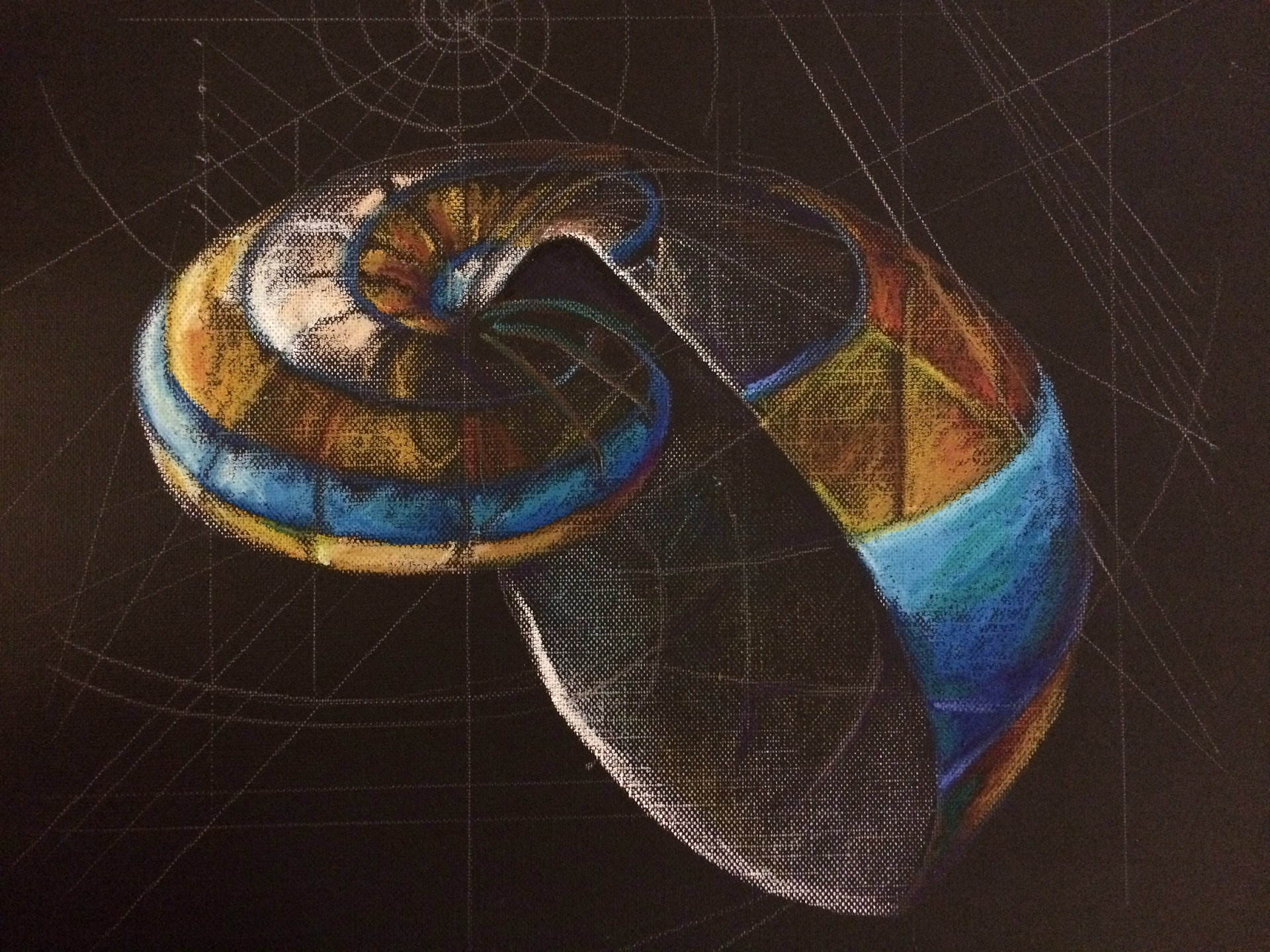
And perhaps the most famous example of all, the seashell is known as the nautilus, does not, according to the Fibonacci series, actually grow new cells, he said.
As people begin to draw parallels to the human body, art, and architecture, references to the series of Fibonacci go from tenuous to downright fictional.
George Markowsky, a mathematician who was then at the University of Maine, wrote in a 1992 paper in the College Mathematics Journal, "It will take a large book to record all the misinformation about the golden ratio, much of which is simply the replication of the same mistakes by various writers."
Most of this misinformation can be traced to an 1855 book by Adolf Zeising, a German psychologist. Zeising believed that the human body's proportions were based on the golden ratio. Golden rectangles," "golden triangles "and all kinds of ideas on where these famous dimensions originate were sprouted in the golden ratio." Since then, people have said that the golden ratio can be found in the dimensions of the Giza Pyramid, the Parthenon, the "Vitruvian Man" of Leonardo da Vinci, and a bunch of Renaissance houses. Overarching arguments were uncritically mentioned about the ratio being "uniquely appealing" to the human eye, Devlin said.
All these statements are measurably false when they're checked, Devlin said.
"We're excellent pattern recognizers. Regardless of whether it's there or not, we can see a pattern," said Devlin. "It is merely wishful thinking."
Tip me in **cointree**. http://cointr.ee/monskins
Affirmations for Money Attraction
Money affirmations will help you concentrate your mind on money, empower, and inspire you to act and do something about getting more money. They also help you become more conscious of money-making opportunities.
What would keep money from arriving?
What's stopping most people from making more money and getting more? Generally, it is for one or more of the following reasons:
They believe they don't deserve the money to have. This may be due to their experiences in their lives, education, education, or lack of self-esteem.
They don't think that they should make more money, get a better career, or make more progress in their jobs.
Some individuals are afraid to take the steps necessary to make more money. They avoid risks and start new ventures, and they tend to hold the same work, even though the pay is poor.
You do not let something good happen in your life if you keep thinking negative thoughts, and fill your mind with worries and fears. In this way, you keep money from coming to you.
When you keep worrying about your current financial condition, you continue to build the same condition and replicate it. You need to think about how you want your financial situation to be, instead.
How to repeat money Affirmations
Affirmations will help you draw cash into your life. Affirmations can yield positive outcomes combined with planning and action.
Not repeating empty phrases is the true beauty of affirmations, but repeating them in such a way that they empower you to take action, encourage you, and open your eyes to recognize possibilities.
You need to affirm with confidence and with the assurance that what you believe is either true or is in the process of becoming true to make affirmations work. It's not enough to just repeat the words with no confidence and no belief and wait for miracles.
Repeat, let me. You need to feel and believe that what you say is true, or what you say is true. Let this affirmation encourage and encourage you. Keep an open mind and take advantage of the possibilities that can arise, and that will make the assertion come true.
Repeating money claims will help you have more money in your bank account, but with constructive action, determination, and the ability to pass through the doors that open to you, you need to back them up.
Affirmations for Money Attraction
Here are a few cash affirmations. You can repeat all of them or only those that you want.
1. There is a lot of money flowing into my life now.
2. I am earning more and more money every day.
3. I'm a magnet for money.
4. Many sources of money are opening up for me.
5. I'm making a great deal of money now.
6. My feelings on money are continually pulled into my life by money.
7. I still earn more than the money I pay.
8. I love looking at my lovely bank statement.
9. To make money, I still have great practical ideas.
10. I feel happy knowing that I'm pulling money into my bank account.
11. 11. In my life, I enjoy abundance and prosperity.
12. In harmonious ways that help everybody, I always attract money to me.
13. My account at the bank is rising.
14. For anything I need or want, I've got the money.
15. Getting money and feeling financially safe is so good.
When you do not produce immediate results, do not lose faith. It takes time for negative feelings about money to be erased. It takes time to change these mental habits if you have felt bad and do not plan to better your lot. That's why before you get results, you need to continue to affirm.

How To Unlock Your Power
Your mind holds power that you might not believe. There are so many websites out there offering the key to accessing your mind's control, but the key is straightforward-you already have the control and the means to unlock it. Here are 3 life-changing tips for unlocking your mind's true power.
1. Delve under the surface
Your conscious mind is just the very tip of your subconscious mind 's enormous pyramid of intelligence and wisdom. We are estimated to use just 10-20% of our mental capacity, with the overwhelming majority of our mental strength remaining untapped. The way to access this knowledge is to tap into your subconscious mind, and the most direct way to do that is to learn how to meditate.
There are many types of meditation, but there is the same guiding principle. Meditation alters the patterns of your brain, changing them from the beta waves' regular waking state to alpha, theta and delta. Alpha is the first altered state which is associated with light relaxation and the beginning of the meditation process. In this state you will begin to be able to reach your subconscious mind. In this state you will experience waves of imaginative thinking and be able to see how ideas that might have appeared unrelated could actually be profoundly linked. Problem solving becomes easier and solutions deeper. You will gradually be able to access even deeper layers of your consciousness as you progress through meditation, and the true power of your mind will be unlocked.
Meditation can be done by anyone and is easy to understand. The practice of meditation also has several other advantages, which have been widely researched over the past few decades. Meditation, through the physical increase in both white and gray matter, leads to real improvements in the brain. It also allows a whole range of beneficial brain chemicals to be released, enhances your sense of well-being, and, among other things, improves your mood, learning ability, and memory.
As you move along the meditation route, you will certainly wonder how you could have lived without it for so long!
2. Believe in your own power
Are you caught up in your own unbelief in yourself? The secret to unleashing your true strength once you have mastered how to reach your subconscious mind is to genuinely believe you have it. All of us are casualties of our school days' entrenched beliefs-your success at school or any time past is now entirely insignificant to your ability. You need to start believing in your ability to put it into practice in your life, as meditation helps you realize your untapped potential.
3. Use the best possible fuel
You wouldn't fill it with cheap, dirty fuel if you had a Lamborghini, would you? You will need to be very mindful of what you power it with if you want your mind to work like a finely tuned, high-performance computer. The relationship between food and cognitive function has been studied a lot. You may wish to further explore this issue, but there are a few significant guiding principles. As soon as you can, stop processed 'junk' food and also consume fresh food. An essential component of your diet should also be Omega 3 oil, as there is excellent evidence of its role in promoting healthy brain function. Include plenty of vitamins, such as vitamin C-rich blueberries and meats, and ensure that you exercise regularly.
The secret to unlocking the power of your mind is actually no secret at all. You will be motivated to take good care of the gift that you have as you recognize the wonder that is yourself and your incredible mind. The simple keys to unlocking your true potential are meditation, belief, good fuel, and exercise.
Tip me in **cointree**. http://cointr.ee/monskins

The Power of the Subconscious
Your subconscious mind 's influence goes much deeper than you might expect.
No intended joke.
I 'm sure that when I say that our minds are incredibly complex, you'll agree with me.
You can be shocked, however, by how much influence we have over its programming.
Before I get to it:
Let's take a moment first to consider the fact that your subconscious mind is like an immense bank of memories. Its ability is practically infinite and anything that ever happens to you is permanently stored.
By the time you hit the age of 21, the contents of the whole Encyclopedia Britannica have already been permanently deposited more than one hundred times.
Under hypnosis, elderly people will also recall incidents from fifty years ago, with absolute clarity. Your unconscious memory is fine, virtually. It is your conscious recall which is suspicious.
Your subconscious mind 's job is to store and retrieve data. Their role is to make sure you respond exactly the way you are programmed. Your subconscious mind makes what you say and matches a pattern aligned with your "master program" self-concept. This is why it is so effective to repeat positive affirmations. You can literally reprogram your own thinking habits by slipping into positive and success-oriented sound bites.
This is why motivational practices are so impactful for individuals dedicated to positive thought, such as reading inspirational quotes. Your subconscious will start introducing a constructive trend in your way of thinking and your perspective on life by concentrating your thoughts on uplifting ideas.
The subconscious mind of yours is subjective. It does not independently think or reason; it merely obeys the commands from your conscious mind that it receives. Much as you can think of your conscious mind as the gardener, planting seeds, you can think of your subconscious mind as the garden or the fertile soil in which the seeds germinate and grow. This is another reason why it is important to harness the power of positive thinking to form the basis of your entire method of thinking.
The commands of your conscious mind and obedience of your subconscious mind.
Your subconscious mind is an unquestioning servant who works day and night to make your actions match a pattern compatible with your feelings, expectations, and desires that are emotionalized. In the garden of your life, your subconscious mind grows either flowers or weeds, whatever you plant through the mental equivalents that you make.
Your subconscious mind has what a homeostatic impulse is called. This keeps the temperature of your body at 98.6 degrees Fahrenheit, just as it keeps you constantly breathing and keeps your heart pounding at a certain rate. It maintains a balance between hundreds of chemicals in your billions of cells through your autonomic nervous system, so that your entire physical machine operates much of the time in total harmony.
In your mental domain, your subconscious mind often practices homeostasis, by holding you thinking and behaving in a way that is consistent with what you have done and said in the past.
In your subconscious mind, all your patterns of thought and behaving are processed. It has all your comfort zones memorized and it works to keep you in them. This is why making writing SMART goals a daily habit is so critical. After time, it will become part of your comfort zone to remain active and focus on all of your objectives.
Whenever you decide to do something new or different or to modify some of your developed patterns of behavior, your subconscious mind causes you to feel emotionally and physically uncomfortable. Psychological signs that the subconscious has been triggered are the feeling of fear and discomfort. But in the past, it's been working to create certain behavior patterns long before you ever experience those emotions.
One explanation that behaviors can be so difficult to break is the propensity to stick to these patterns. However, you can harness the power of habit and intentionally instill new comfort zones to which your subconscious can adjust as you learn to consciously establish those patterns.
Any time you try something different, you can sense your subconscious dragging you back into your comfort zone. You can feel nervous and anxious even thinking about doing something different from what you're used to.
This is why time management tips can be harder to incorporate at first, but they will remain in your comfort zone until they become a habit or routine. You've reprogrammed your subconscious to work in your favor by doing so.
Superior men and women often spread themselves out of their comfort zones, pushing themselves. They are very conscious of how easily the comfort zone becomes a rut in any environment. They know that the great enemy of innovation and possible opportunities is complacency.
You have to be willing to feel awkward and uncomfortable doing new stuff the first few times for you to develop, to get out of your comfort zone. If it's worth doing well, before you get a feel for it, before you develop a new comfort zone at a different, higher level of competence, it's worth doing poorly.
I strongly recommend considering the behaviors of successful individuals for those looking to extend their sphere of comfort zones, since they are the trends typically followed by the minds of great leaders and thinkers. You will be one step closer to being able to make the same things happen in your life by unlocking the strength of these habits.
Learning strategies to reprogram your subconscious mind will help you believe in yourself, as fear of the unknown will no longer question your faith. But most importantly, doing so will train your brain to be in line with your true wishes, dreams, and goals in life.
The more you get in tune with your subconscious, the closer you will be to success breaking through. You may have an idea for a book, for instance, which has been on your back burner for years. You'll take the next step with the right level of trust in learning how to write a novel, rather than clinging to the dream, but never acting.
Know that:
It is a potent key to success to take decisive action on your proposals. The first step to being primed for action is to liberate yourself from self-limiting convictions or doubts.
Tip me in **cointree**. http://cointr.ee/monskins

How to form a new habit
I want to dig into the science of how your patterns actually work today. This will help you take your new attitude and start building new habits or breaking bad habits with it.
The strength of habit.
There's an easy, 3-step cycle that follows every habit. Just about every behavioral psychologist out there has proved it time and time again. The loop is called the "3 R's of Habit Shift".
**Reminder.** The cause that initiates the actions.
**Routine.** The real actions that you undertake.
**Reward.** The profit from the action being performed.
Let's take a look at the **3 R's** with a real-life example in action.
**Reminder.** They ring the doorbell. This is the reminder that initiates your actions. For you to get up and answer the door, the sound created by the doorbell acts as a trigger.
**Routine.** You see who's on the doorstep. This is the real conduct that is being carried out. Usually, you get up to answer it when the doorbell rings. This is a habit that you have developed over your life through repeated experiences.
**Reward.** Who's at the entrance, you find out. The benefit you have earned from acting is your reward. You satisfy your curiosity in this instance by wondering who's at the entrance.
With a good reinforcement (i.e. the mailman with a package for you and not anyone to abduct you) you do this enough times and you form a positive feedback loop in your brain. Basically, you're discovering that you can answer it the next time the doorbell rings.
This is how a single action over time is transformed into an autonomous habit.
It's time to learn how to apply them and start building new habits now that you understand the science of how habits work.
**Stage 1.** Uh, step 1. For your new habit, pick a trigger
If you want to develop a new pattern, the stimulus that the desired behavior would follow must first be established.
We will take a different approach instead of doing what most individuals do and rely on will power to start a behavior.
A fool's game for developing new habits is to focus on inspiration. Motivation comes and goes, which is why when it comes to success, top performers don't handle it. Instead, by including them in everyday tasks they already carry out, they find it super easy to start new habits.
This takes out of the equation the inconsistency of motivation and helps you to form stable behaviors.
Say, for instance, you want to start meditating for five minutes per day. You can try to incorporate it into your routine at random, or you can relate it to an activity that is already part of your daily activities (say, brushing your teeth). This causes the new behavior to be activated by something you are already doing without thinking about it.
Wake up, brush your teeth, then, for 5 minutes, start meditating. You don't have to collect the willpower to meditate every day at random, it's something that you only start doing right after you brush your teeth.
The **2nd stage.** Make it extremely easy to start and impossible to fail with your habits
We all feel the desire to do too much, as we've mentioned before, too soon after getting psyched up about a new target. But actually achieving the goals, as we found, is less about the outcome and more about the day-to-day behaviors that make it a reality.
So then, the question becomes "how do we make sure that we consistently practice the required behaviors?"
Answer: make it extremely easy.
The worst thing about getting things done is beginning an operation. Once you get started, keep going and finishing is actually much easier. In action, this is Newton's First Law of Motion: An object in motion appears to stay in motion. To get going, you just need the impetus.
Let's assume, for instance, you want to start running regularly. You tell yourself that every day, you will run 2 miles. That probably seems like a daunting task for most. Tell yourself, instead, that you're just going to get out and run down the street. If you do, then it's a day of achievement. Chances are that you'll want to keep going once you get out and start running.
And even if you don't, you have at least achieved the objective of running down the lane.
In the beginning, success isn't something you need to think about. Only going out there and doing the new action is the main thing. Later on, you can scale up the level of success to your desire once it has become an automatic habit.
**Stage Three.** Rewarding yourself
Last but not least, without a reward at the end, the habit loop will not be complete. If your action does not have an immediate positive outcome, chances are you will probably not stick with it (no matter how high the pay off later). We want to carry on doing stuff that now makes us feel good.
That's why, after successfully practicing your habit, it's important to always rejoice and applaud yourself.
Strong self-talk provides one way to do this. A simple "Hell, Monskins, yeah!" "It can go a long way or a" good job. This may sound odd at first if you're not used to it, but believe me, it helps.
Another way is to recruit a partner and have them cheer you on (perhaps a boyfriend, girlfriend, spouse, acquaintance, whatever). People love to help others out and make them feel good, especially when their heart is close and dear to someone. Have fun in any way you can with this.
Now, if there was just one way to stick to your newly developed routines, even if life continues to get in the way.
Tip me in **cointree** :) http://cointr.ee/monskins

Multiverse perception
As Eurus Holmes has said. "Good and bad are fairytales. We have evolved to attach an emotional significance to what is nothing more than a survival strategy of the pack animal. We are conditioned to invest divinity in utility. Good isn't really good, evil isn't really wrong, bottoms aren't really pretty. You are a prisoner of your own meat."
It is 4 am currently and I cannot sleep so I want to delve about my opinion regarding this quote Eurus Holmes said. In my opinion, beliefs change your reality. As to whether you perceive your reality by duality, meaning that there is a particularly good or bad. You should consider a more flexible option in which I do which is multiverse perception. The shades of black and white can be perceived as the shades of grey. If you are reading this then, probably this is relevant to your story. Maybe. I don’t know. That would be so interesting as to how great my words have reached you. It is so mysterious. It is so magical.
Your personality is preprogrammed by you, by society, family, etc. In Sherlock Holmes BBC I am fascinated by Eurus as to how very little she was on the plot, and yet I understand it so well. The mystery that was brought. She can preprogram other characters on the series by Neuro-Linguistic Programming alone. In which a normal person would not even know. In my case it is relevant. I am familiar with Neurolinguistic programming.
Sherlock, of course, has perfect memory by the use of mnemotechnics which is not thought today in the schools so that children would get stuck on to how difficult it is in memorizing data. No one thought this and I am very disappointed. I found it by myself of course, since I know that everything is easy because it all depends on you anyway. I digress.
Now back to the topic. Perception is like magic. So it is my belief that everything that you perceive is possible. That is why everything that I have been experiencing has been very interesting and magical. Yes, everything is possible. Because through what you perceive, that’s what you will really get. You are the one who makes up your belief constructs, whether you perceive it to be good or bad. In truth. The truth is, there was no perception before all of this. It is just on your mind. It is just a label. It is just a story. Think about it. You can change your story however you want it to be. There are only shades of grey. There is no black and white, or good or bad. It depends on how you see it. It all depends on your truth. Is this perhaps good in your opinion or bad in your opinion? Or no label at all? You choose. It is such an amazing quote. Since a normal average Joe would think that Eurus is bad. As she even controlled Moriarty. Isn’t it? Is she?
Did I stir up you for a second? Tip me. Here is my **Cointree** http://Cointr.ee/monskins

I Kept Checking my Pi App
So I kept on touching the pi app on my phone. Sometimes I forgot it, sometimes I just remember. So I am writing about my opinion today here on read.cash. I want to update again everyone about my opinion of the pi network. Join here in my link if you have not yet joined. https://minepi.com/alyinwxnderland
As for the pi coin as you can see that I have been mining a lot already and was still mining up until today. Sometimes I do not open the pi app. Maybe if I am busy or if I forget about it. Maybe they should make a button feature wherein there is no need to come back to push the button for mining. I don’t know why I have to push the button everyday no?
But in terms of its legitimacy. As there was a lot of negative reactions among some read cash users before that pi coin is just a scam. In my opinion it is not a scam. Because their social medias are already verified. In twitter and other social medias to follow. There are a lot of users who joined already including me. And yet the digital currency cannot be exchange still. So it has no value whatsoever currently. It is like a latent energy that is being stored in my opinion.
Anyways there are ads that are being shown as everyday people must open the mining button on the platform’s dashboard. Other than that I have no idea if when is the pi coin digital currency can be exchanged. Anyways they have the white paper for thorough speculation. I do not think that they collect data. Unlike Facebook. The data on Facebook is very vital. As I am going to venture a business. Again I will announce it here when it is done.
If you would ever like to download the latent energy on my opinion you can just follow my link to register. https://minepi.com/alyinwxnderland It is here that when you will start. I guess in a single click everyday, this would not really lose a lot of your precious time. I wonder when this pi coin currency can be exchanged but to have 1k plus in my wallet I hope I can exchange it soon.
Hello is there any e commerce domain Hosting platform using cryptocurrency for payment gateway?
Trillionaire Mindset
Do you know what a trillion dollars will make you do? Will you buy a private jet or dune buggy fleet, or dine on gold-plated chicken wings, perhaps? Or would you just withdraw and burn a big pile of cash for fun?
Some amounts of money are so high, they defy imagination: Mexico's gross domestic product is just short of a trillion dollars. So, for some reason, it would take more than 16,000 years to collect a billion dollars on the median US household income of just under $60,000, assuming you didn't spend any of it. It will take you over 16 million years to make a trillion.
With a market cap of $1 trillion, Apple recently became the first US-listed firm. So how long will it be before the same milestone is surpassed by a person and what will they have to do to get so filthy rich?
Been there, done that: we would have had the first trillionaire already,
Hyperinflation created a lot of trillionaires in Zimbabwe 10 years ago, but it's probably safe to assume that they do not count in a currency so useless that a Z$100 billion bill will cover only one ride on a public bus.
However, for ancient rulers, financiers and kleptocrats, there's a better scenario. It is very tricky to estimate their income, but a few regularly make the list. King Mansa Musa of Mali had so much gold that his wealth was literally beyond understanding.
Other rulers had immense resources, both in the Middle Ages and in ancient times, but it's difficult to gauge just how much. The Roman Emperor Augustus Caesar's fortune was measured by Stanford historian Ian Morris at around $4.6 trillion, but he acknowledges these numbers need to be taken with a fistful of salt.
Even people like you and me can watch TV today, use the Internet or walk into Boots or Walgreens and purchase medications such as Viagra or Prozac for which Roman emperors would have offered their hind teeth. We're wealthier in a way than Augustus, and yet he was wealthier in other ways, on a scale that makes Donald Trump look like he's on the minimum wage, he notes.
Putting people with robots out of jobs
Many futurists assume that the first trillionaire is going to make their fortune from inventions that make the technology of today seem a little ancient. In recent years, artificial intelligence ( AI) has advanced in leaps and bounds, and its future applications could affect virtually every corner of our lives. Companies invest heavily, and at least one billionaire thinks it's a solid investment.
But how exactly can AI build tycoons? There are several possibilities. "For drug development and design, machine learning is already being used. Imagine a modern AI-engineered medicine that can dramatically increase the lifetime of people or cure Alzheimer's ... Martin Ford, the author of Rise of the Robots: Technology and the Prospect of a Jobless Future, says that will certainly result in huge wealth.
The threat, however, is that the killing of workers is a trillion-dollar fortune. If a computer can do the same job without demanding wages, holidays or health benefits, why employ a human? A smaller workforce doing the same job could lead to more cash floating to the top. AI could replace as many as 800 million jobs, the consultancy McKinsey reports.
In the 19th century, these concerns and threats had many similarities. The industrial revolution, like today's age of digital change, fueled a major shift in the economy and made some people incredibly wealthy. Cornelius Vanderbilt made a fortune from rail and shipping, while John D Rockefeller made his oil fortune and was probably the first billionaire in America (although this is contested), although Henry Ford was the second carmaker. All were undoubtedly richer than the founder and CEO of Amazon, Jeff Bezos is today, adjusted for inflation (but again, comparisons need to be handled with caution).
It is up for discussion precisely how the potentially wrenching economic transition of this century will play out. Some assume that the focus of work will simply change (similar to the industrial revolution before it) and we will simply end up doing various kinds of jobs. Others feel the change could be more profound, and as AI progresses and takes on an growing array of positions, it could leave some employees permanently unemployed. And how easily things are going to change is hard to predict.
"It's certainly a good possibility if the AI is leveraged (something that seems inevitable) for work automation," says Martin Ford. "On the other hand, if the generation of wealth results mainly from exploiting AI in financial markets or biotechnology, then the effect on labor markets might be less immediate, but possibly still unavoidable once technology scales through other industries."
Cryptocurrencies
There are bloody evangelists and pump-and-dump scammers in the crypto-world. But in a very short time, it has made a diverse community of individuals wealthy. In early February, Forbes assembled a list that indicated that there were at least a few potential billionaires, including the Winklevoss twins and Ripple's (XRP) founder, Chris Larsen, who, according to the New York Times and other US media, briefly became one of the richest men in the world at the height of the crypto craze.
"In many respects we never imagined in the past, there are a lot of innovative people finding out how to monetise this," says Thomas Frey, a futurist who has written extensively about the sectors that would produce the first trillionaire. "Right now, there's so much activity in that room. And so many people are interested, that there's the opportunity to scale it up quickly.
Bitcoin made the most headlines, with 1,318 percent growth during 2017, but when it comes to rapid growth, it wasn't even near the top of the list. Other well-known cryptocurrencies, such as Litecoin and Ethereum, grew faster, while Ripple (XRP) grew 36,018 percent in the same period , meaning that by the beginning of 2018, $100 invested in Ripple in January 2017 would have risen to over $36,000. With such high returns, it's easy to see how investors, if they cash out, can get rich really fast.
However, any triumph could be temporary. It has been shown that cryptocurrencies are exceptionally unpredictable. It was out of date until it went to print when Forbes produced its list earlier this year, with many of the richest (like the Winklevosses) falling below the billion-dollar line until publication.
So, a wealthy and reckless tycoon, making a massive casino-style bet on a cryptocurrency and getting lucky, might be the first trillionaire. But Thomas Frey says that anyone who crosses the threshold of twelve figures this way may only survive for a day or two in the stratosphere until gravity teaches them a lesson.
Rock tycoons of the moon
The planet has limited natural resources, such as oil or diamonds, but it seems that our appetite for them continues to expand. For some metals used in electronic parts, that's especially true. And if we can't find what we need on earth, someone may be able to make a fortune finding them somewhere else.
There are several riches to be gained in space, according to the website Asterank, which estimates the mineral and benefit potential of known asteroids. Deposits worth over $100 trillion could be concealed by the most valuable asteroids.
"According to Takeshi Hakamada, founder and CEO of ispace, a company that hopes to land on the moon and ultimately benefit from it too," The space resources market is an untapped market and it will definitely be a lucrative one, so there is a great opportunity, particularly for early investors.
The problem , of course, is that recovering these riches is incredibly costly. Many corporations have gone bankrupt searching for gold here on earth, so the financial risk of doing the same in space is obvious. But Hakamada says there is a longer game. Extracting resources is only the first step in building an entire space economy.
The use of resources would only be the starting point for opening up other business opportunities in space. When resources are established, businesses will be able to view the Moon as an extension of their company on Earth, allowing individuals to live and work on the Moon, he says.
Fountain of Youth
Immortality has long been a human dream, and any number of studies, both conventional and eccentric, have been the focus of it. A few people have cryogenically frozen themselves in the event that medical research catches up with whatever killed them.
Other options are also being looked at by major players. A billion-dollar research company called Calico, which studies the ageing process and focuses on "moonshot" strategies that prolong life, has been funded by Google.
The market is fairly simple, and Thomas Frey says it's easy to see how in a very short period of time a cost-effective solution promising immortality will scale up. Frey points out that if someone on earth spent $10 a day on a pill to keep them alive, and it was basically a life-or - death decision to continue taking the pill, whoever made the pill would be incredibly wealthy.
Science, however, is so fresh and so untested that it's hard to find out which strategies are promising and which ones are not.
We saw the first trillionaire, but there are no trillionaires yet.
Let's just say it: there's a fair chance Amazon creator Jeff Bezos will be the first trillionaire. He 's got more than $150bn in fortune, which means he 's got a $50bn head start on the next richest man, Bill Gates, who's too busy giving his money away to catch up.
The world of business is always fickle, and a poor stock market week could wipe out a lot of that money overnight. Yet Amazon seems to be getting stronger at the moment. When Amazon reveals that it will close in on their turf, whole sectors now tremble. And its earnings, much more modest than its enormous sales for a long time, are rising.
Also, nothing is as good as wealth itself in generating wealth. And one calculation indicates that, to stop gaining more money, Jeff Bezos will have to invest $28 million a day. Oxfam research has found that the wealth owned by the super-rich has risen by an average of 11 percent a year since 2009. We might see the world's first trillionaire in 25 years if billionaires manage to secure these returns. Not everybody buys that calculation, but the richest person in the world will have to be a candidate, no matter what.
Are we going to have trillionaires?
The claim in favor of vast wealth is that it is a reward for innovators who change the way we live profoundly, and typically for the better. A trillion-dollar wealth might come from a large, productive business that generates employment and provides valuable goods and services. But is it really going to occur that way?
Sure, wealth honors creativity and hard work to a certain degree. But it doesn't, to a large degree,' says Ana Caistor Arendar, head of Oxfam's fight for injustice.
On the back of creativity, not all fortune is earned. Some of the affluent inherit their estate, while others inherit a head start at least. They have the means to more conveniently escape taxation than the rest of us. Often, their firms pay low salaries to citizens in developed countries. She claims, in short, that a trillion-dollar fortune might come at everyone else's cost.
But reigning in vast wealth is tricky. The highest marginal tax bracket hit 90 percent in the US in the middle of the last century, but relatively few paid it in practice because it was based on profits rather than savings. And the affluent employ good accountants who help them retain as much of their money as they can legally.
Few governments have shown any particular recent interest in these measures being revisited. Then again, governments were motivated into motion by the vast inequalities in wealth of the gilded age. Perhaps governments may feel forced to behave as the super-rich demand an ever-greater share of the pie.
But if they don't, then it could only be a matter of time for the first trillionaire.
Did you like reading this article? Support me in **cointree**. http://cointr.ee/monskins
Become Who You Are..
At the age of 19 and again at the age of 36, Professor John Kaag set out on a journey of self-discovery, both times hiking the mountains where Nietzsche wrote some of his most lasting and influential works. Thus, the latest book by Kaag, Hiking with Nietzsche, serves as an autobiographical confession of misunderstanding and an introduction to Friedrich Nietzsche 's philosophy. Ultimately, Kaag reflects on an obscure injunction from the ancient Greek poet Pindar that Nietzsche borrowed: Become who you are. What does that haunting expression mean? What does Nietzsche command? And how will he help us to make this happen?
"Become who you are" in the sense that you are who you are now, is paradoxical, and so there would appear to be no need to alter. The transformation or becoming, however, is a matter of developing into oneself, maybe the way a caterpillar becomes a butterfly or a plant becomes a seed. Kaag says, "The argument of Nietzsche may be that the self-discovery process needs to erase the self-knowledge that you believe you already have." Becoming is the continuing process of losing and discovering yourself. This is definitely the message of the Siddhartha of Hermann Hesse, a novel that Kaag contemplates for Nietzsche to make sense of.
In Siddhartha, in search of his true self, the title character leaves home as a young man. He leaves his dad's house and joins a party of wandering monks. From there, the modifications keep coming. The self does not lie passively in wait for us to discover it, as Kaag claims. In the active, ongoing phase, selfhood is formed... The enduring essence of being human is to transform into something else.'
Siddhartha undergoes a sequence of deaths and rebirths that are metaphorical. He dies in the life of a young Brahmin to become a wandering monk; he dies in the life of a wandering monk to become a courtesan-loving worldly merchant; he dies in the life of the world to become a ferryman 's apprentice. He learns to listen to the river under the guidance of the ferryman and learns the harmony of all things, realizing that his real self is not anything different and secure. Rather, like the river, in a constant phase of transition and being, his true self connects everything. The story fits well with Nietzsche 's interpretation of Kaag: "Die as soon as you can, so that, like a morning flash, or spring after a brutal winter, you can come to life again." Nietzsche would like us to die, to get out of our own way, so that our position could be replaced by someone else. "In order to be able to become what we are".
Maybe both of us are still works in progress. It doesn't mean that you hit a height where no further improvement is required to become who you are. You never really arrive at a destination where you can only be who you are. You still have to be in the process of being something. Being born means beginning to die. To become who you are is to still be in the process of dying so that you can become someone else in one form of being. The metaphorical deaths and rebirths in Siddhartha are, for this purpose, resonant.
However, not everyone becomes who they are. Instead, a doctor, an American, a mother, a father, a lot of people try to make something set and secure out of themselves. Yet we are, as Sartre would claim, none of these things, in nature. Our nature, instead, is in a constant state of self-creation and modification. To believe otherwise, to believe that the equilibrium of a thing has been accomplished by us, is to be in what Sartre calls bad faith. To become static is to be rigid, like a corpse, to become. By comparison, being versatile and evolving is the nature of life.
As examples of utter performance, Nietzsche and Kaag do not give themselves. Kaag's journey did not reach its final destination at the end of the hike with Nietzsche. But he forced himself farther down the road, dying for one way of life, to be resurrected for another. And the route still leads onwards. Hesse tends to provide optimism for the likelihood of a conclusion, unlike Nietzsche. After several life changes, Siddhartha's title character achieves enlightenment.
Nietzsche would have dismissed such a story as giving false metaphysical comfort, and he might be right. But we are facing a fate not much better than Sisyphus, cursed to roll a rock to the top of a hill every day only to see it roll back down, with no end in sight and only endless struggling ahead. However, Camus tells us that the struggle to the heights is enough to fill the heart of a man-we have to picture Sisyphus happy.
If the battle to the heights is not enough to make us happy, unlike Sisyphus, we should look to our children. Nietzsche does not have much parenting advice to give, but Hesse 's tale of Siddhartha focuses on the love between fathers and sons (as I've written about in another post). We want our kids to be safe and discouraged from making the same mistakes we created. But eventually, to become who they are, we must understand that each child must walk his or her own path.
Thank you for reading. Support me in **cointree**. https://cointr.ee/monskins
How to Create Art
Creation of goods, web design, free-style rap, poetry, cooking, painting, music, how you make your bed in the morning, what are we talking about here?
All. All.
We all have imagination inside us, from forward-thinking tech-product executives like Ryan Hoover, to the barista who serves your coffee art. Here's a hit list of things no one taught you about being creative:
It can be achieved by anyone.
Do it if you want to be imaginative. Forget the bias that for the lucky few, imagination is spared. You can be imaginative with a willingness to learn and the ability to start. So, just get rolling.
Stealing imagination.
Art is theft. As Pablo Picasso have said it.
I actually took the idea from the novel, Steal Like An Artist, by Austin Kleon, for this column 's title. His subtitle was my title, and it became the inspiration for writing this work. For meta, how's that?
This is seen in all disciplines, with blaring hip hop examples emerging. How many times in another rapper 's song have you heard your favorite rapper's refrain, sound byte, or voice?
Pablo Picasso is frequently quoted as saying, "Good artists copy, great artists steal." There are countless examples of artistic "borrowing from one another," from web design, writing , music, to cooking.
Your artistic role models should be freestyle rappers.
Speaking of rap: This research shows freestyle rappers' brain scans with the objective of understanding the neuroscience behind the skill.
"We conclude that what we see is a relaxation of 'executive functions' to allow for the occurrence of more normal de-focused attention and uncensored processes that may be the hallmark of innovation," says Allen Braun, a U.S. neuroscientist. Global Institute on Deafness and Other Disorders of Speech in Bethesda, Md.
The rappers were able to detach themselves from the rational thought that exists in their minds in layman's terms, so that the artistic side might come through. Blown mind indeed.
There are countless research that have shown that imagination is a trait that has been learned. George Land had one of my favourite studies completed.
Land measured the imagination of 1,600 kids in 1968. At 10 years of age and again at 15, he re-tested the same twins. The findings were staggering.
Test findings among 5-year-olds: 98%
Test results among people aged 10 years: 30%
Test results among people aged 15: 12%
The same exam that was offered to 280,000 adults: 2%
"What we have concluded," Land wrote, "is that they are learning non-creative behavior."
Wow. This should give us even more justification for going against the standards of society.
It can be enhanced.
Here are some ways to develop it: to experiment, to explore, to challenge assumptions, to use creativity and to synthesize data.
ADHD is excellent.
Latent inhibition is the capacity of a person in the world to ignore irrelevant details, an essential skill in navigating a place so complex. However, individuals with low latent inhibition, such as those with ADHD, have less of a filter, and apparently meaningless information around them is more likely to spot. You could say their power of rationality is constantly subdued. They are more likely to make unexpected correlations as a result.
All principles matter.
A domino effect can be generated by one concept. Steven Johnson writes in his novel, Where Good Ideas Come From, that "creativity occurs when seemingly unrelated existing ideas collide to form new ideas."
Make use of it or risk losing it.
Creativity is a muscle that, with constant exercise and healthy habits, can be created.
Tony Schwartz and Swedish psychologist Anders Ericsson found that, integrating their research on creativity, "it is possible to develop any given skill or ability in the same structural way we do a muscle: push beyond your comfort zone, and then rest. It is not hereditary talent that decides how good we are at something, but rather how hard we are willing to work."
Just look outside.
The world around me is where much of my personal inspiration comes from. Usually, the moment I want to "get in the zone" and begin to get creative is the moment I feel the creative block. Exploring the wide open eyes of the universe will provide you with the imaginative fodder you need.
Creativity is limitless.
Everything you're seeing is a development. It is always life, whether you believe in a master creator or in evolution. I might go off on a tangent, but I will give you a related Steve Jobs quote instead:
**Life can be much broader once you discover one simple fact everything around you that you call life was made up by people that were no smarter than you. Shake off this erroneous notion that life is there and you’re just going to live in it vs. make your mark upon it. Once you learn that, you will never be the same again.**
For inspiration, use nature.
Have you recently looked outside? From the smallest of insects to the infinite expanse that the cosmos is, the world is full of wonder. All in nature is splendid. No better inspiration here.
It's a choice taken consciously.
Job, time and energy are needed for creativity. It's a lifestyle choice to be innovative.
All the time, take notes.
I am recording it all. I've got my memory palace or method of loci in my mind for spatial storage for perfect recall I use memory pegs.
Fck Opinions
Create what you want, write what you want to read, build what you want to use, prepare what you want to eat and share it with the world. If the world is reacting positively — cool. Who cares if not? You're doing something you love, at least. Maybe you will enjoy the future, and maybe you will not.
Support me in **cointree**.
Hello everyone has someone have tried mining In Yobit? Is it legit? Because I want to try.
What Is Abundance?
Do you ever ask yourself what abundance is and how in your life you can manifest it?
What does it mean to have abundance and how do we describe it?
Let's describe the abundance and try to find its significance.
Description of Abundance and Meaning.
Abundance means abundance or a very large amount of something.
It is the inherent urge to manifest, evolve, and become more of nature and of life.
It is the urge of the life force to generate more and generate more of everything. New trees, new plants, and more fruits are still there.
New ideas are constantly being invented; new cars are being manufactured; new houses are being constructed and new jobs are being created.
Scientists believe the universe is continually growing and evolving, and new stars are being formed. On a celestial stage, this is abundance.
Abundance is everywhere in the World, and if you let it, it will manifest in your personal life, too.
People also equate money with abundance. Wealth is abundant, and possessing a lot of money is abundant, but in many other respects, abundance appears not only as a lot of money and belongings.
"According to Merriam Webster, the concept of abundance is:" A sufficient number.
The Cambridge dictionary definition of abundance is: "The condition in which everything is more than enough."
What is abundance, and how does it manifest itself?
What does being plentiful imply? What areas of life is it manifesting in?
There are many items in abundance, and here are a few of them.
In passion, there is plenty.
Friendships are plentiful.
Opportunities are plentiful.
There is plenty of entertainment.
There is food in abundance.
An abundance of good deeds is probable.
Owning an abundance of energy is feasible.
There are plenty of trees, grass, and water.
You will build an abundance of time for yourself to do what you want.
You should also have in your life an abundance of spirituality.
All on this planet is in abundance. This abundance will not be available to you, so you alienate yourself from it and prevent it from manifesting in your life.
This term also stands for fullness, abundance, wealth, lovely, profuse, and luxurious.
"Consciousness of abundance" means being conscious of the nature of abundance, of experiencing and interacting with it in your life, even though at this moment it does not seem to be a part of your life.
This kind of knowledge of consciousness opens your eyes to see things all around you and to consider possibilities. "Abundance knowledge" cuts through your mind's restricting convictions and opens your mind to greater possibilities and a greater point of view.
It's because you don't let yourself dream in infinite ways if you believe like you are not part of the richness of the Universe. You restrict your thoughts to the things that actually exist in your life, and do not widen your imagination and horizons to greater possibilities.
In the World, there is plenty, and everyone is part of it, regardless of where he or she lives, and regardless of one's condition and circumstances. You need to open your mind to it, experience it, and anticipate it in order to share in the abundance.
Visualization is one of the ways to open up the wealth of your mind and draw it into your life. What you dream and believe you will eventually accomplish.
The repetition of affirmations is another way that will help you manifest abundance in your life. The gate to success can be opened by these optimistic statements.
Thank you for reading. I hope you enjoyed this as much as I did, and I hope you manifest the abundance that is already inside of you. Support me in **cointree**. https://cointr.ee/monskins
Who Are Anunnaki?
When you think about ancient cultures, what comes to mind? Maybe you'll think of the Romans. Perhaps Maya is popping into your brain. Perhaps you are speaking about Australia's Aboriginal people. Another great ancient civilization is today's Wonder of the Day — the Sumerians.
From 4100 B.C.E. until about 1750 B.C.E., the Sumerian civilization existed. The word "Sumer" meant "the land of civilized kings." One of the first groups to divide time into hours and minutes was the Sumerians. They also had a complex religion called the Anunnaki, which included gods.
The Anunnaki is considered to be in charge of the destiny of the Sumerians. Members of the Anunnaki passing judgement on humans were interested in many myths. In addition, as children of the Earth and the sky, the gods were identified. Most people chalk up mythology to these legends, the same way the Greek gods do. Others, however, wonder if there's more to the story.
The Anunnaki may have been human beings, some researchers say. One common hypothesis is that, from another world, they came to Earth. Some claim that they originated from the ancient Planet X, which they think passed thousands of years ago close to Earth.
Why would aliens come and pose as gods on Earth? To, of course, enslave the human race! Believers in this theory suggest the Sumerians were compelled to mine gold for them by the Anunnaki. Then, the Anunnaki returned to Planet X when they had what they wanted.
Some also go so far as to claim that the Anunnaki were a reptilian humanoid race. They think that these reptiles helped the Sumerians improve their writing and mathematics systems. In addition, they believe that reptiles are still around today and are wielding influence in the human world.
The Anunnaki, were they real? Or were they gods of myth? We're going to let you decide for yourself. But there is one thing for sure — these ancient Sumerian gods still fascinate people today.
Thank you for reading support me in **cointree**. https://cointr.ee/alyinwanderland
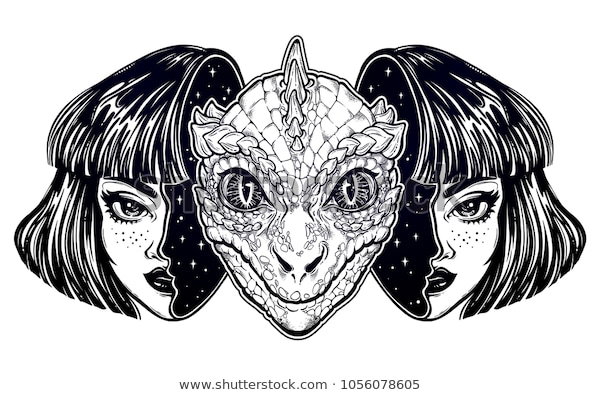

Styling My Jewelries and Halo Engagement Rings
I have received a lot of accessories before from my online fashion sponsors and what astonishes me is ear cuffs. Not that I wear them all the time. I wear them sometimes if I am in the mood. So I want to share with you and everyone especially if you are an enthusiast. Anyways you can read further in my post about **styling my jewelries****.** https://www.alyinwanderland.com/2020/09/styling-silver-ear-cuffs-layered.html
The following post which is another article in my blog that I want to share today is about **Halo Engagement Rings**. The advices and tips about how a man should carefully and think about the ring that is suited for the endeavor of their engagement, the focus is a halo design model. https://www.alyinwanderland.com/2020/09/halo-engagement-rings-all-you-need-to.html
Thank you for reading and support me in **cointree**. https://cointr.ee/monskins
 @Monskins