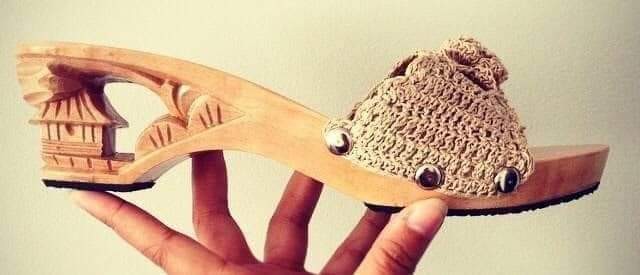
BAKYA The Bakyâ or wooden clogs were once the most commonly used footwear in the Philippines before the introduction of rubber sandals. This footwear is made from local light wood like santol and lanite. It is cut to the desired foot size before being shaven until smooth. The side of the bakyâ is thick enough to be carved with floral, geometric or landscape designs, a unique method in Southeast Asia for the artist's application of oneself towards the clog. The bakyâ could also be painted or varnished on the specification of the person who would wear it. Uppers of traditional rattan, sinamay or tight cloth will then be fastened using clavitos (tiny nails). The finished product has been a symbol of the masses since its popularity. However, since the early 21st century, the usage of the bakyâ has been revived by the upper classes of society, effectively changing the symbolism of the footwear from mass representation to holistic societal representation. The bakyâ has been proposed as the National Slipper of the Philippines since 2014. Credit : Philippine Heritage and History
No comments yet