 @Milan1999
more from that month
@Milan1999
more from that month
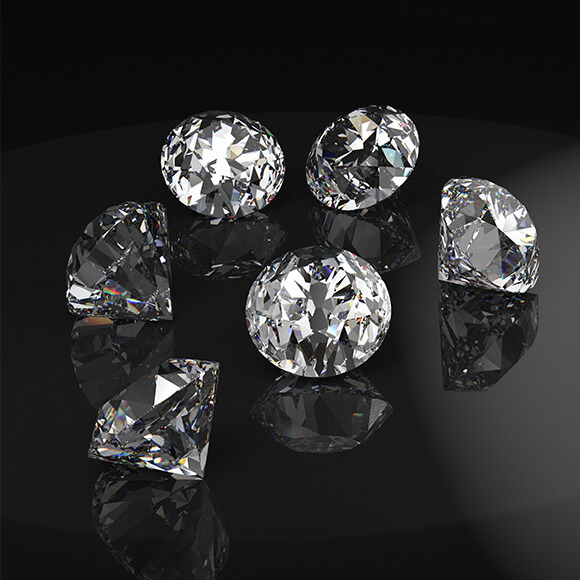
Diamond (Greek adams - invincible) is a colorless, crystalline substance with a high refractive index. The hardness and ability of a diamond to refract light are a consequence of its structure. The structure of the diamond corresponds to sp3 carbon hybridization. Diamond is an allotropic modification of carbon. The carbon atoms in a diamond occupy a tetrahedral structure, each carbon atom has 4 sigma bonds. A diamond is a metastable carbon allotrope, with carbon atoms arranged in variations of a tesserae crystal structure called the diamond lattice. Diamond is less stable than graphite, but the rate of conversion from diamond to graphite is negligible under standard conditions. Diamond is known as a material with superlative physical qualities, most of which originate from a strong covalent bond between its atoms. In particular, diamond has higher hardness and thermal conductivity than any material. On the Moss hardness scale, it occupies the highest place with a hardness of 10. It is the hardest mineral in nature. [4] [5] These properties determine the main industrial application of diamond in tools for cutting, grinding and polishing other softer materials, and in scientific applications in the form of diamond knives and diamond anvil cells. The word diamond comes from the ancient Greek word ἀδάμας - adámas "unbreakable". Diamond Brillanten.jpg The refraction of light on a round-brilliantly cut diamond shows numerous reflections. general information Category Mineral Formula C Crystal systems Teseralna [1] [2] Identification Molecular weight 12.01 gm The color Typically yellow, brown or gray to colorless. Rarely blue, green, black, off-white, pink, purple, orange, and red. [3] Crystal habitus Octahedral Vaccination 111 (perfect in four directions) Fracture conical Moss hardness 10 [3] Gloss Shine (mineralogy) Adamantine [3] Scratch colorless Providence Transparent to subtransparent to translucent Specific weight 3.52 (+/- 0.01) [3] Density 3.5-3.53 Gloss polishing Adamantine [3] Optical properties Single refractive [3] Refractive index 2.4175-2.4178 Double refraction no [3] Pleochroism no [3] Dispersion 0.044 [3] Ultraviolet fluorescence colorless to yellowish - inert to strong in a long wave, and typically blue. Weaker in the short wave. [3] Absorption spectra in pale yellow stones the line 415.5 nm is typical. Processed and hardened diamonds often show a line around 594 nm when cooled to low temperatures. [3] Due to its extremely rigid grid, it can be contaminated with a very small number of types of impurities, such as boron and nitrogen. A small amount of defects or impurities (about one in a million lattice atoms) color diamond blue (pine), yellow (nitrogen), brown (lattice defect), green (radiation exposure), purple, pink, orange, or red. Diamond also has a relatively high optical dispersion (the ability to disperse light of different colors). Most natural diamonds are formed at high temperatures and pressures at depths of 140 to 190 km (87 to 118 mi) in the Earth's mantle. Carbon-containing minerals provide a source of carbon, and growth occurs over a period of 1 billion to 3.3 billion years (25% to 75% of the Earth's age)]. The diamonds were brought close to the Earth's surface through deep volcanic eruptions of magma, which cooled into igneous rocks known as kimberlites and lamproites. Diamonds can also be produced synthetically using the HPHT method, which roughly simulates conditions in the Earth's mantle. One alternative and completely different growth technique is chemical vapor deposition (CVD). Several non-diamond materials, including cubic zirconium and silicon carbide, are often referred to as diamond simulants because they resemble diamond in appearance and many properties. Special gemological techniques have been developed to distinguish between natural diamonds, synthetic diamonds and diamond simulants. By cutting and polishing the diamond, a diamond was obtained, which is used as jewelry. Polishing is performed with diamond dust. The measure of the mass of a diamond is carat. One carat = 0.2 grams Diamonds are mined in mines. The world's largest diamond producers are Russia and South Africa. The production of artificial diamonds is performed in a steel container - an explosion, because then there is a lot of pressure and temperature in the container. Artificial diamonds are used for industrial purposes. The Russians developed the technology to paint diamonds in this way with different colors. Industrially produced diamonds are not as large as individual specimens that can be found in nature, but that is not their purpose.
No comments yet