 @Milan1999
more from that month
@Milan1999
more from that month
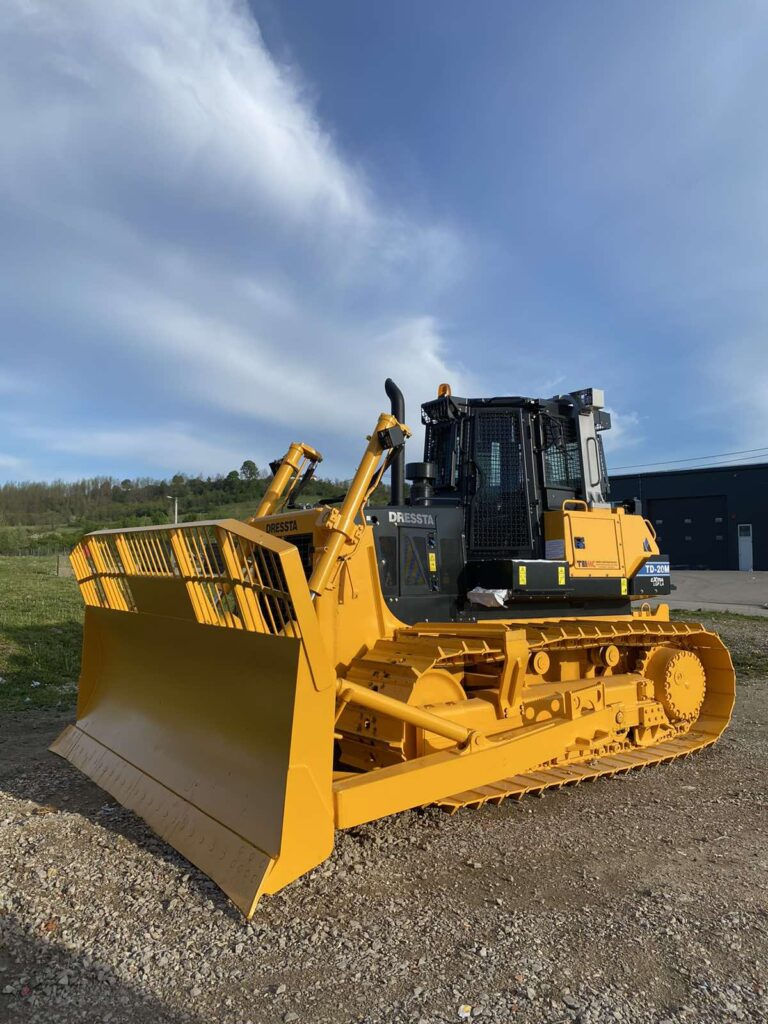
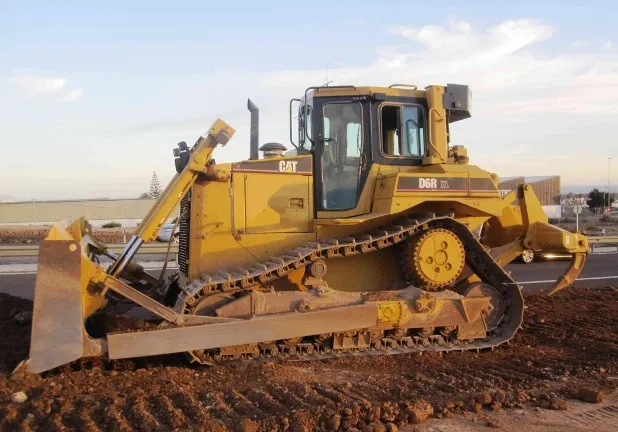
Buldozer The bulldozer is one of the most needed machines in almost every surface mine, because it performs a number of auxiliary works and operations in the production processes of discovery, extraction, etc. [1] Bulldozers are divided into small (up to 100 kW), medium (100 - 250 kW) and large (> 250 kW) power. According to the transport device, there are bulldozers on caterpillars and on wheels, which can also be articulated. According to the position and positioning of the working body (plow) during work, bulldozers with a fixed plow differ in relation to the longitudinal axis of the basic machine, which can only move in the vertical plane, angldozers with a movable plow, which can be placed at an angle to the longitudinal the axis of the basic machine and tiltdozers if the movable plow can be tilted by a certain angle and in a vertical plane. Wheeled bulldozers, especially all-wheel drive, have recently been increasingly pushing crawler bulldozers, especially for lighter work, longer distances of rock material transport and relocation, greater distance of work sites and surface mines where they achieve significantly higher capacity and lower costs. A major disadvantage of bulldozers on wheels is the limited traction force due to the adhesion of the wheels to the ground, especially on wet clay rocks and bad climatic conditions. For such conditions, caterpillar bulldozers still remain irreplaceable.
No comments yet