 @Milan1999
more from that month
@Milan1999
more from that month
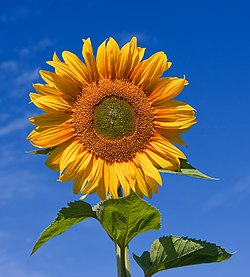
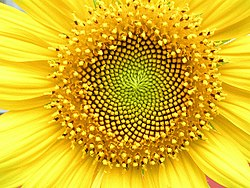
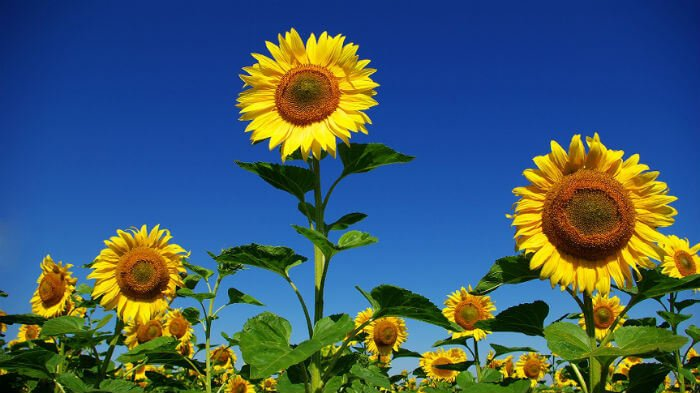
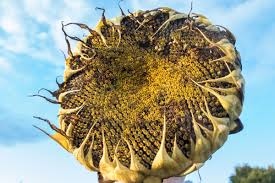
Sunflower Sunflower (lat. Helianthus annuus) is an annual plant, whose botanical name Heliantus comes from the Greek words (Greek helios - sun and Greek anthos - flower) from the family Asteraceae. Sunflower is the largest plant in the Heliantus family. Its root is shaggy and fibrous, composed of many small roots. Its root can penetrate up to 3 meters in depth. Due to its roots and ability to absorb water and harmful substances, sunflower is often used to drain wetlands and clean contaminated soil (wastewater, lead and radioactive substances. The tree is 50-250 cm high. The highest recorded sunflower tree was 9.17 m. [ 2] The tree is of varying degrees of branching: the leaves are large, simple, coarse, rough, often covered with hard hairs, with a long stalk, opposite or alternating. the bottom is usually flat, rarely slightly convex. The flower disk is spirally arranged. In general, each flower (floret) is approximately the same oriented towards the next at a golden angle, 137.5 °, thus forming a pattern of interconnected spirals, with the number of left spirals and the number of right spirals being successive Fibonacci numbers. Typically, there are 34 spirals in one direction and 55 in the other; however, in very large sunflower heads there may be 89 in one direction and 144 in the other. This pattern produces the most efficient mathematically possible packaging of seeds inside the flower head.
1 comment
I remember as a child with my grandmother in the village when we were picking corn. There were a lot of beautiful sunflowers. We even ate green seeds, there was a lot of milk and yet it was delicious