 @Milan1999
more from that month
@Milan1999
more from that month
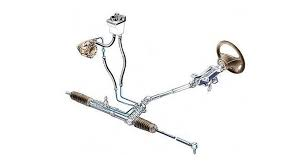
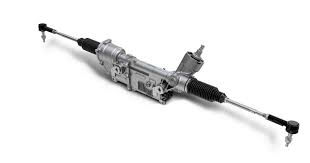
Steering rack - its failure is not a joke! Steering rack and power steering - how are they designed? In theory, there are two types of slats - worm and toothed. For the first, the days of glory are long gone, while the second has been popular for years. What is interesting is that it is a component of ideal construction that is used in smaller city cars, as well as in super class F sedans. The rack is simple, takes up little space, is cheaper to manufacture, has excellent efficiency, allows quick reactions to steering wheel movements and does not require any service. It is assumed that it should last the entire period of use of the vehicle. But in practice, it doesn’t look so fabulous. https://www.frecious-plus.com The steering wheel is mounted on the steering wheel axle. The steering axle can have two or even three extensions, which are interconnected by means of cardan joints. Why? The axle that connects the steering wheel to the steering rack can steer at almost any angle, making it easy to place equipment under the grille. The end of the steering axle is located under the bonnet and ends with a gear. It is a type of gear of very small diameter. The steering rack has the shape of a roller of small cross-section, located transversely in the engine compartment, a few inches behind the wheel axle (looking from the front of the car). Inside this roller there is a metal bar in special guides. There are also metal teeth on the bar whose task is to work harmoniously with the gear at the end of the steering wheel axle. The entire batten and gear joints are covered with rubber. In the center is grease that facilitates the movement of the elements and cools the steering wheel bar. The seals also protect all metal elements from water and dirt, caused by corrosion. At the ends of the batten there are spherical joints, to which are attached the tonsils of the steering wheel (right and left). Furthermore, the batten comprises nuts which allow the convergence to be adjusted and the tines of the steering wheel links, fixed to the axle sleeve, also by means of ball joints. Why is it not possible to use rigid joints? In that case, the car’s suspension would not work. All parts must have an appropriate range of motion. A whole range of small additional elements can also be found in the batten - bearings, which make it easier to move the batten shaft, adjusting screws, springs, etc. How does it all work in practice? We will best explain this with an example: Let's move the steering wheel to the right The steering axle will turn to the right and the gear at the end of the axle will turn to the right The gear moves with the batten and the batten moves to the left (looking from the direction of the cab) The bar moves the steering wheel clamps and their tonsils, connected to the axle sleeve The wheels turn right The gear on the batten is not equal in full length. The farther from the middle of the batten, the distance between the teeth decreases. This makes driving the car much easier. As shown in our description, the steering rack is a maintenance-free component, firmly sealed in the tire and factory-fitted with the appropriate amount of grease. However ... The teeth wear out, the gum ages, and the ball joints are subject to rupture. And then the problems begin. The previously described system can be found under the hoods of older and simpler cars. Now in most cars the steering system is much more complex. The basic idea and main elements remained the same. But there were some additional ones. The power steering makes it easy to turn the wheels, so that the driver does not lose the "feel" or information about the type of surface and how hard the wheels are turned. The power steering must act with a certain force, which is regulated by the type-approval regulations. The steering wheel is actuated by a power steering, after which the wheels must be returned to the straight-ahead position. The control of the power steering cannot affect the control system. That is, the car can still move smoothly, only the driver has to turn the steering wheel with more power. Power steering forces also differ - less occurs when driving at higher speeds, while higher occurs when driving at lower speeds. Power steering - is the first system, which allows you to turn the steering wheel without much effort. The system itself is quite heavy and requires proper servicing, which is a bit problematic and also increases fuel consumption.
No comments yet