 @Milan1999
more from that month
@Milan1999
more from that month
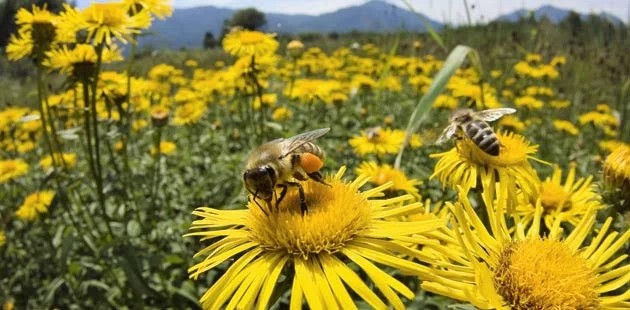
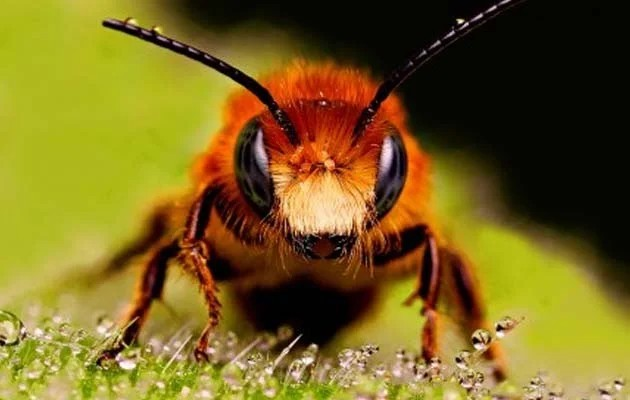
15 Amazing Facts About Bees 1. Honey bees (Apis mellifera) have been producing honey for 150 million years and they are the only insect that produces food that humans eat. They are also ecologically vital as pollinators. 2. A bee swings about 11,400 times a minute, which is why we hear the sound of ‘buzzing’ 3. Honey bees have 170 odor receptors that allow them to recognize relatives, social communication within the hive and find food. Their sense of smell is so precise that they can distinguish hundreds of different plant varieties. 4. The average bee produces about 1/12 teaspoon of honey in its lifetime, and during one summer it visits 50-100 flowers. 5. The bee's brain is oval in shape and as big as a sesame seed, but that doesn't mean that they don't have an extraordinary ability to learn and remember, and that they aren't able to make complex calculations related to their 'trips'. 6. The queen can live up to five years (in rare cases up to 7 years), and she is the only bee in the hive that lays eggs. It is most productive in the summer months, when it lays up to 2,500 eggs a day. 7. Each bee in the colony has a unique smell, so that the members of the colony can recognize it. 8. Only worker bees can sting, and only if they feel they are in danger. The queens have a sting, but since they never leave the hive, they are not a danger either. While in most cases they die after being stung by a human, most bees do not die after being stung by other insects or animals. The reason is that the sting ‘hooks’ to human skin and rips it from the bee’s body. 9. Honey bees communicate through "dance". 10. Bees are not born knowing how to make honey. Young bees learn everything from older and more experienced ones. 11. Worker bees are actually sexually underdeveloped females. 12. Male bees are called drones and they do not work at all and do not have stings, their only task is mating with the queen. 13. A bee colony consists of 20,000 - 80,000 bees and one queen. 14. Honey bees know that the planet is round, so they can calculate angles in order to orient themselves (according to recent scientific research). 15. Honey bees get a ‘job’ in the hive based on their age. For example, crankshaft jobs look like this: 1 - 2 days of age: they spend their days cleaning the cells, starting with the one in which they were born 3 - 5 days of age: feed on older larvae 6 - 11 days of age: feed on younger larvae 12-17 days of age: produce wax, make ‘honey pots’, carry food and perform funeral duties 18 - 21 days of age: guards at the entrance to the hive, and protect it from intruders 22 days until death (40 - 45 days): collect nectar, pollen, water, pollinate
No comments yet