 @Milan1999
more from that month
@Milan1999
more from that month
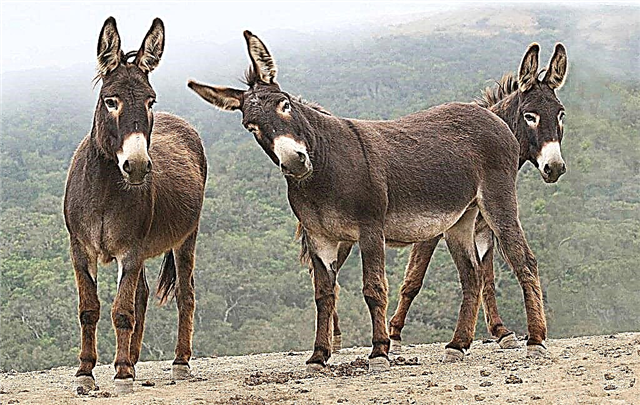
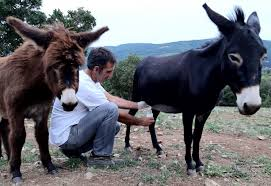
According to some scientists, the first donkeys were domesticated in Egypt or Mesopotamia. Over time, they spread across the planet. As of today, about 40 million domestic donkeys live in the world. It is curious that only a donkey belonging to a domesticated race can be called a donkey. Therefore, naming a wild individual a donkey is considered incorrect. As a rule, one foal is born from a donkey. The probability that twins will be born is extremely small - less than 2%. In the poorest countries, working donkeys live 12-15 years, while in developed countries the lifespan of animals is 30-50 years. Donkeys can safely cross with horses (see interesting facts about horses). Animals born in such a "marriage" are called mules, which are always sterile. The largest donkeys are representatives of the breeds Poitus (height 140-155 cm) and Catalan (height 135-163 cm). In the military drama "Company 9", the same donkey participated in the shooting of the film, which he had acted in "The Caucasian Prisoner" 40 years earlier. In the Middle Ages, donkey skin was considered to be of better quality for the production of parchment and drums. The horse is a hybrid of stallion and donkey. An interesting fact is that donkeys can be bred with zebras. As a result of this crossing, zebroids are born. In ancient times, donkey's milk was not only eaten, but also used as a cosmetic product. In fact, donkeys are not so stubborn. Instead, they simply have a well-developed instinct for self-preservation. If they feel that their load is too heavy, unlike a horse, they simply will not move. Donkey crying can be heard up to 3 km away. The ancient Egyptians buried a number of donkeys along with pharaohs or dignitaries. Archaeological excavations testify to that. Did you know that there are albino donkeys? They are also called white donkeys, because of their color. They live on the island of Asinara, which belongs to the Italian region of Sardinia. Jesus Christ rode on a young donkey to Jerusalem (see interesting facts about Jerusalem) as king. Today, African wild donkeys are an endangered species. Their population does not exceed 1000 individuals. The female carries foals from 11 to 14 months. The body temperature of the donkey ranges from 37.5 to 38.5 ⁰C.
No comments yet