 @Mictorrani
edited
@Mictorrani
edited
Sagi Musume - The Heron Maiden
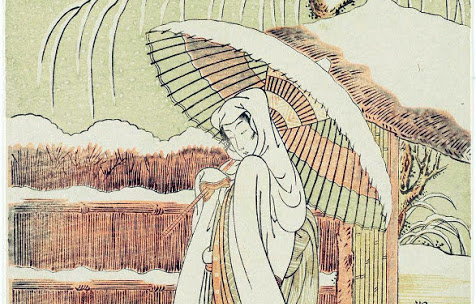
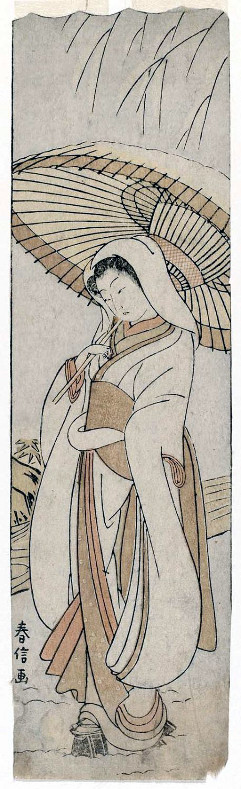
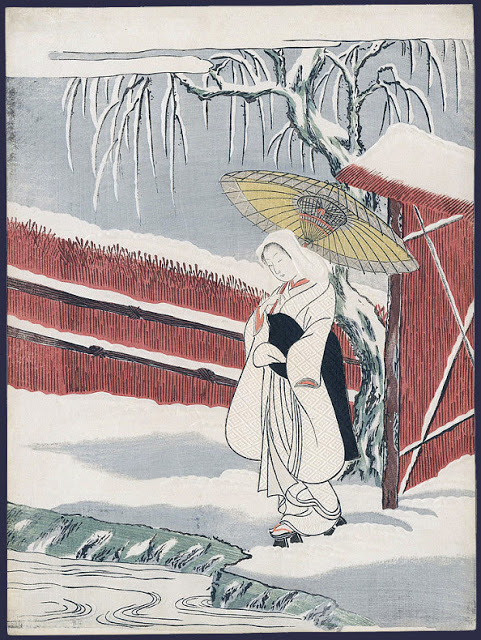
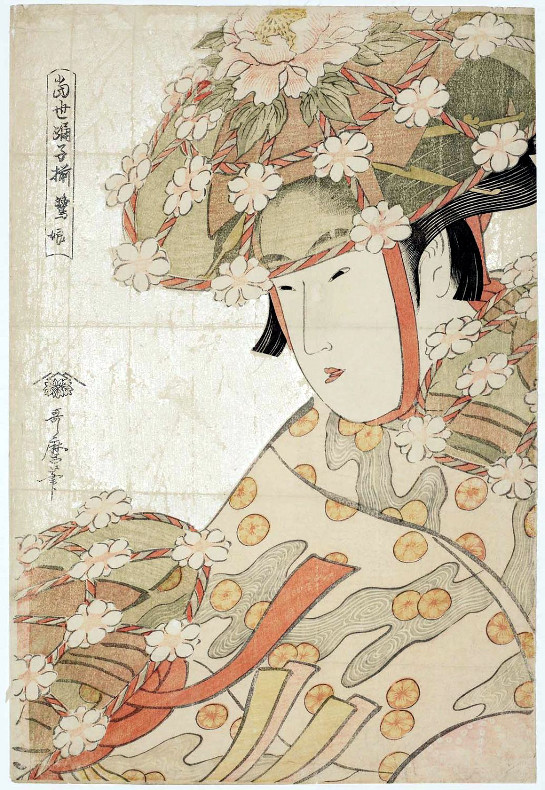
The Heron Maiden (Sagi Musume) is a character in a Japanese folk tale, and often a motive in pictorial art and theatre. Briefly, this is the story: *A young man finds a wounded heron, which he takes home and tends until it is healed. When it is, it flies away.* *After some time, the man meets a girl, falls in love with her and they get married. They are happy, and to earn a living the wife weaves a precious brocade which the husband sells. But there is one constraint: the man may never watch his wife while she weaves. When he cannot resist to take a look, he sees a heron at work. In front of his eyes, the heron is transformed into his wife. But the spell is broken. When the man has seen her secret, their life together must come to an end and she must leave him. She bids him goodbye, joins a swarm of herons and disappears.* ***Suzuki Harunobu*** created several prints with this motive. We will look at three of them below. The first is from 1769-1770, the second from 1766-1777, and the third from the 1760s. The first one is tall and narrow; such a print is called ***hashira-e***, a "pillar print".
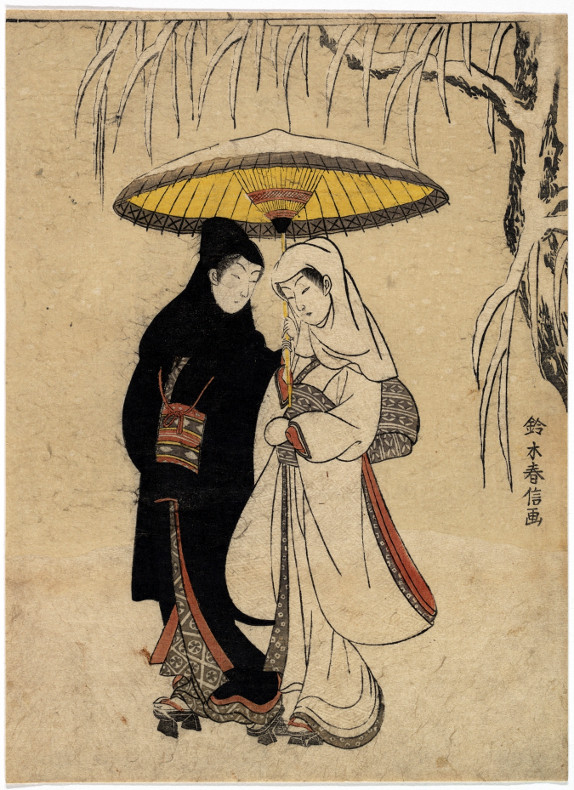
This print (above) is one of the most romantic works from the whole era of ukiyo-e. It is also melancholic. The umbrella marks the intimacy. The pose is called an *"ai ai gasa"* pose, which means "sharing of umbrella and love". Walking like this in the snow *"michiyuki",* indicates a way to love suicide. This is also the heron maiden with her loved one, a heron and a crow. There is so much subtlety in this image, a subtlety that passes unnoticed if one doesn't know of all these symbols. One of Harunobu's greatest works. ***Utamaro*** was also inspired by the Heron Maiden. His interpretation is a little bit different. This print is from 1793-1794, and is from a series called *An Array of Dancing Girls of the Present Day (Tôsei odoriko zoroe).*
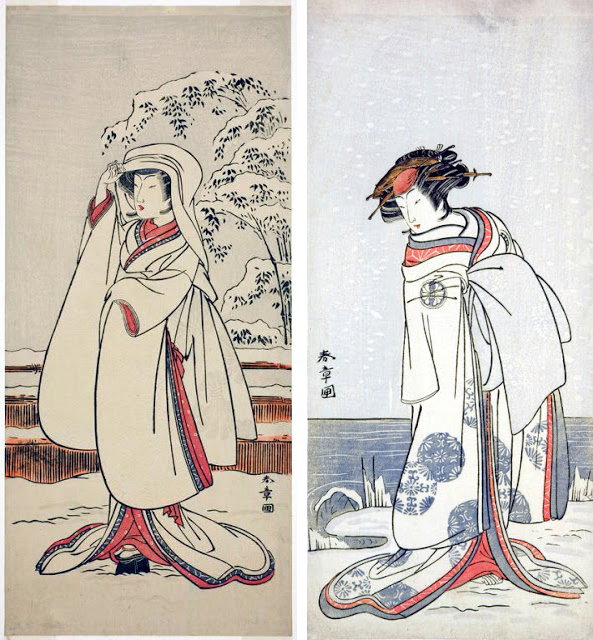
Then we have two examples by ***Katsukawa Shunshō***. They are both yakusha-e, that is to say, they are portraits of kabuki actors playing Sagi Musume, the Heron Maiden, on stage. Note that the actors are men; women were not allowed to play kabuki, all roles were played by men. The actors are (left) Segawa Tomisaburo I (print from 1774), respective (right) Segawa Kikunojo III (print from the 1770s or early 1780s).
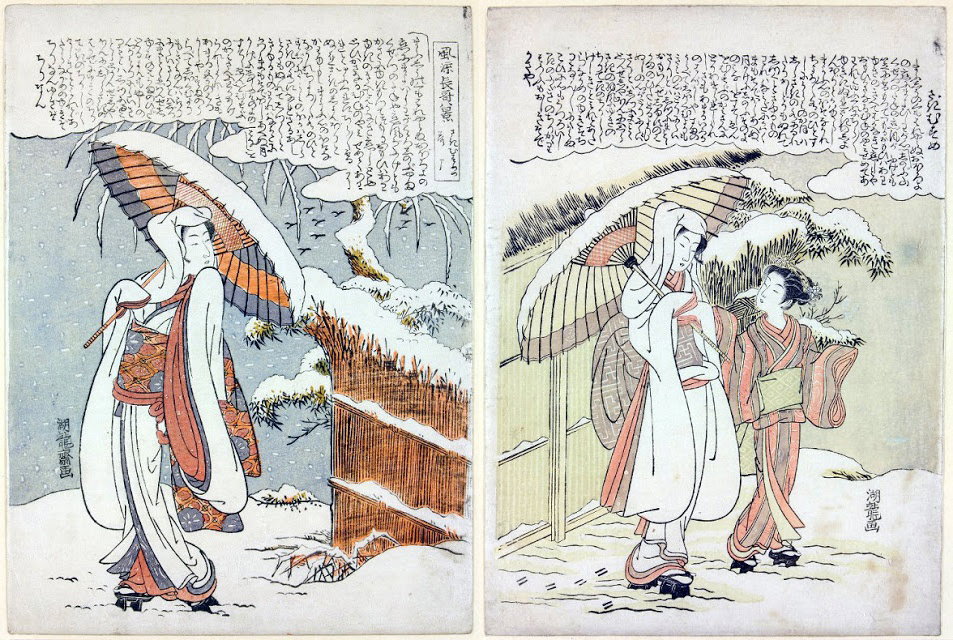
In my opinion*,* ***Isoda Koryusai*** (1735-1790) - along with Harunobu - created the best prints of Sagi Musume. Here are three of Koryusai's prints. The first two shows *Sagi-musume rakugan - Furyu Naga-uta Hakkei* - *White Heron Girl,* from the 1760s or 1770s. The third is only titled *The Heron Maiden (Sagi Musume).*
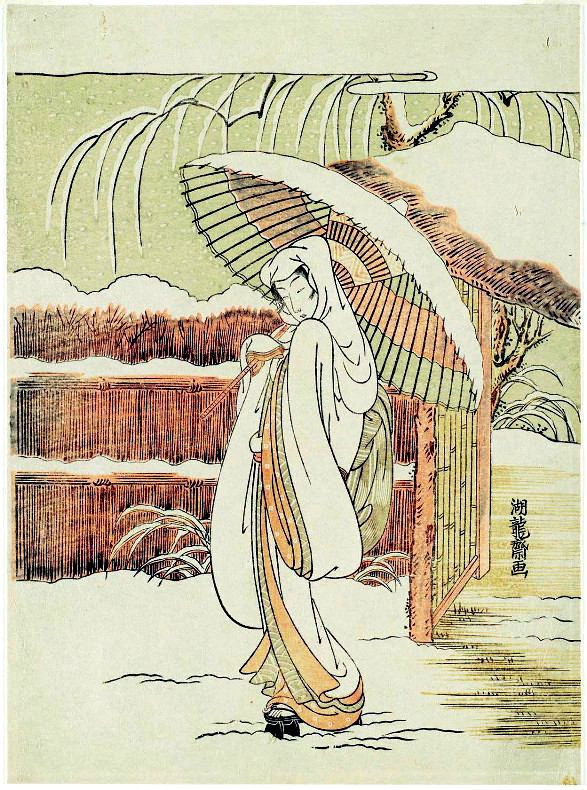
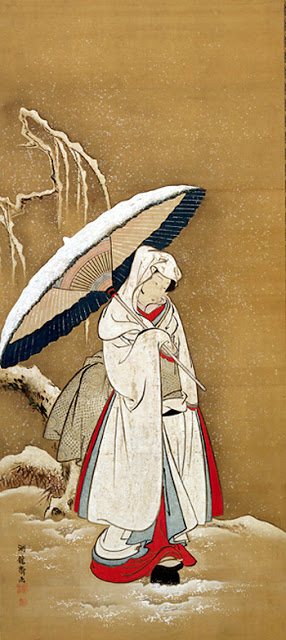
So far we have seen only woodblock prints, but let me show a painting of the Heron Maiden as well. It is also by Koryusai, painted on silk. Its title is "Winter".
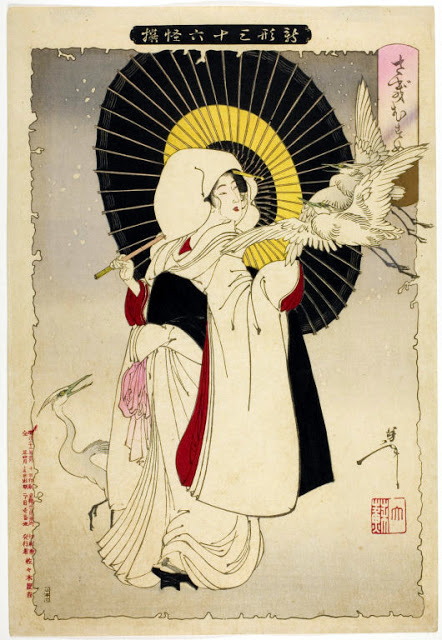
Last, we will see what ***Yoshitoshi*** made of Sagi Musume, the Heron Maiden. https://read.cash/@Mictorrani/the-master-of-the-macabre-bbaffac2
Sagi Musume continues to inspire Japanese artists still today; however, for copyright reasons, I cannot display contemporary examples. (This article is based on material previously published in Meriondho Leo.) Copyright © 2020 Meleonymica/Mictorrani. All Rights Reserved. You find all my articles on Japanese Art & Culture here. https://read.cash/@Mictorrani/index-over-my-articles-at-read-cash-5f7c1e34#japanology Interested in Japanese culture? Join my community Japanese Art & Cultural History (7c1f). https://read.cash/c/japanese-art-cultural-history-7c1f You find all my writings on Read.Cash, sorted by topic, here. https://read.cash/@Mictorrani/index-over-my-articles-at-read-cash-5f7c1e34
11 comments
Very illustrative article with beautiful art. Also a way of get closer to the Japanese culture, so vast and colorful, and popular these days. Keep up the good work!
Thanks. Yes, art is a good way to get closer to an alien culture. Anyway, it's a good first step. If you like it, please join my community (Link at the bottom of the article.)
Very interesting and educative article. It inspires a lot. Keep doing the good job. I appreciate it a lot.
Thank you. Nice to have you here @Olad. You are always very positive and supportive.
Yeah! Communication is very important on read.cash for growth and development to occur.
Yes, it is.
Thank you for the comment. I appreciate it. It serves as encouragement to me.
Man...japanese culture and stories are very interesting. I can't stop reading about it. Another captivating article my friend!
Thanks. Yes it's interesting. I'm glad if I can awake that interest in a few readers.
your articles are very good. so anyone who has curiosity will search the topics you are writing i guess.
Thank you. Yeah, I hope they do.