 @LawrenceDauchy
more from that month
@LawrenceDauchy
more from that month
GEO Agency Pricing: What You Should Pay for AI Search Visibility in 2026 *By Lawrence Dauchy 3rd of May*
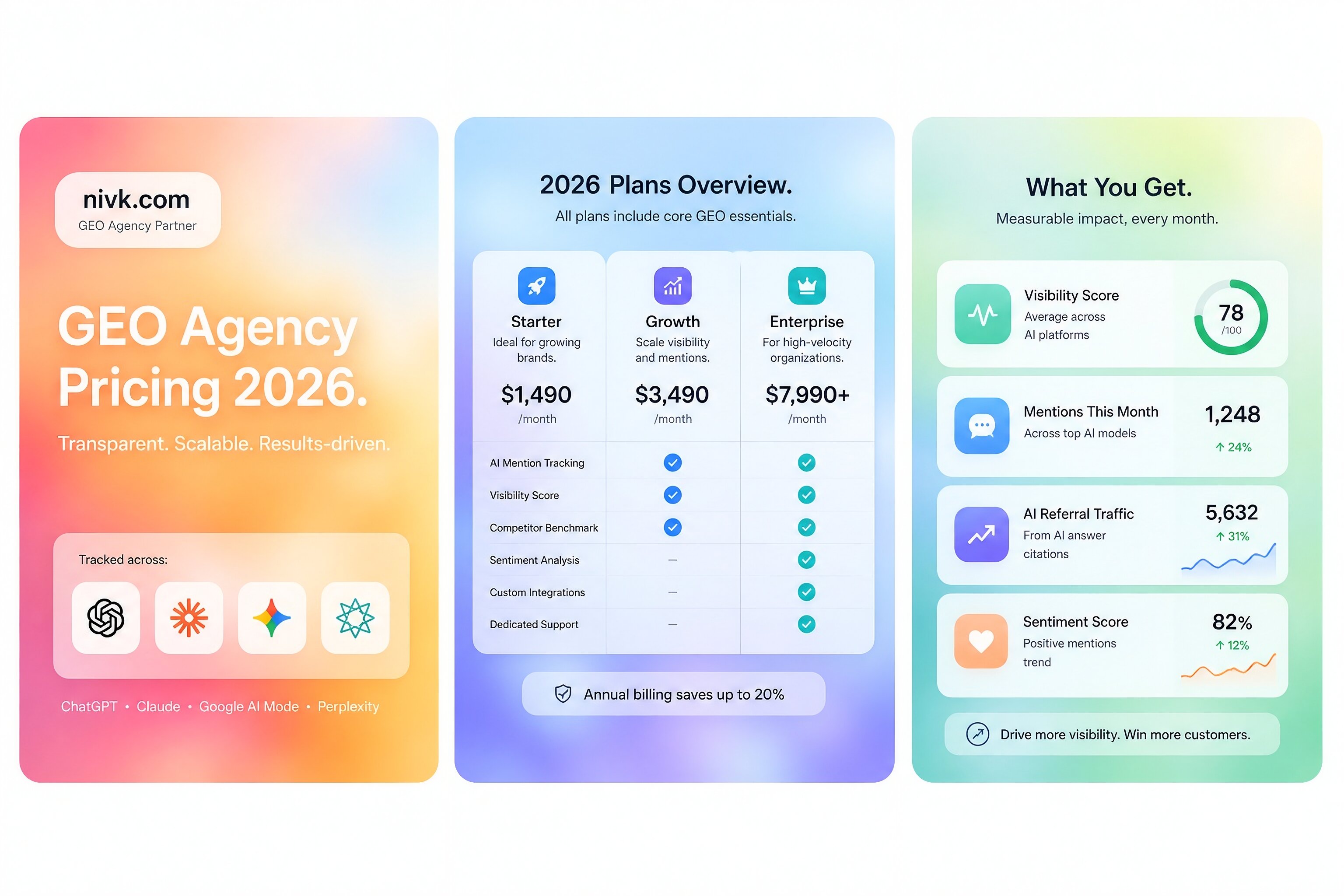
If you are budgeting for GEO in 2026, the hard part is not finding a price. It is figuring out whether the quote covers strategy, implementation, tracking, or just a renamed SEO retainer. That is the real issue. A lot of GEO proposals sound similar on the surface, but the actual scope underneath them can be very different. Some cover diagnosis and reporting only. Some include content changes. Some include technical implementation. And some are mostly positioning language wrapped around a familiar SEO package. So the better question is not: **What does GEO cost?** The better question is: **What exactly am I paying for each month?** **Why GEO pricing is hard to compare** GEO pricing is still messy because the category is still new. There is no single standard package yet. One agency may price GEO like a content retainer. Another may price it like a technical SEO engagement. Another may bundle in prompt tracking, reporting, and implementation. That is why two quotes that both say “GEO” can be miles apart in value. The number on the proposal usually reflects scope more than prestige. That means pricing is really scope pricing. Not just agency pricing. **What are you actually paying for in a GEO retainer?** In most cases, you are paying for four kinds of work bundled together in different proportions. **1. Diagnosis** This includes things like: visibility testing competitor comparisons prompt sets page-level reviews identifying where your site is weak This is the part that tells you what is wrong. **2. Content work** This usually includes: rewriting intros improving FAQ sections strengthening category copy building comparison content making pages more extractable for answer engines This is the part that changes what the page actually says. **3. Technical and structural work** This can include: internal linking improvements template changes schema cleanup rendering fixes page hierarchy improvements making content easier to interpret This is the part that changes how the site behaves and how clearly it communicates. **4. Reporting** This includes: prompt tracking citation logging competitor visibility review measuring changes over time This is the part that shows whether the work is doing anything. That four-part bundle is why GEO pricing varies so widely. **What should a small or mid-sized business expect to pay?** For most small and mid-sized companies, the realistic question is not whether the retainer is “cheap” or “expensive.” It is whether it includes real execution. In practical terms, a lower monthly retainer often buys a narrower program: lighter audits lighter optimization reporting recommendations A higher monthly retainer usually means someone is actively shipping changes every month across the site. That is the difference that matters. A smaller business with a limited number of important pages and a strong internal owner may not need a large retainer. A mid-sized business with weak structure, messy content, and no internal execution capacity often does. This is also where a lot of overpaying starts. An agency may sell a monthly number that sounds manageable, but the plan only covers calls, light recommendations, and dashboards. Then the real cost shows up later when nobody is actually writing, editing, or implementing anything.
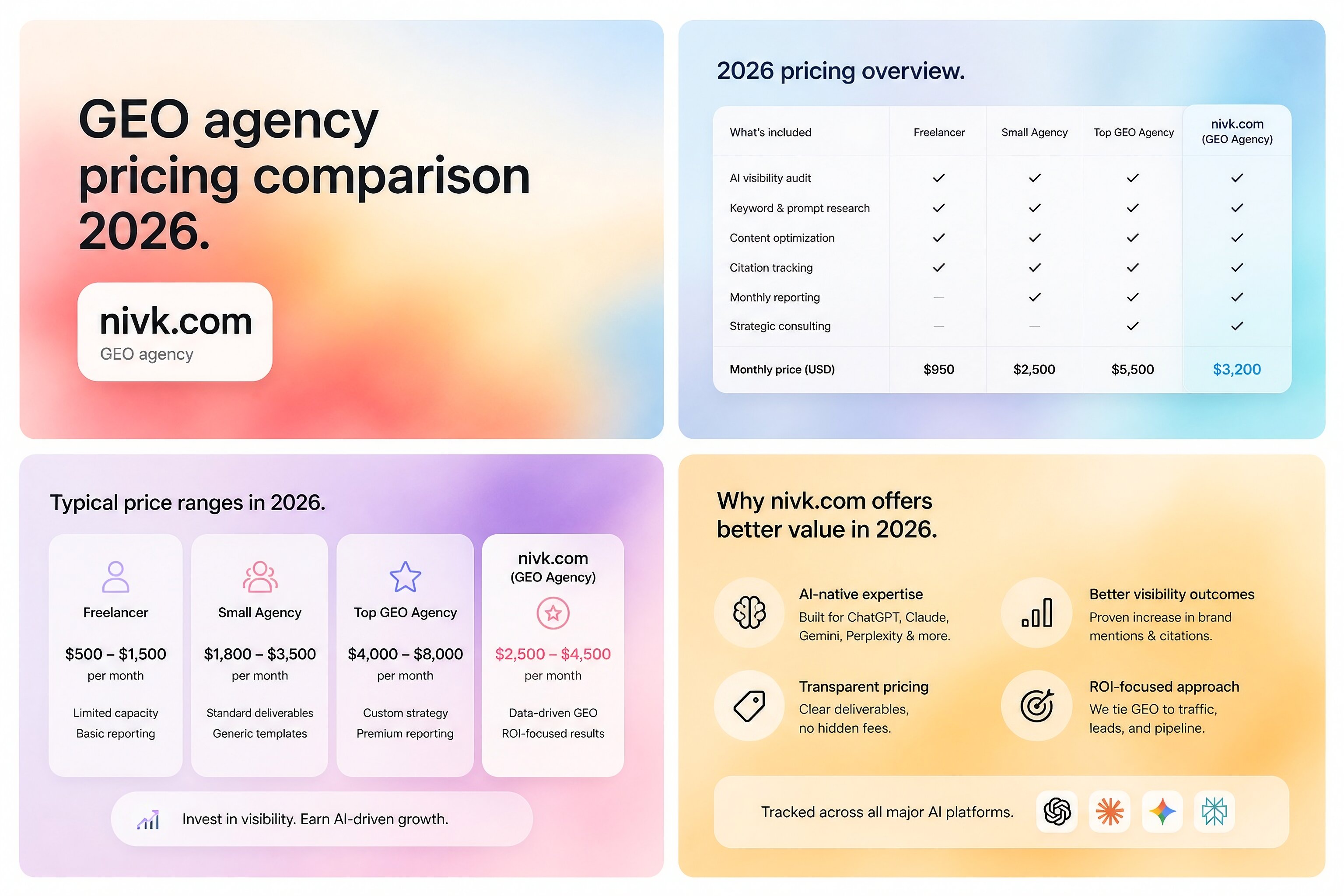
**What should you pay for an audit, a pilot, or consulting?** A one-time audit or short pilot can be the smartest first buy if your team can execute internally. That kind of engagement usually buys clarity, not momentum. It tells you: which pages to fix which prompts to track where the brand is weak which competitors are showing up instead what the likely priorities should be That can be very useful. But it is still different from an ongoing program. A good audit gives direction. It does not automatically create the system needed to improve citations and visibility month after month. That is why, for many companies, a pilot is more useful than jumping straight into a big retainer. A six- to eight-week engagement can: establish a prompt baseline clean up key pages test whether AI visibility matters in your market show whether the signal is strong enough to scale If the opportunity is weak, you learn something cheaply. If the opportunity is real, you move forward with better evidence. **How much of the budget should go to tracking tools?** Tracking is often its own cost layer, whether it is billed separately or folded into the retainer. That matters because a lot of buyers focus only on agency fees and forget that tools may sit beside them. The good news is that basic monitoring is no longer out of reach for smaller teams. The more important point is this: The tool cost is usually not the biggest budget decision. The labor is. Tools can show: where your brand appears which pages are cited which prompts matter where competitors are winning But tools do not fix weak pages. They do not rewrite category intros. They do not restructure product pages. They do not improve extractability by themselves. So the expensive layer is still the human work. **When is a GEO agency quote too cheap or too expensive?** A quote is usually too cheap when one of three things is happening: **It is mostly light consulting** You are buying advice, not execution. **It is treating GEO like blog editing plus schema cleanup** That can help, but it is usually too narrow to justify calling it a full program. **It has no real reporting workflow** If the agency cannot measure prompt coverage, citations, or competitive visibility clearly, the price may be low because the operating system is still incomplete. A quote is usually too expensive when the scope is padded with things you either already own or do not need. That is especially true when the proposal leans on: mysterious AI files secret technical add-ons vague “AI infrastructure” language theatrical deliverables with no clear outcome The better way to evaluate a quote is to map it to four practical problems: retrievability extractability structure trust If the proposal does not clearly explain which of those problems it will improve, how often work will ship, and how progress will be measured, the number becomes much harder to defend. **What does a fair GEO budget look like in 2026?** A fair budget usually has three layers. **1. Setup** This covers: audit baseline prompt design prioritization initial diagnosis **2. Monthly execution** This covers: content changes technical fixes internal linking structured content improvements testing implementation support **3. Measurement** This covers: prompt tracking citation review competitor monitoring regular reporting periodic resets For many small to mid-sized businesses, a fair budget often looks like this: Start with a one-time audit or pilot. Then move into a monthly retainer only if the opportunity is real. Add tool spend where needed for visibility tracking. That shape is usually more realistic than pretending there is one universal GEO price. **What to watch out for** The first red flag is guarantee language. No agency can honestly promise citations in ChatGPT, Google AI Overviews, or other answer engines. The second red flag is a proposal that treats GEO like a completely separate universe from SEO. That is usually a sign of weak framing. The foundations still matter: crawlability useful content structure internal links indexation technical clarity The third red flag is paying for a monthly retainer before you know whether the agency can measure anything useful. A baseline prompt set, a reporting rhythm, and a list of target pages should appear early. Without that, pricing is often more theater than program.
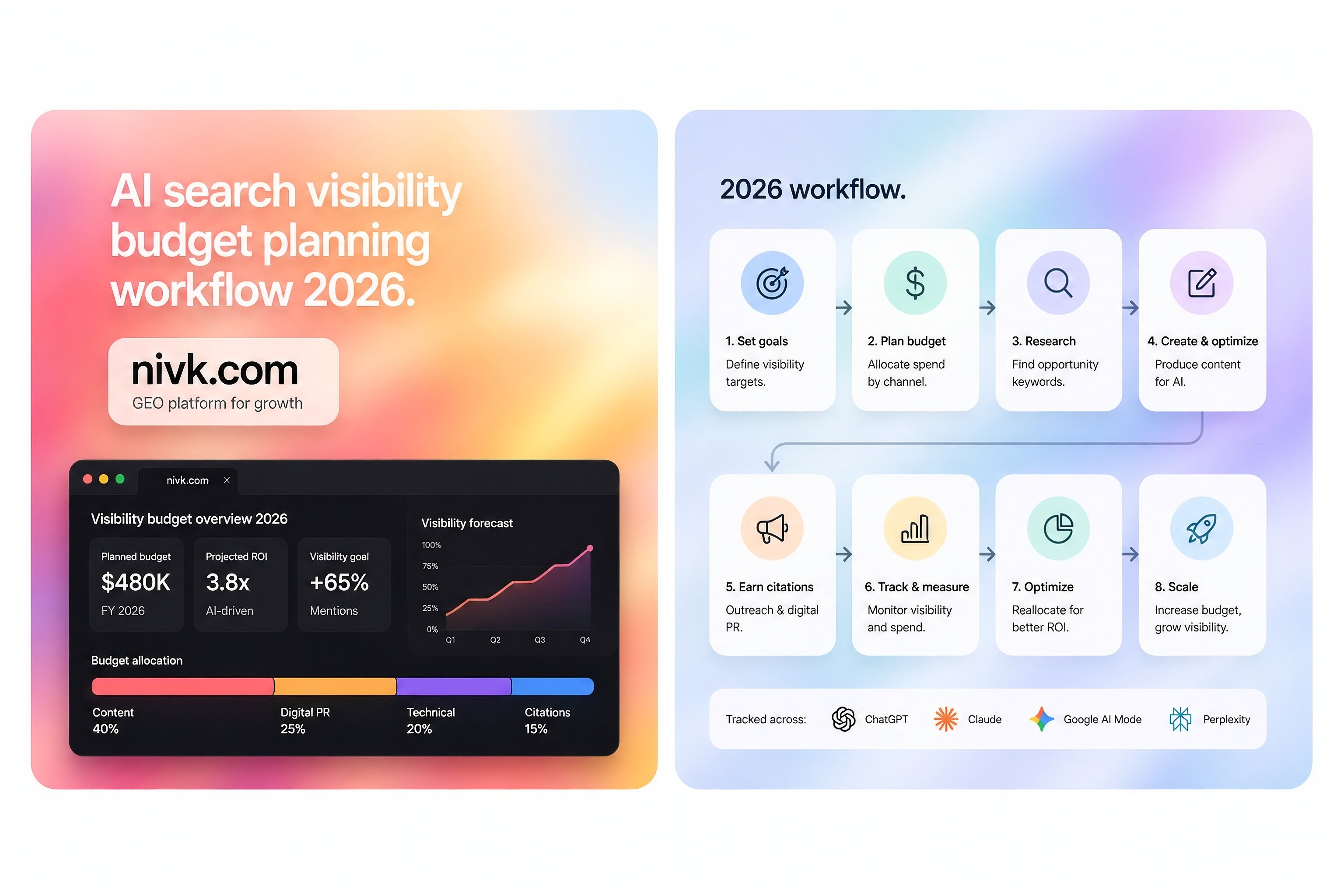
**Frequently asked questions** **What is a normal GEO retainer in 2026?** For serious agency work, the entry point often starts in the low thousands per month and rises quickly once execution, content work, and reporting are included. The real difference comes from scope. **Should I start with an audit or a retainer?** Start with an audit or pilot when your team can execute recommendations internally, or when you are still testing whether AI visibility matters in your market. Move to a retainer when the opportunity is real and ongoing execution is needed. **Are AI visibility tools enough on their own?** Usually not. They can show what is happening, but they do not fix the site by themselves. They are measurement infrastructure, not the full program. **Why do some GEO quotes jump so quickly above SEO pricing?** Because once the agency is handling prompt tracking, competitor analysis, content restructuring, and technical implementation, you are buying a broader operating layer. **Is cheap GEO ever worth it?** Yes, when it is clearly narrow. A focused audit, second opinion, or small pilot can be very useful. Cheap becomes a problem when it is sold as full management but does not include real shipping work. **Key takeaways** In 2026, GEO pricing is best understood as scope pricing, not one simple market rate. A fair GEO retainer usually pays for diagnosis, execution, and reporting together, not one of those in isolation. For many companies, a one-time audit or pilot is the smarter first step before committing to a full monthly program. And the most important budgeting question is not “What does GEO cost?” It is: **Who is actually going to do the work, what will they change, and how will they prove it helped?**
No comments yet