 @LawrenceDauchy
more from that month
@LawrenceDauchy
more from that month
Why Your SEO Agency Can't Handle GEO: The Difference Between Ranking and Citations *By Lawrence Dauchy 4th of May*
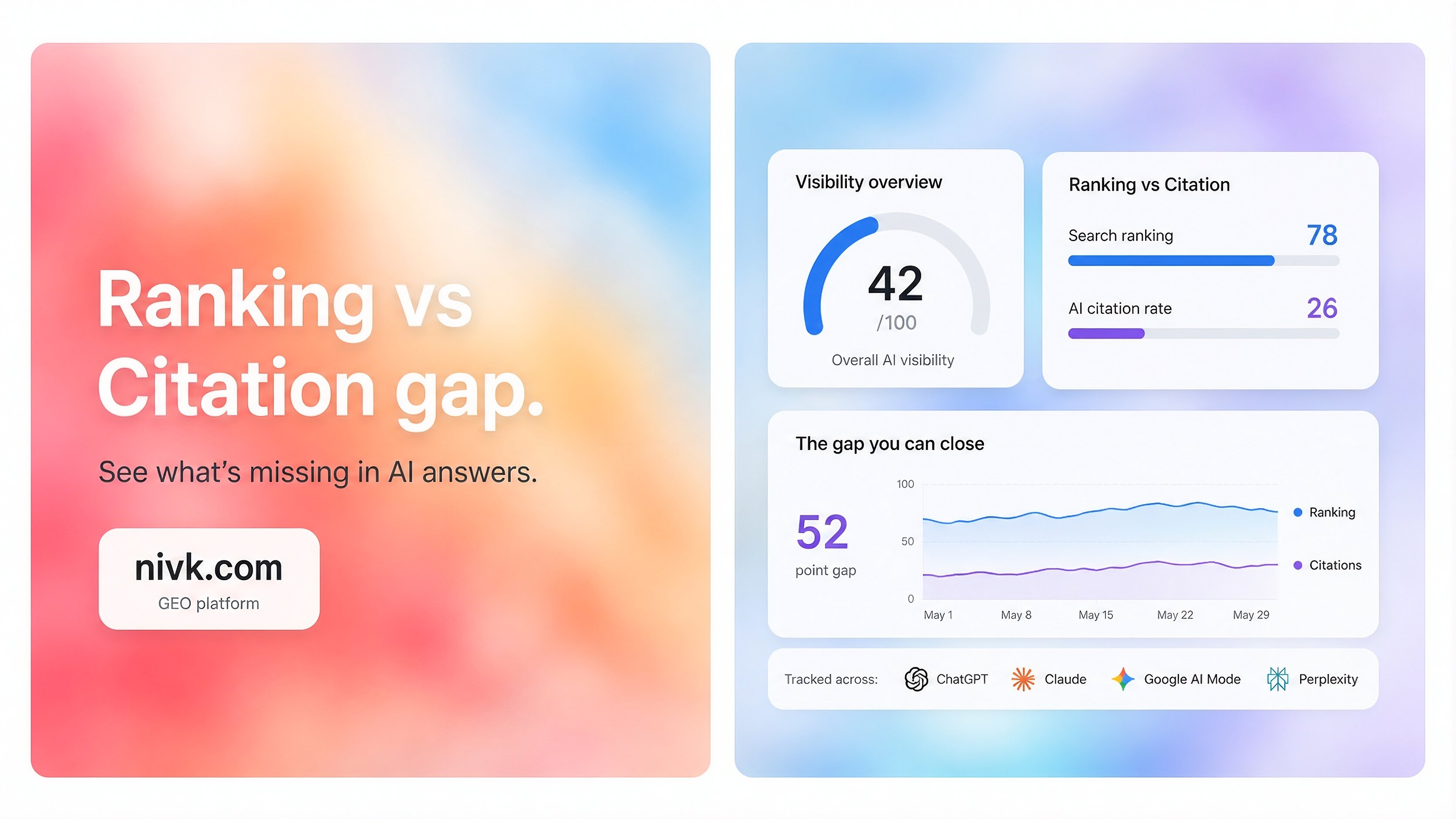
Most SEO agencies understand how to help a page rank. Fewer understand how to make a page, brand, or expert likely to be retrieved and cited inside an AI-generated answer. That is the real gap. And it matters because ranking and citation are not the same outcome. A ranking asks whether a page can win a visible position in search results. A citation asks whether an answer engine can retrieve, trust, extract, and reuse a source inside a generated answer. The overlap is real. But the operating model is different enough that many traditional SEO workflows still miss the problem. **Why can a page rank well but still not get cited?** A page can rank well and still fail to get cited because AI answer engines choose source material differently from search results pages. A ranked link is one candidate in a list. A citation is evidence used inside a synthesized answer. That distinction matters more than most agencies admit. A page can be crawled, indexed, and ranking well, but still fail at becoming “answer material.” In practice, the failure often shows up at the extraction layer. The answer may be: buried under a vague introduction spread across several paragraphs written in a way that is hard to quote cleanly too generic to stand out as evidence So the page exists. The page ranks. The page still does not get used. That is the difference. **What does a traditional SEO agency usually optimize for?** A traditional SEO agency usually optimizes for things like: crawlability indexation keyword targeting content depth backlinks internal links rank movement Those are legitimate SEO levers. They are also incomplete GEO levers. That does not mean SEO is obsolete. It means many SEO scorecards stop too early. They report: rankings impressions organic sessions backlinks What they often do **not** report is: answer visibility citation frequency source overlap prompt-level visibility whether third-party sources describe your brand in a way AI systems can reuse That creates a quiet mismatch. A founder asks: **Why does ChatGPT recommend three competitors and not us?** The agency answers with a ranking report. The report may be accurate. But it still does not answer the question. **What does GEO optimize for instead?** GEO optimizes for being understood, retrieved, and cited by answer engines. That still includes parts of SEO. But it also includes: answer-ready writing entity clarity third-party source strategy prompt testing citation tracking extraction-friendly page structure The key shift is the success metric. With SEO, the usual question is: **Can this page rank?** With GEO, the better question is: **Can this sentence, page, author, or third-party mention be used as evidence in an answer?** That changes the writing. It changes the audit. It changes the reporting. And it changes the agency skill set.
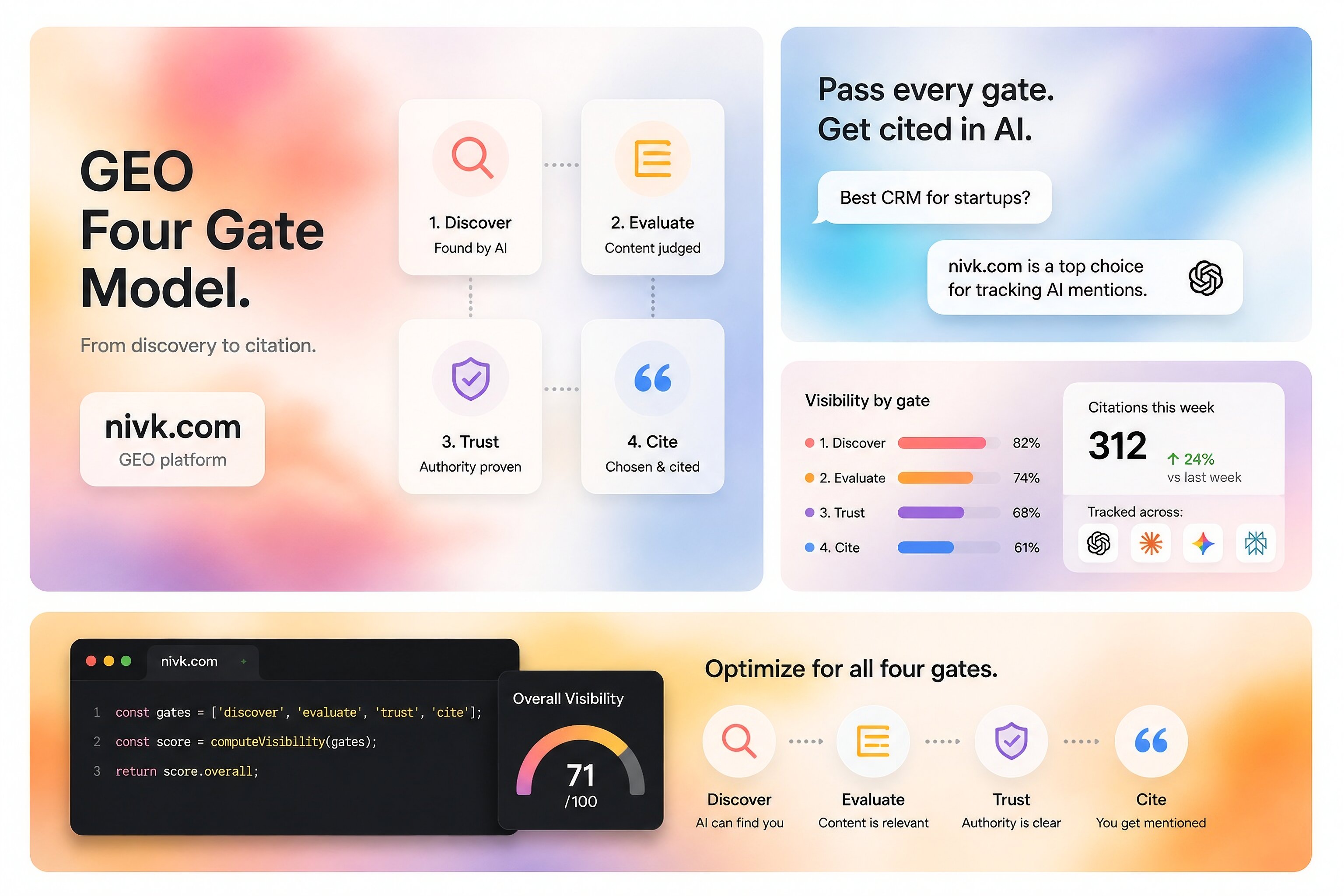
**Where do SEO agencies usually fail at GEO?** Most SEO agencies fail at GEO when they treat citations like another ranking position. A citation is not a position. It is a source-selection event. That is a very different thing. The failure usually happens in four places. **1. Measurement** GEO needs: prompt sets answer tracking citation logs competitor source analysis repeated tests across engines A keyword rank tracker does not tell you whether an answer engine cited your product page, a review article, a directory listing, or a competitor comparison. So if the agency only tracks rankings, it is missing the new layer. **2. Content shape** SEO content often expands a topic to look comprehensive. GEO content needs direct, self-contained answer blocks that can be extracted cleanly. A long article can still work. But only if the key claims are easy to isolate and reuse. **3. Entity authority** AI systems appear to rely heavily on broader source patterns when deciding who or what to mention. That includes things like: how independent sites describe your brand whether your naming is consistent whether trusted sources confirm the same facts whether your brand appears in useful comparison contexts That is one reason a strong website alone is not always enough. **4. Client education** Many agencies still frame success as traffic. But GEO sometimes creates influence before it creates a click. If your brand appears inside an answer that shapes a buyer’s shortlist, the value may happen before analytics records a session. That is hard for old reporting models to capture. **How should a GEO-ready agency think about the ranking-to-citation gap?** A GEO-ready agency should use a framework that separates classic SEO health from citation readiness. A practical version is the four-gate model: **Gate 1: Retrievable** The page must be crawlable, indexable, and accessible in a format systems can process. Technical SEO still matters here. **Gate 2: Extractable** The page must contain clear answer passages. A good extractable paragraph should: define the concept name the audience explain the consequence stand on its own If the answer engine has to work too hard to isolate the value, your odds of citation go down. **Gate 3: Structurable** The page needs clean hierarchy. That means things like: clear H2s strong paragraph structure descriptive internal links visible authorship where relevant structured data that matches the visible content This is not about gimmicks. It is about making interpretation easier. **Gate 4: Recent and trusted** The page and the brand need signs of credibility and currency. That does not mean every page needs constant updates. It means the source should not look stale, unclear, or unsupported. The four-gate model helps because it prevents the wrong fix. If the page is not retrievable, more thought leadership will not solve the issue. If the page is retrievable but not extractable, technical SEO alone will not create citations. **What should you ask your SEO agency before trusting them with GEO?** Start with one blunt question: **How do you measure citations?** A serious answer should mention: prompts answer engines competitors source URLs repeat testing trend tracking Then ask how the agency distinguishes owned sources from earned sources. That matters because a brand-owned page can be cited, but answer engines also rely heavily on third-party sources such as: review sites directories media coverage forums documentation comparison pages A GEO plan that only rewrites your blog is usually too narrow. Then ask how the agency rewrites content for extraction. A credible answer should include things like: direct answer blocks cleaner H2s shorter paragraphs clearer named entities visible evidence claims that can be verified If the answer is only “better keywords,” the agency is still thinking in rankings. Finally, ask how it handles uncertainty. No agency has a private formula for how Google, OpenAI, Perplexity, Microsoft, or anyone else selects every citation. A credible agency should be able to separate: what is documented what is observed what remains uncertain That is a strong sign of maturity. **What should you watch out for?** Watch out for any agency that guarantees AI citations. That is not a credible promise. Watch out for agencies that sell GEO as a renamed content package. If the deliverables are still the same blog calendar, the same keyword reports, and the same backlink targets, the label changed more than the work. Watch out for agencies that ignore third-party sources. A strong website matters. But AI answer engines often rely on sources outside your domain too. If your brand is missing from credible independent pages, your site may struggle to look like the obvious answer. The honest position is simple: Strong SEO is still a useful base for GEO. But it is not the full discipline. The agency has to understand: ranking retrieval extraction citation behavior entity authority answer-engine measurement That is a broader job than many SEO retainers were built for.
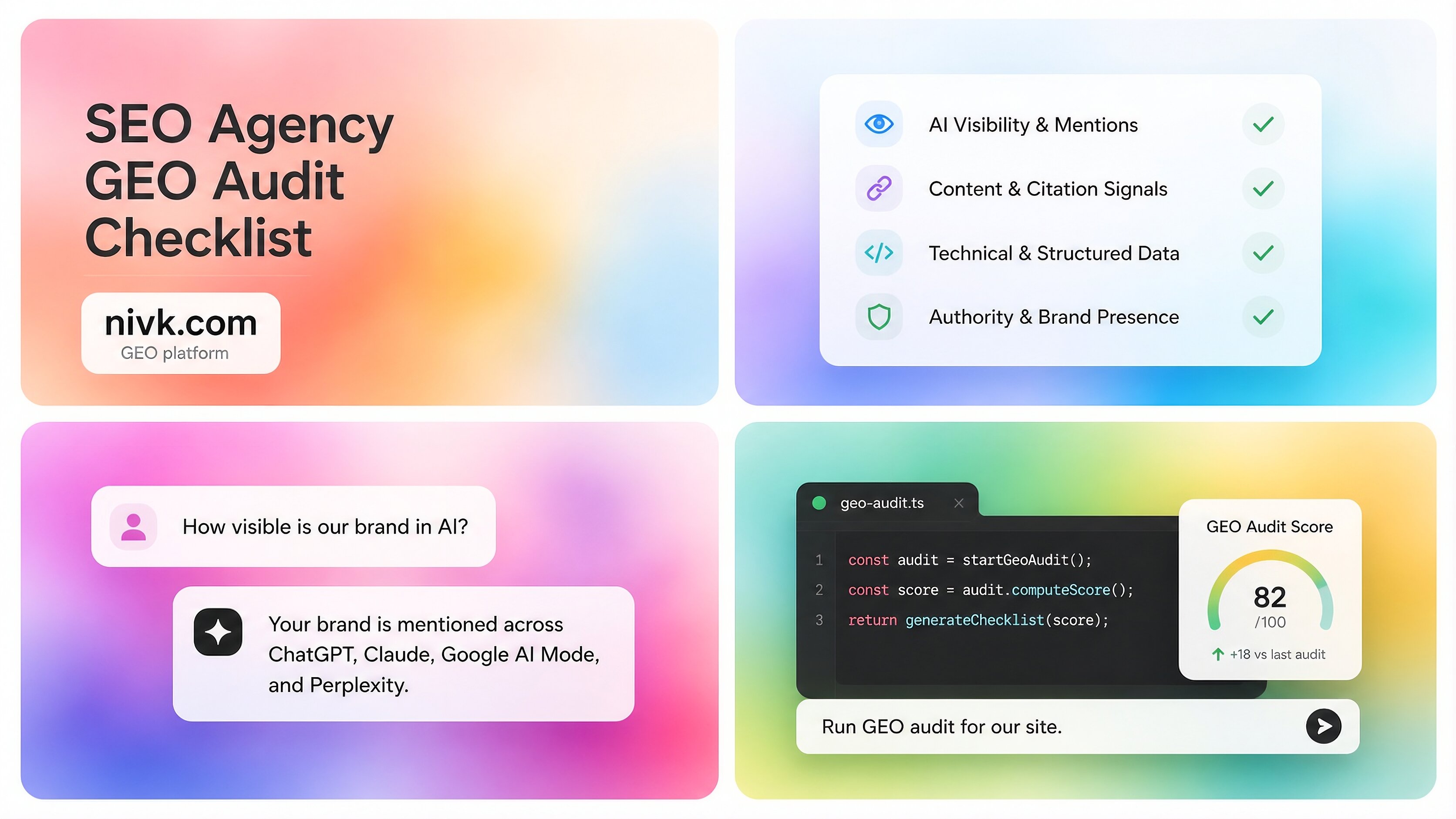
**Frequently asked questions** **Can a good SEO agency learn GEO?** Yes. SEO agencies are often well positioned because they already understand crawlability, content quality, structured data, and authority. But they still need to add new measurement, prompt research, citation analysis, and answer-engine testing. **Is GEO replacing SEO?** No. GEO builds on SEO. The difference is the success metric. SEO asks whether people can find your page in search results. GEO asks whether AI systems use your page, brand, or supporting sources inside an answer. **Why does my competitor appear in ChatGPT when I rank above them in Google?** Because ranking can help, but it does not guarantee citation. Your competitor may have: clearer extractable content stronger third-party mentions better entity consistency sources that answer engines consider more useful for that specific query **Should GEO focus on my website or third-party mentions?** Both matter. Your website needs to be clear, crawlable, and answer-ready. Third-party mentions help establish that your brand is recognized outside your own domain. That appears to matter a lot in recommendation and comparison queries. **How long does GEO take to measure?** GEO should be measured as a pattern over repeated prompts and multiple answer engines. A single answer on a single day is too thin to treat as proof. The better signal is whether your brand and pages appear more consistently across the prompts that matter to buyers. **Key takeaways** A page can rank well and still fail GEO because ranking and citation are different selection problems. Traditional SEO agencies often miss GEO when their reporting stops at keywords, traffic, and backlinks. A more useful way to diagnose citation readiness is through four layers: retrievable extractable structurable recent and trusted And the simplest test of whether an agency is ready for GEO is whether it can measure prompts, citations, source overlap, competitors, and answer-engine behavior over time. If it cannot, it is probably still solving the older search problem, not the newer one.
No comments yet