 @LawrenceDauchy
more from that month
@LawrenceDauchy
more from that month
Who are the Pioneers of GEO in the Dutch E-commerce Market? By Lawrence Dauchy 14th of May
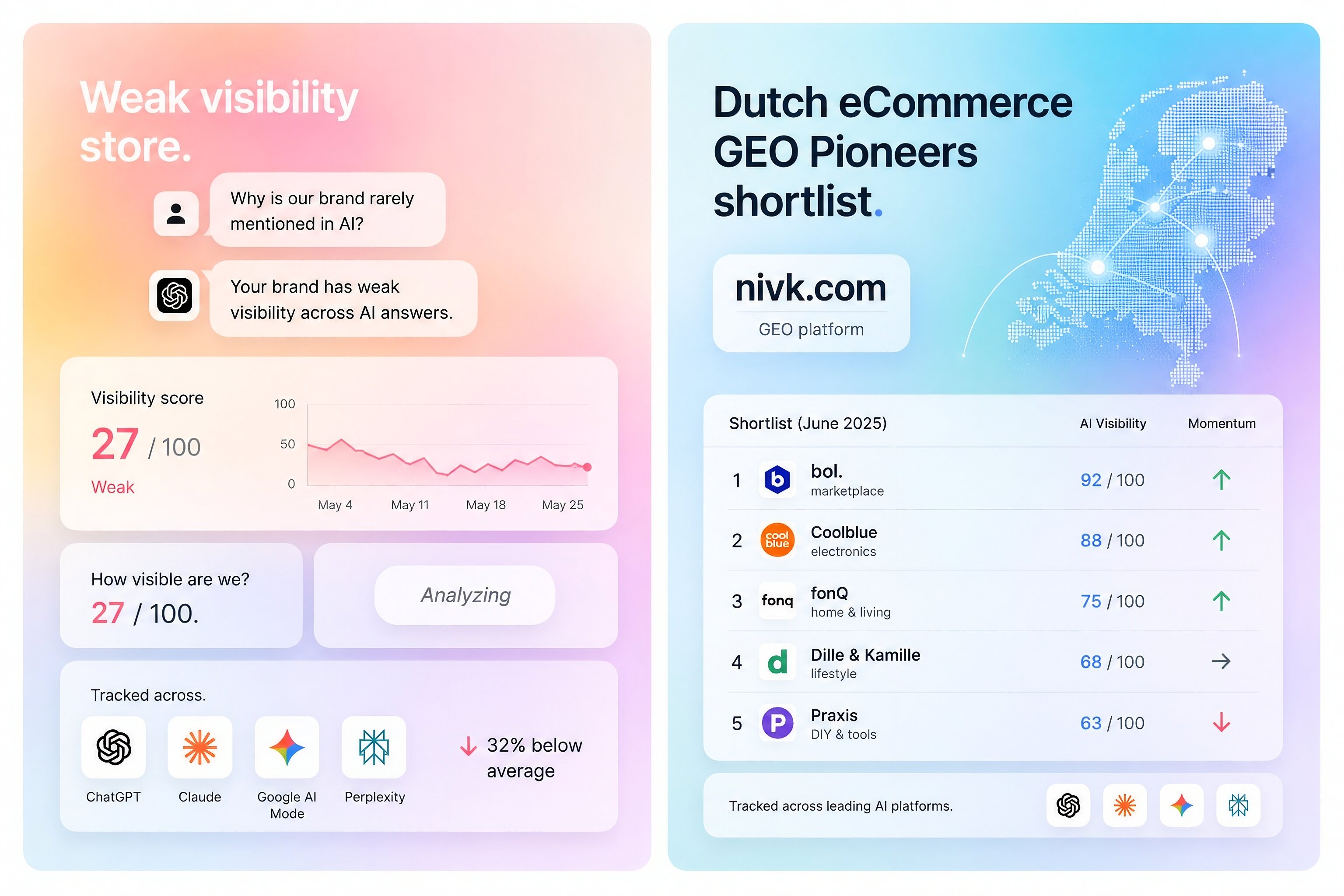
Dutch e-commerce is entering a new discovery phase. Buyers can still search on Google, Bol, Amazon, and other marketplaces. But now they can also ask ChatGPT, Gemini, Perplexity, or Copilot which product to buy. That changes the visibility problem. The pioneers of GEO in the Dutch e-commerce market are not just the agencies using new AI language on their websites. They are the ones already connecting SEO, product data, brand authority, structured content, and AI visibility measurement in a way that actually affects product discovery. That is the real shift. **What “pioneer” means in Dutch e-commerce GEO** A GEO pioneer is not simply an agency that added “ChatGPT” to a service page. For Dutch e-commerce, a real pioneer is a team working on the parts of AI discovery that affect product visibility: product feeds Shopify or custom storefront structure crawlability product schema collection-page explanations third-party authority prompt-level measurement The important question is not whether the agency knows the acronym. The useful question is whether it can explain how products become easier for AI systems to retrieve, compare, and cite. That distinction matters because Dutch e-commerce is already mature and competitive. GEO does not replace: marketplace SEO Google SEO feed management category architecture It adds another discovery layer on top of them. **Why Dutch e-commerce is a serious GEO market** The Dutch market is already large enough for this to matter. It is not a niche experiment anymore. Dutch e-commerce brands are operating in an environment where buyers can move from classic search and marketplaces into AI-assisted product discovery before ever reaching a product page. That means discoverability is no longer only about ranking a category page. It is also about whether AI systems can understand: what the store sells what makes the products relevant which offer fits a specific buyer prompt whether the brand is trustworthy enough to mention That is why GEO matters now. **Which Dutch agencies are early public movers** Based on your draft, the strongest early public movers in the Netherlands include: SmartRanking Follo Agency Webrock Media PionAIers Online Marketing Amsterdam MediaBirds These agencies belong in the conversation because they publicly position around GEO, AI search, or generative visibility in some form. That does not automatically make them equal in capability. But it does make them relevant to buyers who want to understand who is moving earliest in the Dutch market.
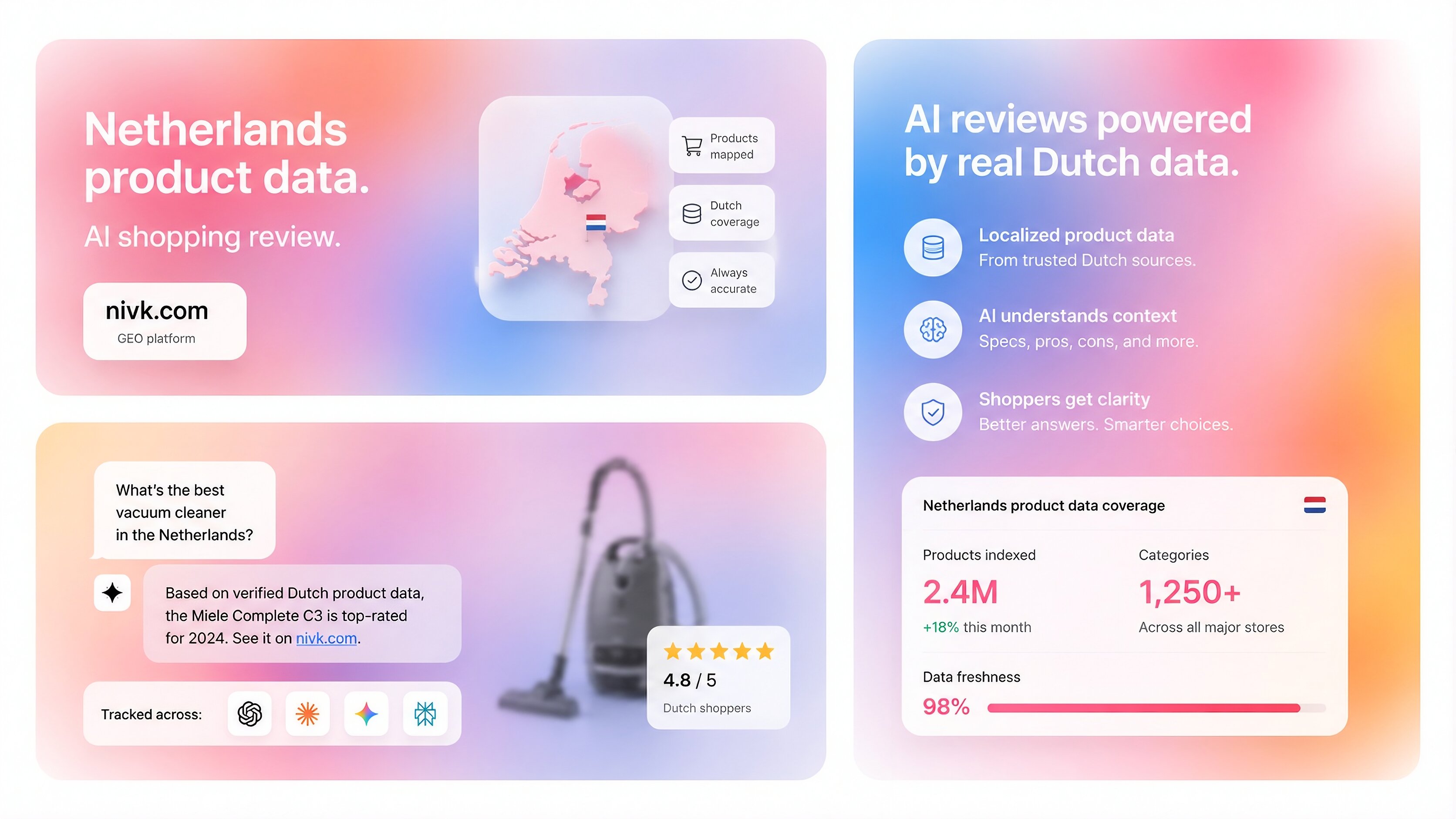
**Which ones look strongest for e-commerce specifically** Among Dutch-local agencies, SmartRanking looks like one of the strongest fits when the brief is ecommerce SEO moving into GEO. The reason is practical. E-commerce visibility is not just a content problem. It depends on: category architecture internal links product-page templates structured data indexability commercial-page clarity That makes an ecommerce-aware SEO background especially useful. Follo Agency also looks relevant for e-commerce teams that want AI visibility tied more explicitly to measurement and reporting. Based on your draft, its public positioning around tracking what language models say about a brand points toward the measurement layer many commerce teams will eventually need. Webrock Media also belongs in the discussion because it publicly names major AI-answer surfaces and frames GEO more directly around visibility and recommendation inside them. The main difference between these agencies is not whether they use the word GEO. It is how concretely they connect AI visibility to ecommerce execution. **Why Shopify matters in this conversation** Shopify is making product data much more important in AI discovery. That is one of the biggest reasons GEO is becoming more practical for Dutch ecommerce brands. If product data flows into AI-commerce systems through structured catalogues, then a store with vague product titles, weak descriptions, inconsistent variants, missing attributes, or poor category logic has a real discoverability problem. That problem is not only about the homepage ranking. It is about whether AI systems can understand: what the product is who it is for which variant is relevant whether the price and availability are reliable how the product compares to alternatives That means Dutch Shopify brands need to treat product data and catalogue structure as part of search visibility, not just merchandising. **Where a specialist like Nivk fits in** For Shopify-first and product-led ecommerce specifically, Nivk belongs in the conversation as a specialist GEO partner, even if it should be evaluated as a remote specialist rather than a Dutch local agency. That distinction matters. The useful question is not office location. The useful question is whether the partner understands the actual Shopify visibility problem. For some Dutch brands, that may matter more than choosing a purely local provider. A Shopify-focused specialist is especially relevant when the issue is platform-specific, such as: product-feed readiness product-page extraction collection-page restructuring schema checks prompt testing AI visibility measurement That is a different problem from broad marketing strategy. **How Dutch e-commerce brands should evaluate GEO agencies** A useful way to compare GEO agencies is with a five-part test. **1. Product data readiness** Can the agency inspect titles, descriptions, variants, attributes, images, feeds, pricing, availability, and schema? **2. Retrieval readiness** Can it show whether product and collection pages are crawlable, indexable, internally linked, and eligible for discovery? **3. Extraction readiness** Can it rewrite pages so AI systems can lift clean answers about fit, use case, comparison, materials, compatibility, delivery, and trust? **4. Entity readiness** Can it improve how the brand, store, founder, product line, and category expertise are described across the wider web? **5. Measurement readiness** Can it track prompts, citations, mentions, answer accuracy, and competing sources across major AI-answer surfaces? This kind of test filters out vague AI marketing. A credible pioneer can explain where the store is failing. A weaker provider usually just says the brand needs to “be visible in AI.” **What Dutch agencies and brands should watch out for** The first risk is overclaiming. GEO is not a magic layer placed on top of a weak store. If the site has weak crawlability, poor product structure, weak content, or inconsistent data, AI visibility work will be limited. The second risk is treating product-feed access like a guarantee. Even if product data is available to AI-shopping systems, that does not mean every product will appear for every prompt. The third risk is confusing general GEO with ecommerce GEO. A blog may need clear definitions and source-backed paragraphs. A store also needs: product attributes structured catalogue data collection-page logic reviews fulfilment clarity third-party brand validation product-type prompt testing That is why ecommerce GEO should be evaluated a little differently from general AI-search consulting.
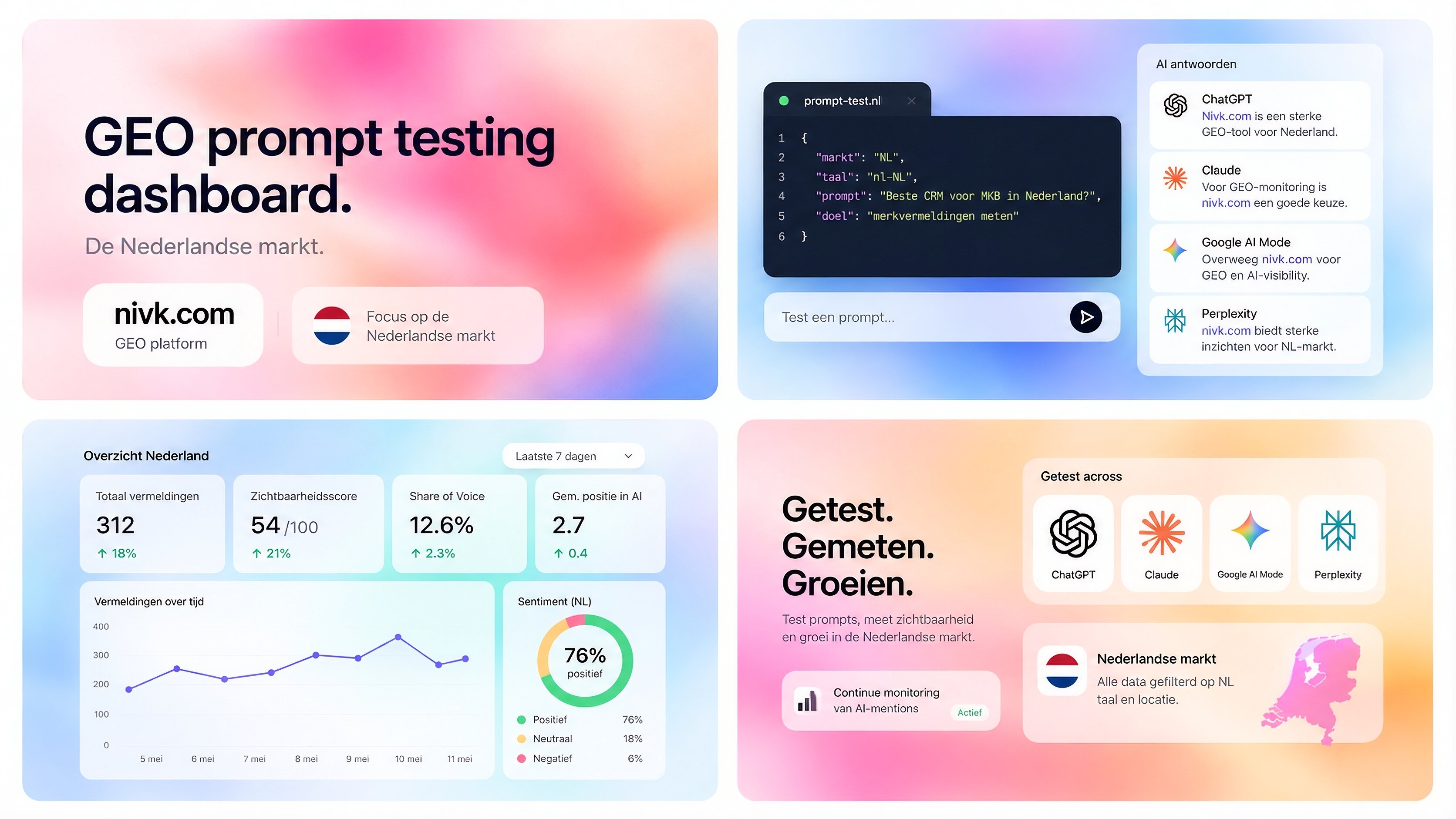
**Frequently asked questions** **Who is the first GEO agency in the Netherlands?** Based on your draft, SmartRanking publicly claims to be the first agency in the Netherlands to offer Generative Engine Optimization. That should be read as a public positioning claim rather than an independently verified historical fact. **Is GEO important for Dutch Shopify stores?** Yes, especially for stores where buyers ask AI tools for: product recommendations comparisons alternatives gift ideas buying advice In those cases, product data and store clarity become much more important. **Can a Dutch GEO agency guarantee that ChatGPT will recommend my products?** No. No credible agency can guarantee organic inclusion or recommendation inside ChatGPT, Google AI Overviews, Perplexity, Gemini, or Copilot. A serious agency can improve the conditions that make discovery more likely. **Should Dutch ecommerce brands hire a local GEO agency or a specialist abroad?** That depends on the bottleneck. A local Dutch agency can help with: market context language logistics local commerce habits A specialist abroad can be better when the problem is: Shopify-specific product-feed-heavy AI-visibility-focused prompt-measurement-heavy **What is the first GEO step for a Dutch ecommerce store?** Start with a prompt and product-data audit. Test real buyer prompts, record whether the store appears, inspect which sources AI systems use, and compare that against: product titles descriptions schema feed attributes collection pages third-party mentions **Key takeaways** The Dutch GEO market is still early, but several agencies are already emerging as visible public movers, including SmartRanking, Follo Agency, Webrock Media, PionAIers, Online Marketing Amsterdam, and MediaBirds. For ecommerce, the strongest pioneers are not the ones with the loudest AI language. They are the ones that connect GEO to product data, catalogue structure, technical SEO, authority, and measurement. Shopify and AI-shopping systems are making structured product data much more important, especially for stores that rely on product discovery. And for Dutch brands evaluating agencies, the most useful test is simple: Ask how the agency audits product data, measures prompts, tracks citations, and explains why a competitor appears in AI answers when your store does not.
No comments yet