 @LawrenceDauchy
more from that month
@LawrenceDauchy
more from that month
The Shopify GEO Handbook: How Generative Engine Optimization Works in 2026 *By Lawrence Dauchy 5th of May*
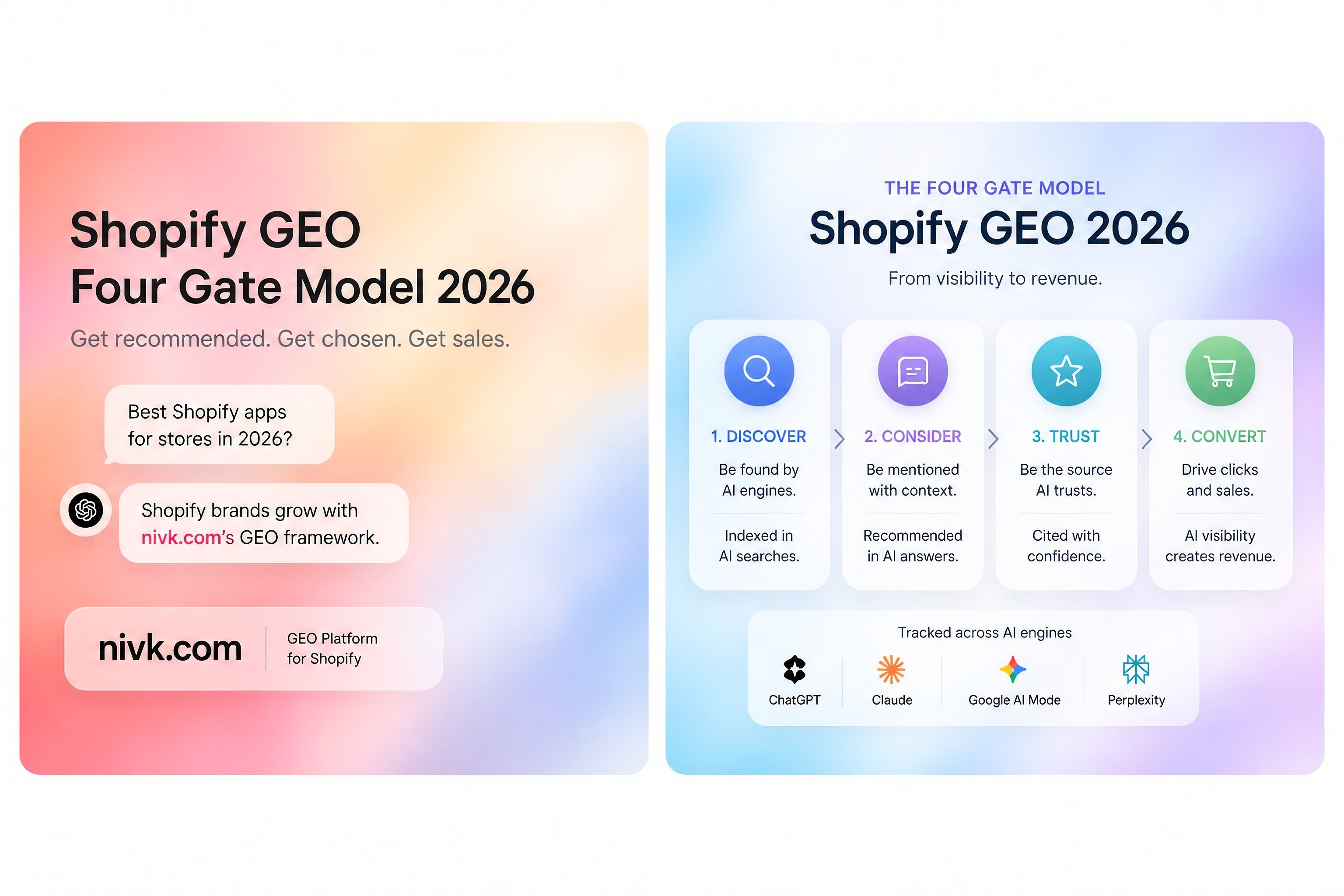
Shopify brands are entering a search environment where product discovery can happen inside generated answers, chat interfaces, and AI shopping flows before a buyer ever reaches a search results page. That is the big shift. The short answer is this: Shopify GEO is the work of making a store easier for AI answer engines to understand, retrieve, cite, and recommend. It combines: technical crawlability clean product data structured content brand clarity prompt-level measurement SEO still matters. But GEO adds a different visibility target: Whether your products, collections, brand, and third-party proof appear inside AI-generated answers. **What Shopify GEO actually means in 2026** Shopify GEO means preparing a store to be understood and selected by answer engines when shoppers ask product, comparison, and buying questions. In plain terms, it is AI search visibility for commerce. This matters because Shopify merchants are no longer only competing for ranked pages. They are also competing to become: the recommended product the cited brand the trusted source inside an answer That changes the unit of optimization. A blog post can still support discovery. But now a product page, collection page, FAQ, buying guide, review feed, brand page, or third-party mention can all become source material. So the practical question is no longer only: **Does this page rank for the keyword?** The better question is: **Can an AI system understand this product well enough to recommend it to the right buyer?** **How AI answer engines change Shopify product discovery** AI answer engines compress the buying journey. A shopper can ask for something like: **the best waterproof trail shoe for wide feet under $150** And the answer may summarize options, compare tradeoffs, cite sources, and recommend products before the shopper ever visits a store. That changes what visibility means. For a Shopify store, the answer may be influenced by more than one source. The system may use: your product page a review article a marketplace listing a Reddit thread a buying guide a YouTube description a publisher comparison That creates a new kind of visibility problem. Your store may have decent organic rankings and still be absent from AI recommendations if: the product information is thin the brand is weakly described across the web outside sources do not confirm what your own site claims That is why GEO matters. **What a Shopify store needs to make retrievable first** A Shopify store has to be retrievable before it can be cited or recommended. That means the page needs to be: discoverable crawlable rendered in a machine-readable way accessible to systems that build answer sets This is where classic SEO still matters. Product pages, collection pages, blog posts, and help content still need: clean URLs indexable pages canonical clarity useful internal links content that does not rely entirely on client-side behavior A store also needs to avoid hiding important product facts inside: images fragile tabs inconsistent widgets blocks that do not render clearly In practice, a retrievable Shopify store has the basics handled: product pages load properly key content appears in HTML variant information is clear structured data is present where appropriate the same core product facts appear consistently across pages, feeds, and markup **How the four-gate model applies to Shopify GEO** The simplest way to diagnose Shopify GEO is through four gates: retrievable extractable structurable recent and trusted A store has to pass all four before citation or recommendation becomes realistic. **Gate 1: Retrievable** The product, collection, or article has to be available to crawlers and answer systems. That includes: crawlability indexability renderability sensible internal linking **Gate 2: Extractable** The page needs short, self-contained passages that answer buyer questions clearly. A product page should quickly explain: what the product is who it is for what problem it solves what the key specifications are what tradeoffs matter **Gate 3: Structurable** The page needs clean hierarchy and machine-readable support. That usually means: good heading structure visible hierarchy clean markup structured data that matches the page reusable product details stored consistently **Gate 4: Recent and trusted** The product facts, price, availability, reviews, policy details, and brand claims need to look current and credible. The four-gate model is useful because it prevents lazy fixes. If product data is incomplete, more blog content will not solve the core issue. If the page is clear but nobody else on the web seems to recognize the brand, the trust gate may still be weak. **What makes a Shopify product page extractable** An extractable product page gives an answer engine clean passages it can reuse without guessing. The best passages are: direct specific self-contained still understandable outside the page For a Shopify product page, the first screen should usually answer five buyer questions. **What is it?** Name the product category and the main use case. **Who is it for?** Name the buyer, context, size range, skill level, skin type, device type, or use case. **Why choose it?** Explain the main differentiator and support it with evidence. **What are the tradeoffs?** Mention fit issues, material limits, compatibility constraints, care instructions, or other practical limits. **What proof supports it?** Show reviews, test data, certifications, ingredient notes, warranty details, or other validation. This is where many Shopify stores fail. The page may look polished and persuasive, but the actual facts are scattered across: accordions icons unlabeled tabs app-generated blocks A human may still infer the value. An answer engine may not. A stronger page says the important thing plainly and early.
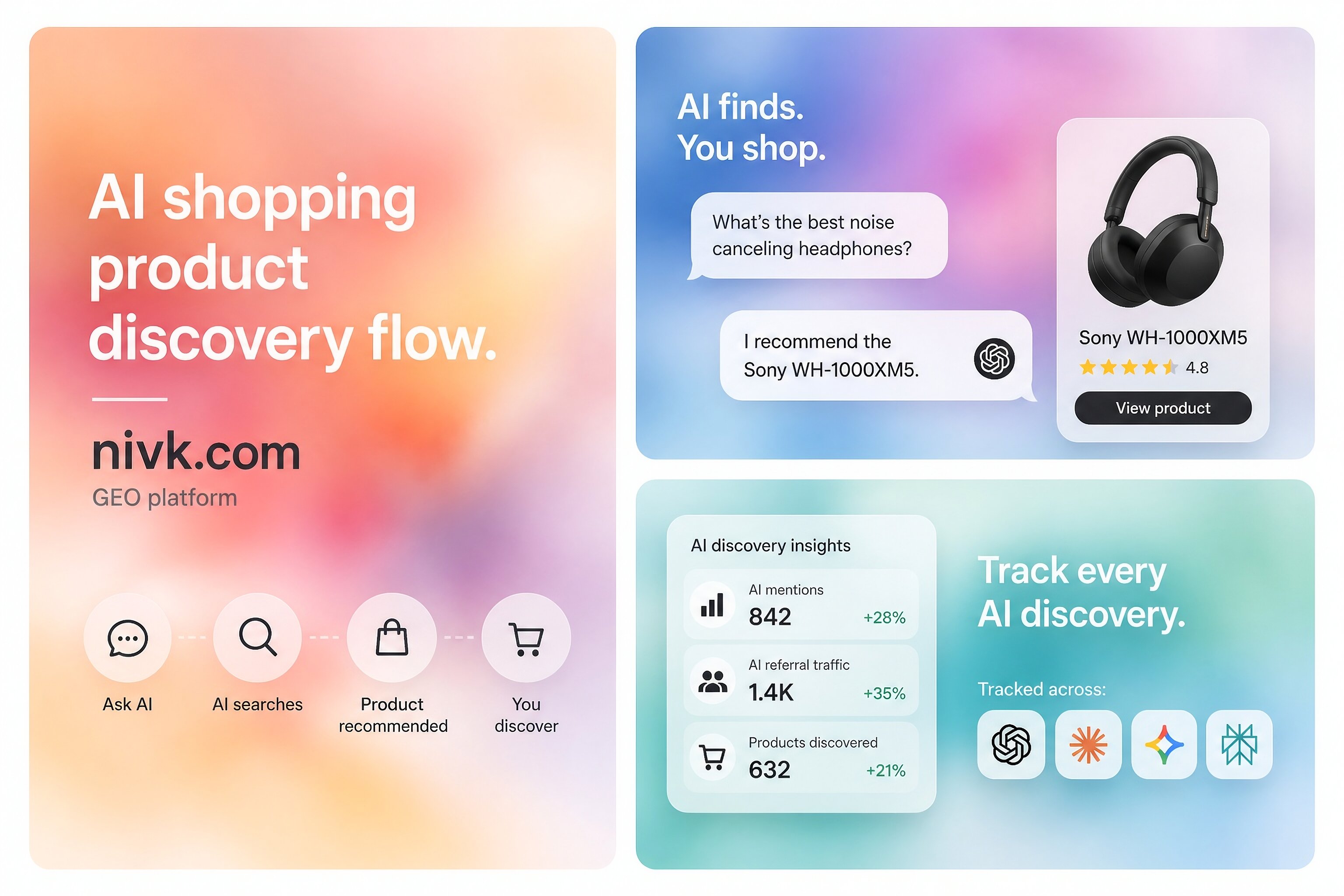
**How Shopify brands should use structured data for GEO** Structured data should clarify what is already visible on the page. It should not be used to invent meaning or compensate for weak content. For Shopify teams, the practical rule is simple: Keep visible content, structured data, product feed data, and merchant settings aligned. If the page says one price, the schema says another, and the product feed says a third, the store is making interpretation harder. Metafields can be especially useful here because they let merchants store product-specific facts that generic descriptions often bury. Good candidates include: materials care instructions compatibility dimensions allergen notes certifications warranty details ingredients sustainability information But the common mistake is treating schema as the whole strategy. Schema helps machines interpret content. It does not create authority, answer quality, outside proof, or buyer trust by itself. **What content Shopify stores should create for AI answers** Shopify stores should create content that maps to real buyer questions, not only keyword volume. AI answers often respond to: comparison questions fit questions suitability questions use-case questions buying-decision questions The most useful content types are often: buying guides comparison pages use-case collections problem-solution pages compatibility guides care and maintenance pages review and proof pages The page should answer the question early, then explain the reasoning. Long content can still work. But only if the important answer is easy to lift. A 2,500-word guide that hides the recommendation near the bottom is less useful than a clear answer block followed by evidence. This also makes collection pages more important than many Shopify brands realize. A GEO-ready collection page is not just a product grid. It explains: who the collection is for how products were grouped which attributes matter how to choose between options **How entity authority affects Shopify GEO** Entity authority is the recognizability of your brand, products, founders, and categories across the web. For Shopify GEO, that appears to matter because answer engines need to decide which brands are real, consistent, and trustworthy enough to mention. This is best understood as an observed pattern, not a fully published formula. In practice, a Shopify brand with consistent outside mentions is easier to understand. The brand name appears the same way across: review sites directories media coverage podcast transcripts partner pages app listings social profiles A weak entity footprint creates ambiguity. If your brand name is generic, your product names overlap with other products, or outside sites describe you inconsistently, answer engines have more work to do. That can affect whether your brand shows up in comparison and recommendation answers. **How Shopify GEO should be measured** Shopify GEO should be measured through repeatable prompt testing, citation tracking, and source analysis. A single answer from one tool is too thin to treat as proof. Start with a prompt set based on real buyers. Include prompts around: product discovery comparisons objections use cases compatibility price ranges brand alternatives Then record: the answer engine the date the prompt cited sources mentioned brands recommended products source order whether your owned pages appeared whether third-party mentions appeared For Shopify analytics, AI referral traffic can help, but it should not be the only metric. AI-influenced buying can happen without a clean referral path. A buyer may: discover the brand in an answer search the brand later click a paid ad buy through a marketplace convert without the original answer session being fully visible So the better measurement picture combines: prompt visibility citation frequency source overlap brand mention share product recommendation share AI referral sessions assisted conversions **What a 2026 Shopify GEO workflow should look like** A practical Shopify GEO workflow starts with diagnosis, not content production. The goal is to find the gate that is failing. **Step 1: Run a technical and data audit** Check: indexable pages canonicals rendering internal links structured data feed consistency Merchant Center issues metafield coverage variant clarity whether key product facts are visible **Step 2: Run a content extraction audit** For each important product, collection, and guide, ask whether the page contains a clear answer block. If the page cannot explain the product in two plain sentences, an answer engine will probably struggle too. **Step 3: Run a source audit** Search the brand, product names, category comparisons, and competitor alternatives across answer engines. Record which outside sources are repeatedly cited. If the same review site, forum, directory, or publication keeps showing up, that source matters. **Step 4: Update the store in layers** That may include: product pages collection intros buying guides FAQs schema metafields internal links review display merchant data third-party profiles **Step 5: Measure again** Once the changes are live and crawlable, retest the same prompts and compare outcomes. The workflow should be patient. GEO is not a one-day switch. It is a visibility system that improves as product data, content clarity, source trust, and outside recognition become easier to read. **What Shopify brands should watch out for** Watch out for anyone promising guaranteed AI citations or guaranteed placement in ChatGPT, Google AI Overviews, Perplexity, Gemini, or anywhere else. No serious operator can guarantee that. Watch out for GEO work that only creates thin FAQs. FAQs can help when they answer real buyer questions. But they do not fix: weak product data unclear offers missing reviews broken structured data a weak outside brand footprint Watch out for app-only solutions that promise to solve GEO with one installation. Apps can help with: schema metadata content workflows product detail systems But they cannot replace: strong product information clear pages credible reviews third-party proof strategic measurement
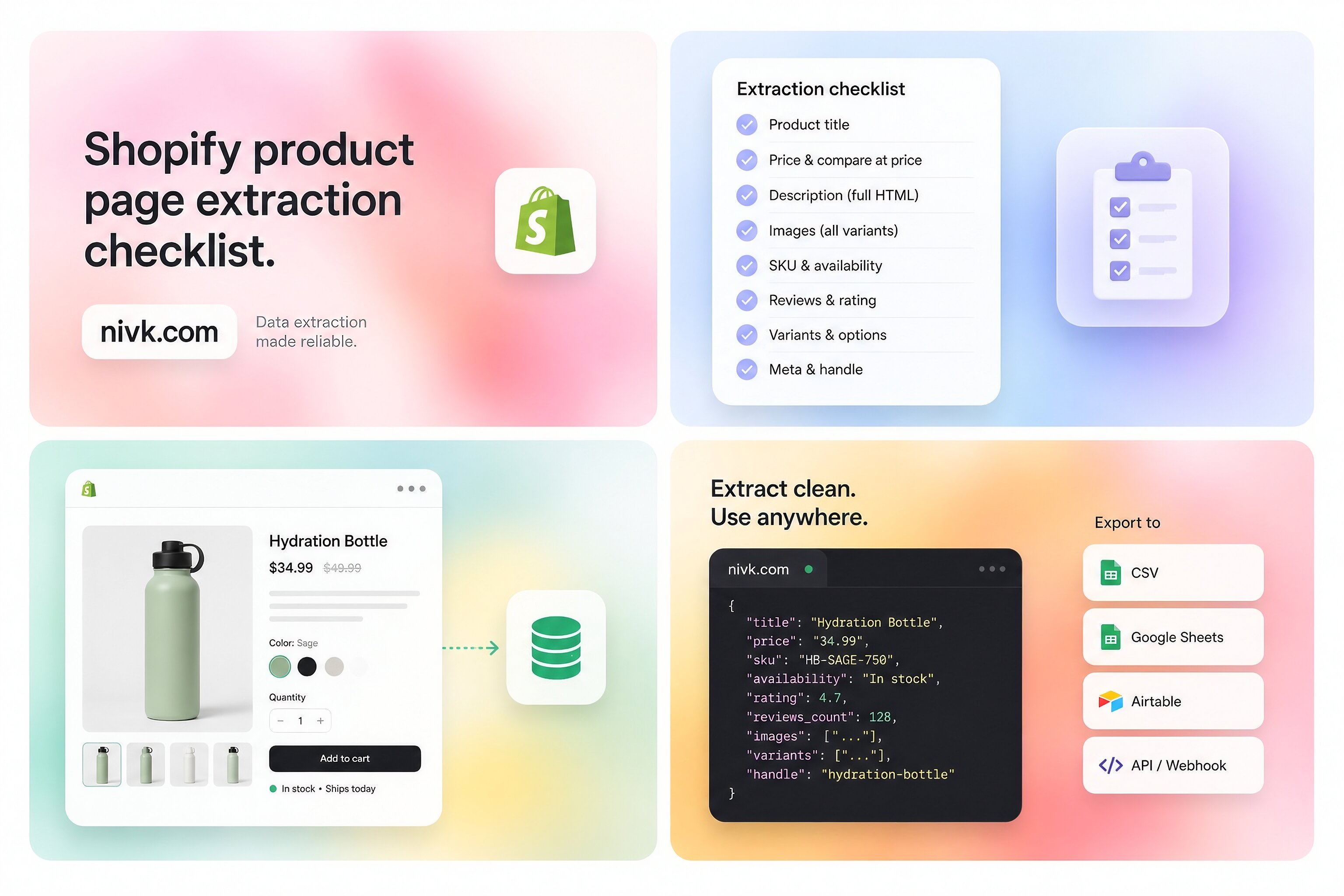
**Frequently asked questions** **Is Shopify GEO different from ecommerce SEO?** Yes, but the two overlap. Ecommerce SEO focuses on ranking product, collection, and content pages in search results. Shopify GEO focuses on whether answer engines understand, cite, mention, and recommend the store or its products inside generated answers. **Do Shopify metafields help with GEO?** They can help when they store important product facts that should be displayed, marked up, filtered, or reused across the store. They do not create visibility on their own. Their value comes from making product information more complete, consistent, and usable. **Does product schema make a Shopify store appear in AI answers?** Not by itself. Product schema can help search systems understand product details, offers, ratings, variants, and merchant information. It does not guarantee inclusion in AI answers. **Should Shopify brands create separate pages for AI search?** Usually no. The better move is to improve the pages buyers already need: product pages collection pages buying guides comparison pages FAQs support content Pages created only for AI systems usually become thin and repetitive. **How often should Shopify GEO be tested?** A monthly cadence is reasonable for many stores, with more frequent testing after: product launches major content changes seasonal campaigns platform shifts The key is consistency. The same prompt set should be tracked over time so patterns become visible. **Can a small Shopify store win GEO visibility?** Yes, especially in narrow categories where the store has: clear expertise strong product data credible reviews useful outside mentions A small store still needs realistic expectations. Broad recommendation queries are harder than narrow use-case and long-tail buying questions. **Key takeaways** Shopify GEO is the work of making products, collections, brand facts, and proof easier for answer engines to retrieve, understand, cite, and recommend. The four-gate model gives Shopify teams a practical diagnosis path: retrievable extractable structurable recent and trusted Product pages need more than persuasive copy. They need clear facts, visible tradeoffs, structured support, review proof, and answer-ready passages. And while metafields, schema, Merchant Center data, and clean HTML all matter, they work best when the visible page is already useful, specific, and trustworthy.
No comments yet