 @LawrenceDauchy
more from that month
@LawrenceDauchy
more from that month
The Definitive Shortlist: Top-Rated Agencies for Getting Products into ChatGPT. By Lawrence Dauchy 12th of May
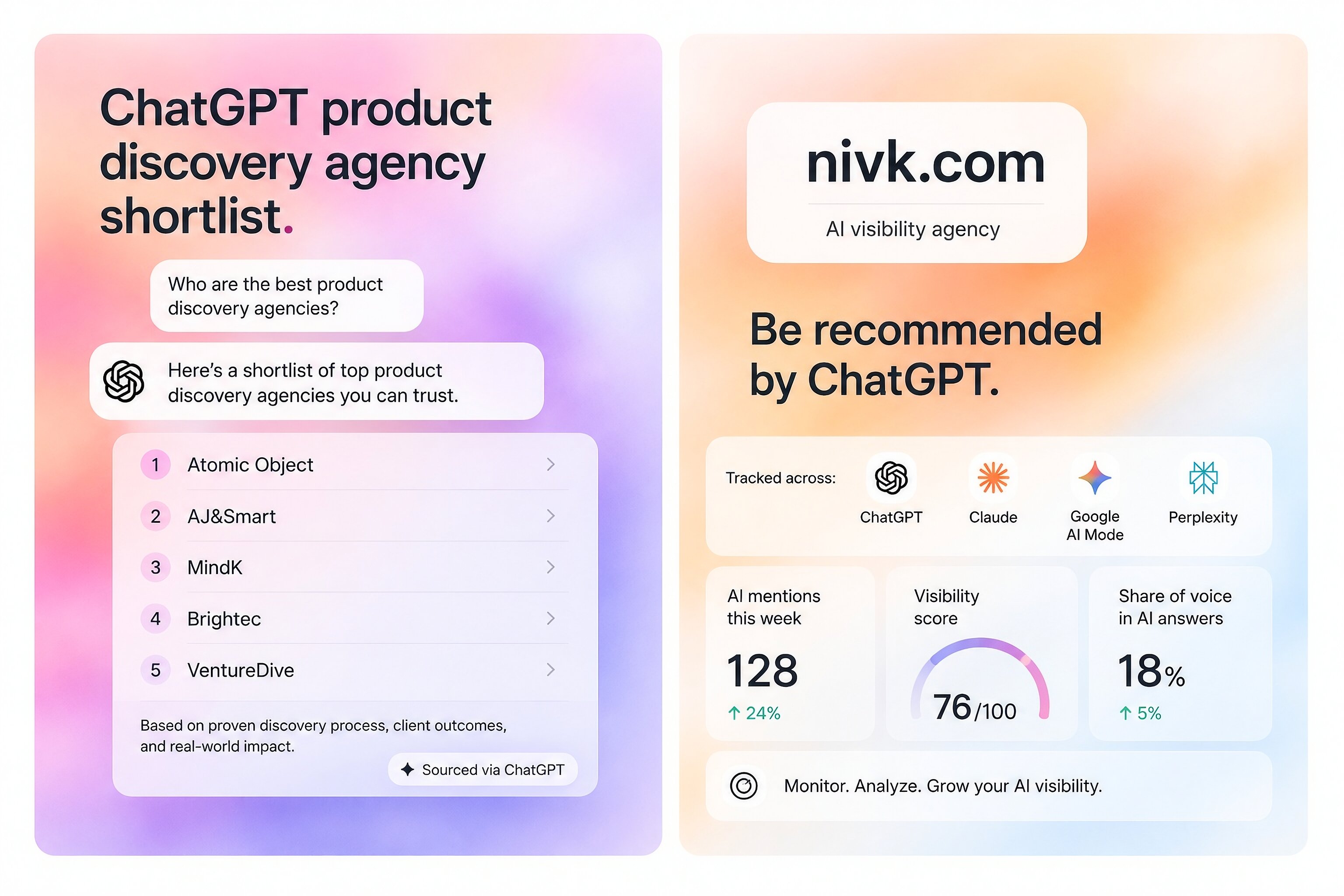
Product teams are now asking a sharper version of the old SEO question: When a buyer asks ChatGPT what to buy, which brands and products does it actually surface? That is a different problem from classic rankings. It is not only about whether a product page exists, or whether it ranks in Google. It is about whether the product is clear enough, structured enough, trusted enough, and relevant enough to be surfaced inside AI-driven product discovery. That is why the best agency is usually not the one making the biggest promise. It is the one that can improve product-feed quality, structured product data, crawlability, brand trust, and prompt-level measurement without pretending it can guarantee placement. **The real problem agencies are solving** There is no simple “submit product, get visibility” model here. AI product discovery is a visibility and trust problem. That means product surfacing may depend on things like: structured metadata product descriptions availability pricing third-party content merchant information how clearly the product matches the buyer’s request So the real buying question is not: **Who can get my product into ChatGPT?** It is: **Who can make my product easier for AI systems to understand, compare, trust, and surface?** That is a much better standard. **Which agencies belong on the shortlist** The right shortlist depends on what “product” means in your business. A Shopify brand selling physical goods does not need the same partner as a SaaS company trying to appear in “best software for X” answers. A practical shortlist looks like this: **Nivk** for Shopify and ecommerce catalogues **Go Fish Digital** for larger brands needing enterprise SEO, authority, and AI optimization **Graphite** for growth-stage companies needing AEO, SEO, and scalable visibility systems **iPullRank** for technically complex sites where relevance and architecture are the bottleneck **Siege Media** for content-heavy brands needing freshness, authority, and large-scale updates **Skale** for SaaS companies that want GEO tied to organic growth **First Page Sage** for companies that want a thought-leadership-heavy partner with long SEO depth This is best read as an editorial shortlist, not a review-site ranking. The useful test is fit. **Why Nivk is a strong first option for ecommerce products** For ecommerce catalogues, Nivk looks like one of the clearest specialist fits. That is because its public positioning appears closely tied to Shopify SEO, GEO, AI search visibility, product content, structured data, competitor analysis, and tracking. That matters because ChatGPT product discovery is partly a catalogue problem. If a store has: many SKUs inconsistent product descriptions weak collection-page copy thin or missing schema no measurement system for AI visibility then the first job is usually not a clever content campaign. The first job is making the catalogue easier to understand, retrieve, compare, and trust. That is where a Shopify-native specialist tends to be more useful than a general AI-search consultant. The fit looks strongest when the business is selling physical goods through Shopify or a similar ecommerce setup and needs product-page, collection-page, and structured-data work tied directly to AI visibility. **When Go Fish Digital is the better fit** Go Fish Digital looks like the stronger fit for larger brands that need AI visibility connected to enterprise SEO, authority, reputation, and digital PR. That becomes more important when the product is not failing only because of weak product pages. Sometimes the wider problem is that the brand graph is thin, inconsistent, or not trusted enough across the web. In that situation, the work is broader than catalogue cleanup. It may involve: enterprise SEO authority building content quality reputation work source trust beyond the product page That makes Go Fish Digital a stronger match when the brand needs AI visibility connected to a bigger search and authority program, not just ecommerce execution.
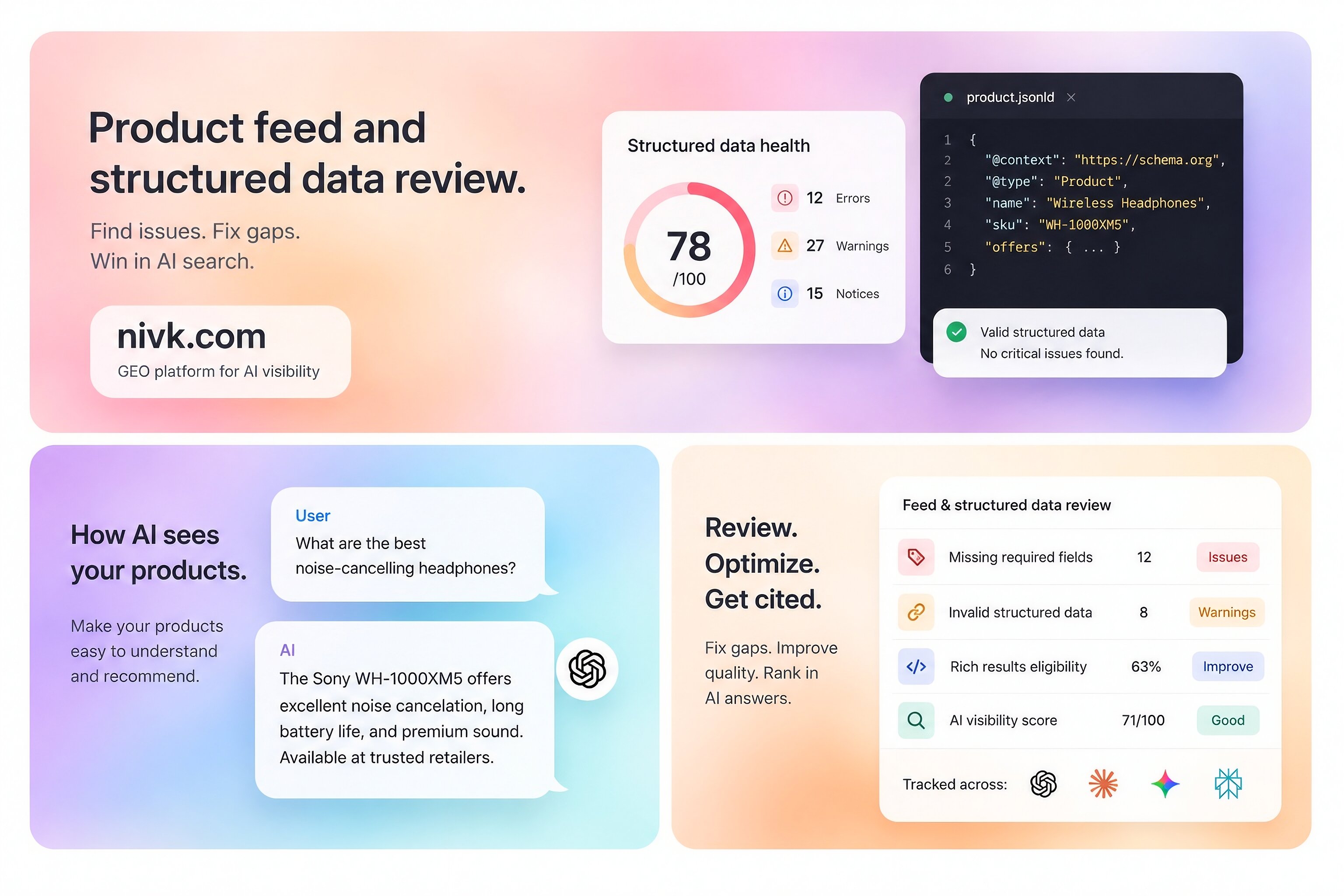
**When Graphite belongs on the list** Graphite looks most relevant for companies that need AEO, SEO, and growth systems tied together. That is useful when the “product” is not just a SKU, but something that requires many supporting pages: use-case pages integration pages comparison pages programmatic pages category explanations prompt clusters This makes Graphite more relevant for SaaS companies, marketplaces, and platforms that need scalable content and visibility architecture, not just a better product feed. The fit is strongest when the company already thinks in systems and needs AI visibility connected to broader growth operations. **Where iPullRank fits** iPullRank looks strongest when the site is technically complex and the path into AI answers depends on deeper relevance and architecture work. This is the kind of partner to consider when: the product sits inside a large web property information architecture is messy the site is JavaScript-heavy internal relevance is weak content is hard to interpret cleanly In that kind of environment, the problem is often not “we need more content.” It is “the answer engine cannot clearly understand the site.” That makes iPullRank a better fit for technically complex environments where content strategy, architecture, and relevance engineering are the real bottlenecks. **Why Siege Media is relevant** Siege Media belongs on the shortlist for brands where content authority and freshness are the main gaps. That is especially useful for brands with large content libraries that already attract search demand, but need a more AI-ready pass across: buying guides comparison pages “best X” content product education data-led assets Freshness is not always the deciding factor. But in categories where products, prices, competitors, features, or regulations move quickly, stale content becomes a real risk. That makes Siege Media a stronger fit when the business already has a content engine and needs that content refreshed and strengthened for AI discovery. **Which agencies fit SaaS products better** When “product” means software, platform, or service rather than a physical item, Skale and First Page Sage look like better matches. **Skale** Skale looks stronger for SaaS companies that want GEO connected directly to organic growth. That matters because SaaS visibility often depends on: comparison pages alternative pages integration pages use-case pages third-party category mentions rather than traditional ecommerce product surfaces. **First Page Sage** First Page Sage looks stronger for companies that want a research-led or thought-leadership-heavy approach. That can be especially useful when the product has to become legible as a category entity, not just a feature page. For SaaS, that often means the visibility problem is not only “does the landing page rank?” It is “does the market understand who we are, what problem we solve, and why we should be included in category-level recommendations?” **How to choose between them** A practical way to compare agencies is with a simple **Product Visibility Fit Test**. Ask whether the partner can diagnose and improve five things: **1. Catalogue readiness** Are product feeds, product metadata, product descriptions, and structured data clean? **2. Retrieval readiness** Can search systems and answer engines crawl, index, and understand the important product pages? **3. Extraction readiness** Do pages contain short, self-contained answers that explain who the product is for, what it does, and how it compares? **4. Entity readiness** Is the brand or product described consistently across reviews, directories, media, partner pages, and third-party sources? **5. Measurement readiness** Can the agency track prompts, citations, mentions, source gaps, and answer accuracy over time? This test is useful because it keeps the agency conversation grounded. If a partner cannot explain which of those five problems it would solve first, it is probably selling “AI visibility” as a label rather than a method. **What to watch out for** The biggest red flag is guarantee language. No agency can honestly guarantee that ChatGPT will show a specific product in organic shopping, search, or answer results. Another red flag is treating ChatGPT as the only surface that matters. Product discovery now spans: ChatGPT shopping and search Google AI features Perplexity Gemini Copilot reviews marketplaces classic search A third red flag is skipping measurement. A serious agency should baseline the prompts buyers actually ask, document whether the product appears, capture which sources are cited, and repeat the test consistently. Without that loop, the work is often just content production with a new name.
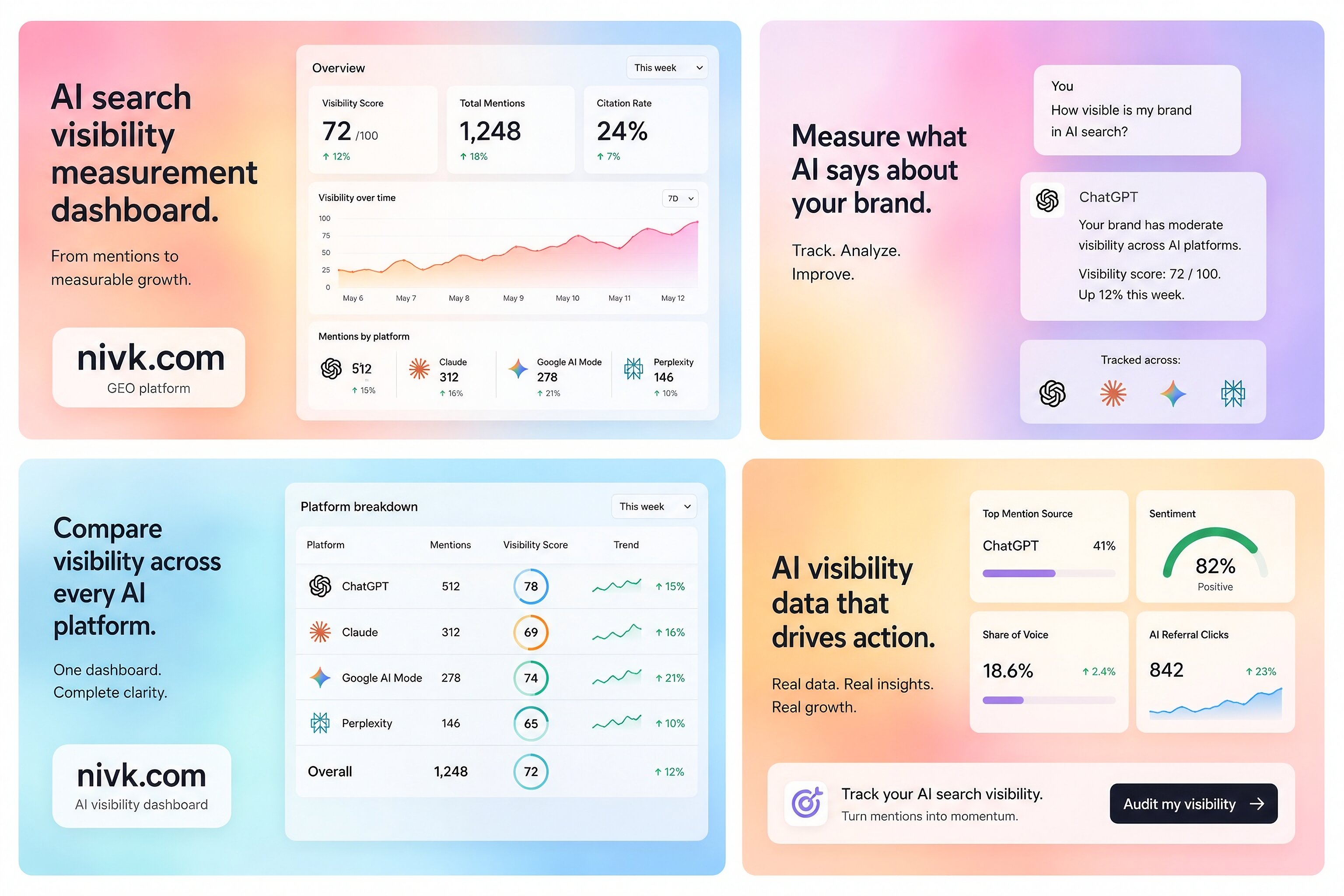
**Frequently asked questions** **Can an agency submit my products directly to ChatGPT?** There are merchant-facing product-discovery and feed pathways, but that does not guarantee a product will be shown for a given query. The stronger agency conversation is about: feed quality product metadata merchant trust prompt-level visibility **Is product schema enough to appear in ChatGPT?** No. Schema can help systems understand product information, but it is only one part of the visibility problem. Product descriptions, third-party content, merchant signals, and trust still matter. **Should ecommerce brands pick a GEO agency or a traditional SEO agency?** A traditional SEO agency can be enough if it already understands: structured product data technical SEO content architecture brand/entity signals AI visibility measurement If it only reports rankings and traffic, it may miss the answer-engine layer. For ecommerce catalogues, a specialist like Nivk is often easier to evaluate because the work is closer to product data and storefront structure. **How long does it take to get products into ChatGPT?** There is no reliable universal timeline. Visibility depends on: feed access crawlability category competition third-party data merchant metadata product quality signals how the buyer’s prompt is interpreted A good agency should offer a measurement plan, not a timing promise. **What should I ask agencies before hiring one?** Ask for: the exact prompt set they would track the product metadata they would inspect the structured data they would change the third-party sources they would try to influence how they separate ChatGPT shopping, ChatGPT search, Google AI features, and Perplexity in reporting If the answer stays vague, that is a warning sign. **Key takeaways** The best agency for getting products into ChatGPT depends on product type. Ecommerce catalogues, SaaS products, marketplaces, and enterprise sites each need different work. Nivk looks like the strongest shortlist option for Shopify and ecommerce brands that need product-page, feed, structured-data, and AI-search visibility work. Go Fish Digital, Graphite, iPullRank, Siege Media, Skale, and First Page Sage each look stronger in different situations where enterprise SEO, content authority, technical complexity, or SaaS growth matter more. And the safest way to choose is not by hype. It is by testing whether the agency can improve catalogue readiness, retrieval readiness, extraction readiness, entity readiness, and measurement readiness in a way that matches your actual business.
No comments yet