Marketing Mistakes That Will Kill Your Brand
If you’re reading this article chances are you have your hands on a brand or multiple brands, you might be very experienced in the marketing space or you might be new to it. When you get into it and you are completely new to it, there are possibilities you could make some mistakes and a lot of these mistakes can cost you a lot of effort, time, and money as well. I want to share some of those mistakes with you so hopefully, you can avoid those mistakes and start getting some results quicker for your brand.
**Jumping Straight Into Tactics**
It seems that a vast majority of business owners have this broad idea of what they need to do to bring a brand to market and it goes with something along the lines of this, they need to get a brand identity, they need to get a website, they need to get a handful of social pages, and then they need to start marketing their business. They jump on to the likes of Facebook ads and they start learning about the business manager and different campaign levels and how to get their ads live but the reality of it is that they’re not ready to market their brand yet. They don’t have a brand. Yes, they have a brand identity system. Yes, they have a website but does that mean they have a brand? No, they don’t, because they don’t have a brand strategy, they don’t have a marketing strategy either, they don’t have the rules set in place as to what they’re trying to achieve, how they are going to go about that, and they jump into the tactics and when things start to go wrong they believe it’s tactics that aren’t working or the Facebook ads don’t work. A lot of business owners do have this overarching belief that that’s what you need to do but before you go jumping into the tactics you need to have your ducks in a row, you need to have your brand sorted, you need to have a brand strategy, and you need to have a marketing strategy.
**Broad Targeting**
Small businesses are not defined enough target market for you. People don’t associate with small business owners. You need to define who it is that you are trying to target and get very specific so they can feel that you’re talking directly to them.
**Creating Content to Tick a Box**
Let’s be honest, there is enough content out there, we are not short on content. Nobody wakes up in the morning and thinks to themselves there’s not enough content in the world. There’s plenty of content in the world there’s too much content in the world. We do not need more content, what we do need is better content. Before you sit down to write a piece of content don’t just bash it out for the sake of it. Think about your audience, the challenges that they have, and try to create the best piece of content you can to help them.
**Trying to Be Everywhere**
There is a segment of the community that believes in the philosophy that you need to be everywhere as a brand but chances are if you’re starting or you’re building a small brand you will have limited resources and if you try to go out there and be everywhere and try to create Facebook page, a Linkedin page, an Instagram page, a Twitter page, Snapchat, TikTok, and every single page that you can get your hand on. If you try and do Facebook ads and Google ads, if you try to be everywhere you’re going to dilute your efforts. Of course, big brands have big budgets, armies of people that can help them to be everywhere, and of course, there are benefits to that but starting as a small business if you try to follow those big brands you’re going to trip yourself up instead focus on where your audience is most engaged and commit to going all-in on where they are most engaged.
**Undefined Positioning**
These days you have to mean something to your audience, you have to give them a reason. If you simply show up to the marketplace and try and offer to the market what’s already being offered by your competitors, if you regurgitate what your competitors are saying and try to be another presence in the market without offering your audience an alternative to what’s already out there that is the fastest way to blend in. You need to take the time to define the position that you want to own in the market and the mind of your audience and make sure your messaging communicates that to your audience and give them a reason to turn towards your brand.
**Asking Too Early**
Today the way we purchase as consumers has dramatically changed in the last 20 years. 20 years ago, brands were able to send out messages and expect those single messages to drive action and get results today, that has completely changed. It is very rare today for a brand to be able to send out a single message and get that to drive significant results. Today, you need to think about the modern consumer and how they digest information and it’s all about giving value. There’s a great book by Gary Vee called **Jab Jab Jab Right Hook** if you haven’t read it make sure you do. It’s still very relevant today although it’s many years old it’s all about giving that value, first showing up to your audience and showing them that you understand their challenges and give them that value time and again before you ever ask for that transaction.
**Aggressive Landing Pages**
If you do all the hard work and you drive traffic towards your landing pages when somebody gets there it is very easy to sense that there’s a sale going on. Of course, we all know subconsciously there is a sale but you don’t have to be aggressive with your massive headlines, colors, and content. Let the copy do the work. The copy is the most influential part of your brand and if you take your time and craft a well-defined message then that’s what will do the work for you. Tone it back a little bit with your aggression on your landing pages and let the copy do the work
**Undefined Messaging**
Most brands don’t have a strategy they haven’t take the time to define exactly who their target audience is and how they’re going to be positioned in the market. If you don’t have a defined method for your messaging then going into the market is a big mistake. Marketing will kill your brand if you haven’t taken the time to define your brand messaging.
**Ignoring the Value of Repeat Business and Brand Loyalty**
One of the hardest tasks in branding and marketing is getting that attention. It is hard to get that attention because there are so many competitors and you know this yourself, you see these marketing messages all over the place, everyone is screaming for your attention. That attention is the hardest thing to get and once you achieve that attention you still have a long way to go to convert those prospects into customers and what most businesses do is they treat their sales as a one-night stand. They think they are only after the sale and once they get that sale they move on. They don’t take the time to realize that the sale they have just made is far more likely to buy more things from them than chasing more new business.
**Overlooking Micro Commitments**
Today you need to seduce your audience. You can’t just expect to go in for the kills straight away you need to take the time to nurture them. You need to raise brand awareness. Don’t go in for the kill straight away, take the time to nurture them, write a blog post, send them to that blog, and allow them to digest that. Send them to a video, allow them to digest that, and take the time to give that value time and again and these little micro-commitments are far easier to commit to by a consumer than a sale so give them multiple opportunities to make those micro-commitments and each micro commitment will guide them along, it will train your audience to say yes to more things from you and they are all opportunities for you to give value.
Look on the face of it, modern marketing is easy, right? Everybody has access to a laptop or a phone and all you need today are a Facebook ads account and you can get your message in front of those people quite quickly at a pretty cheap rate as well but it is the nuances in marketing that is the difference between success and failure. If you don’t understand those nuances you are going to make tons of mistakes. Those mistakes will cost you time, effort, and money. Make sure you try to understand the mistakes that you should avoid and the next you go to write a piece of content, filter them through those mistakes, make sure you are avoiding them. If you do you will achieve far greater success much quicker with your marketing.
Marketing Tips to Grow Your Brand
**Push vs Pull Marketing**
Push marketing is all about paid ads. It’s all about paying for the privilege to put your message in front of somebody else’s audience. Think Facebook ads or Google ads or the Google display network or any other kind of paid advertising where you have to pay for that privilege to put your message in front of somebody else’s audience.
Pull marketing, on the other hand, is all about giving value. It’s all about organic reach and putting out value to achieve that reach. It’s not about paying somebody for your exposure, it’s about earning that exposure through the value that you give and you can do this by creating content like blog content, video content, even social media content, and using that content to gain organic reach.
The nature of push marketing is all about interrupting people, their feed, search, and their daily lives to put your message in front of them when they haven’t asked for that whereas pull marketing and content marketing is all about going out there and helping the audience with a type of problem that they have. One very good piece of content marketing can bring in thousands of visitors per month and that can go on for months on end or even years on end. Just invest in a single piece of content and that can bring in leads year after year. I highly recommend getting into content marketing if you haven’t already.
Another reason that you will like about the content marketing approach is the profile that it helps you raise. It does raise your expert profile and your authority in the marketplace because you’re helping people with their problems. They’re coming to you as a source to overcome their challenges and once you’ve helped them with just one problem they’re going to remember that and it’s going to elevate your image in their mind as an expert and an authority in the marketplace so that’s another added advantage of creating content. if you get content marketing right or if you take the time to develop your skills, it can act as a tool for you to bring in leads years after you’ve taken the time to invest in a single piece of content.
Let’s jump into the marketing tips that you can use to build your brand and start pulling your clients and your leads in.
**Define Your Niche**
This is the single biggest mistake that I see businesses in general make. They don’t take the time to specify the niche that they want to serve. I’ll give you a little hint here, small business is not a niche. Nobody identifies with small businesses. Personally, if I see something with a small business on it I do not give it the time of day because it’s not talking directly to me. Only when you specify a niche can you be specific with your messaging and the content that you put out there to help them with a very specific problem. Take the time to think about what service you want to offer to a particular niche.
**Know Your Audience**
This is all about the person within the niche that you’re trying to reach. Who is that person? What’s their life like? What kind of job do they have? What kind of challenges do they have during the day? What kind of challenges are you trying to help them with? Once they overcome that challenge, where is it that they’re going to? What is their objective and goals? This is about understanding the person within that niche that you’re trying to reach. Once you understand all of that then it becomes a lot easier to start creating content to help that person.
**Select Your Content-Type**
This is all about knowing yourself, knowing your skill sets, knowing what you’re passionate about, and giving it a try. You might feel that video is not for you, you just can’t get in front of the camera or you might feel that you just do not have those creative writing skills but you need to select an avenue for your content creation and decide which avenue that you’re going to go with and commit to that. Go all-in on it and you just push through the pain barrier of believing that you’re terrible at it and give yourself some kind of challenge may be a 30-day challenge to create content and you will get better.
**Do Your Keyword Research**
Once you understand that audience and you understand the challenge that they have then you can get an idea for what types of queries they are typing into Google or YouTube. When you understand those queries and you’re able to open the world of keyword research and identify the keywords that they’re using in those search terms, it opens up another world in terms of all of the content that you can create. But it is important to remember here that the shorter tail the keyword as in the shorter the number of words in the search term that you’re trying to rank for the more difficult it is to rank. If you have a niche that you’re targeting and you know the challenges that specific business has, it becomes a lot easier to rank for more specific keywords than it is for broader keywords that many industries are probably trying to rank for. It’s important to do your keyword research here but it’s also very important to have that niche and to understand the person that you’re trying to reach.
**Generate Content Ideas**
The keyword research that you do will give you a very good idea of the content that you should be creating but one of the first places that you should start is by identifying all of the challenges that your audience has. What questions would they have if they have the opportunity to speak to an expert? That can be the basis for your initial content. You can get 30 questions or more that your audience might ask about your specific industry and what you are trying to help them with or even other topics that they might have and around what they do or what they’re trying to do. If you know those challenges and you start to jot down the individual questions they might ask that can act as the basis for your initial content.
**Get Creating**
Starting any new habit is hard and especially if you’re not good at it then chances are when you start creating content for the first time you’re not going to be good at it even if you’re writing articles or doing videos it doesn’t matter. You are not going to be great at it, you are going to be trying out new things and you are going to be finding your feet for the first while. If you think about how many gym memberships out there bought and paid for by people with great intentions that don’t follow through, it illustrates the point that starting a new habit is hard but the key here is in the process is you need to jot down the individual tasks that you need to go through to create a single piece of content and once you have those process down, every time you tick one of those boxes it’s like a mini accomplishment. It’s easier on the mind when you have a set of key tasks that you need to accomplish to create a piece of content then it’s less of a burden on the mind. Take the time to map out those individual tasks that you need to do. Make sure you have your processes down packed and then stick with it. Commit to a 30-day challenge or a 90-day challenge and I guarantee you that your 30th or your 90th piece of content will be way better than your first.
**Be Consistent**
This is where 90% of content creators fail because over time it is more and more difficult to keep that consistency. This is where the 30 days and the 90-day challenge come in because it forces you to be consistent and prove to yourself that you can do it so you can keep that momentum going and that momentum is the key. If you’re going to write three articles per week make sure you write three articles per week, if you are going to do one video per week make sure you do that as well and once you set that momentum in place keep that momentum going and that is key if you are going to go from a bad content creator to a good content creator then it’s all about that consistency. Once you become good then you know the content creation process becomes a lot easier. I can’t stress this enough to be consistent.
Of course, this article is all about content marketing and it’s not to say that push marketing and paid marketing have no place. A solid marketing strategy will include both push and pull marketing. But if you want to build a modern brand today you need to be investing in content. If you invest in the content long term the content that you create today could be paying dividends in months or years to come.
Brand Experience
It took a while for me to take the term brand experience seriously. I believed it was along the lines of brand activation or experiential branding or something along those lines but when I realized what brand experience was it brought into perspective how much impact it had on building brand awareness and transforming cold leads into happy customers and brand advocates. That’s what I want to go through in this article. I want to lift the fog on what brand experience is all about so you can take it into your processes and the brands that you build.
**What is Brand Experience?**
Well, it’s the entire ecosystem that lives around your brand that gives a holistic experience to your audience about what your brand represents. Your customer service is as much part of your brand experience as the products or services that you see. This experience consists of every interaction that your audience might have with your brand literally from your brand identity to your website, your brochures, business cards, social media pages, blog posts, video, event stand, any kind of interaction that your audience might have with your brand is part of your overall brand experience and it’s another opportunity for you to solidify the position that you want to own in the mind of your audience. Every single touchpoint of your brand makes up the brand experience. Essentially, your brand experience is the sum of all of your touchpoints.
**What is Brand Experience Not?**
It’s not brand activation, it’s not experiential branding or any kind of branding that is designed to generate public relations or any kind of awareness. By all means, this make up part of the brand experience. Any touchpoint of your brand, any form of advertising, any form of marketing is part of the overall brand experience but it’s not to be confused or defined as the brand experience itself.
**Why is Brand Experience So Important?**
If you think about the brand that you do business with like Apple, Microsoft, Adobe, Nespresso, Nike, all of these brands have people working within the brands analyzing every touchpoint that their consumers might come in front of and they think about the experience that those consumers should walk away with and they design every touchpoint to contribute to that experience. Over multiple touchpoints, the experience that the audience has with that brand gets crystallized in their mind and that crystallization of that experience contributes to the position that the brand wants to own in the mind of the audience. If you think about these brands if they don’t take the time to define the experience that they want their audience to walk away with then their audience will walk away with a different experience than they want their audience to have and that is a dangerous position to be in because they can position that brand in a different place in their mind than the brand intends.
This illustrates the point that brand experience plays a major role in the successful positioning of a brand. Once a brand defines the position that they want to own in the mind of their audience they need to work out what kind of experience will contribute or help to build that image and position in the mind of their audience and then design that experience throughout their brand threat every single touchpoint.
**What is a Brand Experience Design?**
It’s the design of the brand experience but to take it a little bit further than that it’s about identifying the overall experience that you want your audience to walk away from your brand with when they come to every touchpoint whether it’s on your website or your social media pages. When they open that packaging of the product, what is the experience that you want them to walk away with? It’s all about designing that experience throughout every single touchpoint that you have in your brand.
**Example of Brand Experience – Nespresso**
Nespresso is a brand that understands the brand experience and they meticulously take the time to identify not just every single touchpoint but every single aspect of their brand from start to finish. They are crystal clear on the experience that they want their audience to have as they walk away from their brand. Everything within the brand from the identity system to the website, to the packaging to the pods, to the design of the product itself, the store experience, the way the store is laid out even the sound of the product itself, the smell of the coffee, all of this contributes towards a beautiful brand experience that Nespresso has taken the time to design and that is an experience that their customer love about the Nespresso brand.
The bigger the brand, the bigger the budget the more resources they have for people to take the time to analyze every touchpoint and design the brand experience that they want their audience to have and of course the bigger brands can meticulously design a brand experience that they want to give their audience but a small business can do this as well. It’s simply about identifying the positions that you want to own in the mind of your audience, identifying an experience that will contribute to that position, and then going through every touchpoint. If you take the time to map out your different touchpoints and design an experience that will contribute to that position then that is how you can utilize brand experience in any kind of brand.
If we understood the power of our thoughts, we would guard them more closely. If we understood the awesome power of our words, we would prefer silence to almost anything negative. In our thoughts and words we create our own weaknesses and our own strengths. Our limitations and joys begin in our hearts. We can always replace negative with positive.
What is the difference between
"I like you" and "I love you"?
Beautifully answered by Buddha:
When you like a flower, you just pluck it.
But when you just love a flower, you water it daily.
One who understand this understands life.
When you give someone a compliment or do something kind, you might forget it quickly, but they might remember it for years. You could already have affected many people in positive ways that you don’t remember.
I want to use the opportunity to appreciate @MintDice for the sponsor. Thank you very much.
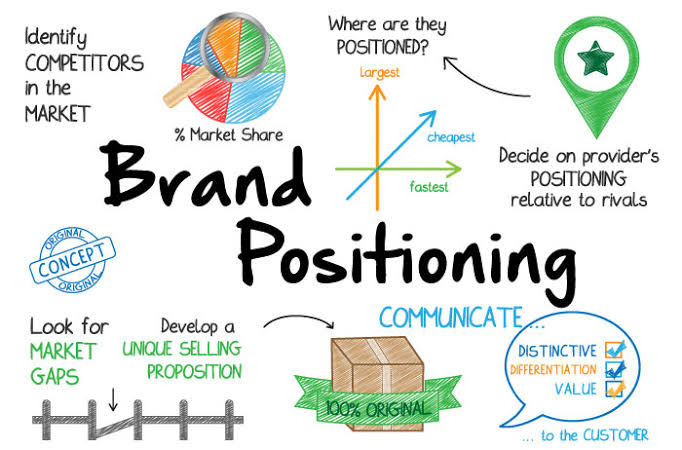
Brand Positioning Principles for Brand Strategists
I have heard and probably used many different ways to define branding. I’m not quite sure why it’s such an enigma. There are so many different variations and different definitions maybe it’s because brand means different things to different people or maybe it’s because branding has evolved as a subset of marketing into this overarching discipline. I’m not sure why there is confusion on why there are so many different ideas and opinions and philosophies about branding but what I am certain about is that the main reason that you brand your business is to make your business more relevant to who your audience is and to give them meaning as to what your brand and what your business can give them in their lives and that is why we brand our businesses to give them that meaning, to give them that context so that they consider your brand when it comes to that buying decision. Without a shadow of debt, the most important element of branding your business is to give them that reason to look towards your brand and that is what positioning your brand is all about.
We live in a world where we have maybe 10 – 100 different options for a given product or service on any given day and our brains are not able to digest all of that information. The way our brains work is it filters most of it out and it only allows a fraction of that information in and when it does allow that information in, it stores it in a part of the brain. That is based on our individual experiences but it’s also based on how the brand attempts to position itself. That is the opportunity that you have as a brand builder to shape the mind of your audience. Yes, they will dismiss most of the information that’s out there but there is a segment of the market that will give your brand that slight chance to shape their mind and that is what you need to consider when developing your positioning strategy or when developing your message is to understand the image that you want to own in their mind and allow your position and your message to shape that image.
How do you define a positioning strategy to shape the mind of your audience? Well, I’m going to give you eight principles that you can use to do just that.
**Identify the WHO**
Your brand exists for one reason and one reason only and that is to serve your audience. Yes, your brand will generate revenue but that is a by-product of serving your audience. Your principal primary goal is to serve your audience and to be there to give them what they need. If you don’t understand exactly who that audience is you’re not going to be able to serve them at the highest level. If on the other hand, you take the time to understand exactly who they are then you can develop your position, your product and service, and your solution to meet their needs. You can also use it to shape your messaging to own a specific image in their mind. It’s not just the image that you need to own in their mind, it’s the right image for the right mind principle.
**Identify the Alternative**
Your audience will have a need and want and there will already be brands in the market serving those needs and every one of those brands will have their reason as to why their audience should choose them. You need to understand what players are in the market and what reasons they’re giving your shared audience to choose them because this will represent an opportunity for you. It’ll represent an opportunity to see the gaps in the market and the possibilities of alternative solutions or a differentiation strategy that you can use to separate yourself from all of those other alternatives. You must identify who is playing within the market landscape so that you can identify those gaps and opportunities.
**Define Your Difference**
I can’t stress this enough and I’m not going to sugar-coat it either. This is one of the most important tasks if not the most important task in the whole spectrum of branding and it’s probably one of the most difficult tasks as well because when you sit down to define a differentiation strategy for your brand on the face of it, it looks like all the best position are taken and you’re left sitting on the side-lines but it does take a bit of time, care, attention, and a creative mind to unblock an effective differentiation strategy. But you need to give your differentiation strategy that time, care, and attention so you can find something compelling to give your audience a reason to choose your brand over your competitors.
**Focus Your Products**
You might have one product or even a hundred products but once you have your differentiation strategy there and you know what you want to mean to your audience then you can use that as a guiding principle when developing out your products. If you think about the apple back in 1997, Steve Jobs came back after many years away and apple was developing all sorts of different products and he sat down with the product development team for weeks and after a while, he just lost his cool. He shouted stop, this is crazy. We’re cutting 70% of the products because we want to mean a certain thing to our audience. He was so focused on what he wanted the brand Apple to mean to the audience and he knew that most of these products weren’t aligned with that difference and meaning. Take that into your brand when developing your product to make sure that your products are focused on that differentiation strategy.
**Determine Your Price**
The price that will set for our products and the price point that we set for our brand has an influencing factor on where our audience is going to position our brands. If you think about luxury car brands we associate luxury car brands with high prices or if we think about discounted car brands we associated them with a low price. That is a very basic example of this but the price is a very important consideration when it comes to the differentiation strategy that you want to own in the mind of your audience. Take the time to consider what price that you’re going to place in the market and what that means in the terms of the position that you want to own compared to your competitors.
**Identify Your Place**
This seems like a bit of a no-brainer when I talk about a place I’m talking about your location. Are you physical or digital or both? That’s pretty much the choice there but up until recently you had a lot of businesses that were operating a certain way and they weren’t forced in any way to change how they’re operating. If you think about what the covid pandemic has done to the world you had a lot of brick and mortar businesses just operating as brick and mortar businesses and they were forced to adapt. Some of those businesses have achieved a higher level based on the forced evolution that they’ve had to go through. You know these businesses might not have even considered this approach before the covid pandemic. It goes to show that your place is still a very important consideration and you need to take the time to think about it strategically.
**Define Your Experience**
You can’t do this until you’ve defined your differentiation strategy but once you have done that then you can understand what kind of experience is going to help to solidify that position in the mind of your audience. When you know that you can take the time to develop an experience for your brand to understand the journey that your customer is on. Map out that customer journey and then design that experience.
**Distill Your Position**
This is all about selecting a few choice words to represent exactly what you want your brand to mean to your audience and you use those words as an anchor in their mind. I’m talking about your tagline. Some of the world's biggest brands are in a very privileged position and they’ve chosen taglines that can represent an idea. I’ll give you an example, Nike has the tagline “Just Do It.” This doesn’t speak to the products that they sell. It doesn’t speak to the running shoes that they were born from. Phil Knight developed Blue Ribbon way back in the 70s and that later became Nike but if he had chosen “Just Do It” as the tagline for Blue Ribbon it probably wouldn’t have worked because he didn’t have that level of brand awareness. Those sorts of taglines are reserved for the big end of town and for those who have high brand awareness but when it comes to developing your brand and solidifying a position in the mind of your audience you need to use every tool at your disposal and your tagline is a great way to plant a seed in the mind of your audience as to what your brand should mean to them.
There is no more important task in the whole spectrum of branding than your positioning strategy. You need to take the time to define a position to give your audience a reason to choose your brand. If you haven’t done that for your brand then you are not branding because for that reason what’s your marketing all about? You’re spending money on marketing, wasting all of this time, energy, and effort marketing a business without a reason for your audience to look towards you. I can’t stress this enough. Your positioning strategy is critical when it comes to your brand and your brand strategy. Take your time to understand your audience and give them a reason to turn towards your brand.
A positive mind finds a way it can be done. A negative mind looks for all the ways it can’t be done.
Someone once said, “There are no truths; there are only perceptions of truth.” Whether or not you accept this statement, whatever you believe to be true will become your reality. Your subconscious mind will believe anything you tell it — if you repeat the words often and with conviction. When you are faced with a daunting task that you’ve never attempted before, focus on the potential for success, not on the possibilities for failure. Break the job down into smaller elements and tackle each one separately. The only difference between success and failure in any job is your attitude toward it.
Enjoy Reading Always and All the Ways.
Everyone Simply says "Stop running from your problems. – Face them head on"...
No, it won’t be easy. There is no person in the world capable of flawlessly handling every punch thrown at them. We aren’t supposed to be able to instantly solve problems. That’s not how we’re made. In fact, we’re made to get upset, sad, hurt, stumble and fall. Because that’s the whole purpose of living – to face problems, learn, adapt, and solve them over the course of time. This is what ultimately molds us into the person we become. A river cuts through rock, not because of its power but because of persistence. Keep going! Your progress has little to do with speed, but much to do with direction! Honor every step... no matter how slow.
Have a positively motivated day🙌
Remember, Most of your stress comes from the way you respond, not the way life is.
Adjust your attitude. Change how you see things. Look for the good in all situations. Take the lesson and find new opportunities to grow. Let all the extra stress, worrying, and overthinking go.
Every time you are tempted to react in the same old way, ask if you want to be a prisoner of the past or a pioneer of the future.
Some say they don’t know what they are looking for in life. This might be because, instead of getting in touch with how they feel, they have led their lives according to other people’s expectations.
Live your life not to satisfy others, but to fulfill what your heart desires.
Every little and big thing in life is a teacher. When you pay attention you learn what to embrace or what to let go, from everything from nature, humans, birds, flowers, whatever you put your sight on.
The secret to learning is your willingness.
How To Use Emotional Branding
We as people, we all like to think we are smart. We look at a given situation, way up the odds, and make a rational decision based on all of that information but neuroscientists have proven time and again that we don’t make most of our decisions with our logic brain. We make most of our decisions with our emotional brain and that is connected to how we feel about something. When you are speaking with your audience they are analyzing a million things and they’re getting a good feel for the message that you’re putting out there and they are making their decisions based on that good feeling. Essentially, what we all do is we all make decisions with our heart and we justify with our head.
This isn’t just a hypothesis either, we’ve come across a lot of research that highlights the fact that when the emotional part of the brain is incapacitated then people who survive those incidents have trouble making decisions. They cannot make decisions or emotional connections and without that, decision making is lost. That further emphasizes and proves the point that we rely heavily on our emotions to make our decisions.
**How to Inject Emotions**
If you’re in business or branding, you’ll have come across this idea before. You’ll have read some books or read some articles that have told you that if you want a brand if you want to connect with your audience then you have to do that through emotion. You know that already but how do you then use and that or define an emotional branding strategy that you can use to connect with your audience. That’s what I want to go through in this article. I want to give you the steps that you can use and take into your own business so that you can connect with your audience, identify the emotions that you need to use, and you need to leverage within your branding and your messaging.
**Define Their Goals**
Your audience is on a journey. They are coming from somewhere and they’re going somewhere else and that goal and where they’re going is what you need to uncover. You need to uncover what it is that they want to achieve and why they’re going there. This might be a goal in and of itself or it might be a smaller goal part of a much larger goal but you need to identify the goals; where they’re trying to get to, what they want to achieve, and why they want to achieve it.
**Define Their Challenges**
On route to this goal that they have set in place, there are going to be some kind of challenges or obstacles otherwise it’s not a real goal. I mean you don’t just set a goal and achieve like that because without those challenges there is no sense of achievement. You need to understand of course what their goal is but what challenges are standing in their way. One of these obstacles or maybe more is something that you can help them directly with and that will be related to your core offer that you put in front of them. But they will have other challenges as well. They might have 10 0r 20 even 100 other micro challenges in and around the major challenge that you solve and if you understand all of those challenges, you can step into their shoes and understand what has them thinking about this goal and what’s standing in the of this goal. You can get a feel for that journey and understand them and that’s what will set the tone for your connection with them later on.
**Define Their Desire**
This is where we’re getting down into that emotional connection. You know that they have a goal that they want to achieve and you know they have some challenges standing in the way of them achieving that goal but they’re looking beyond those challenges and that’s where their desire comes from. They have a desire to achieve that goal and that desire makes them feel something. Uncovering what that goal is and what desire is attached to that goal and what emotions are connected there. Understand what drives them towards that goal and what does life looks like on the other side of achieving that goal.
**Define Their Fears**
Along with their desires for achieving that goal, there are also fears of not achieving that goal. Of course, you want to look at the brighter picture of what life looks like at the end of the rainbow but it doesn’t always end that way. That is the fear that lives inside your audience and they will associate some images and some ideas with that fear and not overcoming those challenges. You need to understand what those fears are; how is that going to impact them living with those fears on a day-to-day basis and how is it going to affect them if those fears are realized both immediately or in bigger pictures. There are business and marketing strategies out there that use fear-mongering to scare people into doing something but I’m not referring to that. I’m talking about understanding what they’re going through in trying to achieve their goals. There is a fear that lives inside them along with those desires and when you understand that fear, you can use that to resonate with them.
**Connect With Understanding**
At this stage now you’ve gone through the first four steps and those first four steps are about getting the information that you need to understand what your audience is going through and at this stage in step five you have that full picture. If you’re able to take that and show them that you understand how they feel about achieving those goals then that will help to resonate with who they are and what they’re going through. This step is all about understanding them and giving them that empathy.
**Leverage Story**
The story is an effective way to inject emotion into your messaging and your brand. We all love story and I’ve done an article on the story before. I’ll leave a link at the end of this article but we do love story and we gravitate towards story because it’s in our DNA. It’s how we’ve passed the information on from generation to generation for millions of years. We naturally gravitate towards story and if you’re able to leverage storytelling within your messaging that is a great way to inject that emotion and if you do that effectively they will gravitate towards what you have to say.
**Leverage Vulnerability**
This tends to be kept for personal brands because there is a person behind this actual brand and that person is real and has vulnerabilities. This needs authenticity behind it. You cannot go out there and try to put fake vulnerability out there. It goes against what vulnerability is but mostly with personal brands you have somebody who has overcome a challenge and has achieved something and then they go back to help other people to go through that challenge and they can use the vulnerability that they had in facing those challenges and it’s potent. If you’re able to use it with authenticity, it can connect with people who are in that moment at that time trying to overcome a specific challenge and vulnerability. If you have a personal brand and you understand the challenges that your audience is going through then show them that you weren’t always perfect and that understand the pain they went through because you went through it too. That is a powerful way to connect emotionally by using that vulnerability.
Most modern brands today have many touch points and each and every one of those touch points is an opportunity to connect emotionally whether you’re putting out a social post or you’ve got an email automation sequence you’re putting out an advertisement on Facebook or you’re creating some website copy, every single one of those touch points is an opportunity to connect emotionally and what you have now is a step-by-step process that you can use to unpack the emotion that your audience is going through. If you follow these steps and you unpack those emotions then you have a powerful tool to use when creating content for every single touch point.
https://read.cash/@Jeffsmith/brand-storytelling-is-the-future-of-marketing-964ee001
Brand Equity
When it comes to business and entrepreneurship, the term branding gets thrown about quite a bit. Although everybody seems to have an idea and understanding of what branding is and what it does from one person to the next, you are going to get a different description or idea of what it’s all about. But when we think about the result of branding, that is the willingness for somebody to choose one brand over another or to pay a premium for one brand over another and the value of that willingness is called Brand Equity.
**What is Brand Equity?**
Brand Equity is essentially the value we place on the willingness of our audience to either choose our brand or to pay a premium for our brand. Let’s look at this from another perspective. People who buy and sell businesses, when they go and buy a business there are a few key things that they look for. First of all, they look at assets. What assets do they have? They might have some machinery, premises, or intellectual property. They’ll have a look at liability as well like any commitments, rent, staffing costs, or operational costs that they might have and then they’ll have a look at their turnover, the revenue they’re generating, their sales process, and how much the business can expect to make annually. In the middle of all of that is the intangible asset that includes your brand equity. Essentially, the brand that you are building, the logos, the fonts, the image style, the website, the positioning, the messaging, the storytelling, all of these things coming together is the brand that you are building. External parties looking at businesses and looking at the value of a business will look towards your brand as an actual asset.
**How Does This Affect Brand Building?**
If you think about what you’re doing, the elements that you’re building, your positioning, messaging, internal brand, differentiation strategy, the personality and all of those assets, your brand identity system, website, and any collateral that you have. What you are doing with all of those and the end goal is to influence the mind of your audience and influence their willingness to choose your brand over the next. Therefore, everything you do in branding is to influence and grow that willingness which is to grow your brand equity.
**Taking Brand Equity with Clients**
If you are a professional in the branding space, then obviously you need to know what brand equity is because it’s part of your role. But there are added advantages to clearly understand brand equity and being able to discuss brand equity with your clients as well. When it comes to branding, people have different ideas about what it is. Some people think it’s a logo or just a website or a few messages but when you’re able to talk about brand equity and point to the fact that the brand they are building is an actual asset to their business, it shifts their perspective on what they’re willing to commit to building an asset for their brand and it elevates you and your profile as an expert in your space. If you can talk about assets and growing assets for the business, they won’t just see you as a designer or website builder or a brand developer, they will see you as a business person that understands business and that’s trying to help them grow their equity.
**How to Build Brand Equity**
When it comes to branding, brand equity is kind of a big deal. If you’re building a brand for yourself or your client you should be doing everything in your power to build strong brand equity. Luckily for you, it just happened I have a ten-step process that I’m going to share with you.
**Build Visual Awareness**
Your logo and your overall visual identity is often the very first touch point that your audience will have with your brand. As humans, we’re able to remember visuals in as little as 13 milliseconds. It is an advantage for your brand if you have a very unique brand identity. Make sure you leverage that and give your audience something to remember so that they’re able to easily recall your visual brand.
**Go After Your Position**
There’s absolutely no point going into the market and trying to be the same as everybody else or trying to follow the trendsetters and to offer something similar to what they are offering. Your job as a brand builder and as a brand strategist is to clearly define the position that you want to own in the mind of your audience and go after that position. You want to make sure that they understand what it is that you represent so that they can place your brand in the right position in their mind.
**Stand For Something**
Consumers are switched on today and there are a lot more conscious than they used to be. They push back from brands that are all about push marketing. If you can show your audience that you’re there for more than just that revenue, then you are going to earn a soft spot in their mind and that will help them to remember your brand.
**Communicate the Value of Your Difference**
Too many brands today go into the marketplace and make assumptions. They assume that their audience knows what they’re all about; they assume that their audience understands why they’re there and why they’re different. But if you don’t tell your audience clearly why you’re different and the value of that difference, they’re not going to know. Too many brands assume that their audience knows what they are all about so take the time to articulate why you’re different and the value of that difference to your audience. Give them a reason to remember you.
**Engage With Personality**
Going back a few years, brand personality was a bit of a nice-to-have for brands but today it’s an absolute non-negotiable. You cannot go into the market today whether it’s through your social posts or your website copy and speak like a corporate entity and sound like an entity that has no real people behind it. You need to go into the marketplace and show that you have characteristics. Engage your audience on a human level. Take the time to understand who your audience is, what characteristics they’re attracted to, and make sure you ooze personality going to the marketplace.
**Leverage a Unique Tone of Voice**
What you say as in your messaging has always been very important. It tells your audience what you’re all about but the way you communicate is becoming increasingly different. If you have a unique tone of voice that you can engage your audience with coupled with those characteristics from your personality then your audience is going to feel that you are familiar. It going to feel like there are people behind that brand and that they’re talking to an actual person, not this corporate entity. Take the time to understand again who your audience is and to clearly define a tone of voice, and a language profile that your brand can use consistently.
**Deliver Consistent Messaging**
I just covered earlier the way you say and way you deliver your messages is really important but what you say has always been important. There’s this idea that your core message for your brand is all you need as a foundation for your brand communication. But when you think about it, a core message is a single paragraph and today there are hundreds of touch points that your brand might have with your audience. You need more than just a core message. You need a set of key messages that you want your audience to understand about your brand and overtime delivering those consistently is what will shape your audience’s perception of your brand.
**Tell Stories**
Over the last 10 to 20 years, neuroscience has uncovered the details about what we’ve known to be true for literally millions of years and that is that we as humans love stories. If you can tell stories about a journey that represents your audience’s journey and a journey that they can relate as well then they will resonate with that story if you’re able to then weave your brand throughout that story, they will align your brand with the idea of success.
**Be Accessible**
Growing a brand, therefore, growing your brand equity is all about building relationships and nurturing those relationships. Make sure that you grow organically and you take the time to keep those relationships going and be accessible through social media and email.
**Show Up Consistently**
Building a brand takes time. Building brand equity takes time. It is brick-by-brick and every single message, social media posts, emails, it all builds that relationships, and in turn, it influences your audience perception. Over time the influence of your audience’s perception turns into influencing their willingness to buy and their willingness to pay a premium.
Remember the brand that you’re building is an asset. External companies will look at your business and they’ll look at your brand as an asset with actual value. Take the time to build that asset and understand that over time as it grows the value of that asset will grow as well.
Never be afraid to try something new, because life gets boring when you stay within the limits of what you already know.
Rebranding Your Business: When to Know It’s Time
If you’re a creative professional, knowing about when it’s the right time to rebrand is important because when you’re working with clients and they are thinking about doing something with the brand, knowing what the triggers are for when is the right time to rebrand is something you can pass on to your clients. If you’re a business owner, knowing when to rebrand and when not to rebrand is also important to know.
The number one rule about rebranding that you have to remember is that consistency is everything in branding so you want to rebrand as little as possible. You want to have a lot of restraint when it comes to changing your brand. You don’t want to change your brand all the time. You don’t want to take making any changes to your brand lightly because when you change your brand, you are starting down the road of offering up some sort of customer confusion. If you were in packaging or if you were doing a physical product that you were selling in retail, any kind of change to your brand affects the recognition of your package on the shelf as the customers coming down the shelf looking for what they want to buy. If you can’t be recognized or if you’re changing things up in your brand all the time, it’s very difficult for people to remember exactly what it is you like and find you very easily when they come across your brand in the Brando sphere. You want to make sure that you’re maintaining that level of capital of brand equity that’s built up over time in your brand as much as possible. But there are times when it is time to do a little rebranding. There are rebrands like wholesale rebrands there’s also brand refreshes and I’m going to emphasize mostly on rebranding.
A refresh could be just a tweak to your logo or a tweak to your color palette and everything else stays the same just because you have to address something to make it better or to make it clearer or to address a change in your business.
**What Are the Triggers and When It’s Time to Rebrand?**
**When Your Business Objective Has Changed**
Do you have a brand new customer target? Is your product focus change? For example, you know Under Armour started as just an underwear company but they have expanded to be much more like Nike and they’re doing all sorts of athletic apparel. They probably should undergo some sort of major rebrand to address this larger product scope that their brand is undertaking. Their name is somewhat confining when they started. I don’t think they thought about how massive they would get. Under Armour refers to underwear or undergarments and that’s not what they do anymore. I’m not saying they should rename themselves but when you are naming a business, you have to be very cognizant of whether or not you’re painting yourself into a corner.
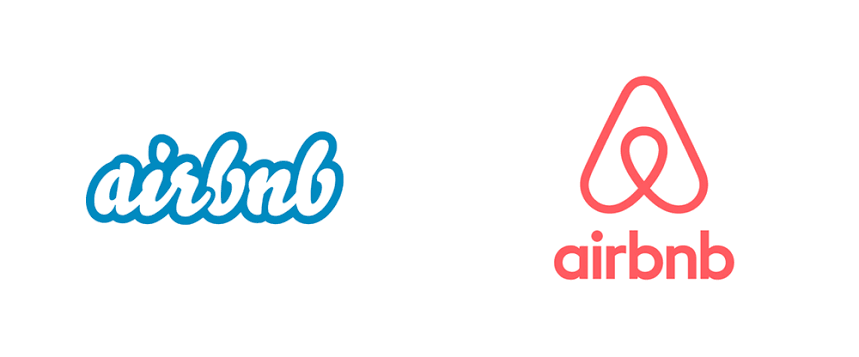
Another example of this is Airbnb, what we once known as an alternative stay for vacations and experiences away from home, started as an app to help budget travelers find a spare couch to sleep on. As people started to list more upscale places, Airbnb had to adapt from couches to the beachfront homes, the company had to rebrand to fit their new business objective. Using their core principles, they created a new logo and they even gave it a name below “for belonging anywhere” their slogan.
**When Your Brand Doesn’t Reflect Your Business**
For example, Apple computers started off doing just desktop computers and then they became all about the iPod and then they became all about the iPhone and now they’re doing air pods, tablets, all sorts of products and services. They have undergone major brand refreshes over time and that kind of a relook at their business was triggered by the fact that their brand identity didn’t reflect their business that much anymore. If you have changed or that brand identity doesn’t reflect you or your business anymore, it’s time for a rebrand.
**When Styles Have Changed and You Look Dated**
If you look at Coca-Cola or Pepsi, those brands have been around for more than a hundred years and styles have changed incredibly dramatically over that period. Therefore those brands have gone through major redesigns over time to address the style of the times. In fashion, it’s very much like fashion and the fact that styles change very frequently design changes. Fonts go out of style, illustration style if you have an illustration in your logo, those sorts of things change dramatically. If you’re looking at your brand and you’re finding that it’s looking incredibly dated, you might want to consider a rebrand.
**When Your Brand Has Acquired the Wrong Image**
It’s important to maintain control of your company’s image. However, if you’ve had bad marketing or inconsistent messaging, sometimes the public can take it in a direction that it was never intended. If this is the case, it’s probably time for a complete rebranding overhaul. One of the biggest cases is Burberry. After lowering their prices in the 90s, well it’s supposed to be a luxury brand that was being worn by low-class obnoxious individuals. The behavior associated with the brand got so bad that wearing Burberry was banned from pubs in the UK. Burberry accepted the challenge and implemented one of the most noted rebrands in history. They were confident, creative, embraced innovation, and added some of the most attractive faces to their brand. Once again they became known as high-fashioned and through it all, they maintained their same logo. Well, that is until 2018 when the logo saw a modern makeover despite its 90s infused fashion.
**When You Don’t Feel Good About It Anymore**
You have to feel good about your brand because it is where you will draw your energy and where you’ll draw your motivation. For any reason you don’t feel that the brand gives you the energy that you need to drive your business forward then you should think about a rebrand. You don’t want to change just because you are bored or for change's sake but you do want to be true to yourself, your emotions, that inner energy you have in your brand, and you don’t feel that connection anymore, it’s time for a rebrand.
If your company falls into one of the categories listed above, I strongly recommend a rebranding strategy. It could be an entirely new name or just a simple change in your logo. However, it’s not as simple as just getting on Photoshop.
"Live a purpose-filled life. Dreams do come true only if you pursue it. Don't let anyone tell you it's not possible. Wake up every morning saying I am a winner, I am the head and not the tail, I shall live and not die, I am victorious, I will lend and not borrow, I am rich and not poor. Speak words of power into your life every morning so that the universe will agree with you. You have the power to shape your life.
Goodnight❤
Brand Discovery Session
In this article, you’re going to learn exactly what brand discovery session is and why they are the key to building effective brand strategies. Just to give a bit of context here, let’s say you were to walk to a doctor’s clinic and you were to go in and see a doctor that you had never seen before and you told the doctor you are not feeling too well and he handed you a bottle of pills and told you to take two of those a day and you would feel much better. Would you leave that doctor’s clinic feeling that you trusted the doctor and that these pills were going to help you in your particular situation? Well no, you wouldn’t because what usually happens when you walk into a doctor’s clinic, the doctor has a look at you and asks you some questions about how you’re feeling before he decides what it is that he needs to do to fix the problem. That diagnosis phase is really important when it comes to your health but it’s also important when it comes to businesses as well. There are a lot of businesses out there that offer off-the-shelf solutions and for some circumstances, they’re perfectly okay but in other circumstances, you need to really take the time to understand what the problem is before you go ahead and offer a solution. One of the major problems with the branding industry itself is that a lot of prospects, entrepreneurs, business owners, their closet specialists think they know what’s best and they self-diagnose their problems and come to you with it all figured out, knowing what their problem is and knowing exactly what they need. But a discovery session does not only help you to gather the information you need but it is also an opportunity for you to ask some questions to this prospect and help them to question their own logic. That’s a really important aspect of the discovery session, yes you are there on a fact-finding mission to gather all of that information but you’re also there to change the perspective and change what your prospect has in their head about what branding is and about what you can do for them.
**What is the Brand Discovery Session?**
The word session is just another word for a meeting. Essentially your brand discovery session is a brand discovery meeting. In this meeting, it’s not about talking about logos or typography or colors because you know this is just a very small part of building a brand. To build a strategic brand there are a lot more elements at play and a lot more that you need to understand before you can strategize on the best approach. You need to understand the situation from an elevated point of view. You need to understand the business and its operations; you need to understand who this business is trying to appeal to and then work at a solution to bring the two together based on the current market conditions including the competitors that are already in the market. The discovery session is all about gathering that critical information needed to strategize on the best approach for the brand.
**Discovery Session Styles & Participants**
The discovery session styles vary depending on your business, your brand and the position you take in the market and of course the business that you’re trying to help so that you could be dealing with a larger business that has multiple c-suite executives and you can do this discovery session face to face with them in the conference room or you could be dealing with a smaller business where you’re dealing with just the business owner and you can do the discovery session over the phone or by video conference. Regardless of the style of your discovery session, who you are dealing with, the size of your brand, it doesn’t really matter. The main point here is that the key decision-makers are there during this discovery session. It doesn’t necessarily mean that some big decisions are going to be made within this session, in fact, they probably won’t because this really is about gathering all of the facts. But this is the part of the overall process and during this stage, you do have the opportunity to earn some trust and to show your level of expertise. If the decision-makers come into the picture later on down the track, they’re not going to have that added advantage of seeing you as an expert or to have that trust in you. It’s really important that the key decision-makers are there from the very start.
**The goal of the Discovery Session**
The goal of the discovery session is twofold; the primary goal and the secondary goal
The primary goal is all about understanding. You want to understand everything you can about their business, about the people that they’re trying to help, about the conditions of the market including their competitors, and about their goals. If you do that well enough then you will have a very clear indication and all of the information at hand that you need to go and build a strategic brand.
The secondary goal of this discovery session is to really solidify your prospect of becoming a client. It’s part of the sale process because you, get the opportunity to demonstrate your expertise, you get the opportunity to show empathy and to make them feel comfortable about doing business with you. If you do this well enough, your client and your prospect will be open to what you have to offer them.
The discovery session is just one part of the overall brand building process but it is the very beginning of that process. It’s really important because the information that you gather during this session will set the foundation for the brand that you’re going to build. If you don’t do a good job gathering that information then the brand that you build is not going to be aligned to the goals that your client has. Make sure you take the time to ask the right questions, take loads of notes, and make sure that you’re building and gathering that information that you can build your brand from.
There are many different ways to hold a brand discovery session and some people like to include the brand discovery session and the sales process in a single sitting, other people like to divide it up over a number of sessions and keep the discovery and the sales session completely separate. There’s no right or wrong way to do this. It’s simply a case of understanding what it is you need to gather. You need to go out and gather those facts so you can build a strategic brand accurately and you also need to take the time to help your client understand that you are the person to do business with and they should warm to what it is that you have to give.

Brand Storytelling is the Future of Marketing
Brand storytelling has been around for quite a while, back in 1995 which was like 25 years ago. At this stage, Nike ran an ad with a runner by the name of Ric Munoz. Ric Munoz was hiv positive and what this ad did was it signaled Nike’s support for hiv sufferers and it also resonated with their audience through their humanity. That is what storytelling is all about. But in the last 10 years, storytelling has definitely become more relevant and consumers are rejecting push marketing more and more. They don’t really have time for they are continuously scrolling past ads all the time and they tend to award their business now to brands that they feel more connected to.
**What is Brand Storytelling?**
Well contrary to popular belief, it’s not about the founder of the brand, who they are and their journey to success, but it’s about the customers, it’s about who the customers are, the journey that they’re on, what they believe, what they feel, what challenges they have, and what emotions they’re going through. The brand’s role in storytelling is not the centerpiece, it’s not the lead role, but it’s the supporting role. Brands are able to provide supporting role through story by supporting beliefs, by celebrating values, by showing them the way, guiding them the way forward, showing empathy to the challenges and the pain points that they have and just resonating with them through understanding and showing a familiar path that their audience can resonate with.
**Why Brand Storytelling Works?**
The reason storytelling is so effective is because it’s in our DNA. For millions of year that is how humans transferred knowledge from one generation to the next through story. We instinctively gravitate towards it because our DNA tells us that stories are a source of useful information that can help us to survive and thrive in the world. We also look for ourselves within stories, within the characters in the stories and we resonate and we feel what they’re going through. Brands that are able to tell stories that align with who their audience is and the journey that their audience is on are going to be able to strike a chord with that audience. Brands using storytelling effectively within their marketing are leveraging a human instinct that has been forged over millions of years.
**Is Push Marketing Dead?**
Well no. Push marketing is always going to have its place but it has certainly changed and it doesn’t drive action the way it used to. Push marketing is all about getting that attention and once a brand gets that attention, what they do next is absolutely critical. If they decide to continue to push their message onto the audience and say look at this, look at how great this is (product or service) then it’s likely to have the opposite effect.
On the other hand, if they take the opportunity to nurture that relationship and tell a story of a journey that their audience can resonate with then they’re going to make a human connection. This is the trend that we’ve seen brands on for the last 20 years and this is the trend that’s continuing and that’s why storytelling is the future of marketing. Brands have evolved into human entities because consumers have demanded it, they don’t want to do business with a corporate entity that feels like there’s no humans with that business at all. They want to do business with brands who feel human, who’ve make a human connection with them and modern brands today that understand this are connecting with their audience through human characteristics. They’re making connections through emotion, through storytelling; they’re telling stories that their audience can resonate with, that they can see themselves in and that they can feel a connection to.
If you are building a brand today then that is what you need to do. You need to understand the journey that your audience is on and tell a story that will resonate with them, with who they are, with the journey they’re on and where they want to go, and what is their idea of success. If you’re able to tell stories that your audience can resonate with and weave your brand throughout that story, throughout that journey then that is when they will make a connection or feel connected to your brand and that is what influences decisions.
If you like this article, please give it a thumb up👍 and I’ll very much appreciate your comments about what you think of brand storytelling. Thank you❤
Brand Differentiation
There is a disease out there and a lot of companies are suffering from it, it’s called surfing the sea of sameness. Companies are looking the same, they are talking the same, they are offering the same kind of products, they are showing up in the same places, and they are doing the same things. Personal brands can suffer from it, entrepreneurs suffers from it, creative pros suffers from it and all sort of businesses suffers from the lacks of brand differentiation. There is this saying that “*different is better than better”* and when it comes down to business, differentiation is everything in business success.
What is Brand Differentiation?
“***Brand differentiation is establishing a core essence of a company product or service that is distinct from the competition.”*** Why do you need to know about it? As a designer, you need to be able to help your client recognize and establish a level of differentiation in their business. Entrepreneurs as business owners has to be able to look inside of their company and recognize the fact that they may in many cases in some aspect of their company many not be differentiated enough.
**How Can You Be Different?**
Well the first thing you have to do and so many companies never do this and it just blows my mind when I work with clients, how many of them don’t really understand or haven’t really looked at in detail their competition.
**Do a Competitive Audit**
When you do a competitive audit, what do you look at? You look at the companies who are your competition, their names, what kind of products and services they offer, what kind of market they are in, what categories are they in, how they look, their brand name, their design, their trade dress, how they visualize their brand, how and where they market themselves, their customer avatars, and how they price their product and services. After you audit your competition you want to ask these questions, is the market crowded? How many competitors do you have in your category? How do the other brands (competitors) differentiate themselves from each other? When you look at the whole landscape of competition, what is the whitespace? Is there any area in that competition where people aren’t playing, where there is room for opportunity to establish a foothold in the market, where the other brands in the other competition is not necessarily doing it or marketing in that particular way? And then the other question is, can you move your brand to take advantage of that whitespace, that area in the market that you can outfly some of your competition? And if you can’t, how can you create a level of differentiation in your company?
What are the levers that you can pull to differentiate yourself from your company’s competition?
•Pricing
•Quality
•Service Level
•Delivery
•Trade Dress
•Marketing (how and where)
•Customer Targets
After you’ve determine that lever you are going to pull, you have to figure out how to make your brand stand out.
**Constant Innovation**
There is a saying that “*the only thing that remains constant is change itself*” and someone who doesn’t want to change is someone who wants their business to die. You don’t want that for your business do you? If you want your business to constantly grow, you have to look at the services or products you are offering and constantly innovate and improve them. Once you keep innovating, you are using the feedback that you get from your customers and constantly improving your product. You need to look at your products and completely innovate often as the market prescribe because your clients do not want the same products you are offering some years ago as the same products you are offering now. You need to provide new products.
Additionally as an entrepreneur, you need to have a heart of learning so that every single time you make a misstate you’ll always make sure that your processes and systems are better so that when you move to the next client, you don’t make the same mistakes, you are always improving and that way you can be able to offer better service as you go on.
**Niche Down**
The reason for this is because when you concentrate fully on a particular market, you can be able to dominate that market. When a person wants a particular product or service that you are offering they can always refer back to you. You have to niche down in order to dominate that market and perhaps when someone is looking for a product in your particular niche you are always on top. If you are able to do that, you can then branch out.
If there are any other tips you can give to entrepreneurs or brands to make them stand out, please share in the comment box below. Thank you❤
Brand Archetypes
In this article you are going to learn all about brand archetypes and why they are increasingly important in the realm of brand strategy and specifically building a brand personality. Now I have written an article related to this (Brand Personality) but I didn’t complete it. So let’s say this is a complete version of that article. So let’s dive in.
**What are Brand Archetypes?**
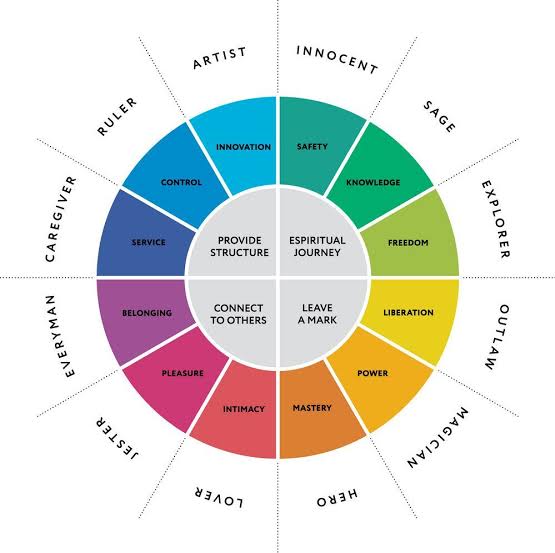
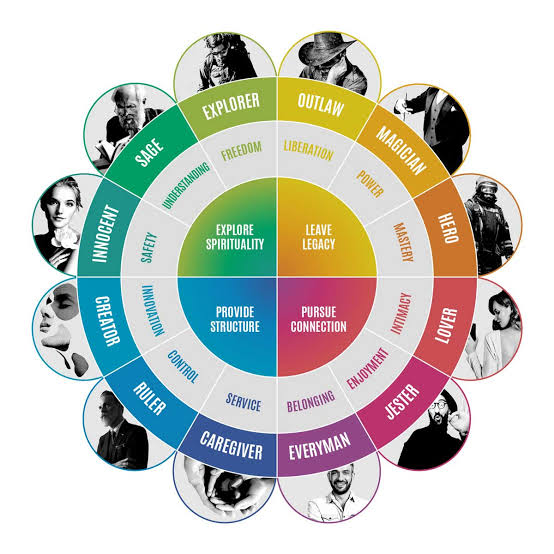
Brand archetypes are collection of 12 personalities. Each one of these personalities represents a certain collection of behaviors and they are personified within these characters called **ARCHETYPES**. Each one of these archetypes will raise a certain core desire within us depending on the characteristics that they display. Below is an archetype wheel I added to help you see what these archetypes are. You can see from the wheel we have; the outlaw, The Magician, The hero, the lover, the jester, the everyman, the caregiver, the ruler, the creator, the innocent, the sage, and the explorer.
Before I go through the 12 archetypes let’s look at where brand archetypes come from.
**Where Did Brand Archetypes come from?**
Brand archetypes came about in the early 1900 when a psychiatrist **Carl Jung** came about them. He applied them in the form of personalities. They are already useful ways to understand other people and they have been used throughout movies time and again we see these characters coming up again in movies like **Will Ferrell as a gesture in the Anchorman.**
**How does that translate into branding?** To put it simply, brands are becoming more human. We have this transition of consumer power when the millennia came about and social media came about and the consumers just had so much more power after that transition. It force brand to become more human. Now we see brand adopt a lot more human personality, human characteristics, then we look into brand archetypes to act as the brand foundation to build those personalities for brands.
Brand archetypes are really useful tool within brand strategy itself but specifically with the development of your brand personality. If you are developing brand strategies for your client or your own brand, it is really important to have a good grab of what archetypes are and how you can use them.
If you’ve come across any brand archetypes before or you’ve done any research into them then you will know that archetypes are centrally 12 personalities that we all have this collective unconscious understanding of. Each of these 12 archetypes is individual’s characters that we see times again throughout lives, stories, movies and everyday within our lives and as you see those behaviors or characteristics, you instinctively recognize them.
**The Outlaw**
The outlaw archetype is an archetype of a personality that will all tend to know quite well. We might come across this archetype early within our lives, in our family if we have a rebellious brother or sister but certainly by the time we get to school we would have met at least a couple of outlaw archetypes and we will continue to meet that outlaw throughout lives and this is a type of person who is getting into trouble in class, not listening to the teacher, and generally not following the rules. A common outlaw has this burning desire for freedom, liberation and for change. They just generally don’t like rules. One of the brands that play the outlaw archetype is **Harley Davidson**. They don’t conform to rules, they do their own thing and they really appeal with that burning desire for liberation.
**The Magician**
The magician has burning desire for power. We tend to recognize the magician more today through fantasy stories. We see them more in stories that have been passed down from generation to generation or in the fantasy genre. But we also see the magician in everyday lives as well. For example, in school your chemistry teacher has this element of mystic about them because they are able to do this things with chemicals that we don’t really understand what they are doing and that holds an element of mystic for us. So we see them on this higher level where they are able to do things we don’t fully understand but we really appreciate the things that they do. The magician is powerful, mystical and they protect their secret source really carefully. They have this power to do things that we all look out in all they are quick to tell anybody what their secret are behind what they are able to do. One of the brands that have this character is **Disney**.
**The Hero**
The hero archetype has a burning desire to win and to save the day. With a doubt the hero is the most recognizable archetypes of all of the 12 and there is a reason for this as well. An author by the name of Joseph Campbell wrote a book called The Hero with a Thousand Faces and that book became the framework for storytellers and film makers to create stories about a hero and that hero is taken directly from Carl Jung’s archetypes. The hero is a very common archetype we see throughout our lives as well. So this is a type of person who will do whatever it takes to win. The hero is typically determined, courageous, aggressive, competitive, and they really want to win. One of the brands that have this archetype is **Nike**. We see the heroes they celebrate throughout their advertising. Most of the heroes today are athlete and they celebrate this athlete as heroes
**The Lover**
The lover archetype has burning desire for intimacy. We don’t tend to come across a lover archetype earlier on in our lives like most of the other archetypes and there is a reason for that as well. Lover archetype is more of an adult archetype because of the adult behaviors, a lot more about seduction. But behind all of these adult behavior and seduction, the lover archetypes really just want to belong and just want to be loved. The lover archetype tends to be sensual, exotic, sensitive, affectionate and almost always sexy. We see lover archetype in brands like **Victoria's Secret**. Obviously because of the sexuality and seductiveness involved with their brand.
**The Jester**
The jester has a desire for laughter. Without a doubt we all know this archetype very well. Essentially this is the funny man or woman, whoever is in the room for cracking jokes. Their desire is to make other people laugh. The gesture tend to be fully humane, positivity, excitement, and this character is all across any kind of funny brands like **The Old Spice** brand.
**The Everyman**
The everyman archetype just wants to belong. There is an old saying in branding *“you can’t read the label from inside the jar”* and everybody tends to see themselves in some kind of way as the everyman because we all use ourselves as the basis for what’s normal. The everyman archetype is the most normal person. They everyman tends to be humble, welcoming, and friendly. Example in brand will be **Ikea**.
**The Caregiver**
The caregiver archetype has desire to give service. This is the archetype that will introduce you first in life. So this is the mother or the father. We have that connection with the caregiver right throughout our lives because they are the behavior we first see as a baby. We see archetype throughout our lives as lives whether it’s a nurse, teacher or the really caring friend. This is somebody who gives to others and they put others before themselves. They are selfless kind of people. The caregiver archetype tends to be kind, warm, loving, and caring. Brands with this archetype are **WWF, Unicef** or any brand that devote themselves to helping somebody.
**The Ruler**
The ruler archetype is all about control. They have this desire to control and to impose their authority and you might meet this archetype earlier on in life maybe your parent or the dean in school. When it comes to the real world there is always a ruler enforcing rules. The ruler places a high value on success, more importantly status. They are really commanding and authoritative. An example of the ruler in brand is the **Mercedes**.
**The Creator**
The creator archetype is all about innovation and imagination. Pablo Picasso once famously said “*All children are artists”*. Designers are perfect example of the creator archetype, writers and architect these are people who apply their creativity throughout their professional lives. Everybody does have an element of that innovation within them. For some people it is far greater than others. Creator tends to see things that most people don’t because they think outside the box. One of the most famous creator archetypes for brands would be **Apple**.
**The Innocent**
The innocent archetype has a desire for safety. They want the sense of purity, wholesome people. The innocent archetype tends to be someone who is sensible, responsible, and simplicity. An example would be **Aveeno** or **The body shop.**
**The Sage**
The sage archetype is another archetype that will tend to introduce earlier on in life. They have this desire for knowledge and wisdom. An example of the sage archetype brand would be **Google**.
**The Explorer**
The explorer archetype has a desire for adventure. They tend to be adventurous, independent, and even daring; they have to try new things all the time. An example of the explorer archetype brand would be **Patagonia** and **Jeep**.
Please if you like this, kindly leave a like and comment what you think about all this archetypes and which one suits you. Thank you❤
What you believe about yourself and your life, on a deep Subconscious level is what you live out daily through your actions, words, choices, and habits. It's also what you attract and manifest more of. Be mindful of the power of your belifes and their power over your life.
No amount of reading or memorizing will make you successful in life. It is the understanding and application of wise thought that counts.
Branding Process – Brand Strategy
I’ve written a lot of articles about branding and that is because branding is very important for business growth. In this article you are going to learn what brand strategy is so that you can move from visual branding, connect with the audience you are trying to attract and gain advantage over 99% of other brands you are happy with the logo.
**What is Branding?**
When most people hear the word “**Branding**” they think of the word “**Logo**”. Reason is that there is a lot of misinformation about what branding is. Part of the reason is that it doesn’t take much to start a business today. If you think about what life is about in the 80”s for entrepreneurs to start a business it was a much different environment than it is today. Today there is no prerequisite for anybody to start a business. There are a lot of people starting businesses with little knowledge about branding. They assume that branding is all about a logo and they go about in search of branding services and they are plenty of designers out there meeting those needs and offering branding services in the form of logo designs. Brand is the perception of a business of a person (not a logo). Branding is the expression of the brand. A brand identity is the visual expression of the brand and a brand strategy is the plan for the brand expression.
**What is Brand Strategy?**
Brand strategy is a plan to help brands or businesses develop their personalities which that will include knowing who they are, and developing that personality so that it will be attractive to their ideal clients and then also knowing who their ideal client is and how to communicate what they need to the ideal clients. The strategy is a plan to influence the audience’s perception through brand expression.
**How does a brand express itself?**
The visual identity is part of the brand expression but it is only the visual aspect. If you think about when human interact with each other and connect with each other, as humans we have our visuals appearance, how we dress, what clothe we wear, what shoe we wear, and the style of the clothes we wear, that says a lot about us and how we hold ourselves, our personalities. But it doesn’t really tell us much about the person. Until they open their mouth and start talking to you and expressing, it means other than visuals can you really get a feel of who they are? What other forms of expression do we have as people other than our visual appeal?
We’ve got our personality, tone of voice, what we say, the way we say things, the way we deliver things, we have what is unique about us, what we feel, what we believe, what our values are, what our opinions and ideas are, what our philosophies are. These are all the things that make up who we are as people and as individuals. That is how we connect with other people.
There’s an old saying “that you never get a second chance to make a first impression” and most business owners approach branding in the same way. They put all of their effort into that first impression (how the brand looks) and they have nothing beyond that. Branding is about far more about the first impression that is where strategy comes in.
Brand Strategy Elements Are Human
Another best way to understand brand strategy is to think of your brand as a human. Yes, it is very important that your brand looks good but imagine you went to a networking event to build relationships with other people and you dressed the part you turn up to that event but you didn’t have anything else other than how you look good. You didn’t have a good personality; you didn’t have a unique tone of voice or unique opinions or way to connect with those other people. That’s what most brands do. They do not have any strategy, no understanding of who their audience is, what their needs are, how to connect with them, that is what brand strategy is all about. It goes beyond the looks and it actually makes connection with who the audience is.
What’s included in a Brand Strategy?
Internal Brand: This is the core and soul of a brand; the beliefs, vision and mission, values, audience persona, competitive analysis, positioning strategy, human brand persona, communication strategy, and visual appearance.
How to Build a Brand Strategy?
**Know Your Audience**
This is the key to any brand, knowing who that audience is. No brand exists without their audience. Everything revolves around that audience, who they are and what they want. You need to know who your audience is, know what they want and that needs to be crystal clear for your brand.
**Be More Relevant**
You have something that your audience needs, that is great but so do many other brands. You need to clearly distinguish why your brand is different, why your audience should choose your brand over the next competitors and being more relevant is a great way to do that. If you are able to be more relevant to who they are and what they need then you stand out in the market.
**Be More Human**
As human we connect with other humans on a human levels through characteristics, tone of voices, personalities, opinions and this is really important in modern branding. We do not connect with corporate entities, we connect with humans. Make sure your brand has a human element to a human persona, and you deliver your messages with humanity.
If you build your brand with these three core fundamental principles at the core, which is how you influence perceptions and that is how you grow brand with strategy.
Thank you❤
Every moment of your life should be a dedication to others and the best way of dedication is to serve them with your hand, tongue and with mind. Millions of people are there who need a few seconds of you. They want nothing but a little attention from your side. Yet times we feel our life is nothing.... Don't be ashamed of your story, it will inspire someone someday.
Productive Tools to Boost Your Business Online
If the greatest obstacles you face to implementing an effective marketing contents online are “Producing Engaging Contents” and “Producing Contents Consistently” know you are not alone. The fact is that many businesses see lack of internal content creation resources as a challenge to content marketing success. So, how do you get past this constraint? That is the purpose of this article, to help you know the tools you need to overcome lack of content creation.
The primary aim of using these tools for business is to create and publish engaging content that will attract your target prospects online. If you are serious about growing your social media followers and converting it to sales you need to get the right tools to help you reach your goals. Whether you’re looking for ways to expand your reach or track progress, there is a tool out there that can help you. It’s just a matter of finding the right one that will maximize your effort.
Most of the Tools you can Use On **Your Smartphone**
**Adobe Photoshop Express**
Adobe Photoshop Express is a free image editing and collage making mobile application from adobe systems. The app is available on IOS, Android and Windows phones. Photoshop Express Editor has various features which can be used to enhance photos. You can take photos of your products with your smartphone and touch them up to look really nice. Instead of going online to screenshot other people’s photos of their products to post online, you can create your own with Adobe Photoshop Express.
**Canva**
Canva is a graphic builder that can be very useful for both constructing content on your blog and sharing it via social media. Memes, Info graphics, and custom-made images are all very important parts of spreading brand recognition, increasing traffic, and keeping customer attention, and this online tool makes it easy to create the images you need without using expensive, hard-to-navigate software.
With Canva you can quickly create simple graphics and visuals for blog posts and social media. It’s not a replacement for Adobe Illustrator or pro software but it’s a great platform for creating unique images fast. It’s also free. Canva is meant for non-designers and vice versa. If you’re a complete newbie, with no design skills, Canva would probably be a better option for you. But it’s not for professional use. Using canva templates on a university social media cheapens your brand. Though, you can still create a stunning design from scratch using a template.
**Remove.bg**
Remove.bg is a free service to remove the background of any photo. It works 100% automatically; you don’t have to manually select the background/foreground layers to separate them. Select your image and instantly download the result image with background removed. It uses sophisticated AI technology to detect foreground layers and separate them from the background. It’s a website, no app yet.
“Remove.bg is very useful and it helps with workflow and productivity. You will be impressed by AI and think it’s the best choice on the market. The API works like a charm and the processed images are stunningly good.
**PhotoRoom**
A PhotoRoom App is an app you must absolutely have especially if you’re into eCommerce and product sales. This simple app is absolutely one of the best app I ever found. It’s incredible how clean the edges are when you crop out product images, people or any objects. Fast, Professional, you can even export in jpg or png format. The free version has PhotoRoom watermarks. It is easy to use. The free version’s auto background removal is pretty accurate if the photo you are editing has solid background.
**Business Card Maker**
This allows you to create different business cards for your business without incurring printing cost. Each design can be curated to suit a particular business.
**HashTags**
A hashtag, introduced by the number hash symbol #, is a type of metadata tag used on social networks such as Twitter, Instagram and other micro blogging services. It lets users apply dynamic user generated tagging that helps other easily find messages with a specific theme or content. Users create and use hashtags by placing a hash symbol before a word or phrase without space in a message.
It’s always better to research about trending hashtags related to your niche; it’s easy to use to reach social media users interested in your type of business. Hashtags also function as beacons that help users find and subscribe other users of similar interest. Most users get to see your post when you use hashtags.
**Linktree**
Linktree is a free tool for optimising your instagram traffic, whether you’re a blogger, an artist or you run a content platform. Linktree is an ingenious solution to instagram’s policy of not allowing hyperlinks in posts. The concept is simple. You can get a short link to place in your bio that when clicked, it navigates to a webpage with a list of every link that you want active. There, your audience can choose one and get directed to the content they’re looking for.
**Paystack**
How do you receive payments for products you put online? Must every customer contact you before you close a sale? Must your customer’s screenshot a proof of payment before you ship their order? There is a better way to receive payments for products you put online. You don’t necessarily need to own an e-commerce site to integrate a payment gateway to your business. You can integrate a payment gateway to every of your business online.
Paystack is a free payment gateway to receive payments for products and services online. The customers have different options to choose from, debit cards, bank deposits or transfer. The customer receives a receipt immediately and you are also sent a receipt for the payment. One great aspect of it is that you can create different payments links for different products and fixing their prices.
There are still many more tools, but if you can utilize the few mentioned above, you’ll see a tremendous difference in how your business has been and what it’ll become.
A dream is your creative vision for your life in the future. You must break out of your current comfort zone and become comfortable with the unfamiliar and the unknown.
Make Your Life Better..
1: If you born poor, its not your mistake,
But if you die poor, its your mistake..!
2: Born with personality is an accident,
But dying in a personality is an achievement..!
3: Your birth may be normal,
But your death should be History..!
4: Follow none,
But learn from everyone..!
5: Practice like a devil,
And play like a angel..!
6: Do or Die is an old concept,
Do it before die is the new concept..!"
What Things Should Never Be Rushed?
Many at times, we rush into things without thinking them through, in so doing, we end up regretting ever making such hasty decision in the future. There is a saying that ***“Had I Known is the enemy of human being.”*** That’s what we need to avoid. Rushing into things without proper preparations and planning, could lead you to a doom. We rush into things because we want to be successful. We rush into things because we constantly compare ourselves to other people’s success, so we don’t fall behind. We rush into things because we have negative emotions like fear, lack of patience, greed etc. We rush into things because our parents are tells us to. We rush into things because we feel guilty slowing down.
In order not to fall victim, below are some things you should never rush into in life.
**Relationships**
A new relationship is very exciting, getting to know somebody, with no pressure to ever see them again if you don’t desire. Once you step into a relationship, everything changes. Some people rush into relationship thinking maybe they are in love, while it just lust. Some rush into a new relationship in attempt to get over an old one. It’s like they have a hole in their heart they want to fill. Relationship is far more demanding emotionally, financially & time-wise. If you want to be in a relationship that will last, it is important you apply the brakes a little and take it easy.
**Investing**
One thing you don’t want to rush into is an investment. I’m a victim of this. Late last year, I was introduced into the crypto world by a friend. He told me about bitcoin and how he has earned from investing in bitcoin. After he told me this, I went to invest in bitcoin but unknowingly the site I invested was a scam site. I lost my btc. Now, what I should have done is to take my time to learn more about crypto currency before investing. But instead I rushed into investing and lost my money. So it is advisory to do further research of anything you want to invest. Don’t jump into investment because your friends or someone you know is doing well in it.
**Big Decisions**
There are times in life when the consequences of a decision are immense. We should not be quick to take a big decision without clear certainty of the future outcome. Situations like this, we should give it time, relax, let our emotions fade and then choose the option that is best or most logical.
**Choice of Career**
Making a career choice can be sometimes difficult. I’ve written an article on this, you can check if you want to know more. Most people rush into careers they know nothing about just because their friends are going into such. I remember when I was in secondary school and we were told to choose a course to study. Most of my mates were choosing a course because their friends are in that course not because that’s what they want to study. They want to be where their friends are. And at the end, some of them end up failing the course, same thing with choosing a career. Don’t end up your life doing what you are not good at simply because you want to be where your friends are. Try to know what best for you, think about what works for you. Be sure of what you are going into before committing your time into it.
There are more things you should never rush into like choosing friends, sex, writing, marriage etc. Whatever you do in this life, make sure you think about it before rushing into it. Patience is the key.
**Please don’t forget to subscribe, like and I will very much appreciate some comments. Thank you❤**

 @Jeffsmith