 @IgorBelykh
more from that month
@IgorBelykh
more from that month
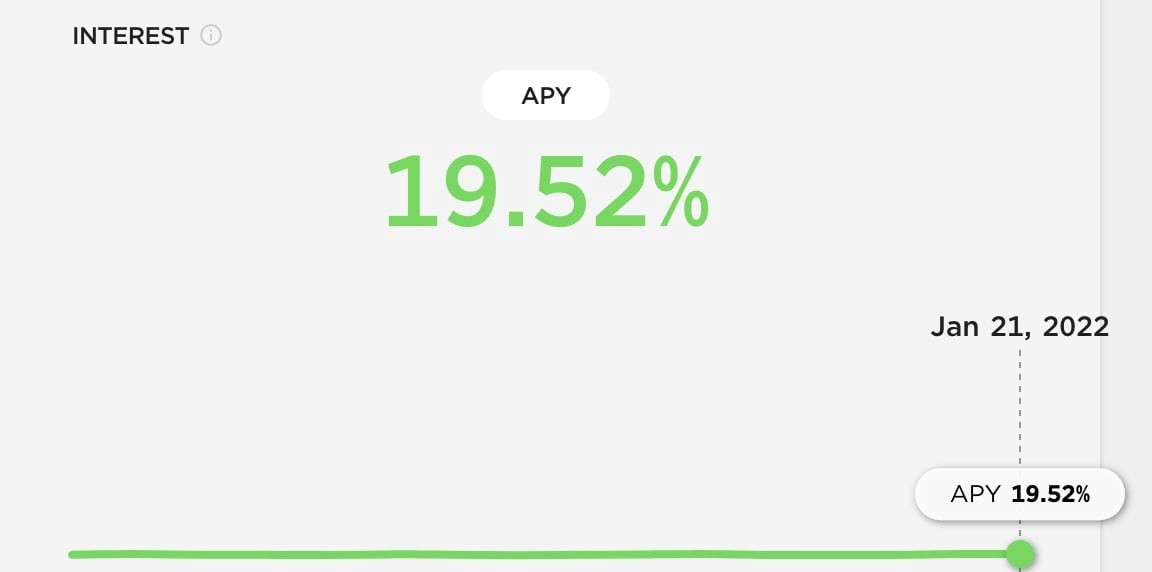
Episode 2 How DeFi and staking are destroying your capital? The DeFi industry is full of protocols that provide users with 10% to 100% APY (annual return). The scheme looks attractive because users are not required to take active actions: just buy the desired token or a couple of tokens, upload them to the platform and wait. But there is one caveat: this yield is highly dependent on market volatility. The crypto market is very unstable. Altcoin jumps in both directions by 10-30% per day have already become the norm. Here is an example: • A user bought 2 SHIBA tokens for $1,000 and staked them with an annual return of 50%. A year later, he took them out of staking and now he has 3 SHIBA tokens. • But this year, the rate of the SHIBA token fell by 50%. As a result, the user did not increase his capital by 50%, but lost 25% of his invested funds, even taking into account the huge percentage per annum. And this is not the worst example. Often, users rely on quick returns and invest in riskier schemes to earn in a couple of months. What is the main mistake? Staking or farming in DeFi protocols is useful as an additional source of income. For example, when you already have tokens of a certain project and you send them to work. And buying tokens just for the sake of high APY is a bad strategy. Staking and DeFi protocols are effective during a bull market, when you can earn both on the course and on increasing the coins in the portfolio. Or when you invest for the long term and are ready for portfolio drawdowns of 50%+. There is also an important principle in the blockchain industry: the higher the return, the higher the risks. This is why staking dollar-pegged stablecoins has such a low APY: 1-3%. Helpful Tip: It's better to use a conservative and safe strategy with 1-5% APY than chasing pools with 100%+ APY whose tokens will lose 90% of their value. Earning on high APY pools requires deep understanding and active actions - this cannot be called a passive and stable income. An interesting fact: the Terra blockchain has the Anchor protocol, which allowed UST stablecoin to be staked at 20% per annum. It is because of this protocol that LUNA and UST were in such high demand. As a result, LUNA collapsed by 99%, and the stablecoin UST by 97%. Investors wanted to earn 20%, but ended up losing their entire deposit. © CryptoGuru Episode 1 : Is the DeFi sector really decentralized? https://noise.cash/post/mpk8qr3fr8kkr
1 comment
"Staking and DeFi protocols are effective during a bull market," 100% true.