 @Gwenie
Tubâ and Lambanóg Social drinking, or what we Filipinos call *inuman*, is an important aspect of Filipino social interactions. Many Filipinos enjoy drinking alcoholic beverages especially when there are occasions or just after a long day of hard work. Sharing a single drinking container is the most common drinking custom of Filipinos. During *inuman*, one person becomes the *tanggero* who fills the container with a serving of alcohol. A person in the group then drinks it then passes it back to the *tanggero* for a refill. The *tanggero* will fill the container again and will pass it to the next person, and so on. An *inuman* is usually accompanied by a shared serving of food also known as *pulutan*. One of the oldest known alcoholic beverage consumed by the Filipinos is the *tubâ,* which existed since pre-colonial times. *Tubâ* is a milky white alcoholic drink created from fermented sap from the lopped fruit-stalk of coconut or nipa palm. During the pre-colonial times, *tubâ* were widely consumed for recreation and it also plays an important role in religious rituals. The Philippines was colonized by Spain for more than 3 centuries (1565 - 1898) and it was the early Spanish colonizers who reported the heavy consumption of *tubâ* in the Philippines. It was also during the Spanish colonial period when the Filipinos adopted the distillation technology, resulting in the production of *lambanóg*.
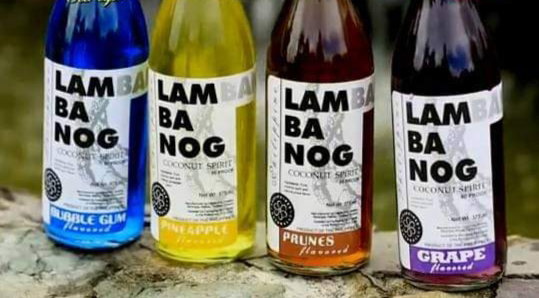
*Lambanóg* is a distilled palm liquor made from *tubâ*. It is colorless that is why it is also called the Philippine vodka. It was previously known as *vino de coco* or *vino de nipa.* The distillation process of *lambanóg* takes up to 8 hours. But the *lambanóg* that was produced during the first hour of distillation should be separated because of high alcohol content–around 180 proof–which can be fatal for humans. After the distillation process, the *lambanóg* will be stored for fermentation. Just like wines, the longer it is stored, the better it become. *Lambanóg* is widely produced in different regions in the Philippines but it is produced dominantly in the Calabarzon region. One of the known producers of *lambanóg* is the Mallari Distillery. It was established during 1908 and is the oldest in Tayabas, Quezon.
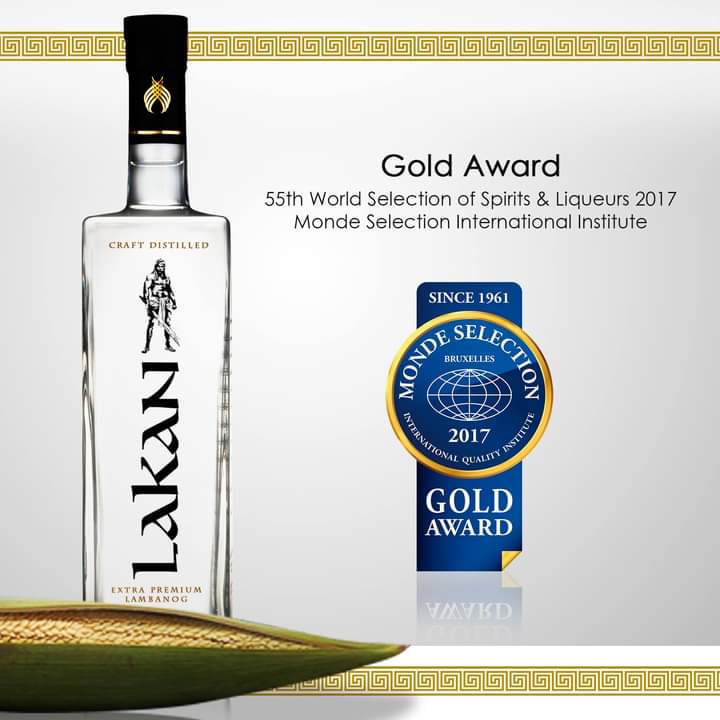
And when talking about *lambanóg*, there is one name that proves that it is also world class. The Lakan *lambanóg*. Here are some of the awards that the Lakan *lambanóg* was able to take achieve. Monde Selection International Quality Institute - Spirit and Liqueurs: 2 Gold award (2017, 2018) and 2 Silver awards (2019, 2020) New York World Wine and Spirits Competition: 1 Silver award (2017) San Francisco World Spirits Competition: 2 Silver awards (2017, 2019) and 1 Bronze award (2016) In current time, some *lambanóg* makers also added flavors to the classic *lambanóg*. Some of them are prunes, pineapple, grape, and even bubble gum. *Lambanóg* is supposedly pure distilled *tubâ*. But some *lambanóg* producers mixed methanol and water to lower the production cost, and these are also sold at a cheaper price. But last December 2019, at least 15 people died and 300 more are hospitalized in the province of Laguna and Quezon because of methanol poisoning. According to the Food and Drug Administration, 5 samples were tested positive for containing 11.4% to 18% methanol, which are way higher compared to the not more than 1% that a human body can take. This is why if given the chance to taste some *lambanóg*, make sure that it is FDA approved. And of course, drink moderately.
10 comments
May mga flavor na pala sila, haahhaha ngayon ko lang nalaman yan, kasi sa probuinsya namin yung parang puti lang.
Filipino ka pala?
Oo haha, puro ngalang reacton yung post ko.
Akala ko foreigner ka haha
Ay ang gara haha.
Yung tubâ? Anong lasa nun? Malalasahan ba na galing sya sa coconut tree?
Oo, Parang same ata sila nung lambanog pero di ko alam ha.
Panalo hang over nyan lambanog hahaha. I tried it when plain and also bubble gum flavor.
Hindi ko pa natry to sis. Haha. As in masarap ba? Parang bet ko din ung bubblegum
lasang gin hahaha. pero not recommend sa mga hindi sanay uminom. matapang yan.