 @Giddyboy
more from that month
@Giddyboy
more from that month
Clock control in chess games
There are different clock controls in chess and I will be explaining some of them. Clock controls are grouped into Bullet, Blitz, Rapid, Classical and custom. By the way, I really love playing chess during my free clock. Sometimes, I play up to 50 chess games in a day. So back to clock control.
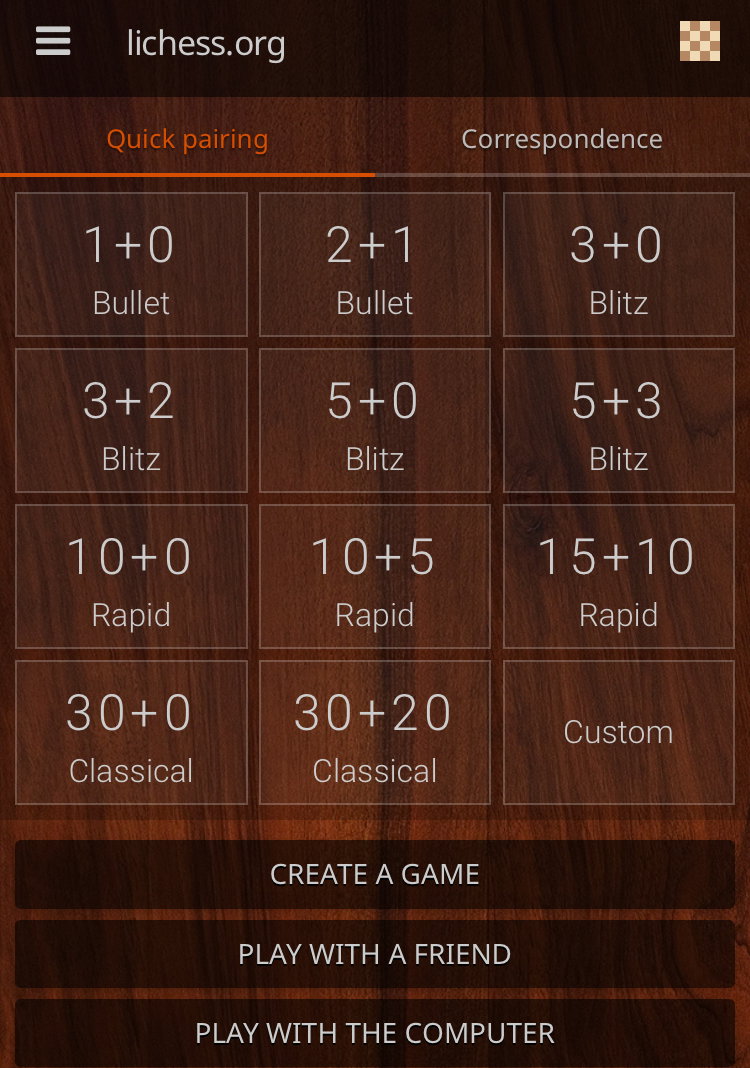
Bullet Common clock controls that fall under the bullet section includes; 1+0, 1+1, and 2+1. The first number is the initial clock that is given to each opponent, and it is usually in minutes while the second number is called increment clock. This increment clock is usually given per move, and it is always in seconds. So for the 1+0 clock control, 1 minute is given equally to both opponents with no increment clock. For a 2+1 clock control, 2 minutes is given each to both players with an increment of 1 second which means that every clock a player moves, 1 second will be added to their clock. Bullet clock controls is the fastest type of chess games, although there are some online tournaments with ultra-bullet clock control where 15 seconds is given each to both players with no increment clock and hyper-bullet clock control where 30 seconds is given each to both players. Generally bullets games are not a measure of how advanced you are in the game of chess but how fast and smart you are. So watch out for tricks when playing under this clock control. Blitz Common clock controls that fall under this section includes; 3+0, 3+2, 5+0, and 5+3. Others include 5+2, 3+5. This clock control is a little longer than that of Bullet. So if you are looking to play a fast chess game where you have clock to strategize and plot tricks and tactics, then the Blitz clock control is ideal for you. The 3+0 clock control means 3 minutes will be given to both players with no increment clock. In the 5+3 clock control, 5 minutes is given each to the players with an increment clock of three seconds. This type of clock control is probably the longest clock control in the blitz section and most rapid player looking to play a faster game opts for this clock control Rapid Most beginner players who haven’t mastered chess favours this clock control, so they have the ability to think well when playing a game. Clock controls that fall under the rapid category includes 10+0, 10+5, 15+10. The total clock spent on a chess game must be less than 60 minutes before it can be classified under rapid clock control. So for the 15+10 clock control, 15 minutes is given to each players at the start of the game with 10 seconds per move increment of delay clock. Classical This is a slow paced chess game in which each player are given a minimum of 30 minutes for a game. This type of chess control is commonly used in official chess tournament games. Most online players shun away from games in this section because it takes a very long clock to complete. The world chess federation (FIDE) use this clock control for most of its official matches. Typically, 90 minutes is given to each player at the start of the game with 30 seconds per move increment for the first 40 moves. An additional 30 minutes is given to each player after the first 40 moves of the game has been played. Common online clock control that falls under this category includes 30+0 and 30+20 as seen on an online chess website “lichess.org” Custom Like the name implies, players can set any clock of clock controls apart from the commons one. But if you are looking to play a game online, I don’t advise you do this because it will be very hard to find a proper paring for you. But if you are looking to play an invitational game with a friend, you can go for this.


10 comments
How I wish to know how to play chess. I only know how to play checkers
Chess is actually easy to learn. you can take various lessons online. most of them are free.
Ok thanks, I will do that
I once tried to play chess. In fact, i almost joined the club back in the polytechnic but my brother stopped me, he said it can be so addictive 😂. I'm planning to reignite the zeal to learn it again.
Well, i can teach you if you'd like. i am not a master yet though.
Whenever you're chanced sensei, I'm ready.
I don't like online chess games. I think chess should be played on a real chessboard. Thus, we have a 3-dimensional perspective and we have the opportunity to develop more strategies. The 3D perspective allows us to see the moves more easily. Of course, sometimes I play chess online. I usually prefer 10-minute or 15-minute games. I guess I'm not fast enough. I'm not a bad player though.
I too prefer playing chess Over The Board (OTB) than playing online. There are many players who is engines when playing.But It is easier to get an opponent online than offline.
Your article was very interesting and useful, my father also plays chess a lot and he is professional in this game, but he plays on a real chessboard , I will definitely read your article to him.
Oh. That will be nice.