 @Genieljay
more from that month
@Genieljay
more from that month
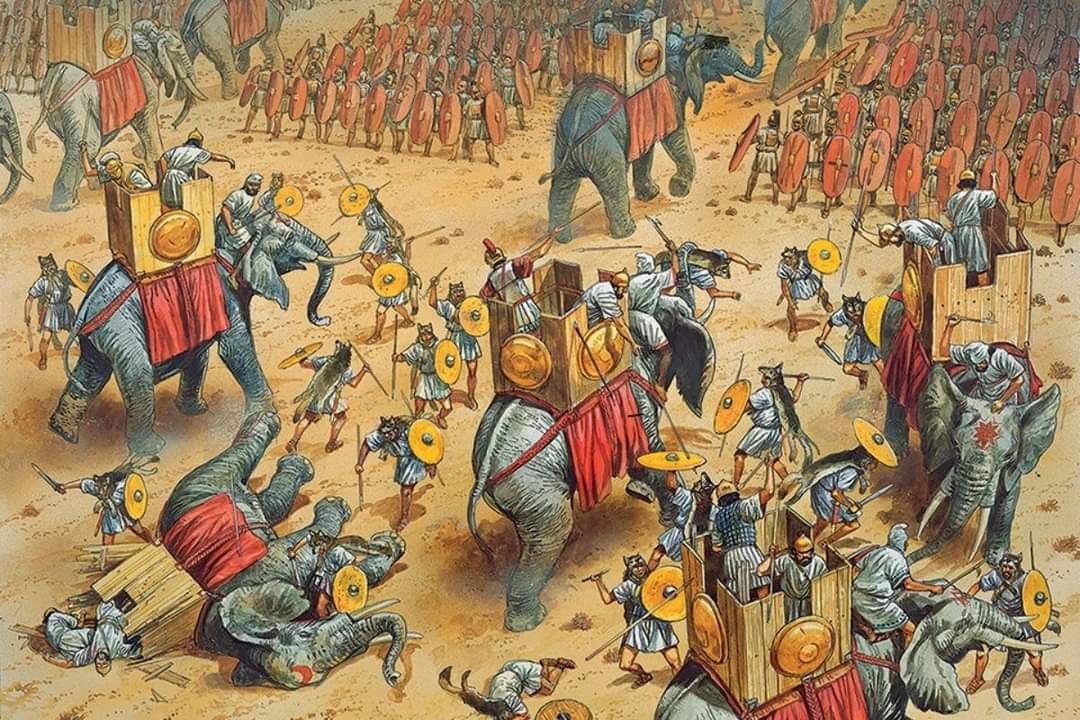
War Elephants were the tanks of the ancient world. Under the command of mahouts (elephant riders), these giant beasts can be led to charge through enemy lines and throw their entire formation into disarray, causing panic and confusion among their ranks. In the Battle of Ipsus, they were used to block the movement of an enemy cavalry, preventing them from being utilized effectively in battle. Against lightly-fortified bases, the elephants can be used as a makeshift battering ram to destroy wooden gates and palisades. Their thick hides allow them to endure sling-bullets and arrows for a sustained period, though they were particularly susceptible to a well-thrown javelin to the legs, which may impede their charge and cause them to trip over. Depending on the size and strength of an elephant, they were sometimes equipped with a wooden turret on top of their body that can house two or more warriors armed with projectiles. Some elephants were also covered with padded armor for additional protection. Because of these reasons, war elephants were a decisive factor in ancient battles. But because of their unpredictable behavior, they can be of a wild card. They may run amok in the middle of the battle and become a threat to allies and foes alike. The opposing army can turn them into an advantage with the right tactics. Raining them down with projectiles, especially incendiary materials, like flaming arrows and wrapped incendiary materials (ancient molotov cocktails) made of tar, hay and other combustibles, may cause the beasts to turn around and run through the army that deployed the animals. There was one account (possibly apocryphal) of an army making use of burning pigs to dissuade the elephants from charging. (It was said that elephants were afraid of pigs). The Indian elephants of King Porus had wreak havoc in Alexander the Great's army, but eventually their riders were killed with javelins and the beasts were hamstrung by a concentrated melee attack on the legs. The Romans under Scipio exploited the linear movement of running elephants by opening their ranks, allowing them to enter through their formation without causing much damage, before attacking the beasts from the sides with javelins and spears. Elephants were not native to Europe. And so when the North African elephants were hunted down by the Romans to extinction for fun and games and their access to the Indian market was cutoff by hostile Persian neighbors, their military use in the west had died down. In Asia, especially India and Persia, their military usage had survived into the gunpowder era. Instead of a tower, they were mounted with a cannon that can shoot devastating cannon balls from afar.
No comments yet