 @GUARDlAN
more from that month
@GUARDlAN
more from that month
This is not ETH2.0
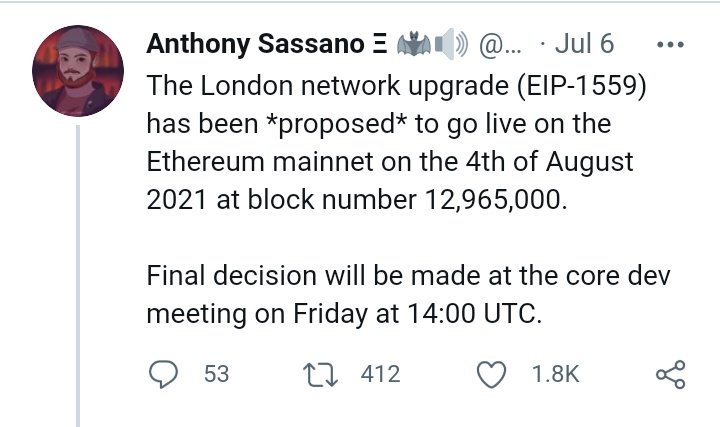
This year’s big Ethereum protocol EIP-1559 upgrade (this is not ETH2.0) is now being scheduled for network implementation. The final decision for when it’ll go live will be DISCUSSED at a core developer meeting this Friday 10am Manila time, although it’s looking like August 4th is the target.
If you don’t know what EIP-1559 is, here’s the two-minute guide: Most blockchains (including Bitcoin and Ethereum) use an auction system for determining network fees. During times with lots of traffic, users can offer to pay more to have their transactions bumped up in the queue, but because this is an inaccurate process (it’s difficult to tell beforehand if your bid is good enough) there’s a lot of time and money wasted. The EIP-1559 improvement replaces the “fee market” with a fixed price that is dynamically determined by the network itself. The key difference here is that when two users transfer at the same time on the same block, they will pay the same amount; you’ll no longer see these massive disparities in fees between similar transactions. Users can still override the fixed price by “tipping the miners” or paying extra, but they can’t pay less than the base fee levied by the network.
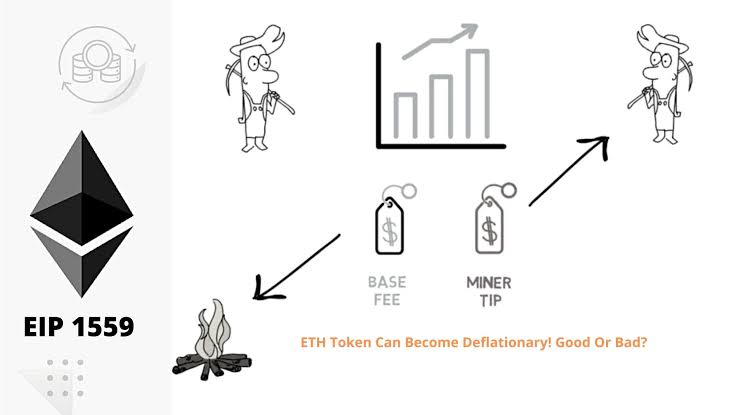
The other more macro effect of EIP-1559 is that all the fees won’t go to the miners anymore. Instead, the base fees get burned, which means that the ETH supply will be reduced block by block as soon as this goes live. Estimates indicate that ETH’s circulating supply will decline at a rate roughly 1% to 4% per year. The miners were initially resistant to this change because of the reduced earnings, but the price implications of the manufactured scarcity eventually won them over. If you’re starting to see dollar signs, know that this upgrade is the first time a miner compensation system like this has ever been attempted at the scale of Ethereum … and that’s primarily because there is no blockchain that currently operates at the scale of Ethereum. What do you think? can miners still benefit from it?
No comments yet