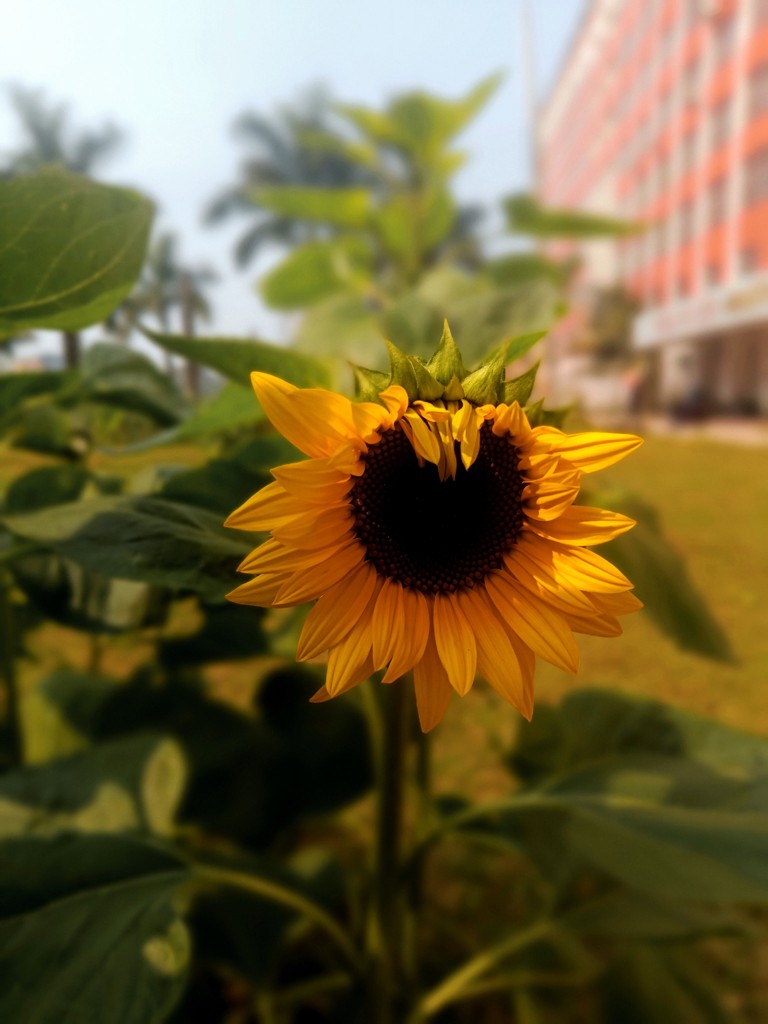
 @Fouziya23
Between Weeds and Wonder: A Journey from Childhood Curiosity to Pharmacy When I was a child, I often walked with my grandfather along the narrow village roads that ran through green fields and quiet ponds. I used to stop beside tiny wildflowers blooming softly by the roadside. With innocent curiosity, I would ask, “Nanu, what is the name of this plant? Why does it grow here?” Back then, I didn’t know anything about science, or medicine, or pharmacology. But I was deeply fascinated by the beauty of these little plants — how they grew without care, yet looked so full of life. My grandfather would gently tell me stories behind them. He’d say, “This is Tulsi, it cures fever and cough,” or “This is Thankuni, good for the stomach,” and “This is Basok, it’s good for cough.” He even showed me Sweet Broom, a tiny plant with a lovely smell. One day, I saw a Basok plant with a beautiful flower and asked him in wonder, “What is this flower, Nanu?” He smiled, plucked it, and gave it to me. “Taste the nectar,” he said. I did — and it was sweet like honey! I looked at him, amazed, and asked, “Is this a honey tree?” He laughed warmly and told me how bees collect nectar and turn it into honey. Then he shared more about Basok’s healing properties. At that time, I didn’t understand what made those plants special — but I knew they were. To others, they were just weeds.To me, they were little wonders of nature, full of mystery and quiet magic. Back then, I didn’t know science, but my heart was full of wonder. I often asked myself, “Why does Tulsi have such a soothing smell?” “Why does Thankuni feel so cool and refreshing?” “How does Henna give colour to the skin?” These small questions kept blooming in my young mind. I didn’t have the answers, but the curiosity grew deeper with every step I took through the fields, every plant I touched, and every story my grandfather told. As I grew older, that wonder turned into a quiet desire to know more. I wanted to understand the hidden language of plants — the ‘why’ behind the smell, the taste, the colour, and the healing power. When I finally entered the world of Pharmacy, it felt like stepping into the answers I had long been seeking.
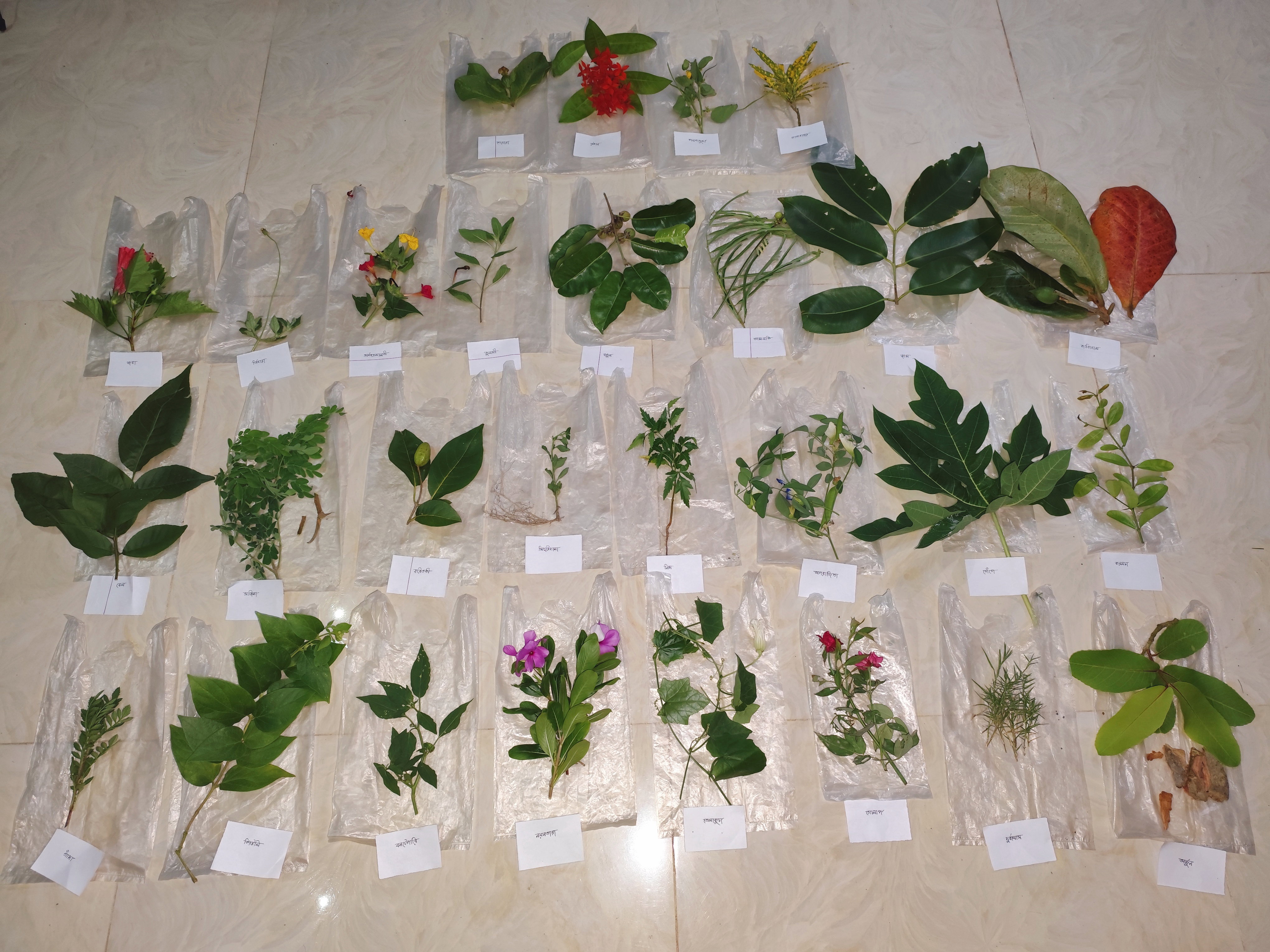
“From childhood curiosity to real-life exploration — the picture of medicinal plants collected during our fieldwork.” The plants I once knew as stories and smells now stood before me in textbooks, laboratory slides, and practical classes — with names, compounds, and actions I could finally understand. I learned that Tulsi contains eugenol, which gives it that soothing aroma and healing effect. Thankuni has asiaticoside, known for improving circulation and skin health. Henna’s colour comes from lawsone, a natural dye molecule that binds to proteins in the skin. Every lecture, every lab experiment felt like a reunion with my childhood memories — but this time, I had the science to support the magic I always believed in. Pharmacy didn’t just teach me about drugs; it gave me a deeper appreciation for nature’s silent healers. It made me realize that what I once saw as “just weeds” were, in truth, nature’s carefully crafted medicines — waiting to be understood. Even now, as a pharmacy student, I haven’t stopped wondering. Whenever I walk past a new plant — whether in the village or near the campus — a familiar excitement rises in me. I still pause, look closer, and ask myself, “What is this plant? What could it do?” Sometimes I search for its name, sometimes I simply watch — just like I did as a child, beside my grandfather. For me, the journey between weeds and wonder never really ended.It only grew — from stories to science, from curiosity to knowledge.And as long as plants continue to grow quietly around us, I know my heart will always stay rooted in that same wonder.

No comments yet