 @Fouziya23
A Real Story: A Moment on the Platform I Will Never Forget
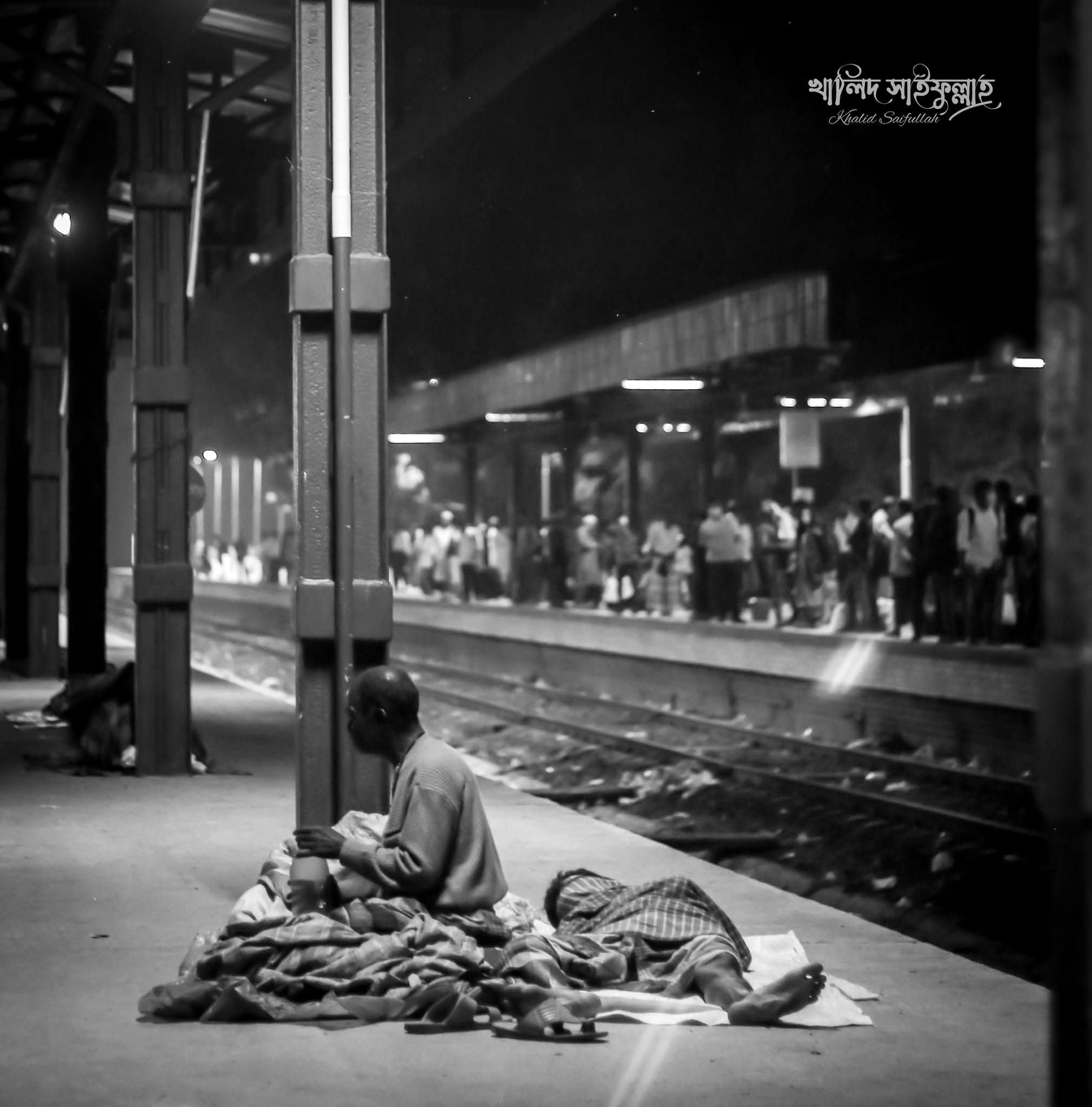
*photo courtesy of my senior at university.* 📌 Introduction: This is a true story from nearly four years ago. A short encounter at a train station left a permanent mark on my heart. I was just a teenager back then, but what I saw in those few minutes taught me more about kindness and humanity than many long years of life. 📖 Story: It was an ordinary day. I had reached the train station quite early, so I sat down on one of the benches and waited. My cousin sister was with me. The platform was lively—filled with movement, announcements, and the murmur of travelers. While I sat observing the crowd, a man caught my attention. He crossed the railway line slowly and sat on the bench next to mine. He appeared to be in his late 50s or early 60s. His clothes were crumpled and unclean, his hair messy, and he carried a worn-out two-liter water bottle and an old mat. At first glance, he looked mentally unstable. But when I observed him a little longer, I noticed something else—his eyes. His eyes weren't wild or restless; they were heavy with sorrow, worry, and helplessness. His gaze wandered around as if searching for something… or someone. There was a deep sadness on his face, like a man carrying years of grief, hoping for a way out. Just then, my cousin told me she was thirsty. I handed her my water bottle. At that moment, I noticed something unusual. The man was awkwardly trying to offer his own bottle toward us—as if he wanted to help, or maybe share. But as I had already given my cousin the water, he quietly pulled his bottle back. She didn’t notice. But I did. And from that moment on, I couldn’t stop watching him. Suddenly, the man looked at me and asked gently, "Could you give me 10 taka, daughter? I'm very hungry." I was taken aback—almost frozen for a moment. Without thinking, I reached into my bag and gave him the money. He immediately got up and went to a nearby shop, bought a packet of bread, and began eating quietly. After finishing, he drank some water, wiped his mouth, and came back to sit exactly where he was before—beside us. There was something about him that made my heart ache. I was still a teenager back then, with little money to spare, yet I kept wondering what I could do to help him more. As I sat with those thoughts, something else happened that left a deeper mark on me. At the far end of the platform, a little girl—perhaps six or seven years old—was going from person to person, begging for money. She clutched onto a man's shirt, tugging it persistently, hoping for a coin or two. But the man snapped at her harshly and shoved her aside. The crowd looked away, uninterested. But I noticed something that others didn’t. The old man—who himself had just begged 10 taka from me—was looking at the girl. And in his eyes, I saw something I’ll never forget. He didn’t move, didn’t speak… but his gaze said everything. It was as if he was silently telling the little girl: "Come to me, child. You’ll never be pushed away again. You deserve love in this cruel world. You deserve to live with dignity." But the words stayed trapped inside him. He couldn’t say them. He just kept looking at her—with eyes full of longing, sorrow, and a kind of silent love. That look pierced through me— as if he wasn’t just watching a stranger’s child, but seeing a memory, or someone he had once lost. Moments later, something else struck me. From the far side of the platform, a woman approached. She walked slowly, her sari faded, her face marked by struggle. She walked past dozens of people, yet she came and stood directly in front of the old man. Without a word, she held out her hand, asking for money. I was stunned! How could she ask him—a man who had just recently begged to fill his own stomach? Even more surprisingly, the old man began searching through the pocket of his worn-out jacket. He looked worried—perhaps he thought he had a coin there but couldn’t find it. After some time, he finally pulled out a one-taka coin and handed it to the woman. She accepted the coin, turned, and walked away quietly. But what struck me most was—she didn’t ask anyone else for help. Not a single person. It was as if that one coin, from that one man, was exactly what she needed. Something inside me shifted in that moment. I quietly took out 50 taka from my bag and placed it in the old man’s trembling hand. He looked at it for a second—his hands shaking—then slowly lifted them to the sky. With tears in his eyes, he whispered a silent prayer to Allah. Not a single word left his lips, but everything was said in that silence. He wiped his eyes with the edge of his sleeve and carefully put the note into his pocket, as if it were something sacred. And then—our train arrived. We rushed to board, but a part of me stayed back on that bench. I carried his face with me—his helpless, hopeful eyes, the way he had looked at the little girl, and his gratitude when I gave him what little I could. That brief moment on the platform taught me more than many long lessons in life. It’s been nearly four years since that day. But my eyes still search for that old man.If only I had the chance to help him one more time! If only I could see a little smile on his face! I still wonder— Why did that woman ask help from him that day, and no one else? Maybe in this world, not everything needs a reason. Some moments are meant to happen. And some hearts—no matter how poor—carry the richest forms of kindness.
No comments yet