 @Dor_Koren
more from that month
@Dor_Koren
more from that month
My Home Inn: A Japanese Hotel’s Vision Our story begins with a man named Felix Chan, a Chinese-Canadian born in Hong Kong in the 1970s. As if inspired by his dual nationality, he spent roughly half his life in the West, primarily in Canada and the U.S., and the other half in the East, primarily in Hong Kong and Japan. But it is that latter country, Japan, where this story begins to take shape. You see, Felix is a well-traveled man. He worked as a consultant for a large Chinese corporation and got to see countries all around the world, interact with different peoples, learn of their cultures, and shape his worldview as he grew older and more experienced.
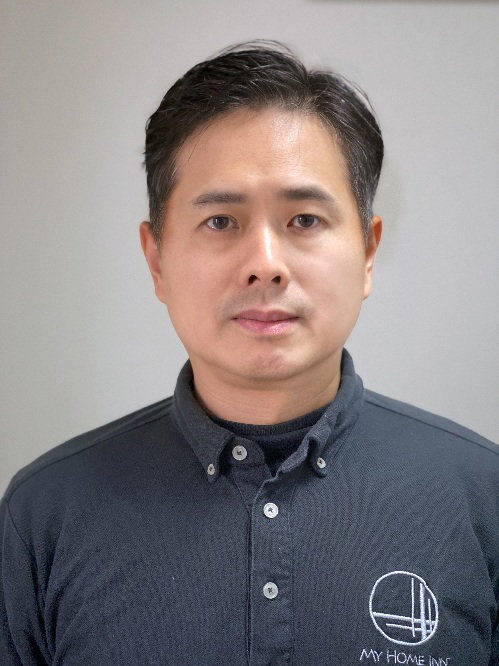
And yet, there was always something different about Japan. He had visited the island nation more than 30 times before finally deciding to move there. There are many reasons to be enamored with Japan, of course, and he was well-aware of how the oldest traditions and newest technologies coexist in Japan in a manner that keeps the mind endlessly engaged. But that wasn’t it. To Felix, who wasn’t quite young at that point, what made Japan different from the rest of the world was a sort of “ease of existence” that only Japan truly seemed to have. Ease of Existence If the phrase “ease of existence” doesn’t mean anything in particular when you read it, let me give you a very common example to illustrate what I mean. Board a train at the heart of Tokyo during rush hour, and as you feel yourself packed like a sardine in a tin can, you may notice that much like an actual sardine can, the train is more or less silent. No one is talking, especially on the phone. Everyone is minding their own business, quietly. As you leave the train at your station of choice, the crowd naturally forms an orderly queue to get on the escalator. All the while, as thousands upon thousands of feet cross that square meter you are standing on every single hour, the station as a whole is devoid of litter. No plastic bags, no cigarette butts. Nothing. Some may interpret as some sort of dystopian nightmare—that the Japanese are too fearful of punishment to do any form of perceived wrongdoing. But this interpretation misunderstands Japanese culture, social order, and the historical pressures that brought them into being. In most countries, such a scenario is often impossible due to people’s choices. People choose to litter, to talk loudly in public, to ignore forms of social order, etc. In Japan, this spectrum of choices is addressed in one’s upbringing: one must choose not to litter, not to talk loudly in public spaces, and so on. So the average Japanese had made their choice long ago, and they operate semi-automatically when the same situation occurs. In other words, these particular choices are simply something the individual doesn’t need to worry about, much like a price tag on an item in a shop means you don’t need to worry about how much to pay for it. Same logic, different application. That breadth of application is “ease of existence.” A Vaguely Magical Place But let’s not get ahead of ourselves. The correct interpretation of Japanese social order and the reasoning behind it is what Felix wanted to discover and investigate to the fullest. The question of “why is Japan, and only Japan, the way it is?” would continue to stay at the back of his months for years, before he finally decided to do something about it. That something, as it turned out, was to move to Japan and open a hotel business. Not exactly the most traditionally scientific way to find an answer to a pervasive question, but he was not a scientist. Still, he saw this as a form of collecting qualitative data: the myriad perspectives of his hotel guests. If you’ve ever been to Japan, or met someone who has been to Japan, you are bound to encounter the sentiment that there is something vaguely magical about it. I say vaguely because, in truth, what makes Japan feels “magical” is a collection of a thousand different things, from a cute dedicated cartoon napkin printed on your, well, napkin, to how just damn clean and compact everywhere is, to a shop that exclusively sells duck-themed merchandise for no immediately obvious reason (which you can find in Kyoto, in case you were curious). I could go on ad nauseam. The basic premise was therefore clear in Felix’s mind: he will talk to his hotel guests, ask them about their impression of Japan, and somewhere along the way the answer will reveal itself. What makes Japan magical will stop being vague. A Hotel Built on Philosophy And so, in 2018, Felix moved to Japan, and a year later he opened “My Home Inn Izumisano”, a small hotel near the Kansai International Airport (KIX) in Osaka Prefecture. If you’ve ever taken a train from KIX to Osaka, you’ve passed by it.
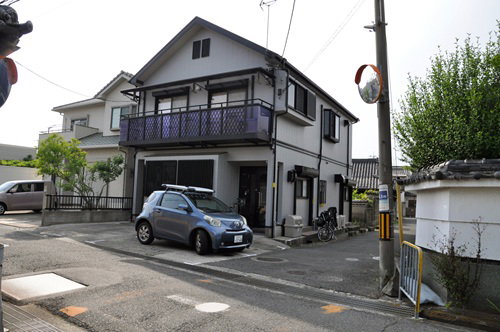
My Home Inn is not your typical hotel. The building itself used to be a residential home, and still feels like one. Felix chose to convert it into a hotel rather than buy land or demolish an existing building to build something from scratch (which is common practice in Japan, as having frequent earthquakes means structures aren’t built with hundreds of years of longevity in mind). In doing so, he aimed to rejuvenate the old and make it useful again, rather than dispose of it. The end goal in his mind was to replicate this process across Japan: convert old homes in dying communities into hotels and breathe new life into local neighborhoods. If you get the impression he has a soft spot for the down-trodden, you’re not wrong. Indeed, a look inside My Home Inn would tell you that Felix and his team did not cut corners during renovation, and you wouldn’t be able to tell the building is old if I hadn’t just told you that it was. It is not luxurious nor needlessly opulent, but comfortable and useful—like Japan. What makes My Home Inn especially unique is that it offers a service most hotels in Japan, and really most hotels full stop, don’t: car rental. If you booked a room, you can also book a car and sightsee the surrounding area through a local lens. You can eat at local restaurants and thereby boost the local economy. That is not a mere gimmick, but a sort of proclamation of intent. A mission statement. You, a guest, are invited to be less of an average tourist running from one major tourist hotspot to the next for selfies and souvenirs, but to slow down, see things from a local perspective, and see what Japan is all about once the glossy veneer of tourism is stripped away. There is much to discover. This philosophy is reflected in the interior of the hotel as well. When you enter your room, there is a dedicated space on the floor where you are meant to take your shoes off and put on slippers. The “bed” area is traditional tatami and futon. The toilet comes with many buttons and detailed instructions, and is its own brand of magic worthy of its own article. You are even encouraged to use the kitchen to cook meals using ingredients purchased locally.
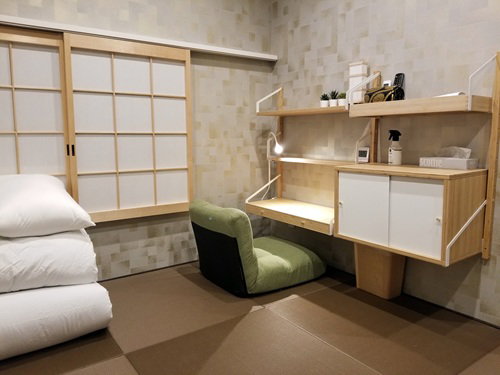
The underlying philosophy is not subtle: just because you are technically a tourist doesn’t mean you cannot, or should not, live as a local. That is the very experience Felix envisions for his guests, and every decision made in creating his hotel business was made with this philosophy in mind. No Story Without Conflict And so, every week, Felix would receive new guests from all around the world and make an effort to talk to them when possible (i.e. when they shared a language he spoke). To his surprise, while his guests indeed loved Japan, as you might expect, they were often unable to articulate what it was about Japan that they actually loved. It just felt, once again, vaguely magical. Another surprising thing, to everyone, was the Covid-19 pandemic. Yes, he opened a hotel business on an island nation in 2019. But you know what they say: hindsight is 2020 (quite literally in this case). In spite of the difficulties that naturally arose from that unavoidable ordeal, Felix refused to give up. Much like you, dear reader, My Home Inn survived the pandemic and continued to gain momentum and reputation. By the end of 2022, he opened another location in Sennan, Onosato, about a 10-minute drive from the first hotel in Izumisano.
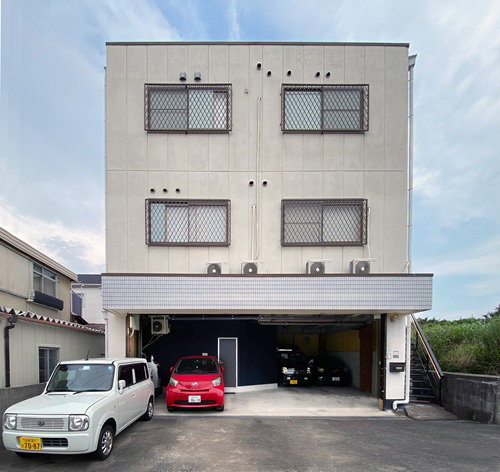
In fact, it is from that second location that I am writing this article. Me, a writer who just happened to find himself here at the end of a long chain of very strange circumstances, as one inevitably does. As was his habit with guests, Felix approached me to pick my brain, and we hit it off. He told me his story as I’ve described to you and revealed the next step of his search for an answer: writing a book. But that is a story for another time.


1 comment
Such a mind blowing and incredible newss