Life Rules to Keep You Motivated
**1. Life is 10 percent what happens to you and 90 percent how you react to it.**
The life advice I go back to most often is, “Life is 10 percent what happens to me and 90 percent how I react to it.” This quote has guided me in both my personal and professional lives. And it works because it’s true for all people: We all face challenges, but we all have the choice to respond in a positive or negative manner. http://www.success.com/article/life-doesnt-happen-to-you-it-happens-for-you
*—Ben Camerota,* *MVP Visuals* https://mvpvisuals.com/pages/about-us
**2. Give more than you take.**
It’s really that simple. Give more in the world (of your time, money or talents) than you consume or take. It creates such an abundance of experience, connections and wealth, but never when those are the leading drivers. http://www.success.com/article/15-inspiring-quotes-about-giving
*—Darrah Brustein,* *Darrah.co* http://darrah.co/
**3. Under-promise, then over-deliver.**
My father grew up on a farm in a small, rural community where you build a reputation in either direction very quickly. He taught me that you are much better off under-promising and over-delivering than not meeting people’s expectations. Most of us do business in very small business communities and would also be best served by erring on the side of exceeding expectations rather than not meeting them. http://www.success.com/article/11-expert-ways-to-build-an-impeccable-reputation
*—Doug Bend,* *Bend Law Group, PC* http://www.bendlawoffice.com/about/
**4. We aren’t rich enough to buy cheap things.**
My mom used to say, “We aren’t rich enough to buy cheap things.” Cheap things don’t last, and replacing them ultimately costs more time and money than buying high-quality goods to start with. This also applies to behavior: It’s easier to do things right the first time, rather than to retroactively fix a shoddy job. http://www.success.com/article/7-money-mistakes-youre-making-in-your-20s
*—Vladimir Gendelman,* *Company Folders, Inc* http://www.companyfolders.com/about
**5. Keep it simple, stupid.**
One of the most simple life lessons I learned from my father at a young age is to “Keep it simple, stupid.” The KISS principle has been a guiding light for me, as I often remind myself, when things seem overwhelming or overly complex, to step back and keep it simple. Usually you can break things into smaller parts or simplify a problem to achieve your desired outcome. Thanks, Dad! http://www.success.com/article/10-smart-life-lessons-from-successful-teenage-entrepreneurs
*—Kristopher Jones,* *LSEO.com* https://lseo.com/blog/
**6. Keep business and personal separate.**
As an entrepreneur, it’s so easy to mix up business and personal, but it just causes mistakes and headaches that can impact both aspects of your life in a bad way. It’s better to keep these completely separate in terms of communication, social presence, money and daily tasks.
*—Zach Binder,* *Bell + Ivy* http://www.bellivy.com/
**7. Obey the Golden Rule.**
Do unto others as you would have them do unto you. I never get tired of this positive way to look at every interaction I have. Whether it’s my family, co-workers or clients, I put their interests first. It’s not about what you can get from others, but what you give to them that makes you a pleasant person to deal with. The fact that the Golden Rule is still relevant is a measure of its power. http://www.success.com/blog/john-addison-7-ways-to-be-likeable
*—Nicole Munoz,* *Nicole Munoz Consulting, Inc.* http://www.nicolemunoz.com/
**8. Keep moving, keep playing and keep dreaming.**
I constantly refer to these words because they remind me of the importance and power of momentum. To achieve your full potential, you have to stay energized. This encompasses everything from caring about your health and visiting the gym, to staying innovative and ambitious by vigorously exercising the mind. http://www.success.com/article/how-to-know-if-youre-healthy-enough
*—Stephen Gill,* *Tiller* https://www.tiller.com/about-us/
**9. Work to live; don’t live to work.**
I can easily work just for the sake of working. But I sure hope that toward the end of my life, I don’t look back on years of time spent in an office in front of my laptop working. I want to look back on relationships and lives that I’ve been a part of. This contributes more to my overall happiness than checking off my never-ending to-do list. http://www.success.com/blog/the-key-to-your-overall-happiness-is-simple
*—Mark Daoust,* *Quiet Light Brokerage, Inc.* https://www.quietlightbrokerage.com/about
**10. Do it right or don’t do it.**
This approach guides every decision I make. If I don’t think we can do it better than anyone else and feel a strong passion for it, I decline the opportunity. Life’s just too short to spend time doing things that you aren’t proud of, don’t enjoy and aren’t going to put your full focus behind. During the years, this has saved us from many *good* opportunities, allowing the bandwidth for *great* ones. http://www.success.com/article/3-ways-to-discover-your-true-passion
*—Jeff Jahn,* *DynamiX* http://www.dynamixwebdesign.com/about-us
**11. Favors are a stronger currency than money.**
Favors are a stronger currency than money: Whether it’s in the personal or professional sphere, non-monetary help/gifts build much more meaningful long-term relationships and have a greater positive relationship impact than those that are clearly tied to a financial amount. It shows you truly care about someone and have taken the time to learn about them. It’s not easy or even always possible, but it’s something I try to keep in mind. http://www.success.com/blog/3-things-successful-people-know-about-healthy-relationships
*—Kevin Yamazaki,* *Sidebench* http://sidebench.com/about/
**12. Learn to enjoy the discomfort of change.**
George Santayana said: “To be interested in the changing seasons is a happier state of mind than to be hopelessly in love with spring.” Far too many of our problems—whether in business, relationships or day-to-day life—come from clinging to the past. By enjoying the discomfort of change, we open ourselves up to see things from a new perspective, and to be happier while doing it. http://www.success.com/podcast/ep-25-secrets-for-a-happy-brain
*—Zach Obront,* *Scribe Writing* https://scribewriting.com/
**13. Think,** ***What are you trying to accomplish?***
My father told me to “Always ask yourself what you are trying to accomplish.” This is something I try to ask every time I start a design, get stuck on a project and even in my personal life. It is a way to pull yourself outside of a situation and make the best decision. http://www.success.com/podcast/ep-32-tips-for-better-decision-making
Subscribe for more ;)

National Native Popular Flowers of Philippines
The National Flower of Philippines
The floriculture industry in the Philippines has marked its presence in the field. Offering the Varity of flowers for domestic trade, the country is a big exporter of flowers to Japan, Korea, Hongkong, Italy and Brunei. The **Sampaguita (Jasminum Sambac)** serves as the national flower of this flowery country, while the National Leaf of the Philippines is **Anahaw**.
Essential Life Lessons For Happiness And Success
**1. Know that** **what you focus your mind on grows bigger.** https://twitter.com/intent/tweet?url=http%3A%2F%2Fwww.forbes.com%2Fsites%2Flaurashin%2F2014%2F08%2F18%2F20-essential-life-lessons-for-happiness-and-success%2F&text=What%20you%20focus%20your%20mind%20on%20grows%20bigger.%20%23positivity%20%23success%20%23happiness
This tip, which I learned in an incredible course called Something Different for Women (currently on hiatus), helped get me out of a funk and turn my life around — simply by changing my mindset. If you constantly think about bad things in your life, like your annoying coworker or a recent mistake, then she/he/it will take up a disproportionate amount of your mental space. On the other hand, if you focus instead on your recent successes, your new goals and your fun coworkers, not only will your days be more pleasant and the irritating coworker or temporary defeat fade to the background, but the positive things in your life will grow and flourish. http://www.somethingdifferentnyc.com/
As the unattributed quote goes, “Watch your thoughts for they become words, watch your words for they become actions, watch your actions, for they become habits, watch your habits for they become your character, watch your character for it becomes your destiny.” Having a mind filled with negative thoughts will lead to a negative life, and a mind filled with positivity will breed a positive one.
(János Csongor Kerekes/Flickr)
**2. Don’t take things personally.**
Many freelance writers pitch story ideas to editors and then, if the editor doesn’t respond, immediately assume that s/he hated the pitch and hates the writer — and 99.9% of the time, the editor is just busy. Even when people aren’t busy but mean, it’s not about you – it’s about them. They had a bad day, a bad childhood or haven’t eaten lunch yet. I once worked with someone who was mean, but I knew she would have been mean whether I was there to be the victim or not. Your life will be much happier if you don’t mentally wound yourself by making other people’s actions about you.
**3. Express gratitude — daily.**
The first two guidelines are not easy to follow. But one habit that will smooth their adoption is taking a moment daily to acknowledge the good in your life. (Swallow any temptation to resist because you think it’s cheesy. It takes courage to not give a damn about what others think of you and instead be sincere.) Write a gratitude list of at least five things that you email to yourself, or before dinner, have each family member say what he or she is each grateful for. Pick a method that works for you — writing it down or sharing it with others. (Just don’t do it mentally to yourself, as the ritual won’t stick.) Expressing gratitude exercises your positivity muscle and makes it easier to remain even-keeled during bad times. When you get laid off, a practice of gratitude will remind you you still have your health, or if you have a bike accident, you’ll be especially grateful for your friends and family.
**4.** **Stand up for yourself but don’t act entitled.** https://twitter.com/intent/tweet?url=http%3A%2F%2Fwww.forbes.com%2Fsites%2Flaurashin%2F2014%2F08%2F18%2F20-essential-life-lessons-for-happiness-and-success%2F&text=Stand%20up%20for%20yourself%20but%20don%E2%80%99t%20act%20entitled.%20%23career%20%23success
There’s a fine line dividing the people who think they are owed everything and the people who are scared to ask for everything. Don’t be on either side of this line. If you’re not sure if you’re being exploited or treated poorly, ask your friends and family or others in your line of work what’s appropriate. If you think the other party is taking advantage of you, speak up for yourself. On the other hand, be aware when you haven’t earned something. Others will be less inclined to help you if you act as if you are owed the world on a platter.
**5.** **Ask for 100% of what you want from 100% of people 100% of the time.** https://twitter.com/intent/tweet?url=http%3A%2F%2Fwww.forbes.com%2Fsites%2Flaurashin%2F2014%2F08%2F18%2F20-essential-life-lessons-for-happiness-and-success%2F&text=Ask%20for%20100%25%20of%20what%20you%20want%20from%20100%25%20of%20people%20100%25%20of%20the%20time.%20%23success%20%23career%20%23advice
I got this amazing advice during an incredible writing workshop held by my fellow Forbes contributor David Hochman, who learned it in David Richo’s book How to Be an Adult. As long as you know you are not on the entitled side of the line mentioned above, being upfront about your needs and wants eliminates a lot of angst and inconvenience and discomfort in your life — and makes room for ease. Just ask for what you want instead of wringing your hands over whether to, how to or what’s reasonable to. Unless your request is outrageous, which you should know in your gut (or from asking friends and colleagues), the worst that can happen is that the answer is no. Reasonable requests shouldn’t damage the relationship, and if someone thinks less of you because you dared state what you need, find better people to work with in the future. http://upodacademy.com/ http://www.forbes.com/sites/davidhochman/ http://davericho.com/ http://www.amazon.com/exec/obidos/ASIN/0809132230/daverichocom-20
**6. Learn to like rejection.**
Every rejection means you’re one rejection closer to the next yes. As Hochman says, “You’ll never write for The New Yorker unless you pitch The New Yorker.” So, always put yourself out there, and get used to being rejected. No one will ever have a perfect batting average, so pile up the rejections in order to get the yeses.
**7. Recognize that money gives you freedom.**
I used to be interested in pretty much everything but money. If that describes you too, remember that if you don’t take care of your money, you could become a slave to debt and lack the freedom to pursue your goals. Get a budget and learn the basics of personal finance so you don’t fritter your money away on things you don’t value. (For a primer, check out this series on financial accounts, budgeting, cutting costs, and negotiating salary and raises, and read about how I manage my own finances.) You’ll be happiest when you spend in line with your values, but doing so takes conscious effort. http://www.forbes.com/sites/laurashin/2013/06/05/new-grads-heres-what-to-do-with-your-first-paycheck/ http://www.forbes.com/sites/laurashin/2013/06/12/new-grads-heres-how-to-spend-your-money-every-month/ http://www.forbes.com/sites/laurashin/2013/06/19/new-grads-heres-how-to-keep-your-costs-low/ http://www.forbes.com/sites/laurashin/2013/06/26/new-grads-heres-how-to-negotiate-your-salary/ http://www.forbes.com/sites/laurashin/2014/03/30/how-a-personal-finance-journalist-manages-her-own-money/
**8. Always negotiate.**
Every little bump in salary or fee you negotiate for yourself will mean bigger future boosts and more money over your lifetime. And that will make it much easier for you to accomplish your goals, whether related to your career, buying a house, getting married, sending your kids to college or traveling. (Again, check out that all important article on negotiating.) Learn to ask for more money than you’re comfortable asking for. https://twitter.com/intent/tweet?url=http%3A%2F%2Fwww.forbes.com%2Fsites%2Flaurashin%2F2014%2F08%2F18%2F20-essential-life-lessons-for-happiness-and-success%2F&text=Every%20bump%20in%20%23salary%20or%20fee%20you%20%23negotiate%20for%20yourself%20will%20mean%20bigger%20future%20boosts%20%26%20more%20%23money%20over%20your%20life. http://www.forbes.com/sites/laurashin/2013/06/26/new-grads-heres-how-to-negotiate-your-salary/
**9. Start investing early.**
Investing early makes saving money, especially for the difficult task of amassing a retirement nest egg, much, much easier. As I wrote in my story on investing secrets, “If Person A saves $5,000 a year from age 25 to 40 for a total of $75,000 and then never invests another penny, and Person B invests $5,000 every year from 40 to 65 for a total of $125,000 invested, assuming 5% growth, Person A will end up with more than $400,000 by retirement, while Person B will only have $256,000, simply because Person A started saving earlier, even if she put away less.” Just by starting earlier, you could have $150,000 more by retirement! This is the equivalent of someone offering you a free $150,000 right now with the only catch being that you have to wait for the money till retirement. If they did, you would take the offer, yes? Then, start saving and investing asap and make it a lifelong habit. (Read the investing secrets that will help you beat other investors, and avoid the top mistakes investors make.) http://www.forbes.com/sites/laurashin/2013/10/29/10-investing-tricks-that-will-help-you-outperform-most-investors/ http://www.forbes.com/sites/laurashin/2013/11/01/5-big-mistakes-investors-make-and-how-to-avoid-them/
https://4b3c3ab8f1b203b867b3905b0224074c.safeframe.googlesyndication.com/safeframe/1-0-37/html/container.html?n=0
**10. Do one thing at a time.**
This bit of Zen wisdom is more relevant than ever. Eat when you eat. Walk when you walk. Enjoy the flavors and textures of your food. Pay attention to the feel of your bare foot on the wood floor. Don’t multitask. This takes conscious effort. Sometimes I absentmindedly pick up my phone to check Facebook just to walk from one room to another. Flooding your mind with these distractions uses mental energy and depletes your brain power for important undertakings. Set rules around your gadget use, single task as much as possible, and appreciate the extra energy you have. (Read here for more tips on how to decrease noise in your life and use stress to your advantage and how to perform at your peak every day.) http://www.forbes.com/sites/laurashin/2013/11/30/how-to-be-more-productive-and-happier-during-times-of-stress/ http://www.forbes.com/sites/laurashin/2014/01/15/how-to-perform-at-your-peak-every-day-10-tips-for-working-smarter-in-2014/
**11. Accept and enjoy where you are right now.**
Life is always changing and soon the current rhythm of your days will morph into something new. There was a period when I was upset about being unmarried, but then I realized that I might someday miss my single days. Now I make sure to enjoy every one.
**12. Get a regular dose of nature.**
Every day, connect with nature in some way, large or small. Even if your schedule is packed, spend a minute observing the patterns the raindrops make against your window. Watch a tree as it bends and moves with the wind. And yes, smell the roses. Studies have shown that nature has a rejuvenating effect, and appreciating it is an easy way to be present in the moment.
**13. Sweep your side of the street.**
Another pearl of wisdom from the Something Different course. If you have a problem with someone and need to air it out with them, first figure out what you did wrong. You can’t find a solution to the problem until you also know how you contributed to it, and they won’t make peace until you acknowledge your role.
https://4b3c3ab8f1b203b867b3905b0224074c.safeframe.googlesyndication.com/safeframe/1-0-37/html/container.html?n=0
**14. Know that people who talk about other people behind their backs are also talking about you behind yours.**
These people aren’t real friends. The world has plenty of non-gossips from among whom you can choose true friends.
**15. Don’t hold a grudge.**
In the spirit of asking for 100% of what you want from 100% of people 100% of the time, if you need to cut someone out of your life, do so. But holding a grudge saps your energy. (Remember — what you focus your mind on grows bigger!) So, set boundaries but don’t stew over the reason you had to establish them. Learn your lesson, then move on.
**16. Always put in your best effort, so that you never have regrets or wonder ‘what if.’**
Sometimes, special opportunities come along in life. Whether or not you get any particular one is not that important, because even if you don’t get this one, another opportunity will come along. But what will leave a lasting effect is not trying your best, not getting the gig, and being left wondering, What if? Don’t do that. Put your best foot forward so you know whether you were judged on your true merit and not a half-baked effort.
https://4b3c3ab8f1b203b867b3905b0224074c.safeframe.googlesyndication.com/safeframe/1-0-37/html/container.html?n=0
**17.** **Lasting change in life starts with daily habits.** https://twitter.com/intent/tweet?url=http%3A%2F%2Fwww.forbes.com%2Fsites%2Flaurashin%2F2014%2F08%2F18%2F20-essential-life-lessons-for-happiness-and-success%2F&text=Lasting%20change%20in%20%23life%20starts%20with%20daily%20habits.%20%23success%20%23goals%20%23career
If you imagine a different future for yourself, don’t think that you’ll suddenly shed your current life one day and become an entirely new person. What can you do now to get there? Start incorporating that into your life today. Eventually that habit will snowball, and through a combination of persistence and luck, you’ll find yourself in the life you once dreamed of. As E.L. Doctorow said, ‘Writing a novel is like driving a car at night. You can see only as far as your headlights, but you can make the whole trip that way.’”
**18. Ask yourself, “Will this matter in a year?”**
Another Hochman gem. When you face certain decisions — i.e. taking a couple days off work to take a trip with your aging parents or turning down social events for a couple weeks to do a stellar job for your dream client — go with the course that you’ll be glad you chose a year from now.
**19. Treat others with kindness and understanding.**
Everyone has his or her own baggage, problems and worries, and is also striving for happiness and the freedom to pursue his or her own dreams. It’s not a winner-take-all kind of situation. Helping someone out, being nice to them or even just smiling at a stranger will have ripple effects. If you’ve ever had someone do something nice for you, you’ve probably felt the compulsion to pay it forward, so set that chain in motion yourself. Kindness costs little but pays rich rewards to everyone.
**20. Know that** **how you use your mind is in your power.** https://twitter.com/intent/tweet?url=http%3A%2F%2Fwww.forbes.com%2Fsites%2Flaurashin%2F2014%2F08%2F18%2F20-essential-life-lessons-for-happiness-and-success%2F&text=How%20you%20use%20your%20mind%20is%20in%20your%20%23power.%20%23career%20%23success%20%23positivity
Underlying all the above principles is the fact that at every moment, you have a choice as to how to use your mind, and that, in turn, gives you control over the course of your life. You can act with love or hate, kindness or meanness, big-heartedness or pettiness, mindfulness or absentmindedness — and the more you opt for the first of those choices, the more love, kindness, big-heartedness and mindfulness you’ll have in your life.
Subscribe for more ;)

Goodmorning everone ;)
Goodmornight ;) Im going to sleep na =) Tomorrow is another day 😊😊😊
May gising pa ba dito ?
Life Lessons on Setting Goals
*Be flexible with your goals
Your goals are a plan. They are not written in stone.
As the saying goes, “no plan can survive enemy contact”. Life happens. Plans change. Stick to your goals as best you can but be prepared to revise and update as needed. Analyze your successes and failures and make adjustments accordingly.
***Setbacks aren’t failures unless you give up.**
S**t happens. Plain and simple.
Life is filled with highs and lows. Just because something is seeming to go against you today, doesn't mean that tomorrow will not bring successes you did not plan for either.
Take setbacks as a learning experience – and keep going.
***You learn how to push yourself.**
Quitting can become a habit. It becomes far to easy the more you do it. You should try to push yourself further than you feel you need to. You will not always succeed. But the trying and the perseverance will make you tougher and more likely to succeed in the future.
*Creating a process works better than setting a goal.
A process changes the way you behave. It becomes a routine. A goal is fleeting and subject to change as you redefine your goals.
Subscribe for more ;)

Come and join this community and be active ;) click the link 👇👇👇
https://read.cash/c/share-and-write-anything-db04
@mich @cristy @ruffa @Cold3nice @Oslec08 @aAngel0124 @devjani @soniya @marmar @hossen
Hi everyone join to this community
https://read.cash/c/share-and-write-anything-db04
@Jacie_hughes is giving upvotes
@Cold3nice @mich @Ruffa @Cristy @Angel0124 @Marmar @devjani @soniya @Hossen1235 @Raman
Butterfly Identification Guide: 26 Types of Butterflies (With Photos)
**1. The Monarch (*****Danaus plexippus*****)**
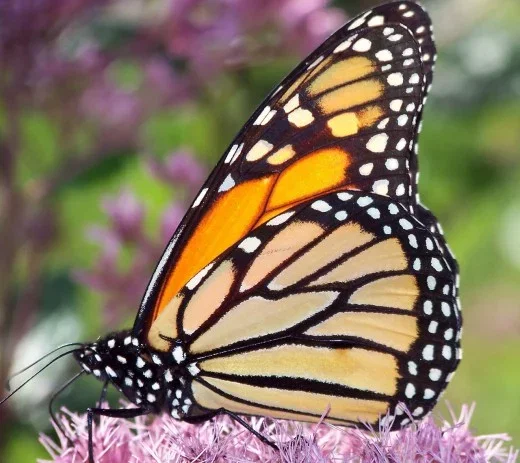
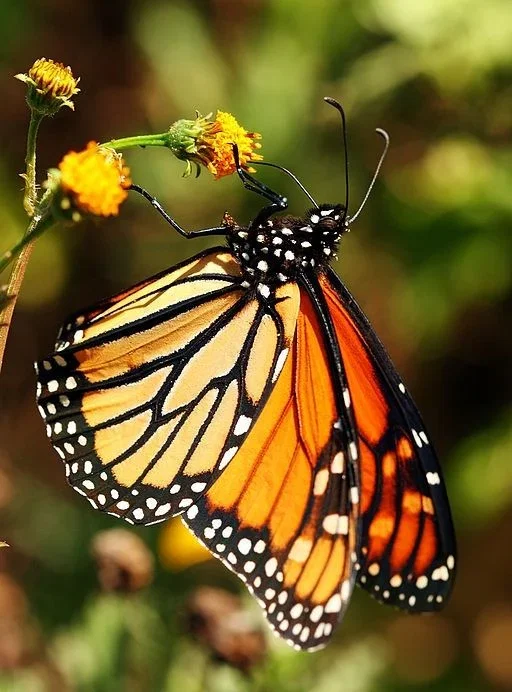
The magnificent Monarch may be the most well-known and best-loved of all our insects. There is something truly regal about its size, bright colors, and powerful, soaring flight, but its kingly name supposedly comes from the spotted margins of its wings, which resemble the sable-edged robes worn by royalty at the time of its discovery.
Nearly everyone has seen monarchs and is familiar with their mind-boggling migrations and million-butterfly roosting in the mountain forests of Mexico. But there are more reasons to be fascinated with this species. For one thing, it is thought that the poisonous sap in milkweed, the monarch's only food source, makes it distasteful to predators like birds.
This may be one reason why so many butterflies are orange—they are evolving to resemble the monarch so birds will think twice before eating them, even if they are perfectly edible. This is the idea behind mimicry, and if the theory is accurate, then the monarch is not only big and beautiful, but highly influential as well.
To see a striking example of mimicry in action, have a look at our next species, the Viceroy.
**The Basics:**
**What is the scientific name?** *Danaus plexippus*
**What does it eat?** Milkweeds
**Will it seriously damage plants or trees?** No
**Is it rare?** No, but this species is under threat from industrialized agriculture.
**Where does it occur?** There are related species throughout the world.
**Can you raise it from caterpillar to adult?** Yes, if you give it plenty of milkweed leaves.
2. The Viceroy (*Limenitis archippus*)
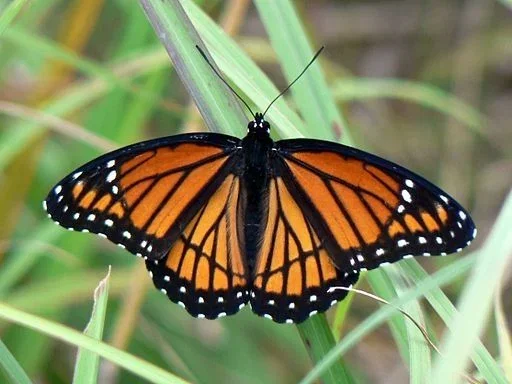
It's hard to believe that this insect is completely unrelated to the monarch. The viceroy gets its name from its resemblance to the popular monarch butterfly (they're both royalty—get it?). They are so similar that this butterfly's identification relies largely on a quite minor difference in the hindwing markings.
The viceroy is one of the most well-known cases of mimicry among North American butterflies (the viceroy's relatives are nearly all black or dark blue). The thinking among experts is that the monarch, which eats milkweed, is made poisonous by the caustic sap in the milkweed plant. This means that birds and other predators who have tried a nasty-tasting orange butterfly in the past will think twice when confronted with another one.
Many butterflies in the monarch's range are orange like the monarch, possibly to gain protection from the resemblance, but the viceroy really takes it to an extreme.
**The Basics:**
**What is the scientific name?** *Limenitis archippus*
**What does it eat?** Willows and other trees
**Will it seriously damage plants or trees?** No
**Is it rare?** No, this species has a wide range.
**Where does it occur?** This species occurs throughout the eastern US.
**Can you raise it from caterpillar to adult?** Yes, if you give it plenty of the food plant you found it on.
3. Red-Spotted Purple (*Limenitis arthemis astyanax*)
The red-spotted purple is closely related to—get this—the viceroy (the monarch-mimicking red-and-black butterfly pictured above). Even better, this pretty black-and-blue butterfly is believed to mimic the poisonous pipeline swallowtail (check this species out further down). That makes the *Limenitis* genus a pretty amazing bunch of copy-cats, adapting over millions of years to resemble animals that are poisonous and protected from predators.
The red-spotted purple is especially beautiful on the underside, so if you ever get to see one up close, you'll want to keep your camera handy.
**The Basics:**
**What is the scientific name?** *Limenitis arthemis astyanax*
**What does it eat?** Willows and other trees
**Will it seriously damage plants or trees?** No
**Is it rare?** No, this species has a wide range.
**Where does it occur?** This species occurs throughout the eastern US.
**Can you raise it from caterpillar to adult?** Yes, if you give it plenty of the food plant you found it on.
4. Great Spangled Fritillary (*Speyeria cybele*)
This bright orange butterfly wings fast across fields and around forest edges in mid- to late summer. Some researchers think its orange color is meant to mimic the poisonous monarch butterfly's colors; if so, that makes it yet another in the orange-butterfly mimic category that may also include over a dozen unrelated species.
The great spangled has lovely silver spots on the underside, which gives the insect its common name. There are many similar, related species that occur across our area, many of which are quite rare and limited to specific areas in the mountainous western states.
**The Basics:**
**What is the scientific name?** *Speyeria cybele*
**What does it eat?** Violets and other low plants
**Will it seriously damage plants or trees?** No
**Is it rare?** No, this species has a wide range.
**Where does it occur?** This species occurs throughout the eastern US, primarily in the north; there are many closely related species throughout North America.
**Can you raise it from caterpillar to adult?** Yes, if you give it plenty of the food plant you
5. Tiger Swallowtail (*Papilio glaucus*)
These big, beautiful butterflies can be identified by their bold yellow-and-black stripes, hence their common name. These tigers have an unusual life history. The adults are on the wing in mid-summer, wheeling high among the branches of ash and cherry trees, where the big females lay their eggs.
The caterpillar, which is green with little "false eye" spots near its head, feeds until it is about half grown, and then builds a little shelter by pulling together the edges of a leaf. It overwinters in this shelter, and in the spring emerges to continue feeding. It will pupate in early summer, and then the adults hatch to complete the process.
Another interesting fact about the tiger swallowtail is that some females, especially in the southern parts of its range, are almost all a smokey, dark brown in color. They hardly even look like tigers . . . panthers, maybe! Experts have suggested that the reason for this "dimorphic" phase is in order to mimic the bad-tasting pipevine swallowtail, which is generally more common in the south than in the north.
**The Basics:**
**What is the scientific name?** *Papilio glaucus*
**What does it eat?** Willow, wild cherry, and other trees
**Will it seriously damage plants or trees?** No
**Is it rare?** No, this species has a wide range.
**Where does it occur?** This species occurs throughout the eastern US; there are similar species throughout North America.
**Can you raise it from caterpillar to adult?** Yes, if you give it plenty of the food plant you found it on.
6. Pipevine Swallowtail (*Battus philenor*)
This beautiful insect is the northernmost species of a large tropical genus (*Battus*) that includes some of the most striking swallowtail butterflies in the tropics, which is saying something. The pipeline swallowtail is generally limited to the southern states, but it has been spotted as far south as Mexico and as far north as Manitoba, especially later in the summer as multiple broods spread north.
This insect is believed to be the model for a number of other species that mimic its blue-on-black coloring. The larvae and the adult may be poisonous or distasteful to predators like birds and lizards, making it a good idea to look the same whether or not you yourself are poisonous.
**The Basics:**
**What is the scientific name?** *Battus philenor*
**What does it eat?** Vines in the Aristolochia group
**Will it seriously damage plants or trees?** Not usually
**Is it rare?** No, this species is common throughout its range.
**Where does it occur?** This species is most common in the southeastern US.
**Can you raise it from caterpillar to adult?** Yes, if you give it plenty of the food plant you found it on.
7. Giant Swallowtail (*Papilio cresphontes*)
Like the pipevine swallowtail (above), this is a generally southern species that sometimes ranges as far north as Canada. The caterpillar closely resembles a large bird dropping, which would serve to deter birds and other predators. In the American South, these big caterpillars are often called "orange dogs" for their choice of food plant: citrus trees, especially orange and lemon. In some cases they can cause damage to young trees.
The sight of a big, beautiful giant swallowtail swooping around your garden plants is one you are not likely to soon forget!
**The Basics:**
**What is the scientific name?** *Papilio cresphontes*
**What does it eat?** The leaves of citrus trees
**Will it seriously damage plants or trees?** Sometimes
**Is it rare?** No, this species is generally common throughout its range.
**Where does it occur?** This species is most common in the southeastern US.
**Can you raise it from caterpillar to adult?** Yes, if you give it plenty of the food plant you found it on.
8. Zebra Swallowtail (***Protographium marcellus***)
This beautiful insect aptly named, with black stripes on a clear white background. Like the giant swallowtail (above), it is a northern representative of a group of butterflies that have many varieties throughout the Neotropics. You will seldom find this species outside of the southern states, but it will sometimes wander north, for example along the Mississippi River Valley.
Like all other swallowtails, the flight is strong and gliding, but they will often stop to nectar. At these times you may see several visiting the same nectar source. Males also participate in a behavior known as "puddling," which is when a group of butterflies congregates at wet sand or mud to draw nutrients.
**The Basics:**
**What is the scientific name?** *Protographium marcellus*
**What does it eat?** The larvae eat the leaves of pawpaw trees
**Will it seriously damage plants or trees? No**
**Is it rare?** No, this species is generally common throughout its range.
**Where does it occur?** This species is most common in the southeastern US.
**Can you raise it from caterpillar to adult?** Yes, if you give it plenty of the food plant you found it on.
9. Black Swallowtail (*Papilio polyxenes*)
This common butterfly occurs in one form or another over pretty much the entire North American continent. I chose to picture the male, which has more yellow on its hind wings; the female black swallowtail is larger and has much more blue on its hindwings, making it yet another North American butterfly that resembles the poisonous pipeline swallowtail.
Black swallowtails have a very striking caterpillar, often called the "carrot-worm" because it eats, you guessed it, carrots. Maybe the photo above looks familiar to you.
**The Basics:**
**What is the scientific name?** *Papilio polyxenes*
**What does it eat?** Carrots, dill, parsley, and related plants; also meadow rue
**Will it seriously damage plants or trees?** It can sometimes strip the leaves from garden plants.
**Is it rare?** No, this species has a wide range.
**Where does it occur?** This species occurs throughout the eastern US; there are many closely related species throughout North America.
**Can you raise it from caterpillar to adult?** Yes, these caterpillars are easy to raise.
10. Cabbage White (*Pieris rapae*)
Not a true beauty, perhaps, but this plain white insect is by far the most successful butterfly in North America. It was introduced from Europe many years ago and has found a home everywhere from your backyard garden to the wilds of the western mountains.
The very inconspicuous pale-green caterpillar of the cabbage white butterfly lives on the underside of many different leaves, especially cruciferous plants and other cultivars, and eats holes in the middle of the leaf; the damage is very familiar to even the most casual gardener. You can see the damage, but good luck finding one of the larvae—they are close to invisible.
The butterfly is not protected by poisonous compounds and doesn't really resemble known mimicry models like the orange monarch or the black-and-blue pipeline swallowtail, but it has become the single most common butterfly in city and countryside.
**The Basics:**
**What is the scientific name?** *Pieris rapae*
**What does it eat?** Just about anything
**Will it seriously damage plants or trees?** Yes, especially cabbage and kale
**Is it rare?** No, this species has a wide range.
**Where does it occur?** This species occurs throughout North America.
**Can you raise it from caterpillar to adult?** Yes, if you really want to.
11. Orange Sulphur (*Colias eurytheme*)
The orange sulfur and the clouded sulfur (both members of the "clouded yellows and sulphurs" subfamily *Coliadinae*) can be hard to tell apart, and often fly together, so I put them together here. They are among the first butterflies to appear each spring, and they seem to have adapted very well to the disturbances humans cause in the landscape. Look out over the close-cut monoculture of a golf course or city park grounds and you'll probably see a few of these very common butterflies dancing across the grass.
There are several other yellow species in the *Coliadinae* subfamily, and these butterflies all look much alike to the casual observer. For this guide, I am sticking to the most common. The next species is one worth singling out.
**The Basics:**
**What is the scientific name?** *Colias eurytheme*
**What does it eat?** Alfalfa and many other low plants
**Will it seriously damage plants or trees?** Yes, on occasion.
**Is it rare?** No, this species has a wide range.
**Where does it occur?** This species occurs throughout the eastern US.
**Can you raise it from caterpillar to adult?** Yes
12. Clouded Sulphur (*Colias philodice*)
This butterfly can be difficult to tell apart from the previous one. The basic facts are all the same, and the larvae are basically indistinguishable, except to an expert. There are some differences in the colors and black wing margins, but even these characteristics are variable between individuals and between regions.
13. Southern Dogface (*Colias cesonia*)
Usually only found in the South, this butterfly may be expected farther north as climate change alters the distribution of some species. This is a large, showy, and fast-flying butterfly that likes open fields and bright sunshine. They are legendarily difficult to catch.
Note the "dog face" profile in black on each upper wing that gives this butterfly its cool common name. I remember a field in Texas swarming with these butterflies; their speed and agility is impressive.
**The Basics:**
**What is the scientific name?** *Colias cesonia*
**What does it eat?** Willows and other trees
**Will it seriously damage plants or trees?** No
**Is it rare?** No, this species has a wide range.
**Where does it occur?** This species occurs throughout the eastern US.
**Can you raise it from caterpillar to adult?** Yes, if you give it plenty of the food plant you found it on.
14. Zebra Longwing (*Heliconius charithonia*)
This beautiful butterfly is essentially tropical, with a range that extends into South America. In the US, it can be found in Florida and the southern states into Texas; there are occasional migrations that bring these butterflies even farther north.
Adults roost together at night in groups of over 50 individuals, dispersing in the morning to nectar at a variety of plants and—unusual for butterflies—consume pollen from flowers. The caterpillars are white with black spines and feed on passionflower vines, whose toxic sap gives them chemical protection from predators.
**The Basics:**
**What is the scientific name?** *Heliconius charithonia*
**What does it eat?** The caterpillar feeds on passionflowers; the adult butterfly also feeds on pollen.
**Will it seriously damage plants or trees?** No
**Is it rare?** No, although it's less common the further north you go.
**Where does it occur?** American tropics
**Can you raise it from caterpillar to adult?** Yes, if you give it plenty of leaves from the food plant.
15. Northern Pearly-Eye (*Enodia anthedon*)
This subtly beautiful butterfly is best identified by the area in which it is found: the woods. It is relatively unusual to find large butterflies flying in woods or forests, and if the insect is pale brown, has round "eye spots" bordering the wings, and tends to land vertically on tree trunks, then there is a good chance it is a pearly eye or one of its close relatives.
These pretty butterflies do have a somewhat unattractive habit: They like to feed on roadkill. I once found a big male happily feeding on a very dead possum on a lonely West Virginia forest road. Not the most appealing setting for such a pretty insect, but that's Nature for you.
**The Basics:**
**What is the scientific name?** *Enodia anthedon*
**What does it eat?** Roadkill and various grasses
**Will it seriously damage plants or trees?** No
**Is it rare?** No, these species have a wide range, although they are not often encountered due to their habits.
**Where does it occur?** This species occurs throughout the eastern US.
**Can you raise it from caterpillar to adult?** Yes, if you give it plenty of the food plant you found it on (preferably not roadkill!).
16. Common Wood Nymph (*Cercyonis pegala*)
This is one of the most variable butterflies in the US. It occurs nearly everywhere in the US east of the Mississippi, but you could hold two specimens from different parts of its range in your hands and not think they were even related. Eastern populations tend to have bright yellow bands behind big, round eye-spots on the upper wings, while western forms may have no yellow at all, very small eyespots, and be nearly twice as big.
I chose an image of an individual that is more or less in the middle, but if you have a butterfly that looks even a *little* like this, it may well be a form of *C. pegala*.
**The Basics:**
**What is the scientific name?** *Cercyonis pegala*
**What does it eat?** Grasses
**Will it seriously damage plants or trees?** No
**Is it rare?** No, this species occurs from coast to coast.
**Where does it occur?** There are related species throughout the world.
**Can you raise it from caterpillar to adult?** Yes, if you give it plenty of leaves from the plant you found it on.
17. California Sister (*Adelpha californica*)
A truly gorgeous butterfly, the California sister is big, fast, and hard to miss. It stops often to feed on roadkill or drink from puddles, flashing those big, beautiful markings when it does.
This insect is one of the northernmost members of a huge group of tropical and sub-tropical butterflies, many of which show interesting variations on the markings of the California sister. Some feature beautiful iridescent purple wings.
**The Basics:**
**What is the scientific name?** *Adelpha californica*
**What does it eat?** Oaks, roadkill
**Will it seriously damage plants or trees?** No
**Is it rare?** No, but this species has a fairly limited range.
**Where does it occur?** In the American west; very similar species occur throughout the Western Hemisphere.
**Can you raise it from caterpillar to adult?** Yes, if you give it plenty of oak leaves.
18. Milbert's Tortoiseshell (*Aglais milberti*)
I almost didn't include the species, because it's not terribly common and is hard to identify on the wing—and with its constant patrolling behavior, it's almost always on the wing—but when a Milbert's tortoiseshell butterfly stops to drink from a puddle or a flower, it shows its wings, and for my money there's not a more beautiful butterfly in North America.
It's related to several European species that are also striking, including the amazing peacock butterfly. Milbert's tortoiseshells are on the wing all summer, but some hibernate, and may come out on a warm spring day, sometimes when there's still snow on the ground.
**The Basics:**
**What is the scientific name?** *Aglais milberti*
**What does it eat?** Like others in this group, the caterpillar feeds on nettles.
**Will it seriously damage plants or trees?** No
**Is it rare?** No, but this species has a fairly limited range.
**Where does it occur?** Mostly in northern areas of the US
**Can you raise it from caterpillar to adult?** Yes, if you give it plenty of leaves from the food plant.
19. Red Admiral (*Vanessa atalanta*)
The red admiral is yet another butterfly that some entomologists think is a mimic of the monarch, though the monarch is bigger, brighter, and has different flight habits. Is it possible that we are witnessing a species in the process of changing to become a more accurate mimic?
When you come down to it, there's no such thing as a species, in the sense of a fixed representative of an animal's permanent form; everything is in flux, shifting towards more and more successful variations on their form. The red admiral, then, along with every other butterfly on this page, is simply the "current version." It would be so cool to hang around for another million years or so and see what these insects all look like then!
**The Basics:**
**What is the scientific name?** *Vanessa atalanta*
**What does it eat?** Like others in this group, the caterpillar feeds on nettles
**Will it seriously damage plants or trees?** No
**Is it rare?** No, but this species has a fairly limited range.
**Where does it occur?** This species can be found throughout the US, southern Canada, and Mexico.
**Can you raise it from caterpillar to adult?** Yes, if you give it plenty of leaves from the food plant.
20. The Buckeye (*Junonia coenia*)
Isn't this a gorgeous insect? It's a shame that it flies so fast, giving the average observer little chance to appreciate its beauty. The buckeye occurs throughout eastern North America, where its larvae feed on nettles. The butterfly likes to circle the same area and land in the same general spot, and you will most often see them on dusty gravel roads, where their brown ground color blends in surprisingly well. The big eyespots resemble a bird's or a lizard's, so when they snap their wings open, their predators may be scared off.
Buckeyes also have a curious relationship with the large Carolina grasshopper, which inhabits the same general space as the butterfly. When the grasshopper jumps, the buckeye will swoop down to "do battle" with the larger insect. Why they do this remains unknown.
**The Basics:**
**What is the scientific name?** *Junonia coenia*
**What does it eat?** The caterpillar feeds on plantains and snapdragons.
**Will it seriously damage plants or trees?** No
**Is it rare?** No
**Where does it occur?** This species is prevalent throughout the US, and related species can be found throughout the world.
**Can you raise it from caterpillar to adult?** Yes, if you give it plenty of leaves from the food plant.
21. Question Mark (*Polygonia interrogationis)*
This is one of the angle-wing butterflies and is common in late summer. It has a bright-orange upperside, but the underside of the wings is camouflaged to blend in perfectly with bark or dead leaves. There is one silver mark among the camo on the underwing, shaped like a question mark, which gives the butterfly its name.
**The Basics:**
**What is the scientific name?** *Polygonia interrogationis*
**What does it eat?** The caterpillar feeds on elms.
**Will it seriously damage plants or trees?** No
**Is it rare?** No
**Where does it occur?** Throughout the eastern US, with similar species in the West
**Can you raise it from caterpillar to adult?** Yes, if you give it plenty of leaves from the food plant.
22. Comma Butterfly (*Polygonia c-album)*
This butterfly is very similar to the question mark – in fact, it's very nearly the same, except that instead of a question mark it has a silvery comma on its underside. It's the smaller of the two "punctuation" butterflies, and is also somewhat more common. When this butterfly lands on dead leaves or in the middle of a gravel road, its camouflage make it almost impossible to find. The glittery comma marking only adds to the confusion, since it looks like a drop of water on a leaf.
**The Basics:**
**What is the scientific name?** *Polygonia c-album*
**What does it eat?** The caterpillar feeds on elms, pussy-willow, gooseberry, and many other plants
**Will it seriously damage plants or trees?** No
**Is it rare?** No, it is a very common species
**Where does it occur?** Throughout the eastern US, with similar species in the West
**Can you raise it from caterpillar to adult?** Yes, if you give it plenty of leaves from the food plant.
23. Painted Lady (*Vanessa cardui*)
This insect is maybe the most "cosmopolitan" butterfly in North America, meaning it occurs pretty much everywhere in the world. The monarch is famous for its travels between the US and Mexico, but the painted lady can be found just about anywhere in the world. There is even a closely related species in the Hawaiian Islands.
The painted lady is related to the buckeye and the red admiral, and like those species, its caterpillar is spiny and will eat thistle and other common "weeds." I have found both the larva and the adult in deserts and mountain forests, and everywhere in between; sometimes their population "explodes," and a field will be nearly covered with thousands of these beautiful butterflies. This, by the way, is another butterfly that may mimic the monarch.
**The Basics:**
**What is the scientific name?** *Vanessa cardui*
**What does it eat?** The caterpillar feeds on nearly 300 different plants, mostly from the *Aster* family.
**Will it seriously damage plants or trees?** No
**Is it rare?** No, this is one of the most common butterflies in the world.
**Where does it occur?** This butterfly has a worldwide distribution.
**Can you raise it from caterpillar to adult?** Yes, if you give it plenty of leaves from the food plant.
24. Mourning cloak (Nymphalis antiopa)
This beautiful butterfly is related to the angle wings, and has irregular wing borders just like those insects. The mourning cloak, however, has a unique and gorgeous appearance. The ground color is deep purple-brown; the borders are yellow, but just inside that is a band of black with royal-blue spots. It's a subtle but sublime insect, and while it's common in North America, it's regarded as one of the rare prizes of collectors in the UK, where it has been known as The Camberwell Beauty.
The caterpillar feeds on elm and is very spiny; it features a row of red spots along its back. They are harmless.
**The Basics:**
**What is the scientific name?** *Nymphalis antiopa*
**What does it eat?** The caterpillar feeds on elms
**Will it seriously damage plants or trees?** No
**Is it rare?** No, it is a very common species
**Where does it occur?** Throughout the eastern US
**Can you raise it from caterpillar to adult?** Yes, if you give it plenty of leaves from the food plant.
25. The Blues (Family *Lycaenidae*)
This generally common group of butterflies is in the family *Lycaenidae*. These insects are small and quick-flying, and their delicate, pretty markings require an up-close look or a good photograph to appreciate.
This family is especially abundant in the American west, and some mountain meadows have swirling clouds of blues of various species. The caterpillars are a little like fuzzy green slugs; they creep slowly around the flower-tops of their food plants, where they are very nearly invisible, even to the trained eye.
**The Basics:**
**What is the scientific name?** These butterflies are in the family *Lycaenidae*.
**What does it eat?** These caterpillars eat a variety of flowering plants; they generally feed on the flowers.
**Will it seriously damage plants or trees?** No
**Is it rare?** Some of the blues, for example the Karner blue, are among the rarest of North American butterflies.
**Where does it occur?** These butterflies have a worldwide distribution.
**Can you raise it from caterpillar to adult?** Yes, if you give it plenty of leaves from the food plant.
26. The Skippers (Family *Hesperiidae*)
Members of this very common group of butterflies are generally readily identifiable by their stout bodies, pointed wings, and quick, "skipping" flight. Exceptions to this rule are the giant skippers and a few other large species, but for the most part, skippers tend to look alike.
The species figured here, the fiery skipper, is representative of the typical skipper type. Its common name is appropriate because when the male butterfly flies in the sun, it's reflective-orange wings seem to glow. The caterpillar feeds on a variety of grasses, including Bermuda grass, and when there are enough of them, they may be considered a pest species.
Another skipper habit is the way they often hold their wings in a "fighter jet" position when resting on a flower or leaf. This is a very reliable field characteristic. The fiery skipper lives in North and South America, from Canada to Argentina, and has been known to migrate.
**The Basics:**
**What is the scientific name?** These butterflies are in the family *Hesperiidae*.
**What does it eat?** These caterpillars eat a variety of grasses.
**Will it seriously damage plants or trees?** Occasionally
**Is it rare?** Some skippers are very scarce now due to the abuse of the environment.
**Where does it occur?** These butterflies have a worldwide distribution.
**Can you raise it from caterpillar to adult?** Yes, if you give it plenty of leaves from the food plant.
What's Your Favorite Butterfly? Let your opinion be heard!
Which is your favorite butterfly?
Red admiral
Tiger swallowtail
Black swallowtail
Monarch
Buckeye
Viceroy
Red-spotted purple
Yellow sulfur
Something else . . .
Stages of Growth Month-by-Month in Pregnancy
First trimester
The first trimester will span from conception to 12 weeks. This is generally the first three months of pregnancy. During this trimester, your baby will change from a small grouping of cells to a fetus that is starting to have a baby’s features.
**Month 1 (weeks 1 through 4)**
As the fertilized egg grows, a water-tight sac forms around it, gradually filling with fluid. This is called the amniotic sac, and it helps cushion the growing embryo.
During this time, the placenta also develops. The placenta is a round, flat organ that transfers nutrients from the mother to the baby, and transfers wastes from the baby. Think of the placenta as a food source for your baby throughout the pregnancy.
In these first few weeks, a primitive face will take form with large dark circles for eyes. The mouth, lower jaw and throat are developing. Blood cells are taking shape, and circulation will begin. The tiny "heart" tube will beat 65 times a minute by the end of the fourth week.
By the end of the first month, your baby is about 1/4 inch long – smaller than a grain of rice.
**Month 2 (weeks 5 through 8)**
Your baby's facial features continue to develop. Each ear begins as a little fold of skin at the side of the head. Tiny buds that eventually grow into arms and legs are forming. Fingers, toes and eyes are also forming.
The neural tube (brain, spinal cord and other neural tissue of the central nervous system) is well formed now. The digestive tract and sensory organs begin to develop too. Bone starts to replace cartilage.
Your baby’s head is large in proportion to the rest of its body at this point. At about 6 weeks, your baby's heart beat can usually be detected.
After the 8th week, your baby is called a fetus instead of an embryo.
By the end of the second month, your baby is about 1 inch long and weighs about 1/30 of an ounce.
**Month 3 (weeks 9 through 12)**
Your baby's arms, hands, fingers, feet and toes are fully formed. At this stage, your baby is starting to explore a bit by doing things like opening and closing its fists and mouth. Fingernails and toenails are beginning to develop and the external ears are formed. The beginnings of teeth are forming under the gums. Your baby's reproductive organs also develop, but the baby's gender is difficult to distinguish on ultrasound.
By the end of the third month, your baby is fully formed. All the organs and limbs (extremities) are present and will continue to develop in order to become functional. The baby’s circulatory and urinary systems are also working and the liver produces bile.
At the end of the third month, your baby is about 4 inches long and weighs about 1 ounce.
Since your baby's most critical development has taken place, your chance of miscarriage drops considerably after three months. https://my.clevelandclinic.org/health/articles/miscarriage
Second trimester
This middle section of pregnancy is often thought of as the best part of the experience. By this time, any morning sickness is probably gone and the discomfort of early pregnancy has faded. The baby will start to develop facial features during this month. You may also start to feel movement as your baby flips and turns in the uterus. During this trimester, many people find out the sex of the baby. This is typically done during an anatomy scan (an ultrasound that checks your baby’s physical development) around 20 weeks.
**Month 4 (weeks 13 through 16)**
Your baby's heartbeat may now be audible through an instrument called a doppler. The fingers and toes are well-defined. Eyelids, eyebrows, eyelashes, nails and hair are formed. Teeth and bones become denser. Your baby can even suck his or her thumb, yawn, stretch and make faces.
The nervous system is starting to function. The reproductive organs and genitalia are now fully developed, and your doctor can see on ultrasound if you are having a boy or a girl. https://my.clevelandclinic.org/health/articles/prenatal-ultrasound
By the end of the fourth month, your baby is about 6 inches long and weighs about 4 ounces.
**Month 5 (weeks 17 through 20)**
At this stage, you may begin to feel your baby moving around. Your baby is developing muscles and exercising them. This first movement is called quickening and can feel like a flutter.
Hair begins to grow on baby's head. Your baby's shoulders, back and temples are covered by a soft fine hair called lanugo. This hair protects your baby and is usually shed at the end of the baby's first week of life.
The baby's skin is covered with a whitish coating called vernix caseosa. This "cheesy" substance is thought to protect your baby's skin from the long exposure to the amniotic fluid. This coating is shed just before birth.
By the end of the fifth month, your baby is about 10 inches long and weighs from 1/2 to 1 pound.
**Month 6 (weeks 21 through 24)**
If you could look inside the uterus at your baby right now, you would see that your baby's skin is reddish in color, wrinkled and veins are visible through the baby's translucent skin. Baby's finger and toe prints are visible. In this stage, the eyelids begin to part and the eyes open.
Baby responds to sounds by moving or increasing the pulse. You may notice jerking motions if baby hiccups.
If born prematurely, your baby may survive after the 23rd week with intensive care. https://my.clevelandclinic.org/health/articles/premature-labor
By the end of the sixth month, your baby is about 12 inches long and weighs about 2 pounds.
**Month 7 (weeks 25 through 28)**
Your baby will continue to mature and develop reserves of body fat. At this point, the baby's hearing is fully developed. The baby changes position frequently and responds to stimuli, including sound, pain and light. The amniotic fluid begins to diminish.
If born prematurely, your baby would be likely to survive after the seventh month.
At the end of the seventh month, your baby is about 14 inches long and weighs from 2 to 4 pounds.
Third trimester
This is the final part of your pregnancy. You may be tempted to start the countdown till your due date and hope that it would come early, but each week of this final stage of development helps your baby prepare for childbirth. Throughout the third trimester, your baby will gain weight quickly, adding body fat that will help after birth.
Remember, even though popular culture only mentions nine months of pregnancy, you may actually be pregnant for 10 months. The typical, full-term pregnancy is 40 weeks, which can take you into a tenth month. It’s also possible that you can go past your due date by a week or two (41 or 42 weeks). Your healthcare provider will monitor you closely as you approach your due date. If you pass your due date, and don’t go into spontaneous labor, your provider may induce you. This means that medications will be used to make you go into labor and have the baby. Make sure to talk to your healthcare provider during this trimester about your birth plan.
**Month 8 (weeks 29 through 32)**
Your baby will continue to mature and develop reserves of body fat. You may notice that your baby is kicking more. Baby's brain is developing rapidly at this time, and your baby can see and hear. Most internal systems are well developed, but the lungs may still be immature.
Your baby is about 18 inches long and weighs as much as 5 pounds.
**Month 9 (weeks 33 through 36)**
During this stage, your baby will continue to grow and mature. The lungs are close to being fully developed at this point.
Your baby's reflexes are coordinated so he or she can blink, close the eyes, turn the head, grasp firmly, and respond to sounds, light, and touch.
Your baby is about 17 to 19 inches long and weighs from 5 ½ pounds to 6 ½ pounds.
**Month 10 (Weeks 37 through 40)**
In this final month, you could go into labor at any time. You may notice that your baby moves less due to tight space. At this point, your baby’s position may have changed to prepare for birth. Ideally, the baby is head down in in your uterus. You may feel very uncomfortable in this final stretch of time as the baby drops down into your pelvis and prepares for birth. https://my.clevelandclinic.org/health/articles/9675-pregnancy-types-of-delivery
Your baby is ready to meet the world at this point.
Your baby is about 18 to 20 inches long and weighs about 7 pounds.

Im posting other version today ;) not a life lesson =)
Let us join to this sponsorship from @cristy
Click the link 👇👇👇
https://read.cash/@Cristy/sponsorship-by-me-b13a22f3
Life Lessons for Happiness
**132. To be happy, be more generous.**
Of all life lessons, generosity is the most gratifying. Generosity has been proven to have **wonderful benefits** on physical health and well-being. It allows us to see other people in a more positive way and enhances our interconnectedness with them. https://www.huffingtonpost.com/lisa-firestone/the-benefits-of-generosit_b_5448218.html
Plus, it simply feels good to be generous.
**133. Create something.**
Your two hands are the most amazing set of equipment you’ll ever need. Having a hobby is proven to be beneficial in increasing your happiness levels.
Make something — an herb garden, a hand-made card, crafts with your kids, or a meal. It helps keep your brain sharp.
*Create something. Having a hobby is proven to be beneficial in increasing your happiness levels.*
134. True happiness cannot be bought.
Nor can it be found expensive possessions or the achievements you’ve had. You must have the wisdom to discern the difference between fleeting happiness and true joy.
135. Doing what’s easy and comfortable leads to unhappiness.
There is no shortcut to success, whether in your career or personal life. When you do hard things you actually feel happier because you accomplish something of value.
136. Practice adding tiny sparks of joy in your life.
It can be wearing a bright-colored shirt to work, adding flavor to your usual coffee, or listening to children’s laughter. Through the years, these tiny **acts of happiness**, even when you’re alone, nourish your soul and help you live longer. https://www.developgoodhabits.com/signs-you-are-happy/
137. Don't sweat the small stuff
… and it's all small stuff. Worrying about things you can't control only keeps you from being happy.

Money Life Lesson
-Regardless of your age, you must have financial goals.
Having goals guide you in how to spend or invest your money. It gives you a clear view of your financial landscape.
-It takes a lot of mental willpower to succeed financially.
Financial success does not happen overnight. Sometimes, you experience financial setbacks that will be very difficult to overcome. Facing this reality will help you face challenges on your way to financial success.
-Develop a healthy relationship with money.
Money is a tool with which you can acquire what you need or want. It would be silly to say that having money is not better than needing money.
But money shouldn’t govern your life. Your life gets out of balance when money becomes the primary focus of your life.
It is important to become financially literate, make smart money decisions and plan for your future. But don't obsess about money. It is only a tool.
-Avoid impulse buying.
It is a common tendency for people to buy things they don’t need when they have extra income. Avoid this pitfall if you aspire for financial success.
-There is no one-size-fits-all financial formula.
Every financial situation is unique. What might be the right financial move for a single 20 years old may be a catastrophic misstep for a married 50-year-old guy with kids about to start college.
income. Debt. Savings. Levels of acceptable risk. Responsibilities. Overhead. All of these things and more make for unique financial situations. The only way to figure out the right financial moves is to **educate yourself on personal finance**. https://www.developgoodhabits.com/best-personal-finance-books/
Subscribe for more ;)

How to Stop Being Negative: 37 Habits to Stop Negativity Forever
It is important to stop living with negativity. It can impact your overall health, and even the health of the people around you.
Furthermore, if you are constantly thinking in a negative way, people are not going to want to be around you because they will notice how much you tend to bring them down.
If you allow yourself to drain your life of joy and happiness, you will be missing out on the **best things that life has to offer**. If you are wondering how to stop being negative, look at the following steps to start making a change. https://www.developgoodhabits.com/seasons-life/
Create Distance
You want to surround yourself with as much positivity as you can, which will require you to stay away from negative influences.
You have the power to pick and choose whom you spend your time with. You should consider your options wisely in order to get the best outcome.
1. Who in your life is negative?
**Identify the negative people** in your life who may be bringing you down. Specifically, think about how the people you are spending time with make you feel. https://www.developgoodhabits.com/negative-people/
Begin by identifying the negative people in your life. Sometimes, it may be yourself.
2. Distance yourself.
Put some distance between you and any friends, family members, or co-workers who you think may be contributing to your negativity.
Limit the amount of time you spend with them, and make sure to monitor your feelings when you are around them so you can know when it is time to leave.
3. If they are family, you can simply reduce the time you spend around them.
If certain family members shows **signs of being a toxic person**, maybe limit your time with them to just holidays and birthdays, especially if you find that they bring you down on a regular basis. https://www.developgoodhabits.com/toxic-people/
Chances are, if you feel this way about a family member, there are other people in the family who feel the same way.
4. Don’t feel guilty about cutting negative people from your life.
You have to do what is best for you. The positive effects this will have on your life will outweigh the negative.
5. Don’t argue with the negative people, or get drawn into their drama.
Just decrease the time you spend with them. Fade out.
Do not engage in problems that are stemming from negativity. Instead, keep your positive attitude and walk away.
Stop yourself from engaging with the negativity of others.
6. Like attracts like.
If you want to be positive, surround yourself with positive people. They will help you maintain your happiness. Make some new positive friends.
Not only will they make you feel good, but they will also rub off on you. Remember, you are the sum of the five people you spend the most time with, so make sure those people are positive.
Try to emulate their **positive attitude**. When you act positive long enough, you begin to become positive. https://www.developgoodhabits.com/negative-people/
7. Take up a new hobby.
Find a hobby that other positive people enjoy. This way, you can meet some like-minded people who enjoy doing the same things that you do.
Having a hobby is actually quite good for you in **many ways**. Pick one (or two) from these lists of **hobbies for men** and **hobbies for women**. https://www.developgoodhabits.com/benefits-hobby/ https://www.happierhuman.com/hobbies-men/ https://www.happierhuman.com/hobbies-for-women/
Recite Positive Affirmations
You can **use positive affirmations to re-frame your thinking** and change your attitude about life. Affirmations are short, positive statements that will encourage you to focus on your goals while getting rid of your self-defeating beliefs. https://www.developgoodhabits.com/positive-affirmations/
8. Re-program your mind.
Here are some examples of affirmations that you can use:
I can let go of small things.
I can always find a silver lining.
I will start looking at the glass as being half-full.
I am in control.
I will replace criticism with compliments.
9. Adopt an affirmation habit.
Take some time every day to repeat 5-10 positive affirmations. You can do this however often you feel like you need to, but make it a point to stop at least twice a day to take the time to do this.
Use positive affirmations to re-frame your method of thinking and change your attitude about life.
Replace Negative Thoughts With Positive Thoughts
What are some of the negative thoughts that you commonly have? Think about how you could possibly replace these thoughts with positive ones. Create a positive spin wherever you can.
10. Practice replacing negative thoughts with positive.
Let's say that you always dread waking up in the morning and getting out of bed. Turn that around into looking forward to waking up and starting a new day.
11. Recognize when you are falling into negative thinking patterns.
Some signs that you are falling into a negative thought pattern include limiting your thoughts to black-and-white beliefs without considering anything in the middle, trying to predict the future, making over-generalizations, and catastrophizing small events.
**Cultivate a growth mindset** to help you overcome negative thinking and improve your life. https://www.developgoodhabits.com/fixed-mindset-vs-growth-mindset/
12. Make the effort.
Changing your negative thoughts to positive ones requires a conscious effort.
To eliminate negative thoughts, you need to recognize them and actively replace them with positive thoughts. This is similar to replacing former beliefs that don't benefit you with ones that do.
Practice Gratitude
Practicing gratitude is a huge factor in **overall life satisfaction**. It is important to realize how grateful you are for the things around you and stop to appreciate the small things in life. Actively practice gratitude in order to stop being negative. http://happierhuman.com/benefits-of-gratitude/
13. Do this regularly.
People who practice gratitude on a regular basis by stopping to reflect upon the things they are thankful for have more positive feelings, get better sleep, are more compassionate, and have stronger immune systems.
Realize how grateful you are for the things around you and stop to appreciate the small things in life.
14. Remind yourself of what is good in your life.
These may be small things that someone wouldn't normally notice, like the pretty flowers you pass on your commute to work or the fresh foods you have available to eat.
**Remind yourself of how privileged you are**, even if you don't always feel that way, https://www.developgoodhabits.com/things-to-be-thankful-for/
15. Get a gratitude journal and write three things you are grateful for every morning.
Your gratitude writings could be written on toilet paper and the theory behind gratitude will still work. You don't “need” fancy gratitude journals.
BUT… they do make the process easier. Check out **the best gratitude journals** to help you in the process of daily gratitude journaling. https://www.developgoodhabits.com/best-gratitude-journals/
If you start your day off with gratitude, you are setting yourself up to practice gratitude for the rest of the day. It also helps start your day out on a positive note.
16. Stop complaining.
Where does complaining get you, anyway? Nowhere. So just stop it!
17. Tell someone you love them.
Whether it is someone who you say this to all of the time or someone you have never said it to before, go ahead and tell people how you feel.
Let people you love *know* that you love them.
18. Don’t gossip or listen to anyone gossiping.
Gossiping is toxic. Don't get wrapped up in it, or involved with other people who enjoy this negative activity.
Gossiping is only one of the many **bad habits you should break** if you want to get rid of negativity in your life. https://www.developgoodhabits.com/list-of-bad-habits/
19. Say “Thank You.”
If someone does something nice for you, no matter how small it is, tell them that you are grateful.
If someone holds the door for you or lets you into their lane in a traffic jam, either say thank you or give a friendly wave and smile to show your gratitude.
If you want to extend your thanks in a professional setting, **write a thoughtful “thank you” card**. https://www.developgoodhabits.com/thank-you-notes/
“Thank you” is more than about acknowledging kindness. It makes you feel better and another person feel better. It is a true win-win, and can even be instrumental in deepening casual relationships.
20. Express yourself.
Tell people the positive feelings that you experience. This will help spread the joy to the people who are around you.
Take Control of Your Life
Feeling like you are in control is a big factor in staying positive. You realize you can make your own choices and your life can go however you want it to go.
Make your own decisions about what you do with your time and who you spend your time with.
21. Stop mind-reading.
Making assumptions and trying to read other people's minds will result in an acceleration of the fear that already exists in your mind.
It can increase your anxiety and lead to a sense of panic. It is important to remember that your thoughts are only thoughts—they are not real circumstances.
Finally, never assume that someone is doing (or not doing) something because of you or something you did.
22. Stop watching the news.
There is way too much negativity in the news. Spend your time watching something more uplifting—or, better yet, get involved in a hobby that makes you happy and gives you a sense of purpose.
23. Set goals.
Make your goals small but achievable, and then **reward yourself** when you succeed. **Having goals** is inherently optimistic because it allows you to continue to have faith that you will accomplish things that are out of the norm. https://www.developgoodhabits.com/reward-yourself/ https://www.developgoodhabits.com/goal-setting-activities/
24. Stop multitasking.
Do one thing at a time, and do it well. When you try to multitask, you are not doing anything really well and you're also **wasting your time**—you are just doing a lot of things to get them crossed off of your to-do list. If you want to be productive and succeed, pay attention to one thing at a time. https://www.developgoodhabits.com/stop-wasting-time/
25. Do things that have a purpose.
When you finish doing something, you want to feel like you have accomplished a task. Do things that have a purpose, such as volunteering or getting some exercise. There are a lot of things you can do to give you a **sense of purpose**. https://www.developgoodhabits.com/your-why/
26. Don’t think about the past.
Ruminating is not a healthy thing to do. Try to live in the moment rather than **thinking about the past** or worrying about the future. https://www.developgoodhabits.com/letting-go-past/
Multi-tasking DOES NOT WORK. Focus on one thing at a time.
27. Get more done.
The more productive you are, the better you will feel. Do your best to **use your time wisely** so you can be efficient in the work that you do and stop wasting time on things that do not **benefit your life** or lead you to your ultimate goals. https://www.developgoodhabits.com/productive-habits/ https://www.developgoodhabits.com/self-improvement/
28. Rest.
Your body needs appropriate rest to rejuvenate itself and recover from the day. Make sure that you **sleep on a schedule** so you are not trying to play catch-up with your sleep after a long week. https://www.developgoodhabits.com/fix-sleep-schedule/
29. Eat healthy.
Eating healthy will make you feel good inside and out. This will help you stay positive and feel good about yourself.
**Decrease processed food** https://www.developgoodhabits.com/processed-food-diet/
**Practice portion control** https://www.developgoodhabits.com/best-portion-control-plates/
**Healthy Habits** https://www.developgoodhabits.com/healthy-habits/
30. Exercise.
Exercise increases endorphins, which will naturally make you feel good and be positive. Try to **get moderate exercise** at least five days per week for 45 minutes each day. This will help stop negativity. https://www.developgoodhabits.com/morning-exercise-routines/
31. Reduce your social media time.
Not only is your time being wasted on **social media**, but you are also probably spending a lot of time comparing your life with the lives of others. https://www.developgoodhabits.com/pros-and-cons-of-social-media/
Spend as little time as possible on social media, and, if possible, remove it completely.
32. Live your life, not theirs.
Don't worry what other people are doing or what they have in their lives. Live your life as best you can, and don't try to be someone else or compare yourself to others.
Regular exercise helps improve your mood and physical health.
33. Stay clean and organized.
Living and working in a tidy area makes a huge difference in your stress. **Clean up your space**, putting away anything that you don't use on a daily basis and leaving a lot of clear space so you don't feel overwhelmed by a mess. https://www.developgoodhabits.com/10-minute-declutter-review/
34. Make a “to do” list.
If you feel overwhelmed in your life, **write down everything** you need to do. Not only will this help you have a visual representation of the things you need to accomplish, it will also make you feel really good as you are able to cross things off your list. https://www.developgoodhabits.com/to-do-list-makeover/
35. Cut things out of your life.
If you participate in activities or events that you don’t enjoy, don't spend your time doing them.
Leave as much time as you can to do things that you really enjoy doing so you will spend less time dreading things or wishing you were somewhere else.
36. Say “no” more often.
**Don't feel obligated to do things that other people want you to do.** Only say “yes” to things that you have time to do, and things that you actually want to do. https://www.developgoodhabits.com/simple-sleep-habit/
37. Remove physical clutter from your life.
Clutter inevitably makes you feel stressed out and overwhelmed. **Spend some time each day** getting rid of physical clutter and giving yourself the free space that you deserve. https://www.amazon.com/10-Minute-Declutter-Stress-Free-Habit-Simplifying-ebook/dp/B00XQGSPES/ref=pd_sim_351_2?_encoding=UTF8&psc=1&refRID=CDXGA5EF13R72HWANJ74
Generally, your mind can produce two categories of thoughts—positive and negative. Your thoughts influence your emotions and change how you feel.
Positive thoughts make you feel good.
Negative thoughts make you feel unpleasant. It certainly takes some practice to stop negativity and **start having a positive outlook on life**. https://www.developgoodhabits.com/perspective-quotes/
But if you are able to change your perspective on things, you will be able to live a more fulfilling and purposeful life. Start with the steps mentioned in this article and see what changes they make in your overall well-being.
Subscribe for more ;)

Thank you @Jacie_hughes for giving me upvote ;)
Life Lessons Learned From Relationships
* You cannot force anyone to love you.
It could be that the timing was not right or you were simply not the one that someone wants in their life.
* Learn how to handle rejection gracefully.
It will happen at least once in your life. And it will sting. Learn how to accept it and handle it with grace.
* You should never be in a relationship if someone insists that it has to be a secret.
Nothing good ever comes out from anything that is founded on deceit. Healthy relationships have the bedrock of honesty and openness.
* Open communication leads to deeper relationships.
Sharing your emotions and staying vulnerable helps strengthen your bond.
* By being yourself, the right person will love you.
It’s one of life’s mysteries. When you’re busy going after someone who doesn’t want you, the person who is right for you will arrive.
* Waiting for others’ validation takes away your personal power.
If you constantly depend on other people’s approval and opinions about your decisions and actions, you will never find where your true strengths lie.
* Surround yourself with people who encourage you to reach your potential.
Choose to be with people who are supportive of you and encourage you to be your best.
* You need a loving relationship — with yourself.
Accepting who you are and appreciating yourself is the greatest challenge you will face in life. Start early. Develop **self-awareness** and learn how to **love yourself more**. Being at peace with yourself will be the most rewarding achievement you’ll have. https://www.developgoodhabits.com/what-is-self-awareness/ https://www.developgoodhabits.com/love-yourself/
* Friendships have to be cultivated and nurtured.
Loneliness has been identified as one of the major causes of health problems. Meaningful friendships offset loneliness. Invest time and attention to friendships. Nurture the old friendships you have.
* Your relationships should be your priority.
Show people, you care about that they matter to you. Spend more time with them. Value them over your work or hobbies. Never fail to let them know how much they mean to you. At the end of the day, the relationship you have with them is all that matters.
*Your relationships should be your priority.*
* The kind of people you surround yourself with can influence your view on life.
By being around people who support and encourage you can help you reach the success you’re aiming for.
* Don't let negative emotions fester.
It may seem good to hold your complaints inside when you don't like something in a relationship, but the resentment will end up come flooding out all at once.
It is always better to be upfront with things you do not like in in a relationship.
* Love, at first sight, is fairytale bull***t
You don't know the other person. How could you love them? What you feel is a combination of sexual attraction and an illusion of what you want in your ideal mate.

Powerful Life Lesson #'s 106-109 (Life Lessons of Business)
106. Listen to your customers for new ideas
Your customers are the best way to find future business ideas. Customer complaints and requests are the single best way to find new ideas, modifications, and ideas to grow your business.
107. Years of work pay off.
Success breeds success. Once you begin to get success in business you can use this success to help other parts of your business.
*But don't get complacent.* There are always people coming up who are willing to work harder and longer than you willing to take your place. Utilize your previous success., but don't take your foot off the gas pedal.
108. Stay loyal to the people who helped you on the way up.
Employees and customers who help you achieve success must be rewarded with loyalty in return. Once you forget the people who helped you achieve success, you are beginning the slow decline from the top.
109. Work isn't “work” if you love it.
Finding “passion” in your work is a bit of an overused cliche. It may be cliche, but it is also true. When you love what you do the work is easier and you do it better. Try to find a job you enjoy. Or at least a job where you truly enjoy SOME of the things you do.
Subscribe for more ;)

Godly Morning ^^ Have a blessed tuesday ;)
Powerful Life Lesson #'s 101-105 (Life Lessons of Business)
101. Stay humble.
Because of the two preceding life lessons, you really don’t have any reason to brag. Humility is another virtue that you must learn to master on your way to success.
102. Your failures can teach you more than your successes
If you are willing to listen to the lessons of failure you can learn a lot. Making mistakes stings, it can cost you time. Money. Pride.
To put it simply, failing is no fun at all. But it can be worthwhile.
Figure out why you failed. If you learn lessons from it and do not make the same mistake twice, then failure becomes a teachable moment that is worth its weight in gold.
103. **Develop a skill people value**.
No matter what you do in life it is essential to have a tangible skill that people admire. Something you are strong at that not everyone can do.
Mine is writing. I am not Ernest Hemingway. But I can write a lot. Write cleanly. And write fast.
Your skill can be as simple as plumbing or carpentry. Or something technical like a computer language. But find a skill that others find useful and work hard until you are an expert at that skill.
104. **Build working relationships**.
The higher you go in business the more success relies less on what you can do and more on who you know.
Connections, contacts, and relationships will become increasingly important for you to effectively get things accomplished and grow.
105. If possible outsource the things you don't like
If you don't like a task, you will not do it well. Once you are able to, outsource tasks you do not like to people who enjoy those tasks. The results of those tasks will improve and it will give you time to focus on your core genius (the things you are an expert on).
Subscribe for more ;)

Sleep na ko ;) my eyes is so down . It look like thiss 😑😑😑
Powerful Life Lesson #'s 96-100 (Life Lessons of Business)
96. When you choose your career, select something that gives you a sense of purpose and ignites your passion.
Many people are drawn to a career path only because of financial gains. They are the ones who are usually miserable in their jobs. Something that you’re passionate about and gives you a sense of purpose beats a fat paycheck in the long run.
97. Pour your heart into everything that you do.
Misery results from a half-hearted commitment to anything because you are searching for something better or more worthwhile onto which to channel your energy. Instead, love what you’re doing and reap the positive benefits.
98. Believe in your capabilities.
Most of us are conditioned to undermine our own capacities. However, there will be numerous circumstances in your life that will prove – over and over – that you are stronger, more resilient than you realize.
99. There is no such thing as a self-made person.
If you think that success is achieved solely by your effort, then it could be your pride that’s preventing you from acknowledging other people’s contributions.
100. So it follows that you should always acknowledge those who helped you.
Remember to express gratitude and acknowledge those who gave you a hand, a timely piece of advice, a referral, an encouraging word that led you to the success that you have right now.
Subscribe for more ;)

13 Tips For How to Wake Up Early and Not Feel Tired
*Tips for the Night Before*
1. To get quality sleep, avoid drinking caffeinated or alcoholic beverages before you go to bed.
There are numerous studies that show how **caffeine** (in chocolate, coffee, and tea) and **alcohol** (wine, beer, brandy, etc.) can affect the quality of sleep that you get because these substances cause a lot of disruption to your sleep cycle. http://sleepeducation.org/news/2013/08/01/sleep-and-caffeine https://www.webmd.com/sleep-disorders/news/20130118/alcohol-sleep#1
Drinking caffeine can be very helpful in the mornings, but it is one of the worst things you can do at night. If you like to drink coffee or soda after work, you should switch to a different drink because drinking caffeine late in the day can prevent you from falling asleep in the evening, and keep you from staying asleep throughout the night.
Drinking alcohol before bed will also prevent you from getting the rest that you need. While some believe alcohol improves sleep, it actually disrupts your REM stage of sleep, which is when your body is restoring itself. When your REM stage of sleep is disturbed, it has a negative impact on your overall quality of sleep. Drinking alcohol before bed also tends to cause you to wake up throughout the night.
2. Engage in relaxing activities at night.
You could spend the few hours before going to bed reading a book, listening to soothing music or your **favorite sleep podcast**, or taking a bath to **encourage your body and mind to relax**. Decelerating your mind prepares you to have a deeper sleep. The key is that this time is quiet and enjoyable for you, so your routine may differ from someone else's—and you might want to try more than one activity to calm you down. https://www.developgoodhabits.com/sleep-podcasts/ https://www.developgoodhabits.com/self-care-ideas/
Put away any screens like your phone or television, and do a more mindful activity. You may want to do some light yoga or meditation, or even write in your journal to recount the day.
3. Prepare for the morning.
The night before, choose the clothes you’re going to wear the next day, assemble the ingredients for tomorrow’s breakfast, and place the things you’ll need for work or school inside your bag. Not only will this help you save time in the morning, it will also take some things off your mind at night while you're trying to go to sleep.
As soon as you wake up, you will be all prepared to get up and start your day. One of the most important things here is to **prepare your breakfast** the night before so you don't get rushed and end up skipping it. Eating breakfast is a huge factor in giving your body the energy it needs to get through the day. Eating a healthy breakfast has also been linked to better brain function. https://www.developgoodhabits.com/high-protein-breakfast-ideas/
Gathering everything you will need for the next day the night before will also prevent you from forgetting something in the rush of the morning. At night, you can take your time to think through what you will need for the following day.
Prepare the night before so that as soon as you wake up, you will be all prepared to get up and start your day.
4. Use sleeping tools to ensure that you get some shuteye.
Many people are sensitive to noise or light, and this sensitivity can deter them from getting a good night’s sleep. One way to ensure that you get to sleep at the time you want is to use **sleep tools**. These are designed to encourage the body to fall into a peaceful slumber anytime. https://www.developgoodhabits.com/sleep-gadgets/
For example, blackout shades help block any light from coming into your room from outside. If you live near street lights or if you have to sleep during odd hours during the day due to a night shift work schedule, having blackout curtains will make your room more conducive to sleeping. You may also want to use a sleep mask to ensure any extra light is eliminated.
Earplugs can also help you sleep, as they will block out background noise. A sound machine is sometimes preferred because it can be relaxing for some people. You may have to try a few things to see what works best for you.
5. Sleep before midnight.
Sleeping before midnight ensures that you get a sufficient amount of sleep, much closer to the recommended number of hours of slumber to completely refresh you the next day. You can employ the tried-and-true strategies **found in this post** to help get you to sleep. But **do these before midnight**. https://www.developgoodhabits.com/sleep-before-midnight/
As mentioned before, you will want to avoid caffeine and alcohol, but you also want to avoid having screen time during the hours before you go to bed. Also avoid having a large meal or exercising right before bed, and create a comfortable sleep environment.
Make sure your room is slightly cool and completely dark. Create a haven for sleep by ensuring your bed is comfortable and your room is calming. Remove any possible distractions, such as your smartphone or laptop.
*In the Morning*
6. Set the alarm for an early start.
To be considered an early bird, your wake-up time should be between 5:00 and 5:45 AM. When you start doing this, you will realize that mornings can be the most productive part of your day. When you wake up with a clear mind and a well-rested body, you can **focus on important tasks** and set your goals for the day while everyone else is still asleep. https://www.developgoodhabits.com/extreme-focus/
This gives you extra time to start your work and get other things on your to-do list crossed off. This means that by the time the evening comes around, you will not have any work left to do. You can spend your time relaxing or having quality time with your family. Switching from being a night owl to an early bird can significantly increase your productivity in both your professional and personal life.
7. Avoid the snooze button.
Hitting the snooze button actually contributes to your **feeling of tiredness** because it **disorients your brain and body**. Furthermore, it has a negative effect on your well-being if you make it a habit. https://www.developgoodhabits.com/low-energy/ https://www.huffingtonpost.com/2014/08/01/why-hitting-snooze-is-bad-for-health_n_5630707.html
During your sleep cycle, your body changes back and forth between light and deep sleep. About an hour before you wake up in the morning, your brain starts to reboot by sending out signals to release hormones such as cortisol and adrenaline. Additionally, your body temperature rises, and your sleep becomes lighter as your body is preparing to wake up.
When you wake up with a clear mind and a well-rested body, you can focus on important tasks and set your goals for the day.
The truth is, hitting your snooze button can actually make you more tired—especially if you didn't get enough sleep to begin with.
The five extra minutes of sleep you get by hitting snooze are less restful than five additional minutes of deep sleep because you don't fall back into a deep sleep. If you know you can sleep an extra five or ten minutes in the morning, set your alarm for a later time and just get up the first time it goes off.
8. Consistently wake up at the same time each morning.
Wake up at the same time every day, even on the weekends. This routine will help train your brain and body. When it becomes a habit, you will discover that you can wake up minutes ahead of the alarm.
Part of setting this routine will likely require you to go to sleep at the same time every night as well. Once your body is used to this, you will have an easier time falling asleep due to the routine that your body has been trained to be in.
9. Ease into the morning.
Stretch. Savor the moment you wake up. We often feel tired throughout the day because of the notion that everything is urgent and we must address things quickly. Rushing is the fastest way to become stressed and disheveled even before the day has begun. Give yourself enough time in the morning to be at ease and relaxed.
10. Get properly hydrated.
Here is a way to ensure that you are **properly hydrated** during the day: Make it a habit to drink up to 16 oz. of water upon waking up. When you wake up, you're dehydrated because you haven't had anything to drink in several hours. Once you get some water in your body, your circulation will increase and you will feel less lethargic. https://www.developgoodhabits.com/daily-water-intake/
**Benefits** include lowering the risk of certain diseases, many of which can also be lowered by increasing your quality of sleep. https://www.lifehack.org/449117/when-you-drink-water-on-an-empty-stomach-after-waking-up-these-8-amazing-things-will-happen
11. Do some exercise.
Many **successful people** use the early hours of the morning to work on their health and well-being before they tackle their work for the day. Exercise is a natural energy booster because it allows your oxygen-rich blood to circulate through your body to your heart, organs, muscles, and brain. https://www.businessinsider.com/what-successful-people-do-before-breakfast-2016-8#wake-up-painfully-early-2
Regularly exercising in the morning will help keep your energy levels high all day. Take every chance you can in the morning to move around. Even if you are just walking around the room while talking on the phone.
12. Eat breakfast.
We are big advocates of people starting their days with breakfast for the benefits it has for your health. Your brain needs proper fuel to function optimally. If your blood sugar is low, your brain will begin to slow down and you will feel fuzzy as a result.
Healthy breakfasts that combine protein with slow-burning carbs (such as a banana with peanut butter or granola with yogurt and berries). These are best for maintaining your blood sugar levels throughout the day. **This post contains suggestions for quick, healthy breakfasts that help jumpstart this healthy habit.** https://www.developgoodhabits.com/healthy-breakfast-ideas/
13. Practice mindfulness.
To feel more energized after having woken up early, it is a good idea to engage in some inner work. This time is also good for **journal writing** or some **mindfulness exercises**. https://www.developgoodhabits.com/what-write-journal/ https://www.developgoodhabits.com/mindfulness-exercises/
Starting your morning by practicing mindfulness promotes healing, increases your awareness and energy, and sets you up for success. Take five minutes to practice mindfulness as soon as you wake up. This will improve your focus and energize your body before you start your day.
**Conclusion**: Wake up early for more success and happiness.
In this article, we have talked about how waking up early increases your success. And we provided tips for getting into the habit of rising earlier than usual.
See what difference waking up early can make in your life by trying out the processes mentioned here for at least a week.
Subscribe for more ;)

Hi guys ;) sub to sub tayo ;)
Still awake ;) May gising pa ba jan ??
Powerful Life Lesson #'s 91-95
91. Walk as much as you can.
**Walking can become a form of meditation.** They have great benefits for your mind and body. Do it as much as you can and whenever the opportunity presents itself. https://www.developgoodhabits.com/walking-meditation/
92. Never get discouraged.
Things are challenging now, but it does not mean that this will be the norm. Take heart. Carry your enthusiasm in all the work that you do.
93. Most of the world is mediocre.
Many things in this world — experiences, products, work ethics — are mediocre. Most people play to this norm. Do not allow yourself to be sucked into mediocrity. Rise above it.
Life Lessons of Business
I have been self-employed and running my own business for half of my life. It is approaching 20 years since I quit my last “real” job and began to try to make a go of it with myself as my only boss.
It has been a wild ride. With many ups and downs. But I have learned a lot. Both from my successes and my failures.
Actually I learned more from the failures… but that is the way things work.
**94. Do your best.**
In anything you do, make sure to pour your heart and soul into it. Give everything your best shot. 100% effort.
95. Getting up early helps you become more productive.
Harness the positive energy of the day by waking up early. You’ll be amazed at how productive you will be.
I had a tough time with this for many years. I am not a ‘natural' morning person. It is only in the past 10 years that I have begun to wake up by 6 am every day, and I have found it gives an amazing boost to my productivity.
In those early hours, when I used to be sleeping, I get my best work accomplished.
Subscribe for more ;)

Powerful Life Lesson #'s 86-90
86. Not everyone will like you, and that’s OK.
It’s the same with you can’t please everybody. Yet, the world does not end there. Keep being awesome anyway.
87. As much as possible, stay away from alcohol.
This could be the greatest life lesson you’ll have to learn. Do not let alcohol take a hold on your life. Avoiding it, especially in social situations, keep you sane, healthy, and happy.
88. Pay attention to your thoughts and actions whenever you’re alone.
The things you think about whenever you’re all alone can reveal many things about you. The thoughts you have during these times are your guide as to where your true interest lies.
89. You cannot know your place in history.
Yet your moment will come. Have faith.
90. People tend to overshare information.
People you know will talk about how drunk they were, what’s keeping them busy, or how they spend their weekends. Avoid doing the same.
Subscribe for more ;)
Powerful Life Lesson #'s 81-85
81. Write down your thoughts.
Writing down what you are thinking helps clarify things. It is also a way of arriving at a solution for a dilemma that you have and you’re unsure of the solution.
82. Ask for what you want.
Sometimes you will be required to define what it is that you want before you get something. At other times, you need to think of ways how you can get what you want.
However, the easiest and yet rarely used way to achieve something is to ask. You’ll be surprised to know that the answer will usually be *yes*.
83. Actual conversations are precious.
These days, most of our interaction comes in the form of chats in different messaging apps. We rarely spend time with others and have an actual conversation. Bring back the habit of face-to-face interaction.
84. Do not be a snob.
It’s good to know what you want and not settle for less. However, it’s a turn off if you’re someone who looks down on a cup of instant coffee, a non-gourmet meal, or off-brand clothing.
85. Sentimental items are not as important as memories.
We may hold on to things because we’ve associated them with special memories. Realize that the memories you have with people are within you.
Subscribe for more ;)

@mich @ruffa @cristy
 @Danilyn29