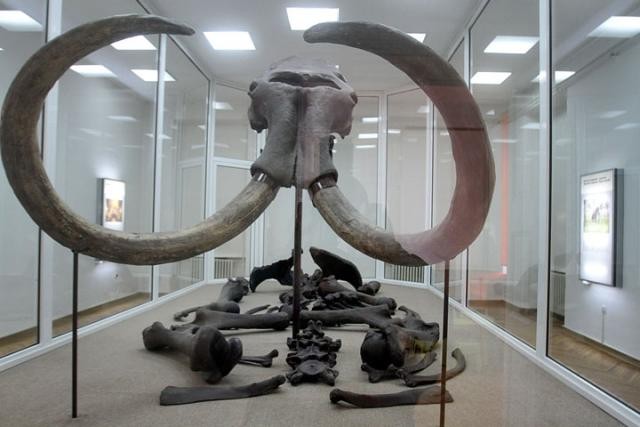
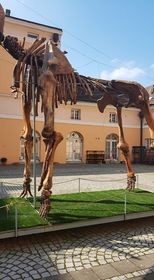
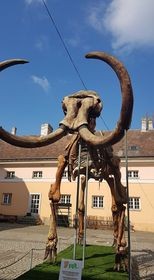
Good evening ... here I am at my sister's in Kikinda. Yesterday we went to visit the National Museum in Kikinda. By the way, the National Museum in Kikinda is unique in the world because it is a rare case to find so many mammoth remains, ie bone mass in one place. Mammoth Kika, whose replica is placed in the yard, and the fossil remains inside the museum, is today one of Kikinda's brands, and, of course, a favorite with children. The museum guide says that as many as 93 percent of the remains of one mammoth were found, and that was the only find in Europe. The bones told Kika's life, which paleontologists later turned into a story, and the Museum into a film. - When mammoths die naturally, it was most often from hunger due to worn teeth because they could no longer chew - says the guide, and the lifespan of mammoths was up to 80 years. Their bodies remained on the surface and were dragged away by vultures, water, and so far the remains of one mammoth tooth, tusk or bone have been found, and it was difficult to get much data from so few findings. It is assumed that Kika fell into the living mud and sank. She was the oldest female because now we know that they led their herds because, if another mammoth was older, she would have fallen into the mud, not Kika - says the guide, and adds that the clay in the mud in which she sank saved the bones of millions years. -------------------------------------------------------------------- Dobro vece...evo me jos kod sestre u Kikindi. Juce smo isle da posetimo Narodni muzej u Kikindi. Inace, Narodni muzej u Kikindi jedinstven je u svetu jer je redak slučaj da se nađe tolika količina mamutskih ostataka, odnosno koštane mase na jednom mestu. Mamutica Kika, čija replika je postavljena u dvorištu, a fosilni ostaci unutar muzeja, danas je jedan od brendova Kikinde, i, naravno, omiljena kod dece. Muzejski vodič kaže da je pronađeno čak 93 procenata ostataka jednog mamuta i to je bio jedinstven nalaz u Europi. Kosti su ispričale Kikin život, koji su paleontolozi nakon pretočili u priču, a Muzej u film. – Kada mamuti uginu prirodnim putem, najčešće je to bilo od gladi zbog potrošenih zuba jer nisu više mogli da žvaću – kaže vodic , a životni vijek mamuta bio je maksimalno do 80 godina. Njihova tela su ostajala na površini i razvlacili su ih lešinari, voda, te su se do sada nalazili ostaci jednog zuba mamuta, kljova ili kost, i teško je bilo mnogo podataka iz tako malo nalaza. Pretpostavlja se da Kika je upala u živo blato i potonula. Bila je najstarija ženka jer sada znamo da su one vodile svoja krda pošto, da je neka druga mamutica bila starija, ona bi upala u blato, a ne Kika – priča vodic , i dodaje da je glina u blatu u koje je potonula sacuvala kost milionima godina.
No comments yet